
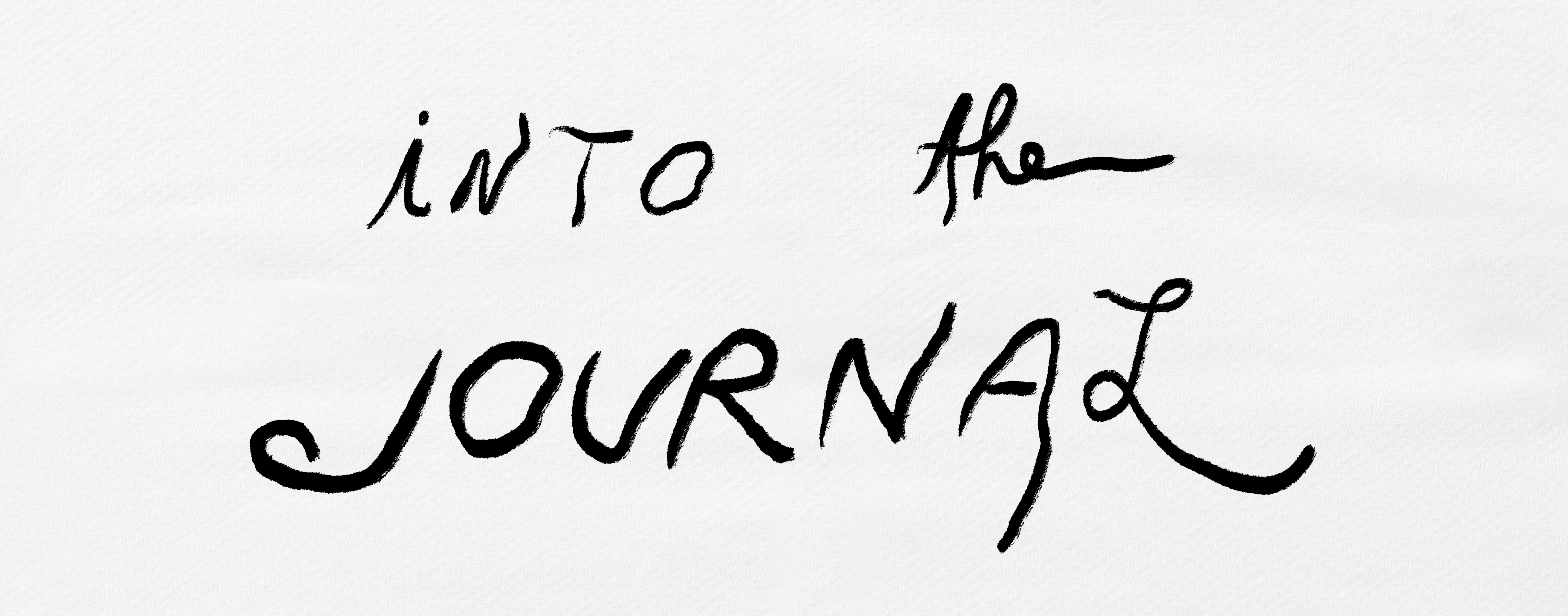
This interview series examines how and why people journal, because no two practices are identical. Appreciating the journal as an inner world.
If you have a journaling practice that you’d like to share about here, email me at evapberezovsky(at)gmail(dot)com.
Hi, I’m Jessica. I am an artist, organizer, community gardener, and dharma practitioner living and breathing in the unceded territory known as Brooklyn, NY. I spend a lot of time thinking about people and their relationship to land, place, and ecology. Much of that inquiry is rooted in Buddhist teachings on interdependence and emptiness. That’s most of what you’ll find in my newsletter, SLOWLY, SLOWLY.
In life, you’ll find me leading workshops and guiding meditations in green spaces, coordinating volunteers and processing compost in a community garden, writing one-line poems, and taking photos, among other things. I am currently counting all my joys and sorrows until I get to 10,000 (each), and I’m also learning Spanish.
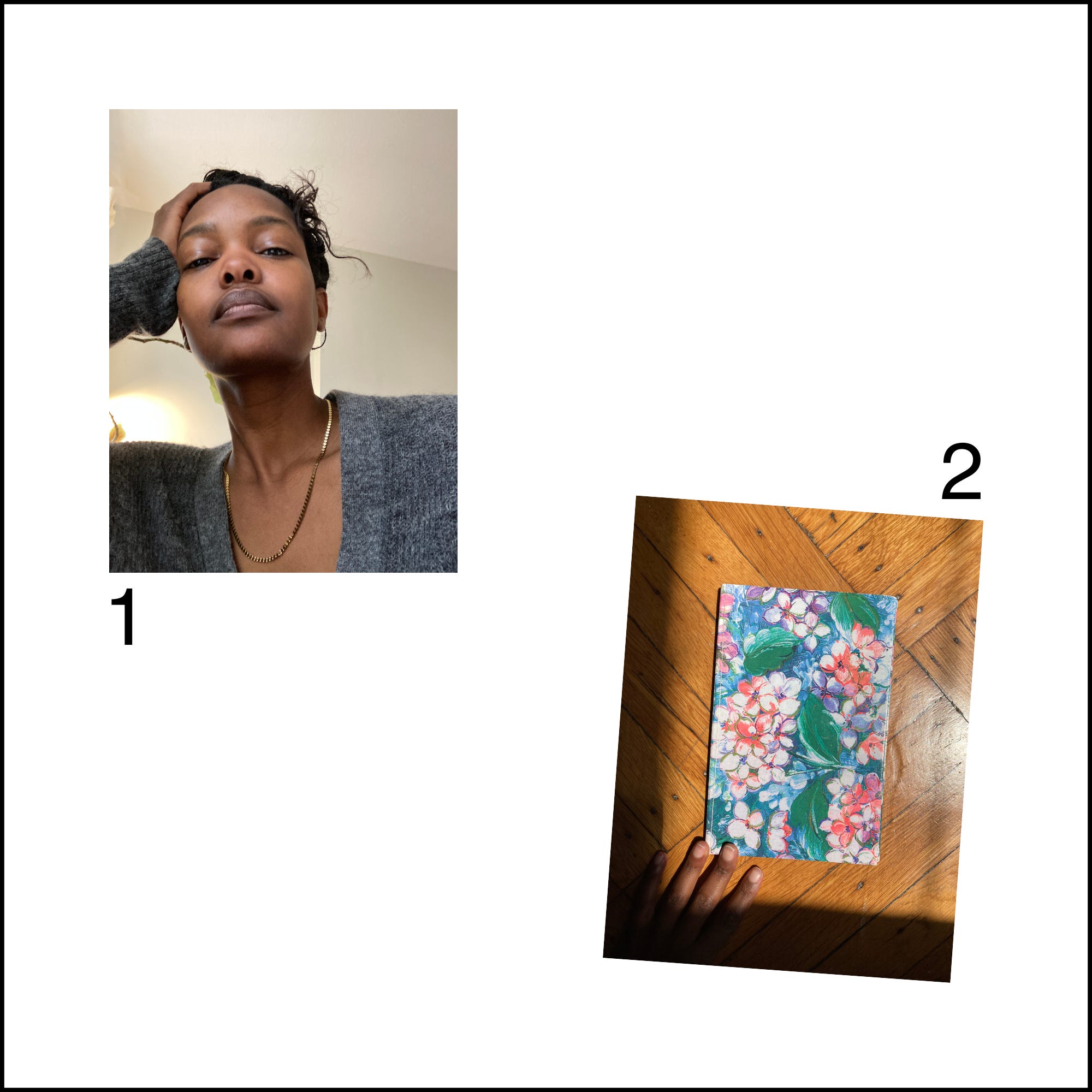
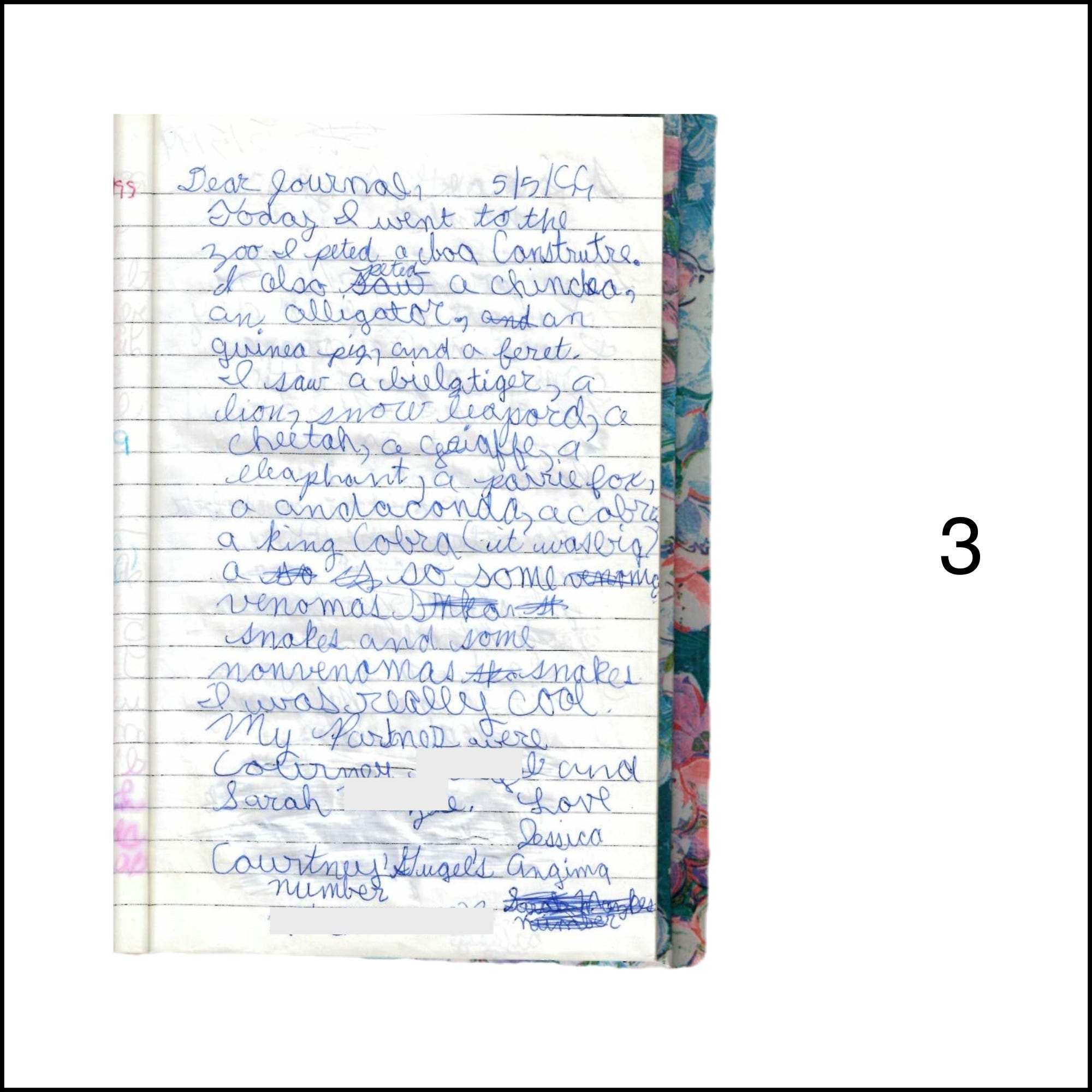
I just pulled out my oldest journal, and the entry date is May 5, 1999, which means I have been journaling since I was just under nine years old. I wrote about a day at the zoo and all the animals I touched.
For reasons of diaspora, from an early age, I had an internal knowing that my memory would fail me — that it would be impossible to remember every moment with the level of detail that I longed to retain. So, my child mind began pushing back on time by documenting the details of my life, approaching journaling as a record of my existence in that exact moment in history. I probably also thought of it as a marker of maturity. Articulating thoughts and feelings seemed adult-like.
I generally equate “journal” and “diary,” though they each evoke a different feeling.
I associate “diary” with youth, confession, and the pervasive dread of someone reading your words, which I seem to remember being a plot point in every Nickelodeon show from my adolescence. I now use “journal” to refer to the pen-to-paper documentation of my thoughts, but could just as easily use “diary.” The content is as honest as my childhood diaries were, and I would still be mortified if anyone read it.
I use “notebook” as well, for day-to-day note-taking: making to-do lists, taking notes during a meeting, workshop, or talk, recording ephemeral thoughts that I don’t want to forget (though those often land in my Notes app).
My notebook travels around with me most often, while my journal mostly lives at home, unless I specifically take it somewhere to write, or if I go on a trip. I love to journal on a trip.
I wish I had a consistent routine, in general. When I try to do something like Morning Pages, it can start to feel like a self-improvement project, and I become a little police-like to myself in my mind. Instead, I just journal when a feeling builds in my body that needs to be released or processed. Or when I crave exact documentation of how I experienced something that has happened to me. Or, sometimes, just when I feel like it.
In my early-to-mid 20s, I journaled with desperation. This is probably the time in my life that I filled the most journals and clung to the practice for dear life. It was the only tool I had for being with my mind.
Around 2016, when I found meditation and dharma, my journal entries lost the desperation and started to mirror the Buddhist principles I was learning about the nature of suffering. I was taking class notes directly in my journal rather than a separate notebook because the teachings and contemplations they provoked were so life-altering for me.
In the journals between then and now, I was writing about different lovers, therapy, grad school, the pandemic, trips home to Kenya. I can’t remember the exact content of each journal, but opening one would be a straight shot into that chapter of life.
Last year, I went on a trip to Barcelona, which blew my world open, so I attempted to write every thought and feeling experienced alongside the Mediterranean. Two days after I got home, I was let go from my job working in Democratic politics. It has been a welcome opportunity (and challenge) to uncouple my personality from five years of doing that work. Through the eye of the identity shift, I have been journaling more conscientiously than I have in years, which is a nice feeling.
I journal to —
feel, to process, to document, to understand my younger selves, to know what I was feeling, to not be a stranger to myself, to unmask, to know impermanence, to build self-compassion, to practice saying the feelings I am afraid to say aloud, or to say the things that don’t need to be said aloud but they still need to be said, so I say them, just to myself.
To grieve, to despair, to note the details of the world, the way the light hit the water on that one trip to Asheville, how it felt when I was that age, and that age.
To know that I had that feeling and no longer have that feeling. To see how some feelings persist. To see that some feelings persist, but they also change; you still feel that feeling, but you feel it differently — its contours have shifted.
To feel delight. To feel the joy of pulling from the atmosphere the words to express what it is I want to express, or to trip over my mind, finding the words that escape me.
I’ve only done a deep-dive read of my old journals once, about five years ago, which is why I can vaguely recount my journaling practice through the years. While I have so much compassion for Baby Jessica, I found it really painful to see how my younger self suffered, and I didn’t garner the information I was seeking by reading them, so I haven’t reread them since.
All the same, they’re cherished objects, and I’m glad that I have my inner thoughts chronicled over the years. I’m sure there will be a time in the future where I sit down and attempt to read them in full.
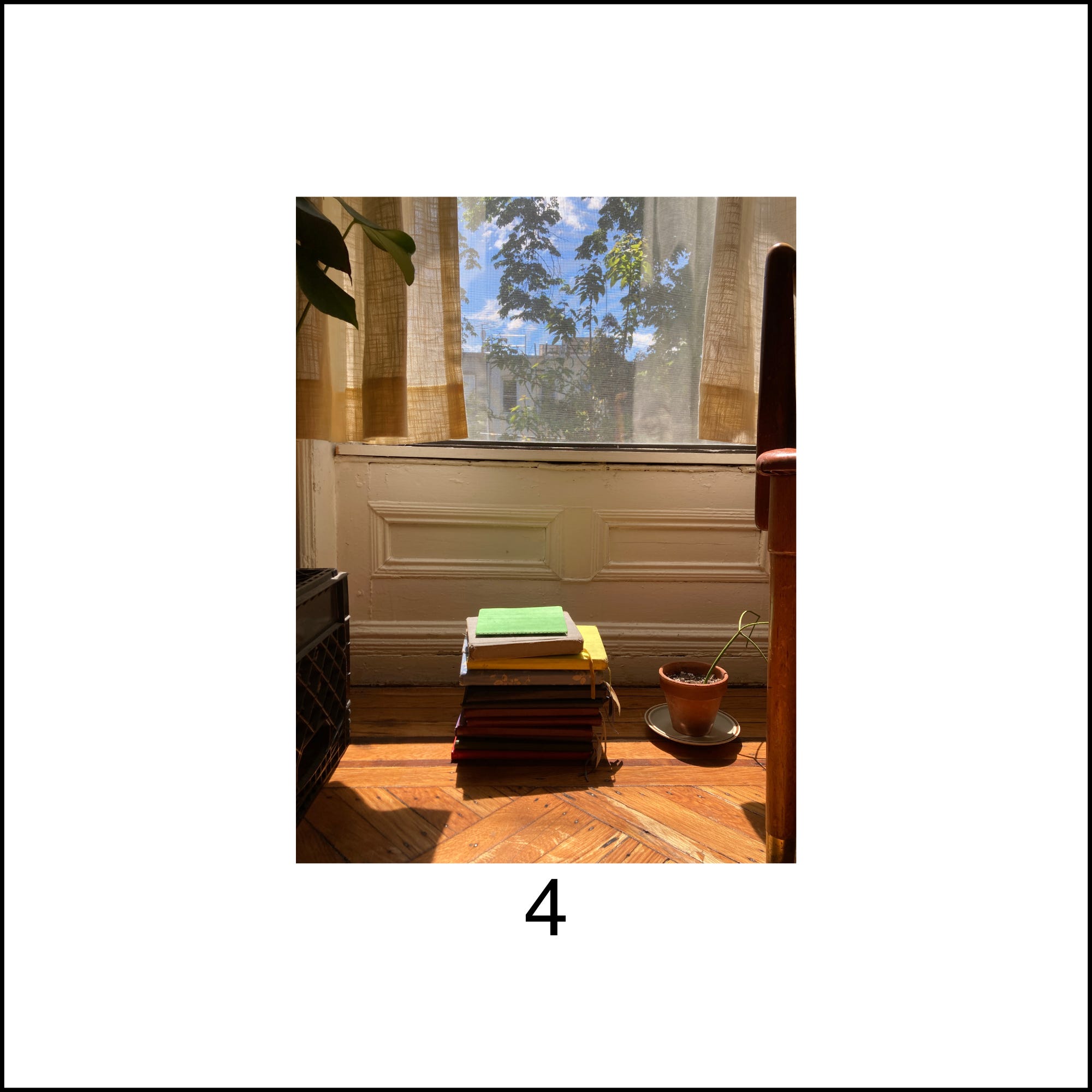
My collection is all physical, baby. There are a lot of Moleskines in the mix, but I have no brand loyalty for journals and ride the vibe of whatever is calling to me. My current one is Penco, purchased while traveling, and before that I had a Mnemosyne.
In college, I would go to Urban Outfitters or Anthropologie to pick out a new journal, and these days, I go to Yours, Truly (owned by and right next door to my favorite bookstore, Greenlight, shoutout) or Goods for the Study.
The Pilot® G-2® Gel Pen (0.7mm) is my favorite.
My journal entries are not for public consumption, but here’s the latest from my notebook. These are notes from a talk I attended about the restoration of Lago de Texcoco outside of Mexico City.
SOFT INFRASTRUCTURE 5.5.2026
City as phenomena as opposed to city as object
Engagement with water instead of fighting it
What arguments are construed as necessary and which are seen as extraneous?
How worlds function — interbeing, co-dependent arising of phenomena
3x SIZE OF MANHATTAN!
Beauty not as by-product but as central argument
Hydrophobia
Alexander von Humboldt — reciprocity
Water as cultural memory
Communal ownership of land — ejidos
@evaberezovsky
evaberezovsky.com
evapberezovsky(at)gmail(dot)com
꩜
No posts
Comments
Nothing yet. Say the first thing.
Sign in to join the conversation.