

Neighbors,
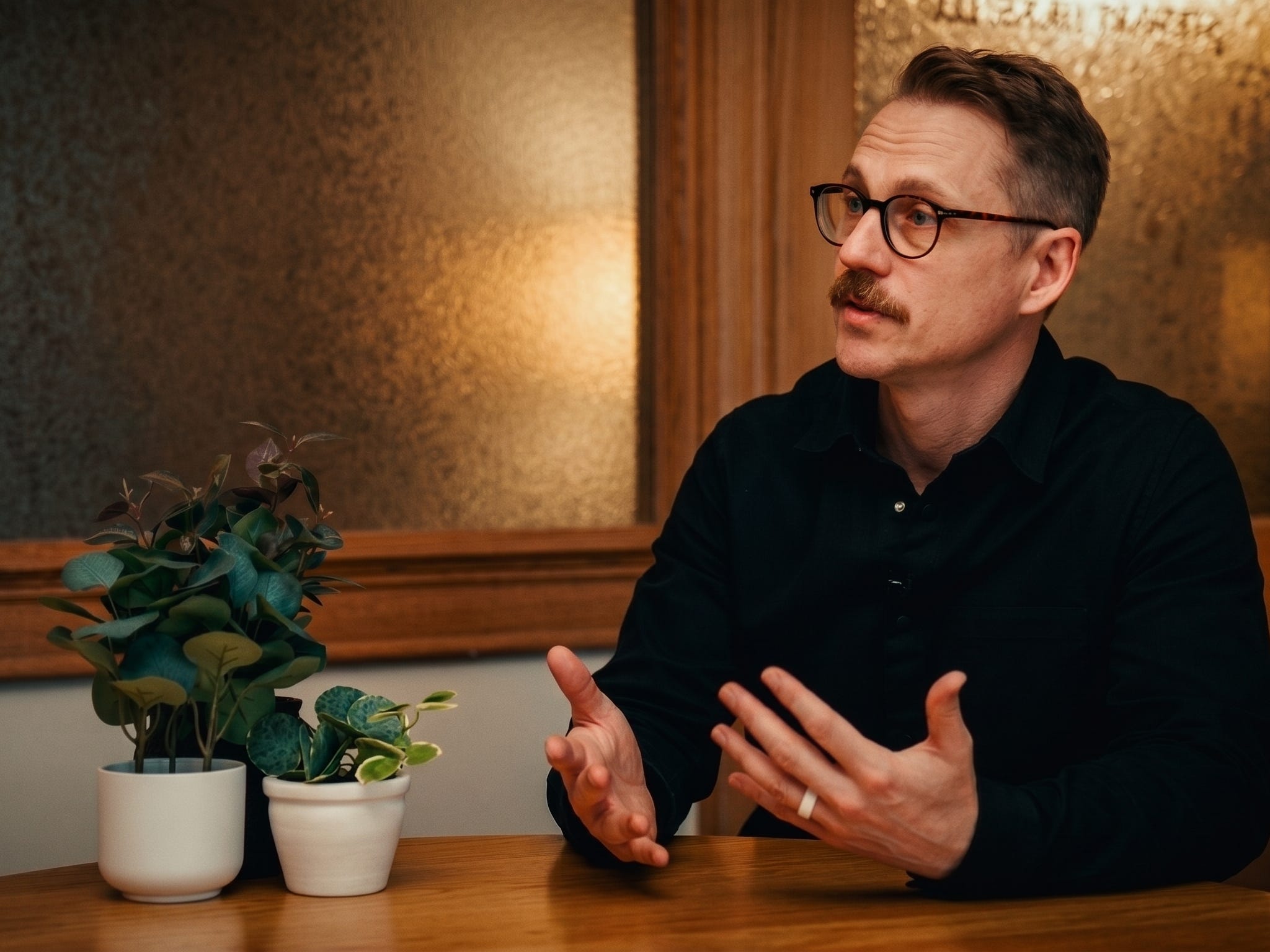
This week, I’m bringing you a special conversation with architect, professor, and Chicago-based video producer Stewart Hicks.
When he’s not fulfilling his duties for his day job, Stewart dishes “takes on buildings and cities” on YouTube, explaining away at topics such as “The Controversy Over Doorless Elevators” and “How a Bombproof Building Works.”
Since launching OFFLINE, we’ve published several essays examining physical spaces and their relationship with the digital world. It only made sense, therefore, to tackle Millennium Park alongside Stewart (selfishly, it made for a free history lesson, too).
“Everybody knows that the best art lets you look at yourself and the city in a different way,” Stewart told us, referring to The Bean. Here’s hoping our work can make you feel the same way.
— NGL
P.S. Only six spots left for our upcoming Game Night + Secret Premiere! You can RSVP here.
P.P.S. Last letter, we reviewed algorithm-manufactured taste, music “psyops,” and Geese (the band). You can read it here.

Our conversation has been edited and condensed for clarity.
Nathan Graber-Lipperman: You spend your time on YouTube explaining architectural marvels, innovations, and design. Walk us through Millennium Park—this staple of Chicago that’s actually only been open for twenty years.
Stewart Hicks: It’s a long history. I’m not sure how much time you have.
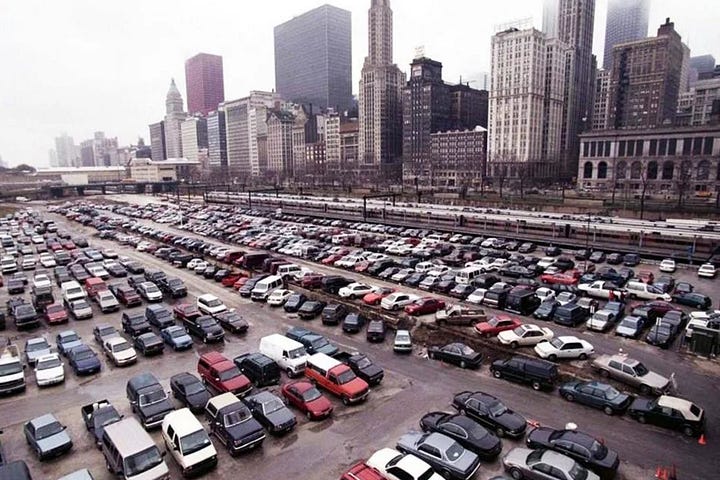
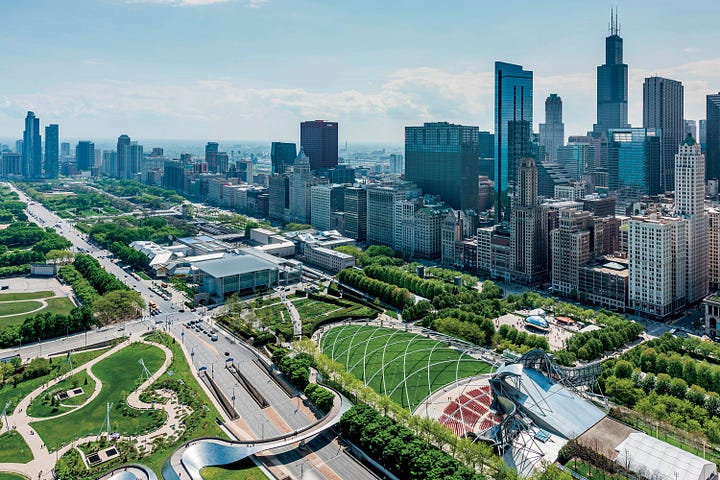
It used to be a place for a lot of railroad traffic and parking garages in the city. Sometime in the Nineties, a coalition of folks gathered together, raised money, and hired the firm SOM to make a master plan. The idea was that it would be a series of rooms in a grid. They started construction without knowing much about what those rooms would be, so they began with the infrastructure and filled in the rest over time.
It’s essentially a giant green roof because a lot of the original stuff—like the parking—is still underneath. You can still see the grid that was originally proposed, along with iconic components like the art, gardens, and the bridge to the Art Institute.
NGL: Are there any secrets to Millennium Park that someone walking through on an average Tuesday might not know?
SH: The fountain was made possible by Owens Corning, who originally made glass blocks and were able to recast those blocks into brick shapes.
Anyway, let’s see…
NGL: From my understanding, too, the park was supposed to open at the turn of the millennium. But it didn’t until 2004, and it came in about three hundred and forty-five million dollars over budget.
SH: A lot of that was because construction started before the designs were finalized, leading to many changes after the fact. It’s a bit more robustly-built than it would have needed to be otherwise.
Anything that takes a long time gets more expensive over time. And a giant project like that, I can’t imagine.
Can you imagine trying to, like, price that thing and getting it right? I wouldn’t the first time, either.
NGL: Speaking of 2004…construction on The Bean started then, but it didn’t open until 2006. What can you tell us about the design?
SH: First off, you shouldn’t call it The Bean. It’s Cloud Gate. The artist, Anish Kapoor, doesn’t like when people use other names.
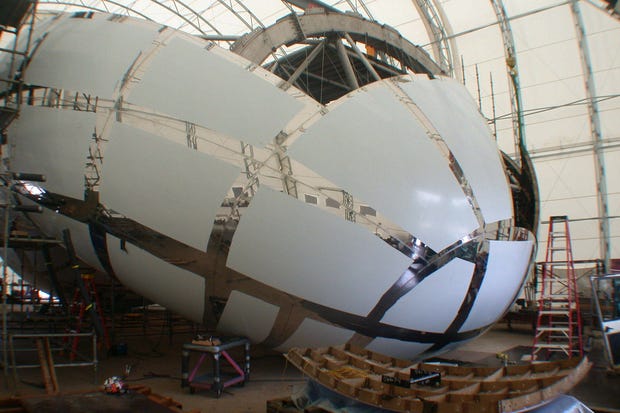
Its design consists of a set of steel panels formed around a steel structure. The panels were welded together, and they had to sit for a couple of years before they could be polished down. For a while, you could see all the seams.
Part of the expense was the foundation, as it wasn’t originally planned for—it is a big, heavy piece of metal. But that shape reflects the city and the people around it.
NGL: Which is why it’s great for selfies.
SH: Exactly. Everybody knows the best art lets you look at yourself and the city in a different way. Other cities have similar versions, but Chicago got in on that early.
NGL: Speaking of, you brought up Anish Kapoor, the designer. What can you tell us about him?
SH: I don’t know a ton about him. He tried to trademark the “blackest black” and got frustrated when nobody abided by it.
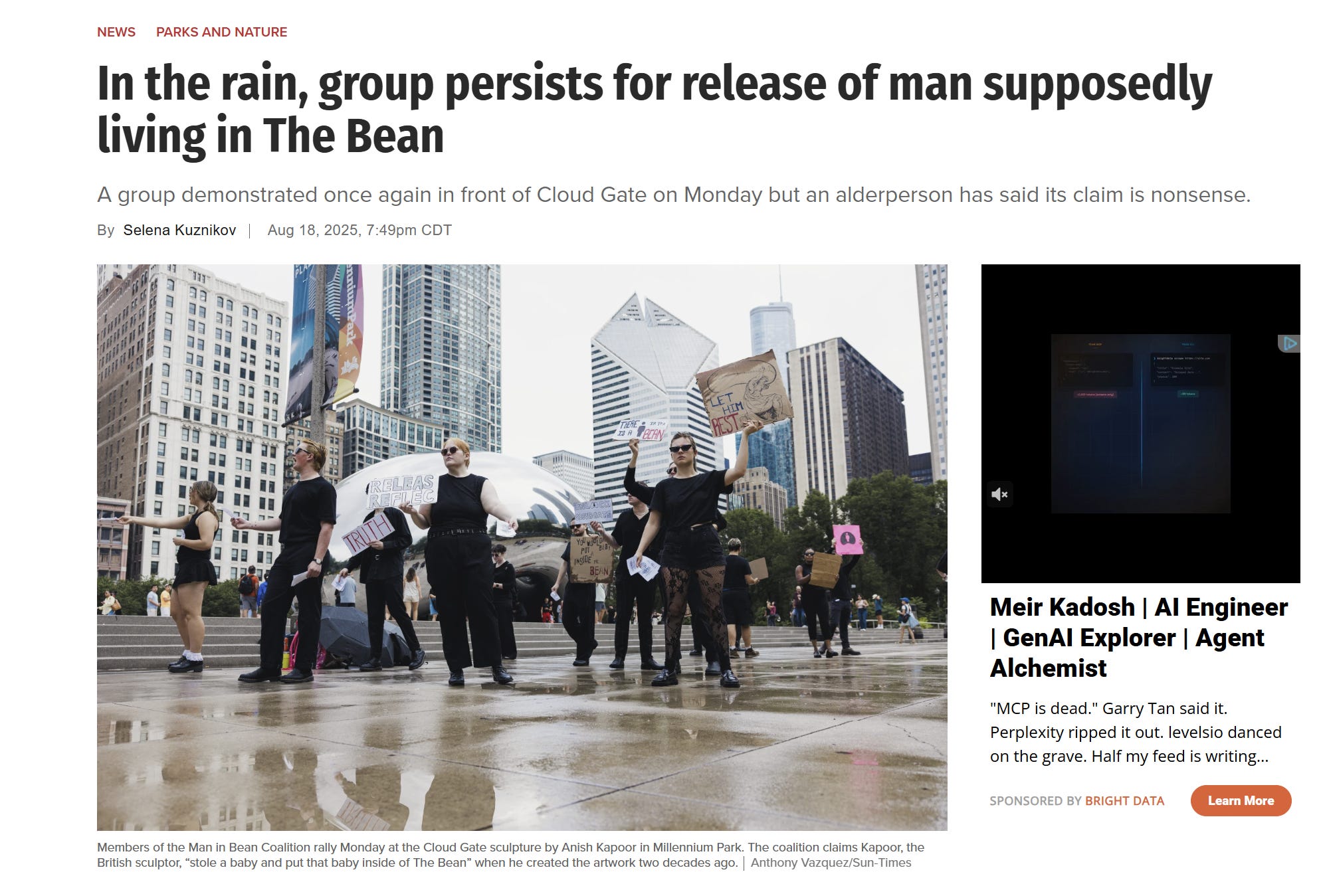
NGL: Speaking of 2004—a group of protesters emerged last year, July 2025. They were protesting outside The Bean, telling passersby that Kapoor stole a baby in 2004 and hid him inside the statue, and that the man has been living inside ever since.
What is the truth here?
SH: I haven’t been inside The Bean, so I cannot attest to what might be living in it. I would imagine it would be difficult for a person to grow up in a space like that.
I imagine it’d be really hot in there, too. I guess they could install some air conditioning.
NGL: The protesters are calling themselves the “Man in Bean Coalition.” If they were sitting here right now, what questions would you have for them?
SH: I’d want to know about the logistics, and Kapoor’s motivation for this. I’d ask if there’s, like, a space where the person could knock, and create conversations with people.
NGL: My last question for you here: You seem like a pretty connected guy, between the university system, the architecture world, and of course, you know, the YouTube élite.
SH: Okay. [laughs]
NGL: Do you think you could take us inside The Bean?
SH: No, I don’t.
I do know people in the Millennium Park group…but I don’t think they would let us in.
You can follow Stewart’s work on YouTube here.
Thanks for reading! Shoot us a reply, comment, or DM if anything resonated with you in particular—we respond to them all.
No posts
Comments
Nothing yet. Say the first thing.
Sign in to join the conversation.