
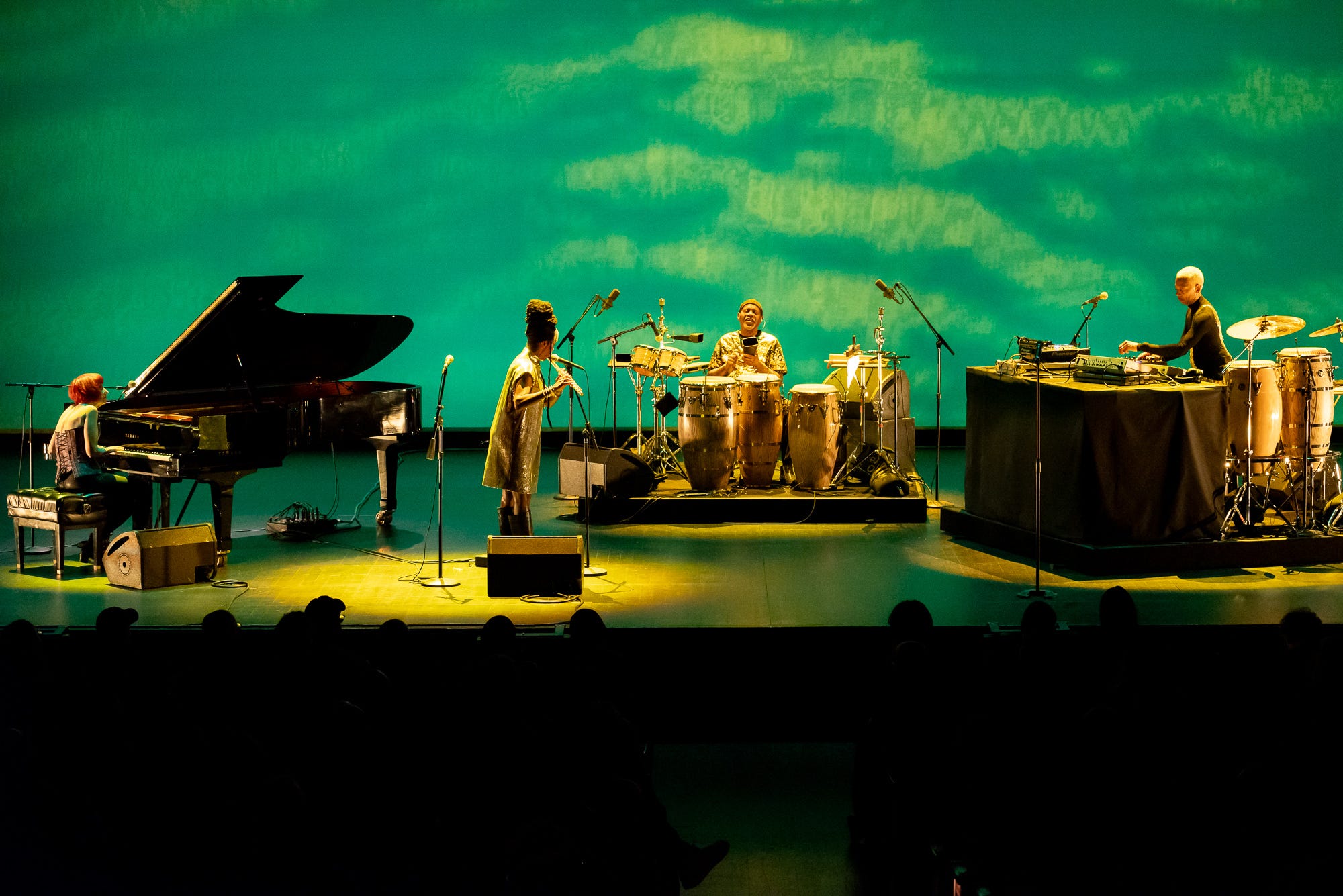
May’s roundup of concerts leans experimental with a strong appetite for new works. That could mean hearing emerging composers premier pieces in the spirit of Morton Feldman at the MATA Festival, or soaking in Alarm Will Sound’s Aphex Twin arrangement for their 25th anniversary concert, or hearing the premier of Nathalie Joachim’s electroacoustic opera-in-progress with the NY Phil that pulls from the freedom movements of the Caribbean, the Americas, and the Pan-African world.
The first weekend alone stacks the Long Play Festival in Brooklyn against the Queens New Music Festival with strong chamber performances including violinist Randall Goosby in recital with pianist Zhu Wang. There’s also a deeply moving Death of Classical performance of Strauss’s Metamorphosen in the crypt under St. John the Divine.
Wynton Marsalis's Symphony No. 5 “Liberty” gets its New York premiere at Carnegie, written for jazz big band and full symphony with Marsalis on trumpet. And the Met opens Gabriela Lena Frank's El Último Sueño de Frida y Diego, a haunting reimagining of Kahlo and Rivera reuniting on the Day of the Dead.
Chamber music holds its own this month too with the Isidore Quartet at 92NY and a string trio of touring musicians coming together at Bohemian National Hall. There's a lot to explore this month, so here’s what I’d recommend.
ODEA covers NYC’s classical and experimental music scene—monthly concert picks worth your time, researched and curated so you don’t hear about them a week too late. Subscribe for free and stay ahead of the curve.
What I’d prioritize if you’re only seeing one or two concerts this month.
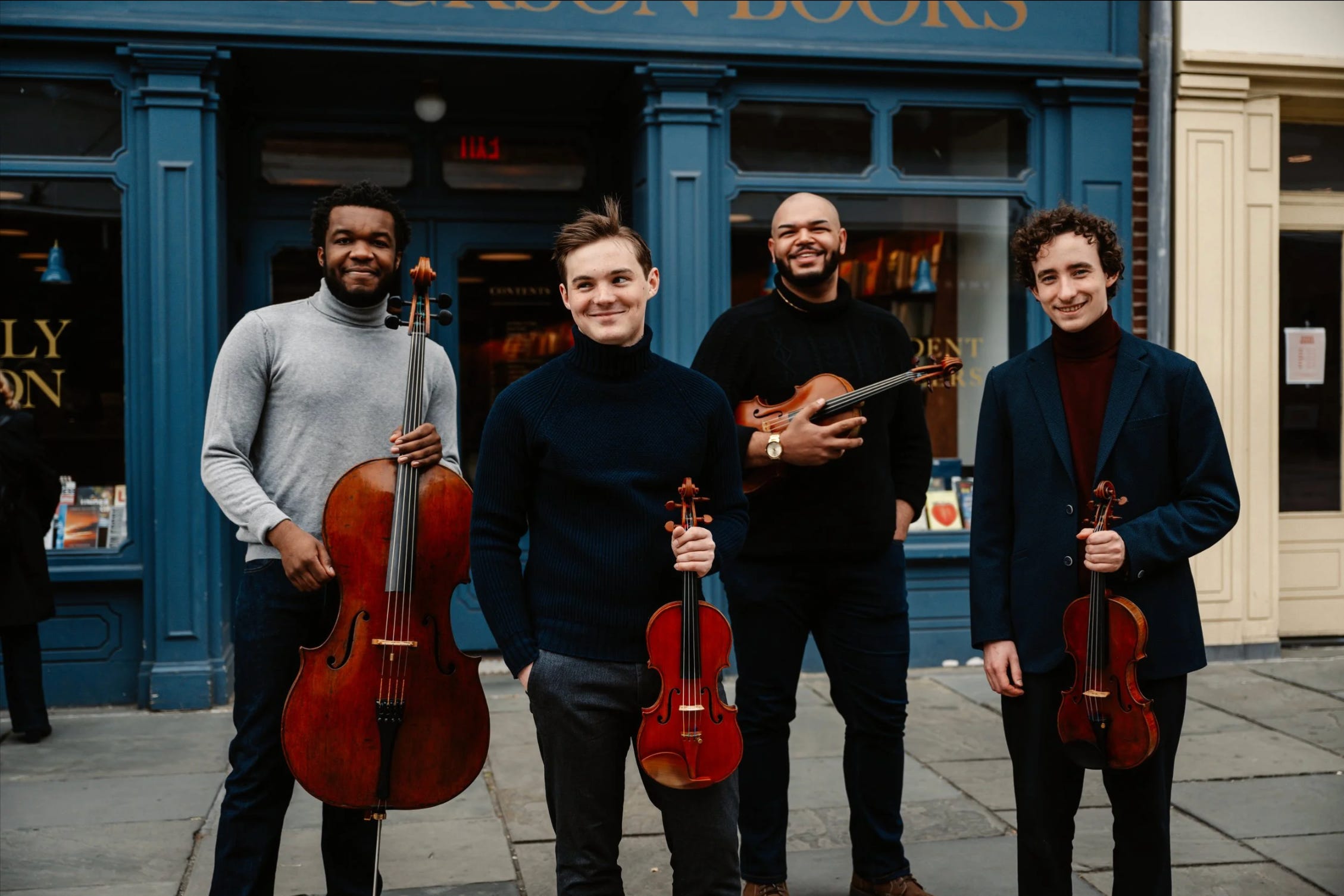
Buttenwieser Hall, 92NY, Upper East Side · Sat, May 2, 7:30pm
Winners of the 2022 Banff competition, Isidore String Quartet has gone from breakout group to one of the most in-demand quartets. Their 92NY program includes Haydn’s “Sunrise” Quartet, named for the way the first violin rises out of a held chord at the opening, Billy Childs’s String Quartet No. 4, American Mosaic—three movements that work through American race relations, the violins and lower strings refusing to play together until the finale resolves on a quote of “Lift Every Voice and Sing.” Brahms’s Third closes the night, written on a happy summer vacation, full of rhythmic trickery and a pastoral movement that just sings.
Go if: you want to catch one of the most promising string quartets out there.
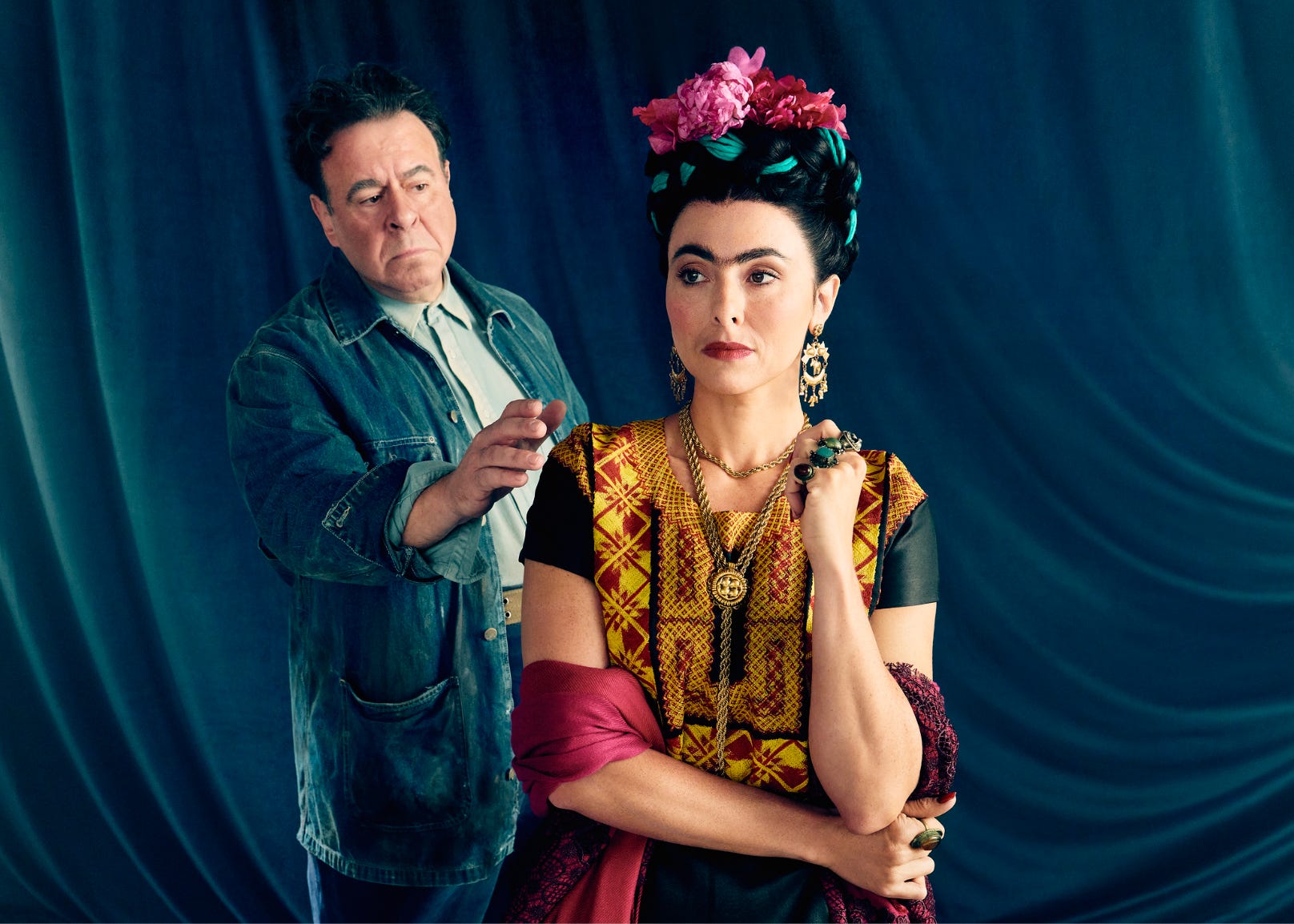
Metropolitan Opera, Lincoln Center · May 14–Jun 5
Gabriela Lena Frank’s first opera lands at the Met after a charmed run that started at San Diego Opera in 2022 and has stopped in Los Angeles, San Francisco, and Chicago—a level of early traction that’s rare for a new opera. The premise is a Day of the Dead reversal of Orpheus and Eurydice: Frida, three years dead, leaves the underworld for 24 hours to lead Diego on his journey toward death. There’s a trickster keeper of the dead named Catrina, a young actor in drag impersonating Greta Garbo, and a rule that Frida can’t touch the living. Frida lived in chronic physical pain after a streetcar accident in her teens and a touch returns her to it.
Frank wrote the score around marimba and unusual instrumental pairings (two piccolos with celesta, bass clarinet doubled with a high violin) and Nilo Cruz wrote the libretto in Spanish. Yannick Nézet-Séguin conducts most performances, Isabel Leonard sings Frida, Carlos Álvarez sings Diego. Deborah Colker directs and choreographs after her acclaimed Ainadamar last season.
Go if: you’re a fan of the Met taking on new works.
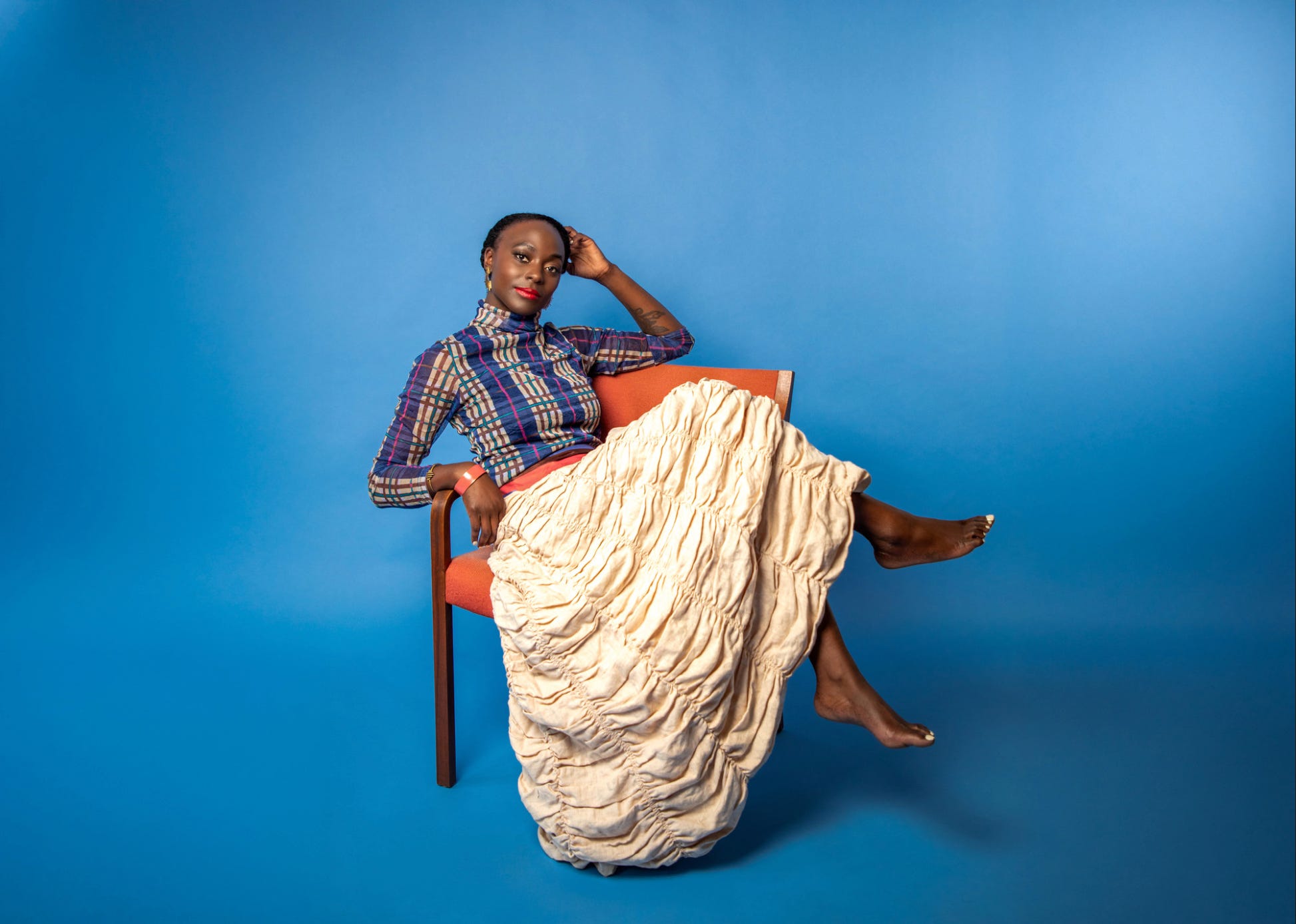
Wu Tsai Theater, David Geffen Hall, Lincoln Center · Fri, May 22, 7:30pm
Nathalie Joachim is a Haitian-American flutist, vocalist, and composer—Grammy-nominated, signed to Nonesuch Records, and a composition professor at Princeton—whose work centers Black women's voices and the freedom movements of the Caribbean, the Americas, and the Pan-African world.
The Phil commissioned a new instrumental version of Le présent éternel, part of an opera she's developing that draws from Vodou tradition and Black Surrealism. She'll sing it with three other Black women, voicing Vodou spirits across the score. Christopher Rountree conducts—he runs Wild Up in LA and has a knack for programs that don’t feel like the Phil’s usual. Opening the night: Lou Harrison’s 1959 Concerto for Violin with Percussion Orchestra, a gamelan-inspired piece where the violin is backed only by percussion. The Phil’s assistant concertmaster Michelle Kim-Solman takes the solo.
Go if: you want to hear what an artist sounds like at full range.
Cross-genre work, unusual spaces, and concerts that upend expectations.
Multiple venues across Brooklyn · Thu, Apr 30–Sun, May 3 · 4-day pass $235, day passes $95
The Long Play festival gives you the chance to take risks with your taste—to confront the unfamiliar, lean into the unexpected, and see what you make of it. The four-day Brooklyn takeover stretches across classical, experimental, jazz, and contemporary music, and going last year felt like a choose-your-own-adventure game with concurrent performances from noon to night.
I caught BlackBox Ensemble’s deep dive on Julius Eastman and sat with David Lang’s darker as the shift from light to dark brought me into a more reflective headspace. I also discovered pieces that have stuck with me since like Anaïs Maviel’s listen to the rain performed by The Rhythm Method, which I’ve recommended in write-ups since. I’d recommend Long Play to anyone with the time, the means, and the curiosity to spend four days finding out what they didn’t know they liked.
This year’s got a few anniversaries that guide some of the programming: Morton Feldman’s 100th birthday is honored across two performances—Quatuor Bozzini playing String Quartet No. 1 and Charlotte Mundy singing Three Voices. Steve Reich’s 90th gets a Sunday marathon at BAM Fisher with Sō Percussion and guitar quartet Dither tearing through Sextet, Four Organs, Piano Phase, and Electric Counterpoint. There’s a healthy dose of long form, slow burn music (Kali Malone, Sarah Davachi, Lucy Railton’s Blue Veil), big-ensemble showcases (John Luther Adams’s Crossing Open Ground for 40 winds, brass, and percussion in Fort Greene Park; Michael Gordon’s Trance with Ensemble Signal; the Bang on a Can All-Stars premiering a new arrangement of Glassworks), and jazz heavyweights (Billy Hart Quartet, Amina Claudine Myers, and Matthew Shipp).
Go if: you’re ready for a recalibration of your taste.
Culture Lab LIC, Long Island City · Thu, Apr 30–Sun, May 3 · Festival pass $60, single show $20
While Long Play takes over Brooklyn the same weekend, Queens has its own four-day new music festival running at Culture Lab LIC, a 12,000-square-foot converted warehouse in Long Island City. Random Access Music started this in 2012 and has built it into what The New York Times called Queens “staking its claim for new-music street cred.” This year’s lineup runs eight concerts featuring KOE (a flute-cello duo), Luminae Trio, Queens College Percussion Ensemble, RAM’s resident composers and players, and a “Fifteen Minutes of Fame” night. You’ll hear pieces from emerging voices you probably haven’t caught yet, in a space small enough that you might find yourself talking to the artists afterward.
Go if: you want new music in a room where you can talk to whoever wrote it.
THE BLANC, 15 E 40th St · Sat, May 2, 7:30pm
THE BLANC is the kind of place that should be more widely known. It acts as a blank slate for whatever artists want to do in it—exhibitions, performances, residencies, the occasional fashion show. The Pulsing Sound series is part of their music programming, curated this season by Artist-in-Residence Sofia Ouyang. Telos Consort is main act, a Bang on a Can-mentored ensemble, two years old and already premiering work by composers nobody else is touching yet. Tonight they play works by seven living composers, two of them Ouyang's own pieces. Odds are you'll walk out with at least one composer name you’ll want to remember.
Go if: you’re ready to discover your new favorite place for music.
Roulette Intermedium, Brooklyn · Thu, May 7, 8pm
The New York Times once called Alarm Will Sound “as close to being a rock band as a chamber orchestra can be,” and 25 years in, that still tracks. The 20 musicians met as students at Eastman in 2001, picked their name off an emergency exit sign, and have kept most of their core lineup in place ever since. They just won their first Grammy(!) in February for Donnacha Dennehy’s Land of Winter. Their anniversary program contains a reinvention of early music, a Jlin reimagining, Aphex Twin and Beatles arrangements, plus a few newer commissions that lean lyric and atmospheric.
Go if: you want a concert that toes the line between classical and electronic.
DiMenna Center, Midtown · Thu, May 21–Sat, May 23, 7pm · Festival pass $135, single night $50
MATA is where you go to hear the next Pulitzer winners before they’re nominated. Philip Glass started it 30 years ago and the alumni list now includes MacArthur fellows and Rome Prize winners. This year’s theme is composer Morton Feldman’s centennial, and seventeen early-career composers responded to a call for scores that pick up on his fascination with memory, his subtle inflections in his marathon length pieces, and his careful piecing together of isolated sounds.
The festival spans three nights. Thursday, the Bang Group performs Reich’s Clapping Music with tap shoes and reimagines Feldman’s For John Cage as a tap dance. Friday’s all about extended duration string works including Bunita Marcus’s Two Pianos and Violin, which Feldman himself loved. Saturday closes with BlackBox Ensemble playing two iconic Feldman pieces from the 1970s—For Frank O’Hara and I Met Heine on the Rue Fürstenberg—alongside new works that pick up his idea of “local music,” where the focus is on a single note or chord rather than the whole structure.
Go if: you want new music in the spirit of one of the great American experimentalists.
Roulette, Boerum Hill · Thu, May 28, 8pm
Yarn/Wire is the Brooklyn quartet that’s been taking on some of the most daring work in new music for the last 20 years. They bring a sound that blends acoustic instruments with electronic manipulation, making you question what you’re actually hearing. Their Currents series is back this year with pieces from Jonah Haven, a Rome Prize laureate writing about the sixth mass extinction and Bergrún Snæbjörnsdóttir, an Icelandic composer whose immersive music has a strange, elemental beauty to it.
Go if: you’re ready to lower your guard and step into the unknown.
Smaller forces, tightly curated programs.
The Crypt under the Cathedral of St. John the Divine, Morningside Heights · May 1 & 2, 7pm & 8:30pm
Death of Classical curates classical music in venues that match the feeling of the music—crypts, catacombs, cemeteries—and the performances have been some of my most memorable. This installment pairs Missy Mazzoli’s Dark with Excessive Bright (string quintet with violin soloist, title from Milton’s Paradise Lost) with one of my favorite pieces, Richard Strauss’s Metamorphosen, written in the last days of World War II as Strauss watched German cultural institutions get bombed into rubble. The Strauss is rarely heard in this septet arrangement. We’re going to the unfinished crypt under St. John the Divine for this one that includes a pre-show reception with wine and Via Carota cocktails.
Go if: you want to make your concert-going experience one to remember.
High School of Fashion Industries, Chelsea · Sat, May 2, 7:30pm
A few years back, I caught Randall Goosby’s Tchaikovsky Violin Concerto with the Mostly Mozart Festival Orchestra and remember being immersed in his playing. His cadenza showed a maturity and lyricism where most would strive to impress. You can expect the same discernment in his chamber program with Zhu Wang on piano—a regular recital partner of Goosby’s, with a solo career running just as fast: Maria Canals first prize this past March, a 2024 New Orleans gold medal, and a 2021 Carnegie debut that landed on the New York Times’ Best of Classical list. They bring a special partnership to a program of Harry Burleigh’s Southland Sketches and Amy Beach’s Romance sitting next to Dvořák, Debussy, and Beethoven’s “Spring” Sonata.
Go if: you want to hear two rising stars take on a wide ranging program.
Kaufmann Concert Hall, 92NY, Upper East Side · Wed, May 6, 7:30pm
After hearing both Erin Morley and Lawrence Brownlee at the Met in separate productions, I can say they’re each the kind of singer you remember long after leaving the opera house. Morley’s voice sits right at the top of the soprano range without ever sounding strained and her leaps are a precise, athletic feat. Brownlee is the tenor people line up for when bel canto is on the calendar. His voice hits those punishing high Cs and Ds without falsetto and the harder the music gets the more he seems to enjoy it. Tonight they’re together with pianist Malcolm Martineau for a Golden Age program: Rossini, Donizetti, Verdi’s “Caro nome” from Rigoletto, the famous “Bell Song” from Lakmé, Bizet’s “Je crois entendre encore” from Pearl Fishers, and a few four-hand piano interludes (Morley plays too).
Go if: you want to hear two of the best bel canto singers share a stage.
Bohemian National Hall, Upper East Side · Thu, May 7, 7:30pm
This is what happens when three of the most-booked young American soloists clear an evening to play chamber music together. Violinist Stella Chen, violist Matthew Lipman, and cellist Brannon Cho take on a program that threads three centuries of trio writing: Mozart’s Divertimento in E-flat (his only string trio and one of his noblest works), Dohnányi’s five movement Serenade, and the New York premiere of Andreia Pinto Correia’s Cantares, drawing on Portuguese folk chant. Correia joins the players for an illustrated talk beforehand.
Go if: you want to catch three rising soloists performing some of the best trio works.
St. Paul & St. Andrew United Methodist Church, Upper West Side · Sun, May 10, 4pm · Free
Sunday afternoon, free, in a church big enough to give the strings some room to breathe. When the Met Orchestra musicians aren’t backing operas at their Lincoln Center home, some of them spin off to perform chamber music all around the city. This performance includes Valerie Coleman’s Maombi Asante (a wind piece whose title is Swahili for “thank you”), Gabriela Lena Frank’s Mitos for wind quintet (worth catching the same week as her opera, listed here too), and Dvořák’s “American” String Quintet, which he wrote during his Iowa summer in 1893, far from New York and homesick for Bohemia.
Go if: you want a Sunday afternoon of top tier classical without the top tier price.
Advent Lutheran Church, Upper West Side · Mon, May 11, 7:30pm · Free with registration
The Parker Quartet—one of my favorite ensembles for their intensity and richness—comes to Music Mondays for an all-Schubert program anchored by the “Death and the Maiden” Quartet, one of Schubert’s most gripping works. The night opens with tenor Nicholas Phan singing Die schöne Müllerin, the song cycle about a young miller's descent from infatuation into heartbreak. He then performs the standalone Schubert lied Der Tod und das Mädchen—the source material that the quartet's slow movement is built on—before the Parker takes the stage.
Go if: a Monday night of Schubert and heartbreak sounds like exactly your thing.
Merkin Hall, Kaufman Music Center, Upper West Side · Tue, May 12, 7:30pm
Watching Jonathan Biss perform takes you well past being impressed and into something more absorbing. You get the sense the piece is so deeply internalized that it pours out of him physically—you can see it in the way his body moves with the score as the piece takes shape in front of you note by note.
Watching Biss perform fifteen feet away in a crypt last year was that kind of experience and I’d bet on a similar outcome for this program about what words can’t say. Mendelssohn, Janáček, and Kurtág all show up in small scale pieces, building towards Schumann’s Fantasie in C—a love letter to his wife Clara so personal you feel like it wasn’t meant for your ears.
Go if: you want to hear one of today’s most thoughtful pianists.
Miller Theatre, Morningside Heights · Mon, May 18, 6pm · Free
Imani Winds moves and plays as a single unit. Five wind players whose tones blur together building this rich tapestry of sound, hard for any wind quintet to achieve. They won a Grammy in 2024, and program music at the intersection of art and justice. Tonight’s program features composers influenced by French culture, jazz, and folk traditions. Valerie Coleman’s Portraits of Josephine Baker, Lalo Schifrin (yes, the Mission: Impossible guy) and his New Orleans suite, and Henri Tomasi’s Sacred and Profane Dances. Pop-ups at Miller put the audience onstage with the players, drink in hand, and you can hang around with the artists after.
Go if: you want to hear one of the best wind quintets out there.
GatherNYC @ Museum of Arts and Design, Columbus Circle · Sun, May 24, 11am
Aeolus has been playing together long enough to have worked out the kind of instinctive communication you can’t fake. They’ve spent years championing American composers who don’t get enough airtime, releasing two albums under their Many-Sided Music project dedicated to that cause. This program fits the bill: a Bach chorale next to Andrea Casarrubios’s Overture and Chorale inspired by it, Jessie Montgomery’s Strum, Bacewicz’s Third Quartet from postwar Poland, and the slow movement of Florence Price’s G Major Quartet, which pulls from Black spirituals. An hour of music, Sunday morning, coffee included.
Go if: you think mornings are the best time to hear chamber music.
Full symphony concerts, chamber orchestras, and large ensemble programs.
Church of the Ascension, Greenwich Village · Thu, May 21, 7:30pm
Voices of Ascension Chorus and Orchestra has built a reputation for its refined sound and thoughtful pairings of choral landmarks with adventurous new works. Their season finale, guest conducted by Beth Willer, centers on the New York premiere of Sofia Gubaidulina’s Canticle of the Sun, which sets a hymn by St. Francis of Assisi for chorus, cello, and percussion. It asks a lot of its solo cellist, Tommy Mesa: detuning, climbing the instrument’s highest register, and at one point abandoning the cello completely for a bass drum and flexatone.
Pulitzer winner Ellen Reid’s Oscillations: 100 Years and Forever gets its East Coast premiere with new NYC visuals and two works by Olivier Messiaen bring the organ and chorus into the same mystical orbit.
Go if: you’re into sacred music with a sense of adventure.
Stern Auditorium, Carnegie Hall, Midtown · Fri, May 29, 8pm
Marin Alsop’s chemistry with the Philadelphia Orchestra at their March concert left a lasting impression, which is why I’m bullish on their return to Carnegie. Beethoven’s Seventh is one of my favorite symphonies—propulsive, intense, and with the famous second movement that builds from a whisper to a full on orchestral procession you can’t get out of your head. On second half, Alsop conducts the New York premiere of Wynton Marsalis’s Symphony No. 5, “Liberty,” a commission for America’s 250th written for a jazz big band and orchestra with Marsalis himself on trumpet.
Go if: you want to hear two legends taking on heavyweight pieces.
Opera classics, new productions, intimate stagings, and anything that tells a story through music and bodies in space.
Baruch Performing Arts Center, Kips Bay · May 12-31
Heartbeat Opera strips operas down to a chamber group and a handful of singers, staged close enough to put you right in front of the drama. Their Manon! at Irondale this past February was opera like I’d never experienced and I want to keep it that way.
Vanessa won composer Samuel Barber the 1958 Pulitzer, then fell out of fashion when serialism took over and dismissed it as too lush and willing to make you feel something. The plot is gothic and a little camp: a woman waits 20 years in a remote estate for her lover Anatol. He doesn’t return—his son does, also named Anatol, and the visit unravels everyone in the house. Heartbeat cuts the score to seven instruments, the cast to five, and the run time to 100 minutes.
Go if: you want your opera up close and personal.
You’re probably looking for more than just another season brochure. That’s what ODEA is for. We cover the concerts that don’t always get the glossy previews: string quartets in crypts, operas in downtown theaters, new music in old churches. The ones you usually hear about a week too late.
If that sounds like your thing, subscribe, share with a friend, or check out something unexpected. Have a concert to share? Reach out at odea@substack.com.
Comments
Nothing yet. Say the first thing.
Sign in to join the conversation.