
ODEA covers NYC’s classical and contemporary music scene—monthly concert picks, researched and curated so you don’t hear about them a week too late. Subscribe for free.
A few weeks ago, I was able to see a superb performance by pianist Víkingur Ólafsson at Carnegie Hall. His Bach, Schubert and Beethoven program all centered around the key of E major and E minor, played sequentially without applause until the very end, making it all the more absorbing. I appreciated his care for the melodic line in the Bach (Partita No. 6 in E Minor, BWV 830), treating it with its own sense of space and time, letting the line breathe naturally while the other voices fell into place around it. Ólafsson was thoughtful in defining the relationship between voices—sometimes working together in the same texture, sometimes at odds with completely different ideas in mind.
His Beethoven (Sonata No. 30 in E major, Op. 109,) felt the most comfortable and expressive out of the program. He seemed to surrender to the slower variations of the third movement’s theme with his hunched over posture and head tucked in, nearly frozen, as if the music was pulling him inward. A departure from his mostly minimal upper body movements elsewhere. It felt introspective carving out space around the notes to perhaps hold a deeper meaning, especially coming out of the other variations’ dense, turbulent textures. It’s the kind of interpretation that makes you wonder more about how he or any pianist relates to this sonata or Beethoven’s music or something bigger. A satisfying resolution to the program’s E minor and E major tension, and it left me more curious about the person at the piano than when I sat down.
April is a big month. Saariaho’s Innocence arrives at the Met, her final opera, about a school shooting’s aftermath with Joyce DiDonato leading the cast. It’s been performed around the world since 2021 but lands differently here.
Carnegie’s United in Sound: America at 250 festival continues with Kronos bringing Indigenous, Gullah-Geechee, and Chinese American histories to the Hall, and the Calder Quartet playing an all-American program that includes Florence Price, whose chamber music scores nearly didn’t make it.
Dover Quartet is back at Town Hall after a strong February showing at Carnegie. I'm curious about Shanghai Quartet at Alice Tully, two brothers who formed a quartet in 1983 when chamber music in China barely existed, still playing together forty years later. Poiesis Quartet comes to Kaufman Music Center having swept Banff and Fischoff while programming four living composers in their finals. Sō Percussion makes a splash at Queens College and Sandbox Percussion and Metropolis Ensemble bring the dreamy minimalism of Canto Ostinato to The New School.
Here’s what’s worth hearing this month.
What I’d prioritize if you’re only seeing one or two concerts this month.
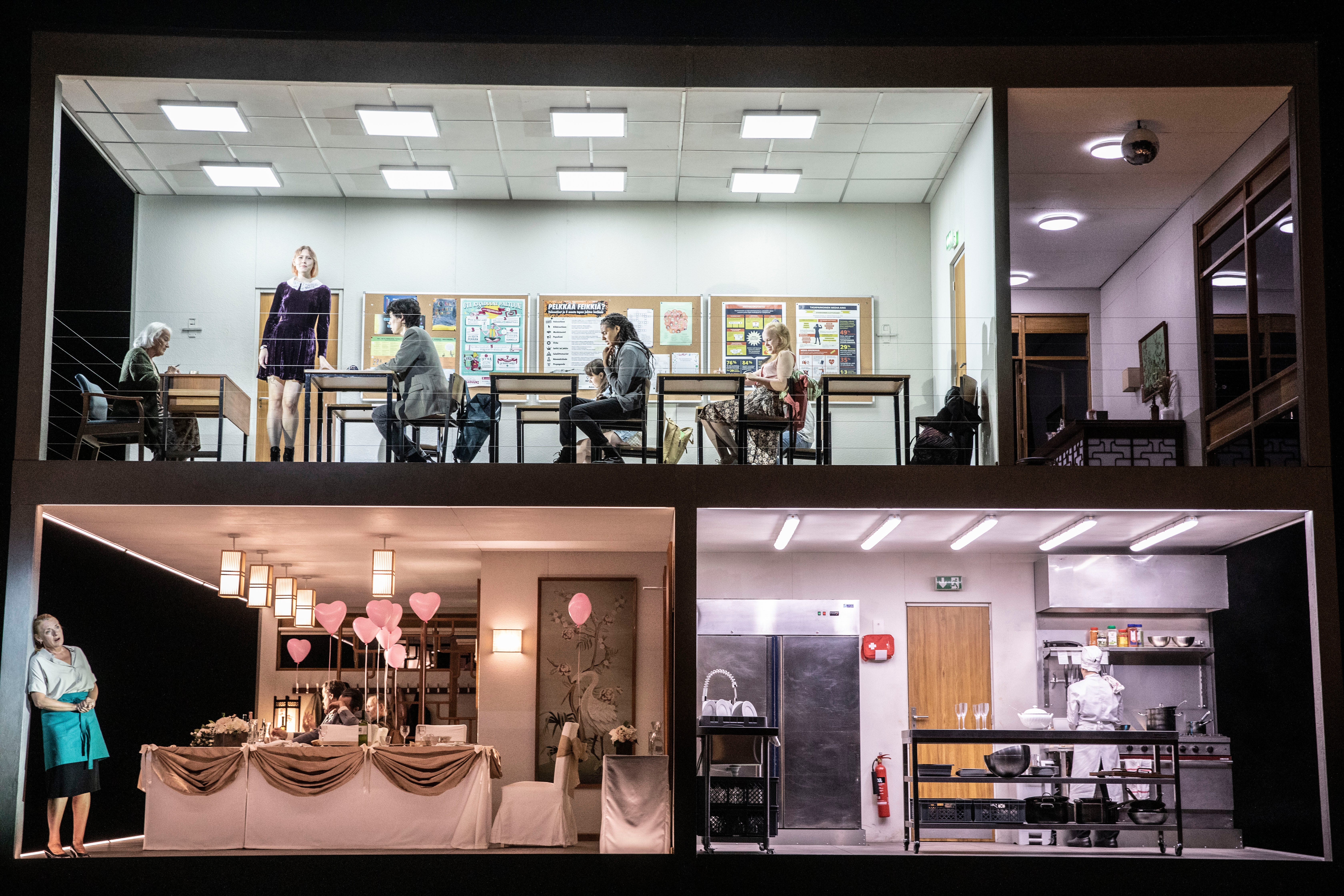
Metropolitan Opera House, Lincoln Center · Apr 6–29 (7 performances)
Once I saw the doll house-esque set design I couldn’t get it out of my head. A classroom, restaurant kitchen, and wedding reception fit together to create compressed visual tension. I’d like to think it reflects the way the late Kaija Saariaho's final opera forces you to hold multiple truths together in your head.
Innocence begins at a wedding reception in Helsinki where the groom’s older brother carried out a school shooting a decade earlier. When a last-minute replacement waitress shows up and recognizes the family, her daughter was one of the dead, the opera becomes a slow burn thriller about complicity and grief.
Saariaho wrote Innocence in nine languages mixing traditional opera singers with musical actors and folk vocalists. Joyce DiDonato sings the grieving mother, Susanna Mälkki conducts, and Simon Stone’s original staging makes the trip from Aix-en-Provence.
Go if: you want to experience the most important new opera of the decade.
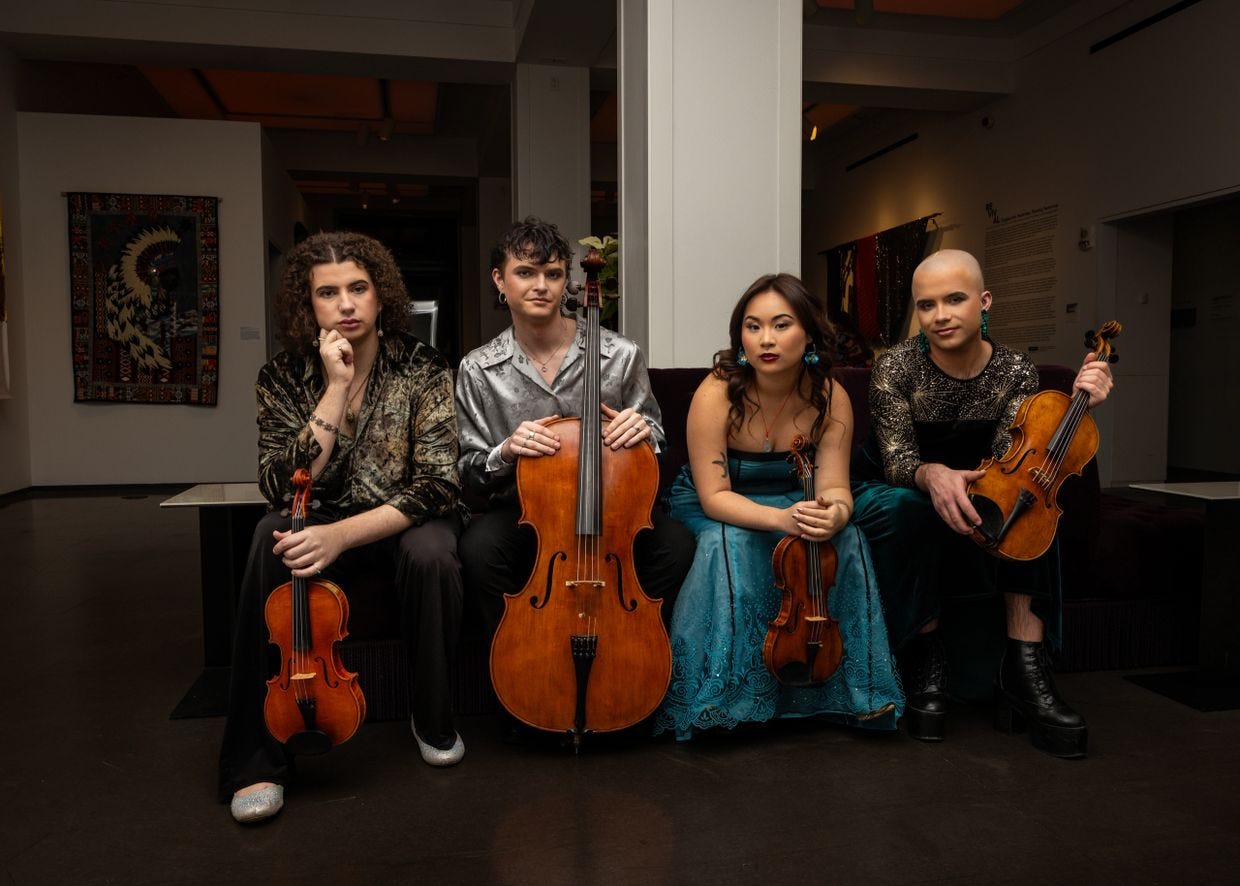
Kaufman Music Center, Upper West Side · Fri, Apr 10, 7:30pm
Sweeping Banff, Fischoff, and St. Paul in two years while programming four living composers in their finals, including a world premiere, is a remarkable feat. Atypical of other quartets that tend to gravitate to the familiarity of canonical works. When I saw they’re coming to NYC (twice this month!), I knew this had to be a top recommendation.
Pianist Amiri Harewood joins them, a Concert Artists Guild competition winner on his North American debut tour. The program is built around Gabriela Lena Frank’s Tres Homenajes, a piano quintet exploring Latin American camaraderie through Peruvian and Bolivian rhythms. It moves from an aggressive scherzo to an extended slow movement inspired by an island in Lake Titicaca. Poiesis performs Jerod Tate’s Pisachi, six sections drawing on Hopi and Pueblo music, and Brian Nabors’ String Quartet, which he says contains “heart and grit, capturing my love for lyricism, harmony and more thorny techniques.” Harewood pairs Shostakovich and Bach Preludes and Fugues. Don’t miss Poiesis’s other concert happening later in the month at Museum of Arts and Design.
Program:
Gabriela Lena Frank — Tres Homenajes, 1. Scherzo para Sipan
Shostakovich — Prelude and Fugues Op. 87, No. 7 in A Major
J.S. Bach — The Well-Tempered Clavier, Book 2: Prelude and Fugue No. 19 in A Major, BWV 888
Brian Nabors — String Quartet
Gabriela Lena Frank — Tres Homenajes, 2. Adagio para Amantani
Jerod Impichchaachaaha’ Tate — Pisachi
J.S. Bach — The Well-Tempered Clavier, Book 2: Prelude and Fugue No. 24 in B Minor, BWV 893
Shostakovich — Prelude and Fugues Op. 87, No. 6 in B Minor
Gabriela Lena Frank — Tres Homenajes, 3. T’inku
Go if: you want to hear the quartet that proved you can win everything without playing it safe.
Smaller forces, tightly curated programs.
Merkin Hall, Upper West Side · Sun, Apr 12, 3pm
The New York Philharmonic’s chamber music series at Merkin is one of the best deals in the city for a third of what you’d pay at David Geffen Hall. Dvořák’s Ninth Quartet is melancholic from start to finish, written in twelve days and dedicated to Brahms for getting his music published. Schumann’s Märchenerzählungen (Fairy Tales) for clarinet, viola, and piano came in his final weeks before entering an asylum—four miniatures whose stories he never explained. Brahms’s Second Trio has the piano playing in two while the strings play in three, cross-rhythms layered throughout.
Program:
Dvořák – String Quartet No. 9
R. Schumann – Märchenerzählungen (Fairy Tales)
Brahms – Piano Trio No. 2
Go if: you want to see the Philharmonic up close and personal.
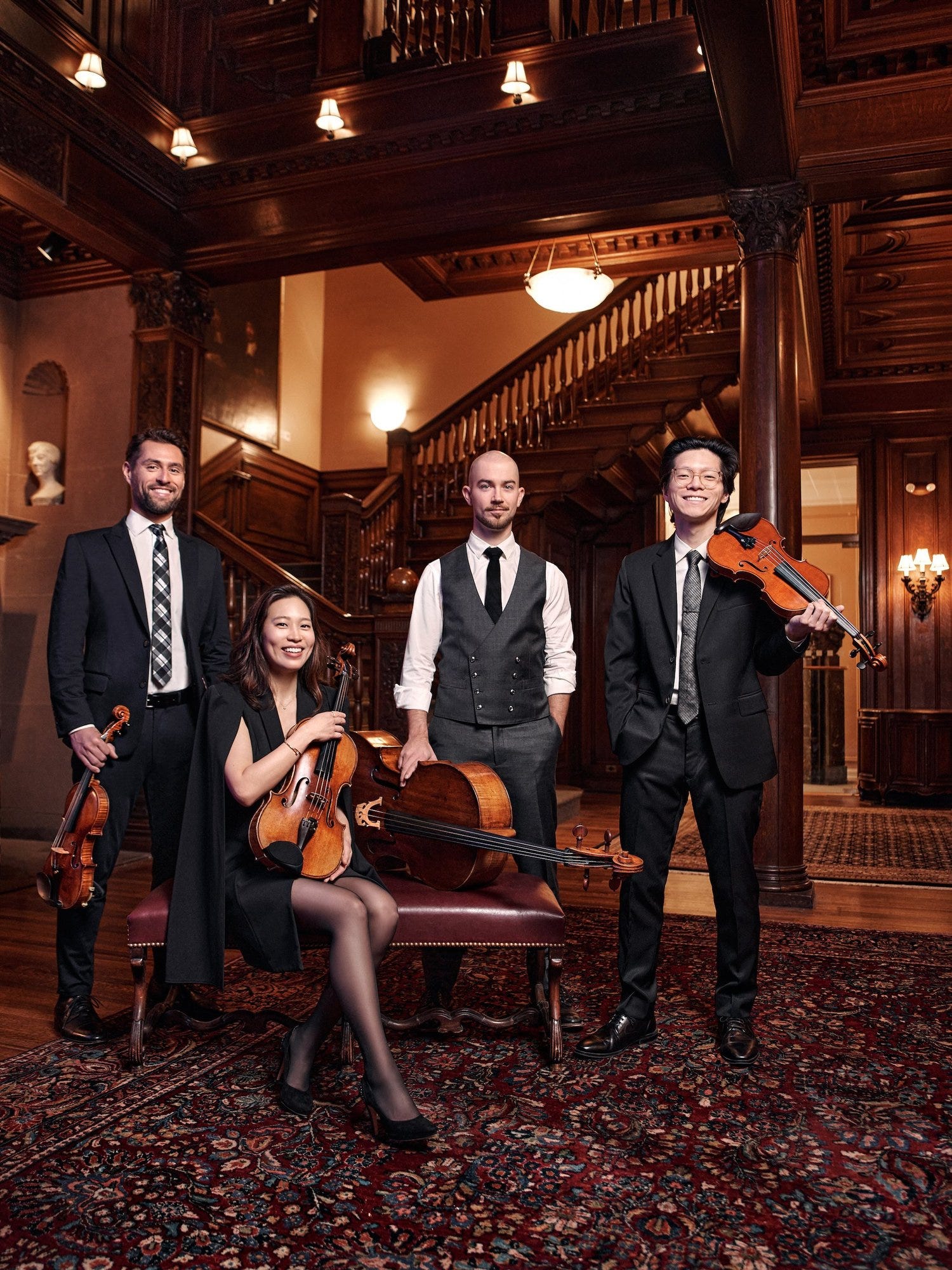
Town Hall, Midtown · Sun, Apr 19, 2pm
After seeing Dover’s masterful performance back in February at Carnegie, their return to NYC is an easy rec. This program at Town Hall opens with early Schubert, a young composer finding his voice in the quartet form. Then Grażyna Bacewicz’s Quartet No. 4, written in 1951 for the Underground Union of Musicians that kept music alive during the war in Poland. It won first prize at Liège and became a required piece for the Geneva quartet competition. The finale uses the oberek, a Polish leaping dance, and builds to what one writer called “a conclusion of symphonic proportions.”
After intermission, Mendelssohn’s Quartet No. 6 in F minor, Op. 80, which he wrote right after his sister Fanny died from a stroke in May 1847. He called it “Requiem for Fanny,” finished it by September, and died himself two months later at age 38, making this his last major work.
Program:
Schubert — Quartet No. 11 in E major, D. 353
Grazyna Bacewicz — Quartet No. 4
Mendelssohn — Quartet No. 6 in F minor, Op. 80
Go if: you want to hear one of the great quartets of our time.
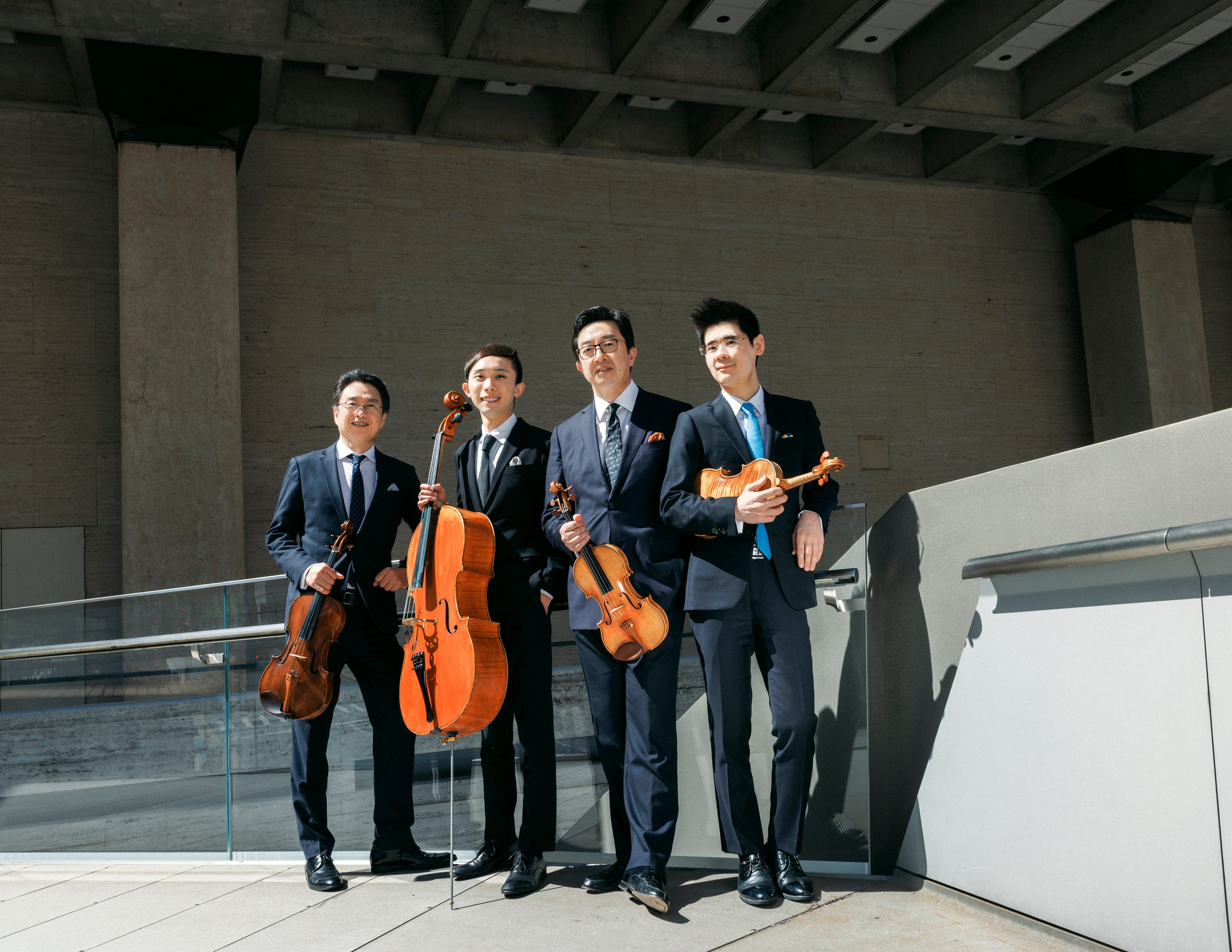
Alice Tully Hall, Lincoln Center · Sun, Apr 19, 5pm
Brothers Weigang and Honggang Li were born in 1960s Shanghai where they learned violin during a time when Western music and literature was outlawed and their family was under surveillance. As restrictions eased, they attended Shangai Conservatory of Music and formed a quartet with two classmates in 1983 when chamber music in China barely existed. They won second prize at a competition in England a year later, and have kept the group together ever since with several personnel changes over the year.
Their performance tackles Haydn's "Rider" Quartet from his London period, Tan Dun mixing Chinese poetry with Western forms, Gershwin's Lullaby written as a composition exercise at 21, Dvořák's "American" Quartet sketched while homesick in Iowa. The quartet has been playing these pieces for decades, but approach the music with a fresh perspective, listening to old recordings and finding new ways to improve.
Program:
Haydn — Quartet in G minor for Strings, Hob. III:74, No. 3, “The Rider”
Tan Dun — Feng Ya Song (String Quartet No. 1)
Gershwin — Lullaby for String Quartet
Dvořák — Quartet in F major for Strings, Op. 96, “American”
Go if: you want a quartet that’s actually lived the story they’re telling.
Tenri Cultural Institute, Greenwich Village · Sun, Apr 12, 6pm
Riverside Brass Quintet has an impressively rich sound, the kind where you hear the quintet first and individuals second. They play with control throughout the dynamic range without losing presence, which means they’ll fit their sound nicely into the intimate space of Tenri.
They start off with David Biedenbender’s Nautilus, a movement from his Sacred Geometry suite inspired by Gaudí’s Sagrada Família. The piece builds on a small phrase that develops into longer harmonic progressions, mimicking how a nautilus shell grows outward in a logarithmic spiral. Shanyse Strickland’s Colors pulls from jazz and disco. She calls her work “Classical-Pop,” mixing R&B and contemporary classical. Bass trombonist Declan Wilcox arranged Chick Corea’s Children’s Songs for brass and hornist Liana Hoffman arranged Amy Beach’s Pastorale from 1941. Dana Wilson’s Daylight at Midnight closes with his blend of minimalism and jazz. Reception after with light refreshments.
Program:
Alan Civil — Dance Suite (1990)
Chick Corea arr. Declan Wilcox — Children’s Songs (1984)
Shanyse Strickland — Colors (2023)
David Biedenbender — Nautilus from Sacred Geometry (2022)
Amy Beach arr. Liana Hoffman — ˆPastorale (1941)
Dana Wilson — Daylight at Midnight (2005)
Go if: you want to hear a top notch brass quartet explore contemporary works.
National Sawdust, Williamsburg · Sat, Apr 25, 7:30pm
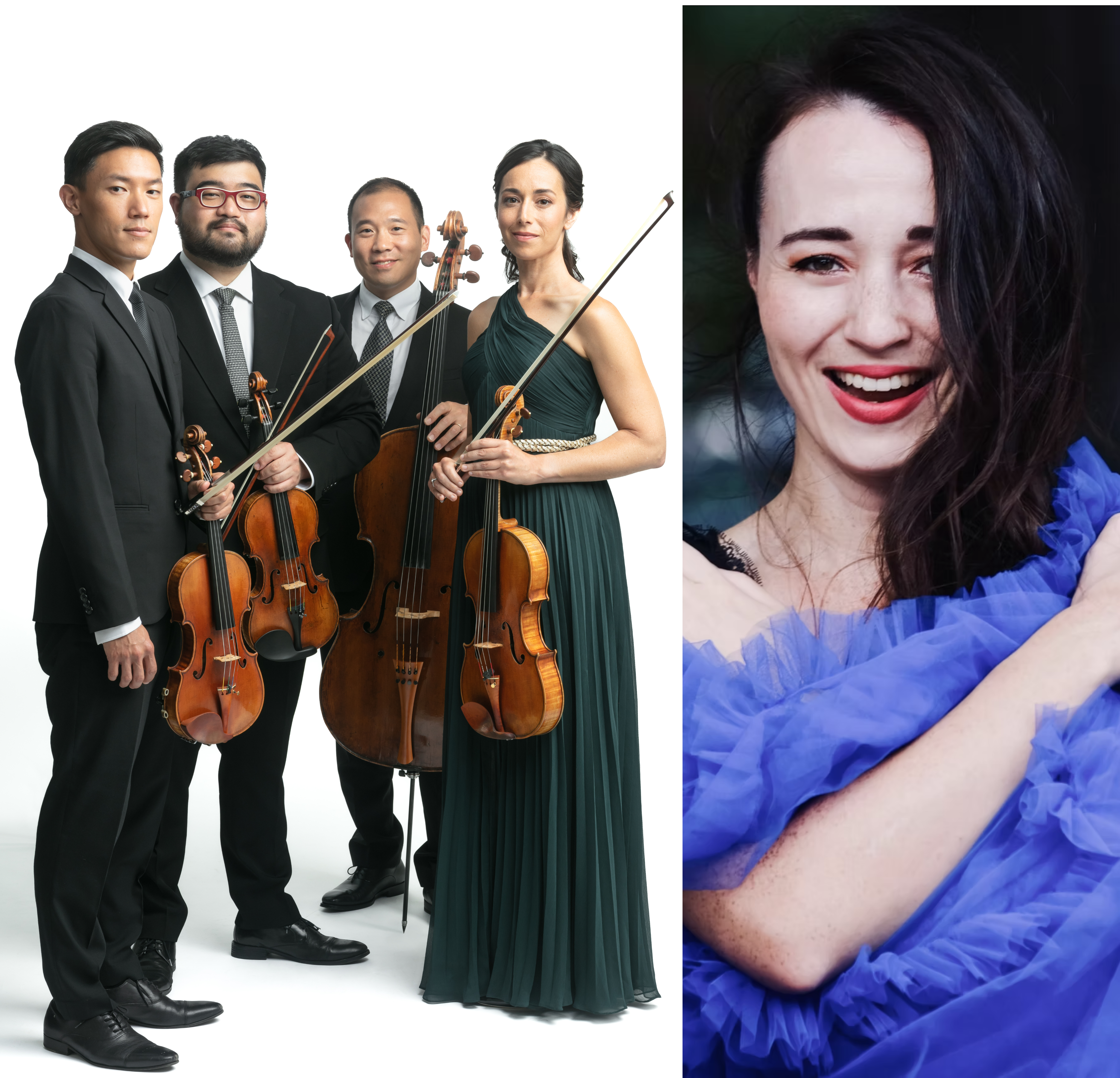
Anthony Cheung takes poems by Arthur Sze and Victoria Chang and builds a new piece out of them, for string quartet and mezzo-soprano. Both write about the natural world in their own unique way with Sze making you feel small inside it while Chang makes you feel like it's watching you. The Parker Quartet commissioned this piece, so by the time they play it at National Sawdust they'll have been living with it for over a year. They’re joined by Fleur Barron, a Singaporean-British mezzo with a warm voice that’ll help bring color and character to the poetry.
Go if: you’ve ever wondered what it feels like when a string quartet plays a poem.
Zankel Hall, Carnegie Hall, Midtown · Sat, Apr 25, 7:30pm
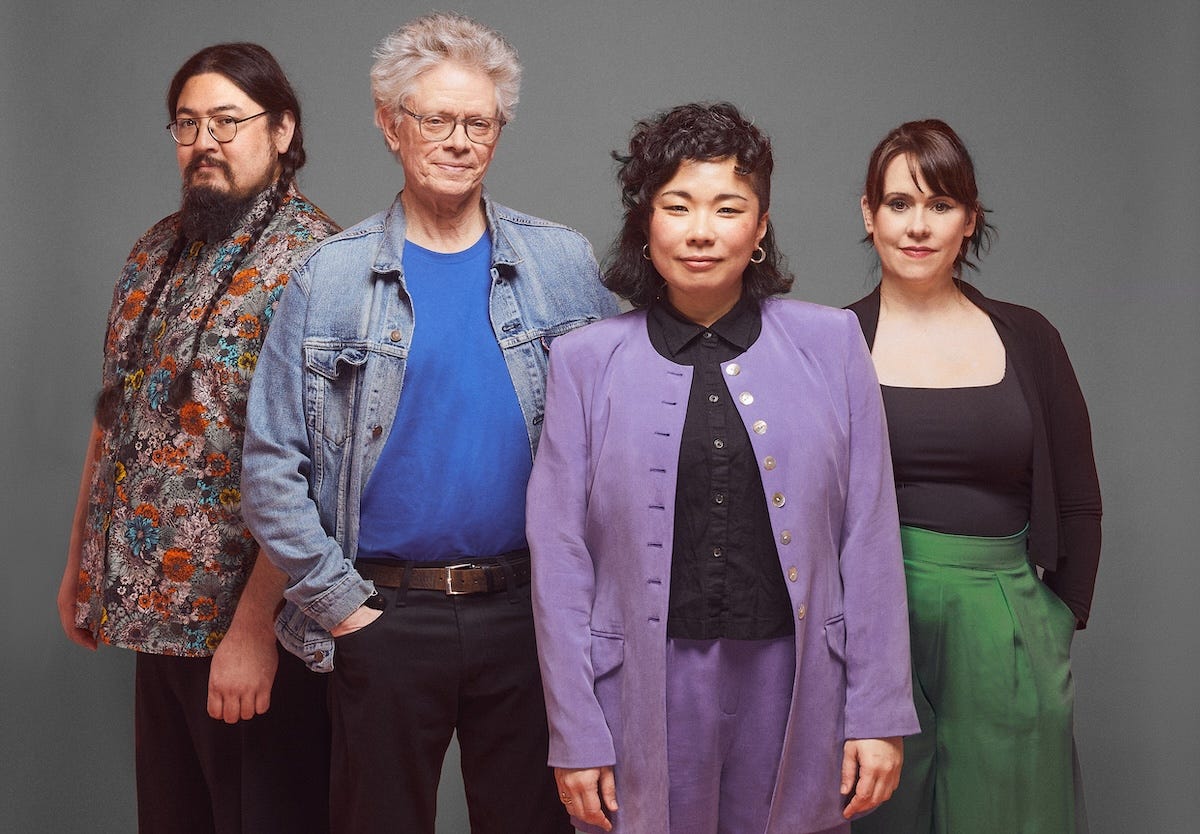
Kronos Quartet lives in a different world than the quartets who built their careers on Beethoven and Brahms cycles. They’ve commissioned over 1,000 new works since 1973, championing new voices and pushing the boundaries of what four string instruments can do. Their program Three Bones is a semi-staged triptych exploring Indigenous, Gullah-Geechee, and Chinese American histories as part of Carnegie’s United in Sound: America at 250 festival. Electric Apache violinist Laura Ortman opens, followed by Charlton Singleton’s Amelia’s Song featuring Grammy-winning percussionist Quentin E. Baxter, then pipa virtuoso Wu Man closes with new music by Dai Wei and personal histories of Chinese Americans who fought for civil rights in San Francisco. A big night of music that gets left out of American history.
Go if: you’re curious what Indigenous, Gullah-Geechee, and Chinese American histories sound like coming through one of the best string quartets.
Advent Lutheran Church, Upper West Side · Mon, Apr 27, 7:30pm · Free with registration
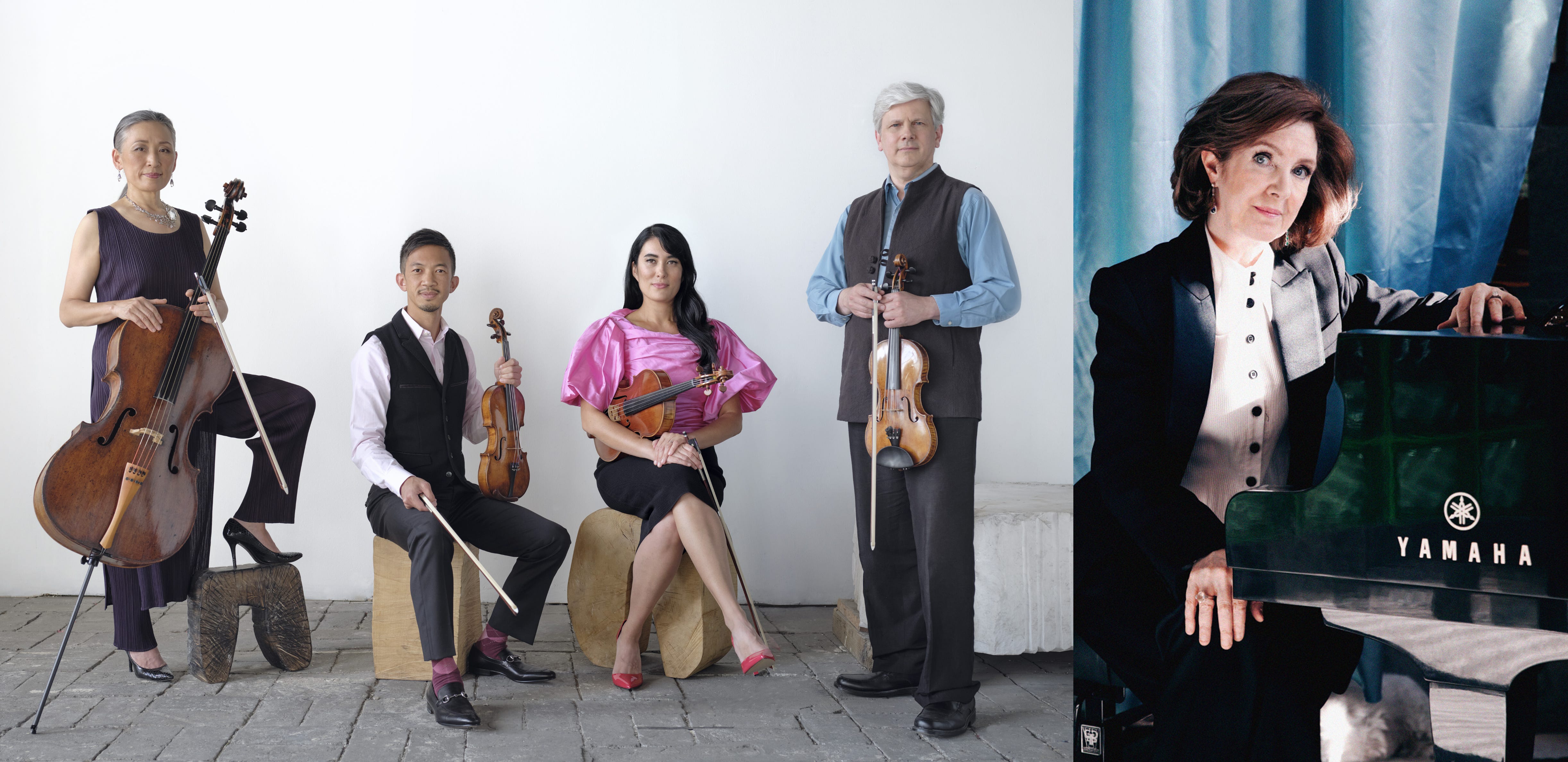
Violinist Nicholas Kitchen has spent years finding markings in Beethoven's manuscripts that never made it into the published scores. That level of score study is just how Borromeo operates. The quartet performs from full four-part scores rather than individual parts, so everyone is always reading the whole piece at once. Tonight they play Kitchen’s arrangements of Bach and Shostakovich preludes and fugues alongside Stravinsky, Caroline Shaw, and Vijay Iyer, with legendary pianist Anne-Marie McDermott joining for Schumann’s Piano Quintet. It’s free with registration, which means the seats go fast, so get there early.
Program:
J.S. Bach, arr. N. Kitchen — Prelude and Fugue in C-sharp minor, BWV 849
Shostakovich, arr. N. Kitchen — Prelude and Fugue in B-flat Major, Op. 87
Stravinsky — Three Pieces
Caroline Shaw — Entr’acte
Vijay Iyer — Dig the Say
Schumann — Piano Quintet, Op. 44
Go if: you’ve never heard a quartet that reads music this closely.
Leonard Nimoy Thalia, Symphony Space, Upper West Side · Tue, Apr 28, 7:30pm
Laura Schwendinger writes operas about women whose art was shaped by violence. Her previous opera Artemisia was about Baroque painter Artemisia Gentileschi, who went on to make some of the most powerful work of her era. Now she turns to Margaret Fuller, the first female foreign correspondent for the New York Tribune, who covered the Italian revolution from the front lines in 1847, fell in love with a young revolutionary, had a child, and died with both of them in a shipwreck off Fire Island—her manuscript history of the revolution lost at sea. Marnie Breckenridge sings the title role, Chris Alden directs, and conductor Eiki Isomura leads the chamber ensemble.
Go if: a journalist who died with her revolution unfinished seems like exactly the right subject for an opera.
Morgan Library & Museum, Gilder Lehrman Hall, Murray Hill · Wed, Apr 29, 7pm
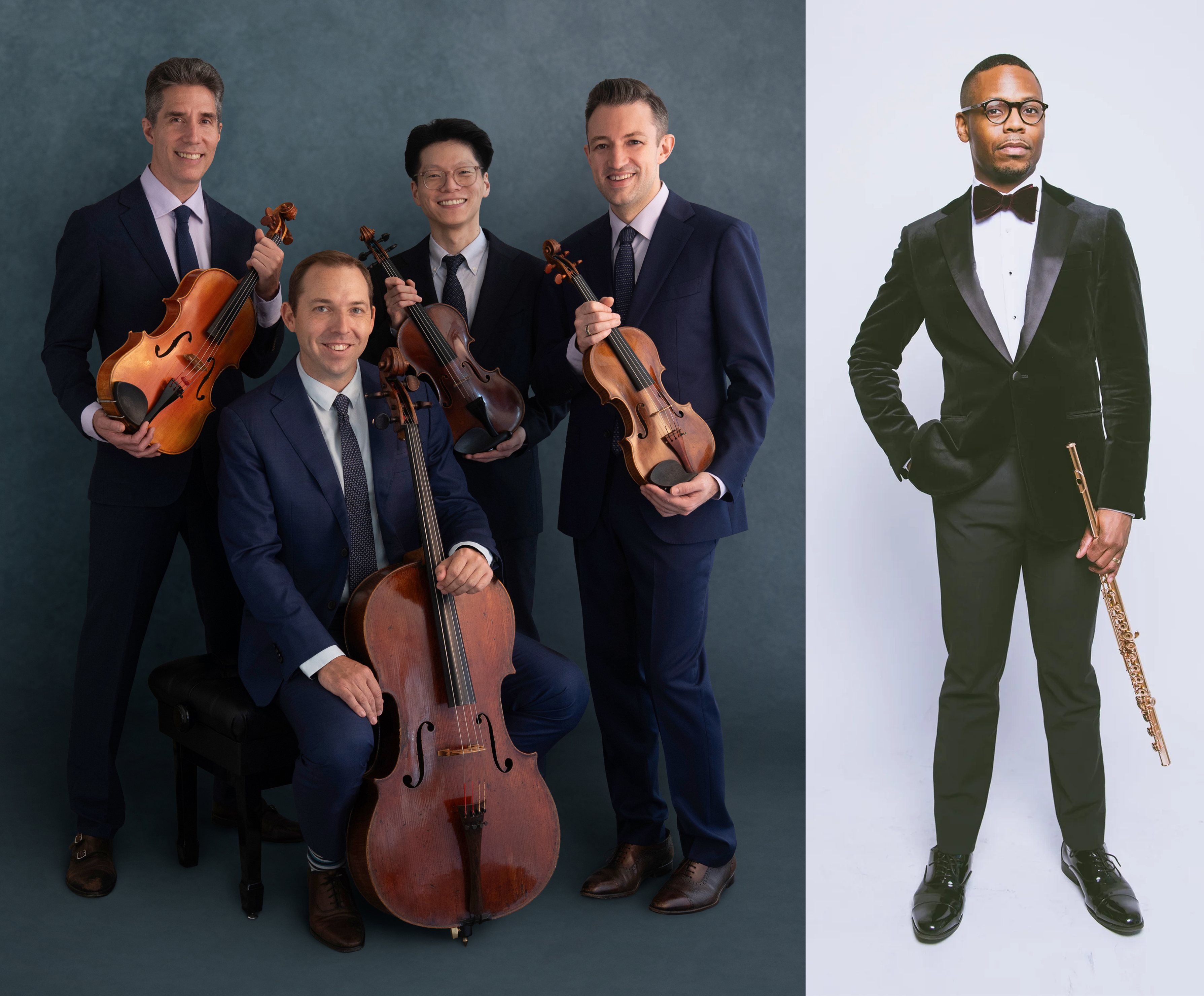
The Escher String Quartet celebrates the Morgan’s Mozart exhibition with a program of quartets from his mature period — written after Mozart quit his court job in Salzburg, moved to Vienna, and started pushing the music somewhere his audiences didn't always follow. The quartet’s name comes from M.C. Escher’s method of combining individual parts into a whole—four distinct voices that come together without losing the unique character of each one. Flutist Brandon Patrick George, a Grammy winner with Imani Winds, joins for Mozart’s Flute Quartet in D Major. Get there early to catch the exhibition before the concert.
All Mozart program:
String Quartet in E-flat Major, K. 428
Flute Quartet No. 1 in D Major, K. 285
String Quartet in B-flat Major, K. 458 “The Hunt”
Go if: you want to see and hear Mozart’s manuscripts.
Weill Recital Hall, Carnegie Hall, Midtown · Thu, Apr 30, 7:30pm
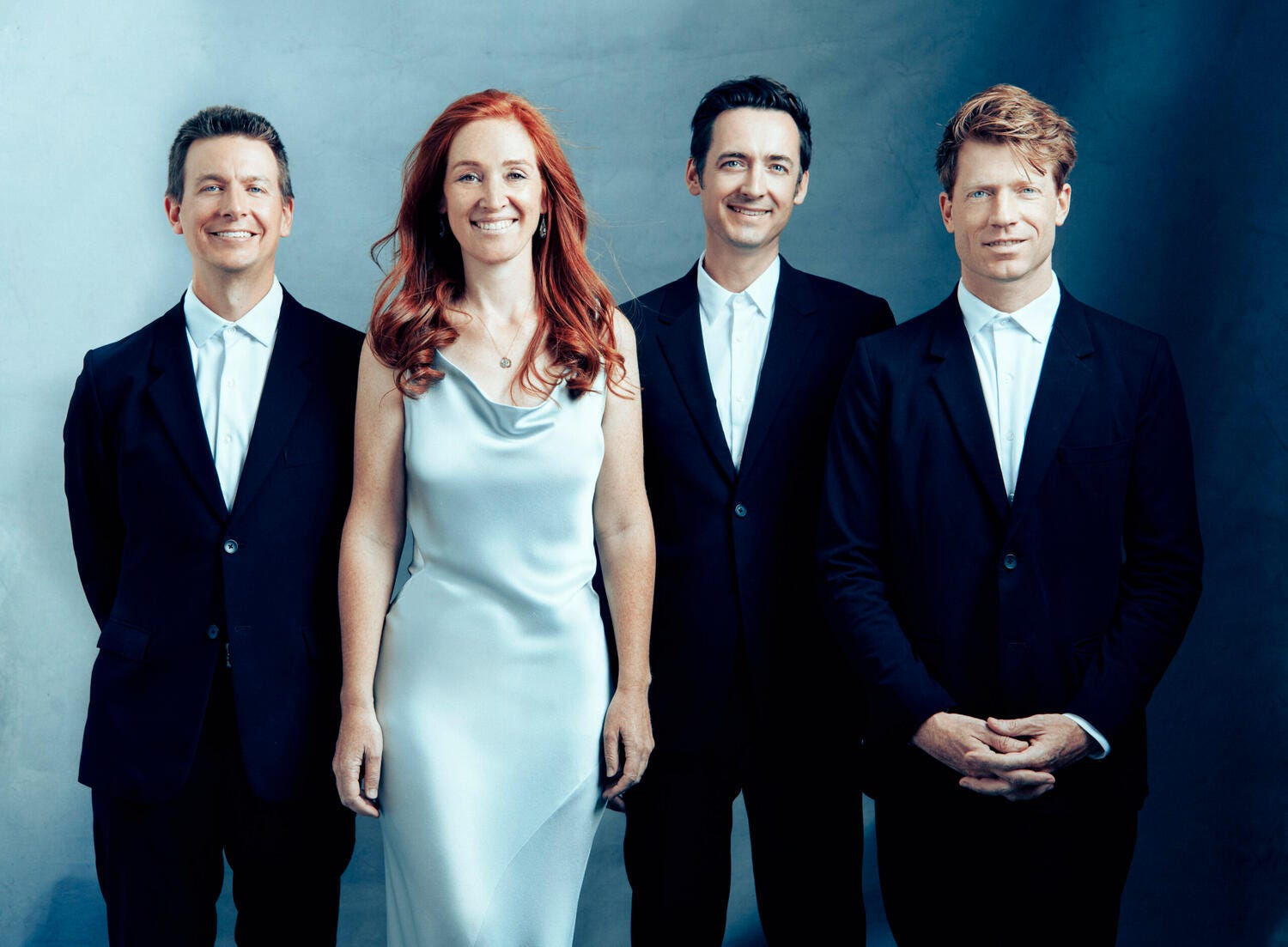
The Calder Quartet plays contemporary music with a conviction that most quartets reserve for the canon. Their Carnegie Hall debut is an all-American program that includes Philip Glass’s minimalist “Company” quartet, Ben Johnston’s microtonal “Amazing Grace” (tuned to just intonation, which makes the hymn sound more like itself than you've ever heard it), Samuel Barber’s String Quartet with the Adagio everyone’s heard in a movie, Andrew Norman’s Sabina arranged for quartet, and Florence Price’s Second Quartet to close. As the first Black woman to have a symphony performed by a major American orchestra, her chamber music nearly didn’t survive, found in an abandoned house in 2009, making you wonder how close we’ve come to losing such history. After the concert, join Calder for a drink in the Jacobs Room.
Program:
Glass — String Quartet No. 2, “Company”
Johnston — String Quartet No. 4, “Amazing Grace”
Barber — String Quartet
Andrew Norman — Sabina (arr. for string quartet)
Price — String Quartet No. 2
Go if: you want American music played like it matters as much as the European canon.
Cross-genre work, unusual spaces, and concerts that upend expectations.
One Rivington, Lower East Side · Mon, Apr 6, 7-8pm · Pay-what-you-wish
Matthew Evan Taylor writes music where the structure comes from breath. His AfroPneumaism practice asks musicians to be silent on the inhale and make sound on the exhale, so the ensemble moves at the pace of breathing instead of strict time. Tonight he premieres Breath-songs & Lullabies, a 30 minute piece celebrating the birth of his son that includes a lullaby and asks the audience to breathe with the performers. Taylor plays alto sax, clarinet, and flutes through a loop station, building layers of wind sound with tenor saxophonist James Brandon Lewis and percussionist Lesley Mok. The evening opens with an improvised set before the premiere. This happens in Metropolis Ensemble’s small incubator space on Rivington Street, fitting for a piece where breathing is part of the music.
Go if: you want to hear how joy and grief can be part of the same breath.
Tishman Auditorium, The New School · Wed, Apr 8, 7:30pm
If you were to take a piece typically scored for two or four pianos and expand it across mallet instruments, woodwinds, strings, and a concert grand, this is the result of that experiment. In Simeon ten Holt’s minimalist masterpiece Canto Ostinato, performers take the wheel, deciding how long sections last, when to move on, and which instruments play what. Most performances run about 90 minutes while some stretch past four hours. Metropolis Ensemble, Erik Hall, and Sandbox Percussion built their own version of it, premiered it at Brooklyn Botanic Garden for over 3,000 people at sunrise and sunset, and released a studio recording this month.
Go if: you want to know what happens when minimalism becomes a group experiment.
Roulette, Boerum Hill · Wed, Apr 8, 8pm
Ninety minutes of Morton Feldman. You may wonder what does that even sound like? Or who is Morton Feldman? He was a downtown New York composer, one of the most significant of the 20th century, known for extremely long and quiet pieces that mess with your sense of time and memory.
David Harrington who premiered the piece with Kronos Quartet describes it feeling like “warm, slow, beautiful drops of water over a long period of time.” Steve Reich called it “the most beautiful work I know.” Elvis Costello said it’s the best music for 4 a.m.
Piano and String Quartet was one of Feldman’s final pieces before he died in 1987, and it barely rises above a a sotto voce for the entire 90 minutes. Tiny harmonic shifts, arpeggios on the piano, brief chords from the quartet. When you listen to it, the complexity is all in your head. Pianist Vicky Chow from Bang on a Can teams up with the Mivos Quartet for contemporary music that requires next level stamina.
Go if: you want to get lost in minimalist sound world.
LeFrak Concert Hall, Queens College, Flushing · Fri, Apr 17, 8pm
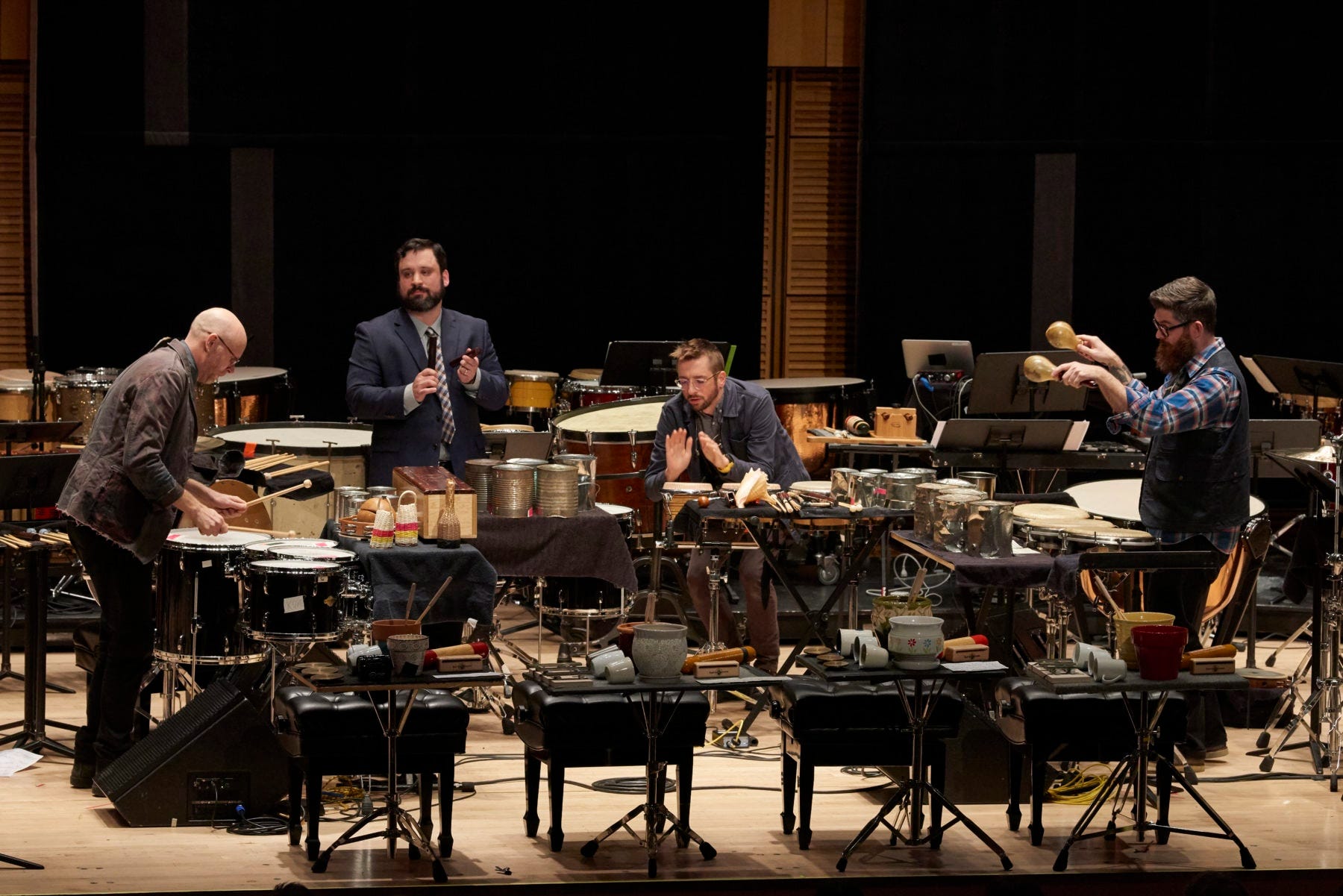
One five-octave marimba, four tables with small objects, a few drums, flower pots, hand-held metal pipes, household items, and a friction drum called the lion’s roar. That’s the setup for Sō Percussion to blow away everyone’s expectations of percussion performance—something they’ve been doing for the past 25 years.
Their program features works by Caroline Shaw, John Cage, and Vijay Iyer, pulling from deep knowledge of rhythms from West Africa, Trinidad, India, and North America. When you watch them play a marimba with fingertips and thimbles or turn flower pots into instruments, you'll see why they achieve a level of synchronicity most chamber groups never reach.
Go if: you want a night of top tier percussion works.
YIVO Institute, Chelsea · Thu, Apr 23, 7:30pm
Two composers, two grandmothers, two ways of preserving memories. Alex Weiser recorded his grandmother Irene talking about 1930s Coney Island before she died in 2021, transcribed her words verbatim and set them to music. Eric Chasalow, who has spent his career combining acoustic instruments with electronic sound and archival materials, found stories his grandmother Muriel wrote in her eighties and turn it into music that ranges from Baroque to disco. Both composers make it so that you can hear the person as if they’re right there, their voice, inflection, storytelling. The adventurous Talea Ensemble helps bring these memories to life with mezzo-sopranos Sharon Harms and Annie Rosen.
Go if: you want to hear what happens when composers treat their grandmothers’ words as primary source material.
Miller Theatre, Morningside Heights · Thu, Apr 23, 7:30pm
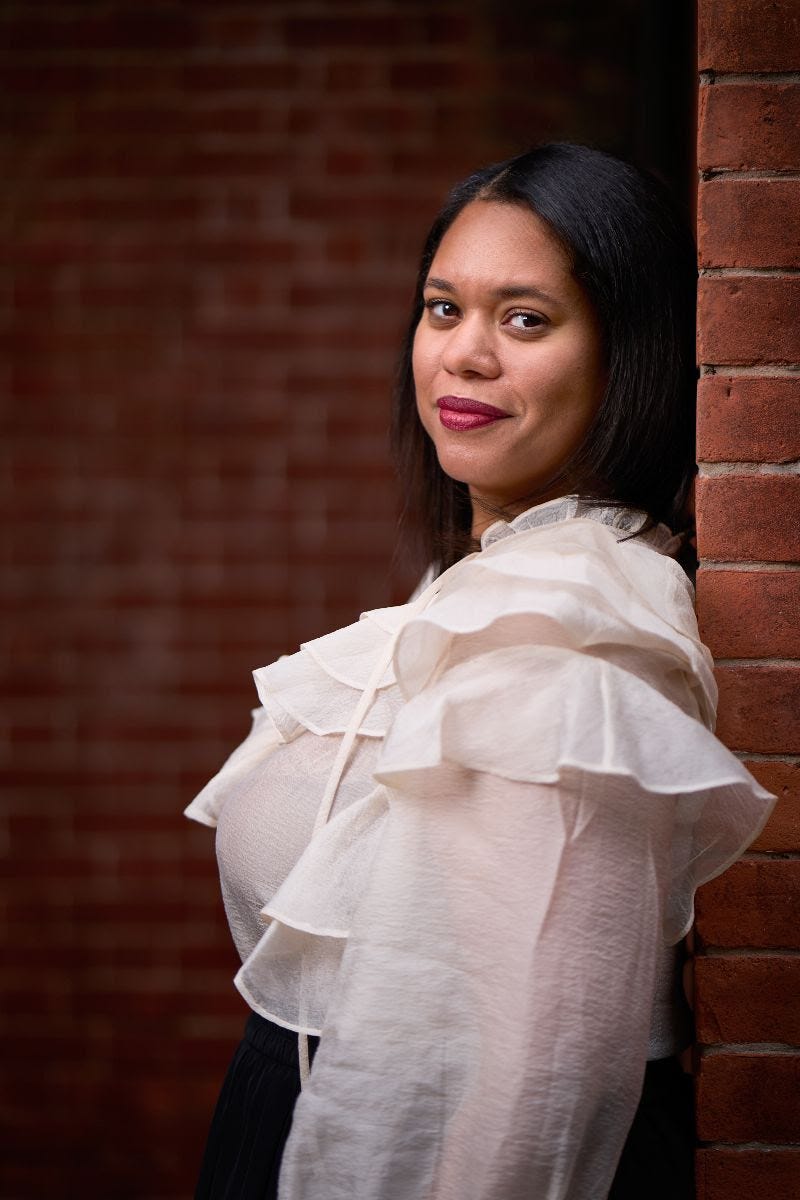
Hannah Kendall uses combs to pluck strings, dreadlock cuffs to prepare violins, and music boxes amplified by snare drums. She’s a British composer who studied at Columbia with Georg Friedrich Haas and George E. Lewis. She describes her work as trying to “creolize” sound within orchestral settings, bringing Afro-diasporic traditions alongside European classical forms. When you listen to her pieces the dynamics are polarizing and the details are intricate enough that you catch new things on repeat listens. The International Contemporary Ensemble performs several recent pieces, including the U.S. premiere of building a burning house.
Program:
building a burning house (2026) U.S. Premiere co-commissioned by Crash Ensemble, Barbican Centre, Ensemble Musikfabrik, and Miller Theatre at Columbia University
when flesh is pressed against the dark (2024)
Even sweetness can scratch the throat (2023)
Tuxedo: Diving Bell 2. (2021)
Go if: you want to hear a composer building her own vocabulary from scratch.
Baruch Performing Arts Center, Kips Bay · Thu–Sat, Apr 23–25, 7pm
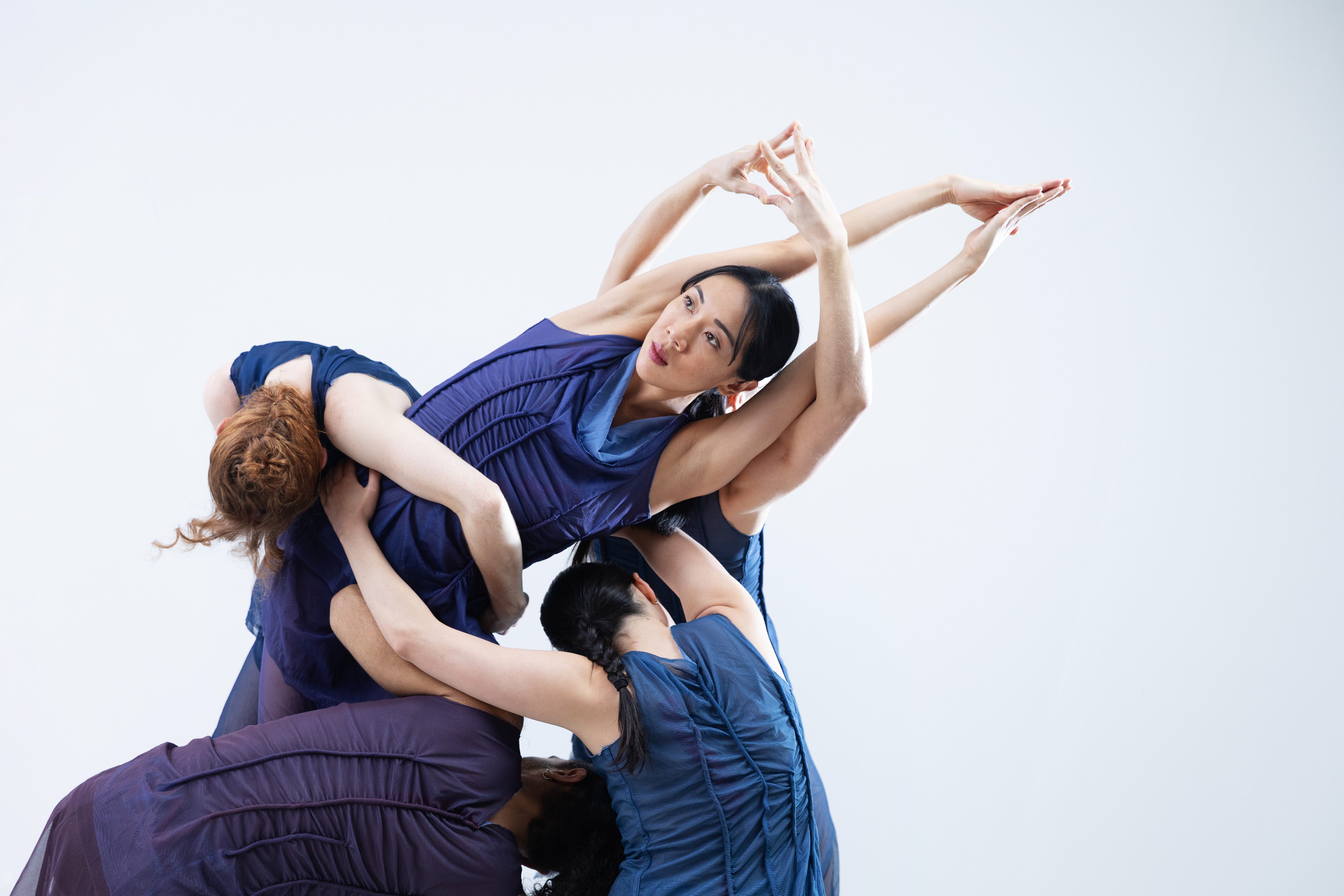
Sometimes the feeling from dance and music, the abstraction of an overwhelming topic like climate change, can influence your perspective in ways that facts and data can’t. Rising attempts to do that as a collaboration between Pigeonwing Dance and the Neave Trio about our connection to the ocean and what happens when sea levels rise. The score includes recorded text from oceanographer Curtis Ebbesmeyer and naturalist Craig Foster from the documentary My Octopus Teacher. Composer Robert Sirota wrote the music, Gabrielle Lamb choreographed the dances, and they spent three years developing it with both groups to shape the final work.
Go if: you want to see whether dance and chamber music can say something about climate that words can’t.
The DiMenna Center for Classical Music, Midtown · Sat, Apr 25, 8pm
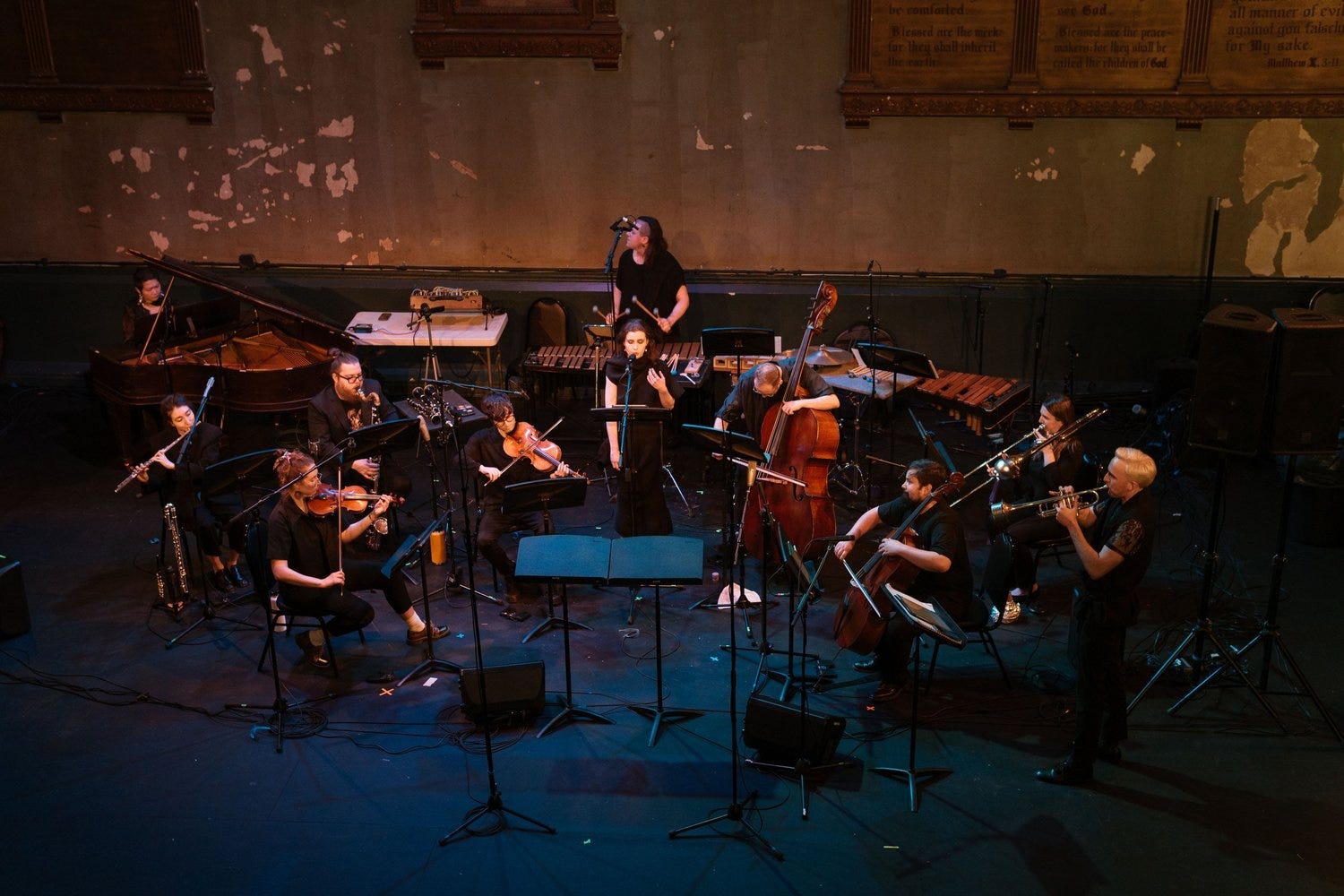
The adventurous BlackBox Ensemble designed a program around the idea that instruments can become extensions of speech. In Andile Khumalo’s Shades of Words, a narrator’s reading of poetry blends with the ensemble as they reflect the rhythms of language. Elliott Carter’s A Mirror on Which to Dwell sets Elizabeth Bishop poems for soprano and chamber orchestra, building worlds from her precise, photographic language that often carries a deeper meaning.
Rising composer Paul Novak premiers when i was nine and a diagnosis, both exploring memory and psychosomatic illness. Unsuk Chin’s Akrostichon-Wortspiel closes the night with seven scenes from The Endless Story and Alice through the Looking Glass. Consonants and vowels get scrambled, words are read backwards, and the soprano navigates microtonal landscapes through seven emotional states from bright to grotesque.
Program:
Andile Khumalo, Shades of Words (2011)
Elliott Carter, A Mirror On Which to Dwell (1975)
Paul Novak, when i was nine (2025)
Paul Novak, a diagnosis (2024/25)
Unsuk Chin, Akrostichon-Wortspiel (1991, rev. 1993)
Go if: you want to hear sound worlds built by some of the most compelling contemporary composers.
Opera classics, new productions, intimate stagings, and anything that tells a story through music and bodies in space.
Manhattan School of Music · Thu–Sat, Apr 16–18, 7:30pm; Sun, Apr 19, 2pm
Nico Muhly and playwright Stephen Karam wrote an opera about the Fundamentalist Church of Jesus Christ of Latter-Day Saints, the polygamist sect that split from mainstream Mormonism in the early 1900s and made headlines after a 2008 Texas ranch raid. Dark Sisters follows one woman trying to escape, but the real story is the complicated dance between all the sister wives and the single patriarch who controls everything.
Muhly wrote music for each wife based on where she is psychologically. The believer, the grief-stricken one, the teenager whose hymns develop into something harsher. Manhattan School of Music’s Opera Theatre stages it with conductor Rakefet Hak and director Janine Morita Colletti.
Go if: you want to hear about polygamy from the sister wives’ side.
You’re probably looking for more than just another season brochure. That’s what ODEA is for. We cover the concerts that don’t always get the glossy previews: string quartets in crypts, operas in downtown theaters, new music in old churches. The ones you usually hear about a week too late.
If that sounds like your thing, subscribe, share with a friend, or check out something unexpected. Have a concert to share? Reach out at odea@substack.com.
Comments
Nothing yet. Say the first thing.
Sign in to join the conversation.