
Thank you for reading Observing Japan. Japan Daily Briefing is a feature for paid subscribers. My goal is to publish this briefing every weekday and once over the weekend. Today’s edition is available to all readers.
If you are looking for timely, forward-looking analysis of the stories in Japans’s politics and policymaking that move markets, I have launched a service through my business, Japan Foresight LLC. For 2026, I am preparing a new pricing tier for public institutions. For more information about Japan Foresight’s services or for information on how to sign up for a trial or schedule a briefing, please visit our website or reach out to me.
The ruling parties avoided an additional extension of the legislative session when the upper house passed their joint bill to establish an auxiliary capital before the session was scheduled to close on 25 July. The bill’s passage came only after negotiations with opposition parties to permit a vote, highlighting the friction that characterized Prime Minister Takaichi Sanae’s first regular session as prime minister.
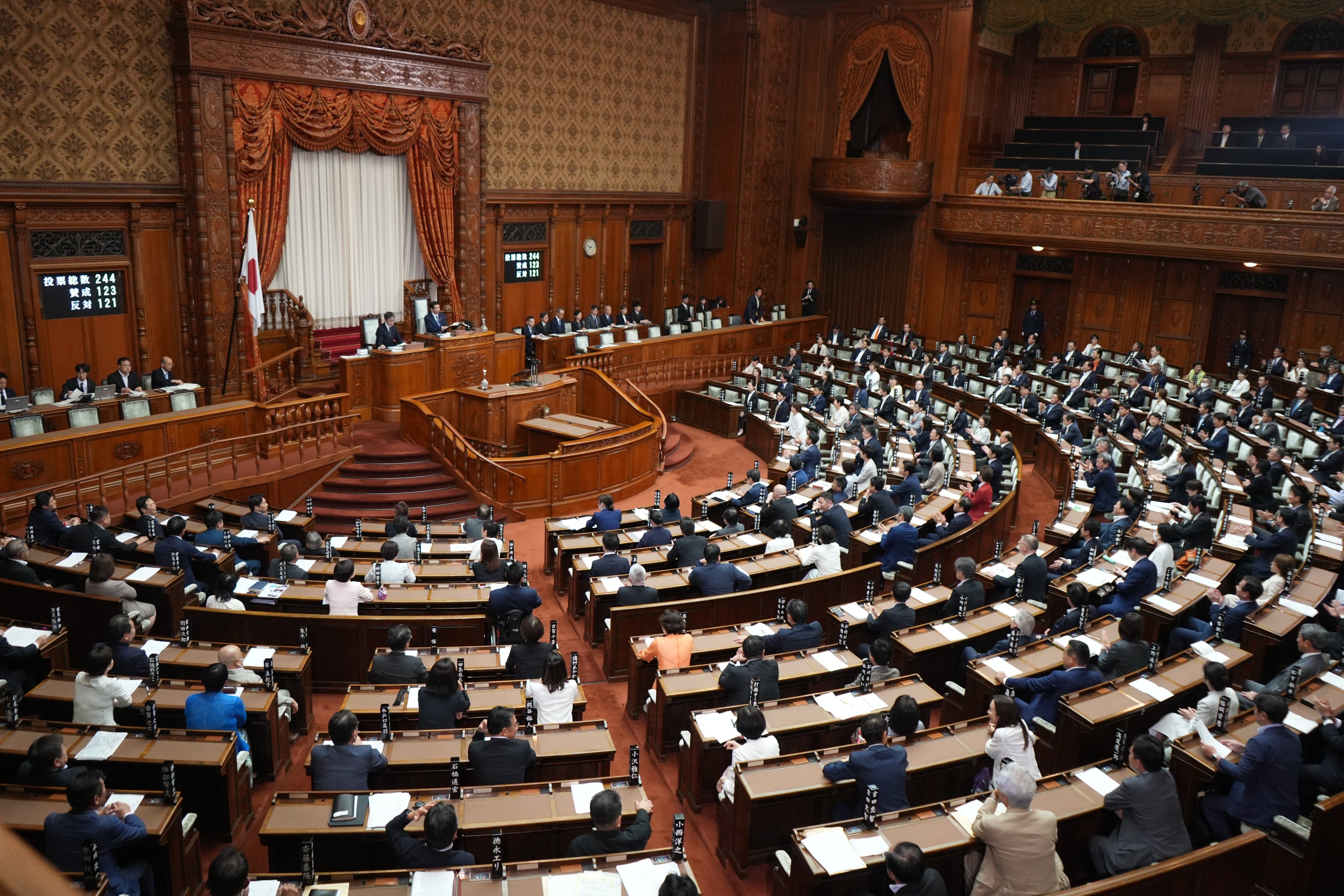
The spring Diet session effectively closed late Friday, 24 July when the House of Councillors passed the joint Liberal Democratic Party (LDP)-Ishin no Kai bill establishing a process for designating an auxiliary capital by a 123-121 margin. The bill passed only after Ishin no Kai accepted opposition demands that would prevent Ishin no Kai from holding a referendum on reorganizing Osaka’s government the same day as next year’s unified local elections. There was a risk that the ruling parties would have to extend the legislative session again if the bill could not be brought for a vote Friday. In the end, the ruling parties cleared the upper house with the help of Team Mirai and several independents, avoiding a second vote in the lower house. All sixty-four government bills – which does not include the auxiliary capital bill – passed this session, the first ordinary session in which the government passed all of its bill since 2022.
The extended negotiations between the ruling and opposition parties meant that the lower house budget committee could not hold the hearing with Prime Minister Takaichi Sanae that had been scheduled for Friday. That hearing will be held on Monday, 27 July as a recess hearing. Before the session ended the prime minister submitted a statement denying all allegations related to the creation and dissemination of defamatory videos in the LDP leadership election and general election, as well as the market of the “SANAE TOKEN” memecoin; it remains to be seen whether this will be the last word on these issues.
The end of the session has led to criticism from opposition parties about Takaichi’s heavy-handed approach to the Diet, noting, for example, that she attended only thirty hours of intensive discussions in the lower and upper house budget committees with Ishiba Shigeru’s ninety hours in 2025 and Kishida Fumio’s nearly seventy-four hours of participation in 2024. Even some LDP lawmakers have criticized the government’s preference for overpowering the opposition and pushing legislation forward without responding to opposition parties’ demands, despite needing their assent in the upper house. LDP lawmakers have also suggested that the prime minister’s handling of the Diet is the cause of her declining approval ratings. Democratic Party for the People (DPFP) leader Tamaki Yūichirō extended his condemnation to Ishin no Kai after Ishin no Kai leader Yoshimura Hirofumi suggested that the party would push for a referendum next spring notwithstanding the legislative compromise to secure the bill’s passage.
Professor Tamura Shigeru identifies some of the flaws with the rushed process of passing the auxiliary capital bill.
The upper house’s rules committee decided on Thursday that the chamber will henceforth be known in English as the Senate and its members as senators instead of the House of Councillors.
After Takaichi posted on social media that she regularly gets fewer than three hours of sleep, LDP policy chief Kobayashi Takayuki said that he met with the prime minister and reported that she is in good health – so he added that he asked her to sleep. Meanwhile, Takaichi’s remark has prompted examination of the sleeping habits of other world leaders past and present, including Takaichi’s idol Margaret Thatcher.
Akazawa Ryōsei, minister of economy, trade, and industry and chief trade negotiator with the US, characterized the newly announced US Section 301 tariffs as “regrettable” but said that the bilateral agreement not to raise US tariffs on Japan above 15% remains intact, though some tariff lines currently below the 301 level of 12.5% could be raised.
Japan’s new National Intelligence Bureau (NIB) will be officially launched on 31 July, with Hara Kazuya, currently the Director of Cabinet Intelligence, taking over as the first chief. There is some concern in other parts of the government that by naming Hara, a former National Police Agency (NPA) official, as the first head of the bureau it will establish a precedent that the role will be monopolized by NPA officials.
Defense Minister Koizumi Shinjirō denied a report that Self-Defense Forces (SDF) intelligence units were inappropriately collecting information about private citizens’ political views when conducting surveys of experts. Koizumi, meanwhile, is still facing scrutiny for his remarks in an interview with right-wing commentator Sakurai Yoshiko about the necessity of a debate about nuclear weapons.
Asahi digs deeper into the prime minister’s falling approval ratings.
The Takaichi government might be serious about trying to push the GPIF to rebalance its portfolio, but the obstacles are significant.
Nikkei discusses a trilemma between growth, redistribution, and fiscal rectitude.
The social influence of the annual economy white paper has declined as the influence of incumbent governments over its substance has grown.
A Nikkei-Japan Center for Economic Research survey of experts finds widespread skepticism of the Takaichi government’s growth strategy.
Why was Asō Tarō so determined to pass a revision of the Imperial Household law this session?
No posts
Comments
Nothing yet. Say the first thing.
Sign in to join the conversation.