
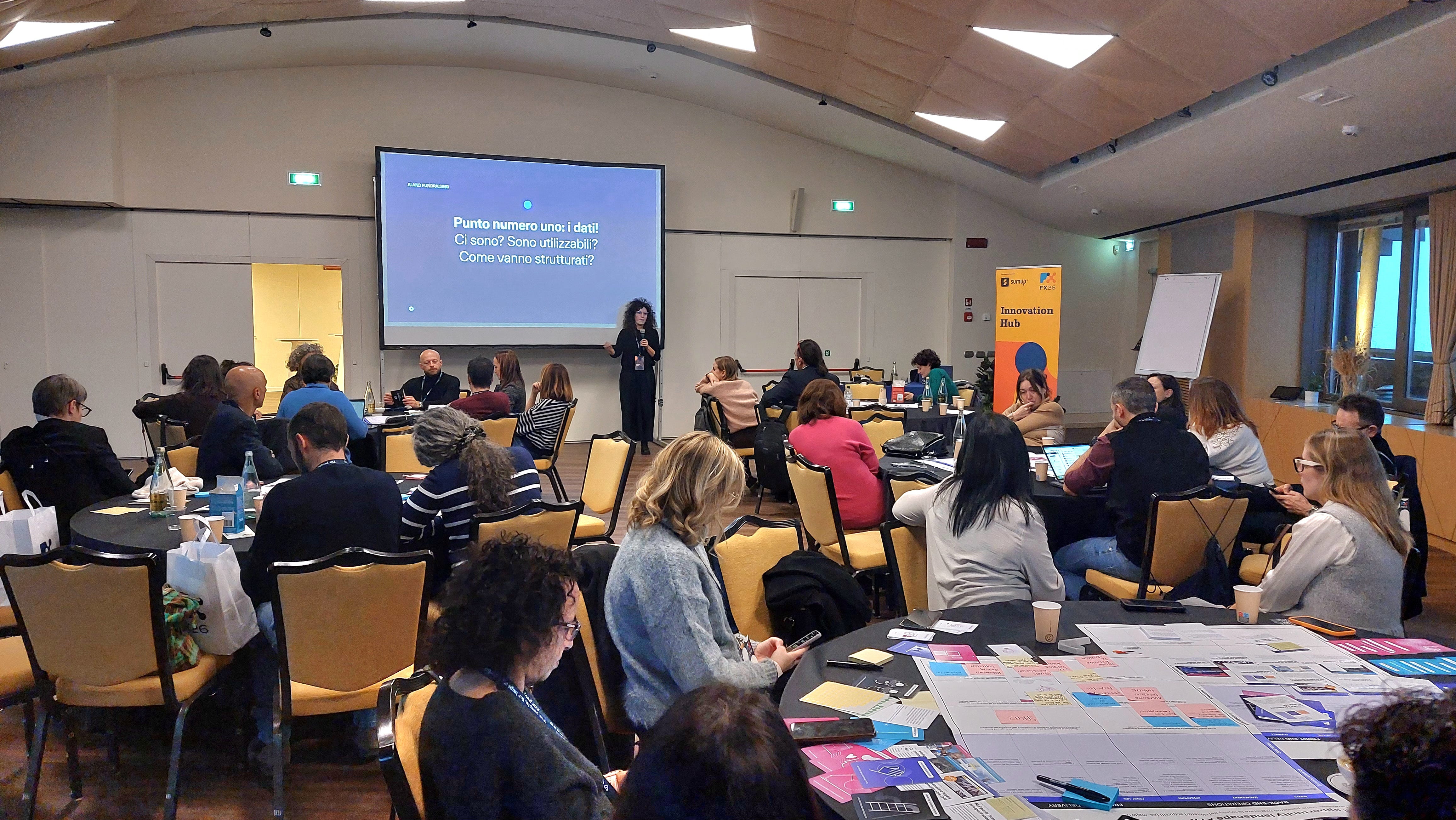
Last month we were at Fundraising Experience 2026 in Bologna, running an AI & Fundraising bootcamp — a hands-on session where participants mapped their fundraising processes and explored where AI can actually make a difference.
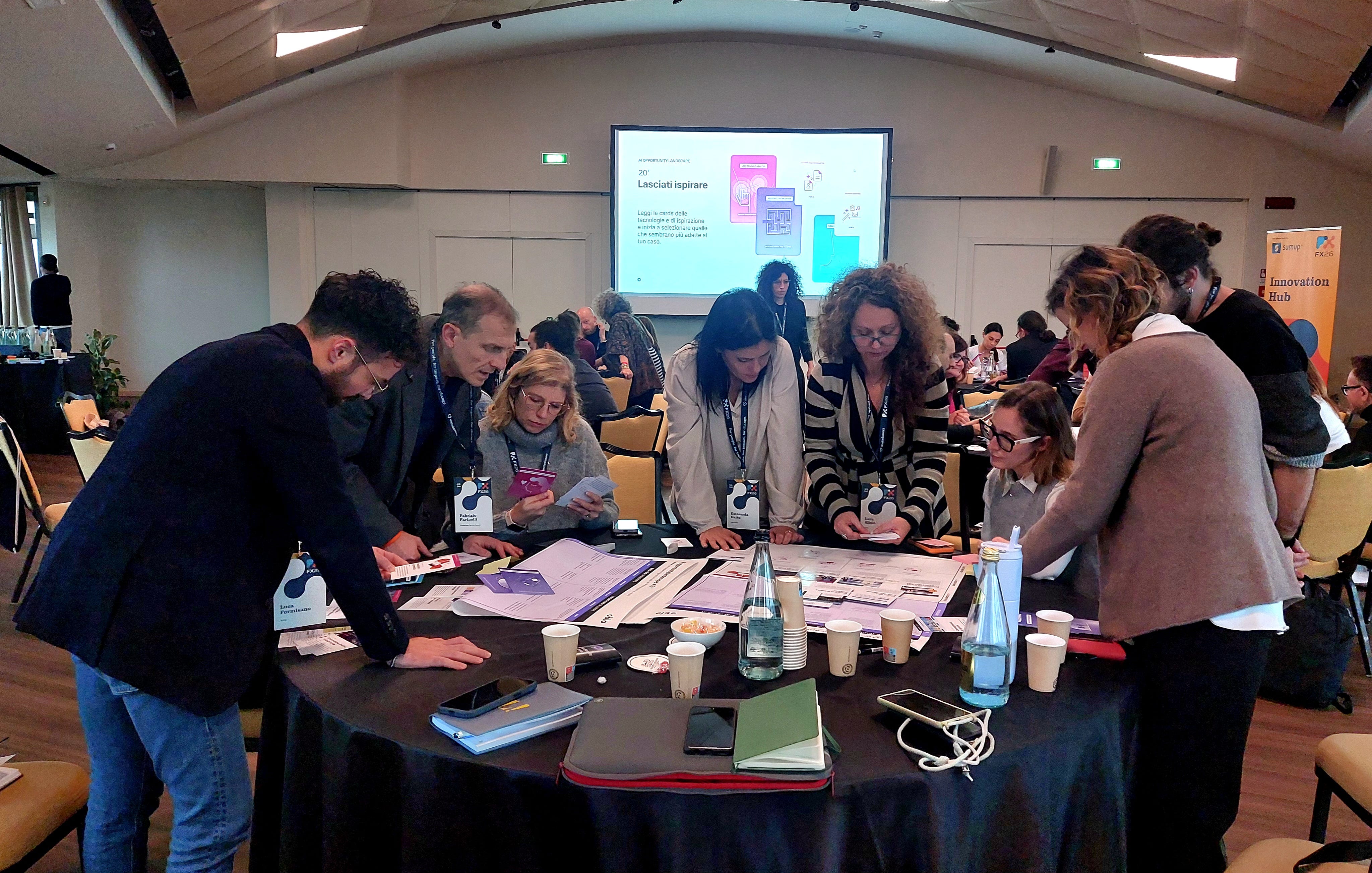
To prepare, we did a deep dive into the latest trends and case studies. We’re sharing both the research and some reflections from the room, because we think the combination tells a more honest story than either would alone.
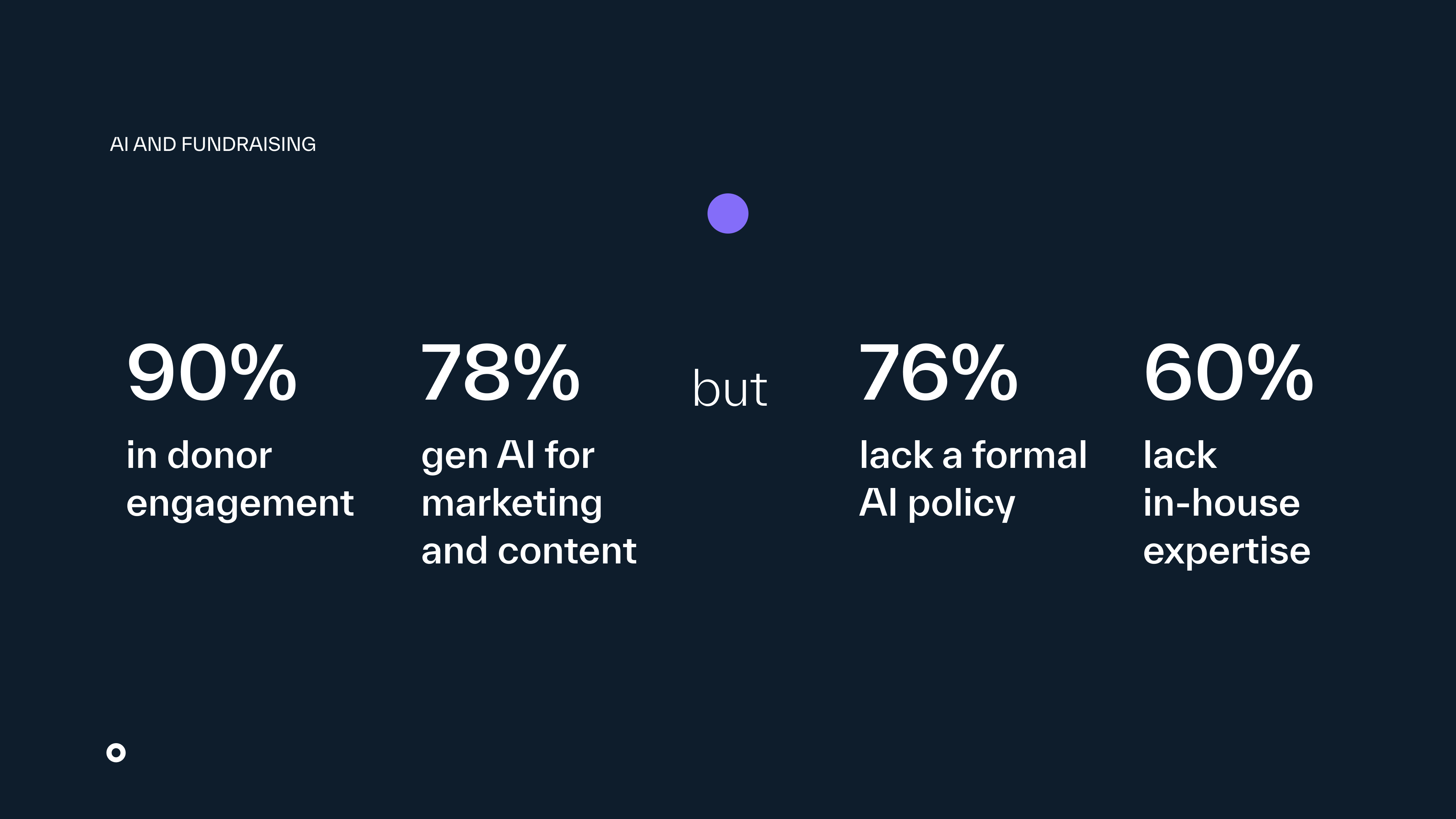
According to European Nonprofit Pulse 2025 nearly half of European nonprofits now use AI — up from just 13% last year. But dig a little deeper and the paradox becomes clear: 76% still lack a formal AI policy, 60% don’t have in-house expertise, and yet 78% are already using generative AI for marketing and content. In other words: people are experimenting, but mostly without a map.
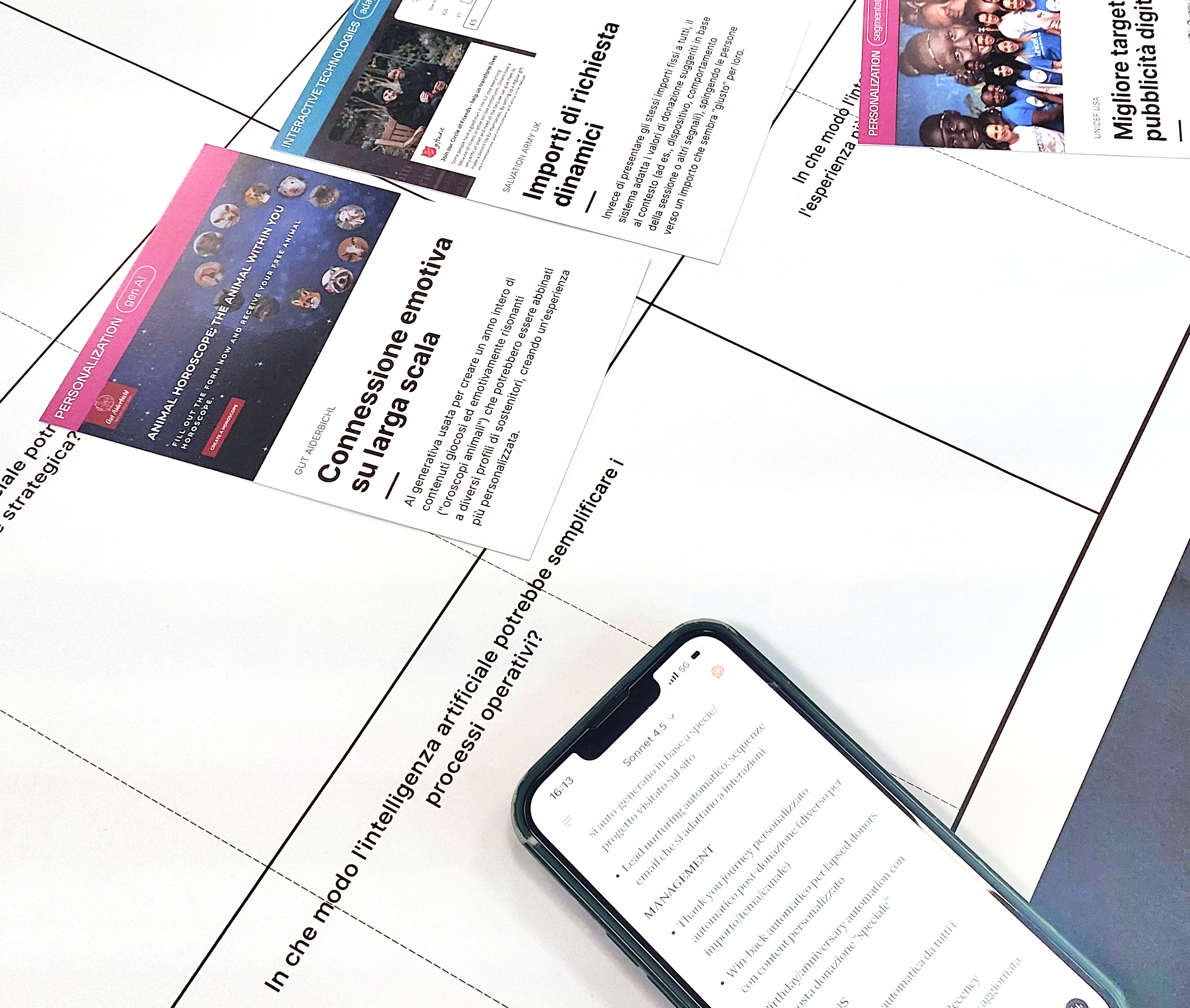
The workshop confirmed exactly this. Participants came from very different organizations and needed to think collectively about the overall fundraising process while also wrapping their heads around the technologies and how to apply them. The ideation was hard, some participants even brought in AI helpers :), and that’s a signal. There’s still a real gap between the AI conversation happening at conferences and where teams actually are day to day. Data management remains a major concern, especially around sensitive donor information and the very concrete question of how to work with AI safely.
Here’s the thing that surprised us most. What resonated for many participants wasn’t the AI application itself — it was the method that we applied. Starting from mapping the existing process, identifying problems first, then ideating solutions. Some took the canvas home to use with their teams.
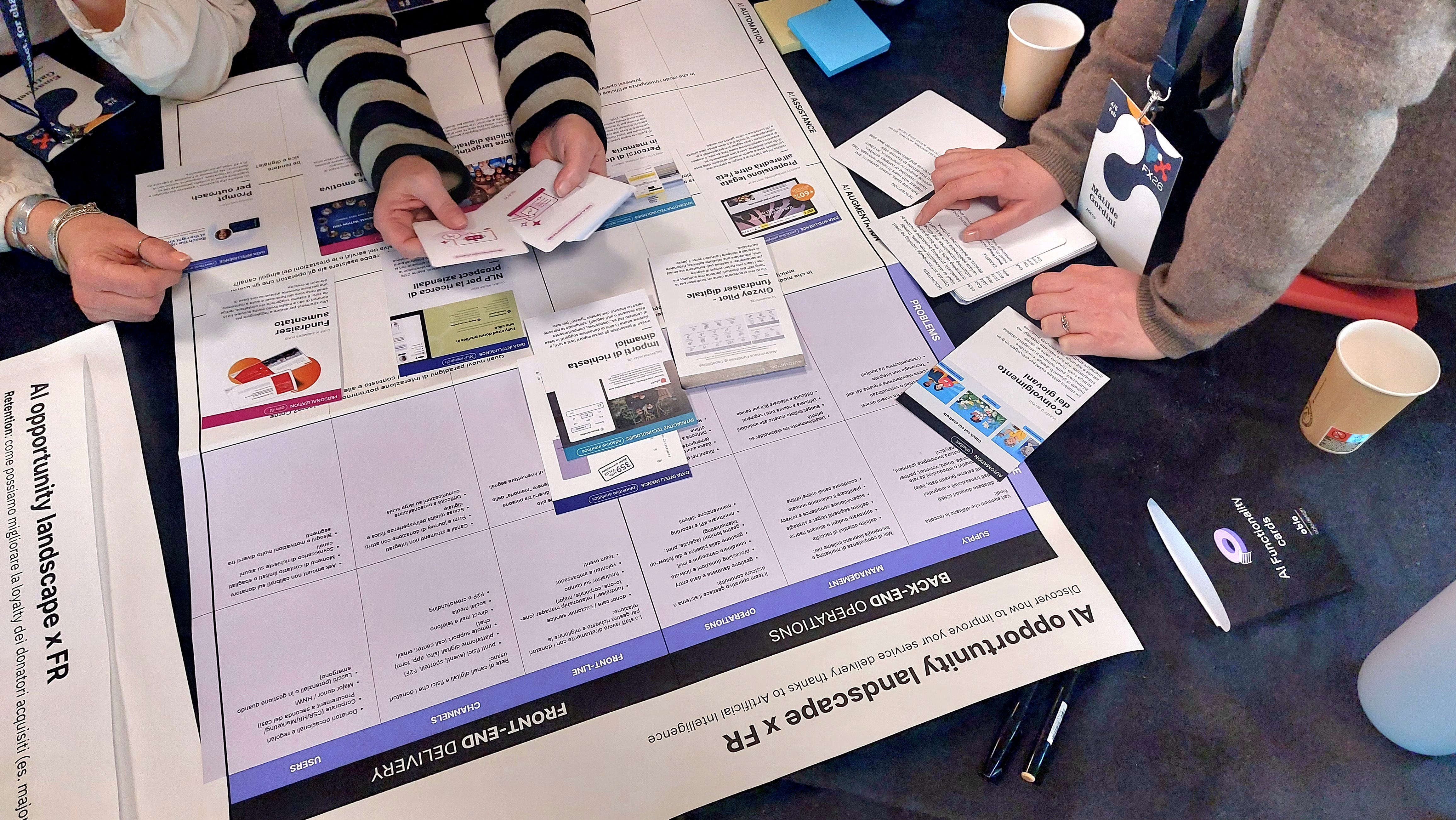
This validates something we’ve been seeing consistently in our work: before we talk about what AI can do, organizations need support in structuring how they think about their own operations. You can’t automate a process you haven’t mapped or a journey you don’t understand. Apparently, service design works :)
But looking into technology part there are some clear directions for the few years of development that can be seen:
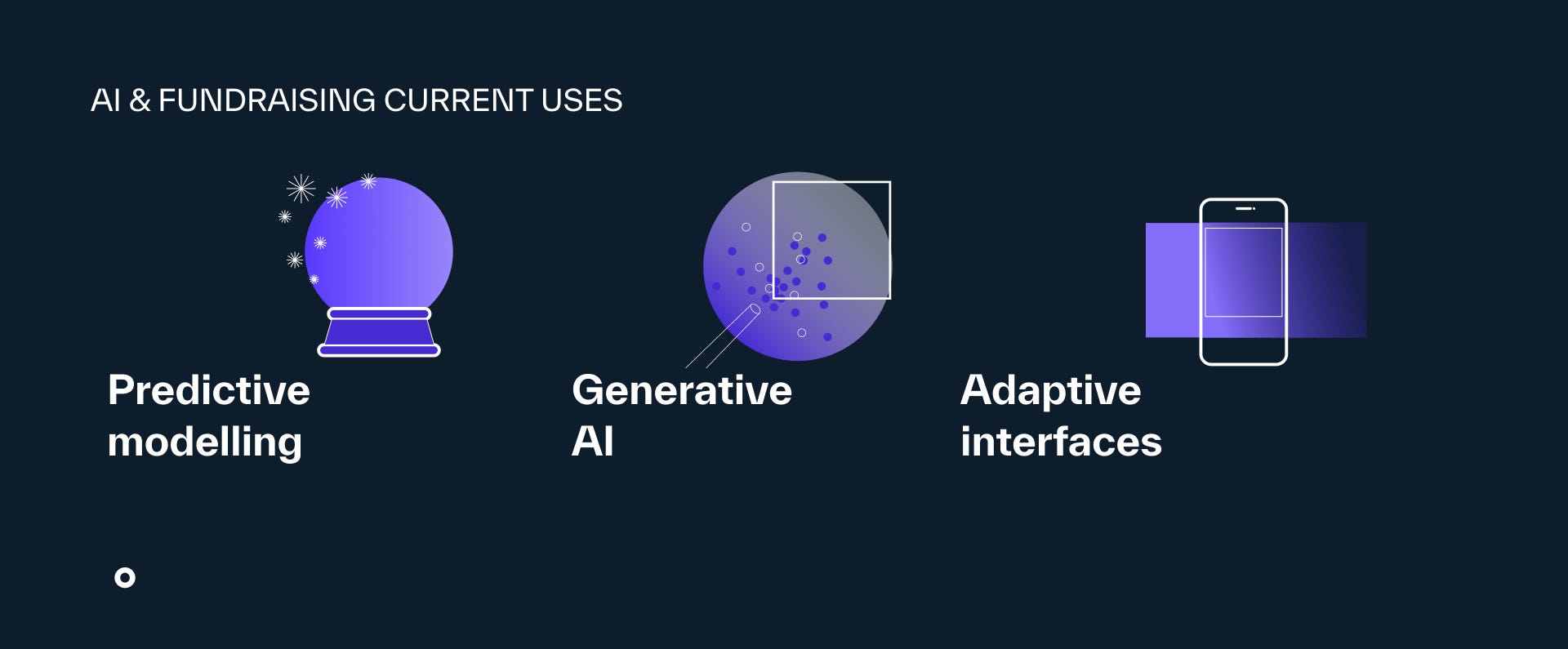
Predictive modelling is becoming a new CRM feature complementing what data science teams could do inside the orgs. UNICEF Australia used propensity scoring to send 15,000 fewer letters while increasing net revenue by 26%. Less volume, more precision.
Generative AI is solving the blank page problem. Cure Alzheimer’s Fund let AI draft personalized outreach for gift officers to review and send — 49% increase in fundraising, 69 new gifts totaling $1.2M.
Dynamic donation forms as an example of adaptive interfaces are replacing static ask amounts with real-time personalization. Salvation Army UK hit a 49% conversion rate — triple the industry standard.
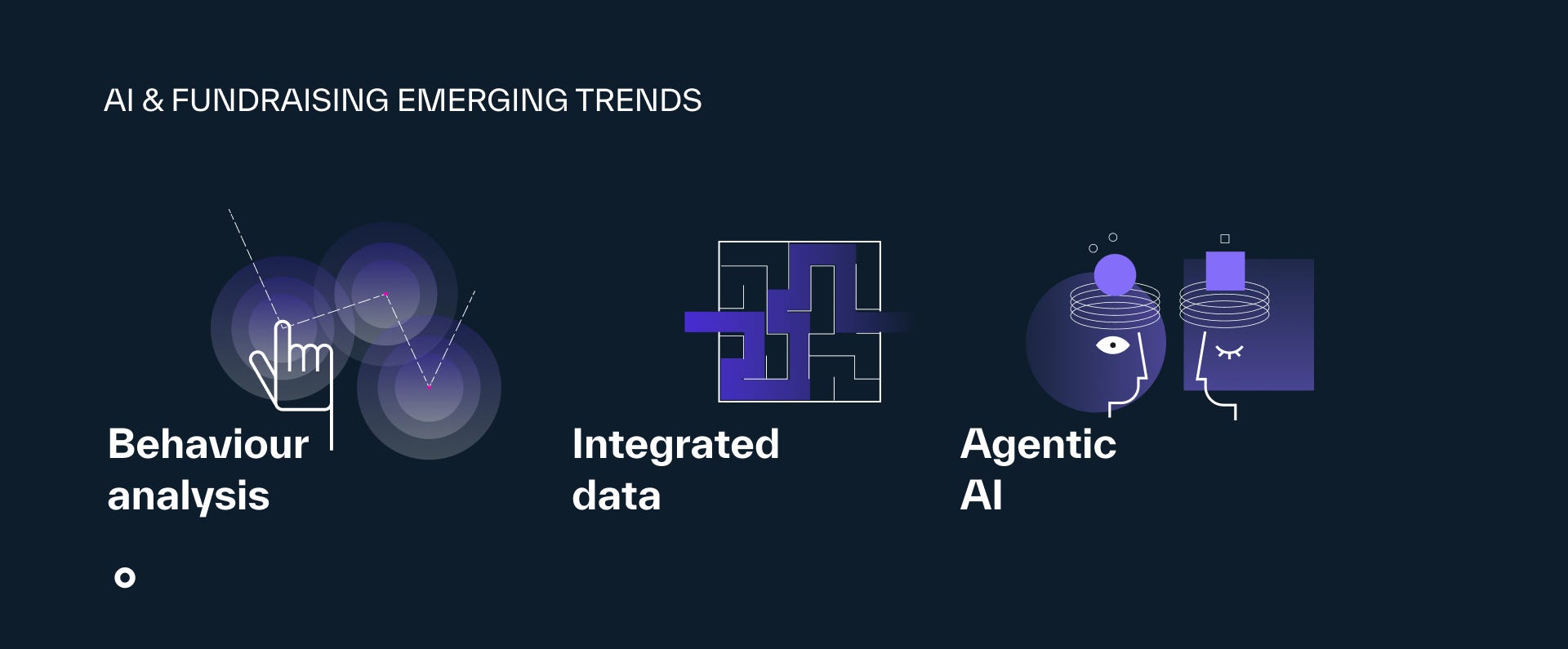
Behavioral analysis is moving beyond demographics. UNICEF USA clustered donors into six personas from 15+ years of data — driving genuinely different messaging, not just different ask amounts.
Data integration is finally getting attention. Australian Red Cross unified their systems and found $266K in mid-value prospects that traditional segmentation had missed entirely.
And agentic AI is no longer theoretical. Givzey’s AI avatar has managed 105,000+ donor relationships autonomously, raising $8.5M with a 0.07% opt-out rate.
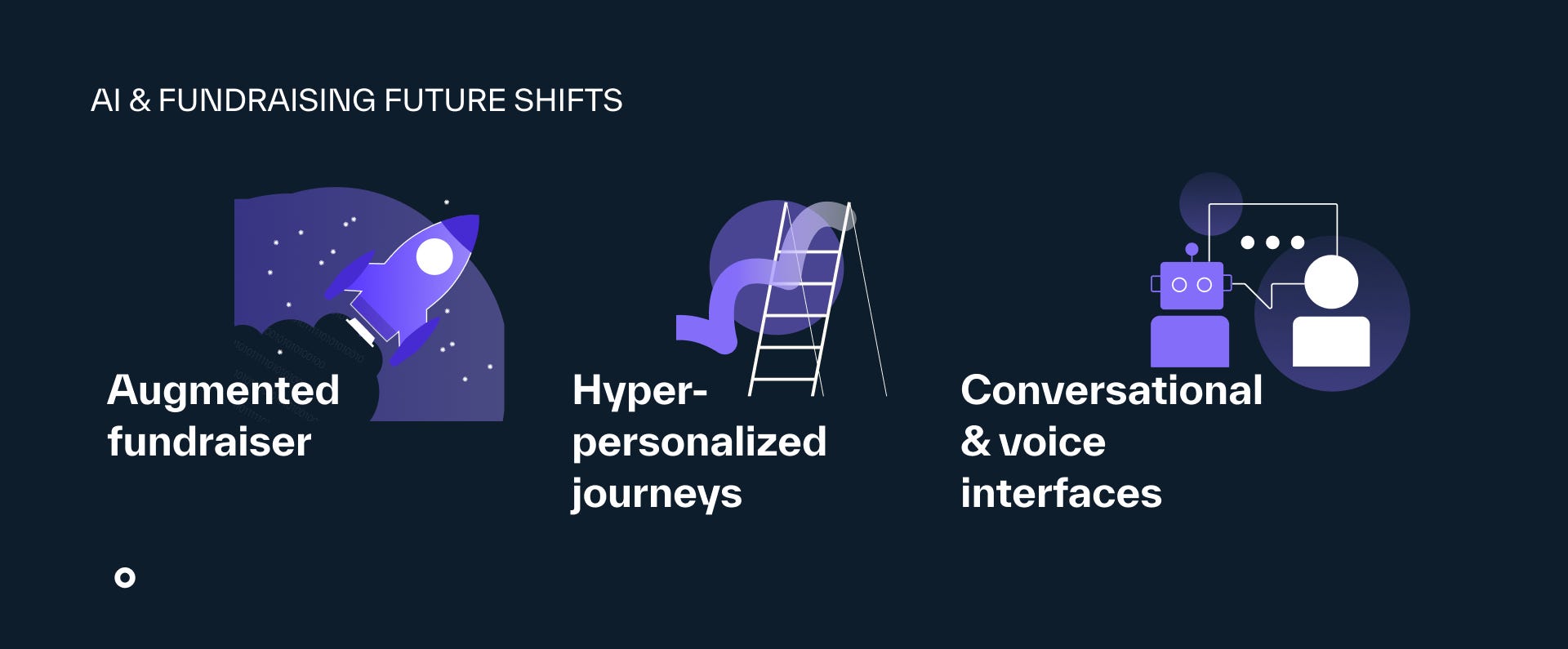
All the pieces we've described are converging toward a fundamentally different way of doing fundraising.
The augmented fundraiser: real-time briefing docs before donor meetings, sentiment analysis, relationship health scoring across a portfolio, AI making every fundraiser more capable, not replacing them.
Hyper-personalized journeys can start adapting in real time across channels to different publics. And conversational interfaces instead of dashboard can become the main way in which fundraisers interact with their data and donors interact with organizations.
None of these trends mean anything without clean, integrated data. 90% of nonprofits use 3+ systems beyond their main CRM; 79% use 5+, that’s a lot of silos. AI needs unified data to function, and getting there is less glamorous than buying a new tool — but it’s the foundation everything else depends on.
Technology moves fast, but trust is slow. The organizations that will get the most out of AI are the ones that adopt it thoughtfully — being upfront with donors about how it's used, keeping the human option always available, and making sure the algorithms don't push too hard or target people in vulnerable moments.
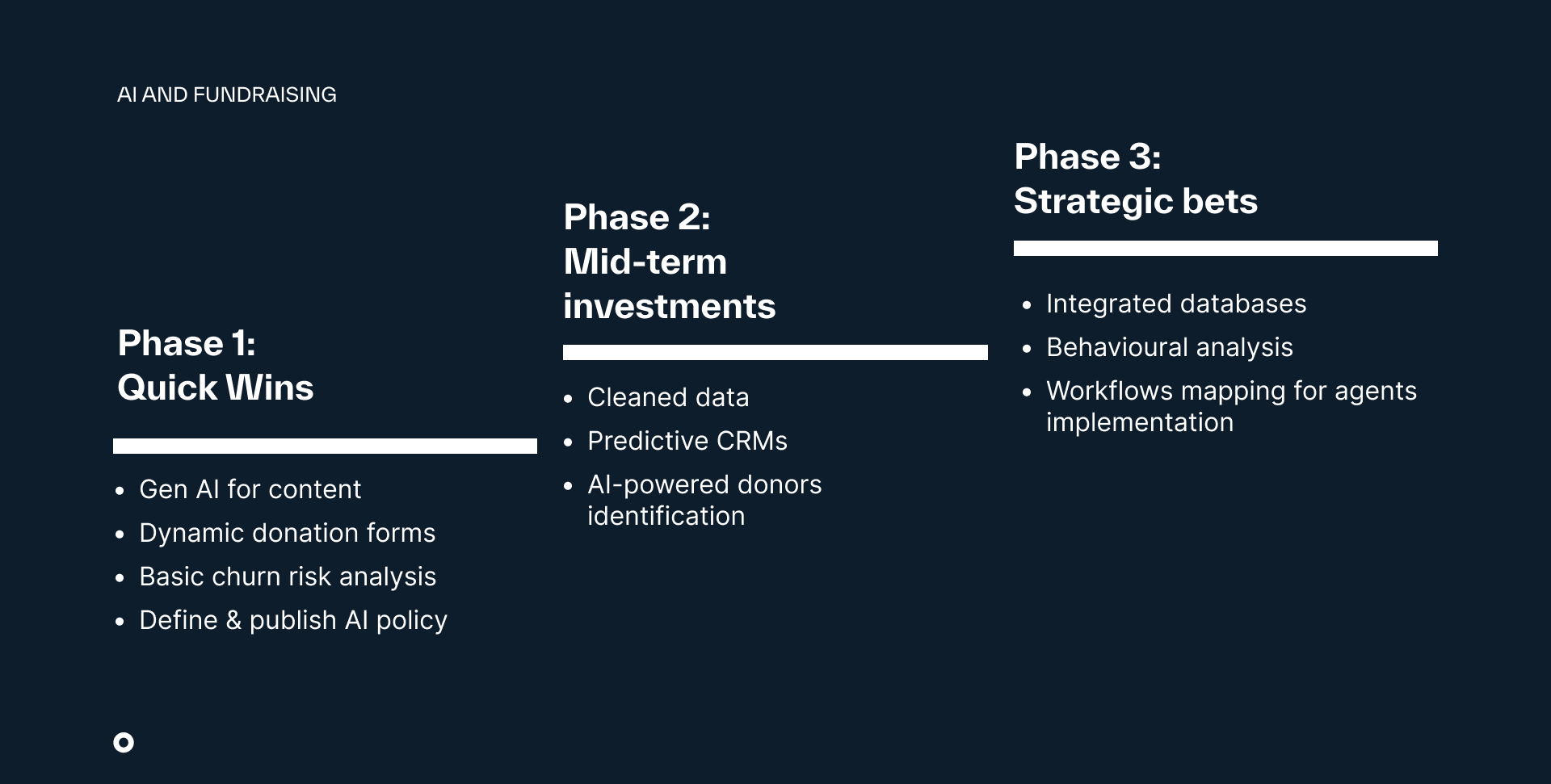
The biggest risk is trying to do everything at once. We suggest thinking in phases: start with what's accessible today and builds organizational confidence, then invest in the infrastructure that makes more advanced applications possible, and only then place strategic bets on the transformative stuff.
Want to go deeper?
If your organization wants to explore AI opportunities through a structured, hands-on approach, our bootcamp format is designed exactly for that: mapping your processes, identifying real problems, ideating solutions together and prioritizing them for the best impact.
No posts
Comments
Nothing yet. Say the first thing.
Sign in to join the conversation.