

Most businesses build their strategy around numbers.
Revenue targets, margin goals, a neat five-year plan with tidy lines on a graph. It all looks very grown-up and controlled. But when you zoom out and look at which companies actually survive beyond those carefully modelled horizons, you notice something strangely familiar:
It’s almost never the spreadsheet alone that keeps them alive.
It’s the strength of their community.
Not “community” as in a token CSR initiative, or a couple of charity partnerships.
Community as in:
The web of relationships that surround the business and either hold it up… or quietly let it fall.
Employees, customers, suppliers, local residents, schools, councils, online networks, informal connectors – all the people and places that the business touches, and that decide, collectively, whether it’s worth having around.
Most companies don’t design for that.
They design for quarterly results.
And that’s where things start to go wrong.
Think about the way most strategic conversations go.
Leaders will spend hours debating revenue streams, cost optimisation, product mix, headcount plans. They’ll have carefully colour-coded risk logs and dependency maps. But ask a simple question like, “How does our local community see us?” and you’ll often get silence, or vague hand-waving about “goodwill” and “brand”.
Ask, “If we hit a rough patch, who outside this building would fight for us to survive?” and things get even quieter.
The reality is that a lot of businesses have no real answer, because they’ve never seen community as a strategic asset. At best, it’s treated as a side-project for the marketing team or to tick a box to become a B-Corp badge holder.
At worst, it’s simply invisible.
Yet when something goes wrong… a reputational issue, an economic shock, a sudden shift in the market… the first thing that matters is not your five-year plan. It’s how many people actually care whether you make it through.
You can cut costs.
You can pivot products.
You can restructure teams.
But if nobody outside your leadership meetings is emotionally invested in your survival, you’re simply swapping one spreadsheet for another and living on borrowed time.
The businesses that do survive the infinite game… and not just limp over the line, but genuinely embed themselves into the fabric of a place or sector… behave differently from the start.
They don’t see themselves purely as organisations. They see themselves as communities in their own right, nested inside wider communities.
Internally, that shows up as more than a ‘culture deck’.
There’s a sense of belonging.
People don’t just clock in; they feel part of something that exists beyond their job title. Stories get told.
Rituals develop.
Shared language emerges.
People are proud to say “I work there,” not just because of the salary, but because of what the business stands for.
Externally, those same companies behave like citizens, not just entities. They show up in local conversations. They partner with schools, colleges, and local groups.
They create opportunities, not just transactions.
Their doors (physical or virtual) feel open. They’re visible for the right reasons – not just when they’re hiring or selling something.
If you strip away all the fancy buzzwords:
A business built only as an economic machine will always be fragile.
A business built as part of a community has redundancy, support, and room to adapt.
The problem, of course, is that our planning habits don’t encourage any of this.
The five-year fiscal plan is an attractive device because it feels containable. You plug in assumptions, tweak levers, and pretend the world will respect your Gantt chart.
There’s a comforting illusion of control.
But the world doesn’t move on your schedule.
Pandemics don’t follow the plan.
Regulatory changes don’t follow the plan.
Local opposition to your new site doesn’t follow the plan.
A key client going under doesn’t follow the plan.
A reputational flare-up on social media definitely doesn’t follow the plan.
What does cut through the chaos, consistently, is the network you’ve built around you.
If employees trust you and feel part of something, they’ll stay when things wobble.
If customers feel an emotional connection, they will give you time to course-correct.
If local institutions see you as a genuine contributor, they will back you when you need flexibility.
If your name means something positive beyond your own walls, you’ll find allies instead of critics.
That sort of resilience can’t be bought in year four of the plan when someone suddenly realises, “We should probably do something in the community.”
It’s built in year one. And then year two. And then every year after that.
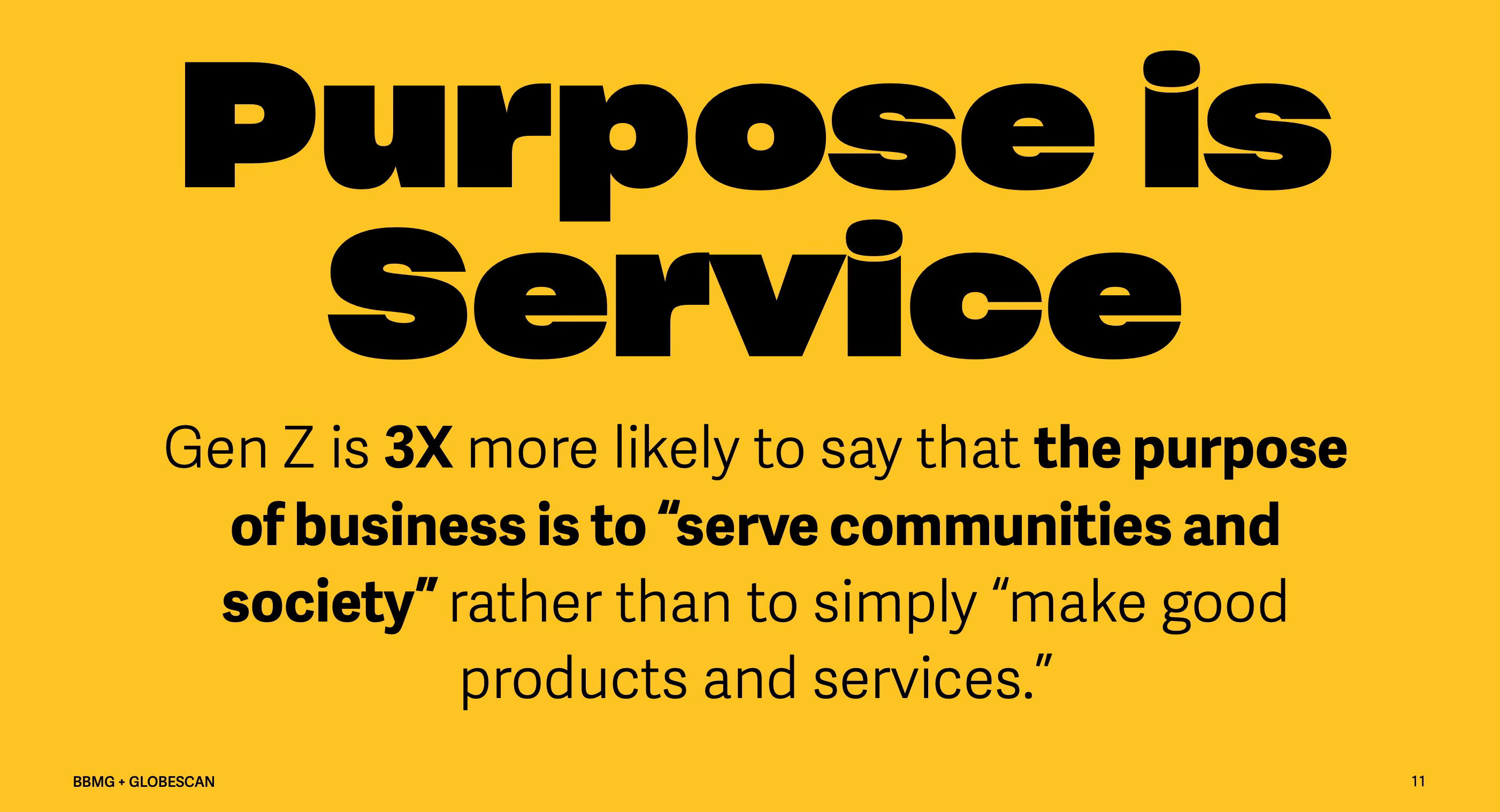
A useful way to think about this is to borrow from systems and networks rather than traditional business planning.
Imagine your company as a node in a wider network.
On paper, you might see yourself as having a handful of formal connections:
customers,
suppliers,
maybe an investor or two.
But in reality, there are dozens… sometimes hundreds… of weaker links that you touch:
families of your employees,
local organisations,
online communities,
schools,
freelancers,
neighbours,
regulators,
industry peers.
Most businesses leave those nodes dormant.
They don’t invest in them, they don’t ask much of them, and they don’t give much back beyond what’s necessary.
The companies that last the distance do something else entirely:
They strengthen those connections little by little, until the network is robust enough that if one strand fails, others pick up the strain.
That might look like:
making your premises available for local events
giving employees protected time to mentor or support nearby schools or colleges
partnering with local organisations on skills programmes, not because it “looks good”, but because you genuinely need a future talent pipeline
bringing local stakeholders into conversations about new initiatives early, instead of presenting decisions as done deals
sharing your story openly… including the messy bits… so people understand the journey you’re on
None of these things show up neatly in a profit and loss statement. But they absolutely influence whether your business is seen as “one of us” or “just another company”.
And when pressure hits, that distinction matters more than your last EBITDA slide.
It’s worth being clear that this is not the same as traditional CSR.
CSR has too often become a performance:
A one-day volunteering photo,
an annual donation,
maybe a nicely designed impact report.
It sits at the edge of the business, not in the core.
Community, done properly, is not a department. It’s a way of operating.
It asks harder questions:
Are we creating real value beyond our own balance sheet?
Do people feel better off – in skills, opportunities, connection – because we’re here?
Would we be missed if we disappeared?
Are the stories people tell about us rooted in trust, or in scepticism?
These questions aren’t fluffy. They’re existential.
If the answer to “Would we be missed?” is “Not really,” then your five-year plan is built on fairly potent quicksand.
There’s also a very practical, selfish upside to treating your business as part of a broader community:
It makes talent and innovation easier, not harder!
Companies that engage with the local ecosystem:
schools,
colleges,
returners,
under-represented groups
…don’t have to rely solely on traditional recruitment channels. They see potential earlier. They build loyalty before someone ever submits a CV. They get to shape skills, not just complain about shortages.
That matters if you’re a start-up trying to grow on limited resources. It matters if you’re a scale-up trying to professionalise without losing your soul. And it definitely matters if you’re trying to build any kind of legacy beyond “we made some decent money for a few years”.
The same applies to innovation.
Businesses that are plugged into their communities hear more, sooner. They see emerging needs, shifting attitudes, new patterns of behaviour. People tell them things because there’s trust. That’s market intelligence you can’t buy from a report.
It’s also a safety net: If you misstep, the very people who might have turned into critics are often willing to give you feedback instead.
All of this sounds big and abstract until you bring it down to a simple question:
What does it mean for your specific business to be a good neighbour?
Not in a PR-driven way. In a concrete, observable way.
For some organisations, that might look like:
paying local suppliers on time and treating them as partners, not commodities
creating apprenticeships or learning pathways that give people in your area real options
using your expertise to support community problem-solving – for example, offering data, design, tech, or facilitation support to local initiatives
making sure your hiring, working practices, and opening hours aren’t designed in a way that excludes people who live closest to you
For others… especially those that are remote-first or globally distributed… the “local” might be digital communities:
Industry networks,
practitioner groups,
learning communities.
The same logic applies. Are you a passive consumer, or an active contributor?
In both cases, the underlying principle is the same:
Stop thinking of your business as a sealed box.
Start thinking of it as a living part of a wider organism.
If this all feels like extra work on top of an already full agenda, that in itself is telling.
We’ve normalised the idea that anything involving people, place, and long-term relationship building is “nice to have”, while anything involving numbers and timelines is “must have”.
The truth is you need both.
You need the discipline of fiscal planning.
You need the ambition of growth.
But you also need the messy, human, unplottable web of relationships that make those numbers meaningful… and make survival possible when the numbers go sideways.
The businesses that will still be here in twenty years will be the ones that understand that being part of a community isn’t a side quest.
It’s the main storyline.
Strategies matter, but fellowships carry you. Every enduring company has one person who refuses to give up when things get tough. Who is your Samwise?

If reading this has highlighted that your operational model is built on outdated assumptions - or that your strategies don’t yet reflect the reality of the future you’re trying to build - this is where nuutology can help.
Let’s find your wavelength and let others tune in.
Before you can connect with local communities, you need the rot articulate the world you are trying to build. At nuutology, we support organisations to:
uncover their unwavering values and translate them into observable behaviours
clarify their long-term vision story so every one can see where the business is truly heading and why they should care
If you’re ready to move from finite to infinite thinking…
...if you want to connect with communities who care if you are still here tomorrow
...then it’s time to redesign the game.
Let’s build a system that gives people a reason to care about your business.
Comments
Nothing yet. Say the first thing.
Sign in to join the conversation.