
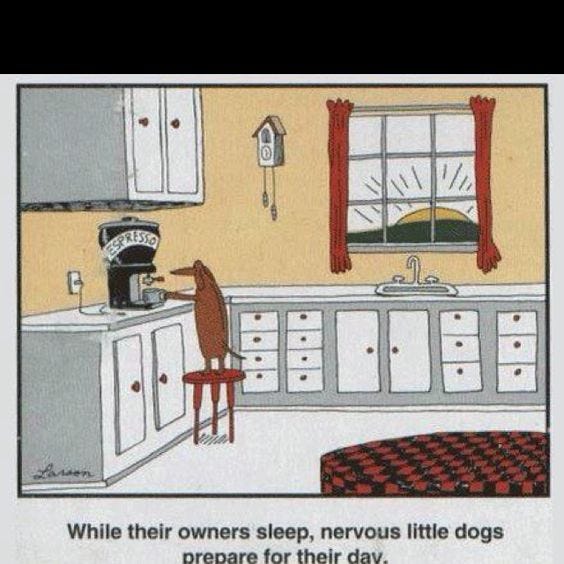
There are certain advantages to being married to a psychologist. There are also disadvantages, principally that you can never have an ordinary argument. Most husbands can say, “I’m not angry,” and reasonably expect the matter to stagger along for another forty minutes before somebody slams a cupboard. I say, “I’m not angry,” and Sharon looks at me across the kitchen table with the expression of a woman who has spent a professional lifetime listening to people say things that are demonstrably untrue. “You seem angry,” she says. “I’m Belgian,” I reply. “That isn’t the same thing.” It frequently is.
And so begins another session of Casteels Marriage Therapy, conducted at our kitchen table, usually over a lovely latte or two, without an appointment, insurance coverage, or any apparent provision allowing the patient to leave. This particular branch of psychotherapy developed after cancer entered our marriage. Not metaphorically. Cancer does not need metaphors. It already has pathology reports. It arrived with a PSA of nearly twenty seven, a biopsy, seven positive cores, Gleason scores, cribriform architecture, scans, radiation, brachytherapy, hormone treatment and approximately six thousand medical conversations containing the phrase “quality of life.”
I have come to distrust that phrase. Doctors say “quality of life” the way airlines say “minor inconvenience.” It covers an impressive amount of territory. Before cancer, quality of life meant a good dinner, travelling somewhere with Sharon, laughing at something inappropriate, sleeping through the night, having sex, cooking, writing, walking the dog and occasionally sitting in the garden doing absolutely nothing without feeling I should be checking a laboratory result. After cancer treatment, quality of life became a questionnaire. How many times do you urinate at night? How often do you experience hot flashes? Any bowel changes? Fatigue? Sexual function? Mood changes? Anxiety? On a scale from one to ten, how would you rate your overall wellbeing? Well, Doctor, at three fifteen this morning I was lying naked on top of the sheets sweating like a guilty politician while simultaneously wondering whether a PSA increase of five hundredths meant the cancer was returning, so put me down for a festive seven.
The peculiar thing about cancer treatment is that everyone warns you about the physical consequences. Nobody adequately explains what happens when those consequences come home and sit between two people who have been married for decades. Hormone treatment changes your body. Radiation changes your body. Cancer changes your relationship with your body. Things that once happened automatically become subjects requiring discussion, medication, planning, experimentation and occasionally equipment. Sex acquires logistics. Sleep becomes fragmented. Energy disappears without leaving a forwarding address. Your weight changes. Your confidence takes a beating. You become acquainted with parts of yourself you had previously assumed would continue operating without quarterly management meetings.
Sharon also has opinions about what hormone treatment did to the physical specimen formerly known as her husband. Firmagon did not merely suppress testosterone. It apparently undertook a renovation project without consulting either of us. I gained weight in places where weight had previously shown little entrepreneurial interest. Muscle quietly resigned. My waist expanded. And then, as a particularly thoughtful finishing touch, I grew breasts. Not magnificent breasts. Nothing that would cause envy at the beach. Just enough breast tissue to make me stand sideways in front of the bathroom mirror and think, well, this is a development nobody mentioned during the wedding ceremony.
Sharon’s professional response to this is acceptance, reassurance and the entirely sensible observation that bodies change, cancer treatment has consequences and my value as a husband is not determined by my waistline, testosterone level or whether I now require slightly more aerodynamic consideration when selecting a shirt. Her marital response is somewhat less clinical. She would prefer that I lose some weight. This is communicated with the gentle persistence available only to psychologists and wives, and Sharon has recklessly been issued both licences. She does not call me fat. She merely discusses nutrition, portions, exercise and the cardiovascular advantages of losing twenty pounds with sufficient regularity that eventually even a Belgian can detect the underlying theme.
The erection situation is more complicated because there is only so much therapeutic vocabulary available before everybody at the kitchen table knows perfectly well what we are talking about. Cancer treatment did not remove desire from our marriage, but it did introduce the possibility that desire and equipment might no longer arrive at the same meeting. Sharon is remarkably matter of fact about this, which is both comforting and occasionally irritating because I would like the universe to acknowledge that this is a fairly significant design failure. She reminds me that intimacy is larger than erections. I agree intellectually. Intellectually is an important word here. There are moments in a man’s life when he does not particularly want a psychologically sophisticated explanation of intimacy. He wants his penis to work.
And then there are the man tits. Sharon insists on the medically respectable term gynecomastia, which is exactly the sort of word medicine invents when “the hormone treatment gave my husband tits” would make the consent form too alarming. Mine have moved well beyond diagnosis and are now participating in daily life. They clap at each other when I brush my teeth. They jiggle independently when I come down the stairs, arriving at the bottom approximately half a second after the rest of me. They perspire underneath themselves, which was a bodily experience I had previously associated exclusively with women, large men at summer barbecues and certain farm animals. I now understand why bras were invented, although I remain ideologically opposed to purchasing one. On sufficiently hot days I find myself lifting a tit to permit ventilation, an action that would have caused the younger Hans to assume something had gone catastrophically wrong with the future.
Sharon claims they are “not that noticeable,” which is marriage language for “I have noticed them but would prefer not to destroy what remains of your self esteem.” Nobody has ever spontaneously reassured a man that his elbows are not particularly noticeable. I occasionally catch her looking at them, although she denies this, and I cannot entirely blame her because I look at them too. They are fascinating in the same way an unexplained municipal structure is fascinating. Why are they here? Who approved this? Is somebody eventually coming back to remove them? Meanwhile they bounce when I walk quickly, object to stairs, require their own drying procedure after a shower and have developed an alarming relationship with gravity. Cancer treatment was supposed to extend my life. Nobody mentioned that part of the extension would apparently occur directly below my nipples.
These changes inevitably become part of the marriage because Sharon did not marry a PSA result. She married the entire package, and somebody has since tampered with the package. She has watched the man she married become heavier, softer, more tired, occasionally anxious, (hopefully) temporarily chemically castrated and unexpectedly equipped with breasts. I have watched her adjust without pretending she does not notice. That distinction matters. Love is not blindness. Sharon sees all of it. She would like me thinner. She would undoubtedly welcome the enthusiastic return of erections. Neither of us ordered the tits. But none of those things has caused her to move her chair away from mine at the kitchen table.
Perhaps that is another part of “quality of life” the questionnaires never quite capture. They can ask whether erections are sufficient for intercourse and assign the answer a number. They can record weight gain and breast tenderness. They can measure testosterone to a decimal point. What they cannot measure is what happens when the person who has known your body for decades watches it change and somehow manages to acknowledge the losses without making you feel like one of them. That is not a side effect. That is marriage.
And because this is prostate cancer, a significant portion of the damage occurs in precisely the territory where men have historically demonstrated the emotional vocabulary of patio furniture. We are apparently expected to discuss it. With our wives. This is where Sharon has an unfair advantage because she asks questions. Not normal questions such as whether I want another coffee. Those I can handle. She asks things like, “What are you actually afraid of?” This is a vicious question because the correct Belgian response is obviously, “Nothing.” Belgian men were not raised to identify feelings. We were raised to identify beer. Fear was something occurring to other people, usually farther south.
But cancer is persistent. It finds the little cupboard where you stored all the things you planned never to discuss, pulls everything onto the floor and invites your wife to examine the contents. So eventually I answer. “I’m afraid it will come back.” There it is. Not PSA. Not testosterone recovery. Not biochemical recurrence. Not risk percentages. Not the latest study. I am afraid the cancer will come back. Sharon nods and asks what happens when I become afraid. “I research.” She says I obsess. I explain that I research thoroughly. She points out that I read medical papers at two in the morning. I tell her that is when PubMed is quiet. She says I check the same numbers repeatedly. I am verifying them. She says I ask questions I already know the answer to. I am seeking an independent opinion. She says I catastrophize. I prefer scenario planning.
This is another difficulty with being married to a psychologist when you spent your working life in strategy. Every pathology has a business synonym. Anxiety becomes risk management. Obsessive thinking becomes due diligence. Avoidance becomes prioritization. Denial becomes maintaining strategic focus. Lying awake at two in the morning wondering whether PSA 0.15 is substantially more sinister than PSA 0.10 becomes longitudinal trend analysis. Sharon remains unimpressed by the terminology. “You’re scared,” she says. Apparently decades of executive experience have left me without an adequate PowerPoint response to this.
Scanxiety is particularly interesting because it violates the normal rules of time. A scan scheduled three weeks from now begins happening immediately. It occupies the future but somehow manages to ruin the present. You can be sitting in your kitchen on Tuesday morning eating toast and simultaneously be inside a radiology department three Thursdays from now receiving terrible news that has not happened. The human brain is an astonishing organ. Give it insufficient information and it will manufacture the missing information, almost invariably selecting the worst available option.
Then there is the marriage itself. Cancer literature loves to tell us that serious illness brings couples closer together. Sometimes it does. Sometimes it also makes one person frightened, irritable, exhausted, sexually altered, preoccupied and occasionally impossible, while the other person is expected to remain loving, patient, reassuring, sexually understanding, medically informed and somehow still interested in discussing what to have for dinner. Caregivers receive an especially rotten assignment. They are supposed to be supportive without hovering, optimistic without lying, concerned without panicking, helpful without infantilizing and cheerful without making the person with cancer want to throw something at them. Then they are expected to climb into bed beside us and behave as though this arrangement was included in the vows.
Sharon has her own fears, of course. This was one of the things I initially overlooked because cancer has a remarkable ability to make the patient believe he is the central character in everybody else’s life. The pathology report had my name on it. The consequences did not. My anxiety became her anxiety. My sleeplessness entered her bedroom. My hot flashes threw off the blankets. My sexual side effects became part of our sexual relationship. My uncertainty became part of her future. Cancer may be biologically individual, but its blast radius is marital.
This realization arrived during one of our kitchen table sessions when I was explaining, with considerable brilliance, why something I had done was perfectly reasonable. Sharon listened. This should have worried me. Psychologists who interrupt are merely working. Psychologists who become completely silent have begun collecting evidence. Finally she asked whether I realized how much of our life had become organized around whether I might get cancer again. I prepared several excellent responses. None survived.
Because she was right. There is a point at which vigilance becomes occupation. Cancer can continue taking your life even when it is no longer demonstrably taking your cells. It can turn every ache into metastasis, every laboratory result into prophecy, every upcoming appointment into a tribunal and every ordinary Tuesday into the waiting room for some imaginary catastrophe. That is not surviving cancer. That is giving it office space in your house and apparently allowing it to attend breakfast.
This does not mean the anxiety is irrational. That is another bit of nonsense occasionally inflicted upon patients. Of course I worry about recurrence. I have had cancer. Worrying that it might return is considerably more rational than worrying about being eaten by a shark while shopping at Canadian Tire. The problem is not having the fear. The problem is allowing fear to become the organizing principle of the marriage. And that, apparently, is what my unpaid kitchen table therapist has been trying to tell me.
We cannot make cancer disappear by refusing to discuss it. Nor can we protect ourselves by discussing it constantly. There has to be some middle territory where PSA results matter enormously on Tuesday morning and the spaghetti sauce matters more on Tuesday evening. There has to be room for sex that may be different, bodies that have changed, fatigue that sometimes wins, anxiety that occasionally arrives uninvited and two people who are allowed to admit that none of this was part of the original marriage contract. When we promised for better or worse, nobody handed us an appendix explaining erectile dysfunction, testosterone suppression, radiation damage, urinary urgency and the fascinating psychological implications of waiting three months for another blood test.
There also has to be humour because there are moments when the alternative is simply too ridiculous. I have stood naked in our bedroom discussing erectile function with my wife using terminology that would have caused the nineteen year old Hans Casteels to emigrate to another continent. Which, come to think of it, he eventually did. We have discussed testosterone over breakfast, urinary function over coffee, bowel movements before lunch, sexual rehabilitation in bed and PSA velocity while walking the dog. Romance after cancer is apparently less Casablanca and more continuing medical education.
But there is something unexpectedly intimate about all of this too. Not beautiful. I refuse to turn cancer into syrup. There is nothing beautiful about cancer. There is something profound, however, about being known after the machinery has been damaged. Marriage when you are young is partly built on possibility. You look at another person and imagine everything you might become together. Marriage later in life becomes something else. You know what broke. You know what frightened each other. You know which parts no longer work as advertised. You know what the other person looks like at three in the morning when there is a scan coming. You know precisely which subjects can make the other person go silent. And despite knowing all of that, you are still sitting together at the kitchen table.
That may be the closest thing I have discovered to a definition of marriage worth keeping. Not endless romance. Not unconditional happiness. Certainly not completing one another, because anyone who has been married for thirty years knows that sometimes you would simply like the other person to complete loading the dishwasher. Marriage is having somebody who knows precisely where your fear lives and refuses to let you redecorate the entire house around it.
So Sharon continues providing marriage therapy to her husband at the kitchen table. The fee structure remains unclear, although I suspect I have been paying for it through several decades of home maintenance. She asks uncomfortable questions. I provide unnecessarily complicated answers. She reduces them to approximately seven words. I accuse her of oversimplification. She drinks her coffee. And somewhere between the PSA tests, the hot flashes, the changed body, the changed sex, the sleepless nights, the anxiety, the scanxiety and all those professionally delivered promises about “quality of life,” something resembling an actual life continues.
Not the old life, because pretending nothing changed would be another form of denial and Sharon would spot that before I finished the sentence. Cancer took some things and treatment took some others. We are still discovering exactly what was borrowed, what was stolen and what might eventually be returned. But the great mistake would be spending whatever life remains auditing the losses. At some point you have to close the medical portal, stop calculating probabilities and notice that the woman across the kitchen table is still there.
Tomorrow morning I will probably forget all of this and say, “I’m perfectly fine.” Sharon will look across the table. There will be a brief silence. I will recognize the expression immediately.
And my next session will begin.
If I May… Speaking of very small creatures trying to make it through their first days, there are babies in the NICU who arrived considerably earlier than planned and without even the consolation of a ripe peach or a glass of Sancerre. My daughter Ashley is a NICU nurse, and I write these ridiculous little essays partly because laughter keeps the machinery upstairs running, but also because we are raising money to help her hospital buy two desperately needed bassinets, at roughly $30,000 each. I don’t charge for anything I write. If something here made you laugh, snort coffee through your nose, or briefly reconsider the moral character of a fruit fly, consider tossing a few dollars toward the NICU. Fruit flies get about thirty days and immediately head for the wine. These tiny humans are fighting for considerably more time, and they deserve every piece of equipment we can put around them.
If you are able, the donation link is below. Every contribution, no matter the size, helps give a newborn the chance to grow up and one day argue about something much more sensible.
The essays will remain free. The bassinets, unfortunately, are not.
No posts
Comments
Nothing yet. Say the first thing.
Sign in to join the conversation.