
This issue is sponsored by Flytedesk. The Nutgraf independently produced the content.
When a story about a Day of the Dead celebration landed on Analah Wallace’s desk, one quote from a source gave them pause. An attendee, speaking about their heritage, mentioned that their culture is known for coming from low-income communities.
For Wallace, the managing diversity, equity and inclusion editor at The State Hornet, it was a classic dilemma.
On one hand, the quote was an authentic representation of the source’s experience. On the other hand, it risked reinforcing a stereotype that others in the community might not agree with.
“You really have to kind of weigh, do you want that in the story because it represents the source well or do you want to take it out because it’s kind of pushing a stereotype?” Wallace said.
Instead of making a unilateral decision, Wallace consulted with others in their community and newsroom. They learned that for many, acknowledging economic struggle was a reclaimed and accepted part of their culture’s story.
The quote stayed in.
This process is central to the DEI editor’s role at Sacramento State University’s student newspaper — a position that has evolved from a niche section into a vital part of the entire newsroom’s management structure.
This move by The State Hornet is against the backdrop of many professional newsrooms retreating from their DEI commitments and student newsrooms seeing their DEI funding disappear.
The position was created so that every section is “keeping track of their own DEI content and publishing content related to different, diverse communities that otherwise may not have gotten content published before,” Wallace said.

Flytedesk is hiring! They’re looking for a person with a background in student media and business operations to join the team as a Publisher Development Manager. This role helps provide essential service and support to the more than 600+ student media organizations we work with.
Learn more about available positions at Flytedesk here.
While the DEI editor position has existed for a few years, Wallace is the first to hold it as a full management role, a shift from its origins as a separate content section.
This structure allows Wallace to influence coverage across the entire newsroom.
A typical week involves a mix of proactive and reactive work. The majority of Wallace’s time is spent reading every story before publication to check for stereotypes, bias or harmful language.
“If I see something that we’ve published or that we’re going to publish that may come off wrong to a certain community, I have to speak up,” Wallace said.
Besides that, the newspaper also trains its staff on covering sensitive topics and respectful reporting while seeking out stories from underrepresented communities.
At the end of each semester, the DEI editor publishes a diversity audit that recaps the paper’s coverage and sets goals for improvement.
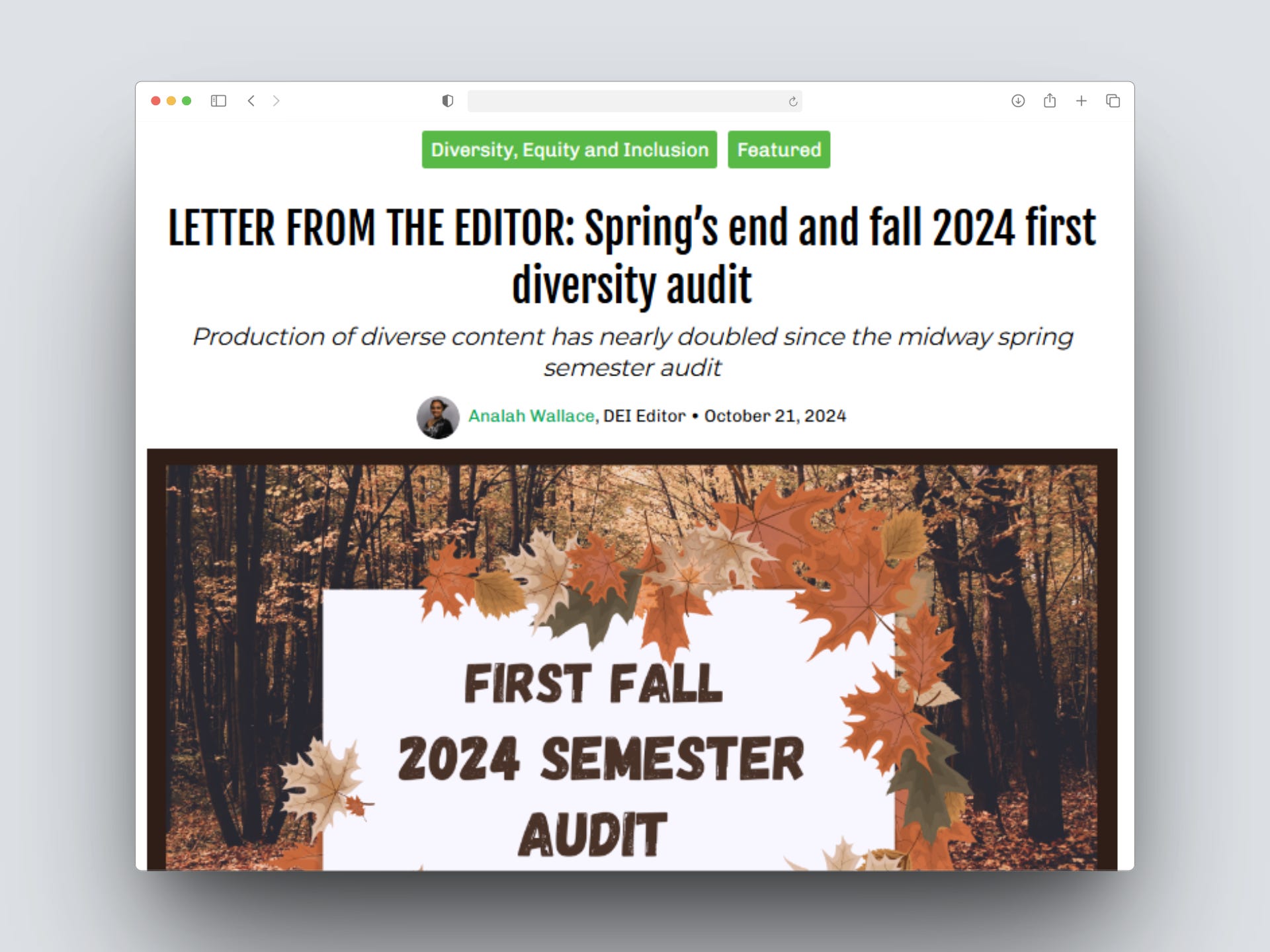
While the audit provides quantitative data, Wallace emphasizes that the true measure of success is qualitative. It’s not about meeting a quota.
“I feel like we are most successful when we have people from these communities coming to us with their stories and feeling safe, approaching us with more sensitive topics,” Wallace said.
This trust, according to Wallace, was evident in the paper’s coverage of the pro-Palestinian encampment on campus, as many students were wary of speaking to larger news outlets but trusted The Hornet. Wallace credits this access to the newsroom’s DEI efforts.
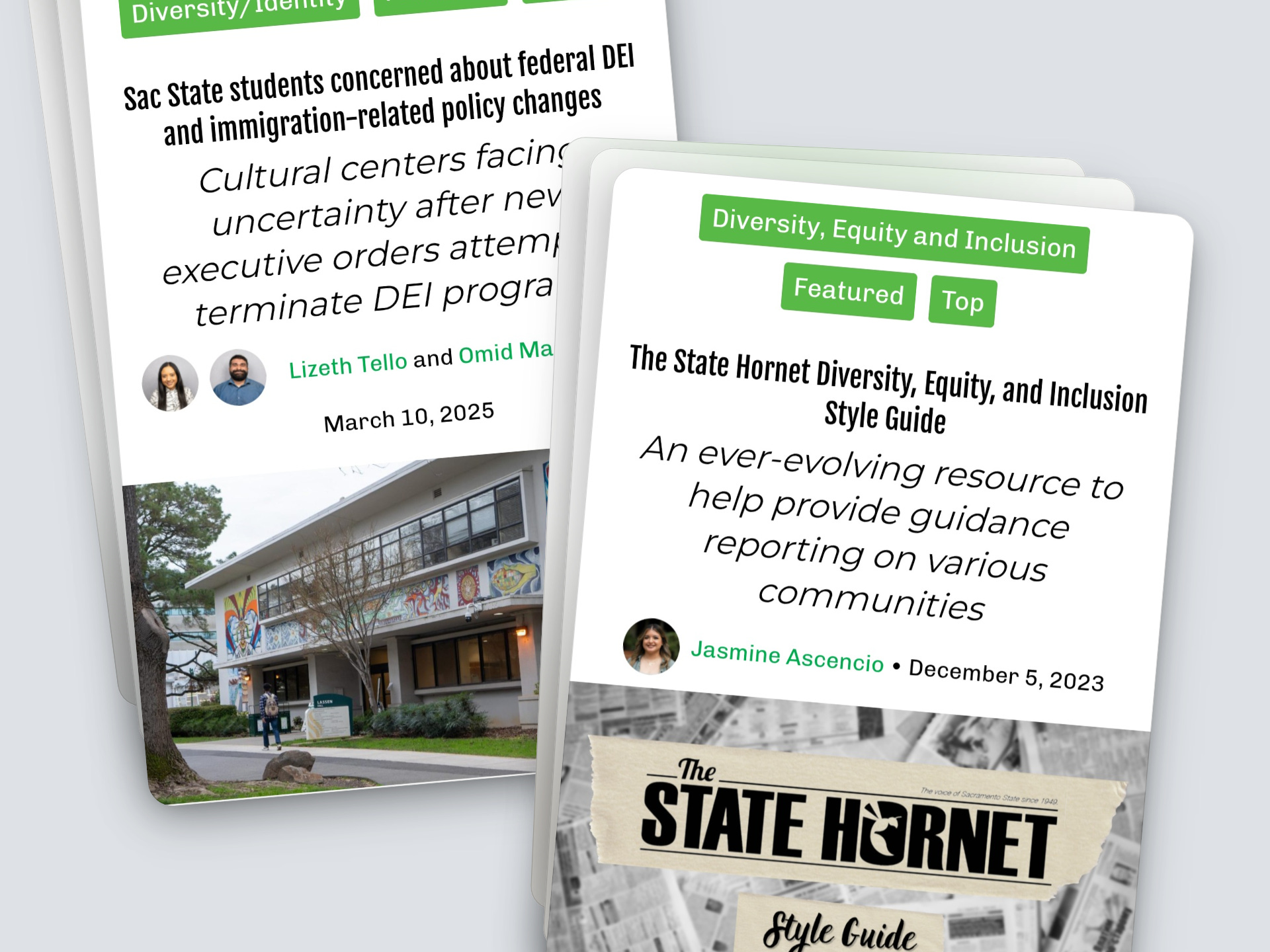
To institutionalize this, The Hornet developed a DEI Style Guide.
Created by a former DEI editor, the guide offers specific language recommendations for covering topics like gender, race, immigration, disability and behavioral health.
“It shows that we can hold ourselves accountable, that we really want to be a publication that kind of puts DEI at the forefront,” Wallace said.
Wallace’s advice for other student publications: start with the right intentions.
“Don’t approach it because you’re trying to fill a quota,” Wallace said. “Approach it because you actually care about these communities and want them to be represented. Approach it with empathy and you’ll find that it’ll come pretty naturally.
📊 Flashback: Black and Latinx students were severely underrepresented as editors-in-chief at top college newsrooms in spring 2021, Nieman Lab reported, making students feel not “wanted by student media.”
🚨 Free speech groups called on the Institute of American Indian Arts to drop sanctions against a student journalist, who published an investigation into an empty food pantry.
🤖 The Johns Hopkins News-Letter is against AI in journalism. The editorial board wrote they won’t “sacrifice ethical reporting for efficiency, no matter how alluring the prospect may be.”
🪦 Do you cover students’ deaths? A letter to the editor of the Columbia Spectator urges student journalists to write obituaries with names and cause of death, instead of just reprinting communications from officials.
SPJ Georgia is organizing a webinar on photojournalism for visual storytellers of all backgrounds and experience levels Sept. 30.
Chicago Media Career Fair takes place Oct. 10.
The Nation Magazine is looking for a full-time editorial intern. Deadline’s Oct. 26.
Apply to the Bloomberg summer news internship before Oct. 31.
The Minnesota Star Tribune’s applications for summer internships are live.
The Seattle Times is seeking summer interns for multiple departments.
Early-career journalists: Cincinnati Public Radio is looking for a full-time Adam R. Scripps Fellow.
PA students: Apply to the Pittsburgh Media Partnership Newsroom’s Journalism Apprentice.
Comments
Nothing yet. Say the first thing.
Sign in to join the conversation.