
The issue is sponsored by Flytedesk. The Nutgraf independently produced the content.
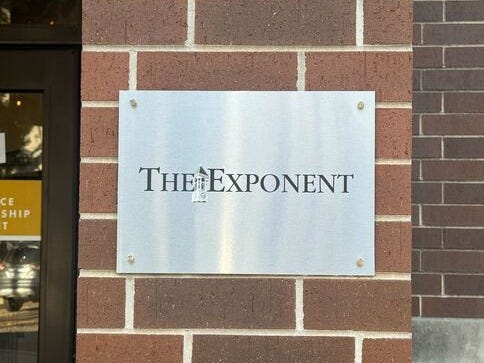
For four international student staffers at the Purdue Exponent and about ten more who hoped to join them, the news came at the start of the fall semester: they could no longer work for the paper.
The reason wasn’t their performance or a lack of positions. It was the “unintended consequence” of a university decision made months earlier.
Over the summer, Purdue University administration informed the independent student newspaper that it would no longer honor a long-standing contract for distribution and other services.
Because of that decision, the Exponent lost its status as a “contracted vendor” with the university.
Under the student visa regulations, international students can only work on campus or for university-contracted businesses. Suddenly, the Exponent was off-limits.
“We’re not going to employ international students out of concern about their legal status,” said Kyle Charters, the Exponent’s publisher. “We wouldn’t want to do anything here to jeopardize anyone’s legal status in the United States. That’s the stance we’ve been forced to take.”
The situation highlights a precarity for student newsrooms, where administrative decisions can have unexpected consequences on staffing, diversity and the ability to cover the campus community.

Flytedesk is excited to announce another year of its Fall Fellows program for the 2026 midterm elections. This intensive 23-week program will give a recent or soon-to-be grad a crash course on politics, media and working for a startup. Learn more about our fall fellowship here.
The university’s decision, sent via email over the summer, ended a partnership that had lasted for decades, according to the newspaper.
Citing a contract that expired in 2014 — despite both parties operating under its terms for the last 11 years — Purdue announced it would no longer assist in distributing the biweekly paper.
The university also ended the paper’s ability to purchase parking passes at a campus garage and requested that it remove “Purdue” from its name.
In a statement to the Indy Star, the university said the Exponent is a private business that’s “jurisdictionally and financially independent of the university” and that it doesn’t provide such support to other media organizations.
But for students at a university with no journalism school, the Exponent is more than just a private business.
“This is the journalism school,” said Editor-in-Chief Olivia Mapes. “I’ve learned everything I have about journalism at the Exponent, and it has helped me get internships … That’s what these people are missing out on is really the education opportunity.”
The loss of international student staffers, who came from the reporting, copy editing and photo desks, is a significant blow to a newsroom that serves a campus where international students make up about 17% of the student body.
“We’ve always felt that we’re stronger when there’s a diverse population of employees here,” Charters said. “That’s being taken away. We were put in a situation where we had to exclude people.”
The Exponent is a tax-exempt organization with about 120 employees.
The situation at Purdue doesn’t exist in a vacuum. It comes at a time of heightened anxiety for international student journalists across the country, fueled by political rhetoric and policy changes targeting them.
An executive order, for instance, pushes universities to “monitor for and report” on the activities of international students for antisemitic activities, with the president pledging visa revocations and deportations.
This very order previously prompted the Exponent to redact the names and images of pro-Palestinian student protests from its coverage to protect them from potential federal scrutiny.
Other student newsrooms followed suit, after national student media organizations sent out a “Student Media Alert” to warn about threats to student speech by immigration enforcement on campuses.
“It feels like international students are being marginalized and we don’t want to be a part of that,” Charters said. “We think that their voices deserve to be heard and should be heard.”
The only sustainable solution is for Purdue to recognize the paper as a contracted vendor again, which would restore its status as a qualified on-campus employer for student visa holders.
Charters said the Exponent’s attorneys have been in contact with the university but haven’t yet received a response.
In the meantime, the paper is exploring limited workarounds, like course-related internships. However, these are narrow paths, as a student would need to be majoring in a field directly related to their work on the paper to qualify.
With a majority of the Exponent’s staff being STEM majors, that option provides little relief, Charters said.
For now, Mapes said her team is focused on actively reaching out to international student communities and encouraging news tips to ensure their perspectives remain in the paper.
“It was just tragic because they were some of the people who were most excited about joining the Exponent,” Mapes said of the students they had to turn away. “It’s a loss for the Exponent.”
⚖️ A student photojournalist who interned at Cincinnati CityBeat was on trial in Kentucky last week for charges related to his protest coverage, including a riot charge. He was convicted of failure to disperse while covering a protest.
✉️ The Poly Post at California State Polytechnic University, Pomona received a cease-and-desist letter for its Spanish-language section called “La Voz de Pomona” from local Spanish outlet La Nueva Voz.
“Our seasoned colleagues missed the opportunity to start a dialogue, to mentor us and help us learn how to deal with this issue and how to avoid trademark infringement,” the editorial board wrote.
📻 Cleveland State University is handing over the reins of its beloved student-run radio station to Ideastream Public Media.
📌 Her Campus: Here are eight free speech organizations student journalists should be aware of.
NPR’s College Podcast Challenge is back for its fifth year, with a $5,000 cash prize.
The Pulitzer Center will host a free webinar Oct. 14 on how journalists can use scraping tools for environmental stories.
The Reynolds Journalism Institute will host a virtual workshop Oct. 14 on how to report like an anthropologist.
Apply to the Dallas Morning News College Internship Program before Oct. 31.
Apply to the Wall Street Journal internships through the National Association of Hispanic Journalists before Oct. 31.
The Progressive Magazine in Wisconsin is seeking interns for the spring. Apply before Oct. 31.
The CNN News Associate Program is accepting applications.
The application for POLITICO Fellows is open until Nov. 7.
The Las Vegas Review-Journal is accepting applications for summer interns until Dec. 1.
The 2026 HBCU News Intern Program is accepting applications until Dec. 15.
Comments
Nothing yet. Say the first thing.
Sign in to join the conversation.