
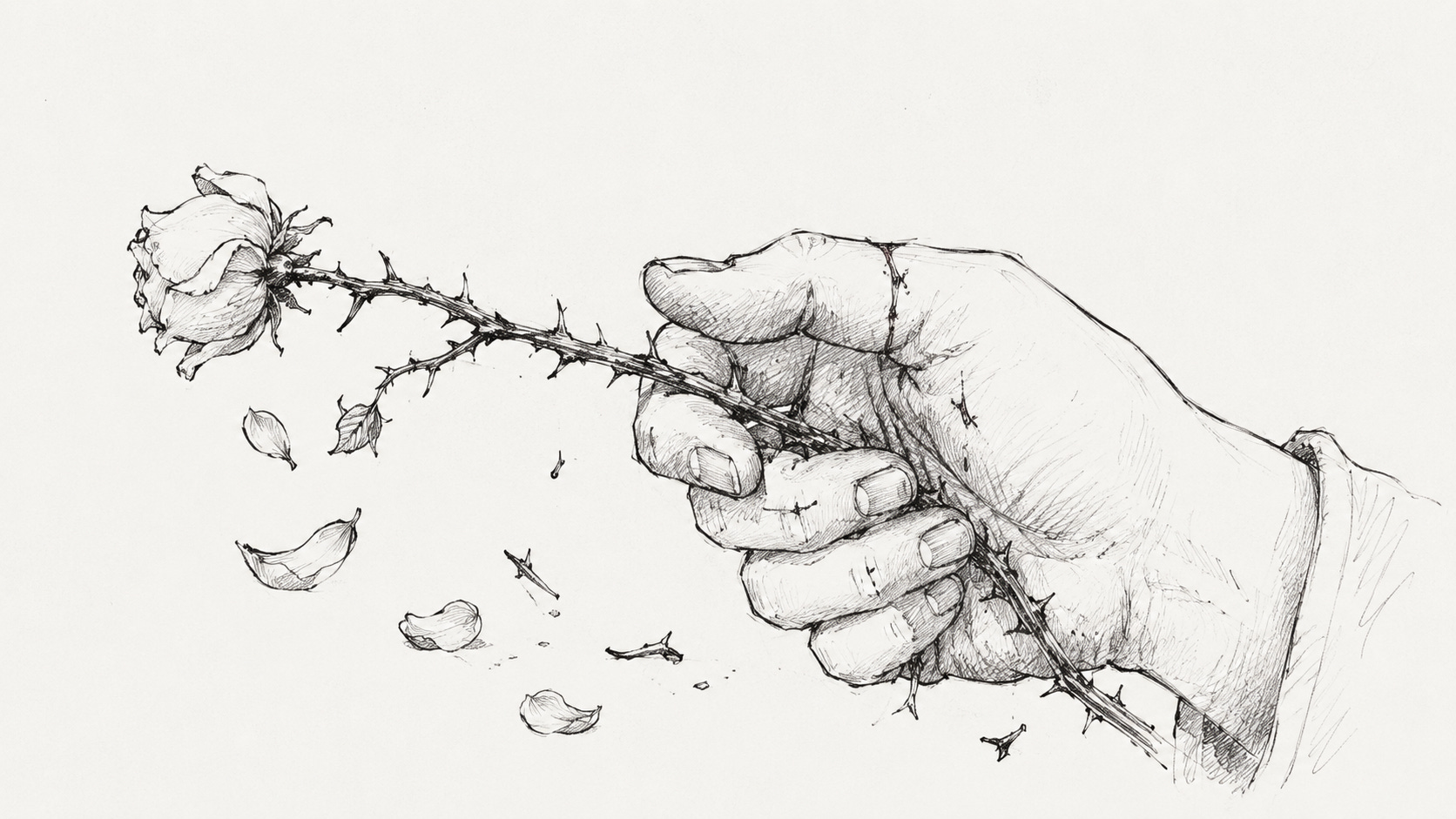
I experienced my very first anxiety attack over the same thing that brings me joy and meaning today: social media.
At the time, I was running multiple pages at once: TikTok, Instagram, Facebook, a blog, YouTube & Snapchat.
My goal was to grow all of them simultaneously. Then, one day I was talking to my brother, and he pointed out that I was wasting myself trying to do everything at once. I had convinced myself that people expected me to post every single day, to create something new constantly. He said, “Nurain, nobody really cares. You’re the one who created all these expectations for yourself.”
I brushed it off. But the next morning, I experienced my first anxiety attack — and I couldn’t even understand what was happening to me. His advice had been to stop posting on all those pages. He didn’t tell me to focus on one; that part was for me to figure out.
I found it painfully hard to take his advice, because I had poured months into growing those pages. Throwing all of that away felt insane. I’ve spent months building this — I can’t just let it go. That was the thought running in my head.
But when I finally cut them off, the relief was almost immediate. Once I made those hard choices, all that time, focus, and energy came flooding back to me — and I used it to grow far faster than I ever could have while holding on. And that was when I recognised what I’d been suffering from — something I’d only ever read about: the sunk cost fallacy.
Here’s what it means. We find it hard to let go of things because of how much we’ve already invested in them — time, money, energy, effort. We have a tendency to focus more on what we have poured into something instead of where we are going with it. But what we often fail to realise is that the investment is already gone.
You can’t get it back whether you stay or leave. The fallacy is making your decision based on what you’ve already spent instead of on whether the thing is actually useful to you. I kept staring at the months I’d sunk into those pages, completely ignoring what they were costing me right now. I was like a car stuck in mud — flooring the accelerator, going nowhere.
You’ve probably faced this yourself, or you might be facing it right now. Maybe you’ve poured your savings into a business that isn’t going anywhere; the market is shrinking, and letting go feels impossible because all you can see is what you’ve put in. Or maybe you’re in a relationship that drains you and brings you no joy, and yet you keep pouring into it because “I’ve already been with this person five years.” You focus on the years behind you instead of the direction you’re heading.
The hardest truth about the sunk cost fallacy is this: you have to look at where you’re going, not at how much you’ve poured in.
Imagine you’re climbing a mountain, and halfway up you realise it’s the wrong one. Most people won’t climb back down. They’d rather finish the wrong climb than admit they need to start over. So they push to the summit of a mountain they never wanted and carry on with their lives from there. The right move — as painful as it is — is to go back down and climb the right one. It’s not an easy decision. But if you actually want to get the results you desire, it’s the one you have to make.
But here’s where it gets interesting. The sunk cost fallacy isn’t always a bad thing — because this same force can work for you instead of against you.
When you pour money into something — an online course, expensive gear for your content, a coach, a trainer — you’re far more likely to take it seriously because you paid. The spending gives you skin in the game.
Think about how seriously you take things you paid for with your hard-earned money compared to things you got for free. Chances are, if you paid, you’ll use what you paid for. There’s a saying in business that, “If you pay, you pay attention.” And I’ve seen this play out in my life as well.
Whenever I pay for things, I take them far more seriously than if I got them free. For example, I subscribed to MyFitnessPal a while ago, which is a fitness app that makes me take my training seriously. I’ve also paid for several tools tied to my income that push me to actually make a sale each month so the money isn’t wasted. That’s not the fallacy trapping me — that’s me using the exact force as a commitment device to help me make progress.
So the fallacy itself isn’t the enemy. Holding on to something that’s clearly going nowhere because of what you’ve already spent — that’s the trap. But if you use it to your advantage, that is, putting something on the line so you’ll follow through – that’s one of the smartest moves you can make.
So every once in a while, you have to step back and ask whether you’re climbing the right mountain — or whether it’s time to start again.
And if you’re not sure whether to hold on or let go, here’s the question I keep coming back to: If nothing about this ever changed — if it stayed exactly as it is right now — would you still hold on?
—
Sitting with that question is the easy part. Acting on it — building the discipline to climb back down the wrong mountain and start the right climb — is where most people stall.
That’s what I built Self-Mastery for: a course for those who want the clarity and discipline to stop drifting and design a life on purpose. If you’re ready to do more than reflect, start here → ENROL NOW
No posts
Comments
Nothing yet. Say the first thing.
Sign in to join the conversation.