
We are The Nucleate Artery, a monthly newsletter focused on the latest Singaporean biotech research and events. Chat with us via our new telegram community: The Biotech Kopitiam!
If you enjoyed reading this post, comment and give us a like! Or let us know your thoughts here.
Happy graduation season to our graduand readers! Whether you’re taking the first step in your career, looking for a mid-career switch, or just want to find out more about navigating intellectual property as a career, don’t miss this illuminating fireside chat. Click here or scan the QR code in the poster below to sign up now!
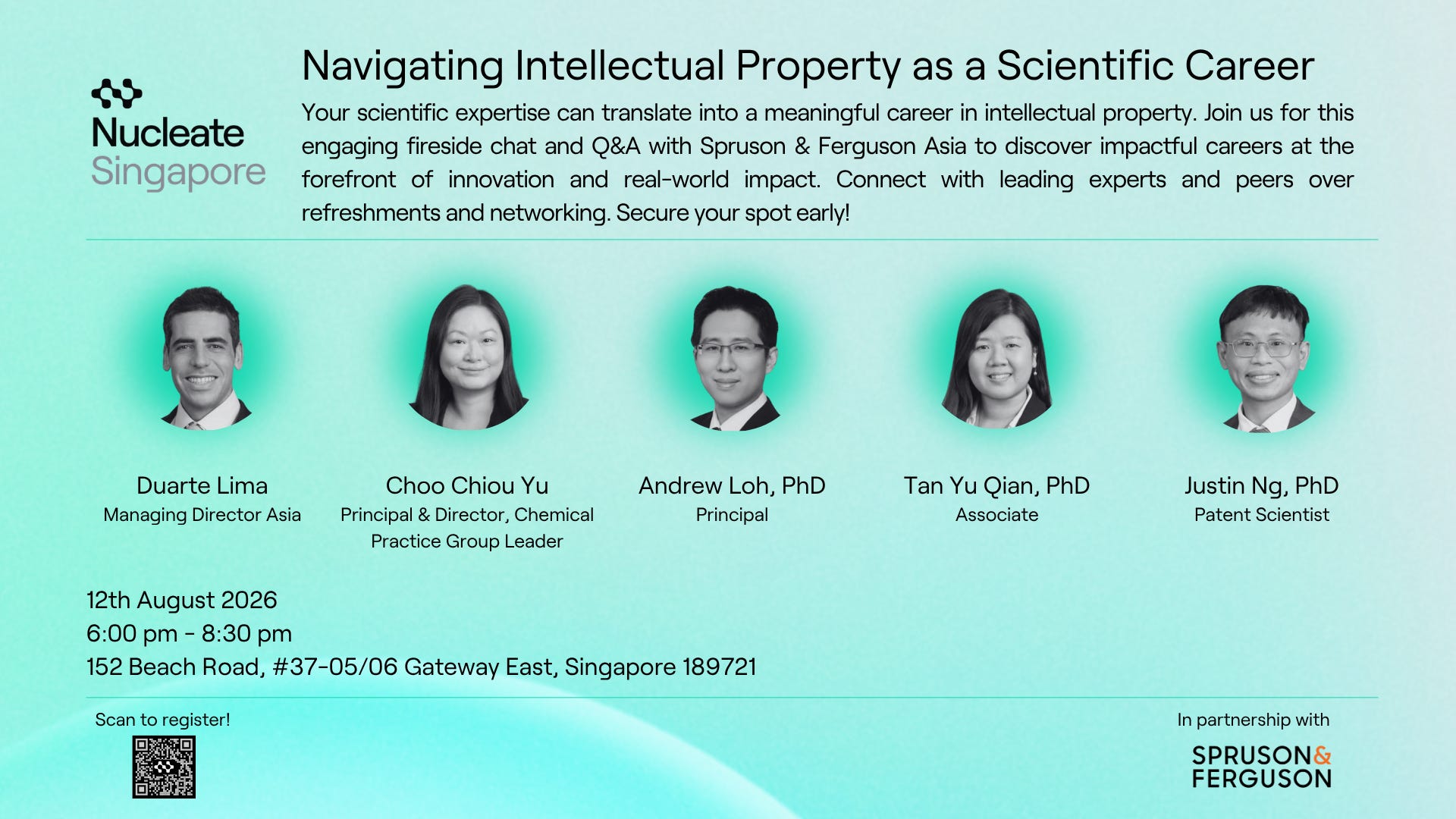
And now, let’s get into the rest of the article! Enjoy!
High potential SG research, hot off the press
@Senuri De Silva
TL;DR:
NK-cell therapies show promise against cancer but often lose their cancer-killing activity in the harsh, immunosuppressive environment of liver tumors.
Researchers at SIgN, A*STAR identified Nur77 as a key regulator that helps NK cells resist harmful lipid-driven suppression and maintain their anti-tumor activity.
Activating Nur77 with Cytosporone B strengthened NK cells and, when used to precondition NK cells before treatment, improved tumor control in liver cancer models.
Hepatocellular carcinoma (HCC), the most common form of liver cancer, remains difficult to treat. Immunotherapy has transformed cancer care by helping the immune system attack tumors, but its success in liver cancer is still limited. Natural killer (NK) cells are particularly promising because they can directly recognize and destroy abnormal cells and are being explored as ready-to-use “off-the-shelf” cell therapies. However, once NK cells enter solid tumors, the harsh and immunosuppressive tumor environment can weaken their ability to survive, infiltrate, and kill cancer cells.
Scientists at SIgN, A*STAR and collaborating institutions set out to understand what was holding NK cells back in liver cancer. By combining spatial and single-cell transcriptomics of human HCC tumors, the team mapped NK cells within the tumor environment and identified a protein called Nur77 as a potential regulator of their anti-tumor activity. NK cells expressing Nur77 showed stronger immune activation programs and were associated with better outcomes in patients with HCC. The team then uncovered an important metabolic roadblock. The liver cancer environment is rich in harmful lipid signals that can be taken up by NK cells through a receptor called CD36. This lipid buildup creates oxidative stress inside NK cells and suppresses their cancer-killing functions. Nur77 appeared to act as a protective switch by reducing CD36, helping NK cells resist this lipid-driven immune suppression.
To confirm this, the researchers removed Nur77 specifically from NK cells in mice. Without Nur77, NK cells were less mature, infiltrated tumors less effectively, and produced fewer cancer-killing molecules, allowing liver tumors to grow faster. The team then took the opposite approach and activated Nur77 using a small molecule called Cytosporone B. This restored NK-cell activity, reduced lipid-related stress, and improved their ability to kill cancer cells. Most importantly, the researchers tested whether this discovery could improve NK-cell therapy. NK cells were briefly treated with the Nur77-activating molecule before being infused into mice with liver cancer. These “preconditioned” NK cells infiltrated tumors more effectively, maintained their cancer-killing machinery, and controlled tumor growth better than untreated NK cells.
The study highlights Nur77 as a promising way to strengthen NK cells against the metabolic pressures of solid tumors. Rather than developing an entirely new immune cell therapy, Nur77 activation could potentially be used as a pre-treatment step to “prime” NK cells before infusion, helping existing NK-cell therapies remain active for longer and work more effectively against liver cancer.
Read more about the current status in cell therapy biotech:
How partnerships are advancing cell therapies.
Biotech advancements predicted for 2026 in cell and gene therapy.
Amid industry’s cell therapy automation push, Cellares and Ori dominate the field.
@Senuri De Silva
TL;DR:
Autism spectrum disorder looks different in every person, and researchers are still trying to understand how diverse genetic changes shape brain development and give rise to this remarkable variability.
Using patient-derived brain organoids, GIS researchers found scattered patches of disorganized cells and altered developmental timelines, offering a new explanation for why autism varies so much between individuals.
Autism spectrum disorder (ASD) is one of the most complex neurodevelopmental conditions, with symptoms and severity varying widely from one person to another. More than 1,000 genes have been associated with ASD, yet around 75% of cases still have no clearly defined genetic cause. This diversity has made it difficult to explain how autism begins during early brain development and why its features differ so greatly between individuals. Most previous studies have also focused on rare, severe forms of ASD or individual high-risk genes, leaving much of the broader autism spectrum poorly understood.
Scientists at GIS, A*STAR approached the problem from a different angle: instead of looking only at which genes or cells are altered, they asked whether developing brain cells are organized differently in space. The team grew patient-derived brain organoids; miniature models of the developing brain from a genetically diverse group of individuals with ASD. By combining single-cell and spatial transcriptomics, they could identify individual cell types and map exactly where they were positioned within the developing tissue.
The researchers discovered that ASD organoids showed disrupted organization between immature and developing neurons. Rather than the entire tissue being uniformly affected, scattered patches of disorganized neurons appeared in different locations and to varying degrees between patients. Some organoids also showed altered developmental timing, suggesting that parts of the developing brain may mature out of sync. This “spatially mosaic” pattern could help explain why ASD presents so differently across individuals. The researchers also found that the brain’s natural scaffolding fibres were disrupted in ASD organoids, supporting a role for weakened cell adhesion in abnormal brain development. These abnormalities persisted as the organoids matured.
By identifying spatially mosaic and abnormality in cell adhesion as a common disrupted pathway across genetically diverse patients, the study highlights a potential molecular vulnerability for further investigation. Future studies could explore whether restoring these cell-adhesion signals can rescue brain tissue organization, potentially opening new directions for target discovery and patient-specific therapeutic research in ASD.
Learn more about how biotech companies are shifting ASD care from behavioral observation to precision medicine:
Otsuka announced positive Phase III clinical trial results evaluating brexpiprazole for managing irritability associated with ASD in children and adolescents.
Roche collaborated with Genentech and the Simons Foundation to identify genetic markers associated with ASD subtypes.
Novartis introduced an AI-driven clinical development platform designed to accelerate ASD drug trials through real-time analysis of behavioral biomarkers and treatment responses.
@Devika Menon
TL;DR:
Metabolic dysfunction-associated steatotic liver disease (MASLD) is a metabolic disease that results when excess dietary lipids end up accumulating in the liver.
NTU scientists developed an efficient platform for the synthesis of FAHFAs (Fatty Acid Esters of Hydroxy Fatty Acids) that can treat MASLD.
These synthetic lipids block intestinal uptake of dietary lipids and modulate the gut microbiome, achieving similar therapeutic efficacy to that of a leading GLP-1 drug.
Metabolic dysfunction-associated steatotic liver disease (MASLD) is characterised by accumulation of excess fat (steatosis) in the liver, and affects 2 in 5 people in Singapore. Current treatment options are limited, as existing drugs only target the host endocrine or metabolic pathways, leaving the upstream driver of disease - excess dietary lipid flow from intestine to liver - unaddressed. FAHFAs (Fatty Acid Esters of Hydroxy Fatty Acids) are a class of naturally occurring lipids with anti-inflammatory properties and metabolic regulation potential. However, their clinical applicability is constrained by scarcity and poor bioavailability, as they break down easily in the stomach, making oral dosing a challenge.
To address these challenges, a team of scientists from NTU built a modular, four-step synthesis platform to produce several FAHFA variants. By sharing common synthetic steps across variants with shared structures, it allows FAHFAs to be synthesized efficiently. The team then modified the vulnerable ester bond to create two compounds - 12-TAASA and 12-HDTZSA - that resist stomach acid degradation while maintaining their gut-centric mechanism of action.
In diet-induced MASLD mouse models, oral dosing of these compounds reduced liver fat accumulation and weight gain to levels comparable to semaglutide (a leading GLP-1 drug). Interestingly, they discovered that these compounds employ a novel dual mechanism that was localized to the gut. Both compounds drive a shift in the gut microbiome towards bacteria that produce anti-inflammatory short-chain-fatty-acids (SCFA) and away from pro-inflammatory bacteria, while 12-TAASA also suppresses genes involved in intestinal lipid uptake.
By targeting the root cause of disease - intestinal lipid flow to the liver - rather than downstream metabolic effects, these engineered FAHFAs represent a fundamentally new therapeutic approach to treating a MASLD.
For more on liver disease treatments:
Singapore-based AIM Biotech developed “LEADS” liver-on-a-chip model for NASH drug testing.
Scientists from NUS developed nanoparticles for treatment of fatty liver disease.
News from the Singapore life sciences industry
Singapore-based startup ChemT Biotechnology raises $5 M to bring AI to Biomanufacturing.
Singapore’s Biobot Surgical raises S$20 M to support global commercialisation.
ALR Technologies acquires CGM Medical Technology for $45 M.
Singapore’s Foundation Healthcare launches IPO to raise approx $242 M.
ARIA Bioscience collaborates with A*STAR to explore mitochondria-focused research for longevity aesthetics.
Singapore’s premier podcast on the local biotech ecosystem.
Conference
SINGAPORE LAB EXPO 2026
(25-26 Aug, 10:00 AM - 04:00 PM, in person)
Competitions
MedTech Actuator Origin Singapore Semi-final | MedTech Actuator
(25 July, 6:00 PM - 8:30 PM, in person)
Networking
Sat Health & Bio Brews Singapore
(Every Sat, 9:00 AM - 10:30 AM, in person)
Workshop/Seminars
The ESOP Primer: From Plan Design, Policy, to Valuations
(15 July, 06:30 PM - 09:30 PM, in person)
Startupbootcamp Sustainability Singapore 2026 Demo Day
(16 Jul, 3:00 PM - 6:00 PM, in person)SCTP (SkillsFuture Career Transistion Programme) Launch & Lead: Startup Strategy, Funding and Operations
(18 Jul, TBA, in person)ACE.SG July Incubation Programme
(21 Jul, TBA, apply online)“Bridging the Gap: RNA Translation to Hidden Proteomes” Summer School (24-26 Sept Jul, in person, registrations open)
Thanks for reading The Nucleate Artery! Share this post with a friend.
Comments
Nothing yet. Say the first thing.
Sign in to join the conversation.