
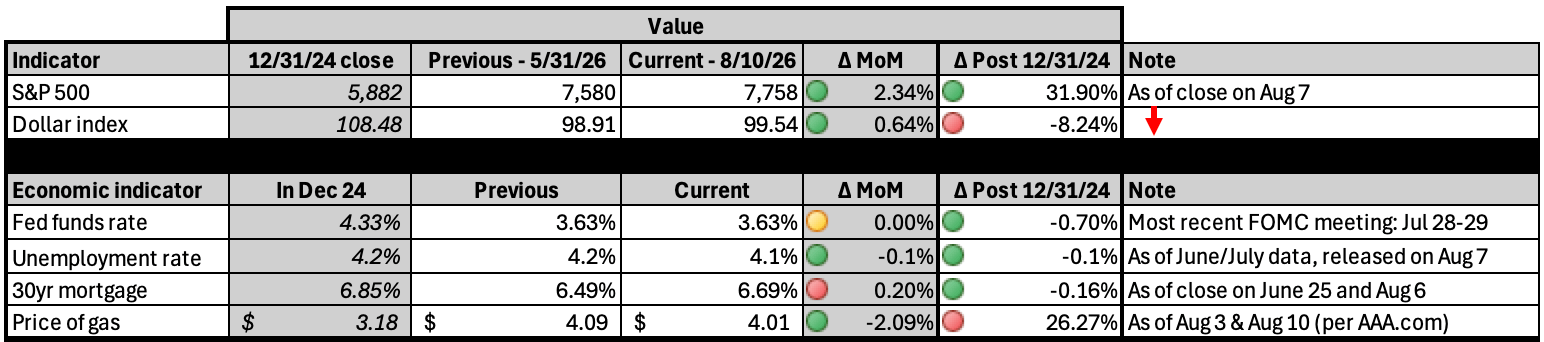
Green circle = indicator has moved in a positive direction
Red circle = indicator has moved in a negative direction
MoM change = month-over-month change
I would much appreciate it if you could hit the like ❤️ button!
It helps more people discover Nuance Matters and is a cost-free way to let me know you appreciate the work!
Unemployment rate (July 2026, released on Aug 7): 4.1% 🟢
Labor force participation rate (July 2026, released on Aug 7): 61.4% 🔴
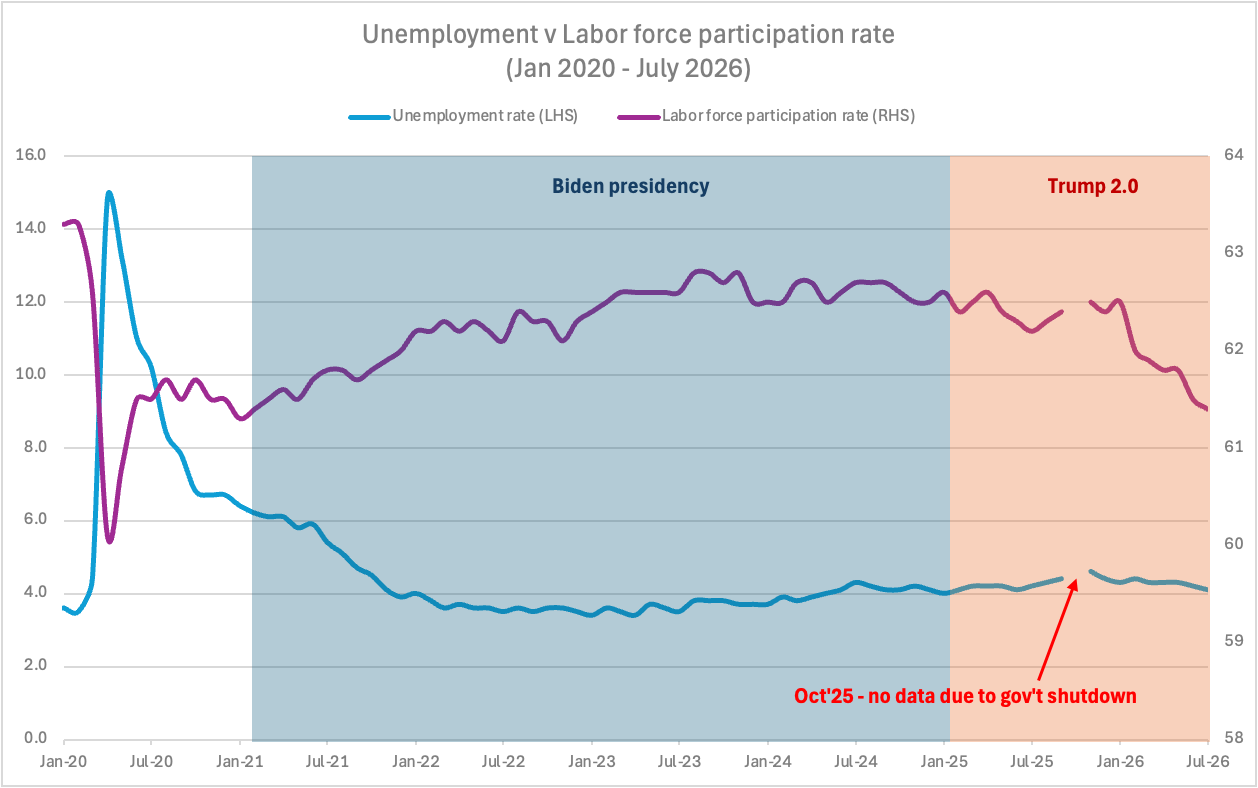
Source: St. Louis Fed (x2)
***********************************************************************
On Friday, the US economy was briefly stunned when the Bureau of Labor Statistics announced July numbers. Not only did the BLS report that non-farm US jobs were down 23,000 last month, but the numbers for May and June were also revised down, by a combined 103,000 jobs.1
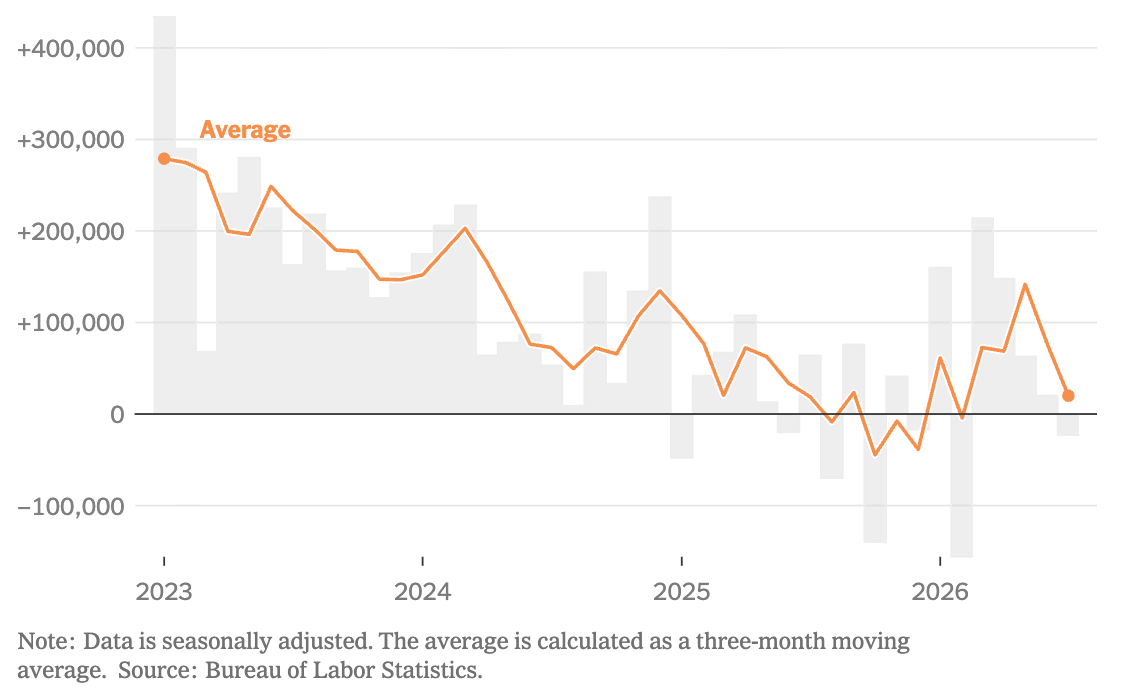
This was quite a turn from pre-announcement expectations, which, according to Morningstar, were that the economy would add 100,000 jobs and unemployment would stay flat at 4.2%.
It is important to note the breakout of this job gain / loss. Last month, the private sector (led by health care and construction) actually added net 30,000 jobs, but government employment was down 53,000 positions — mainly attributable to the loss of 50,000 public sector education roles, the largest seasonally adjusted drop in July since at least 2015.2
Relatedly, the unemployment rate itself fell slightly (from 4.2% to 4.1%,) the lowest level since last June. In a vacuum, this is good news. However, this drop is largely because the US labor participation rate shrunk to 61.4% — the lowest rate since February 2021. The labor force shrank by 260,000 people last month and overall, 1.4mn workers have left the workforce in 2026 (due to a combination of an aging population and the government’s policy toward immigration).
Small businesses are looking for workers. According to the National Federation of Independent Business, 20% of small business owners plan on creating new jobs in the next three months, with hiring plans at their highest point since October 2022.
The problem though is the labor just isn’t there. 27% of small business owners said “labor quality or availability” was their biggest problem, up 8 pts from June.
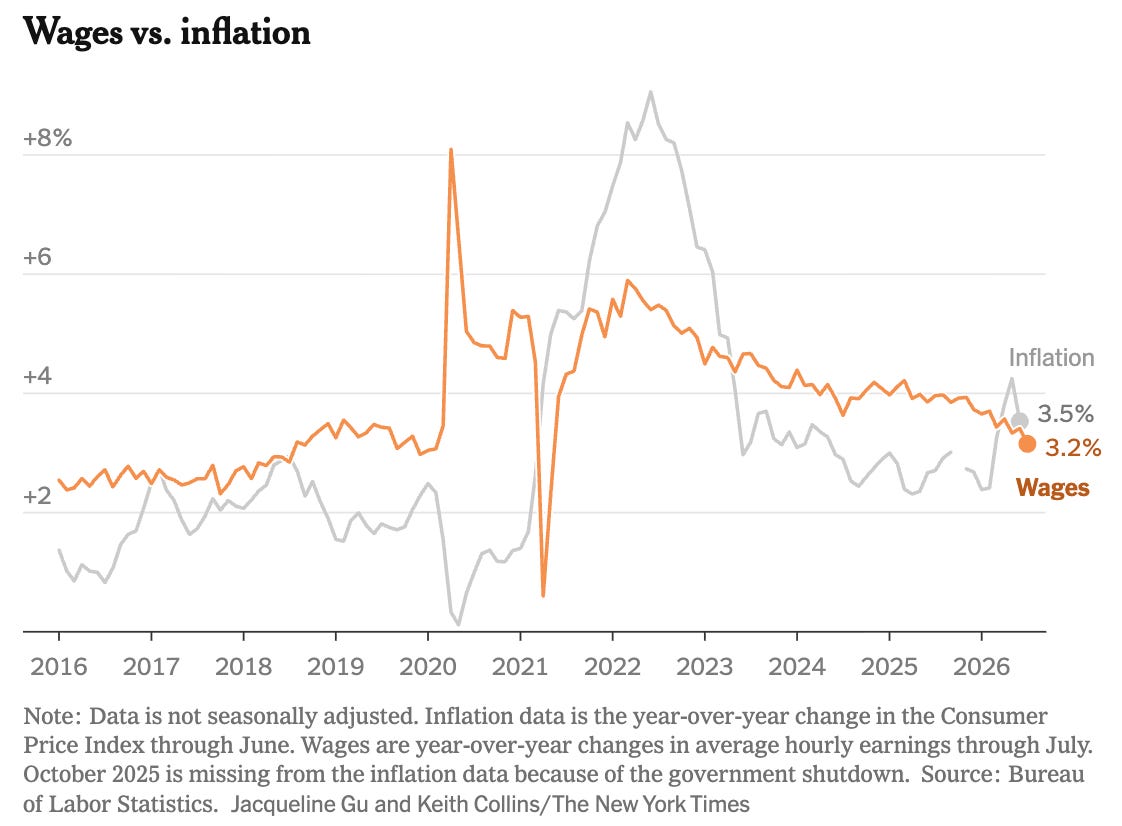
Importantly, people in the workforce are not getting wage increases commensurate with inflation. Year-over-Year wage growth, at 3.2%, continued its downward fall and sits below inflation (which is currently 3.5%).
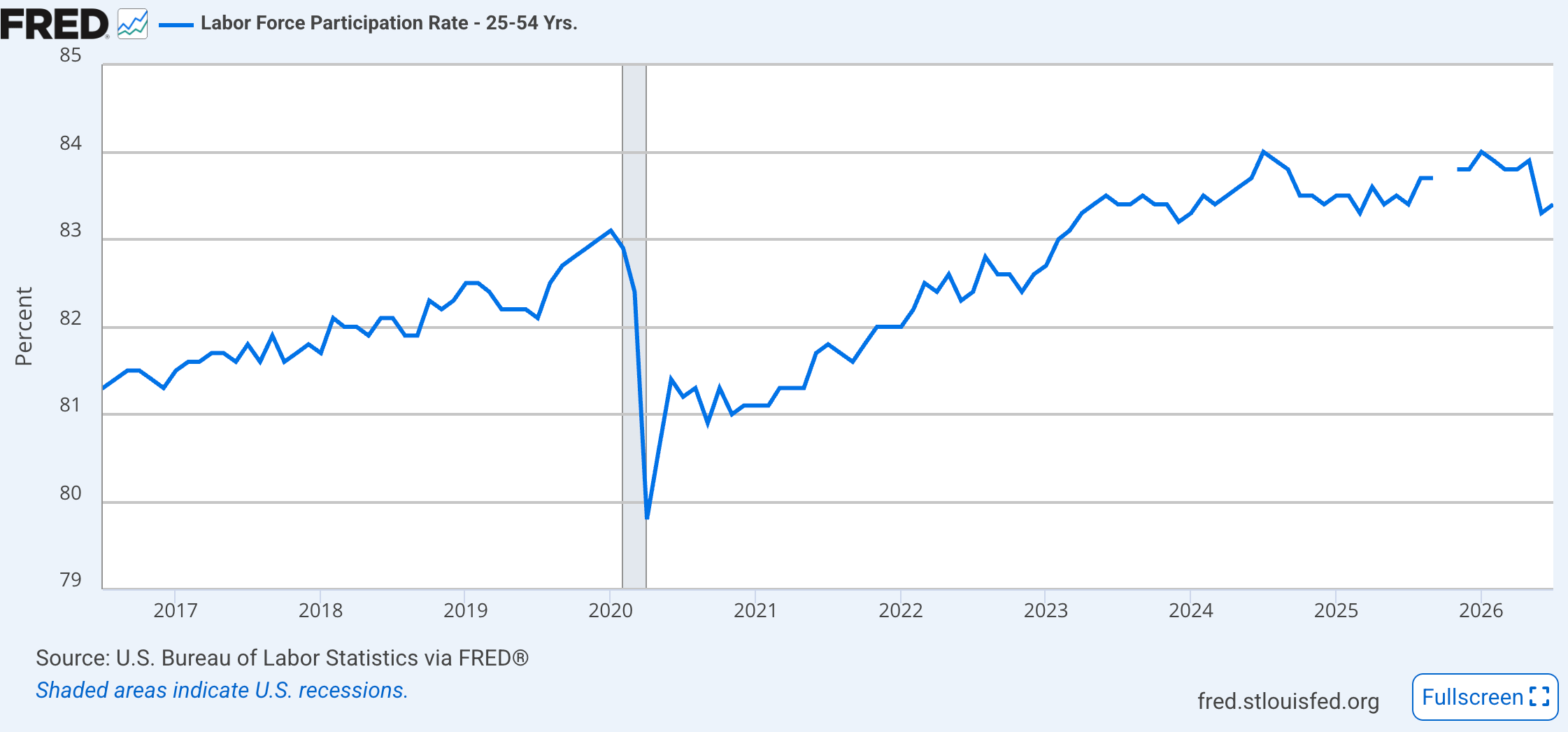
On a more positive note, after a big drop in June there was a slight uptick in participation rate for prime working age adults (currently at 83.4%)…
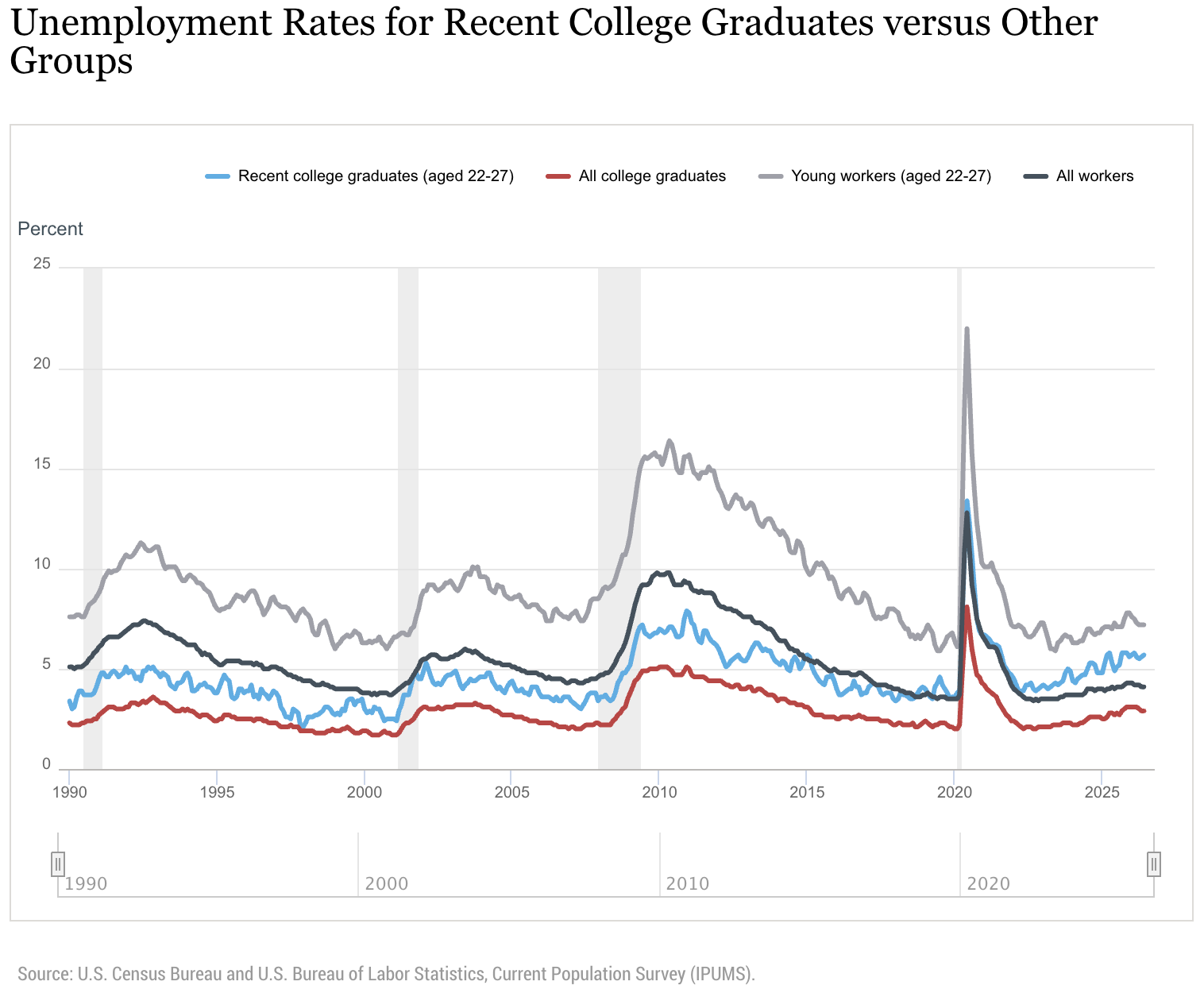
…though the unemployment rate for recent college graduates is trending in the wrong direction.
What does this mean going forward? Remember, just last week we were discussing higher inflation and how the Fed might need to raise rates to deal with it. But, high inflation and low job growth are a bad combination.
Investors have now flipped on the likelihood of a rate cut.
That being said, inflation has been the name of the economic game since the pandemic, and will likely be the critical factor in determining what the Fed does next month.3
All eyes will be on the latest inflation data, due out Wednesday (Aug 12).
If you enjoyed this edition of Nuance Matters, consider letting me know by buying me a cup of coffee!
Cheers!
Employment in manufacturing inched up, but is still below 2023-2024 levels (let alone decades prior).
As opposed to post-Global Financial Crisis when it was all about jobs / unemployment.
Comments
Nothing yet. Say the first thing.
Sign in to join the conversation.