
💙 This month we dive into the the importance of hardware in the creative industries and how good design and UX are the most important ingredients to success in hardware and software in the era of AI.
New Renaissance Notes: a monthly newsletter where we share insights about the intersection of culture, creativity and technology. We include our updates from New Renaissance Ventures - Europe’s first venture fund dedicated to the Creative and Cultural Industries.
If you haven’t subscribed yet you can join our journey here:
See here for our special previous edition ‘The Year 2 Update’
In the world of tech and startups, it’s not the festival summer but rather the conference fall, and our schedule reflected this. We’ve been busy the last few weeks, attending and hosting gatherings from the cold north in Helsinki to the hot east in Riyadh.
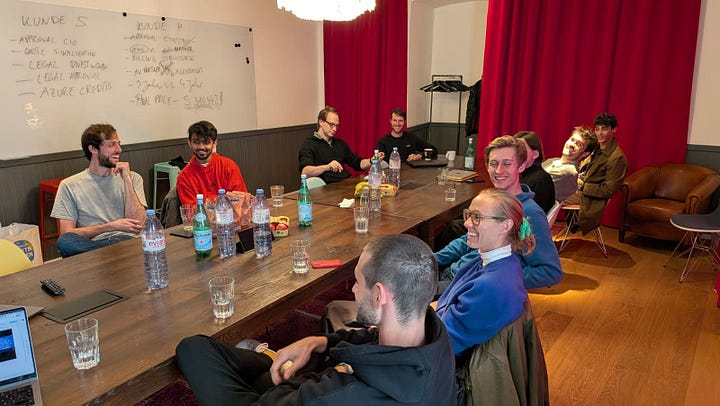
We hosted our first founder retreat in Vienna and invited Sir Konstantin Novoselov, Nobel Prize Winner in Physics, to discuss with our founders on how to “Play the Long Game”. He shared how long-term thinking has guided his scientific and artistic work, and what founders might learn from that mindset. We were also lucky to attend a private guided tour through the Belvedere Museum, famous for the world’s largest collection of Gustav Klimt’s works.
Last month also marked the second annual CultTech Summit in Vienna. As a close partner, we were delighted to host a panel on “Investing in the Future of Creative Tech” at this conference, which gathers investors, founders, artists, and senior stakeholders from the CCIs to explore the intersection of culture and technology.
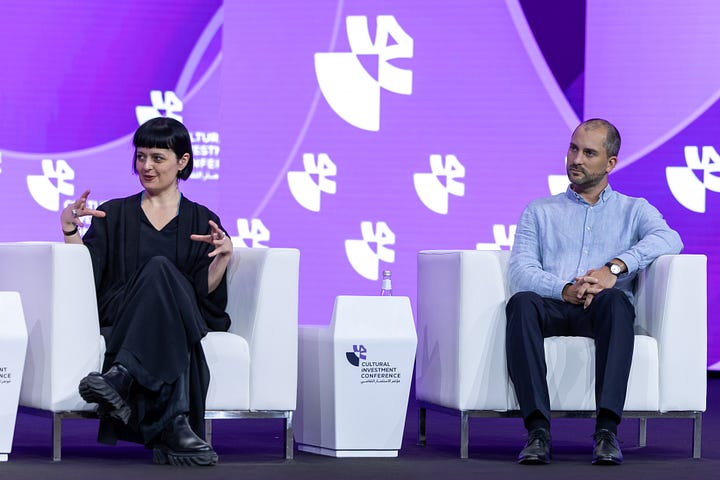
In Riyadh, we were invited to speak at the inaugural Culture Investment Conference to share the investors’ perspective on the next generation of cultural entrepreneurs. It was a big stage with many top international guests, including the CEOs of Sotheby’s, Christie’s, and Art Basel.
We also attended Expand North Star / GITEX 2025 in Dubai, a massive startup conference and a great opportunity to meet founders, fellow investors, and LPs from all over the world.
We couldn’t miss Slush, the ultimate tech week in Helsinki. Despite the seasonal chill, the atmosphere was incredibly warm thanks to the organizers and the welcoming Finnish people. We’re grateful to have connected with so many founders and attended events hosted by Creandum, Firstminute, LeftLane, Lakestar, Atomico, HV Capital, and Cherry. A personal highlight was co-hosting a dinner with our friends at Supernode Global.


Victor Henning is the founder of Mendeley, the research collaboration platform acquired by Elsevier, and Fjorden, a creative tech hardware company acquired by Leica Camera AG. His career spans music, film, and technology, giving him a uniquely creative and cross-disciplinary perspective. After building influential software used by millions, he transitioned into hardware with Fjorden, focusing on tools that elevate the creative process.
The strongest creative tools of the future will be hybrids. Software gets commoditized and hardware is too limited—the real value is in the mix.
Fjorden proved this: phone cameras were great, but the ergonomics were awful. Photographers needed physical buttons backed by pro-level apps. By embedding yourself into a workflow both physically and digitally, you create a moat that AI can’t copy.
In hardware, the cost of complexity isn’t linear but exponential. Every design choice haunts you later.
Victor kept Fjorden alive by keeping it simple: minimal SKUs, no fluff. A single green wrist strap once caused enough logistical drag to nearly bankrupt them. The lesson? Obsess over quality, not breadth. Ship one thing that works perfectly.
In an era where AI commoditizes technical capabilities, the differentiator in creative tech is taste. The design sensibility, ergonomics, curation, and experience that turn tools into beloved objects. Software is now easy to build; the advantage lies in taste, usability, and design.
(And Advice for Founders Building Hardware In The Creative Industries…)
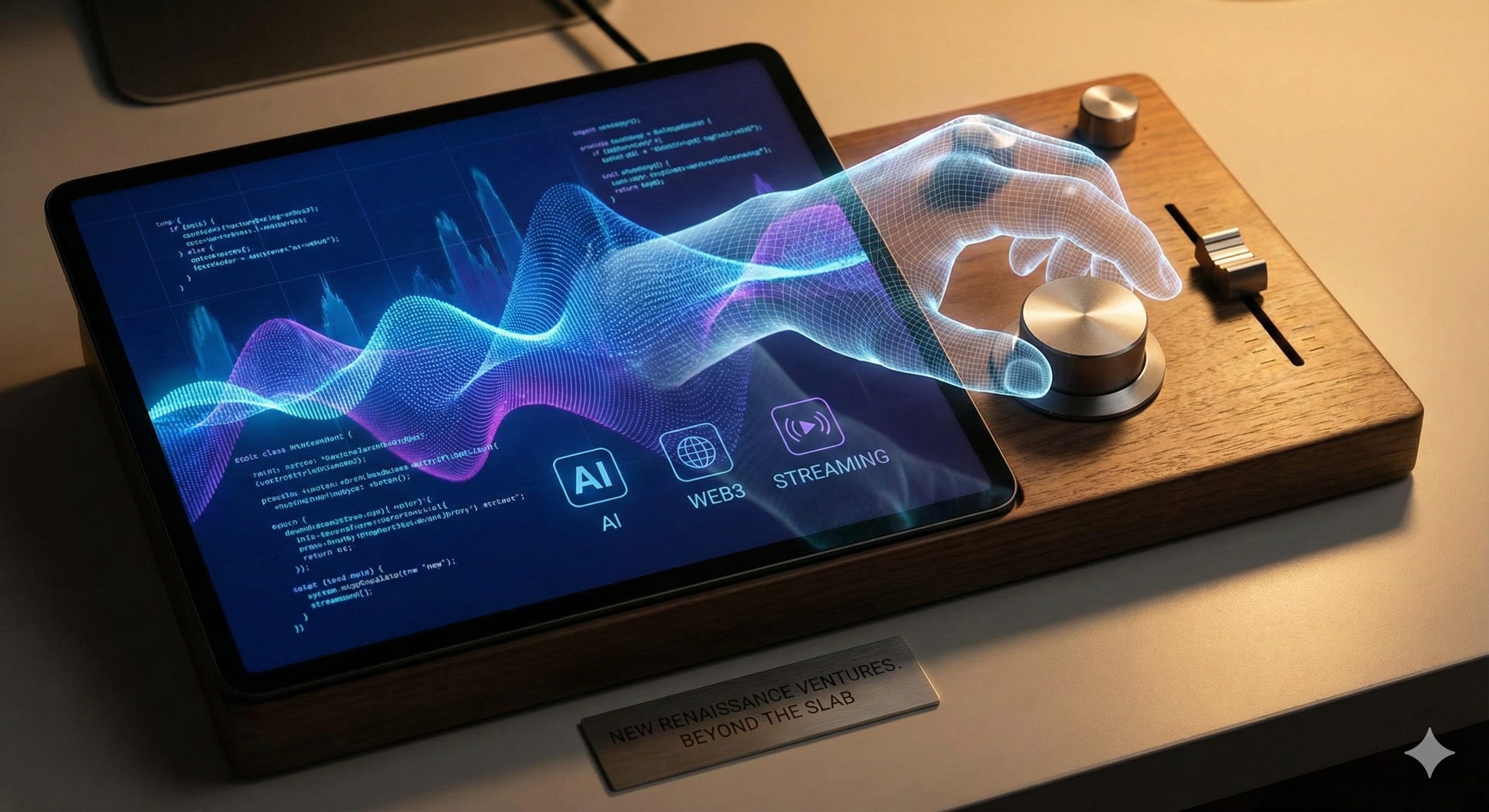
Creative tech was defined by software. Streaming democratized content consumption, AI revolutionized creative tooling, and Web3 explored digital ownership. This era of pure software delivered accessibility, but it came at an ergonomic cost: digital fatigue.
For true mastery, deep immersion, or consciousness-shifting experiences, the standard phone or laptop (the “touch-only slab,” as Victor Henning called it) is a bottleneck. When we are limited to a flat pane of glass and virtual controls, we compromise fidelity and flow.
At New Renaissance Ventures, we believe the highest-value opportunities are moving beyond the software layer and into the physical interface. We’re excited about ventures that re-introduce the physical to push the boundaries of creative experience.
The challenge for professional creatives is the loss of tactile fidelity. When you rely on a virtual slider or a software shutter button, you lose the haptic feedback essential for speed and precision.
Victor Henning understood this perfectly. He wasn’t building a simple “camera accessory”, he was building a device that restores the ergonomics of a true instrument to the most-used camera in the world: the iPhone. For context, 92% of all photos are now taken on phones, creating huge demand for better phone-centric creative tools, not fewer tools. People take ~2 trillion photos per year, so even incremental UX improvements reach huge audiences. The Fjorden Grip restores the physical shutter, aperture, and zoom dials that are critical for achieving flow state and professional precision in photography.
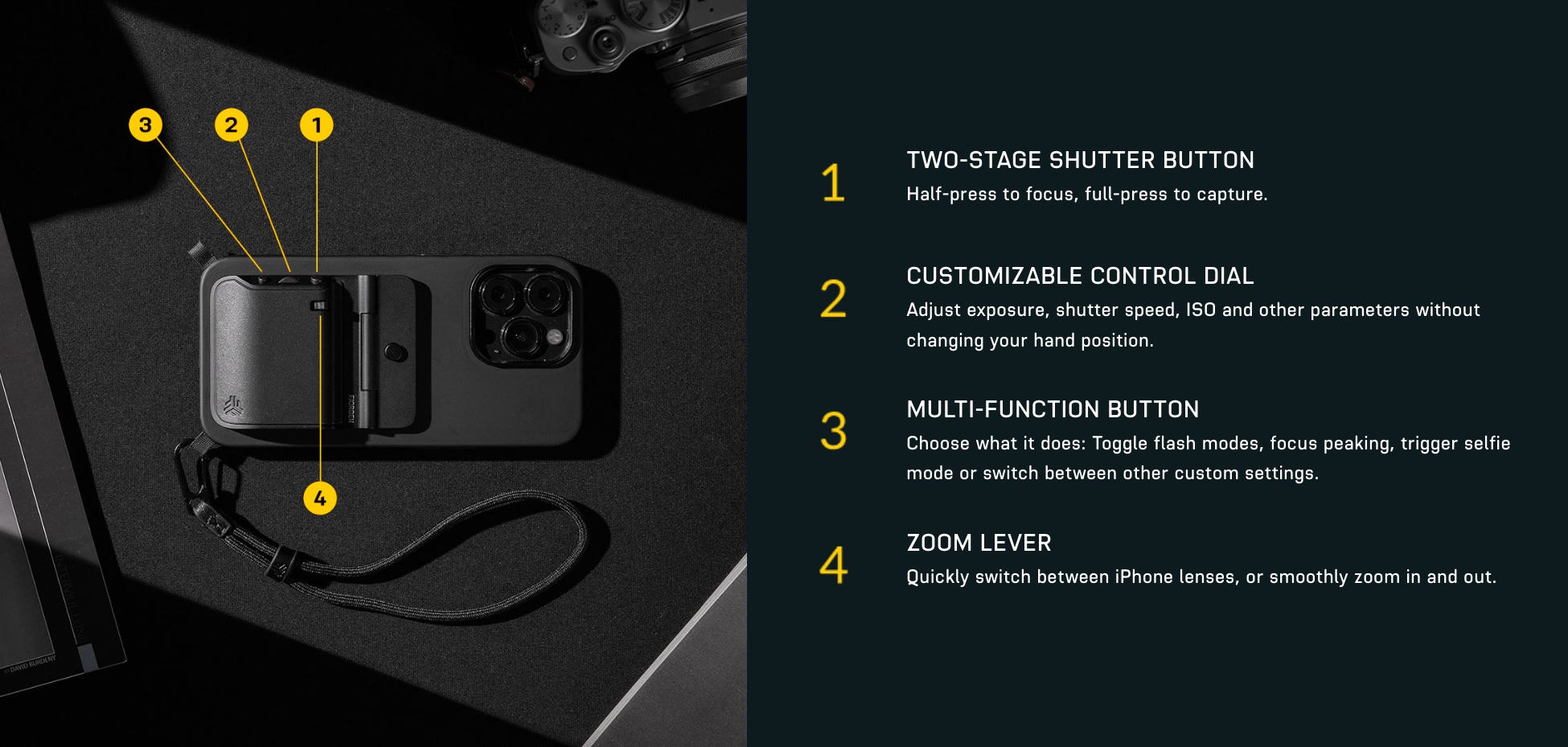
The insight here is that the hardware is the catalyst for mastery. The Fjorden Grip transforms a general-purpose, distraction-laden tool into a dedicated, focused creative machine.
Crucially, this hardware is a Trojan Horse for digital value. Fjorden’s success was cemented when Victor was brought on to lead the development of the Leica LUX app. The hardware purchase is the physical lock-in that enables long-term digital engagement, which includes a freemium/subscription model for advanced features and authentic Leica lens simulations. The physical product captures the user, and the software delivers the recurring value.
Not all creative tech demands active control, some require total surrender. This is the domain of our second model, best exemplified by Lumenate.
The original Lumenate app used the phone’s flash to induce consciousness-shifting light patterns for meditation and creativity. However, it required users to hold their phone, which is ergonomically incompatible with deep relaxation. Lumenate recognized that the full experience could not be achieved until the physical constraint was removed.
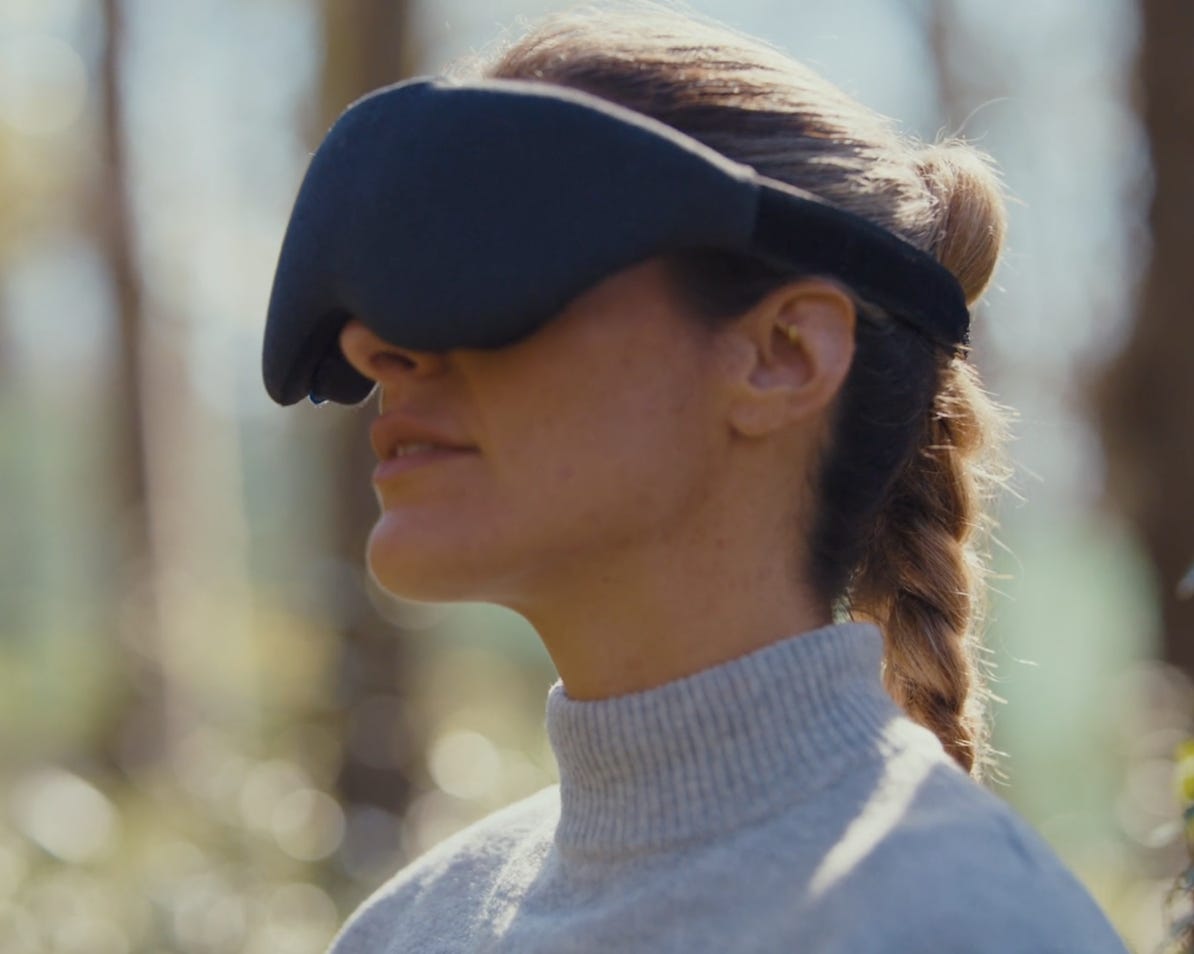
The Lumenate Nova light mask is the solution. It is not an app; it is a dedicated, hands-free physical gateway to an internal experience. The hardware provides two non-negotiable elements:
Comfort and hands-free operation: The design allows the user to lay down and relax fully.
Sensory Environment: The light-blocking mask and precision LED array create the high-fidelity, controlled environment required for the neuro-synchronization to take effect safely and effectively.
The Lumenate hardware is the product, and the software is the content/delivery system. It creates an entirely new category of sensory experience that is physically impossible to replicate using a generic screen interface.
Traditional VCs are often wary of hardware (high CAPEX, inventory risk, complex supply chains). However, if you build “Physical-Digital Interface” companies that solve fundamental ergonomic and sensory limitations, you capture value because the hardware becomes the bottleneck for a premium experience:
Fjorden: The physical controls are the key to premium precision and flow software (Leica LUX Pro).
Lumenate: The physical mask is the key to deep immersion and consciousness content.
Once a user is invested in the physical tool, they are locked into the valuable digital ecosystem that sits on top which ultimately drives retention and revenue. This model provides a strong, defensible position often missing in pure software plays. It’s fair to say that Apple is the company that understood this principle best. However, we also have more recent breakout successes that beautifully embody this thesis, such as Oura and Whoop.
AI is accelerating the shift to software-defined hardware (SDH): Advances in AI are dramatically reducing the cost and effort of software development, making SDH viable for more industries beyond high-volume sectors like smartphones.
AI enhances both the development and the end product: AI is used to optimize the SDH development process through AI-assisted design, faster testing, and seamless software-hardware co-development.
‘The beautiful, retro tech of two theatrical sound designers’ - The Verge
‘The Cinematic Future, Navigating Art, Technology, and Tradition in an Evolving Frame’ - The Art Times
Thanks for subscribing to New Renaissance Notes - please feel free to share this newsletter with anyone you think would appreciate it! We welcome feedback so let us know your thoughts!
If you haven’t subscribed yet you can here:
For more regular updates, insights and resources follow us on Linkedin.
No posts
Comments
Nothing yet. Say the first thing.
Sign in to join the conversation.