
💙 This month we dive into our trends and forecasts for the creative and cultural industries in 2026.
New Renaissance Notes: a monthly newsletter where we share insights about the intersection of culture, creativity and technology. We include our updates from New Renaissance Ventures - Europe’s first venture fund dedicated to the Creative and Cultural Industries.
If you haven’t subscribed yet you can join our journey here:
If you haven’t read already, here’s our last edition ‘Why the Next Renaissance in Creativity Requires Hardware’
Our portfolio company Lumenate launched its dedicated hardware device ‘Lumenate Nova’. Nova takes the consciousness-shifting flicker experience already loved by more than 2M users and elevates it to new heights. We’ve been lucky enough to try the product already, and it is no exaggeration to say that the experience is truly mind-blowing. We can’t wait to see the impact Nova will have on the world!
ElevenLabs has been a core partner of our portfolio company Mozart AI, providing the generative music API that underpins the platform. We’re excited about what they will create together this year! Read more about the partnership here.
🇩🇪 We are building a dedicated one-day invite-only event in Berlin focused on the intersection of AI x Creativity. We’re bringing together the brightest and creative minds to explore how technology is reshaping the creative landscape. We’ll be sharing the full details and dates very soon. Want to be the first to know, reply to this email to join the early interest list.
An AI-generated song will soon shatter streaming records, sparking a massive industry scandal. We’ve seen this cycle before, every major tech shift triggers a creative crisis before becoming the new standard.
While the Anti-AI camp mourns the loss of traditional craft, we champion the Pro-vibes approach. We don’t see AI as a replacement for artists, but as a tool to bypass gatekeepers and create at the speed of inspiration. We are all in for fair compensation, ensuring artists receive their share is a problem as old as the concept of intellectual property itself. However, and again, reality is neither black or white but somewhere in between. AI tools equally enable and democratize music creation. Much like electronic instruments, DAWs, and auto-tune did before it. We are always standing on the shoulders of giants and remixing existing patterns.
The reality? Most listeners already consume AI-assisted music through mastering, tuning, and algorithmic tools. Like the DAW or Photoshop before it, AI isn’t killing music—it’s democratizing who gets to create it.
The Scandal is Inevitable: Music is tied to identity, making the AI backlash emotional and loud.
A Proven Pattern: History shows that scandalous tech eventually becomes the industry backbone.
Efficiency Over Ego: AI allows for rapid iteration and exploration without the friction of traditional production.
💙 Our portfolio company Mozart AI, built on the Eleven Music API, is emblematic of this shift. They’re building a generative audio workstation that real producers actually want to use. Text-to-track, clean stems, deep control inside a modern DAW.
Text → images was just the warm-up.
We believe 2026 is the year generative media fully breaks out as a category, not a feature. Video, audio, 3D assets, characters, environments, and entire worlds will all be generated.
The key shift: AI moves from workflow acceleration to end-to-end creation.
💙 We’re particularly excited about companies like our portfolio company Wonder Studios, which demonstrate how AI can reshape entertainment pipelines holistically from performance capture to final output.
This mirrors what we’ve seen historically: the biggest platform shifts don’t just make things cheaper; they make entirely new formats possible.
YouTube didn’t just reduce distribution costs, it created creators. TikTok didn’t just compress video, it changed culture.
We believe Hollywood learned the wrong lesson from streaming and it won’t make the same mistake twice.
During the streaming era, talent lost leverage, royalties eroded, and value accrued disproportionately to platforms. With AI, studios know what’s at stake: likeness, voice, performance, and creative IP are suddenly programmable.
Expect landmark AI talent deals.
Expect new royalty frameworks.
Expect lawsuits.
This won’t just be a legal battle; it will be a cultural one. Who owns a performance? What does “authorship” mean when models are trained on decades of work? These questions will define the next era of entertainment contracts.
We believe the winners will be the companies that proactively align incentives between creators and technology and not those trying to extract value quietly in the background.
Mass platforms are losing their grip.
We believe the future belongs to deep, passionate communities. Music subcultures, wellness practitioners, athletes, educators, spiritual explorers. People who care deeply about something specific.
AI makes this economically viable.
When tooling is cheap, distribution is global, and personalization is native, niche communities can professionalize. They can build businesses, not just followings.
That’s why we back depth over breadth.
💙 Companies like our portfolio company Lumenate show how AI-native tools can support highly specific communities. In this case, tech-assisted psychedelic meditation with credibility, safety, and scale.
Paradoxically, the more AI eats productivity, the more humans crave presence.
We believe 2026 will see a surge in live events, physical venues, retreats, and tactile experiences (not despite AI, but because of it). When work becomes automated, meaning becomes scarce.
This is the “Anti-AI Bet.”
Authenticity, physicality, and shared moments become premium. Music festivals, intimate performances, wellness experiences, maker spaces, and real-world communities thrive as digital abundance increases.
AI creates leverage.
IRL creates meaning.
The smartest companies will pair both.

Watching is passive.
Participating is sticky.
We believe the most powerful entertainment platforms won’t be consumed, they’ll be lived in. Roblox already proved this: playing, creating, socialising, and spending inside a world beats passive viewing every time.
The future of entertainment belongs to world-builders.
AI accelerates this shift by lowering the cost of creation. Worlds can be built faster, populated dynamically, and personalized in real time. Users are now co-creators.
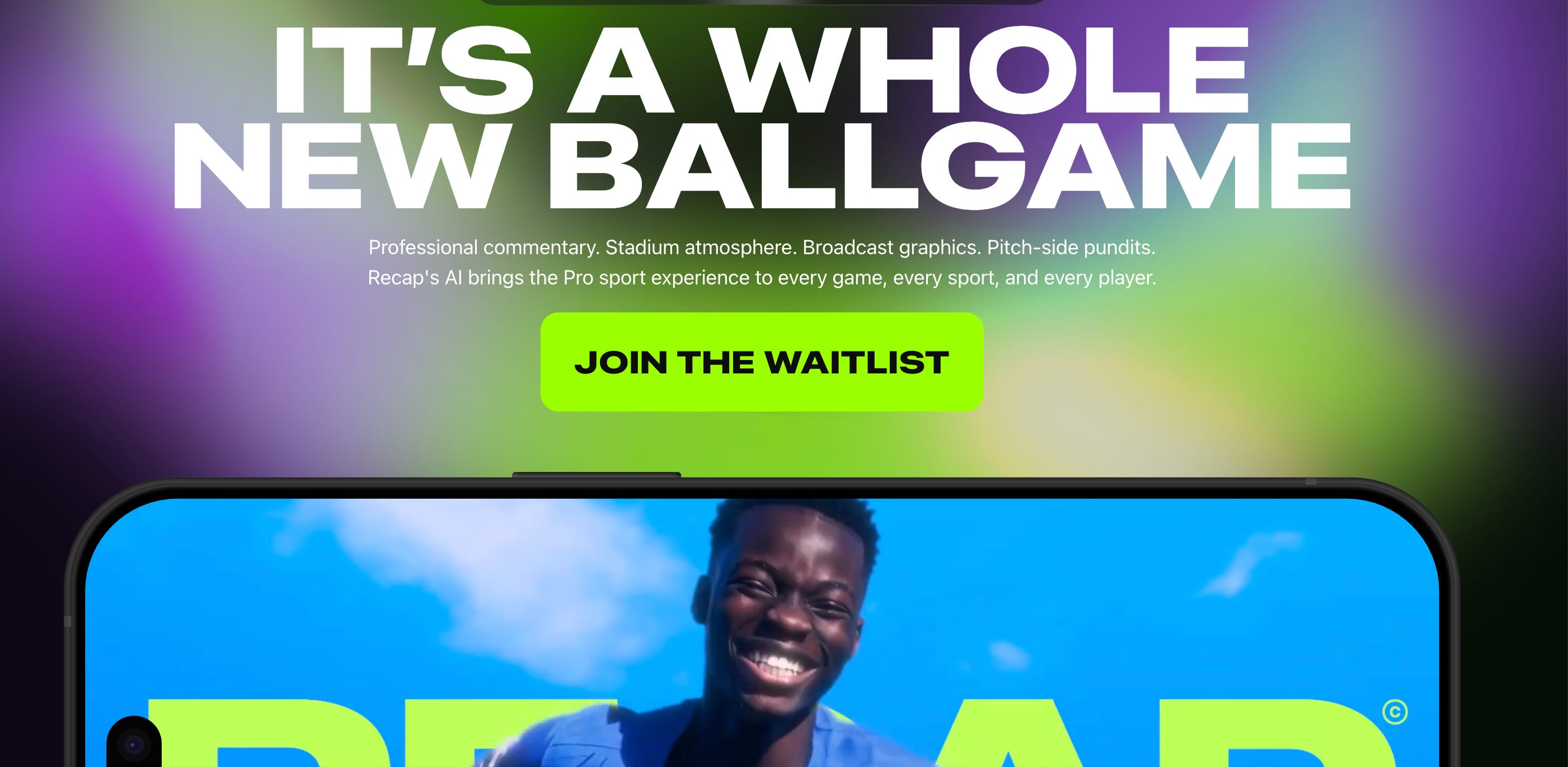
💙 That’s why we’re excited about our portfolio companies toongether, RECAP™, and Iconic. All are building toward participatory, AI-native entertainment experiences.
Last year we spoke to Ali Albazaz, Founder of Inkitt, building the ‘Disney of the 21st century’, creating blockbuster franchises across all media: from text, audiobooks, movies, to theme parks.
You can listen to the full episode on Spotify here:
Models are commoditising fast.
We believe intelligence will soon be table stakes. What matters next is taste, workflow, and interface. The best AI products won’t feel like AI at all.
Great products meet users where they already work. They don’t ask people to change habits; they enhance them.
This is especially true for creatives.
In the long run, the winners won’t be the smartest models. They’ll be the best-designed products.
As ‘AI memory’ improves, it will be one of the most dramatic shifts for consumer apps.
When AI remembers context, preference, and history, products stop feeling transactional and start feeling relational.
💙 Our portco Amble is a perfect example of how good UX combined with AI can break through noise. There are a million different language learning apps… but not all of them look and feel this good.
Our conversation with Anna Veronika Dorogush, founder of Recraft, reinforced the importance of good UX in the AI era. Designers don’t want “AI buttons. They want tools that respect their process, aesthetics, and intent.
You can listen to the full episode on Spotify here:
AI can create slop.
But it can also create magic.
We believe by the end of 2026, roughly 25% of social content will be partially or fully synthetic. AI will become a standard creative layer.
Voice models, image generation, and video synthesis unlock formats that simply weren’t possible before. Think fictional creators, hyper-personalized media, new storytelling genres. We are seeing so much exciting stuff here, it’s crazy!
Finally, we see a backlash brewing. Alongside AI hype, we believe a new class of companies will win by being intentionally "screen-light." These physical products and tactile experiences serve as Trojan Horses for durable, high-margin software ecosystems. Our portfolio company, Lumenate, exemplifies this shift. They recently launched Lumenate Nova, a dedicated hardware device designed to safely guide their two million users (and anyone seeking a deeper experience) into altered states of consciousness.
Hardware isn’t dead, it’s become more strategic than ever.
In a world of infinite digital choice, constraints become valuable.
The future will be a mix of virtual and physical.
Our conversation with Victor Henning, Head of Product at Leica Camera AG highlighted this beautifully: great hardware anchors creativity, identity, and trust in a way software alone rarely can.
You can listen to the full episode on Spotify here:
The biggest misconception about AI in creativity is that the goal is replacement.
It’s not.
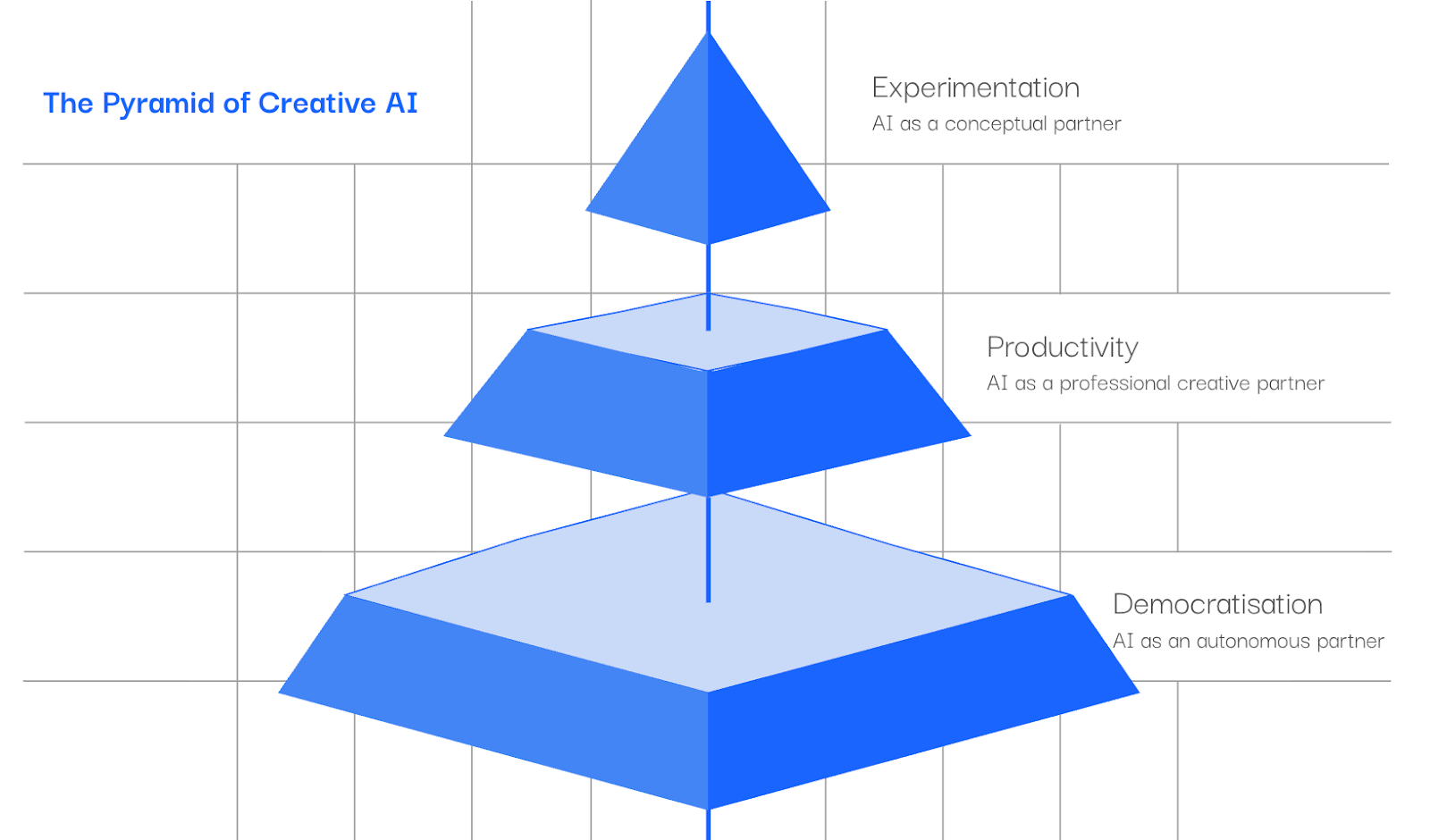
We believe the next phase of creative AI is not about pressing a button and getting an output. It’s about dialogue. Back-and-forth. Push and pull. Human intent shaping machine possibility.
As we explain in our article ‘As AI Enters the Creative Arena, Co-Creation Must Lead the Way’, the real opportunity isn’t efficiency, it’s expansion. Automation optimizes known paths. Co-creation opens unknown ones.
Creators don’t want machines that finish their work. They want partners that:
Suggest without deciding
Expand without overwriting
Challenge taste without flattening it
Stay legible, steerable, and interruptible
Thanks for subscribing to New Renaissance Monthly - please feel free to share this newsletter with anyone you think would appreciate it! We welcome feedback so let us know your thoughts!
If you haven’t subscribed yet you can here:
For more regular updates, insights and resources follow us on Linkedin.
If you missed the past newsletters, you can catch up here.
No posts
Comments
Nothing yet. Say the first thing.
Sign in to join the conversation.