
Maybe it was taking one too many field trips to the stone houses in my hometown. Perhaps it had to do with memorizing endless dates for exams where they never seemed to add up to anything more. Whatever the case, it was not really my thing as a kid.
Honestly, not a lot has changed. I spend most of my time consuming (relatively) contemporary books, music, and films. If I’m walking around a museum for too long reading factoid cards, I will no doubt start nodding off on a bench somewhere. I like the occasional, interesting historical trivia anecdote, but for the most part, I’m uninterested. I know it’s not a very flattering quality. That at best it’s lazy and at worst a little ignorant.
However, I recently discovered there is one distinct way I don’t mind a little history, and that is through the world of antique shops.
My home in London is situated atop one of the world’s largest antique markets. On weekends, Max and I often wander the stalls, taking in the silver spoons and oil paintings and Wedgwood pieces available for purchase. Sometimes I see a specific piece and start wondering about its story: who the previous owner was and how they acquired the item. A few things have been so intriguing that we’ve had to bring them home, all of us starting an exciting new chapter together.
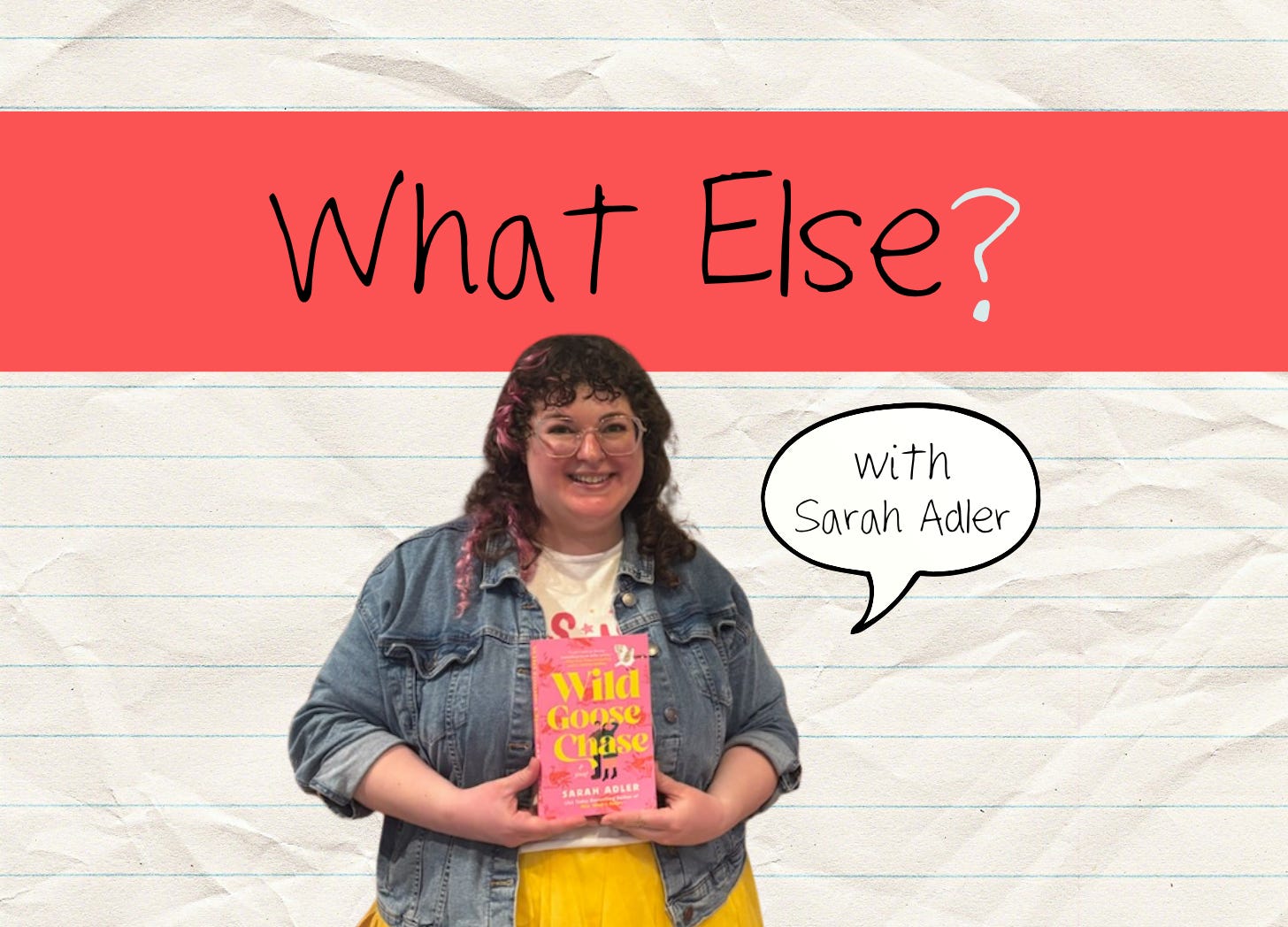
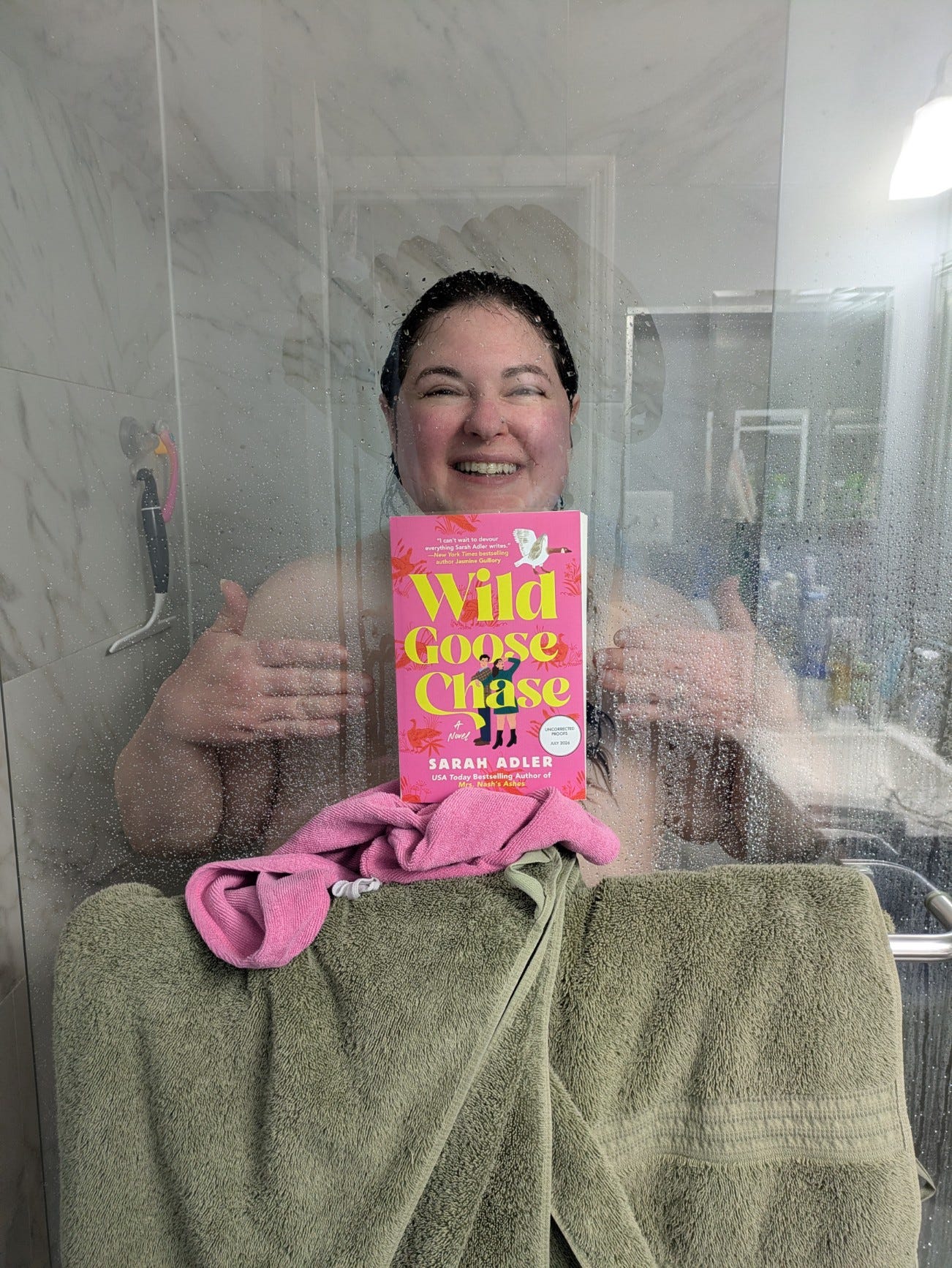
This recent fascination with antiques (as well as a general adoration for her work) drew me to Sarah Adler’s latest novel Wild Goose Chase.
The rom-com pairs stoic, snarky antique store owner Cal with Annie, the chaotically charming niece of his business partner. At first, the two are just meant to run the store together while Annie’s uncle is on vacation. But when a taxidermy goose with a complicated past suddenly goes missing, the pair must put their differences aside in order to track the bird down before either of their metaphorical geese gets cooked. It’s a hilarious premise with a fabulous execution that’s perfect for lovers of odd history, opposites attracting, and of course good bird puns.
Sarah is so wonderful, whether she’s discussing her love of a specific super market chain or her secret to writing deliciously witty banter. We get into it all. And while her fans may be waiting a little bit longer than usual for her next book, I am certain it’ll be worth every second.
What do you do outside of reading and writing?
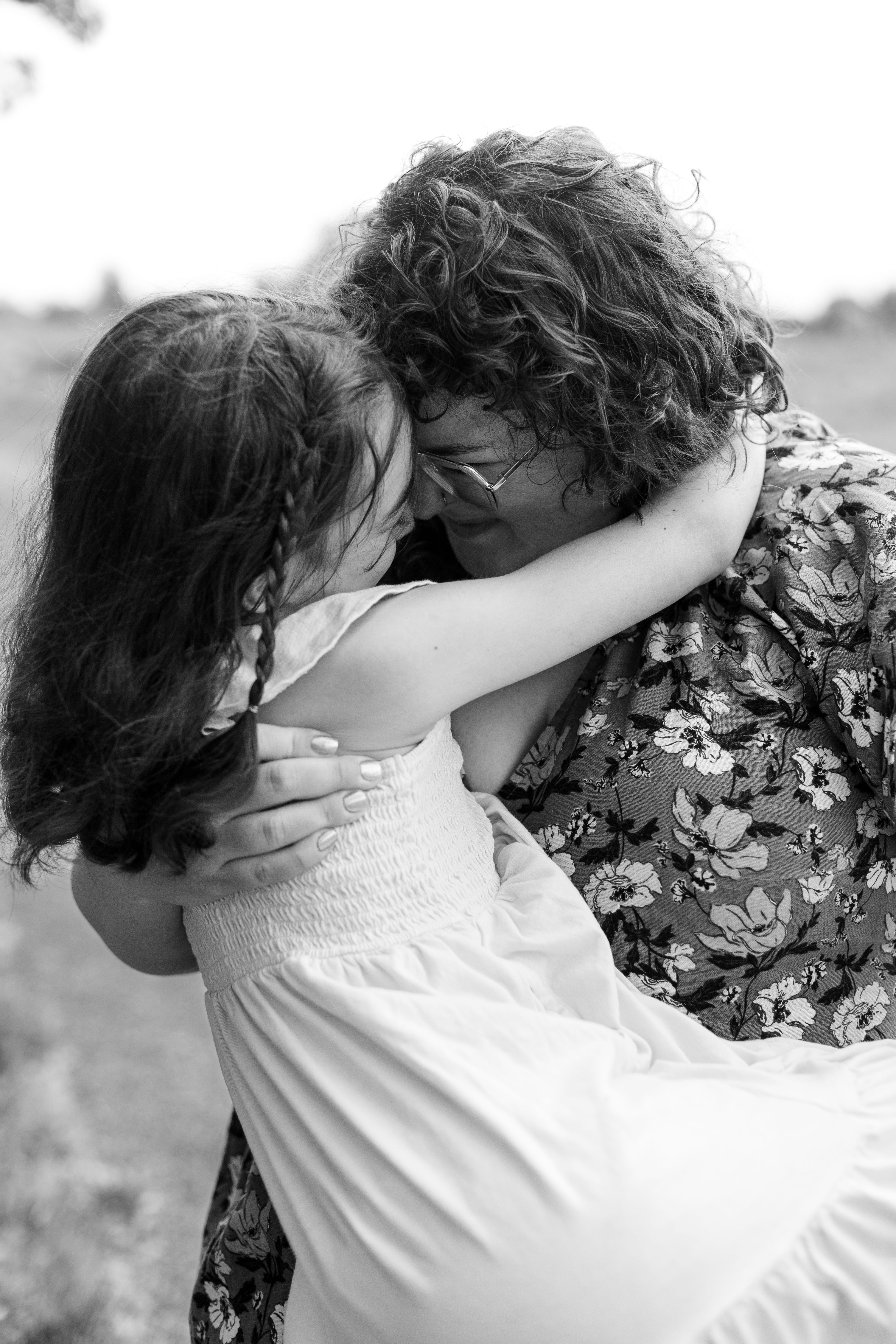
The biggest chunk of my time is spent being a mom. I have an eight-year-old daughter. I love her very much, but she requires a lot of attention and coordination. It’s a lot of managing her life as well as mine.
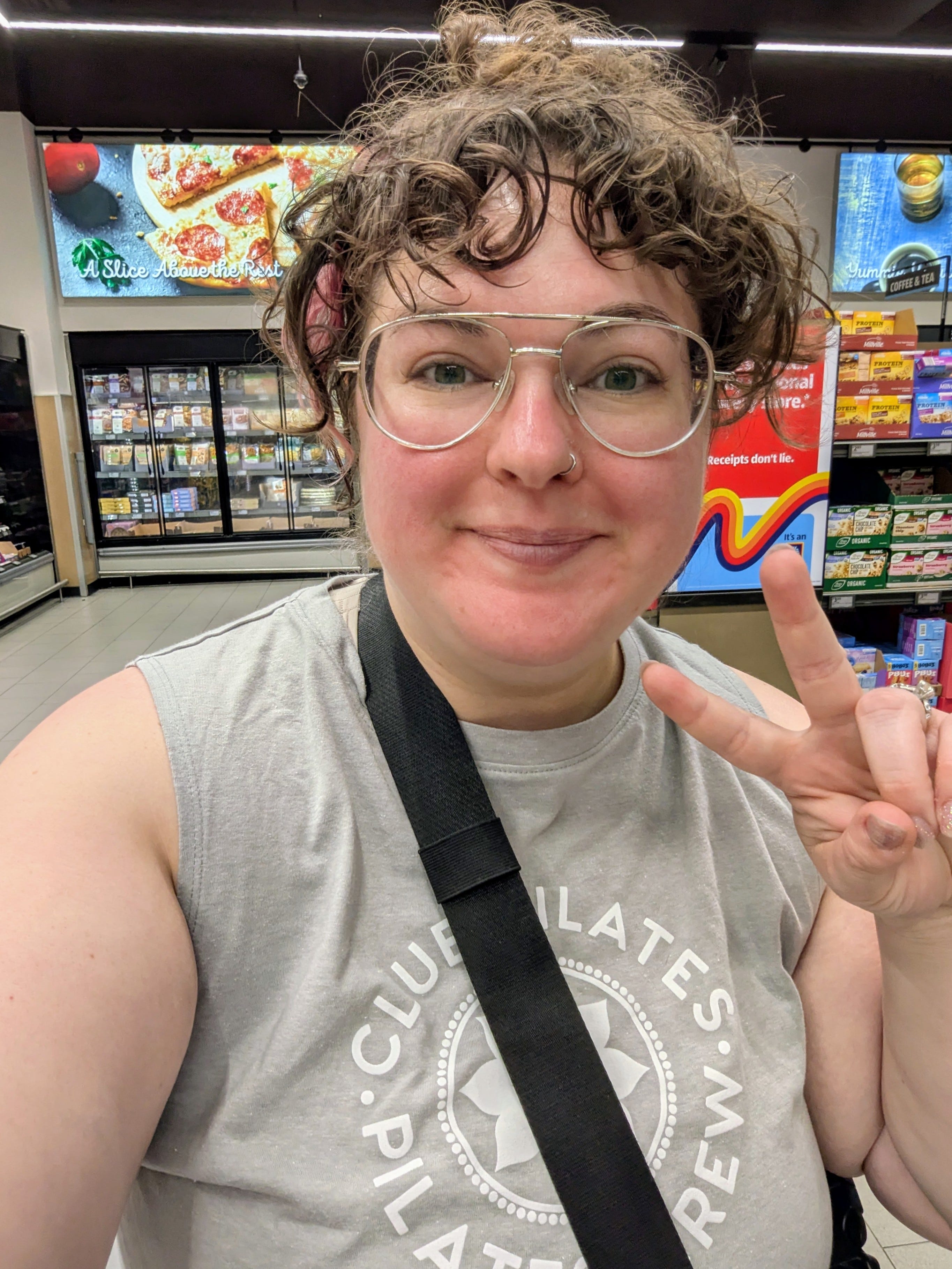
The next biggest chunk is probably Pilates. About a year ago, I started going and it sort of changed my life. Now I’m one of those annoying Pilates evangelists. I also like going to Aldi. I really look forward to my weekly shop. It’s my favorite store.
I often ask parents how having children changed their relationship to writing. What was it like for you?
It’s hard to know what it would be like otherwise because I didn’t start writing until after my daughter was born. Writing was something I latched onto as a way to reclaim my identity after becoming a mother. So her existence has always been baked into what I’m doing.
I had been working full-time at a university and going to grad school part-time. I finished my Master’s degree about a month before my daughter was born and ended up having to leave my job about three or four months after that. I went from doing all this stuff that was very focused on me to being a stay-at-home mom, which had not been my plan. I was kind of desperate to figure out who I was again. I found it through writing and reading for fun after a lot of academic work had burned me out.
Everything changes with each stage of my daughter’s life. She’s eight now and more independent, so there’s a lot more freedom for me to fit my work in and know that she can respect those boundaries. She’s starting to understand that it’s my job and it’s important. When she was really young, it was a lot of writing during nap time. Then it was making sure my creative hours fit into the same hours she was at daycare or with Grandma.
The real secret to doing it is having a partner that’s supportive. I couldn’t have done it without my husband being one hundred percent on board from the minute I started writing. We had no idea if it would ever make any money. But he saw what it was doing for me mentally and emotionally, so he told me to keep going. He made sure I had the time and space. He still does that. It’s my job now, so it’s a little different, but if I say I really need to focus on a revision because I’m on deadline, he can takeover.
People should have kids with partners who like and respect them. That is my number one rule. Be really picky. Especially if you want to be a creative. You need someone who is going to cheer you on. I’ve seen so many people whose relationships collapsed as soon as they started living their dream because their partner could not handle it. The bar is on the floor for men, but even if it was higher, I think my husband would super exceed it, and for that I am very grateful.
You also mentioned Pilates. Why did you take that up?
I used to do yoga a lot, before and when I was pregnant. When the pandemic hit, I stopped going. We also moved from D.C. to Maryland and I hadn’t really found a yoga studio I liked.
After that, my anxiety really ramped up. It was taking over my life, especially my medical anxiety/possible OCD. I was basically afraid of my body. If I didn’t acknowledge it existed, I thought maybe nothing could go wrong. So I kind of detached my mind from the rest of me. Once I got things more under control with medication, I decided it was time to try to bring my body and mind back together. I remembered how yoga had made me feel that connection, and because of medication, I was brave enough to try something new.
The Pilates studio is right down the street from me. They had a free intro class, so I gave it a try. And I immediately fell in love. I’ve done something like 130 classes in a year. It’s changed so many things for me in ways I never expected. It’s kind of like yoga, but with more strength training. I needed to find something that would challenge me without making me feel like death. Pilates is that exact sweet spot.
It brought me back to my body in a way that’s been really wonderful. I’m so much stronger and it’s so cool, to feel strong for the first time in my life.
I must admit, I’ve never been to an Aldi. What makes it unique from other grocery stores?
The prices are cheaper. Like way cheaper. I can go to my closest grocery store for a couple items and easily spend thirty bucks. But I never spend than more than $150 at Aldi, and that’s when I stock up on canned goods for a month. The quality of the food is also super good. It’s very similar to a Trader Joe’s without the mark-up of a Trader Joe’s. That’s probably the best way to describe it.
They have the same things all the time, so there’s this wonderful sense of reliability that my neurodivergence really loves. Sensory-wise, it’s a lot nicer than other grocery stores, too. The lighting is not fluorescent. There’s no music playing. They also have what is colloquially known as The Aisle of Shame. It’s called that because you go in there not intending to buy things and leave with half the aisle. It’s all special, limited edition things. Some of it’s food. But a lot of it is the most random stuff that you didn’t know you needed until you see it.
My favorite thing I’ve found there is a ceramic-coated Dutch oven, like a Le Creuset. I got it for $20. It works amazing. I bought workout leggings there the other day that are now one of my favorite pairs. My favorite jean jacket came from Aldi and was like $12. They always have really good sandals and knock-off Crocs for kids, as well. I’ve gotten plants there. We got a giant disc swing that is now in our basement. Several of my favorite kitchen supplies and outdoor toys for my daughter. Plus school supplies. She has a really nice lunchbox I got for ninety-five cents.
It’s just one of those things where it’s reliable and steady, and then there’s one aisle to be pleasantly surprised. For me, it’s the perfect mixture of what I’m expecting with a little bit of novelty. I feel like I’m doing something I need to do but in the most comfortable and interesting way possible.
If you ever need a second job, marketing for Aldi feels like it could be in your wheelhouse.
They should really hire me for a partnership. I will talk up Aldi as much as I can.
Let’s dive into your new book. All of your novels have very quirky plots. How do you come up with them?
Sometimes it’s taking two things that I keep thinking about and mashing them together. That’s pretty much how Wild Goose Chase came about, same with Mrs. Nash’s Ashes. Sometimes I latch onto a pun or a joke and try to expand from there. That’s how Happy Medium came about. I kind of just let my brain guide me to something I find interesting or different. Then I try to find a way to make that into a rom-com.
Certain things I probably won’t ever be able to connect. I’m really fascinated by this intentional train crash they did in the 1800s in Texas called Crash at Crush where they crashed two trains into each other as a publicity stunt, not realizing it was super dangerous. I haven’t figured out how to make that into a rom-com yet. But other things I’ve latched onto, like the Migratory Bird Treaty Act of 1918 or the fact that the musician Graham Nash took his mother’s ashes everywhere he went on tour, sprinkling them on stage. Things like that, I try to embrace enough to see how they could develop into a story.
It’s very important to me that the premise continues through to a plot. It’s not just a bait and switch. It’s got to be weird throughout. That’s my goal.
Your books interweave so much fun history. Is that one of your specific interests?
My Master’s is in History. I never got to use it in a traditional sense, so I feel like some of it is me finding a way to make all that studying worth my time. But I wouldn’t say I seek out weird history so much as I hear something interesting somewhere and tend to hold onto it. I basically have a little encyclopedia in my head of things I’ve learned, whether through internships or places I’ve visited or random Wikipedia wormholes. I have a list of interesting things that when I’m starting a new book, I go to it and think about if I can fit anything in.
The Migratory Bird Treaty Act of 1918 I found because I was working on a different version of Wild Goose Chase a long time ago. My critique partner at the time, my friend Amber Roberts, was like, “Isn’t that illegal?” I delved in to what she was talking about and it was fascinated. I wanted to use it in some form. When I decided I wanted to write something in an antique store, I was talking through with my husband what types of things could happen in the antique store. I thought maybe there could be an object that they needed to look for. I wondered if it could be a ceramic goose, then it’s a wild goose chase, ha ha ha… But then I thought: wait, what if it’s a real goose? And behold, the Migratory Bird Act Treat of 1918! It was a very big aha moment.
I love that this book is set in an antique shop. Are you a big antique person?
As someone who grew up loving history, I was always interested in antiques. I don’t buy a lot of them because they’re so expensive. I get too nervous that I’ll break or destroy them. But I grew up in an area with a lot of antique stores. I always feel cozy in one. They’re a little dirty, a little grimy. I do find them a little overwhelming sometimes because there’s just so much to see and try to parse out if something is of value. But they are always really interesting.
My history background is in cultural history. Part of that is material history. I really love learning about the past through objects. There was a short period of time where I was volunteering at a historic house museum and considered doing a Master’s in Decorative Arts History. I got to explore that through the character of Cal. What would it look like to do something like that and then end up in the antique business and really love objects? What can they tell you and what do they carry with them? Then there’s Annie, and what you do with those objects to make them feel more modern and relevant to today’s time if you don’t want to put them on a pedestal and stare at them. I thought that was an interesting juxtaposition of the two characters.
I had no idea Decorative Arts History was a thing!
I really love going into an old place and looking at the furniture, the ceramics. Thinking about what they say about the time period, the people who lived there and had them. But getting to experience the material culture of a time is something we don’t get to do a lot except at certain museums. The place where art history and history meet is Decorative Arts History and that’s really cool to me. If there were more jobs in it, maybe I would’ve gone into that field.
Your main characters are very different from one another. What was fun for you about writing them?
I really like opposites attract generally. I think this one was particularly fun for me because even though it’s grumpy/sunshine, the characters are so different from Millie and Hollis in Mrs. Nash’s Ashes, which was also grumpy/sunshine. This was the first dual POV I’ve done. I really loved being able to make Cal a deadpan snarker, someone who’s very sarcastic. There was a line in a very early draft where Annie says, “Oh no, Chandler was always my favorite Friend. I’m in trouble.” There’s something really appealing to me about a man who is grumpy but in a way that’s kind of sad. The sort of sarcastic, put-out kind, versus the hates-everyone-but-you kind.
With Annie, I loved getting to write a bubbly character who wasn’t quite as unmasked. She is still in the process of discovering her neurodivergence. She’s very much, “I’m trying to be myself, but that’s still a little uncomfortable for me, so I’m doing it in certain ways and still self conscious about it in others.” Annie is aware of the work she’s just done and the work she still needs to do. She is someone who is making the choice every day to be sunshine instead of whatever she thinks someone else wants her to be.
So much of the heat in the book comes from their banter rather than physical touch. It was a refreshing change from the super spicy books that are currently blowing up the romance marketplace.
The most important thing for me when writing an intimate moment between two characters is that everything between them is furthering their connection and the story. Sometimes that looks like a full sex scene. Sometimes it’s a kiss. Sometimes it’s a little argument that could’ve turned into more if they weren’t interrupted.
There seems to be a temptation nowadays to just throw in as many sex scenes as possible so that we can say it’s a five chilli pepper read, but it’s doing the reader a disservice. If it’s not a necessary scene that’s actually doing something for the character and just another hot thing, it loses some of the hotness. You wouldn’t think that something like that could be boring, but when you’ve read so many romances and you’ve seen this couple already go at it four times, another one is not really going to do anything for anybody. It’s almost like the scarcity is what makes it valuable.
It’s important to build up and, when you get there, being able to show why it needed to happen and what it means to them both. How it kind of disrupts and heals their insecurities and concerns at the same time; how these things are being brought up by the intimacy. But that’s not the only way to be intimate with somebody. There are lots of ways you can achieve a better understanding. I don’t think that an over reliance is beneficial to readers, even if publishers find it easier to market. It creates a less solid product.
This is so stupid, but sometimes I think about intimacy in terms of playing The Sims; the little thing over their head that shows a positive interaction. Sometimes I will be talking to somebody and feel like I have that between us. We have grown our connection. This was a positive conversation and now we are closer. I feel like I’m always trying to do that with characters, too. What in this moment would create that little positive encounter symbol above their head to bring them closer? Sometimes that is him going down on her on the kitchen counter. Sometimes that is playing Truth or Dare.
Is it difficult for you to write good banter?
I grew up watching a lot of seventies and eighties sitcoms where the banter is very quick and funny. Things like Airplane and Real Genius and Better Off Dead. It’s something that makes my writing unique, setting me up to have a slightly different voice because I’m perpetually ten years behind on pop culture. I’m not drawing from the same pool as everybody else. But it’s also given me a really solid sense of what the funny response to something is.
Sometimes in real life it’s like that and sometimes it’s not. For my characters, I like to at least make them able to make a good joke now and then.
I like that your voice is so unique. It’s quirky, in a really good way.
Honestly, I think that’s the secret to whatever success I’ve had. It was when I stopped telling myself how I should be writing and just started writing the way my brain wanted to that I finally figured it out.
Mrs. Nash’s Ashes was my third manuscript. But it was the first time that I sat down and decided whatever voice that came out was going to be the voice. I’m not going to edit it. I’m not going to tell myself it needs to be more likeable. It’s just going to be whatever comes out. That’s when Millie’s voice happened. It was really different, and I thought maybe it was right. Turns out, it was.
Even though there are a lot of publishers saying they want the same old thing, truth is they also want something new. They are looking for the next thing. Being yourself, being unique, and leaning into those things versus trying to make yourself fit into the existing market, in my opinion, is like having the key to the city. That’s when you start to get multiple offers. That’s when you start to go to auction and get a six-figure deal.
You have something different to offer the world. If you just lean into being yourself, you can’t do it wrong. You’re the only one who knows who that is.
Did you go on submission with those first two projects?
No. I queried them and got about two hundred rejections. That was the first two years or so. With Mrs. Nash’s Ashes, I got an agent offer after a week of querying, and then I got five more offers within the next two weeks. I had six offers and got to choose, which was really wonderful. And then I went on submission and got an offer within a week. It went to auction and we had six editors interested. It was pretty much two years of trudging through the query trenches, then everything happened all at once. I had horrible imposter syndrome.
This is your fourth novel. It sounds like trusting your voice has gotten easier. Has anything else? Has anything remained really difficult?
It’s still very hard. In some ways it’s harder. I only have one kid, so I don’t know how true this is, but they say parenting each kid is so different that it doesn’t translate one to one. I feel like that with my books. Each of them has its own stuff going on and needs different things from me.
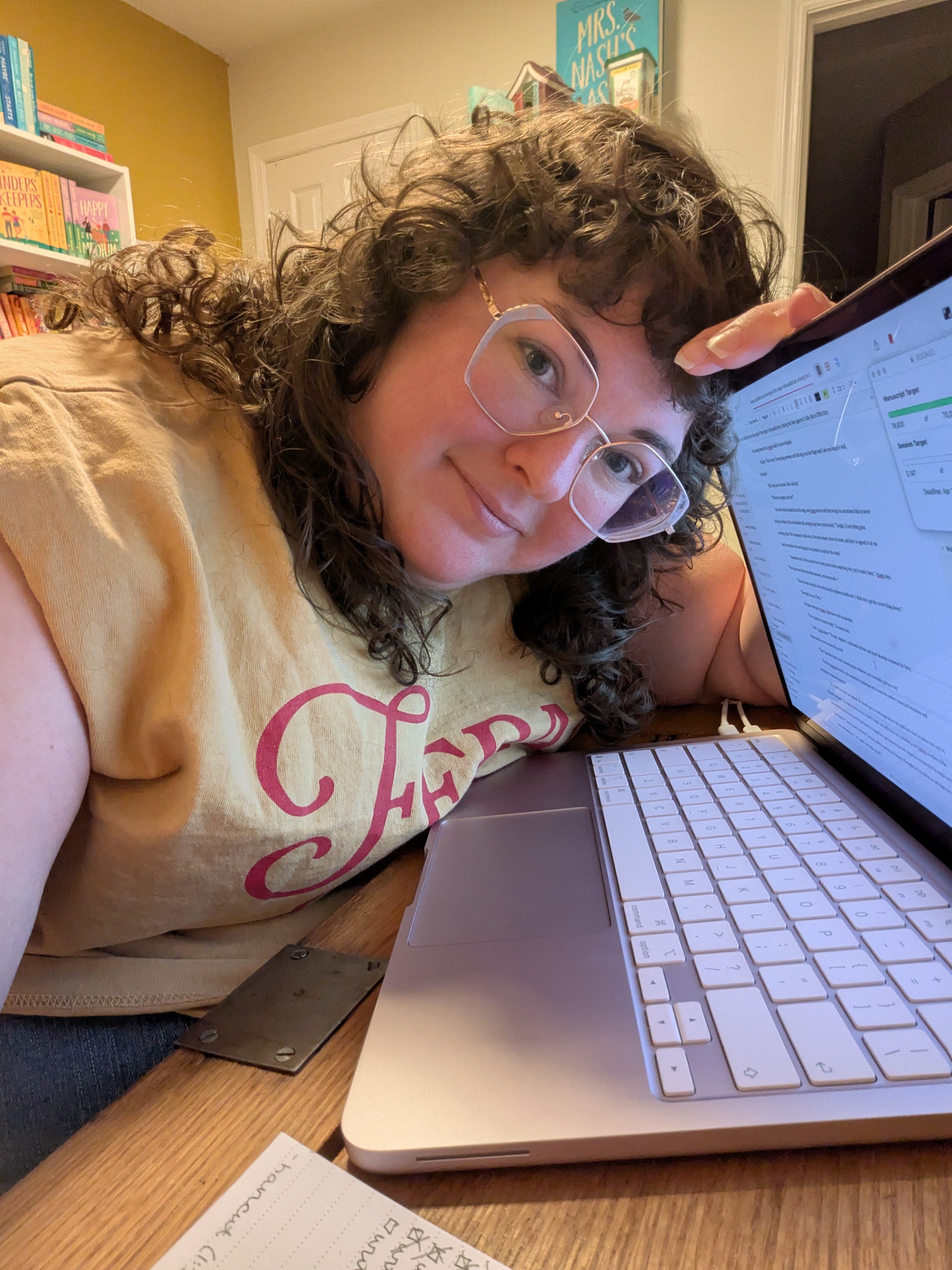
Sometimes it’s really easy. Wild Goose Chase was probably the easiest book I’ve ever written. I sat down and it just spilled out of me. Something about it was just working from the beginning and I kind of knew what it was going to look like. I just needed to get the words out. That had never happened before. My second book, Happy Medium, was horrible to write because my mental health was terrible. I wasn’t sure I could even do this again. The sophomore slump is serious. People joke about it but it’s an actual thing that most of us go through, because you suddenly have a lot more pressure. It’s usually your first time writing on contract. It’s just a whole different ballgame. Finders Keepers I had to rewrite so many times. And because it’s a treasure hunt, anytime I changed one thing, everything else needed to change.
Book Five I wrote in three and a half months in the midst of burnout. I just pushed through and turned it in. It’s horrible. I need to start over. It’s genuinely not my best work. I don’t think it’s worth fixing. My team agrees it was stupid of me to do that, that we should have taken more time. I’ll have to skip publishing something in 2027, most likely, because of timing.
With each book I learn a valuable lesson, whether it’s to take better care of myself or that I need to be more deliberate in outlining. There’s something that challenges me every time. But each one has such a unique vibe that I really don’t feel any more equipped to do it for the next book.
I can’t imagine trying to write a full, finished draft in three months. I’m glad you’re getting more time.
It was rough. My editor and I have worked together long enough now that she knows deadlines are motivating for me. However, I think maybe we were a little too optimistic. My editor usually sends her edit letter in an email and she had to put it in a Word Doc because it was so long. It wasn’t the longest one she’s ever written, but it was close. She checked. That’s when I knew it wasn’t actually the best move.
So, lesson learned there, but it goes to show. It’s my fifth book. Seventh, technically, that I’ve written in total. And I’m still not able to do it right the first time. It sucks because I spent three and a half months miserable. I made my editor read through that garbage for nothing. We’re behind schedule anyway now and I have to write a whole other book in the same calendar year which I really try not to do. But at the same time, my readers have been so kind. Other authors have been supportive, too, and said they are going through the same thing or have gone through it.
My team has said before that my mental health comes first and they really mean that. I think professionals in a lot of industries say that and don’t mean it, but my team does. They’re been very willing to change things around. I’m grateful I have all that support.
USA Today bestselling author Sarah Adler writes romantic comedies about lovable weirdos finding their happily ever afters. She lives in Maryland with her husband, daughter, and very mischievous cat. When not working, you can find her attempting to course-correct an ill-advised late afternoon nap with an equally ill-advised late afternoon coffee, as she is incapable of ever learning a lesson.
Comments
Nothing yet. Say the first thing.
Sign in to join the conversation.