
Since I couldn’t write very much, it mainly became a space for random doodles. Or the occasional story that I treated with the same intensity Booker Prize winners use to discuss their novels. I thought my everyday life was dull, that nothing I did could possibly be worth writing about. Perhaps it wasn’t. Perhaps I was simply too precocious for my own good.
Most of the stuff I wrote growing up was fiction. Short stories about young lovers. Novels about old friends. Writing was as much an escape as it was an art form. I vicariously lived through my narratives. The characters sometimes vaguely resembled people I knew, but the things that happened to them were always more dramatic than anything going on with anyone around me. The work embodied the kind of life I wanted to live: a big one where the potential for excitement was always right around the corner.
My first crack at this kind of life came when I was eighteen and moved to Manhattan for school. I went from living in a village with a population of just over 6,000 to a city of more than 8.5 million. It was the kind of change I’d spent years dreaming of, though when it finally arrived, I was slightly overwhelmed.
After six weeks of crippling anxiety, I began exploring the city. I also became a student journalist for both my university’s newspaper and radio station. As a member of the press, I gained access to endless free events so long as I promised to share my experiences. Film festivals, concerts, even the occasional off-Broadway play: tickets to all of it could be mine for the low, low price of making what nowadays would probably be called “content.”
As I experienced more things and made new friends, I started to have the kind of life I’d always wanted. The kind of life worth committing to paper. Coincidentally, for Christmas in 2015, I received a new diary. I dedicated it to writing all about my daily life.
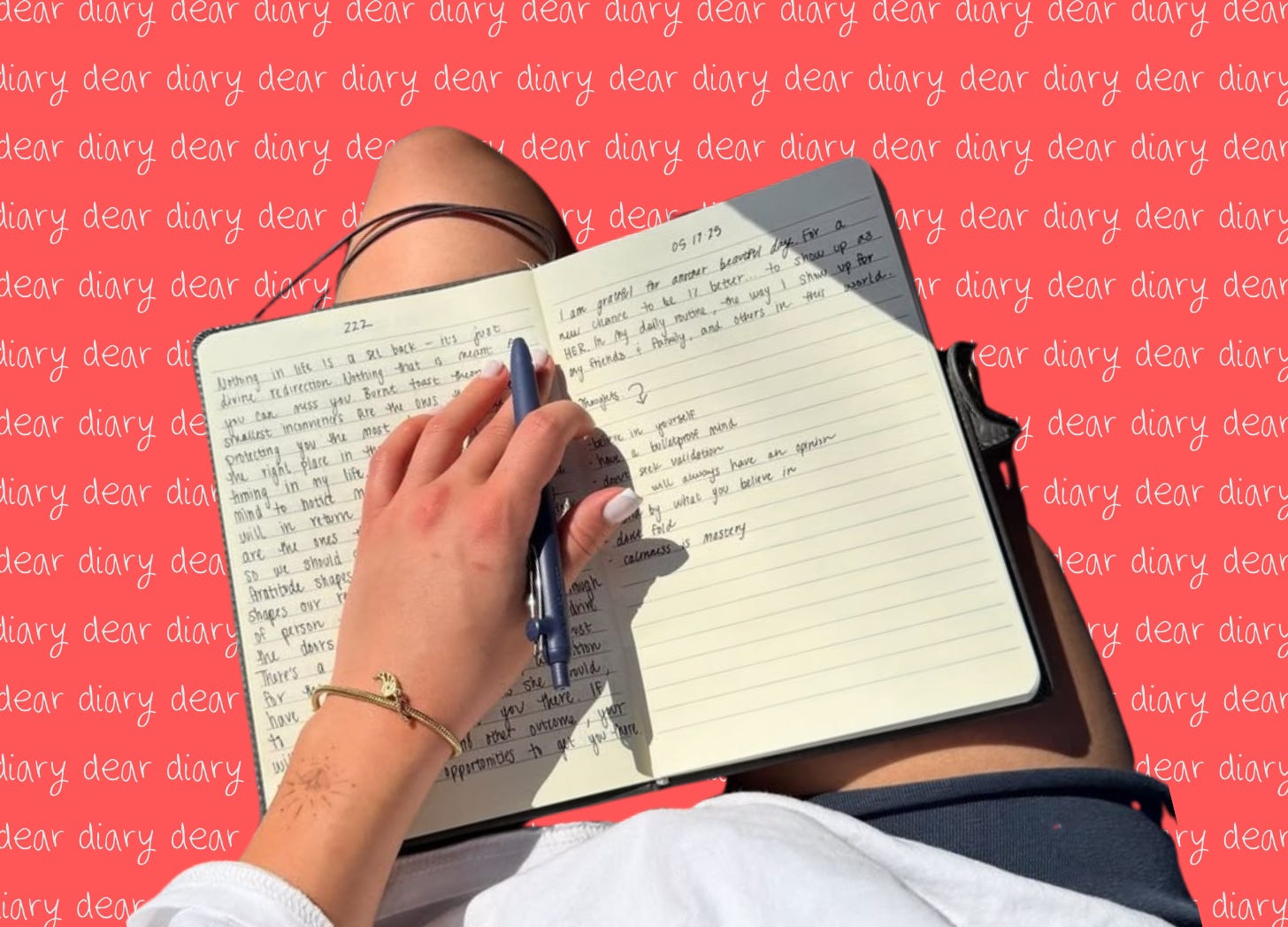
I’ve continued keeping a diary for the better part of the last decade. Taking the time each day (or sometimes every few days) to document the events that happen and my feelings about them. Part of it is that I have always seriously hoped to become famous enough that any future heirs of mine could make a small fortune selling my youthful ramblings.
The other, more practical part is that the act of journaling is relatively good for my mental health. The diary is a safe space to dump out all my messy thoughts. A place to work through things before I’m ready to deal with them in the real world.
I rarely go back and read the entries. But something about this summer has felt oddly nostalgic. Maybe it’s that I’ve largely been writing in the same house where I first discovered my love of the craft. Or it could be that as my thirtieth year dwells on, I find myself getting more and more reflective on the past because it can feel a lot more comforting than daring to guess about the uncertain future.
After staring at the journals long enough, I finally pulled one down from the shelf and opened it to the first page. Once I started reading, I couldn’t stop. Even though I wasn’t sure I wanted to remember this old version of myself.
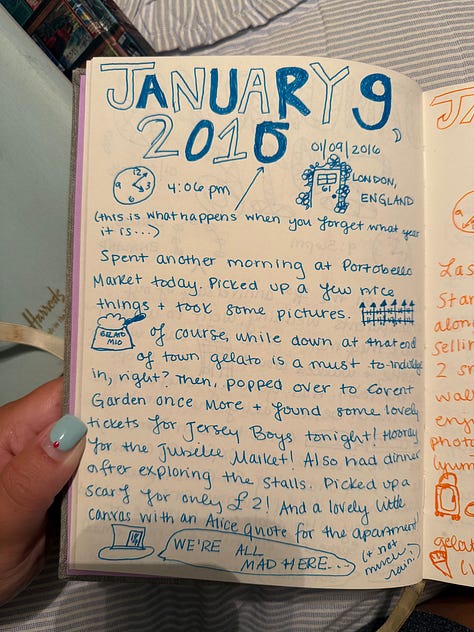
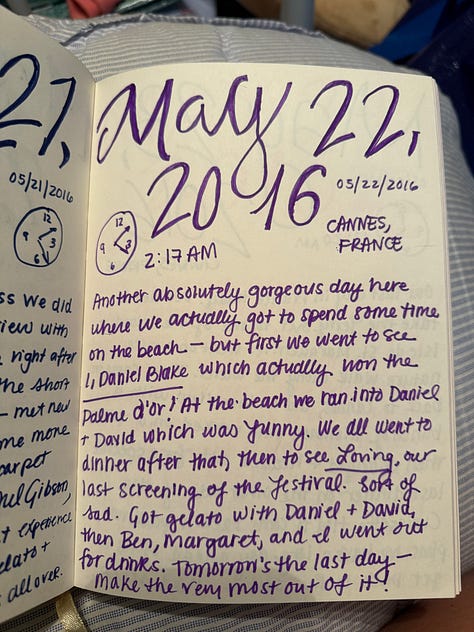
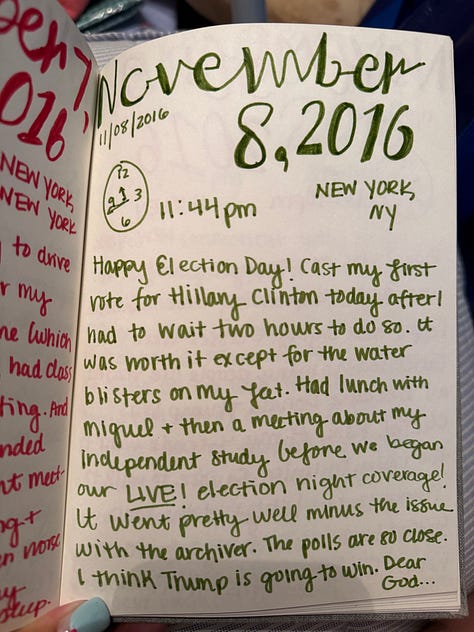
Before I get too deep, it’s worth noting that my diary entries have always followed a particular format. Every page includes not just the date but also the location where I’m writing. Sometimes, I jotted down the time. In the very early days I used colorful pens and drew pictures to depict the events I described.
My first entries are from 2016. Ironically, they start with me in London, in awe of how a day there can look so different from (read: better than) one in New York. I laughed reading about my younger self traipsing down the same street where I now have a flat. Remembering how I took that photo I shared on social media earlier this year during the 2016 throwback trend; the one of me standing a few yards from what is now my blue door. I am happy. At least for a little while.


Comments
Nothing yet. Say the first thing.
Sign in to join the conversation.