
I’m writing this from Barcelona, where summer heatwaves have a way of turning even basic life into a survival exercise.
Walk the kids to camp. Sweat. Go buy groceries. Sweat. Sit in the wrong room of the apartment at the wrong hour. Sweat. Pretend, briefly, that I am a self-denying, noble environmentalist European who does not need air conditioning. Then remember that I am an American, I believe in human comfort, and I would like the future to be good, actually… and go buy another portable AC unit.
There is a strange moral energy around air conditioning in Europe. Like needing to cool your home during a heatwave is some kind of personal or societal failure.
I get the concern. AC uses energy. Climate change is real. Waste is waste.
But the conclusion many people reach is totally backwards.
The answer to a hotter world is not to become smaller, poorer, personally hotter, and more miserable because the degrowth scolds want us all to atone for our sins. (degrowth primer)
The answer is abundance.
More clean energy. More energy storage. Better buildings. Better grids. More trees. More shade. More heat pumps. More air conditioning where people actually live, work, study, and sleep. More infrastructure, not less. More adaptation, not more guilt.
Degrowth strikes me as a failure of imagination. It looks at climate change and says: “Well, I guess the future has to be worse.”
Or worse: “We screwed up the world, so now we have to suffer.”
I don’t buy it.
The whole point of technology is that humans are not stuck accepting the raw conditions of nature. We build shelter. We move water. We grow food. We create products. We vaccinate kids.
We heat homes in winter.
We should cool them in summer.
And this week’s future signals all point in the same direction: the next decade is going to be more physical.
Not just web apps and chatbots. Not just some guy in San Francisco vibecoding an AI calendar plugin.
The future is batteries in garages. Solar farms behind data centers. Robots driving steel beams into the ground. Humanoid robots learning how to load boxes. Spacecraft rescuing old satellites instead of letting them fall out of the sky.
It is easy to talk about the future as if it lives on a screen. And given my fascination with the Metaverse, I am partial to this view, of course.
But the important stuff is increasingly made of metal, concrete, glass, silicon, wires, motors, refrigerant, batteries, and sunlight.
The future needs a body.
And it needs a lot more power.
A Guardian piece this week looked at Europe’s weird debate over air conditioning. Only about 6% of German homes have it, even as summers get hotter and thousands of Europeans die preventable deaths.
My take: Europe needs more AC, more clean electricity, better insulation, more shade, and less moral panic.
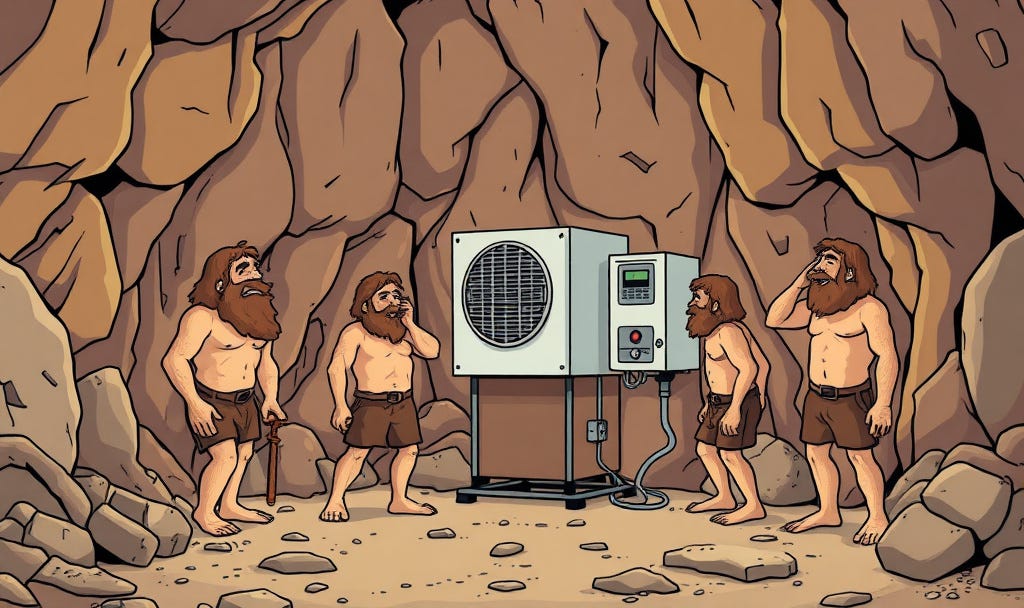
We’ve had fire since the dawn of humanity, so warming ourselves is seen as a natural human right. Cooling is no different, even if it took us thousands of years to invent the required technology.
Australia’s battery subsidy has reportedly cut upfront installation costs by about 30%, and home battery additions from January to May 2026 exceeded the previous six years combined.
That is not a small policy tweak. That is a household energy revolution.
The future grid shouldn’t just be giant power plants. It should be a distributed network of millions of homes, batteries, EVs, heat pumps, and AC units negotiating with each other in real time.
Complicated? Yes.
Cool? Also yes.
Europe’s solar boom is real. The problem is that the grid is not flexible enough to use all of it.
Reuters reported that Germany and Spain curtailed more than 3.6 TWh of solar generation in May 2026 alone.
Let me break that down in plain English: clean electricity was there, and the system could not take it in.
This is exactly the kind of problem a rich, serious civilization should want to have. So much clean energy that we need more batteries, better grids, smarter pricing, and more things that can use power when the sun is blasting.
Like ACs.
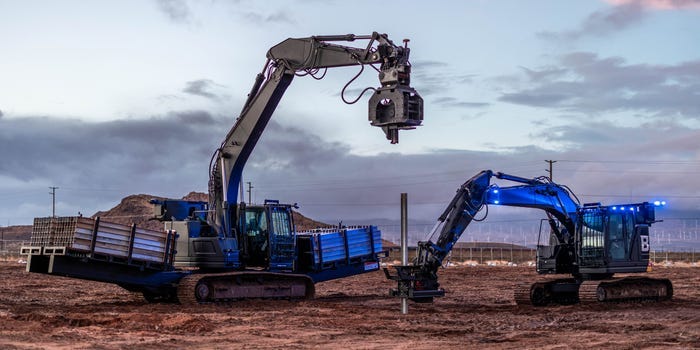
Autonomous construction robots from Built Robotics are helping build solar infrastructure for Meta’s massive Hyperion AI data center. These are not cute little Roombas. They are 72-ton machines doing repetitive, heavy tasks like pile driving, trenching, and pre-drilling.
There is something wonderfully circular about this.
AI needs data centers.
Data centers need power.
Power needs solar farms.
Solar farms need construction.
Construction needs robots.
For the AI revolution, maybe ChatGPT was the appetizer and the automated bulldozer is the entree.
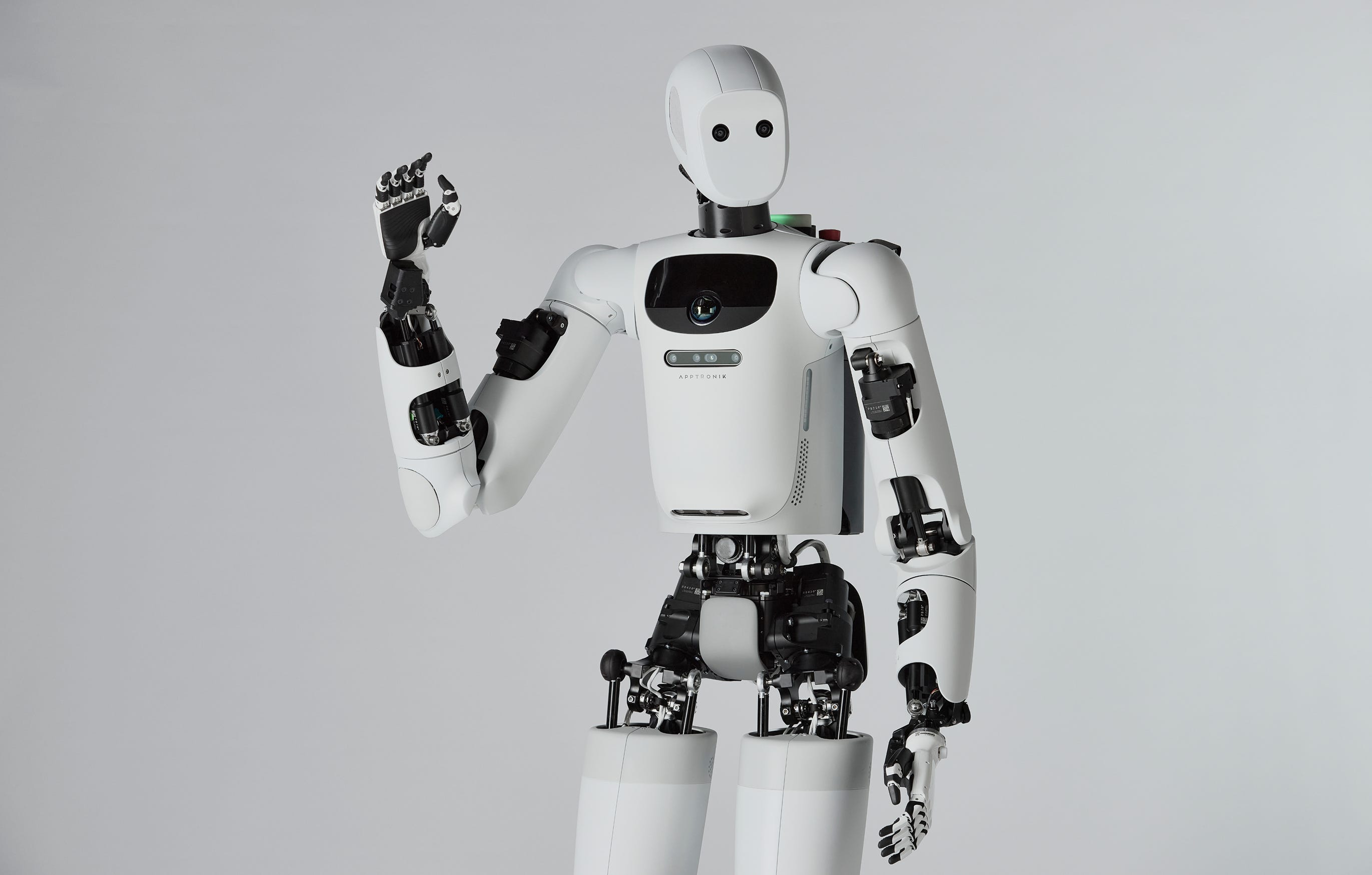
Apptronik opened a new robot training facility in Austin, developed with Google DeepMind, to push humanoid robots closer to actual production use. It also unveiled Apollo 2, its latest humanoid.
This is probably the right way to think about humanoid robots right now.
They’re not robot butlers yet.
They’re more like awkward interns.
Large language models trained on the internet. Robots need the physical world. So now we are making robot schools.
Katalyst launched LINK, a spacecraft built to rescue NASA’s aging Neil Gehrels Swift Observatory by grabbing it and boosting it into a safer orbit. NASA says Katalyst had to design, build, test, launch, meet, grab, and lift Swift in less than a year. Reuters described LINK as a half-ton spacecraft designed to save the $500 million observatory and potentially extend its mission by years.
This is such a clean “next decade” story.
For most of the space age, satellites have been closer to disposable electronics than infrastructure. We launch them, use them, and eventually they die and burn up on reentry.
But if spacecraft can inspect, dock, move, repair, refuel, or upgrade other spacecraft, then orbit starts to look less like a junkyard and more like a place.
A place with maintenance crews.
That’s when you know space is getting real.
I keep coming back to the same thought: the future is not only digital.
The next decade is going to be about whether we can build enough of the physical stuff too: energy, storage, cooling, robots, grids, solar farms, factories, launch systems, and orbital infrastructure.
The degrowth, pessimists say use less, expect less, want less.
I want the other future.
More energy. More comfort. More machines. More resilience. More abundance.
The future should not be smaller.
It should be bigger, cleaner, cooler, and better.
No posts
Comments
Nothing yet. Say the first thing.
Sign in to join the conversation.