
In this post I wanted to share the perspective of an architecture student. The challenges we are now experiencing will be mostly met by this generation of new professionals. I feel it is important to open the discussion about how to address our concerns and what solutions seem possible.
I started my Bachelor of Architecture at LSU in August of 2020, in a world still reeling from a global pandemic. Unlike many of my peers, I moved into my dorm in the South, ready to start this new chapter, despite the uncertainty around me. I found myself in a new city, logging into Zoom classes while attending an in-person studio just once a week—masked and separated by plastic dividers from classmates who would become my team for the next five years. It was isolating, and the contrast between the world outside and the world I was studying felt impossible to ignore. While the reality around me called for separation, I was entering a field that insists on closeness—on designing spaces that heal disconnection and make room for community.
In one of those early Zoom lectures on architectural history, I learned about some of the first homes built by humans—how Paleolithic peoples took shelter in caves and later constructed with clay, stone, and even elephant tusks. We eventually moved on to wood structures, still widely used today, and from there, to the more industrialized materials that have come to define modern construction. But what struck me was how quickly my professor glossed over the shift from earth-based construction to industrialized building. Even in that lecture, I couldn't shake the thought that these natural materials —those of the past—were rooted in place and created to last. In contrast, today we import materials from around the world, often unsuitable for the climates in which they are used. Living in a hurricane-prone region, I couldn’t help but wonder: Why do we still frame homes with light wood, as if resilience were an afterthought?
That moment stayed with me. Over the next few years, I returned again and again to the same question: Why did we stop building that way? The older methods, which we studied only briefly, felt to me like a blueprint for a future we need to remember. They weren’t just about shelter—they were about creating something that lasted, something deeply connected to place and purpose. And yet, they were treated as relics, outdated and irrelevant. But they weren’t irrelevant to me. They felt like something we need now more than ever.
A few years later, during my last year of undergrad–, after having interned at architecture firms, attended professional conferences, and begun to experience the realities of the architectural profession, I found myself grappling with these questions more than ever. I had seen firsthand the emphasis on speed, market value, and innovation in pursuit of the latest definition of “sustainability in architecture” in the workplace. I observed how sustainability was often more about optics than substance. And yet, the deep disconnect I felt between the work I was seeing in practice and the architectural values I cherished only grew stronger.
I remember telling one of my professors that professional spaces often feel weirdly calculated performative—that there’s an emphasis on optics, not substance. He didn’t deny it. He just said, “That’s most of the profession.”
And I’ve found that same performative energy embedded in the way we talk about sustainability. We have so many certifications—LEED, WELL, Passive House—all these systems intended to measure how green or healthy a building is. But rarely do they ask who the building is for, how it’s made, or where its materials come from. We’ve created a system where we score buildings, not ask if they belong to the people they serve or the place they reside.
It wasn’t until I took an elective on earth blocks that everything shifted for me. Up until that point, I had assumed that if I wanted to work with my hands, I’d have to go into construction. But this class completely reframed how I understood architecture. We made bricks. We got dirty. We explored the properties of soil—compression, porosity, and the science behind these materials. We also looked at precedents built in the past five years from around the world, each designed with the earth for different climates and needs. Seeing these modern examples of earth-based construction made me realize that these techniques weren’t just relics of the past, but viable, relevant solutions for today’s challenges.
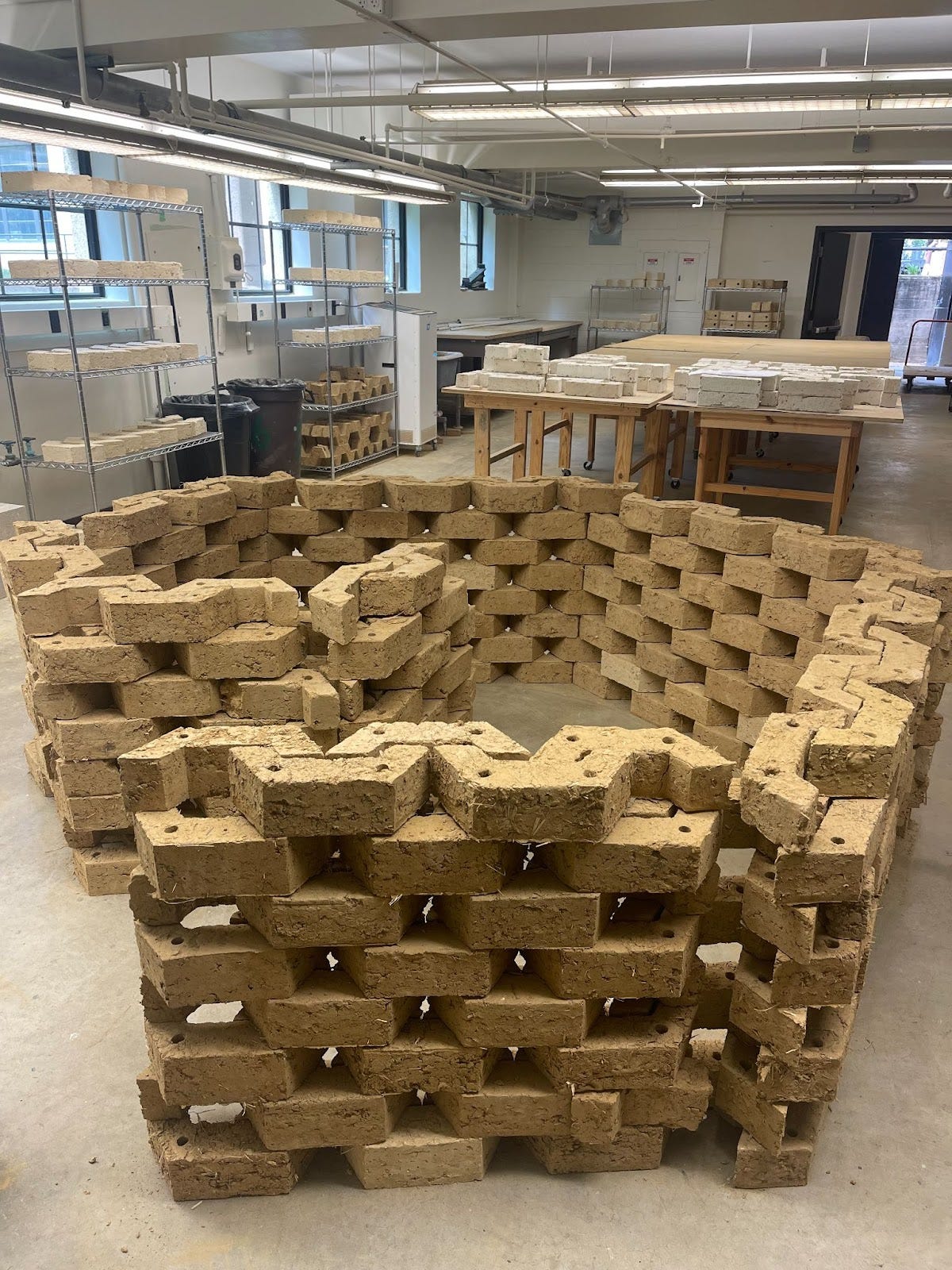
After this class I often wondered if I had chosen the wrong major, because the things that captivated me most weren’t new technologies or parametric façades—they were the oldest methods. Clay, straw, earth, fiber. These materials tell stories, respond to place, and demand a deeper understanding and connection. It wasn’t that I had lost interest in architecture—I had simply become disconnected from what made it feel authentic, real, and meaningful.
I think part of why that earth block class hit me so deeply is because it reminded me of something I already knew—something I felt growing up overseas. I spent part of my childhood in Germany, where sustainability wasn’t a niche or a certification—it was a way of life, and the built environment reflected that.
There were community gardens tucked between apartment blocks, composting bins outside every home, public transit that actually worked. Buildings were often simple, efficient, and built to last. Walkability wasn’t a buzzword—it was just how we got around. And somehow, that created space for people of all ages to move, gather, and breathe.
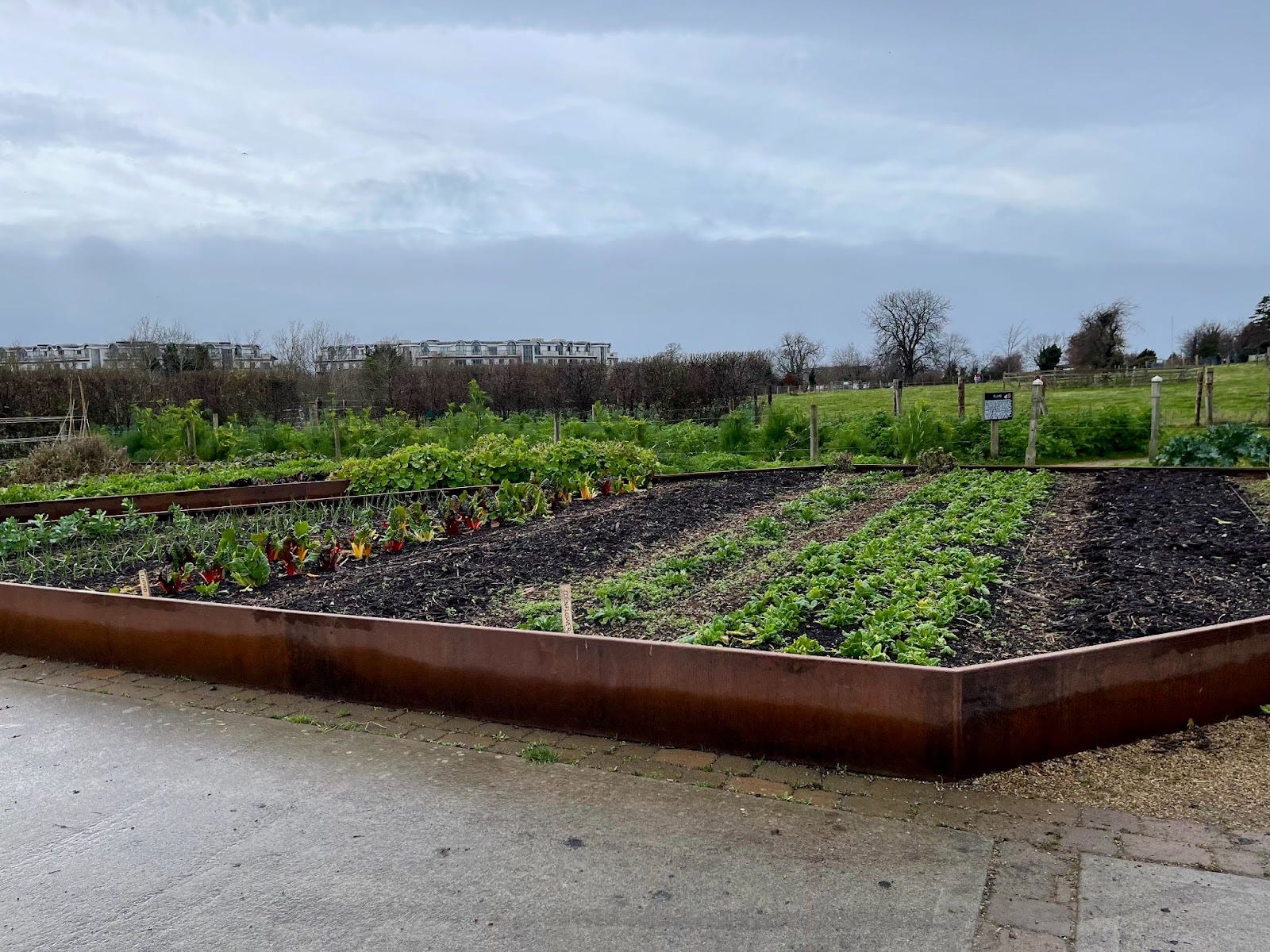
Looking back, it’s clear that sustainability there wasn’t about checking boxes. It was about a deeper kind of care—for the land, for your neighbors, for future generations. It was slow, quiet, and often invisible. But it worked. And it made people’s lives better.
That’s what real resiliency looks like to me. Not just buildings that “withstand,” but systems that sustain—humanly, ecologically, generationally. And that’s the kind of architect I want to be.
The more I’ve learned—both in school and beyond —the clearer it’s become: we don’t build for resilience because there’s no profit in it. Not the kind of resilience I’m talking about. You can’t trademark adobe. You can’t patent dirt. There’s no quarterly return on teaching communities to build with what they have.
Instead, we’ve created an economy around fragility. Buildings that require constant maintenance. Materials that degrade quickly. Neighborhoods that flood, burn, or crumble because they weren’t designed for the land they sit on. The construction industry tells us it’s about innovation—but it’s really about control, speed, and market value. And in that equation, true resilience doesn’t stand a chance.
But resilience isn’t something we invent—it’s something we remember. I’ve seen glimpses of it in that earth block class, in the rhythms of life overseas, in the gardens and conversations that happen when people feel rooted where they live.
As a student about to enter the workforce, I hold all of this close. I know I’ll walk into spaces that prioritize performance over purpose. But I also know there’s another way—an older, slower, more grounded path. One that sees architecture not as a product, but as a process. Not as spectacle, but as stewardship.
Resilience, I’ve learned, is quiet. It’s layered. It lives in the soil, in our hands, and in the choices we make when no one’s watching. It’s something we cultivate, something we create. And it’s my responsibility now—not just to remember it, but to build from it.
To learn more about my work, visit https://jenniferrwhite.myportfolio.com/
Comments
Nothing yet. Say the first thing.
Sign in to join the conversation.