
The topic of resiliency is everywhere I look these days.
From conference topics to environmental movements, philosophical and educational reels in my feed, and my own personal reflection in my life, resiliency is hunting me down, and therefore I must write about it.
Webster tells us resiliency is “the capacity to withstand or to recover quickly from difficulties, toughness. The ability to adapt well in the face of adversity, trauma, tragedy, threats, or significant sources of stress.”
The words “recover quickly” and “adapt well” are subjective. Is there a time frame that meets ‘quickly’ and how are we to interpret ‘well’? Both seem to vary based on what one has learned from hearing and doing, and from my experience, the path of resiliency takes time and requires endurance.
Much of my work today is spent addressing the need for a resilient-built-environment – focusing primarily on our homes. Home is a place where we go to regroup it is meant to be a place that protects us and provides the space to build resiliency for the outside world. However our homes, specifically the building materials, are now under more pressure from fires and extreme weather events. The term Structural Conflagration is defined as fire-encompassing all of a given structure, which cause fires to spread uncontrollably from structure to structure. In both the Lahina Fire in Maui and the Marshal Fire in Colorado, over 1000 structures were lost in just 12 hours.
According to the Insurance Institute for Business & Home Safety (IBHS), there are five overlapping factors that have accompanied urban and suburban conflagrations:
Drought
Wind
Ignition mechanism, often human-based
Dense construction using materials with little to no resistance to the hazard
Dense combustible elements surrounding and between structures
One of the most critical improvements we can make is selecting fire-resistant building materials. This would therefore slow the spread, not only allowing for evacuations from the burning structure, but also containing the fire and allowing time for fire response.
The Serenity Prayer tells us to “Grant me the serenity to accept the things I cannot change (aka drought and wind), the courage to change the things I can (materials from which to build), and the Wisdom to know the difference.”
It seems the building culture in the United States is embedded deeply to build with wood, while it is estimated that 70% of countries use masonry as the primary construction method for housing.
So back to Resiliency and what we can do as building practitioners, designers, builders and those considering building a home. We can all learn to do new things, to create new pathways in our mind, and to take on new understandings. When we are BEING resilient, it feels hard and uncomfortable, like the world is taking a beating on us. However, if one can remain tolerant of the discomfort and uncertainties, profound things can come from this tension. During this time, we may want to cling to what we know, and hold onto the status quo, because it's familiar and feels safe. New orientation can feel destabilizing, allowing questions to arise. While we are in the state of practicing resiliency, we are challenged by a new truth, a new reality. While in this state we can allow ourselves to be open to discovery.
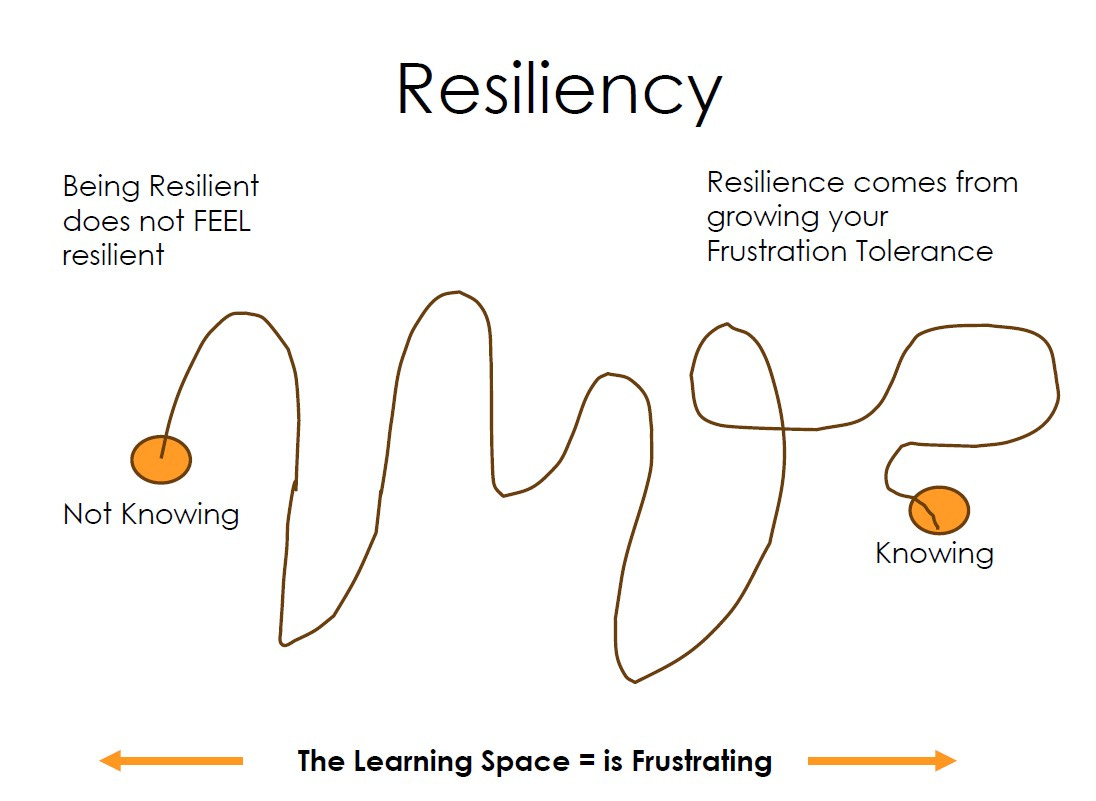
Figure above: Based on teachings by Dr. Becky on the Learning Space
Let’s learn together and build a New World together – a place where our tolerance of being resilient creates a place of security, so that we may be create resilient structures for whatever may come our way.
Comments
Nothing yet. Say the first thing.
Sign in to join the conversation.