
I sometimes think it’d be interesting to write a series of apologies and apologia, a sort of personal retrospective on “the social justice movement.” It’s a big part of my ideological background—I was on tumblr in the pre-dashcon days of high school, getting triggered by GamerGaters on reddit in college. What’s most interesting to me is how hard it is to talk about, for I think two weird reasons.
The first reason is that the “movement” didn’t have a proper name. It’s easy to call someone an anarcho-communist, or a Tea Party conservative, or a NeverTrumper, because these are terms they apply to themselves (or at least do not resist). But woke wasn’t like that.
There’s an old joke that the surest way to identify a goth band is by whether they deny being goth—noted disclaimers have belonged to Sisters of Mercy, Bauhaus, Siouxsie and the Banshees, the Cure, Christian Death…
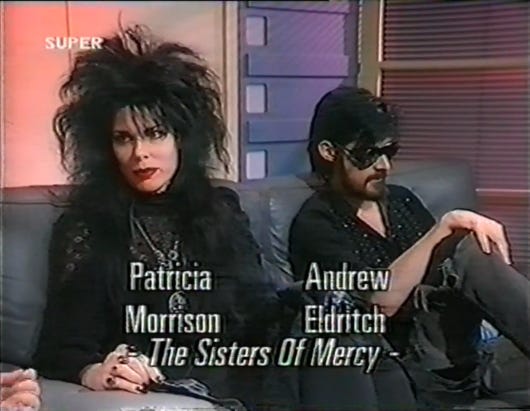
Sometimes this is a sort of “my band is undefinable” preciousness, other times it’s a more honest snobbery—see Peter Murphy of Bauhaus:
They really started goth. Them, The Mission, Alien Sex Fiend.1 All that lot. They came after us and there was The Batcave and all that… We’re not goth. That’s goth. But I understand how we sparked that. I don’t deny it, but sorry, yes-but-no, you know what I mean?
It’s not so much that denial of being goth makes a goth, so much as a painful over-attention to what is or is not goth in general.2 In other words, they’re scenesters, hipsters. They oftentimes have a point—there is a lot of bewildering variety in what certified Trve Goths like, and even more so in what The Mainstream clumsily labels “goth.”
But it’s also really annoying.
Being what we call “woke” was a lot like that.
Before we called them “woke,” we called them “social justice warriors”—“social justice” being to them what “diversity, equity, and inclusion” were to the “woke” of yesterday. That verbal tic was noted by outsiders (see Glenn Beck in 2010 telling people to leave churches which commit themselves to social or economic justice), who started to mock its goofy frequency—the OED added SJW with a characteristically defensive definition in 2015, after GamerGate made it really widespread. In the years leading up to the 2016 election, I was regularly referring to myself as an SJW with my tongue only half-planted in my cheek—because like, I needed something to call this.
At the time, the only uniformly adopted label for it was “progressive.” But this was never really sufficient. Progressivism is a classic strain in American politics which certainly includes the SJWs, but also quite a bit that the woke would consider anathema. “Progressive” was also made divisive within the “woke” crowd when the media started using the term to refer to Senator Sanders, and Berniebros and Hillshills were bitterly denying the validity of each other’s self-identification. On the other hand, particularly now, you’ll have people who still identify as progressive but not as whatever woke was, for example: me! As much as you can’t understand the rise of “woke” without him, the undeniably progressive President Obama has frequently criticized the culture, and frankly disclaiming him was something of a shibboleth among the woke themselves (something something drone wars).
Anyway, as “SJW” really picked up steam you saw SJWs distance themselves from the term and anything reminiscent of it, sorta acting like they didn’t know where it came from (I looked it up, and it turns out it came from the SJWs—in 2009 as a derogatory term aimed at those who didn’t “do the work”). As “social justice” became less fashionable, “woke” had started being used within social justice circles around the 2013-2016 period that BLM was rising in prominence. I distinctly remember, tho cannot cite, its usage as a self-descriptor—and this being mocked—on tumblr around this time.3 I remember my subsequent confusion at others’ professed confusion regarding the origin of the term when it started being applied against the “woke” by what we then called the “alt-right,” sometime between the 2016 and 2020 elections (Wikipedia says “by 2019,” citing a guardian article referring to the term).
In 2024-2026, we’re clearly in the phase of “DEI” becoming cringe to those who first used it, and past the point where “woke” has its sting as an insult—in other words, a time reminiscent of how I felt around 2016 regarding SJWs and “social justice.” So folks have sorta just gotten together and decided “woke” is good enough as a term—it predominates in center left takes on the subject—but I still don’t really think it works, since it now refers to everything from campus radicals in the early 2010s raging against Glenn Beck to advertising campaigns launched by multinational corporations, anti-racist table books bought by suburban whites who might’ve once more honestly called themselves “socially liberal, fiscally conservative,” and the ideology of self-proclaimed “third worldist” communists protesting the war in Gaza.
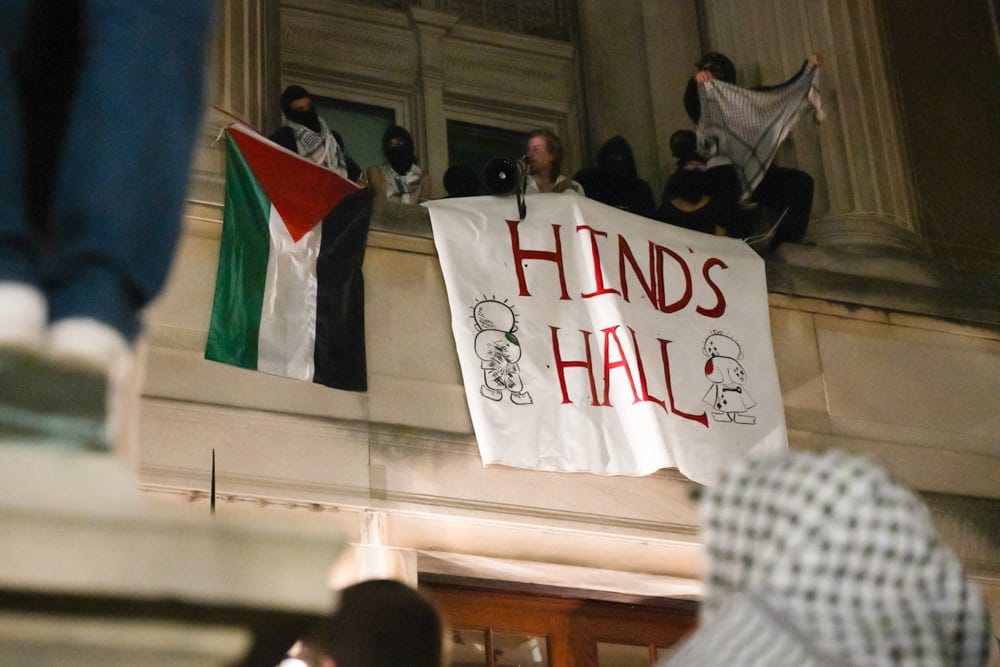
It’s just still the case that “woke” is a generic insult for “liberal and/or leftist,” and at best it’s no more descriptive than “progressive.” It’s missing something.
What would be really accurate would be to call the thing at the heart of all of this the New New Left, or maybe the Late New Left, as both sociologically and ideologically the actual political movement was a direct descendent of the New Left of the 70’s: a campus-based youth movement for sexual revolution, anti-racism, anti-imperialism, ecological conservation, and economic equality (albeit in a vaguer way than the Marxist left which preceded it), informed by what we now call “critical theory.”4
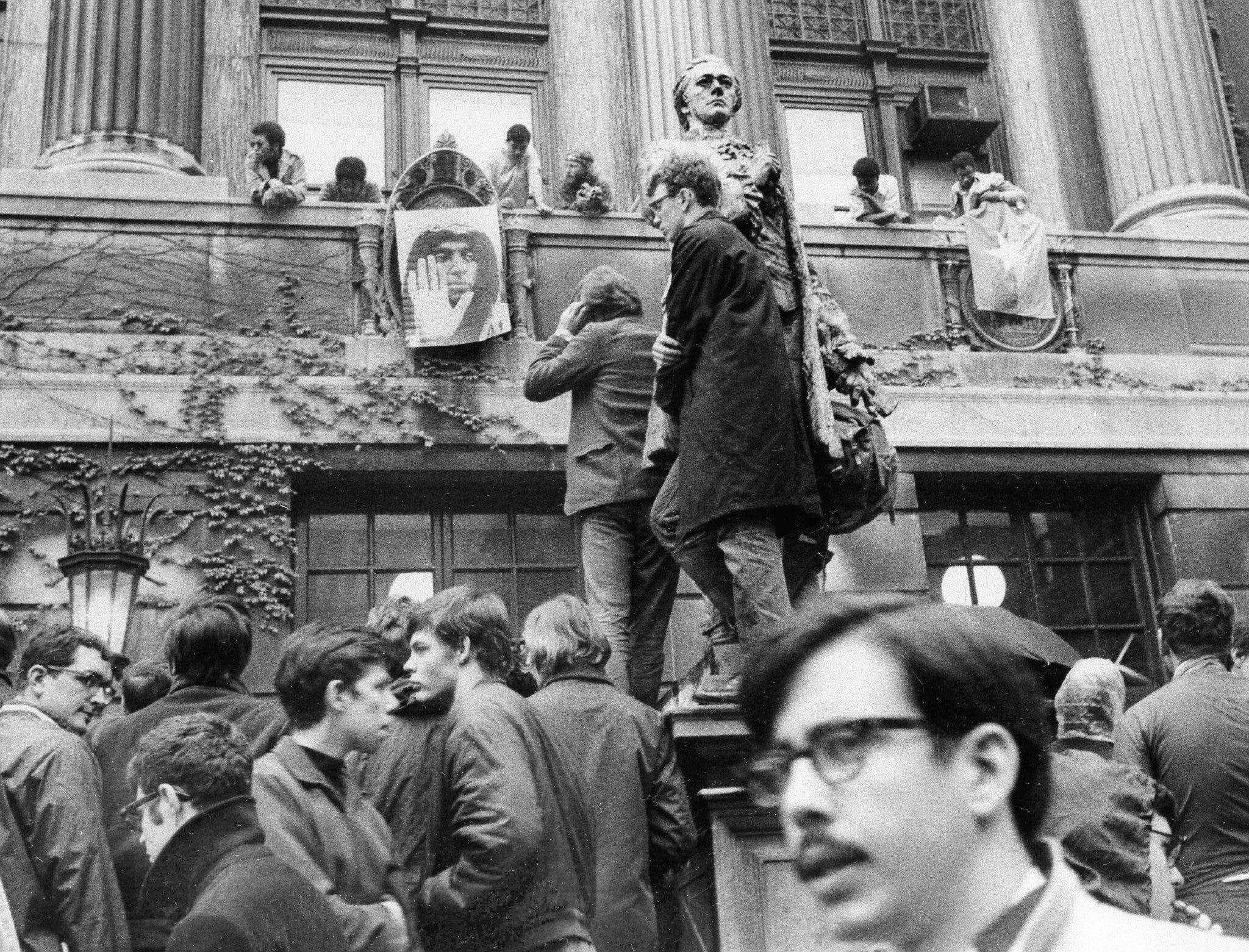
As catchy as “the Late New Left” isn’t, I think a more readily understood term would just be the social justice movement, or the Social Justice Left. So I guess that’s what I’ll default to, when I’m not trying to make fetch happen.
So, we have a terminology for what we want to criticize—the specific political movement and its ideas which strongly contributed to the bad times of the Long 2016 (tentatively 2014?-2024?),5 but is at least conceptually separable from them, because it’s useful to be able to zero in on specific doctrines that can be evaluated, rather than waste time arguing about beer can labels or whatever.
The second issue is that the Late New Left has an ideology, which has its roots in academic theories, which can be found written down in black and white, and it has attitudes and behaviors which in many cases seem directly contradictory to those stated beliefs—and both of these sets contain a lot of good and bad worth picking apart.
The classic example is the concept of privilege. Something you’ll see really often is criticisms of “intersectionality” which basically say, e.g. “you say that white men are privileged, but that doesn’t mean much to a white guy who’s still poor.” Which is weird, because that’s an intersectional argument.
What intersectionality actually is is the point that overly rigid conceptions of social categories and social hierarchy are bad at describing reality, because they miss the way that any person actually lives at the intersection of a variety of different identities. The initial point was that black women have issues that white women do not, that just because they are both groups of women does not mean that advocacy for the interests of one will take care of all the interests for the other.
To apply this to our case, it’s just not true that me and some cashier in Arkansas are similarly positioned in society by dint of being white men. And yet, obviously a lot of people experienced being written off as not having anything important to say about issues of privilege because of their race or sex in the social circles that actually practiced these politics.
I think of these things in terms of doctrine and practice, borrowing from the situation faced by the Catholic church. It’s been around a very long time and is used to dealing with the fact that the lay audience for highly technical theological teachings are not always going to apply what they hear in the desired way. A repeated issue for Catholic folk practice is the emergence of “folk saints,” cults of figures which the local believing have decided are clearly miracle workers, but who might not pass the muster of an inquiry from the Dicastery for the Causes of Saints—for instance, Saint Guinefort the Martyr, who was literally a dog.
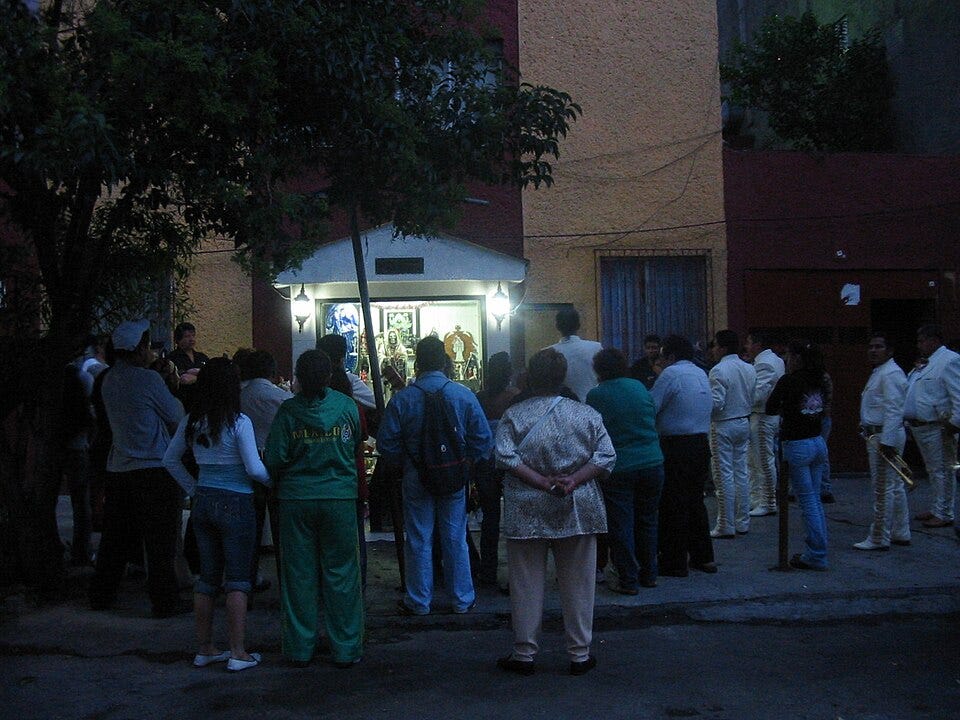
In Catholicism, as in the Late New Left, there’s a weird tension at play. You may be familiar with Santa Muerte, the strangely Marian death figure infamous for veneration by drug runners and other criminals, as well as growing sections of the Mexican church. This has repeatedly been denounced within Catholicism, as when Cardinal Gianfranco Ravasi, speaking in Mexico City, referred to it as “blasphemy” and “the degeneration of religion.” Catholics will argue that veneration of Santa Muerte is literal demon worship. And yet, it’s hard to deny that the practice looks Catholic, and those who venerate her usually believe they are practicing Catholics.
In fact, Andrew Chesnut, a professor of Catholic Studies and an expert in the Santa Muerte cult, once said:
“You can almost see some of it as kind of an extreme heretical form of folk Catholicism… In fact, I can say Santa Muerte could only have arisen from a Catholic environment.”
That’s a really interesting concept, and one I think applies here: an error that “could only have arisen” in the context of the doctrine; a degeneration of doctrine. So, we could call these folk practices in error a sort of political superstition, to borrow St. Thomas of Aquinas’ categorization of religious practices toward God but “in an undue mode,” or else directing worship to an undue subject (i.e., not God).
In our case, the intersectional analysis of privilege is comparable to the Catholic veneration of saints: the teaching at the root of a practice in direct contradiction to the teaching itself; the degeneration of ideals into popular superstition. The idea that one could face challenges or prejudice because of different aspects of who they are and how they navigate society degenerated into applying identity descriptors as static privilege buffs or debuffs; the idea that some people had privilege in ways others didn’t, that this had the potential to blind them to the struggle of others, degenerated into a practice of shutting one’s ears to what others had to say. In effect, complex social conditions like “queerness” and “racial marginalization” were too often boiled down into amulets used in ascribing one’s degree of in-group membership.
I’ve been thinking about all this in light of Cartoons Hate Her’s excellently titled post, “Louis Theroux Statusmogged the Manosphere,” in which she notes an important irony for post-Woke (….sleepy?) viewers:
When Theroux interviews some manosphere followers—including a formerly homeless young man looking for direction—this status gap becomes very obvious, but also flips the whole 2010s-era SJW concept of “privilege” upside down—and I appreciate this, given that I always found it a little ridiculous. In the 2010s, various leftist and progressive voices warned us that bigoted beliefs (especially misogyny) come from especially privileged men—white, straight, upper class men, primarily. We were supposed to believe that the most hateful opinions about everyone, especially women, came from Southern frat boys and Manhattan finance bros. We were told that if you walked around at night alone, a guy in a Vineyard Vines polo was going to materialize and assault you. We were told that it was especially egregious for “old white men” to pass abortion laws, as if we should have been fine with it had they been young Latino men. An example of this in action: when a woman published a video of her day walking alone in NYC in 2014, the video showed that most of her catcalls came from working-class or lower-class men of color. As a result, she was accused of deliberately editing out all the lecherous finance bros.
More specifically, I’m moved to respond to Oliver’s comment on the contradiction:
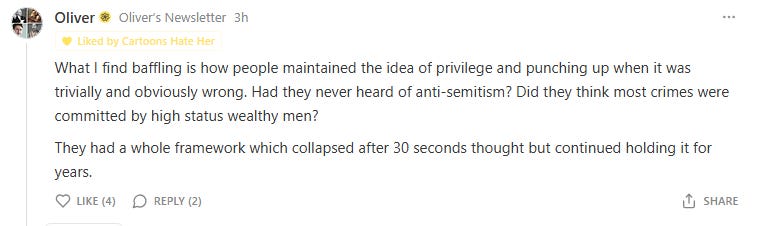
As with the last contradiction we discussed, obviously CHH is noticing something very real. And I think this had real political consequences, as she notes: it meant that when SJWs “punched up,” people “beneath” the activists who nonetheless identified with the criticized individuals or behaviors were watching, and they saw something stupid and dangerous, in much the same way we (good liberals) feel when we see the dudes who think blondes with email jobs are the new Judeo-bourgeois oppressor class.
And when Oliver lays this pattern of behavior out, it seems obviously self-refuting as an ideological framework. What I think we have to understand is that this was never the framework, but a habit of thinking and a pattern of behavior that the framework collapsed into. The way privilege discourse played out online was driven by political superstition, “privilege” and “intersectionality” degenerated into evil-eye style fetishes.
What I’m saying is emphatically not that these posters were not true Scotspeople. What I’m trying to say is that the dynamic at play is kinda weird, and seems to me to be generalizable to other political movements, and that’s worth exploring. What I’m also saying is that as we exit Le Wokisme (see footnote 5) and try to draw some lessons from whatever that all was, it pays to be specific, because I think the errors that were made are still super poorly understood by the people who made them—and there’s actually a lot we can and should rescue from the wreckage of the last decade as well.
In my next piece on this topic, I want to take a closer look at the specific thinking Oliver and CHH speak to above—the way the idea of privilege, essentialized into an object of superstition, seriously misled people’s behavior, and how we might think and act moving forward. It’s obviously the case that social hierarchies exist, and have political and moral relevance to the egalitarian—and equally obvious that this way of talking about it did at least as much harm as good.
That’s going to take discussion of Christianity, chivalry & noblesse oblige, and “inverted empathy” to do justice, I think.
One confused redditor, user Banshee45, asks, “How is Alien Sex Fiend considered goth but not Skinny Puppy?” Top answer: “AFS is goth that draws elements from industrial. That’s where the similarities come from. SP is pure industrial.” Be glad you’re not asking about the difference between doom, stoner, and sludge metal. “Well it all goes back to the Melvins in Seattle…”
You know it when you hear it, imho.
predictably, an early take was that it was not woke for white SJWs to call themselves woke, appropriating AAVE
This, in turn, is plagued by its own version of the name dispute and holy hell I just cannot start on that today. Another article. Just… iykyk, right?
The Woke years, I guess. When I talk about this I reach for the obviously dumb Le Wokisme, because everything for and against the trend at the time was so, so much stupider than all of this already was.
No posts
Comments
Nothing yet. Say the first thing.
Sign in to join the conversation.