
Nothing Bogus is funded by its readers. To support this work, please consider upgrading from a free subscription to a paid one. For only $5/month or $50/year, you’ll get access to all content + the sublime high that comes from supporting independent arts journalism. Sharing the newsletter also goes a long way.
With temperatures nearing 100 degrees this Fourth of July, I opted to skip the barbecues and spend the day in a cold movie theater. I saw Total Recall at Metrograph, and, well, let’s just say few decisions in my life have been better. Hotdogs and hamburgers and friends are all good, but weird stomach mutants and Arnold deadpanning “Consider that a divorce!” are truly special. Fourth of July doesn’t get enough love as a moviegoing holiday. And with their camp and excess, Paul Verhoeven movies are perfect for commemorating this nation’s birthday. Next year, someone please program RoboCop!
Here’s what’s happening this week:
My birthday is this week, and you bet your ass I’m going to use it as a way to guilt you into upgrading your subscription to a premium one. Please and thanks!
Get tickets now for Aidan Cronin’s The Birds Tell Me All There Is to Know which will be playing at Spectacle July 17, 22, 23, and 27.
Please give some love to your favorite actor the world doesn’t know about yet by the end of this week.
Justin Casselle is ISO a Costume Designer + Makeup Artist for a shoot on the 12th. Paid. Inglewood. DM @justincasselle on IG.
Eddy Frumpkin and William George-Louis’s All-Starrs series returns to Starr Barr in Brooklyn July 21 at 9:00 PM.
David Wain’s latest, Gail Daughtry and the Celebrity Sex Pass, is out July 10. It made me laugh.
Albert Birney and Kentucker Audley put together a great breakdown of their practical VFX use in Strawberry Mansion on their Substack.
If you would like to list in a future issue, email nothingbogus1@gmail.com with the subject “Listing.” (It’s FREE!) Include your email and all relevant details (price, dates, etc.)
THE FEATURE PRESENTATION
Tuttle describes blocking and staging in a contained location, enabling daring performances, and the biggest lesson learned from his transgressive debut feature.
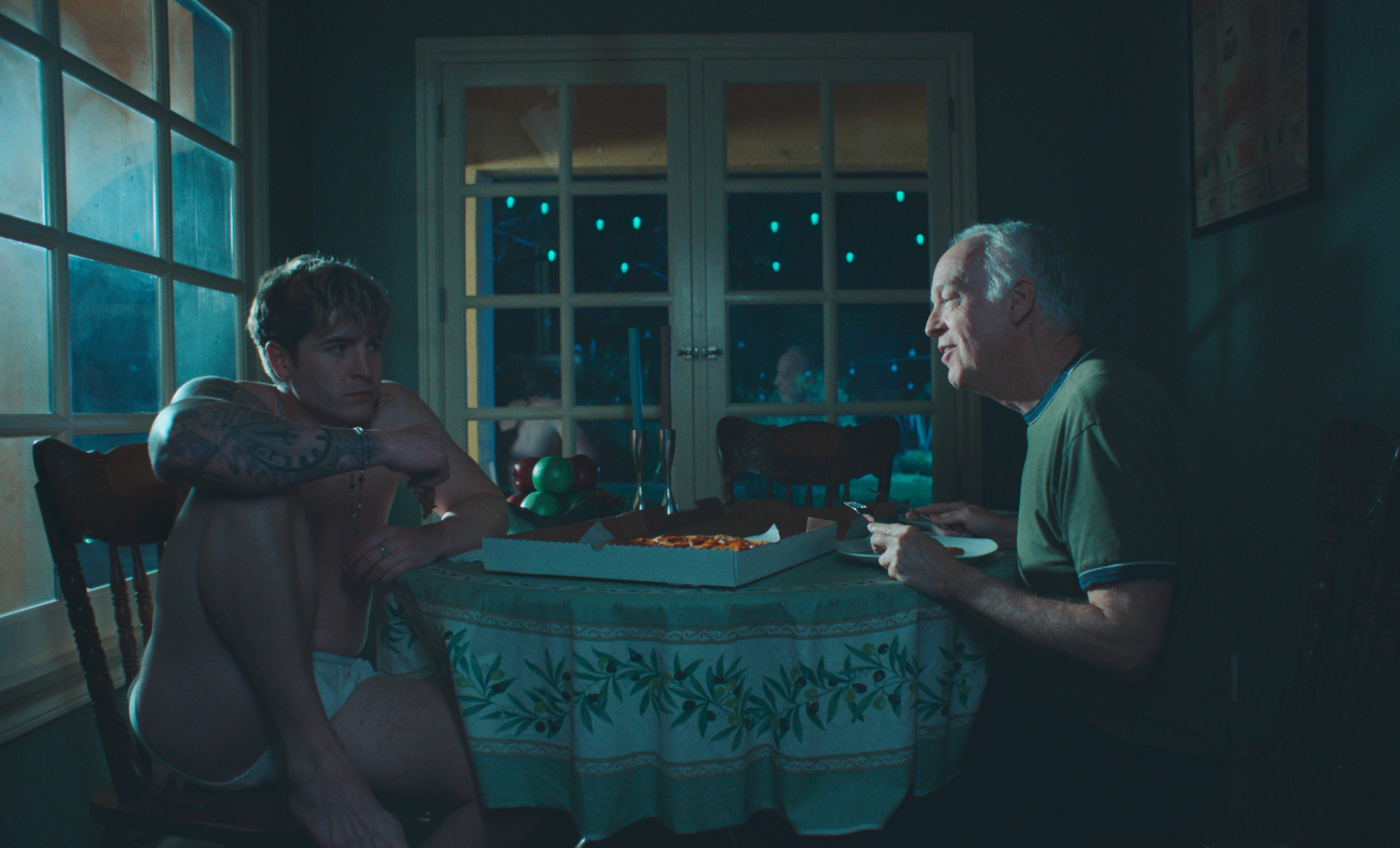
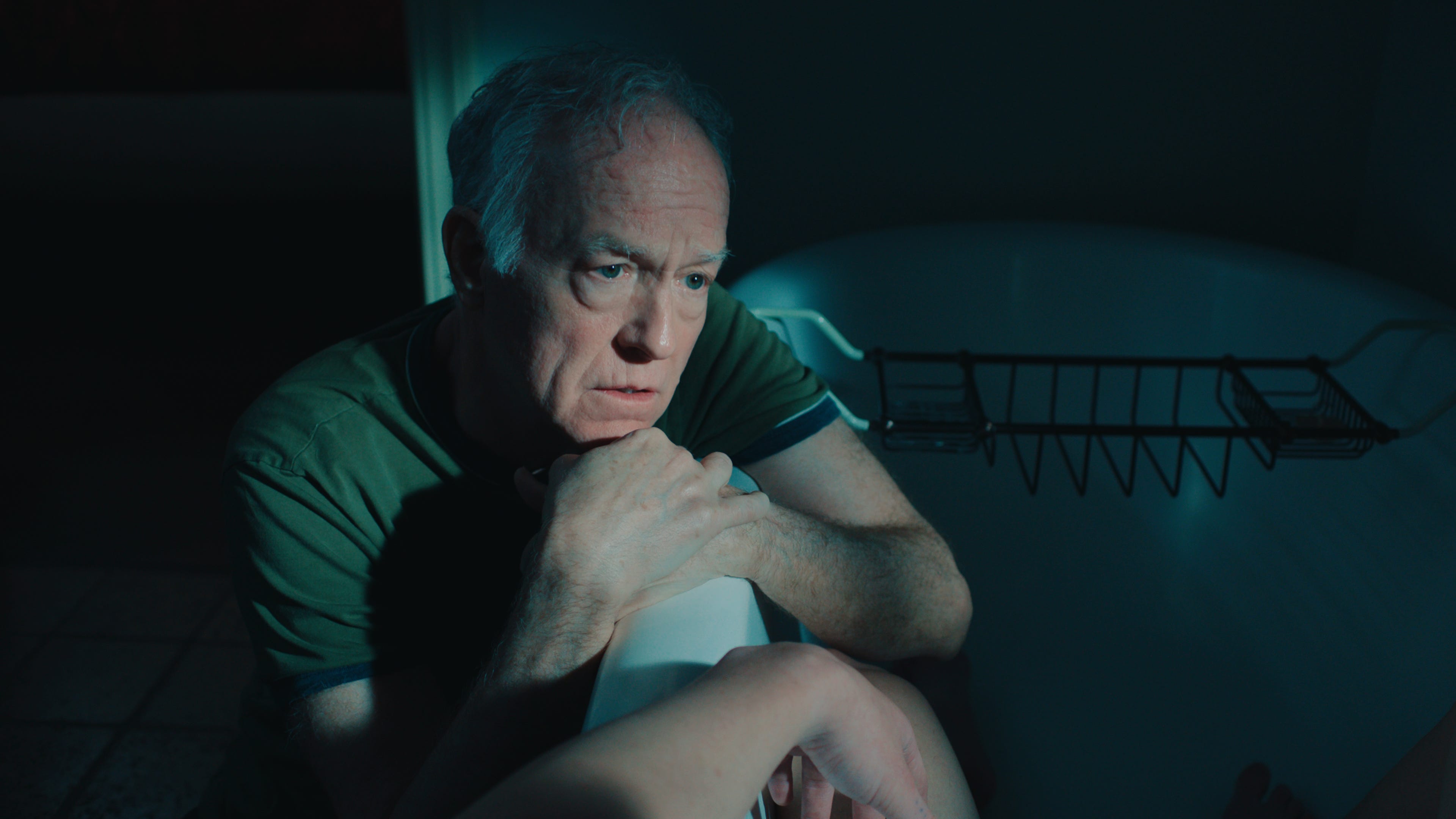
When Blue Film hit select theaters earlier this year, I was admittedly reluctant to go see it. In the film, Hank (Reed Birney), a former middle-school teacher and convicted pederast hires a Los Angeles camboy named Aaron Eagle (Kieron Moore) to spend the night with him. Back when Aaron Eagle was Alex McConnell, he was one of Hank’s students. Naturally, the two of them have a dark night of the soul, full of stomach-churning revelations and uncomfortable attempts at physical intimacy.
Despite occasionally making me squirm, Blue Film turned out to be exactly what I want out of a microbudget feature. Elliot Tuttle, the film’s young writer-director, embraces the limitations of his modest resources, and focuses his energy on digging deep — asking difficult questions, plumbing the depths of his complicated characters’ psyches, and creating compelling, sustained emotional tension. Blue Film came after years of Tuttle writing and trying to make bigger films. “People would say they loved the scripts and then nothing would come of it,” he says. “Eventually I just wanted to make something, so I wrote this with producability in mind.” In the following conversation, we discuss some of the experiences and influences that inspired the film, how he approached shooting a contained location, and his biggest takeaway from the process of making a debut feature.
Tell me about how you got your start as a filmmaker.
Elliot Tuttle: Growing up, I wanted to be a film critic. I had a movie review website from when I was like ten that my dad helped me set up. It wasn’t until the end of high school that I was like, “I think I could be a filmmaker.” I took an independent study in high school on French New Wave cinema. And I remember watching all the Godard films from the ‘60s and early ‘70s, and those really esoteric run-and-gun films felt very creatively inspiring to me. That was probably the turning point. Watching Tout Va Bien and Made in U.S.A. felt so sustained by creative energy and a small crew, and that felt within reach to me.
Then I went to Occidental College, which is a liberal arts school, and while I was there I interned at the Duplass Brothers production company. Probably the first time I made something was during COVID. I had the script for a film I knew would never be made because it was a super gonzo, expensive script. And during COVID, I redesigned it as a narrative podcast. And that was my first foray into making something significant.
I’m curious about the first draft of Blue Film. Did it look like what you wound up shooting? Was there a different focus or different themes?
I think its themes were pretty intact. The way it started was from watching a lot of Catherine Breillat films, and then extrapolating this figure that I might’ve been fantasizing about as an adolescent. But pretty quickly it became a film about what it felt like to be a gay guy in a metropolis where sex and love felt like a hobby and where they felt very fractured. But the process of writing drafts was a process of refining this idea. The first draft was pretty messy. A lot of the rewrites were about synthesizing or clarifying these conceptual ideas that I was working with in the first place. The film is still pretty discursive. But it got more cinematic with each draft.
When you describe synthesizing and making it more cinematic, what does that mean?
A lot of it was figuring out what exactly is moving the engine of the story. It seemed like what was moving the engine of the story was this dissonance between both of these characters — between their assumed self versus a true self. Really honing in on what exactly is driving the conflict, scene by scene, to reach a boiling point, was important. I think when you write a first draft, sometimes you feel lost in the weeds a little bit. The way I write a lot of the time is starting conceptual and refining plot mechanics and tracing a character’s arc. I usually start with a feeling or idea and start translating that feeling or idea into a story. So it was about identifying the key driving force.
Were there collaborators who gave you particularly helpful notes?
My producer Will Youmans is one of my best friends. He’s a fantastic writer, and he’s very intelligent about writing in a way that I’m not. Will can look at plot beats and characters and figure out a story so quickly. He can make the arc and narrative make sense. I feel like I’m good at other stuff.
What did that process result in here?
Will gave me notes with each draft that inspired moments like the final admission of Hank that “I let him get away.” That took retrospective planning in drafts in terms of when and where to layer his inability to be honest with himself. And in revising, you realize it’s not just about the revelation. It’s about when he’s lying to himself, when he can’t admit something, and what that means in the greater context of the scene and how you make it pay off later.
I could imagine how on the page this script would be full of tension and people would tell you how compelling it was, and then they’d tell you that certain scenes are too long, and you’d have apprehension about whether the length of those scenes would work. Did you have those fears?
Yes, I did. But it’s like, shoot it anyway. You can cut it out later. The first twenty minutes of the film where Aaron is on the couch talking into the video camera was originally like 35 minutes. We cut out like 15 minutes of that. It was the entire first act of the script. I was worried about it, but it’s kind of a problem for later. When you’re on set, collect as many gems as you can to thread into a necklace later.
On the other hand, I could see someone make the argument that you have limited time and resources so you want the script to be as tight as possible.
We shot the film in about 12 days with $50,000, and I was still like “Shoot everything on the page” and we still made every day. So no excuse not to do it.
Once you did get to the edit, did you learn anything about what worked and what didn’t so far as the script was concerned?
More so I learned how to be a better director next time I’m on set. When I was looking at all of the footage and threading it all together, I realized how to save myself headaches later. I’m a pretty passive and conflict-averse person by nature. And I learned the way to communicate exactly what I want without stepping on other people’s ideas. Film is a naturally collaborative medium. I wanted to run a very positive set, and we did. The set life was very smooth. And I think it takes practice to be able to have that while exacting a vision on something. In the edit, I could see moments when it took forever to get something because I wasn’t being clear immediately because I was too nervous about shooting down another creative opinion. And that’s informed how I even work with an editor in post. It saves us all time if I’m as clear as possible while also respecting the opinions of the people I’m working with.
With actors, sometimes there’s a tension between being direct about your vision and what you want and providing space and freedom for experimentation. How did you navigate that?
I do think that you have to lose control a little bit with an actor. You wrote this character, and then you cast someone because you’re comfortable enough to surrender it to them. I mostly felt like it was my job to facilitate a good, healthy creative environment for Reed Birney and Kieron Moore. And so much of what they offered made its way into the film.
This movie feels like a movie you make because you want to work with actors and go to deep places with them. So how did you do that? Did you rehearse?
I didn’t really have the luxury of a ton of rehearsal time or even a ton of time on set to play around. But I think you have to establish trust by showing that you’ve done your homework. When I talked to Reed about the character of Hank, it’s clear that I’ve done a lot of research on convicted sex offenders and I can tell him, “Here’s everything that’s motivating every creative choice in the script. If you have a question, I have an answer.” I prepped more with my DP than my actors, and it was because I wanted to spend my days on set pretty much only working with the actors.
Were there things the actors brought to the characters that surprised you?
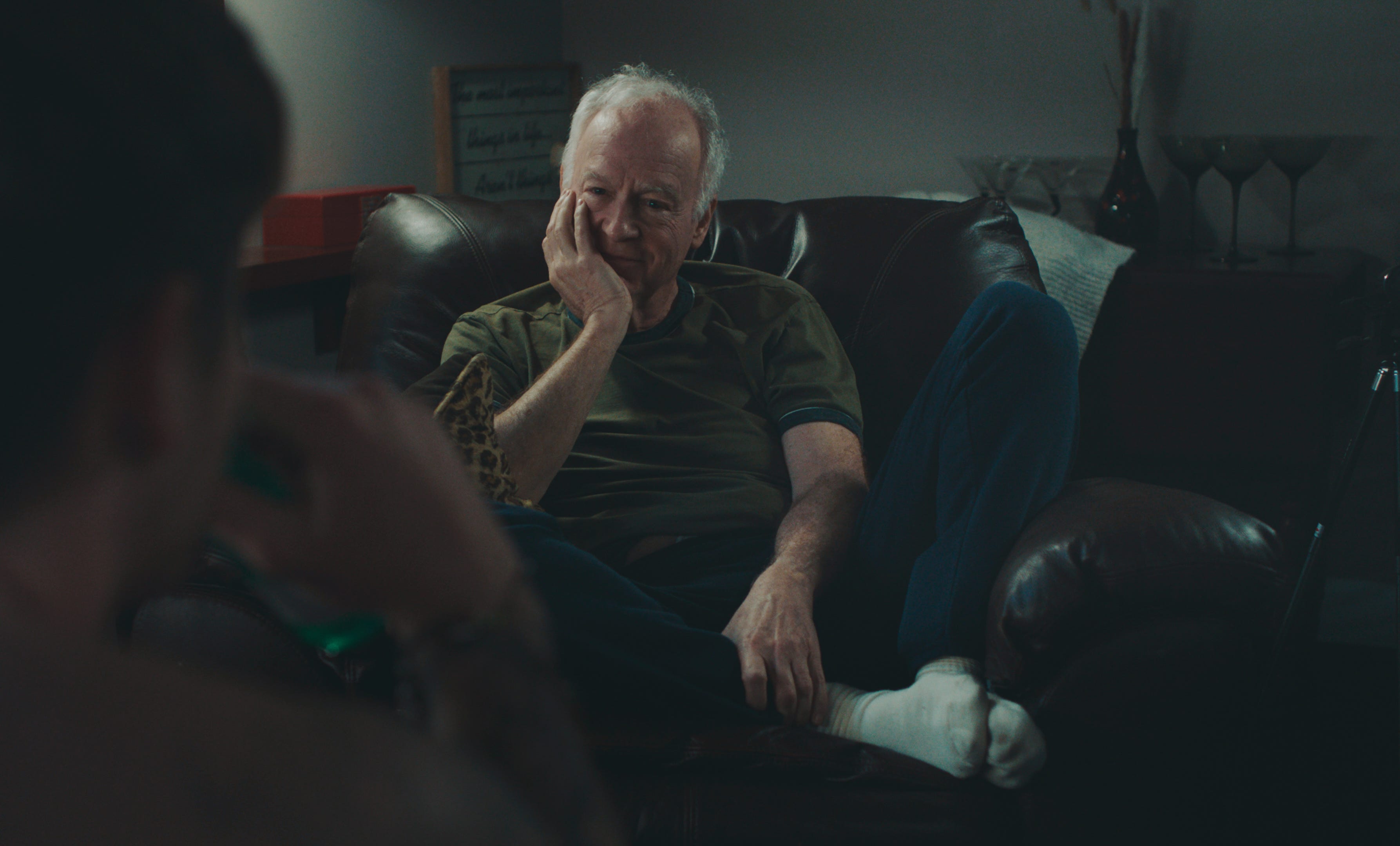
Reed brought this real warmth to Hank that was a choice. There’s this moment when he’s sitting in the chair and his knee is up and he’s playing with his ear, and he looks like a little monkey sitting in a chair. There’s something so warm and inviting about his performance that heightens this contrast that was already in the script — this scholarly pervert. It made the character both more inviting and more creepy.
In terms of the prep you did with your DP, how did you think about building the visual language for the film and what you wanted to prioritize?
We knew that we had such a limited amount of time. In order to make our days, a lot of times it was about getting the minimum coverage we could get, and then figuring out where we should be intentional about a big setup. I feel like in a lot of debut films, people forget they’re telling a story visually. Or people mistake framing for good cinematography. Good cinematography is about telling a story with the visuals. So it became about how we create a visual world. I think we use four different formats in the film, and that’s something that doesn’t require a ton of time. I loved using the mini DV footage because it felt like a good Venn diagram of something used for either home family videos or snuff films. Blue Film fits perfectly in there. So how do we use it?
Comments
Nothing yet. Say the first thing.
Sign in to join the conversation.