
Nothing Bogus is funded by its readers. To support this work, please consider upgrading from a free subscription to a paid one. For only $5/month or $50/year, you’ll get access to all content + the sublime high that comes from supporting independent arts journalism. Sharing the newsletter also goes a long way.
Last week, Vulture sent shockwaves through Movie Internet with a new breaking report: independent filmmaking is — sit down, brace yourself — not a lucrative career path. I suppose it’s time to pivot to poetry, everyone!
…OK, so maybe it’s not exactly news that most independent filmmakers are not rolling in cash. Still, it’s validating — and dispiriting! — to see your reality reflected back to you. If you’re not making a living off of your movies, you are not alone.
Personally, I can’t remember a time when independent filmmaking was a dependable career. You’re always playing the lottery, deluding yourself that your film will be the exception. What seems to have changed post streaming boom, though, is that where once making an acclaimed indie feature was an on-ramp to other paid opportunities (commercials, TV, studio projects, teaching, etc.), those lanes don’t seem to be opening as frequently — and when they do, they’re not paying as much.
So what’s to be done? I’ve had — and observed other people having — that conversation enough over the past few years to feel skeptical that there’s a viable systemic solution. The tech companies are pretty damn good at extracting profit from industries and leaving workers and artists in the lurch — and as AI becomes more pervasive, things are probably only going to get worse.
On a more individual level, everyone’s situation is different — from financial safety nets to life goals (i.e., having children, living in an expensive city, etc.) to day jobs. What I appreciated most about the Vulture article was that each filmmaker shared what they are doing for money. If we’re all committed to doing this stupid thing, and if we accept that we’re probably not going to make much money from it, the question we all have to ask ourselves is: What will pay the bills?
Crewing or working service industry jobs are two obvious answers. What else? Comment below or write in anonymously to nothingbogus1@gmail.com. And relatedly, please please please help me pay my own bills by becoming a paid subscriber to this newsletter!
Here’s what’s happening this week:
Friend of the newsletter Graham Mason made an awesome music video with a very promising musical artist nobody’s ever heard of, and he shared some cool BTS material on Instagram.
The great Edy Modica has a new comedy special out on Veeps.
The best thing on social media right now is Eddy Frumpkin’s Making Movies Today channel. Eddy’s trademark enthusiasm and love of cinema is so lovely and infectious.
Leave it to The Big Game DP Chris Violette and It Ends producer Carrie Carusone to put together the most intricate, city-spanning Amazing Race scavenger hunt this past weekend. I remarked that it felt like a good filmmaking exercise because you’re constantly reminded to avoid the urge to rush and instead take a breath and focus on the problem at hand. Thanks, Chris and Carrie!
Will you be at Life World’s hotdog eating contest this July 3rd?
Eric Krehbiel is seeking an animator/gfx asap. Quick turnaround. Paid. 2-3 deliverables. DM @erickrehbiel on IG.
IFC Center is extending Honeyjoon again, and adding another Q&A June 29 with special guest moderator Jess Val Ortiz and director Lilian T. Mehrel.
The Illuminations Grant, an annual $10,000 award that provides support to Black Trans Women Visual Artists, is open for applications through July 2. Winning artists and finalists will receive additional professional development resources and further guidance. More here.
If you would like to list in a future issue, email nothingbogus1@gmail.com with the subject “Listing.” (It’s FREE!) Include your email and all relevant details (price, dates, etc.)
LIGHTS, CAMERA…
Lakner discusses lessons in Steadicam, combining disparate references, and his fairytale collaboration with John Early.
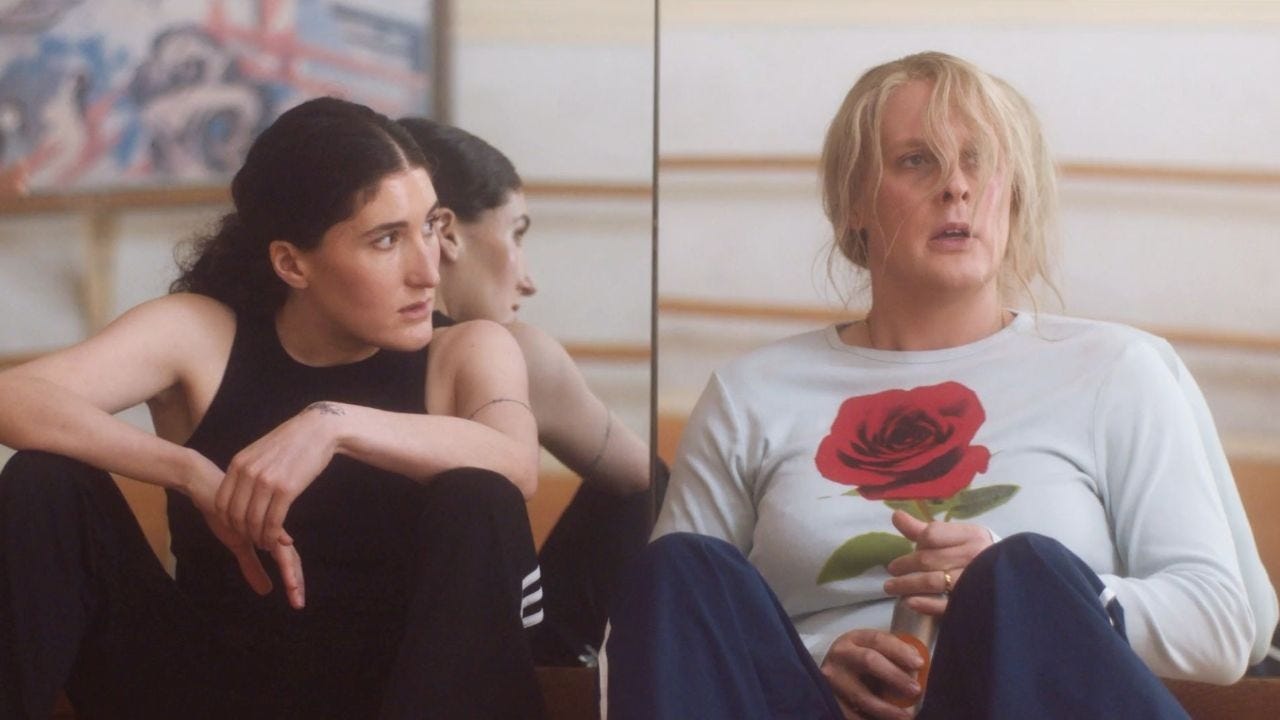
In early 2024, cinematographer Max Lakner got a call from John Early. Early was a fan of the web series Zhe Zhe and pilot Illuminati Detectives — both of which Lakner had made with actors Leah Hennessey, Ruby McCollister, and Emily Allan — and wanted to see if Lakner had interest in shooting a microbudget feature he was planning to direct and star in called Maddie’s Secret. “I was so flattered,” Lakner remembers. “John was being very sweet. He said, ‘There’s really no money. Think about it.’ And I said, ‘No, I’m on board. Whatever you say, I’ll be there.’”
Lakner was won over by Early’s charm and pedigree, but most of all he was attracted to his pitch for the movie. “We were talking at first about Cabaret and Showgirls. And I was like, ‘OK, it’s a combo of two of my favorite movies that are completely different, but both extreme. I’m sold!’”
Initially, Early was planning to make the film with $50,000 to $80,000 of his own money and was eyeing a shoot that summer. Lakner was skeptical the film would be that small or film that soon, but he wasn’t about to rain on Early’s parade; and really, he was game for anything. Eventually, the film did push and the budget did grow (to a modest, yet workable $750,000). Which for Lakner was great! The added time and resources gave Early and Lakner the opportunity to hone an ambitious visual style that prized speed, beauty, and fluid movement. When I saw Maddie’s Secret at this year’s New Director’s / New Films, it was that assured style, as much as the film’s abundant humor and heart, that struck me. Despite Early being in front of the camera for nearly the entire movie, he and Lakner pull off a lot of difficult shots, all of which cohere and serve the film’s melodramatic tone. On the heels of Maddie’s Secret’s premiere — and just as it’s about to expand wide on July 3rd — I spoke to Lakner about shooting the film. It’s one of the more illuminating conversations I’ve had for the newsletter about cinematography, and there are a bunch of terrific bonus materials for paid subscribers.
When John mentioned Cabaret and Showgirls, did you have a sense of what elements you’d take from each film and how you’d fuse them?
Max Lakner: It’s the commitment to pleasure in both movies. They’re both extremely expressive. With Cabaret, it’s the dreaminess, the way the lenses look. It’s gauzy, it’s a fairytale, it’s lush and European. And with Showgirls, the speed and playfulness and intensity and loudness and bigness.
(Other references can be viewed in the above video courtesy of Lakner.)
I imagine that executing those things on an indie budget might be challenging. Did you have that concern?
I built in the compromises from the start.
What were those?
The budget was like $750,000. So we decided to use Steadicam a lot. I don’t know if that was a compromise. But the movies we were imitating used dollies. And when it comes to the lighting, there are scenes where I had the opportunity to perfect it. And then there are a lot of scenes where I didn’t. From the start, I thought I wanted to create a style in which a certain limitation of the realism of an on-location lighting is built in to the heightened style so that even in some scenes where I could’ve controlled the lighting more, I chose to use some of the practical lights that are there so it all works together as one and elevates the mundane and grounds the fantastical.
I want to ask more about the lighting. But first, we need to talk about Steadicam. It’s interesting you viewed that as a compromise, when often times it can be quite expensive. Did you operate yourself?
No. I had an incredible operator, Devon Catucci. It could not have worked without him. We had him for the whole shoot. He supported me in all kinds of ways. I love to operate, and sometimes I missed putting my body into it. But he put his body into it. We could do all these complex moves. They’re a little swimmier than if it was on a dolly, and that became the style.
Ultimately, I found it was very cost effective and time effective. At first, the producers were asking why we need an operator, because that would be an added expense. I said that the Steadicam operator will be the A-cam operator, and we get the flexibility of being able to go on and off Steadicam at will and not have to just have specific Steadicam days; we’d just be free. But also, the main thing for me was that John was the star and the director, and I felt that if I’m not at the monitor nobody who knows what we’re going for is watching. And that was really important to me. It allowed me to see more clearly and keep the whole edit in my mind.
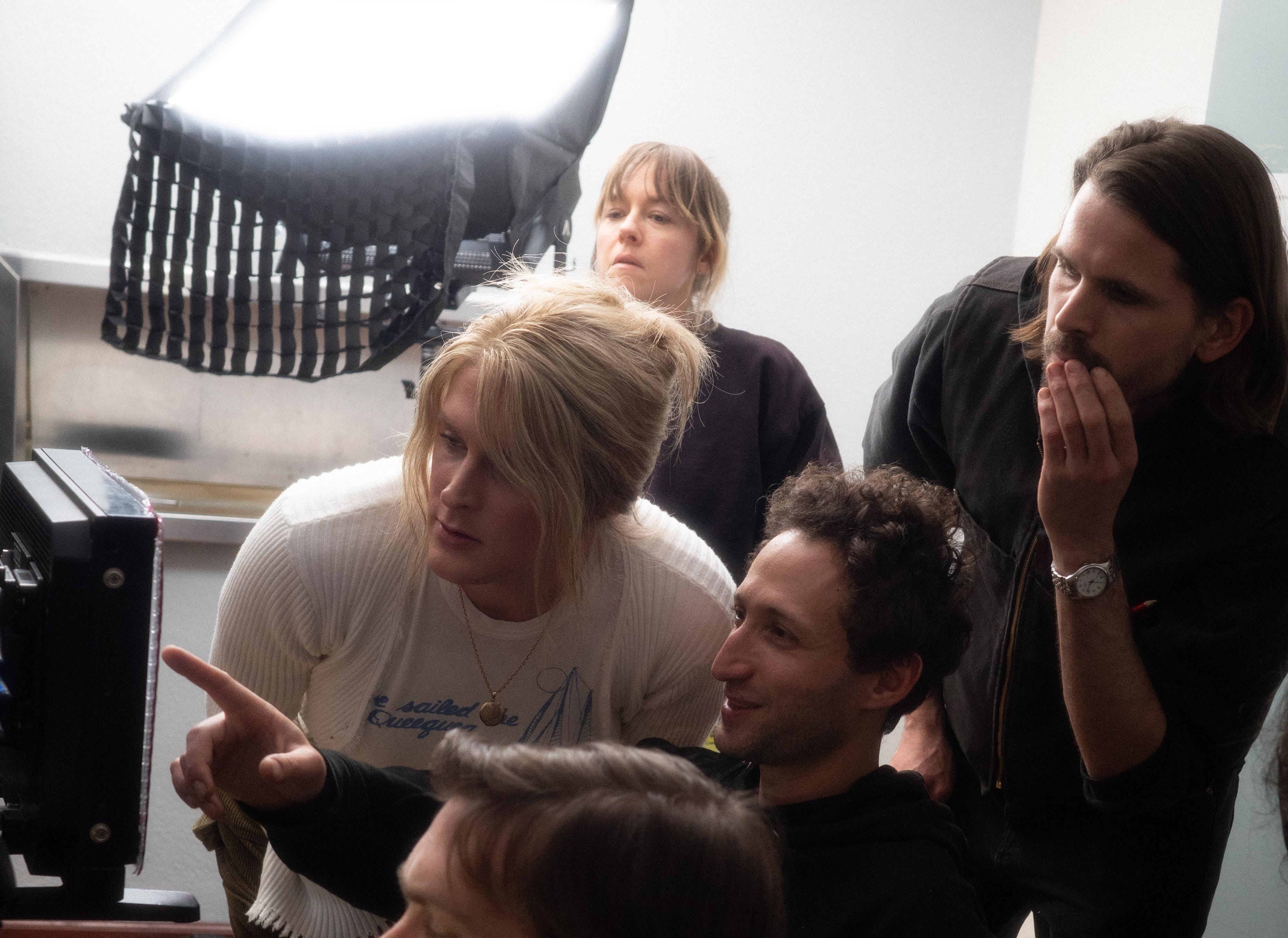
Did you guys rehearse each movement? How did your collaboration with Devon work practically?
John and I rehearsed each movement in the months leading up to it and then also every night before the next day. We would practice the moves on my phone and then Devon was so good at looking at that and knowing what to do. He brought a lot of his own instincts, too. A lot of beautiful moments are at the end of shots that we planned, where he did something else on his own.
Having Devon also helped me understand what’s possible. People are always telling you certain things aren’t possible on our budget, which is fine. But sometimes Devon would hear that and go, “We could make that happen.” There was a very heroic moment where — SPOILER — there’s this spiral ramp outside the treatment center they have to escape out of, and the whole week we were filming there, each night I’d be thinking about the one wide shot of the ramp, because to me that had to be poetic and establish the scene. If it was a picture book, that would be the picture at the start of this chapter. Establishing that the place has a lot of symbolic resonance is so essential to making it a fairytale. So when we shot it, we had a very hard day and we had like ten minutes left, and I was ready to give up. Devon knew it was an important shot to me, and he was like, “No, you need this shot.” It was very action movie. He drove in the camera van really fast, got the camera up on top of the camera van, everyone’s running around helping, and we got the shot at the end of the day. I didn’t know it was an option and that we could do it so fast.
I was really blown away with the timing of a lot of movements and how they captured and elevated the comedy. I imagined that with the director acting, that would be very hard to achieve.
Yeah. But he really did know very clearly what he wanted. Our ambition was then to go even faster and snappier. Showgirls is such a peak of speed — whoosh, bam — and you’d have to do it in camera a lot of times. That was a big focus, and it’s cool that the first few scenes set that tone.
Did that mean that you wound up directing the timing of actors once you were on set?
Yeah. The timing and the blocking.
Were you doing a lot of takes?
No. Sometimes the complicated shots that we couldn’t nail took a lot of takes, but most shots we did very few. I wanted John to watch the playback, but often he didn’t. He’d say, “Was it good for you?” And I’d say “Yes.” And he’d say, “Great, let’s move on.”
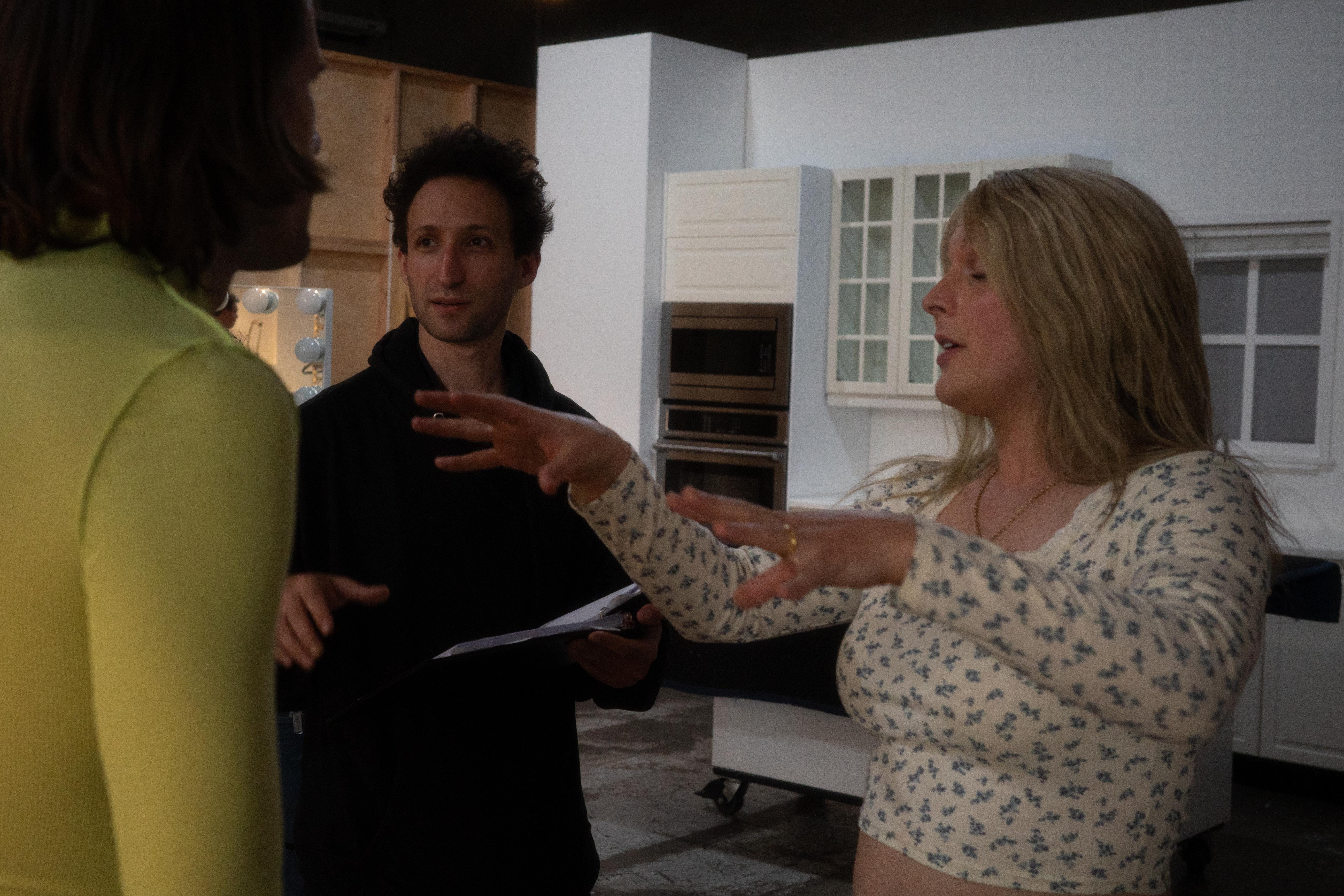
I’m guessing that was a different experience than you’ve had on other films.
It was a different experience in so many ways. But I think DPs are always doing some directing. Not the performance so much. But I think most DPs secretly sneak in directing. Sometimes you have a strong instinct that it’s all going to click in one more take, and you say, “Oh, we messed something up. Can we do another?” when we actually didn’t. And normally if a director’s not in the movie, I might whisper to them, “Take it or leave it but I think this performance could be more such and such.” And in this case I had to tell him directly. But John’s so clear and confident and he always knew if that was valid or not. It wasn’t an emotional problem.
You mentioned that you and John would practice each shot every night for the next day. When you did that, were you adjusting the style at all as the shoot progressed?
There was refining and also adjusting to the demands of the schedule a little bit. I don’t know why we did it this way, but we had the whole shot list before the shoot, and then each night we would recreate the shot list from scratch. And usually it wound up being about the same as what was in the document. It was time consuming but I think a very useful process. I think the most important part of it was knowing what in each scene is the core emotionally for the characters, but also what’s the core of the pleasure of the scene. It was a very gradual process of me taking in John’s vision. He had a clear vision but it took time for me to absorb it.
Comments
Nothing yet. Say the first thing.
Sign in to join the conversation.