
Disclaimer: I love Waitress the musical. I get choked up at key moments despite knowing exactly what’s coming. I listen to the cast album without provocation. I compare performances of different actors in the same role. Etc.
I say “disclaimer” because this blog isn’t about musicals that I happen to enjoy, but effective storytelling through music. Jesus Christ Superstar and Chess are among my favorite shows, but I’ll never write an article about their narrative excellence, and in fact may need to write one about how awful their lyrics are. In short, there’s a difference between a show’s being beloved and being good.
Fortunately, Waitress is one of those rare musicals that’s not only a crowd-pleaser but also rather well-written, especially for a light dramedy with fairly broad characters. There is real craftsmanship underlying the folksy humor and I want to point some of it out.
(Some spoilers follow.)
You, protagonist, matter to me
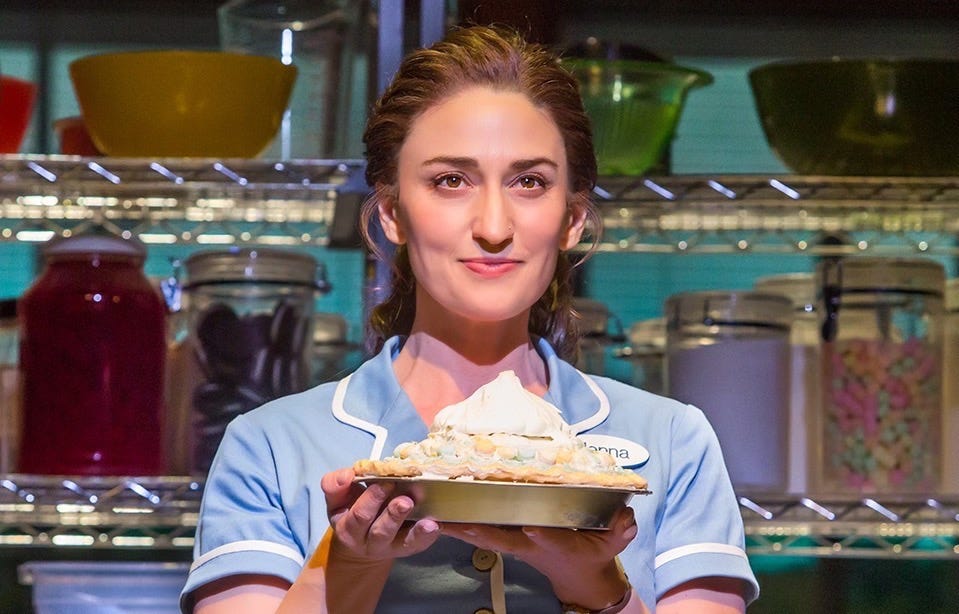
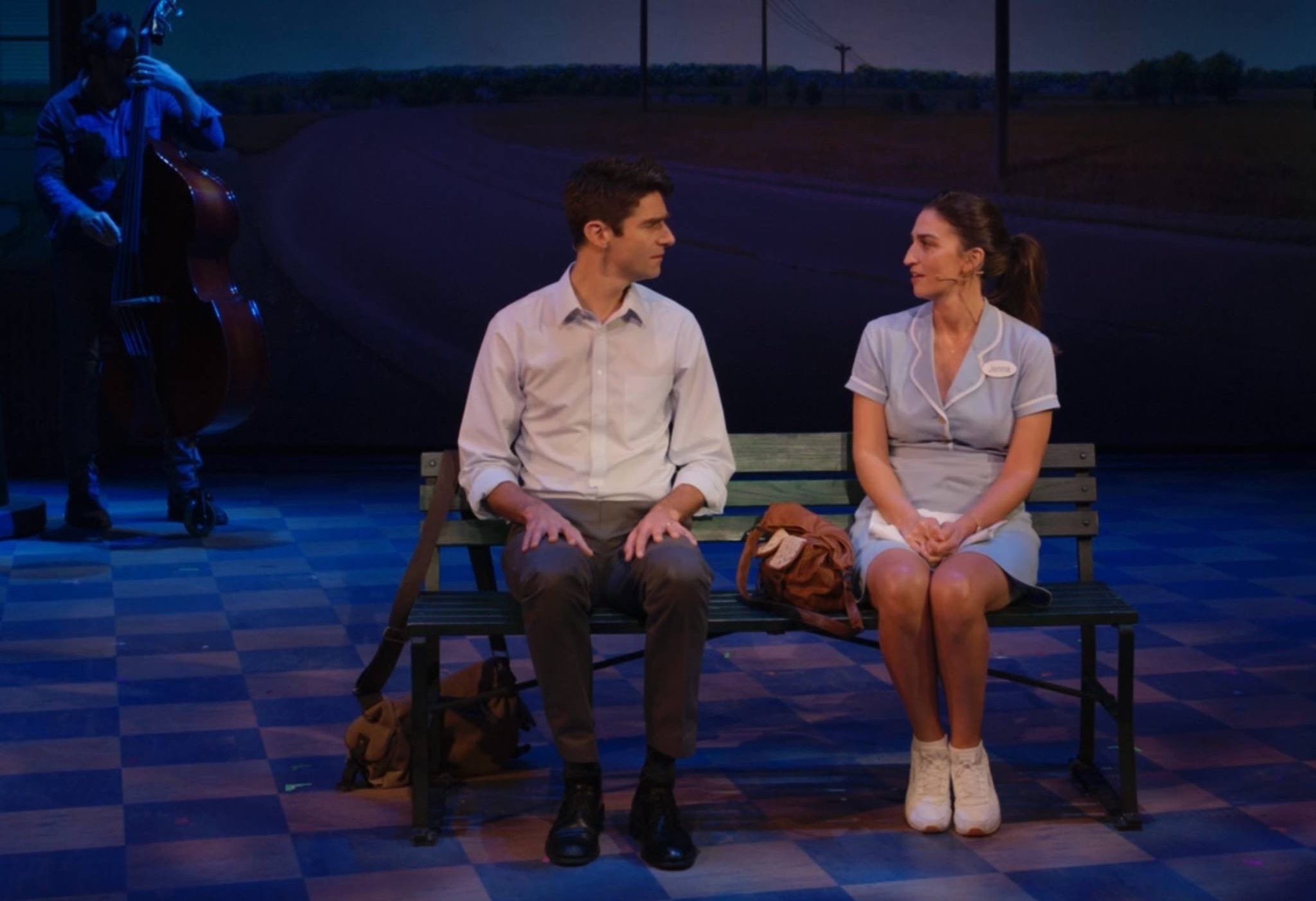
Let’s start with some basics. Every musical needs a lead with whom we bond in some way. Waitress almost immediately endears us to the main character, a beleaguered server named Jenna who presses on with good cheer and a reverence for baking. We’re on board with her desire for a better life, and admire her honesty. And who can dislike someone who loves making pie?
Waitress also engages our interest by giving our empathetic protagonist a big problem: she’s pregnant. Well, that in itself isn’t a problem so much as is the abusive husband who’s partly responsible for this state of affairs. We immediately sense that he’s a jerk, and later learn just how deep his psychopathy goes.
Jenna yearns to win a pie-making contest in order to have some money for the impending family member, but her true issues are deeper. How does she raise a baby with such a hostile father? Does she even want the baby? These questions raise tensions that keep us engaged from outset until to conclusion.
We learn of the pregnancy when Jenna does, as this news is embedded in an early number, “The Negative”. (As in, hoping for a negative test result.) This upbeat folksy shuffle takes place during the wait between taking a pregnancy test and frantically reviewing its results. The song is full of cheeky humor but also holds a real stake: is Jenna pregnant or not?
A lesser musical would have Jenna reveal her pregnancy via dialogue, then spend four minutes of ballad emoting about it. But Waitress is smart enough to know that songs that contain story pivots are better than songs that merely follow them.
Functional songs
Speaking of music, it’s easy to love the show just for Sara Bareilles’ mesmerizing folk-rock score. Each song feels as lovingly crafted as one of Jenna’s pies, offering memorable melodies that demand our full attention and emotional immersion. The cast album will give you a lot of listening (and re-listening) mileage.
But the score also represents another of Waitress’ key virtues: almost every song advances the story in some way. As we’ll see, this applies to numbers sung by secondary characters as well.
This is a noteworthy accomplishment! Many musicals indulge in songs that digress, stall, or give voice to characters we don’t particularly care about — just to give an actor a moment in the spotlight, or to include some desired song genre. Waitress keeps its numbers focused and meaningful, and the few that are merely reflective still manage to focus on the lead character.
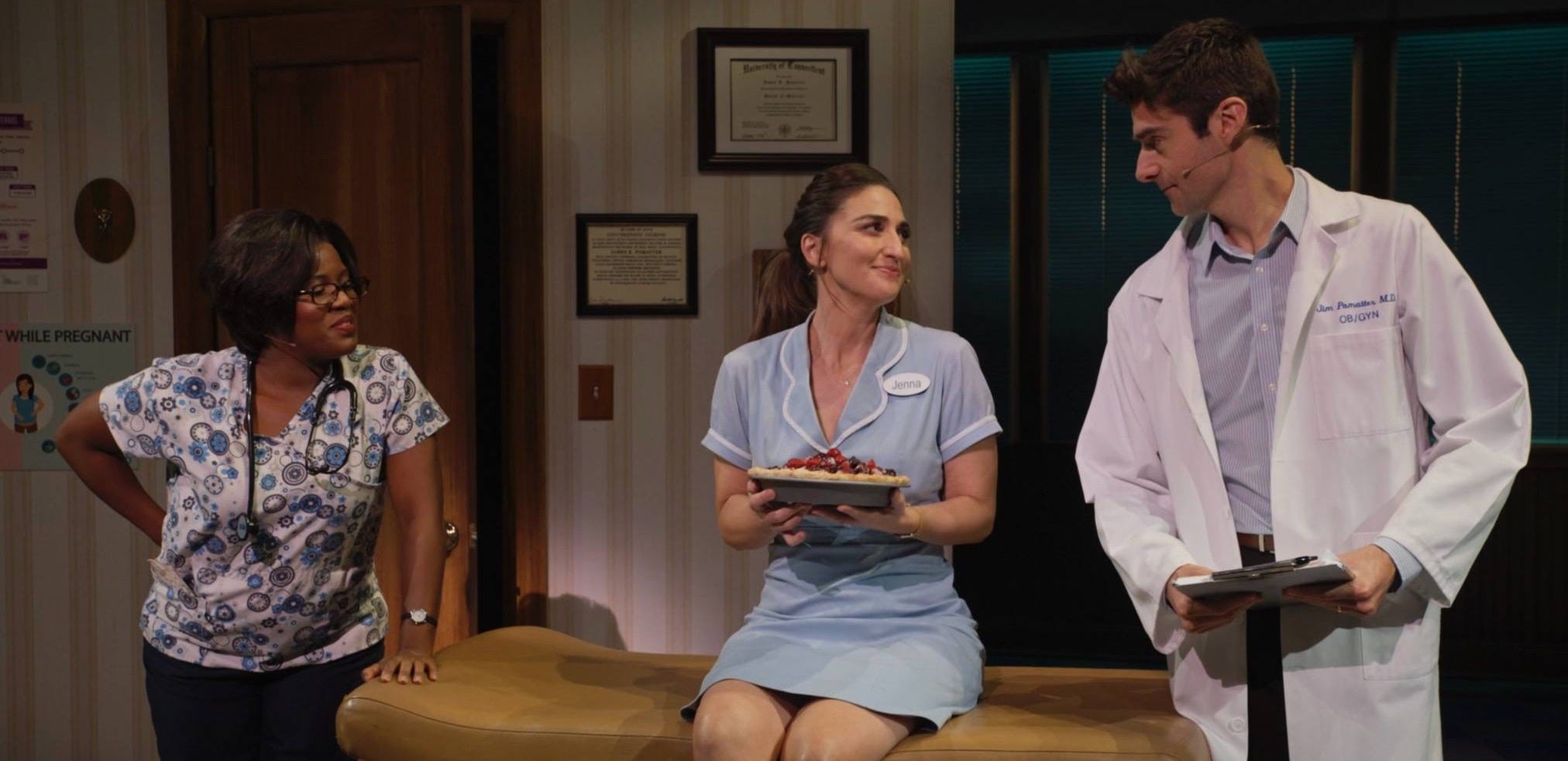
“Bad Idea” is a great example. This soaring act one closer celebrates/criticizes the newfound affair between Jenna and her obstetrician Dr. Pomatter. No mere folk-rock crowd-pleaser (though it is also that), “Bad Idea” somehow infuses an intimate moment with a world-sized sense of stakes. As with “The Negative”, the song dramatizes events as they happen, rather than being a reaction to something that just occurred. It takes place on the precipice of a momentous decision, and pulls us joyously along as it leaps over the edge.
“Take it From an Old Man”. Another longstanding musical theater tradition is Advice From Wise Elder song. (Think “History Has Its Eyes On You” or, ugh, “Children Will Listen”). This can often be an excuse to give the limelight to a stage veteran, and if deployed carelessly can kill a story’s momentum just as it’s ramping up to the finale.
Waitress’ entry in this genre, however, imbues the trope with purpose. Old Joe, the diner’s owner, reveals a soft heart beneath his curmudgeonly exterior, and moreover makes it clear that he’s impressed with Jenna and wants to help. Without this song, a later windfall might have felt like a deus ex machina, but this song helps portray it as earned (heh) desserts.
“When He Sees Me”, “A Soft Place to Land”, “Never Ever Getting Rid of Me” and “I Didn’t Plan It” all pertain to the romantic lives of Jenna’s co-workers, and thus might seem like digressions or throwaway numbers — but even they serve to move the central story forward, in their own way. This is as good a time as any to segue to the topic of:
Supporting characters who support
Many shows feature a secondary romantic couple who provide musical variety as well as the story’s subplot. Herein lies danger, as subplots — and their accompanying songs — can try our patience if they separate us too long from the protagonist in whom we’re emotionally invested.
For example, in the generally strong A Man of No Importance, a rando shows up in act two to sing “The Cuddles that Mary Gave”. (The story has nothing to do with the unseen Mary and/or her cuddle quality.) And even the smartly-written Legally Blonde screeches to a halt when Paulette the manicurist sings “Ireland”. (Paulette plays a crucial role in the story, but her daydream doesn’t really impact Elle’s journey.)
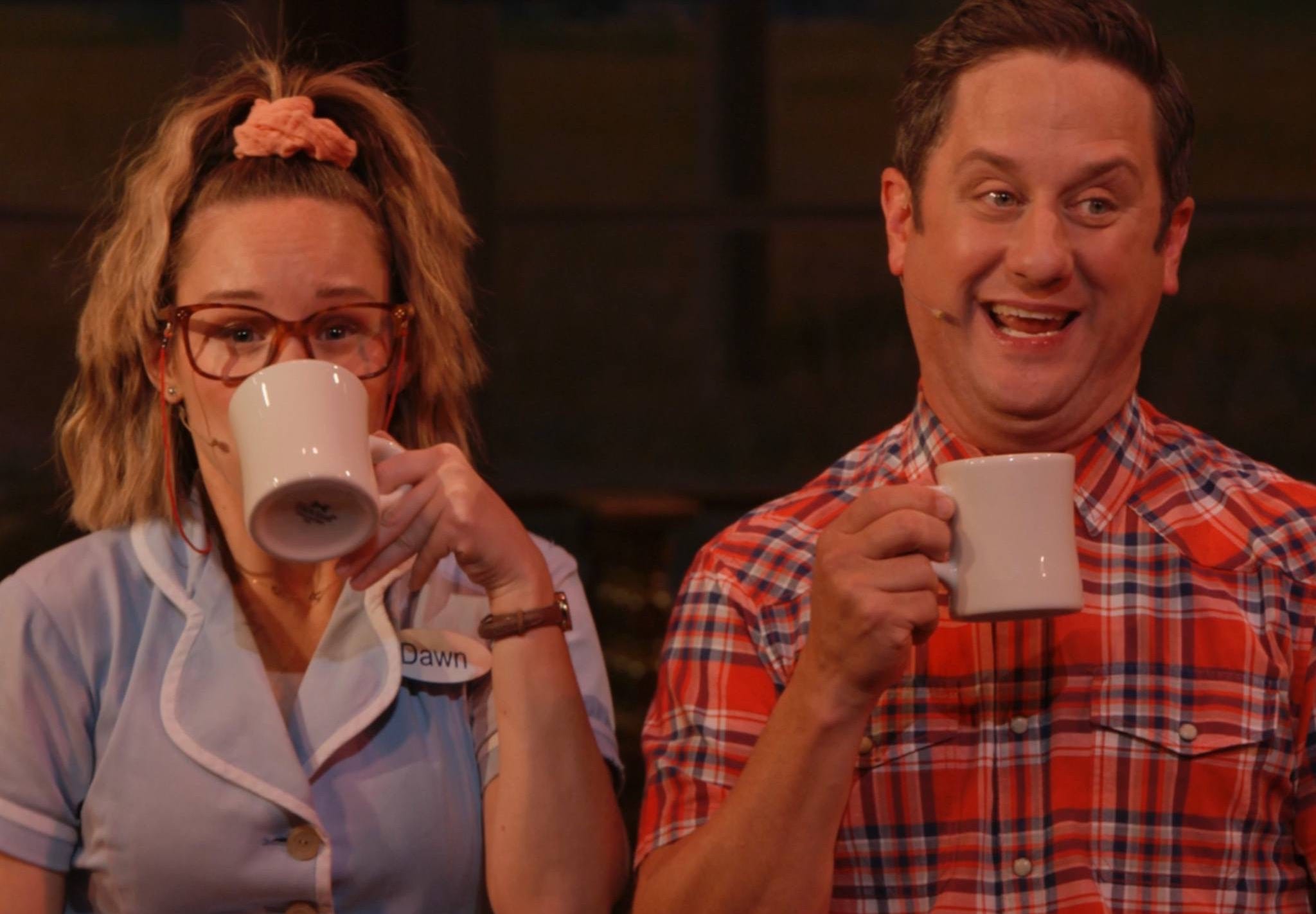
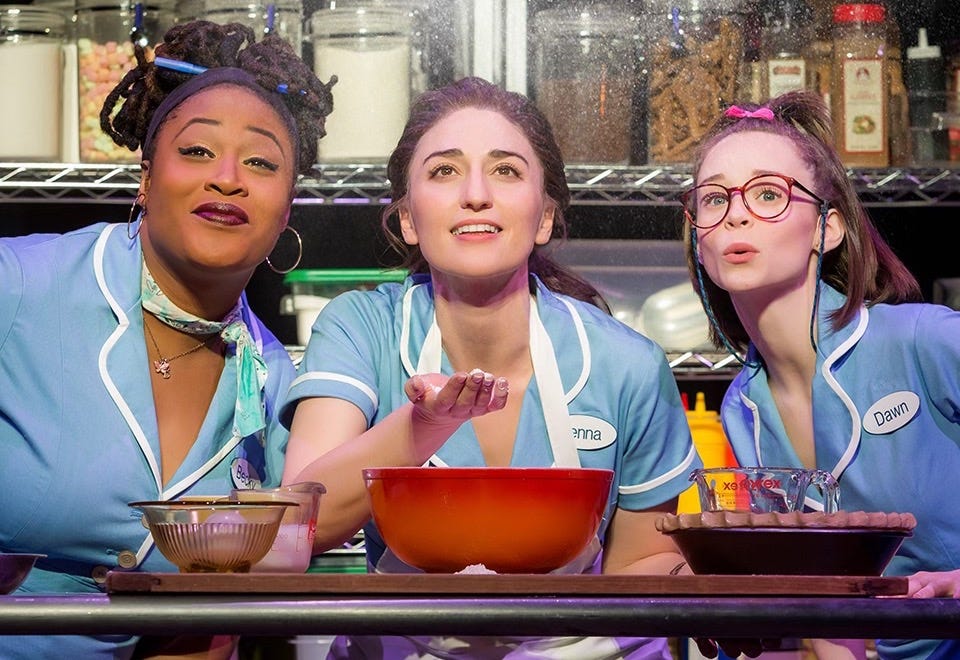
Waitress arguably features two such subplots, centering on the romantic lives of Jenna’s fellow servers Becky (strong-willed) and Dawn (anxious in an adorable way). But rather than pulling us from the story, both characters serve as contrast objects for our protagonist, and visibly impact her decision-making. In other words, they enrich the main story rather than divert us from it.
Dawn’s budding romance with the eccentric Ogie is quirky, but both partners are legitimately smitten. Dawn’s example fuels Jenna’s own romantic ambition, inspiring her to seek fulfillment in Dr. Pomatter.
Becky on the other hand serves as a cautionary tale, as her ossified marriage impels her to an affair with the diner’s manager. Becky’s situation is lamentable, but she defends herself as “happy enough”. This cautions Jenna of the dangers of settling for less than one’s worth, and helps her eventually break from her dalliance (meaningful as it was) in search of something better.
Imperfections and redemptions
I won’t say that Waitress is flawless from a storytelling perspective. One thing we generally need in a strong musical is an active, decision-making main character. We can forgive the occasional lament song, but a protagonist who merely reacts to things is invariably unsatisfying. After all, you can’t sing convincingly about a problem if you’re not willing to try to do something about it.
In act two, Jenna sometimes seems tossed around by the winds of fate, her last big active decision having happened during “Bad Idea”. The show does drag a bit at this point, and the eleven-o-clock number “She Used to Be Mine”, for all its loveliness, protracts the problem.
But the story rallies towards the end, as Jenna bids amicable farewell to Dr. Pomatter and firm goodbye to her no-good husband. She turns her life around without the pie contest win that previously represented her only hope. (Though the show implies that she does eventually win.) Jenna’s slow act two decision-making ends up being a blemish rather than a killer flaw.
What’s inside the lyrics
The lyrics, like the show’s main character, lack polish but make up for it in emotional earnestness. There are false rhymes but they’re not egregious. (The show missed a fun opportunity in not making abusive husband Earl sing entirely in false rhyme, though he comes close.) The language is appropriate to the characters, who are relatively unsophisticated but direct and sincere. Quoth Earl in his one-sided nostalgia song:
Remember my clean shave
Back in our old days
When we were just kids
I had my six string
And you had your own thing
Though I don’t remember what it is
So much about their relationship revealed just by what’s omitted!
Jenna’s own lyrics mostly serve as softly poetic accompaniment to the captivating music, working most powerfully when they’re simplest.
Today's a day, like any other
But I am changed, I am a mother
The soft chant “sugar, butter, flour” introduces many of Jenna’s moments of reflection, and indeed she frames her life’s episodes in terms of metaphorical pie ingredients. It’s a simple recurring motif and it’s perfectly paired with its pillowy melodic refrain.
Big picture
I’ve spent a lot of this post tacitly praising Waitress’ book, written by Jessie Nelson, as well as Adrienne Shelly’s script for the movie on which the show was based. But I think the biggest reason for the musical’s success was a good matching of songwriter and story. Sara Bareilles was able to tap into the psyches of the small-town middle-American characters and convey their rich and sometimes tumultuous inner lives through an evocative, lush score. Bareilles’ empathy for Jenna’s worldview was evident in her astonishingly good stint in the lead role herself.
Musical storytelling is a specialized discipline, and shows penned by pop artists are often doomed at conception. (Think The Last Ship, or Spider-Man: Turn off the Dark.) But we shouldn’t be prejudiced against the idea; Waitress shows that the right talent combined with the right subject matter can work wonderfully.
You can actually watch the show!
As of this writing, those in the US can stream a high-quality recorded performance of Waitress (featuring composer/lyricist Sara Bareilles as the lead), while those in the UK can see it in cinemas. Highly recommended!
Comments
Nothing yet. Say the first thing.
Sign in to join the conversation.