
Hi friends,
Hope you’re having a great day.
This essay is for anyone who is or wants to write Romantasy… or just love the vibe.
I sometimes think the appeal of romantasy has less to do with dragons or magic,
and more to do with our fascination for epic love stories and what we would concour for love.
If you strip away the swords, the wars, the empires, what’s left are people trying to love each other in impossible circumstances.
And isn’t that what we’re all doing, in one way or another?
Romantasy is in a way the belief that love can change the world, or possibly destroy it.
That’s what makes the genre powerful.. and difficult to write.
Pour a coffee. Let’s get into how.
If you haven’t seen me before, HELLO! I’m so excited to e-meet you.
I’m Elin, passionate about everything storytelling. With a degree in journalism and BA film, here we unpack the story behind our favourite films and books and deep dive into how we can write our own.
Is that your vibe? Let’s be friends x
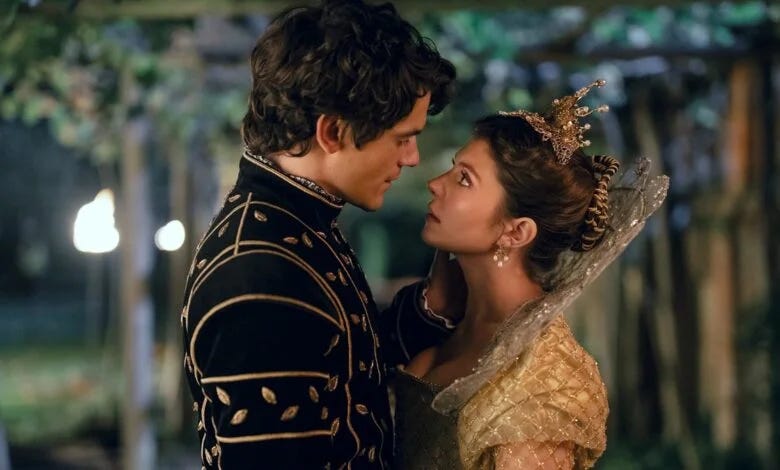
Before we get into craft, it’s worth understanding what romantasy is and why it’s the defining genre of this moment in time.
Romantasy (the blend of romance and fantasy) is has evolved to a category of it’s own. Bloomberg quoted that the category generated $610 million in US sales in 2024, up 34% from the year before. Rebecca Yarros’s Onyx Storm sold 2.7 million copies in its first week of release in January 2025, making it the fastest-selling adult fiction title in twenty years.
A lot of that is BookTok. But I think the underlying behaviour driving that trend comes down to 3 things;
it counters the anti-romance trend of the late 2010s
it offers escapism
it adds survival stakes
In a romantasy, the question of whether two people get to be together carries the same urgency as the question of whether the world survives it’s threat.
The names you’ll hear most often in this space: Sarah J. Maas (A Court of Thorns and Roses, Crescent City), Rebecca Yarros (Fourth Wing, Iron Flame), Jennifer L. Armentrout (From Blood and Ash), Holly Black (The Cruel Prince), Sabaa Tahir (An Ember in the Ashes). These writers have built enormous readerships by making readers feel that the love story matters on the same level as the world-ending stakes.
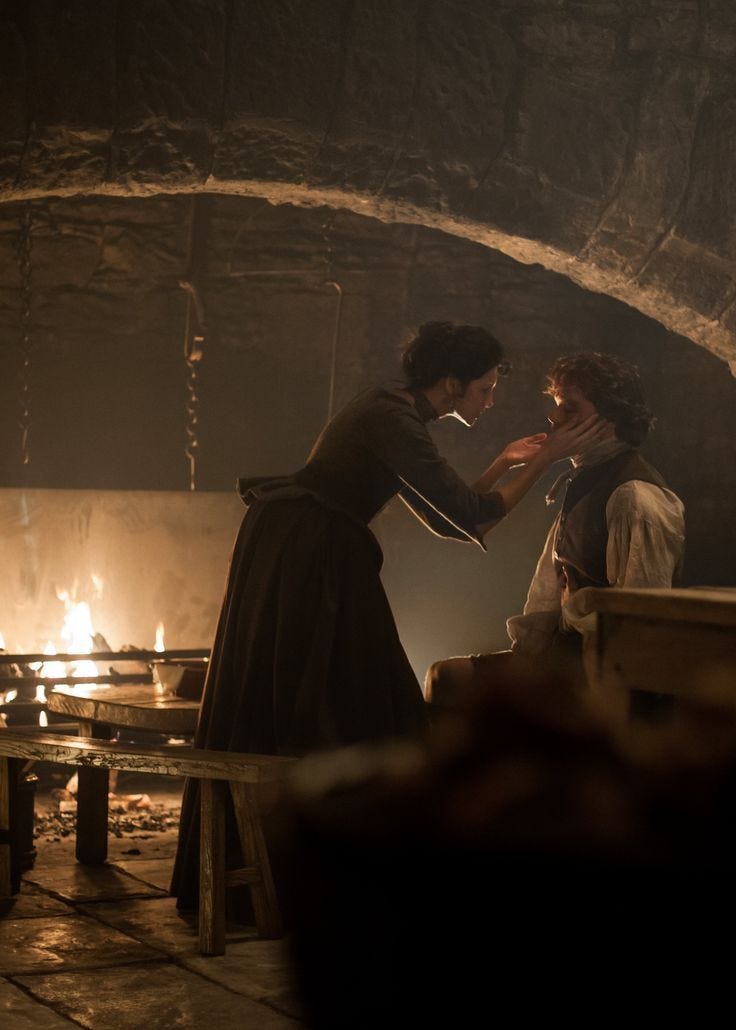
At its core, romantasy is about duality between the war and the yearning, the magic and the intimacy, the world and the heart.
Every good romantasy has two arcs:
The external arc: the fantasy journey → survival, rebellion, destiny.
The internal arc: the emotional journey → love, fear, trust, change.
The quest for the writer is to make them depend on each other, which means that when one moves, the other shifts.
Ask yourself:
Does every plot event test the relationship somehow?
Does every emotional choice have a consequence in the world?
Emotional stakes are the plot stakes → that’s how readers stay hooked.
In A Court of Thorns and Roses, Feyre’s external arc is the quest to save Prythian from Amarantha, but every trial also forces her to confront her own worth, her trust in Rhysand and her willingness to be vulnerable.
In Fourth Wing, Violet’s external arc is surviving Basgiath War College and uncovering the truth about the wards, but doing so requires trusting Xaden, the person she has every reason not to trust.
If you could remove the romance entirely and the plot still works the same way, the arcs aren’t woven together.
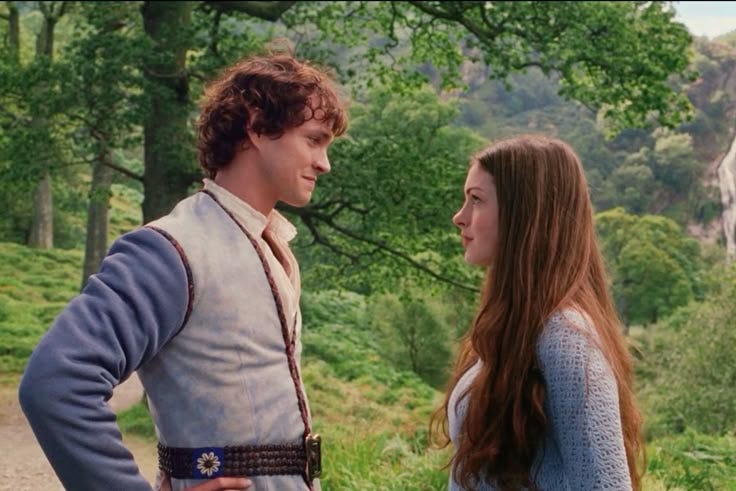
Romantasy has a set of recurring tropes, and while advice often say that your should avoid tropes all together, I think there are useful things to pick up from them even if you go a different way. (Or lean into it, IT’S FUN!)
Enemies to lovers is the most dominant romantasy romance, two people who are supposed to be on opposite sides, who have every reason not to trust each other, who might actively want to hurt each other… fall in love. The journey from “I hate you” to “I would burn everything for you” is often long, which means there’s room for a slow build, reveals and yearning.
Forbidden love works for similar reasons. The obstacle isn’t internal ambivalence, the world itself says no. It makes every moment together feel suspensful, which increases the intensity of all scenes.
Fated mates is a fantasy-specific trope that removes the question of whether they’ll end up together and replaces it with what it will cost them to accept it. The tension comes from watching the characters resist or surrender to it.
The morally grey love interest. He’s powerful, dangerous, and his feelings for the protagonist are the one thing that humanises him. The reader stays hooked because (well, escapism) they’re asking: can she trust him? Should she?
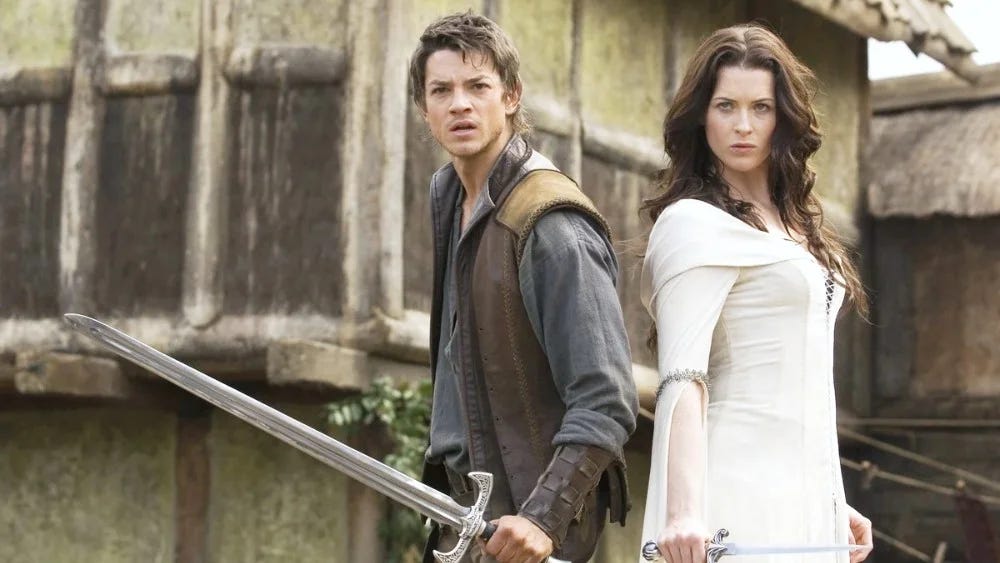
World-building in romantasy is about friction.You can have the most inventive and distinctive kingdoms, magic systems, and lore but if your world dosen’t have conflicted related to those aspects, it’s hard to get readers to care.
Maybe emotion weakens magic.
Maybe loyalty to a crown means betraying ones heart.
Maybe the act of loving someone becomes rebellion itself.
The more your world punishes the emotional stakes of your story, the more powerful it becomes. So instead of focusing on how your world looks, focus on how it impacts your characters.
In what five specific ways does your world make your characters’ love harder, more dangerous, or more costly? If you can’t answer that, the world-building and the romance aren’t connected yet.
Some starting points:
Does your magic system respond to emotion, and if so, in what way?
Are there political or social structures that make this love hard?
Is there a prophecy, a curse, or a law that directly targets your characters?
What does loving this person cost your protagonist in terms of their role or identity in the world?
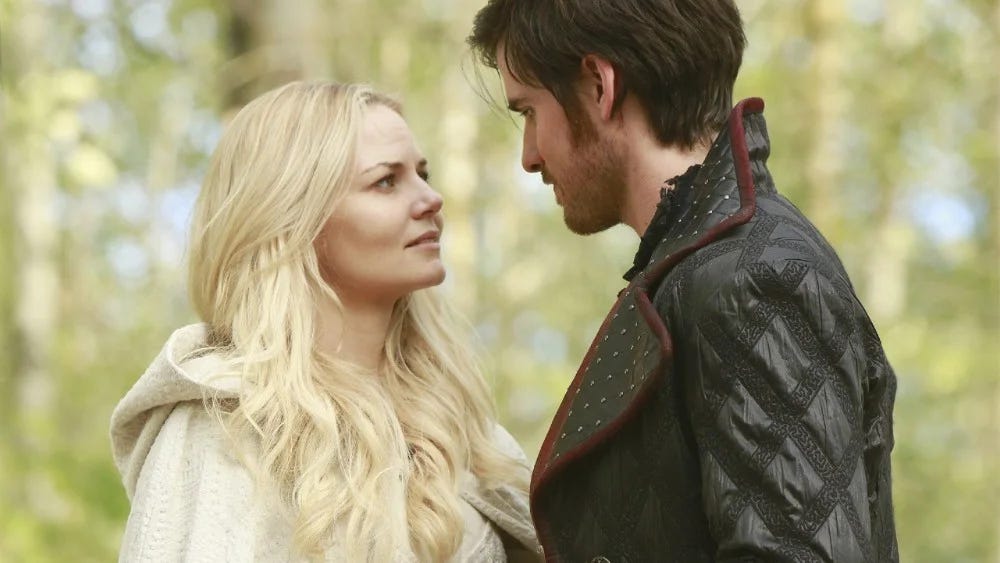
Any romance story fails a little bit in my book when it becomes to reliant on one character to deliver the heart, humour, emotions, care (the list can goes on). It’s like your favourite person in a couple, there could be a funny one, the kind one.. but in a book, you need each of them to pull their weight.
And that means both characters having emotional arcs, with them having something to learn and something to lose.
You do this by giving each of them their own sense of drive and purpose, using that to drive the conflict.
Maybe she wants freedom → he wants order.
Maybe she hides her power → he’s been raised to destroy it.
That friction is the romance.
Try this exercise:
Write each character’s arc as if they were the only protagonist.
Then overlay them.
Where they align, you get chemistry.
Where they clash, you get story.
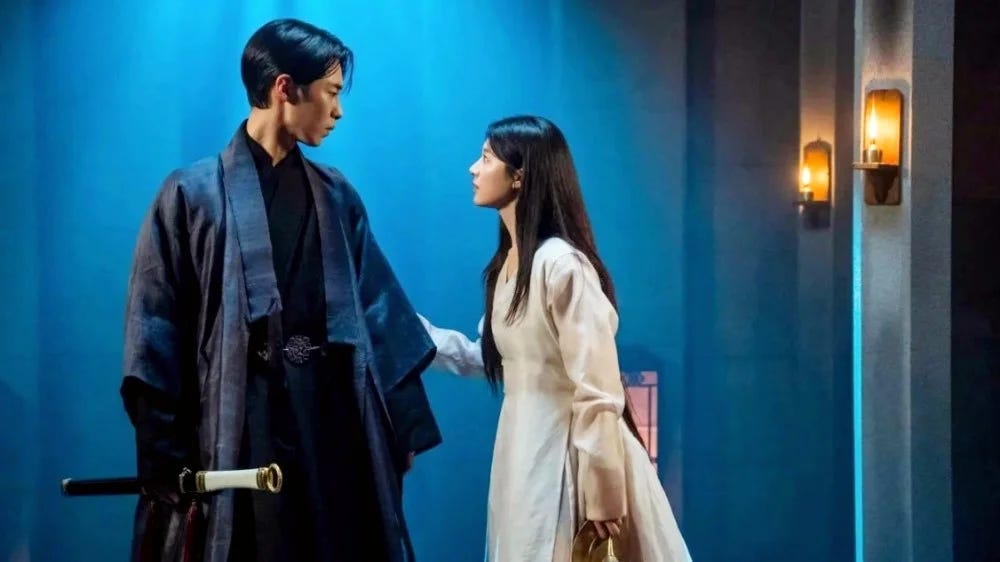
Romantasy tension isn’t all about will-they-won’t-they. It’s about how much it hurts that they can’t.
The trick is to create tension on three levels:
Internal: What emotion are they fighting within themselves?
→ Fear of vulnerability? Guilt? Shame?Relational: What misunderstanding or truth stands between them?
→ A secret, a lie, a betrayal, a duty.Contextual: What external force keeps them apart?
→ War, prophecy, curse, politics.
Two people stuck in a room isn’t interesting. Two people stuck in a room with history, resentment, and something to lose… now that’s interesting.
Every fight, every alliance, every small act of care should reveal something deeper. The more you expose the ways they misunderstand each other, the more readers ache for the moment they finally do.
Tension is built on contradiction:
wanting someone and fearing them
trusting someone who’s lied
needing someone who might ruin everything
Balance comes from rhythm:
Conflict → Vulnerability → Consequence.
World chaos → Emotional clarity → New risk.
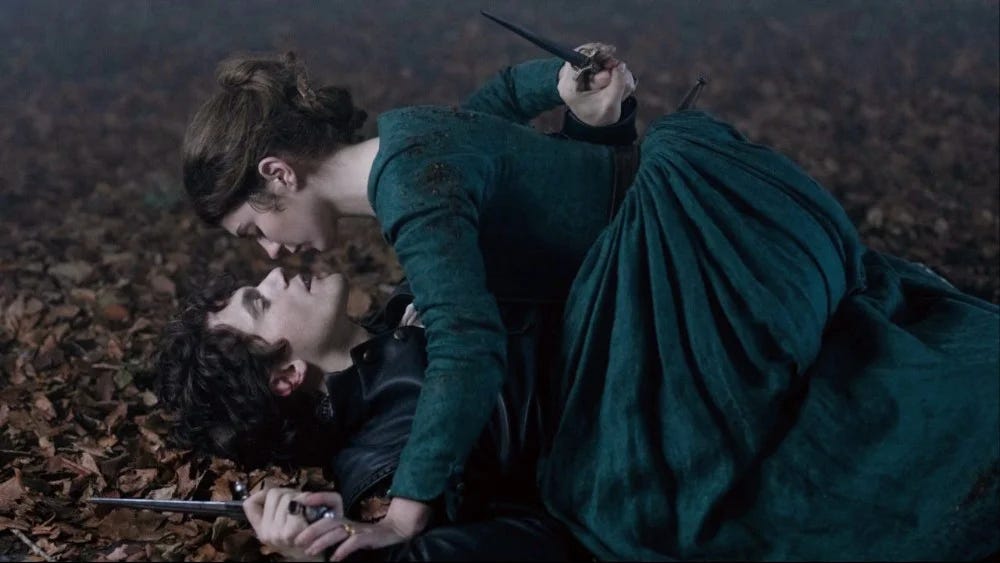
The climax of your story… the war, the battle, the final choice… should test the emotional truth of your characters as much as their physical survival.
If they save the world but stay the same people, the ending will feel empty.
A great romantasy ending isn’t about whether they end up together.
Sometimes they choose each other.
Sometimes they can’t.
But either way, they see themselves differently because they loved at all.
That’s the point.
Love is not the reward for surviving the story
→ it’s the reason they became who they are.
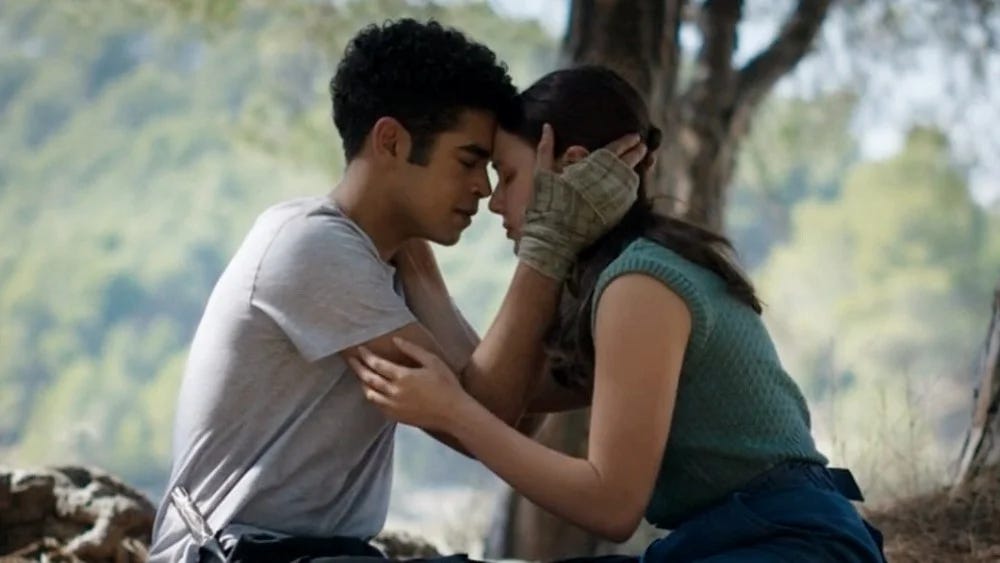
One last thing before you go.
Romantasy is a genre that gets dismissed sometimes (too romantic, too escapist, too much fluff). I don’t think that’s right..
What romantasy does, at its best, is take love seriously as one of the most prominent emotions and experiences in our “human life”.
That the people we love change who we are.
Like Romeo and Juliet but with dragons.
Are you writing romantasy? Tell me in the comments, I’d love to hear about it.
All my love, Elin
Join 6K+ writers, readers, and storytellers as we nerd out over our favourite books, films, and shows, break down the storytelling behind them, and help each other become better writers while pursuing our own creative projects.
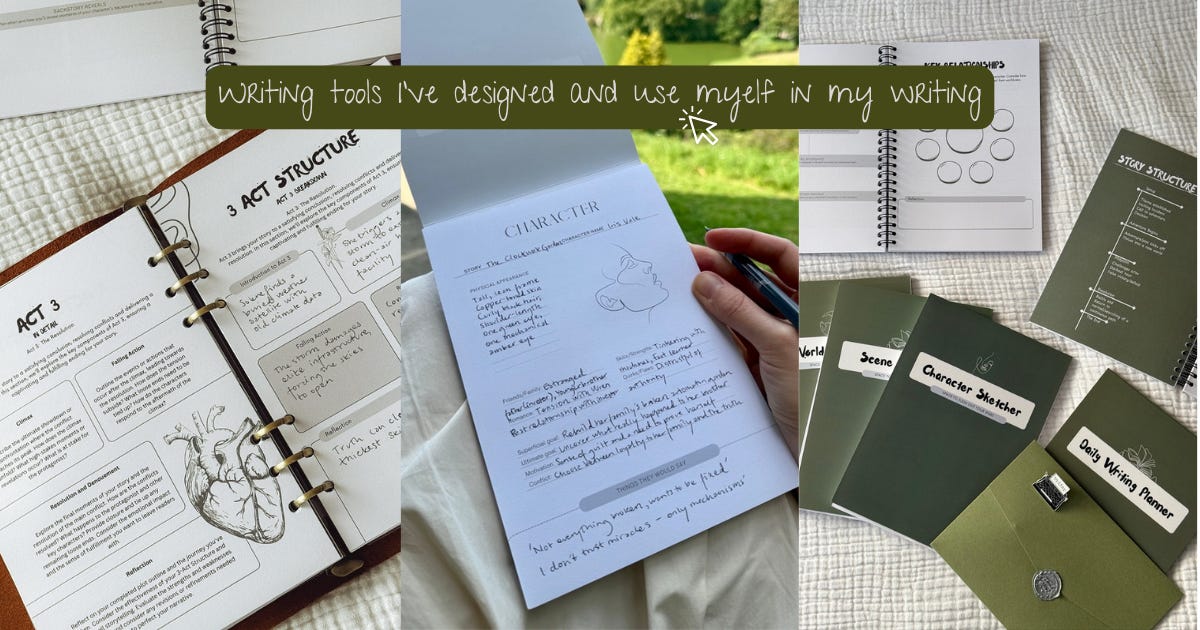
Want to start writing?
I’ve created free digital workbooks, writing tools, and resources based on what has helped me write my novels and what I learned through my journalism degree.
Let’s connect:
💌 Reply to this email, I’d love to hear your thoughts
📱 Come say hi on Instagram
If you enjoyed this essay, feel free to like, comment, or share it so more writers can find this little corner of the internet.
Thanks for reading; I’m so glad you’re here. x
No posts
Comments
Nothing yet. Say the first thing.
Sign in to join the conversation.