
Hi friends,
How are you doing today? I hope you’re having a beautiful day.
I’m not sure about you, but I’ve dealt with (worked through, handled, processed, battled = there was so many words that came to mind when I’m writing this) with self criticism all my life.
I think at some point, or maybe throughout, I’ve probably been my own biggest critic (bully, mean girl, jock). And despite getting older, getting kinder to myself, it hit me today that I still often resort back to criticism, especially when it comes to my creative projects.
And while I’ve gotten a lot better at processing it, and changing that internal conversation with myself, it’s still a process nonetheless.. BUT.. it has gotten better, so I wanted to take some time in this essay to talk about what has helped me and to encourage anyone who’s reading this and relating to this who might be at a different stage in their process, that there are ways to work through that voice.
I’m not a psychologist, I’m a researcher hobbyists who find topics like this very interesting. So if you have anything that has worked for you that you’d like to share, I’d love to hear it in the comments.
Let’s pour a cup of tea and jump in?
If you haven’t seen me before, HELLO! I’m so excited to e-meet you.
I’m Elin, passionate about everything storytelling. With a degree in journalism and BA film, here we unpack the story behind our favourite films and books and deep dive into how we can write our own.
Is that your vibe? Let’s be friends x
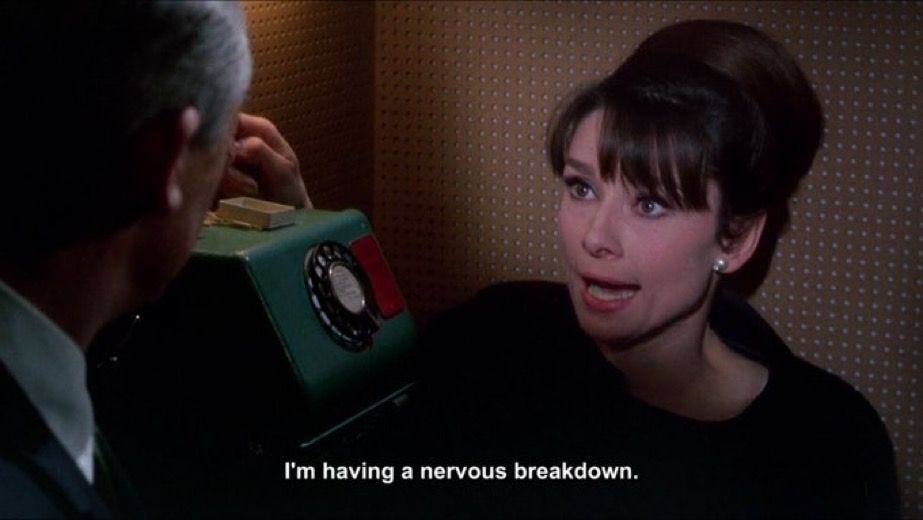
I think criticism often correlates to caring. If you’re passionate, excited, care about something, you want it to be the best that it can be. Reflecting on what that is, or not feeling like it’s not reached it’s maximum potential, is natural, although often not the most productive.
Dr. Brené Brown, a professor at the University of Houston who has spent over two decades studying shame, perfectionism, and vulnerability, describes perfectionism as a belief system built on: “If I look perfect and do everything perfectly, I can avoid the pain of blame, judgment, and failure.” The people who tend to experience the harshest inner critics are often the most passionate about their work, because they care the most about the gap between what they made and what they imagined.
Dr. Kristin Neff, a psychologist at the University of Texas at Austin, found that people who respond to their own perceived failures with kindness, rather than harsh self-judgment, are more likely to persist, learn, and ultimately do better creative work. The instinct to push yourself harder through criticism turns out to be less effective than treating yourself the way you’d treat someone you love who was struggling.
Which is deeply annoying if, like me, you’ve spent years believing the inner critic was somehow helping you.
So, let me be your cheerleader for 1 minute
I truly believe that your story and your work matters, because you never know who needs to hear it. Social Media evaporated the image of success, but think how incredible its to have even one person say that they enjoy it or that it connected with them.
No one can do what you do, and before you roll your eyes at me.. do you know why? Because nobody is you, living your experiences, having your thoughts. Why try to be someone else when you have you have a unique canvas at your disposal.
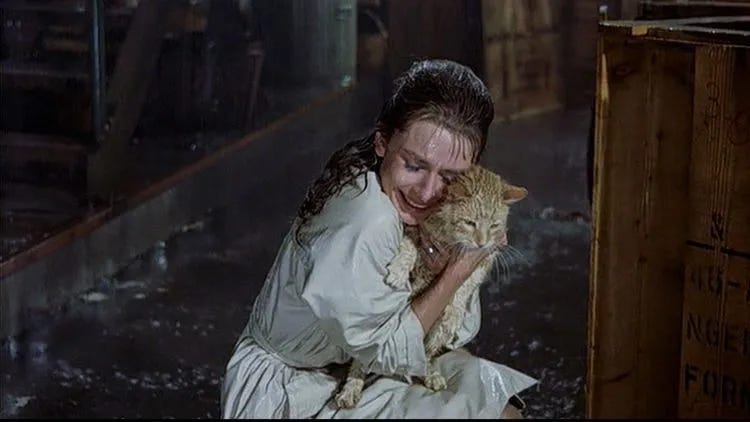
Whenever you feel that voice starting to second guess, starting to question, text or call someone that you trust and who also understand what you are trying to do. Someone that you can have a dialogue with that feels helpful.
It feels uncomfortable at first, like you might be admitting defeat, but with time, and as your brain gets more used to that vulnerability, it will help to bring your brain back to a place of objectivity.
It sounds silly but it has helped me more times then I can count. To literally imagine that the voice, those thoughts, are a rock, that I’m gripping tight in my hand and then letting fall.
It's called cognitive defusion, a technique from Acceptance and Commitment Therapy (ACT), developed by psychologist Steven Hayes. The idea is that when you're caught in a spiral of self-critical thoughts, defusion techniques helps you step outside the thought and see it more clearly.
For example, if what’s pop into your head is “I’m not good enough at this”, force yourself to specify why and really explain it in a way that’s not abstract and big.
What I mean by that is… instead of keep thinking big statements like “I’m not good enough”, question it like “what is it about it that makes me say that”. Often when we are forced to specify, our brain will hesitate because it’s so caught up in the feeling.
If you’re able to come up with specifics, try to make it objective and detached, creating almost like a roadmap or an action plan instead of focusing in on the feeling.
Cognitive behavioural therapy (CBT) has a technique called cognitive restructuring. The premise is that our most painful thoughts tend to be vague, catastrophic, and absolute like “I’m not good enough”. When you force them to get specific, they tend to lose their power, because specific problems are solvable in a way that abstract feelings aren’t. The inner critic is often very good at generating feelings and very bad at providing evidence.
It will sound a bit silly, but I often put on bloopers from my favourite sitcoms and watch that. It works 9/10 to help my brain get out of my thought spiral and focus on something else, giving it some room to breath so that I’m able to re-approach it with more fresh eyes.

If you’re still reading, I want to say HI again. And say that I’m cheering for you. For all the corners of the internet, I feel honoured and blessed to say that you’ve stumbled into a good one.
So I’d love to hear what you’re working on, if you relate to what I’ve spoken about in this essay and if there’s been anything that has helped you overcome your inner critic - do share it.
Thanks for being here x
I’m cheering for you.
All my love
Elin
Join 6K+ writers, readers, and storytellers as we nerd out over our favourite books, films, and shows, break down the storytelling behind them, and help each other become better writers while pursuing our own creative projects.
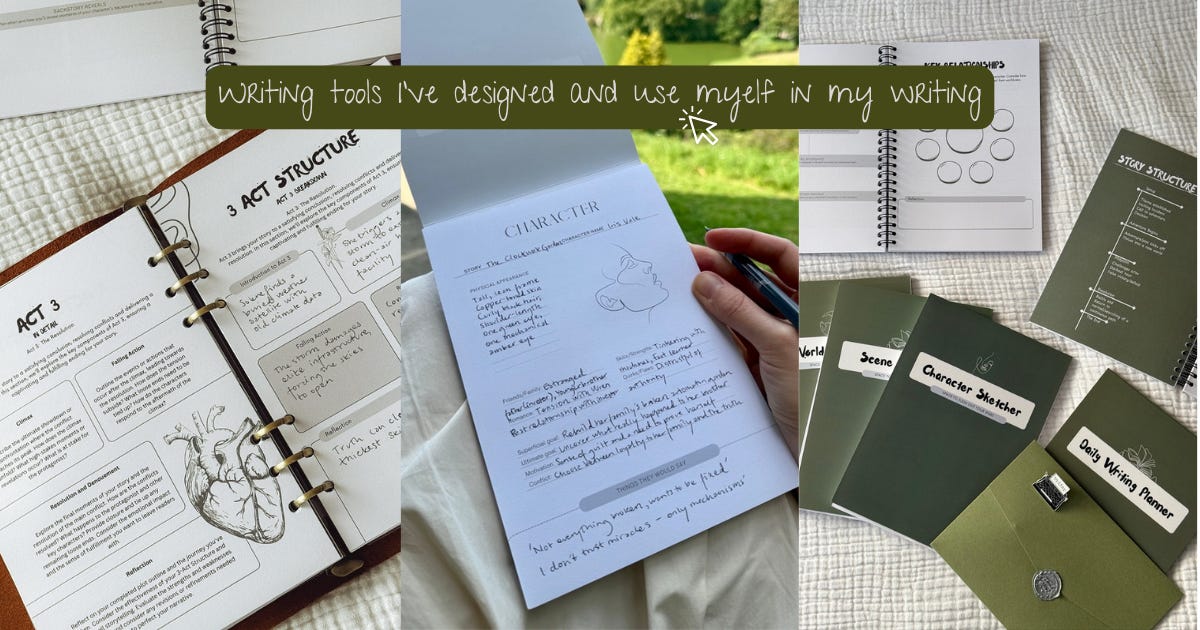
Want to start writing?
I’ve created free digital workbooks, writing tools, and resources based on what has helped me write my novels and what I learned through my journalism degree.
Let’s connect:
💌 Reply to this email, I’d love to hear your thoughts
📱 Come say hi on Instagram
If you enjoyed this essay, feel free to like, comment, or share it so more writers can find this little corner of the internet.
Thanks for reading; I’m so glad you’re here. x
No posts
Comments
Nothing yet. Say the first thing.
Sign in to join the conversation.