
29 Oct, 2025 12:42 GMT, US
Vinícius Júnior is expected to release a public statement apologizing to Real Madrid fans after his emotional reaction to being substituted in El Clásico. The move is intended to de-escalate a fast-building narrative and refocus attention on performance. Early social chatter shows fans split: many value accountability and are ready to move on, others felt the gesture was necessary after a perceived show of disrespect. Some voices also questioned the decision to sub him. Overall, the apology is poised to close the loop quickly, restore dressing-room calm, and protect team momentum heading into a congested schedule.

Following El Clásico, Vinícius Júnior reacted visibly when taken off, prompting rapid debate across Spanish media and fan spaces. Club-adjacent reporting has since indicated a public apology is forthcoming and that internal handling is expected to be measured, with an emphasis on swift resolution and focus on upcoming fixtures. The mood around the training ground contextually suggests the club favors de-escalation over punitive optics, acknowledging the player’s importance and current form while reinforcing behavioral standards for matchday conduct.
From a performance-operations lens, a prompt apology serves three strategic purposes. First, it neutralizes a potential cycle of negative coverage that could overshadow match preparation. High-usage attacking profiles like Vinícius inevitably carry emotional intensity; converting that intensity into controlled competitiveness is a known optimization challenge for elite dressing rooms. Second, it protects squad cohesion: leadership groups tend to prioritize consistency of standards over punitive gestures that could alienate on-field difference-makers. A visible apology allows captains and staff to set a public baseline of accountability while keeping their best transitions threat intact.
Third, it can be reputation-stabilizing for both player and club partners. Vinícius is a commercial pillar and a tactical hub—frequently central to chance creation chains via carries, fouls drawn and final-third pressure. A concise “own-the-moment” message reduces sponsor risk and minimizes distraction for younger teammates who often mirror star behavior. If internal follow-up includes a brief code-of-conduct refresher and role clarity about end-game management, the medium-term effect should be positive. The lone risk is repeat episodes; however, with a public reset and senior oversight, the probability of recurrence in the near term trends lower, especially as fixtures compress and the competitive incentive to self-regulate increases.
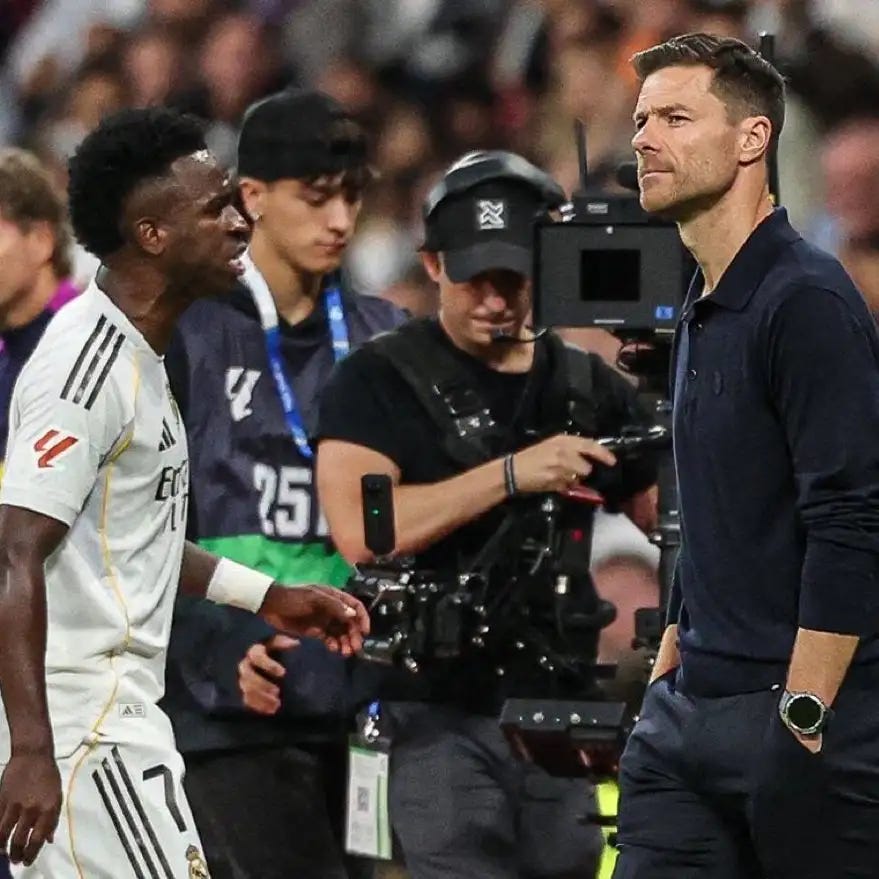
Social channels lit up with mixed but largely pragmatic sentiment. A strong contingent applauded the move as mature—“accountability hits harder than excuses” captured the tone of those who felt the matter should end with a sincere statement and a return to business. Another group framed the incident as emotional overflow from a top performer at full throttle, emphasizing that passion is inseparable from elite output and that a quick apology is enough to reset.
There were also critical voices labeling the reaction as disrespectful toward the staff and teammates, yet many in that camp added they would accept the apology and move on. A subset redirected scrutiny toward the substitution decision itself, questioning the timing and tactical logic. Others highlighted his prolific contributions this season as context, arguing production often correlates with visible competitive edge. A few fans injected humor or hyperbole, while community leaders pushed a unifying line: fight, fix, and focus on the next match. Net sentiment: cautious forgiveness, expectation of learning, and a clear desire to keep headlines on the pitch.
Base case scenario: the apology lands clearly, includes a brief acknowledgment of standards, and the club amplifies it with a restrained internal reminder about touchline behavior. That closes the story in 24–72 hours. Performance-wise, expect no systemic changes—usage, pressing cues, and transition routes remain centered on Vinícius, who thrives when emotionally dialed in but guided by senior voices. If he couples the statement with a modest on-pitch celebration tone-down in the next match, media pressure should deflate rapidly.
Upside scenario: the episode catalyzes a leadership mini-reset. The player joins the captains’ group in reinforcing late-game discipline, improving end-of-match game states and reducing avoidable bookings. His brand value ticks up on the back of visible accountability, and sponsors lean into the redemption arc.
Downside scenario: if future flashpoints reappear, the club may escalate with defined internal sanctions or short-term benchings to reassert standards. However, given form and importance, a coordinated support structure—sports psych, clearer substitution protocols, and pre-agreed communication signals—likely keeps volatility contained. Expect the narrative to be results-led within a week.
This is a classic elite-sport micro-crisis: high emotion colliding with high stakes. The data tells us that players who dominate carry volume and receive heavy defensive attention often operate at the edge of emotional bandwidth. The professional response is to own the moment and move forward. A succinct apology, reinforced by internal alignment and senior guidance, preserves both performance and culture. Fans appear prepared to accept that trade-off so long as lessons are applied.
For the club, de-escalation is prudent. It keeps the team’s attacking structure intact and prevents a news cycle that benefits rivals. For the player, the path is simple: channel intensity into productive sequences—fast breaks, xG-chain involvements, and decisive final balls—while maintaining composure in substitution scenarios. If those boxes are ticked, this will read as a one-week blip rather than a season-defining storyline. The smart money says it fades quickly, replaced by the next decisive contribution on the pitch.
No posts
Comments
Nothing yet. Say the first thing.
Sign in to join the conversation.