

As you stroll through the grocery store and fill your basket with chips, frozen pizza, ice cream, chocolate, detergent, shampoo, and cosmetics - what do you notice apart from this clearly being an American1 shopper? A closer look at the ingredients list should give it away. Palm oil.
Palm oil is everywhere, and that’s unlikely to change anytime soon, despite the heavy criticism it has attracted over the past decade. Yield-per-hectare for the crop is ~9x higher than its closest alternative, making any large-scale substitution both economically and environmentally unrealistic. That doesn’t mean investors should bury their head in the sand and ignore the criticism. Much of it is warranted and centers on the industry’s role in deforestation and the destruction of habitats for endangered species. But the debate lacks nuance, with good and bad actors often lumped together without context.
The company covered today, United International Enterprise (“UIE”) (CPSE:UIE), is a Denmark-based holding company whose core value is derived from United Plantations (“UP”) (KLSE:UTDPLT) - a vertically integrated palm oil producer in Southeast Asia, with unmatched operating efficiency and environmental leadership - two attributes that rarely coexist. Beyond its controlling stake in UP, UIE has exposure to 6 high-quality Swedish names (5/6 listed) and a smaller “venture”-like fund. The best thing is, the portfolio trades at a ~30% discount to NAV - and management is actively looking to close the gap via buybacks “so long as the shares continue to be traded at a material holding discount”.
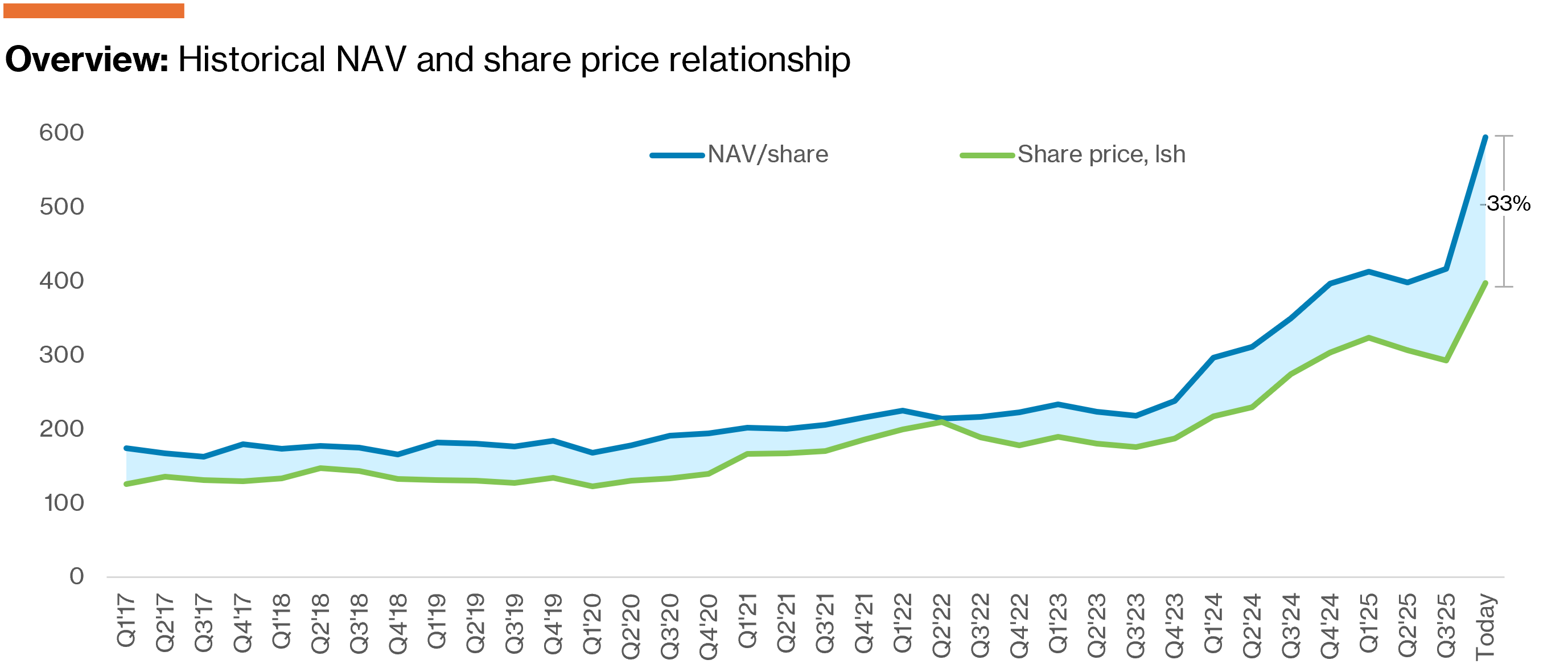
Before anyone starts pounding the table over HoldCo discounts - citing a ~30% discount as standard compensation for risks pertaining to asset quality, incentives, governance, capital allocation, etc. - let me be the first to calm your nerves. You’re not wrong. Those risks are not applicable to UIE, who has materially improved its approach to disclosure, governance, and capital distribution2.
I believe UIE - to a large extent a historical construct - is a proxy for UP rather than a conventional investment company. As such, I see this investment as exposure to a high-quality, largely owner-operated core asset, with incremental upside from small, liquid, non-core investments.
With that, let’s dig in…
Understanding UIE requires some familiarity with the history of UP - partly because the creation of UIE is indeed a byproduct of historical events, but more importantly because the foundation of UPs moat has blossomed from seeds planted more than a century ago (no pun intended). If you find the story as fascinating as I did3, I strongly recommend reading The UP Saga, which is freely available for download. Apart from that, the company has done a good job archiving past events, summarized in its 50-year and 100-year booklet.
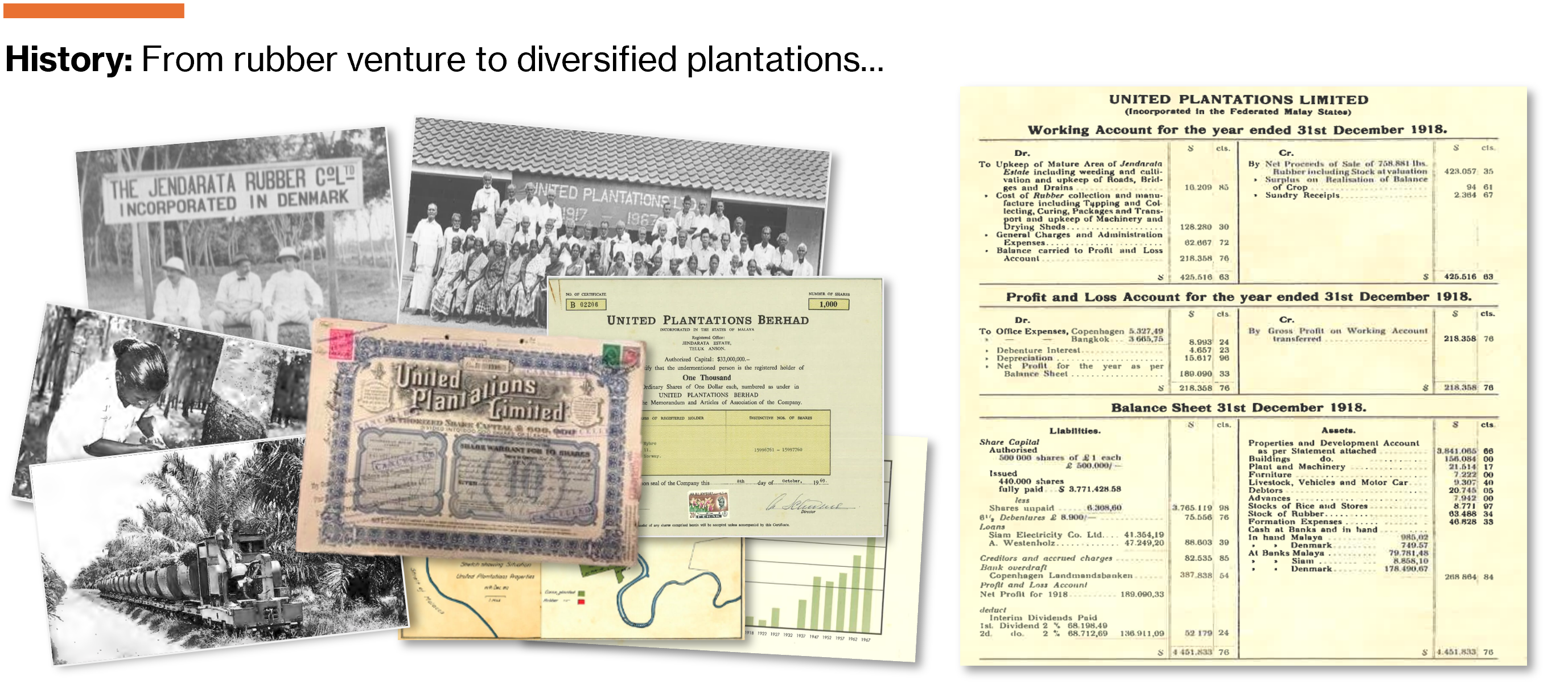
In 1906, Aage Westenholz, a 47 year-old Danish engineer and businessman who had built his fortune in Thailand4, established a rubber estate at Jemdarata in Lower Perak, Malaysia (“The Jendarata Rubber Company”). When his brother-in-law, Willian Lennart Grut, succeeded him in 1911, the business started diversifying into other crops and new estates, consolidating operations into United Plantations in 1917. Still, the heavy exposure toward rubber production put the company near bankruptcy by 1922 on the back of collapsing rubber prices, only saved by a Straits 100,000 capital injection.
It wasn’t until the late 1920s that UP pivoted into large-scale oil palm cultivation in Malaysia - among the first of its kind. Drawing on A. Westenholz’s Thai railway experience, the company invested in narrow-gauge light railway to move fresh fruit bunches (“FFB”) efficiently from field to mill. That system still operates today, spanning +600km across estates.
The “modern” UP culture crystalized under the leadership of Tan Sri Dato’ Seri Børge Bek-Nielsen5 who took over as managing director in 1972 after 31 years at the company. He essentially institutionalized what his predecessors had begun, instilling long-term thinking, operational discipline, and strong workforce welfare as core pillars of the UP values.
“It is through discipline and productivity that UP is what it is today. We are one of the best-managed plantations. We pay the highest wages in the industry. Our workers have an excellent provident fund. We have started the first old folks’ home in one of our estates, where old employees are looked after. Our medical and housing facilities are among the best”
- Dato Seri B. Bek-Nielsen, Financial Times (May 13, 1982)
These clams still hold today. UP offers its employees modern housing, schools for their kids, medical facilities, nursing homes, etc. The community even features a Danish-inspired bakery. Perhaps more importantly - and elaborated later - the operating edge persists, supported by aforementioned railway, in-house R&D of high-yielding planting material, and deep vertical integration.
Against the backdrop of the Malaysian government’s New Economic Policy (“NEP”), foreign-controlled companies had to reduce their stakes to a maximum of 30% by 1990. As a result of this, UP’s Danish ownership structure were reduced in a transaction with the state-owned vehicle, FIMA, during the early 1980s.
This essentially left foreign (largely Danish) investors with a binary choice; accept dilution and influence of UP or monetize and exit. In that context, UIE was essentially an adaptive response, whereby shareholders could sell down part of their UP exposure to Malaysian interests while reconsolidating the remaining stake into a single holding company with board-level influence. Apart from owning UP as a core holding, the purpose of UIE was to allocate capital into the broader agriculture sector.
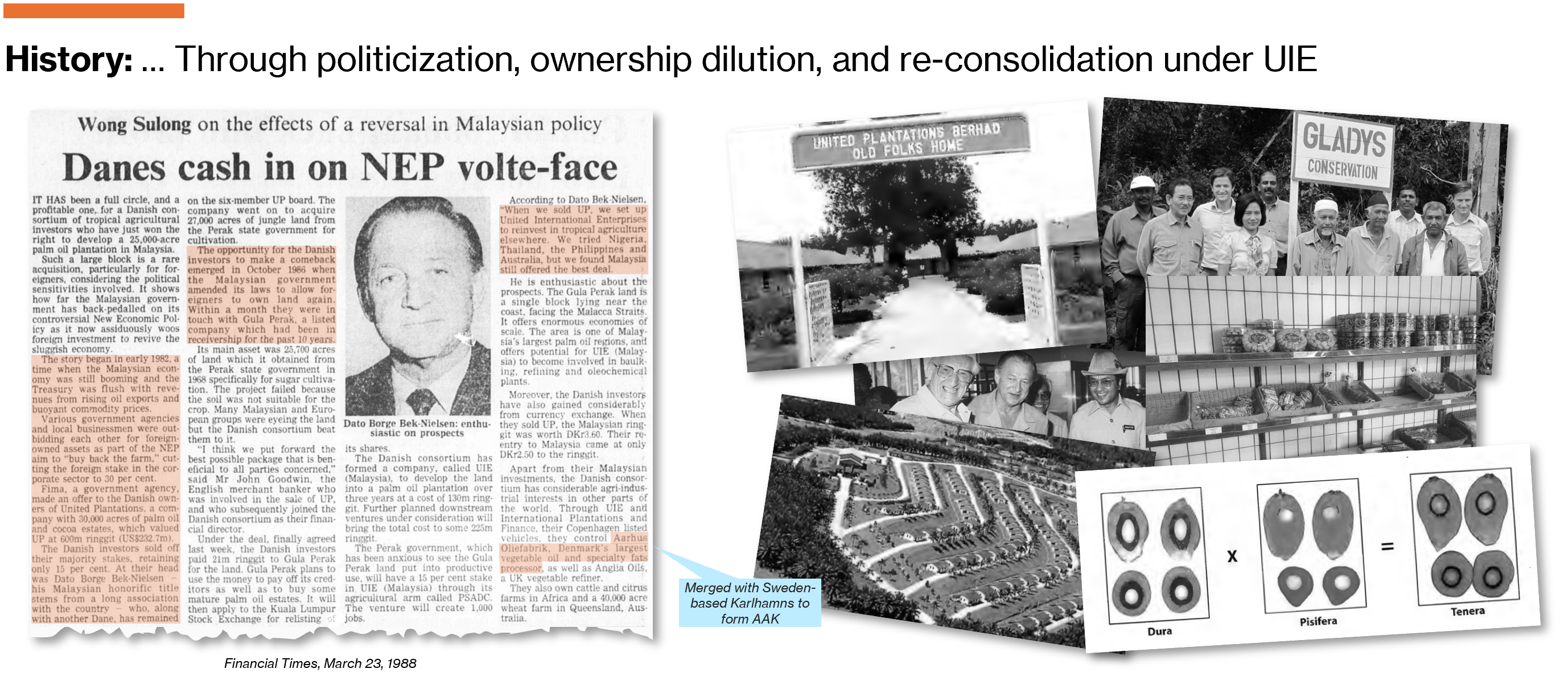
However, they never really got up to speed on the latter objective as the NEP was rolled back just ~5 years after the transaction, paving the way for UIE to increase exposure to today’s 48.4%. While the state-driven reset is still detectable in the UP cap table today, its impact is contained as a historical artefact (i.e., <5% holding)6.
Today, UIE is formally listed as a holding company with one operating asset - UP (~89% of NAV) - for which it holds a 48.4% stake. Alongside this, UIE has indirect exposure to 6 quality Swedish companies via a 1.78% stake in Schörling (~9% of NAV), and 5 tech companies via a 9.3% investment in venture-like fund, Greenbridge (~2%), headed by Ola Rellén.
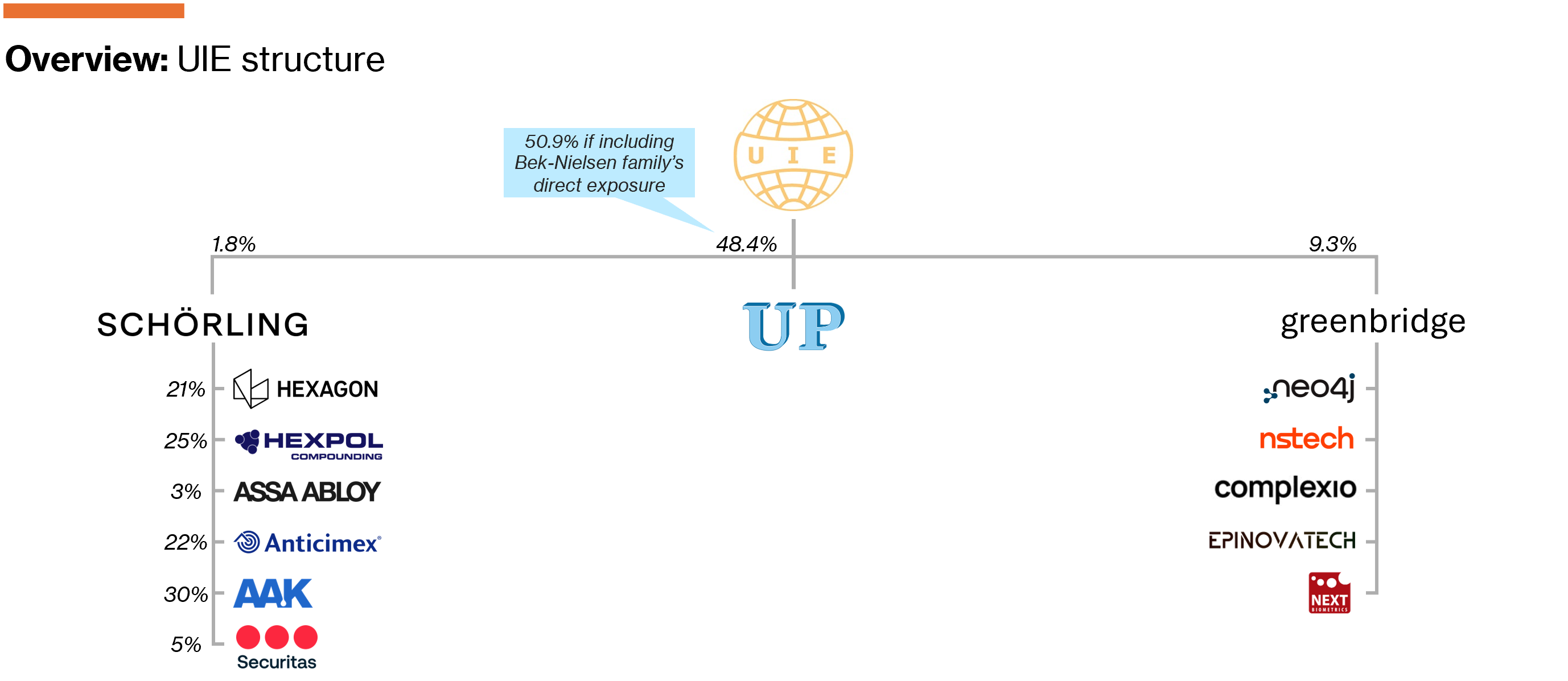
However, given UP’s dominant weight, an investment in UIE should be underwritten first and foremost as a fundamentally anchored investment in UP with the remaining holdings viewed as incremental upside.
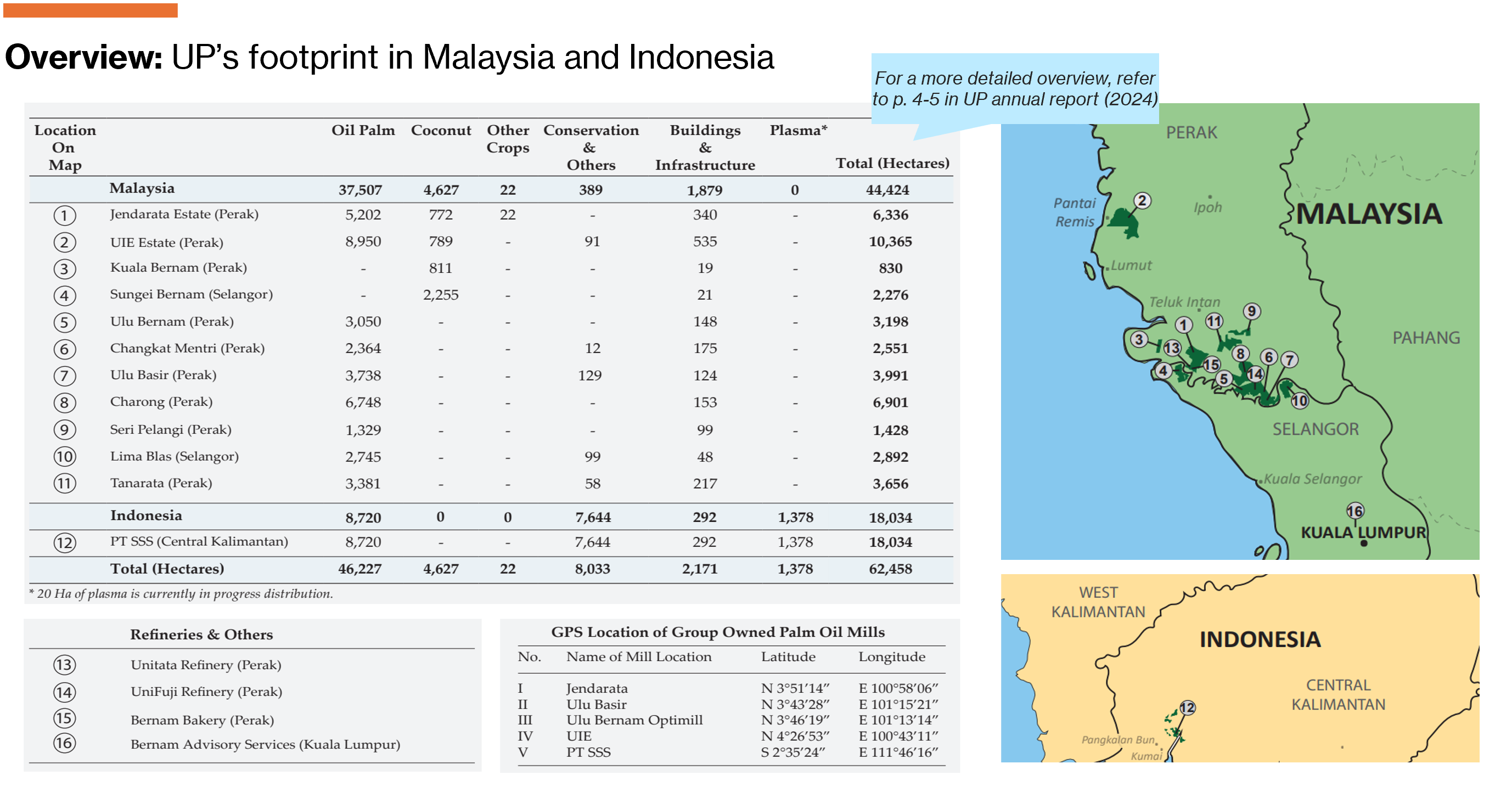
With a total landbank of +60,000 hectares, of which 50,854 is cultivated, UP operates an area that is +10x the size of Manhattan. The company has a vertically integrated value chain spanning pre-seed R&D, cultivation, milling, and oil extraction and refining. Its hard-to-replicate biological asset base supports annual production of +250,000 Mt crude palm oil (CPO), ~50,000 Mt palm kernel oil (PKO), and ~90m coconuts. Here’s an overview of the estate:
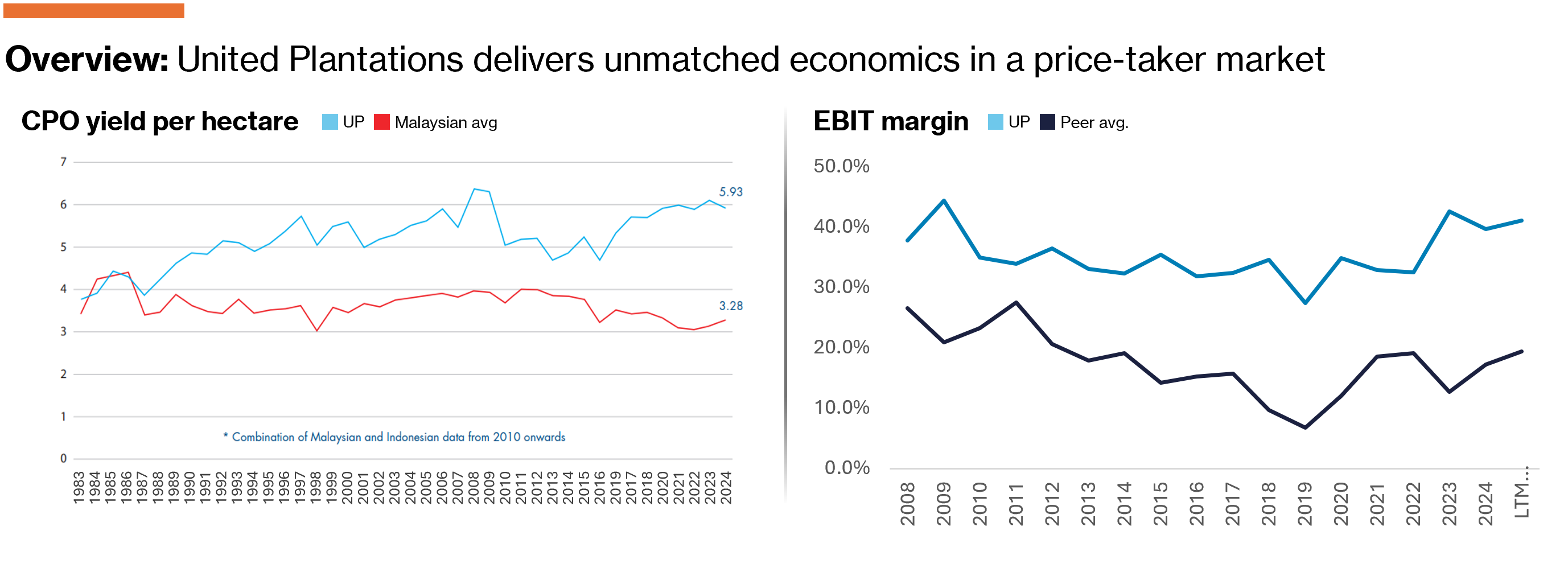
Importantly, scale alone is not the key differentiator. In fact, UP is not even close to being the largest plantation operator, however, it is consistently the most productive, with yields - and consequently margins - running at ~2x the industry average. This is a crucial part of the equity story given suppliers in the agriculture industry, to a large extent, operate with limited pricing power7.
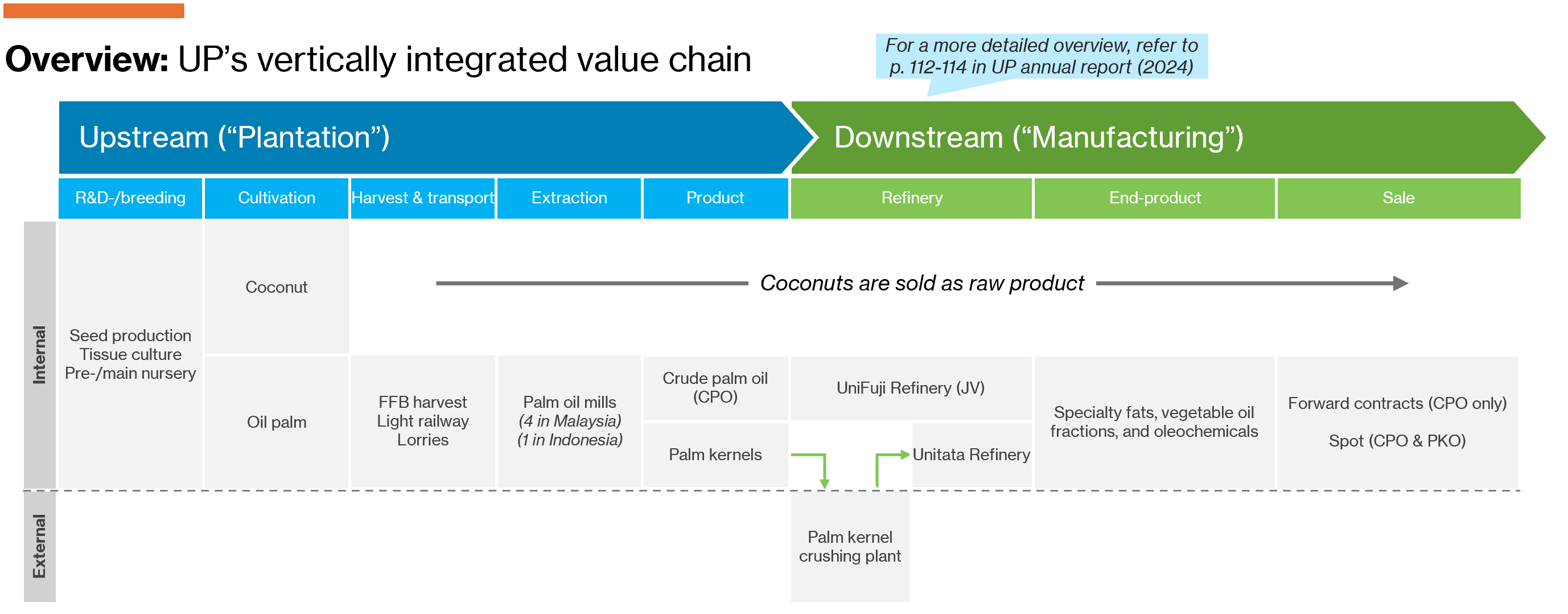
The key enabler of this efficiency comes from, inter alia, (i) its rail infrastructure spanning +600km; (ii) proprietary high-yield planting material; and (iii) full value chain control, incl. self-powered energy usage8. Below is an attempt to illustrate the value chain:
As a relatively unique characteristic, oil palms can generate two distinct types of oil; (i) crude palm oil (“CPO”); and (ii) palm kernel oil (“PKO”). Once an oil palm is planted, it takes roughly 2-4 years before reaching maturity and production of fresh fruit bunches (“FFB”). Yield then ramps and peaks between ~5 and ~23 years of age, after which yields contract9. As such, the lifecycle of a palm is ~25 years at which point it is felled and replanted - the economic life, however, is closer to ~20 years.
This long biological lifecycle is crucial as it requires plantation owners to continuously allocate land to immature plants that generate no near-term revenue - a point I will revisit shortly.
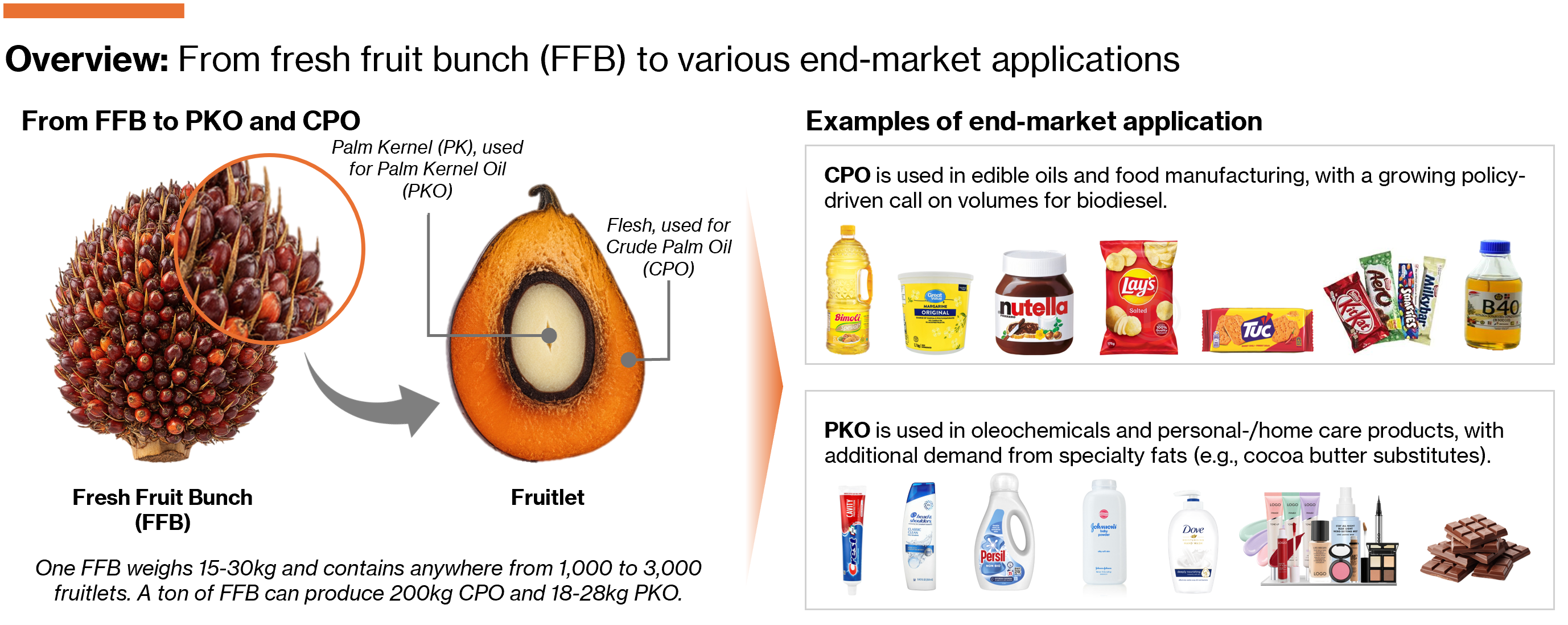
At peak productivity, a single palm produces 12-14 FFBs annually - distributed over the year as oil palms can be harvested every ~2 weeks. Each FFB weighs 20-30 kg and contains upwards of 3,000 individual fruitlets. The fruitlet consists of two economically relevant components; (i) the flesh which is processed into CPO; and (ii) the kernel which is used for palm kernel oil and related derivatives (e.g., animal feed).
Contrary to the prevailing mainstream media narrative, palm oil is second to none in terms of its yield profile - and consequently land-use efficiency and climate impact. On an industry-average basis, the yield-per-hectare of oil palms is ~9x higher than any substitutable crop (e.g., soy, rape, sunflower, etc.). With that in mind, recall that UP’s yield is 2x the palm oil industry standard.
Having said that, parts of the criticism are justified - namely deforestation and biodiversity loss linked to irresponsible expansion. As with anything, however, there are good and bad actors. UP belongs in the latter camp and is exemplary of sustainable agriculture: As documented in their collaboration with Copenhagen Zoo in this documentary and underscored by its status as the first member of the RSPO, the company has long relied on biological pest control by, inter alia, fostering a controlled ecosystem of snakes, barn owls, and other natural predators to protect crops. As a side note, the documentary also illustrates the passion of the Bek-Nielsen brothers (majority owners), who are in the trenches on a day-to-day basis as opposed to running UP on an arms-length basis.
In more recent years, the governments - Malaysian and Indonesian, that is, who account for 85% of global CPO-/PKO supply - have also taken a more proactive stance. For instance, Malaysia - which is more progressed on this front - has imposed regulations limiting the total hectares that can be used for oil palm cultivation, set at 6.5m versus the current level of 5.6m.
This effectively caps greenfield-driven supply growth and pushes operator’s volume expansion into two camps: (i) brownfield acquisitions; and/or (ii) yield uplift. To that end, UP acquired 3,656 hectares (brownfield) in Malaysia - Tanarata Estate (prev. Pinehill) - in 2019, which had an FFB yield at 14-16 Mt/Ha vis-á-vis UP Malaysia at 29.6 Mt/Ha in 2024. UP has felled and replanted the estate during 2019-2021, using its higher-yielding planting material, and that cohort - as per the oil palm lifecycle described earlier - is entering prime yield territory.
Constrained greenfield expansion is only part of the supply story. Indonesia’s biofuel mandates10 - currently at B40 as of Jan’25 but in the last innings of B50 testing - absorbs incremental CPO volumes, with some government officials guiding for 2026 as the B50 transition. Lastly, smallholders11 - collectively accounting for +30% of FFB volumes - have deferred replanting for short-term economics12. In short, I see 3 “structural” supply-side factors that are supportive for UP:
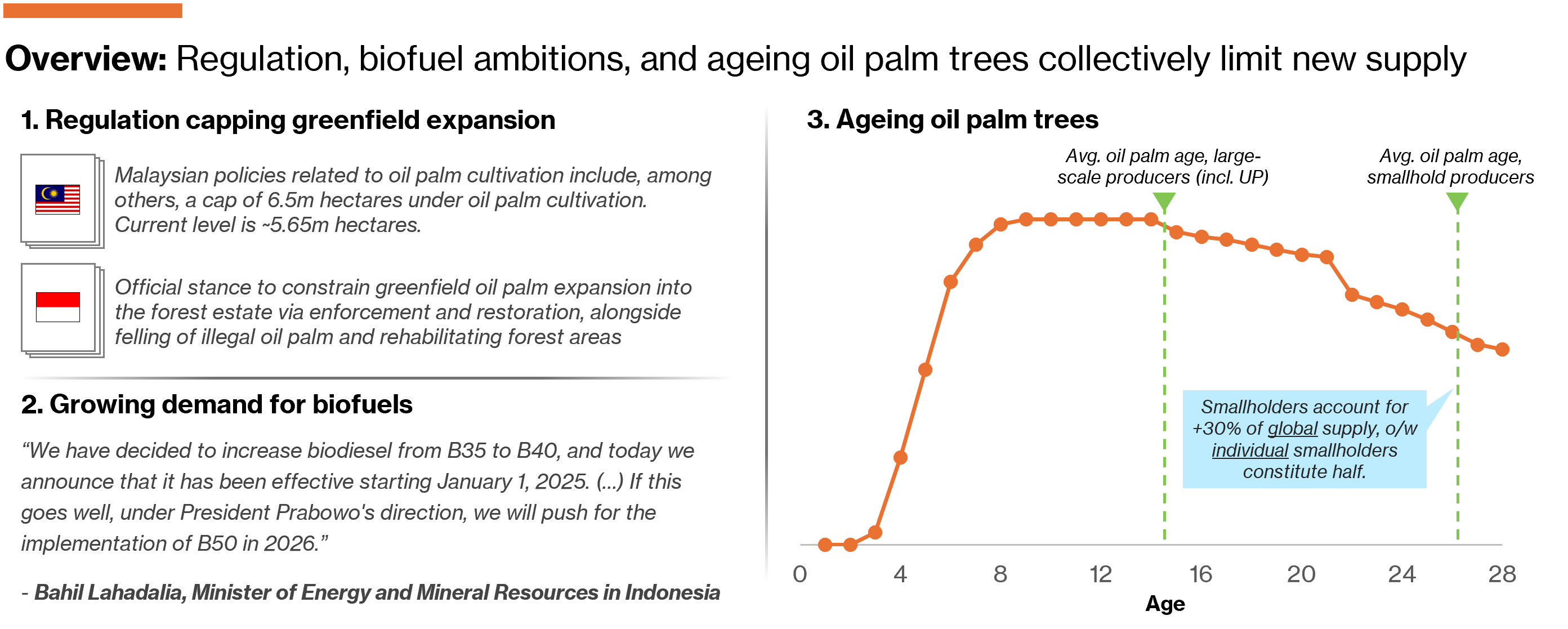
All of this happens while CPO-/PKO output from UP is expected to grow modestly13 while demand remains anchored to population growth and rising GDP per capita, particularly across EM where per-capita oils and fats consumption is still on the steep part of the income curve.
As with virtually any commodity, demand for a given crop is a shaped by the price (and supply) of substitutes. In the context of palm oil, it is helpful to understand the relative pricing and marginal substitution within the global vegetable oil complex (soybean, rapeseed, sunflower, coconut, etc.). Against that backdrop, CPO/PKO appear well positioned, trading at a discount to most competing oils today - which is supportive for UP in the short-term.
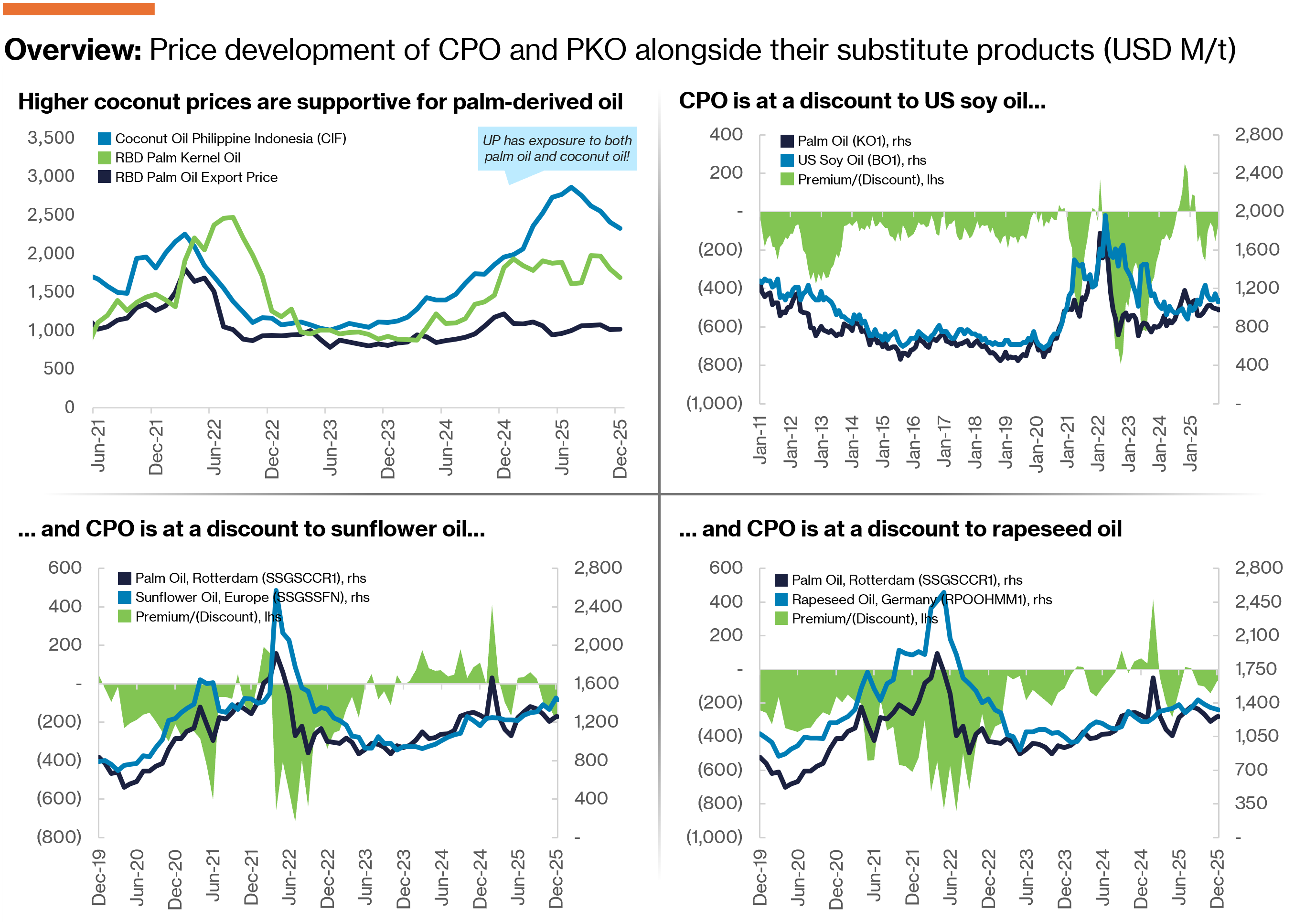
Similarly, the biofuel mandates implemented by the likes of Indonesia (palm oil) and Brazil (soy oil) has created a price-link between said oils and the wider brent crude prices. This is is despite only ~5% - but growing - of global palm oil output is used for biofuels. To that end, worth noting that UP maintains a strict (long-standing, since 2003) policy against supplying raw materials or refined products for biodiesel production.
Having said that, I am no commodity expert - and frankly, I am not aspiring to be one either - and so I will refrain from trying to call the medium-/long-term outlook. But I highly doubt that palm oil will ever get displaced as a core ingredient across food-/oleochemicals so long as humans walk this earth.
As you’d expect, UP’s financial performance tracks CPO-/PKO prices, which will always be subject to vagaries of weather and international markets. That said, the company’s efficiency-/profitability cushions any such downturns. In fact, the company has not reported a single year of negative EPS or operating cash flow since 1989 (the earliest available data point14).
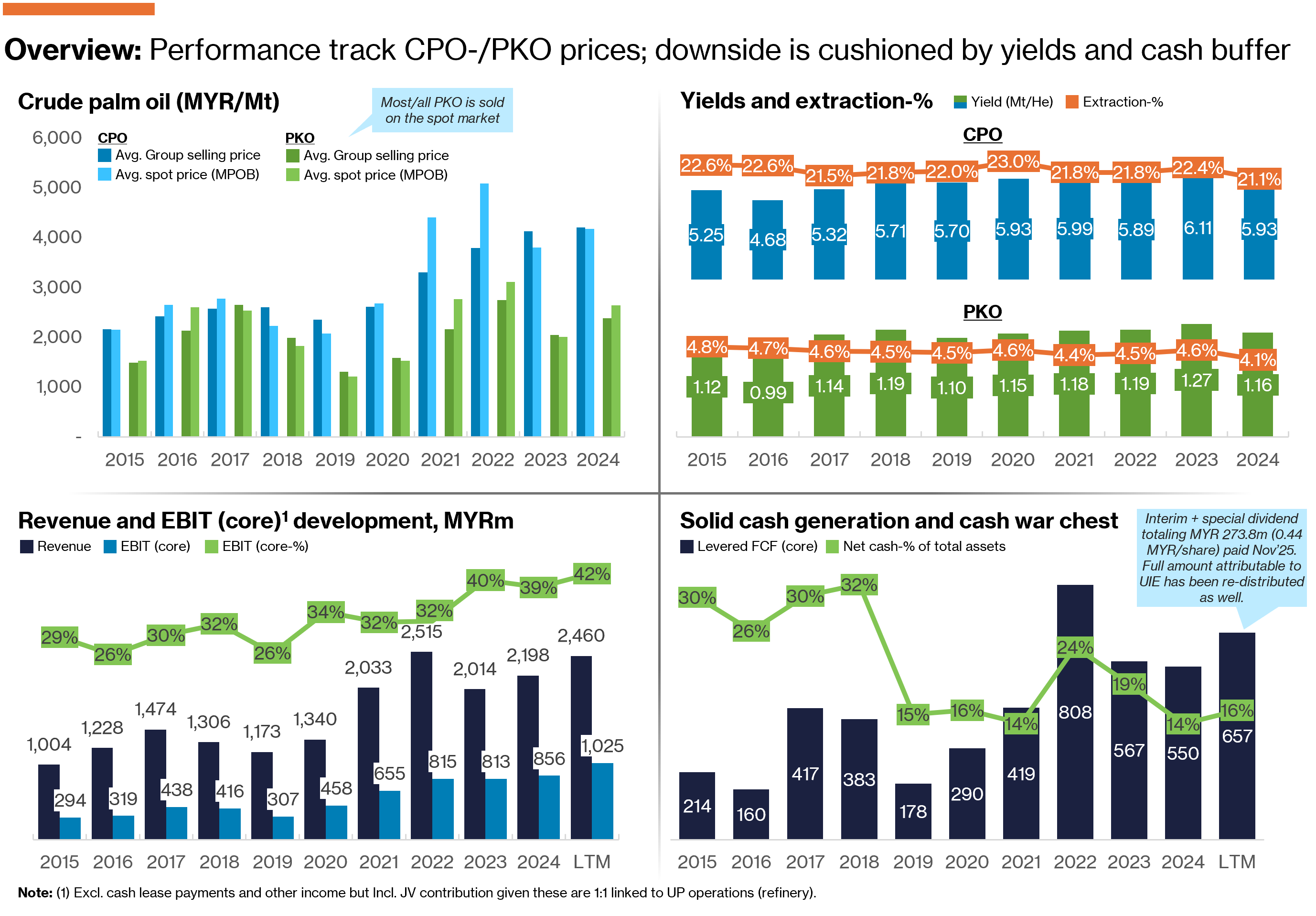
Speaking of balance sheet cushion, the company runs a very conservative capital structure, with net cash at ~15% of total assets - perhaps overly conservative, in my view. While liquidity for “a rainy day” is indeed valuable, ide cash - even if part of it is placed in higher-yielding cash accounts - can get too excessive. Perhaps this is what motivated the special dividend (MYR 0.14/share) alongside the interim dividend (MYR 0.30/share) paid in Nov’25. With market pricing having remained elevated through Q4’25 and carrying into 2026, I would expect more of the same to come in 2026. For completeness, the stated payout policy is 70-90% of net income - of which UIE re-distributes at least 50% to shareholders.
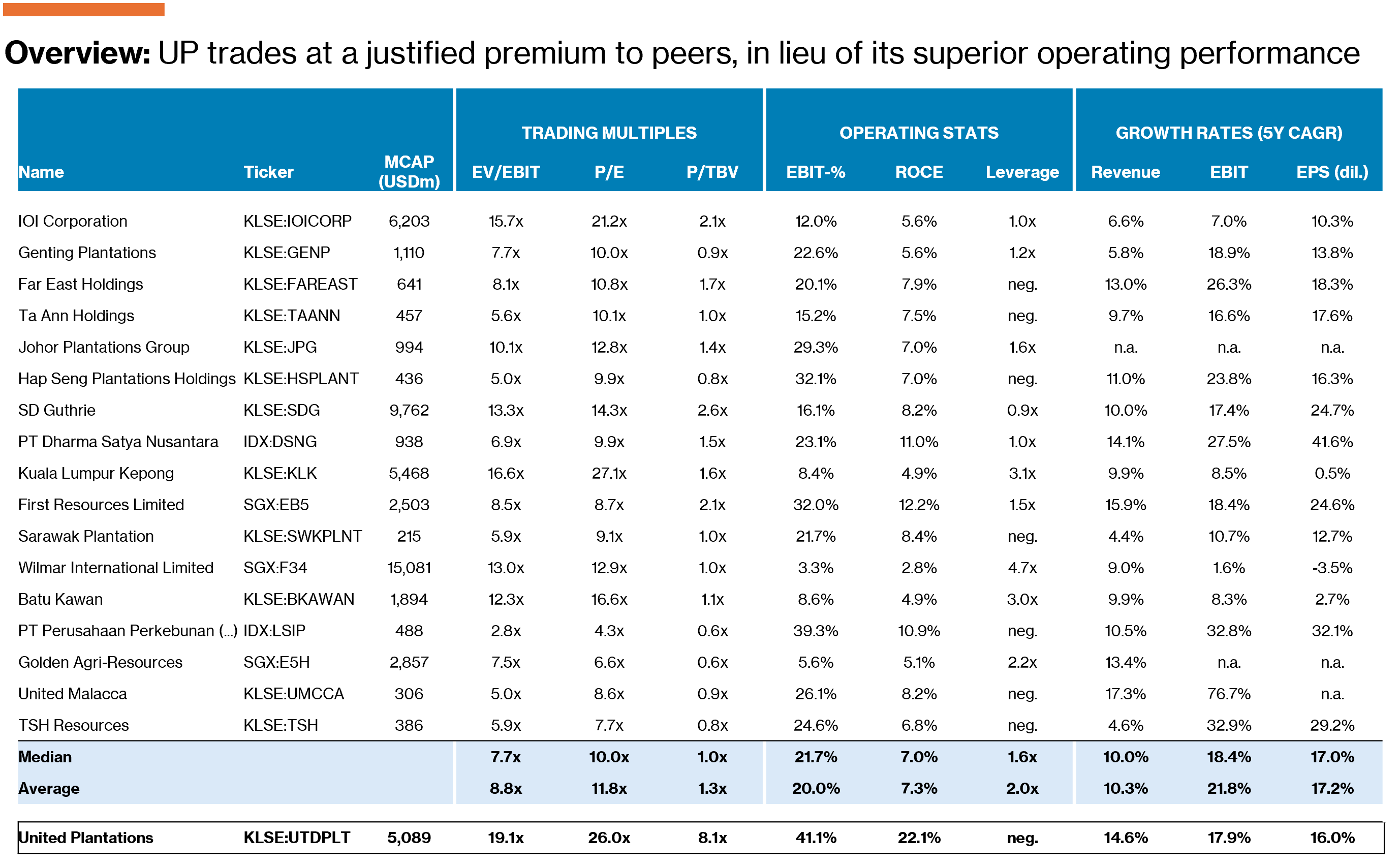
Valuation-wise, I believe UP trades broadly at fair value and at a justified premium to the wider peer group. With its superior economics largely priced in at current levels, I would expect incremental upside to be driven primarily by sector beta and less company-specific.
The story of the UIE-Schörling-Greenbridge relationship can easily get messy, but here’s the short version. In 2012, UIE sold 2/3 of its stake in AAK (OM:AAK) to the then-listed investment company, Schörling (MSAB). Part of the consideration was equity rather than cash, leaving UIE with an initial 1.1% ownership in Schörling, which has since increased to 1.8% today.
Most of Schörling’s assets - at least the ones UIE have exposure to - are liquid, Swedish-listed quality companies. In fact, I own some of them myself (not that it matters). The only holding which is not listed is Anticimex, a tech-enabled pest-control business, majority owned by EQT since 2012. The company was rumored for IPO in 2021, but was ultimately sold to EQT future instead15. It was part of this sale that Schörling joined with a 22% stake. We’re now approaching 14 years of cumulative EQT ownership, hence I would not be surprised to see a listing/exit soon enough.
Greenbridge is best understood as an offspring of the UIE-Schörling partnership, but led by co-owner and prior CEO of Hexagon (OM:HEXA B), Ola Rollén who monetised half his stake in Hexagon for this project. Information on Greenbridge and its assets are relatively limited - and to be fair, it is a rounding error in UIE regardless - but my they essentially invest in founder-led advanced technology businesses16.
UIE is represented on the board of both Schörling and Greenbridge.
Given most assets are publicly listed, the look-through NAV valuation is fairly straight-forward and suggests a ~30% discount to NAV as per the below overview.
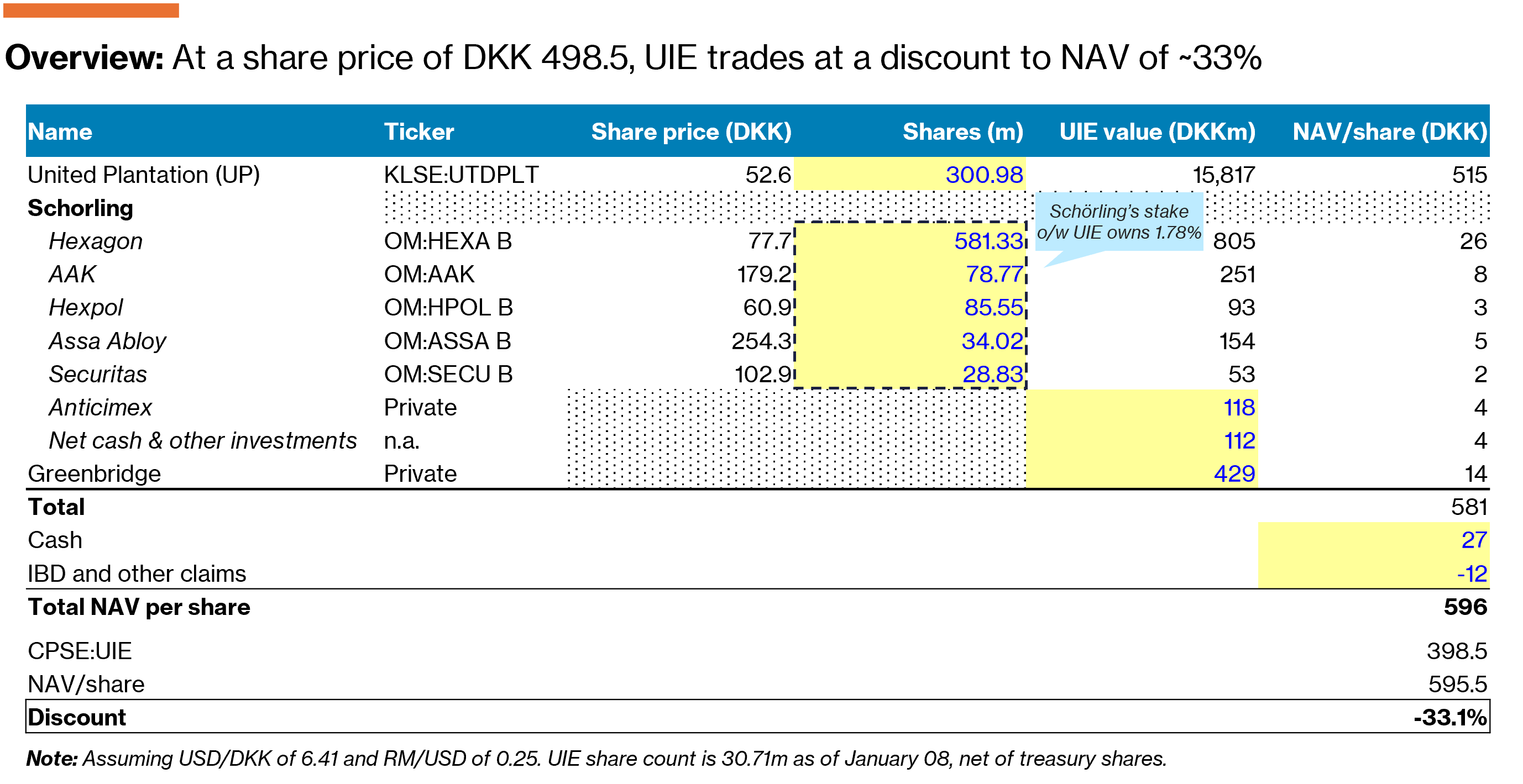
A HoldCo discount of this magnitude is not out of the ordinary. However, I don’t view UIE as your typical HoldCo. In my view, UIE is a proxy for UP - it was literally created as a legal work-around on the back of the Malaysian NEP paradigm. This is supported by the fact that (i) the Bek-Nielsen brothers’ role as “owner-operators” in UP, with day-to-day involvement; and (ii) UIE’s limited activity in new capital deployments. As such, I see UIE as exposure to (i) a fundamentally sound, “evergreen”-style asset, with (ii) a return kicker17 from the Schörling and Greenbridge investments; for which (iii) there’s a margin of safety embedded into the NAV-discount.
I know some of my readers would like to have additional margin of safety embedded into the UP share price, which is a fair take. In that case, UIE is a solid name to track going forward. Personally, I take comfort in the long historical track and the company buying back shares with a clear intent of narrowing the discount.
Risks
Commodity cycle
Weaponization of CPO in global trade
Regulations, incl. biofuel mandate changes (i.e., delay of B50 in Indonesia)
Deterioration of yields (weather, “animal pest control” backlash, etc.)
Catalysts
Listing of Anticimex and/or Greenbridge
Jumbo dividend, tender offer, or similar
Reconsolidation to old structure-/share distribution of UP shares
Incremental pick-up in yields as Tanarata Estate reaches maturity
Sorry, I couldn’t help myself.
The company has returned ~25% of its current MCAP to shareholders L10Y. Dividend policy of atleast 50% of received dividends re-distributed.
Before I knew it, I had buried my head in old newspapers featuring a “portrait” of Dato Seri B. Bek-Nielsen - dubbed “The Palm King” - and his takes on Danish politics.
Mainly related to the development of tramways; experience that would later become a focal point of efficiency to UP.
Tan Sri Dato’ Seri Børge Bek-Nielsen was awarded the most prestigious Malaysian civilian title of Tan Sri in recognition of his contribution to the Malaysian palm oil industry.
I.e., Perak State Agricultural Development Corporation (PPPNP). Full overview of the 15 largest shareholders available here.
Albeit western demands for 100% traceability, evidenced pro-environment stance, etc. may add a bit of incremental pricing power; a positive for a player like UP.
I.e., A near “perpetual motion system” where waste product is converted and used as a source of green energy for internal use. All mills equipped with biogas plants for this purpose.
Primarily due to growing too tall. Mind you, harvesting is a quite manual process. If you’re thinking the same thing as I did - automation? - that’s not viable (yet) due to the soil being uneven, etc.
Indonesia has been vocal about its intent to limit its reliance on diesel fuel imports so as to become self-sufficient. The current mandatory blend is B40 (i.e., 40% palm oil), but the government is looking to increase this to B50 during 2026. For what its worth, some experts deem this unrealistic and point to risks of backpedaling during H1’26.
Smallholders are independent or semi-independent farmers operating relatively small oil palm plots, typically outside fully integrated plantation groups.
Mind you, a 3-5 year downtime - the time it takes for new plantations to deliver FBBs at meaningful scale - can be material when operating with smaller volumes.
I.e., Jemdarata Estate reaching higher-yield maturity.
I suspect EQT treating this asset the same way as H&F did Verisure, which went public not too long ago, covered here.
Finally some actual AI exposure in my portfolio…🤥
No posts
Comments
Nothing yet. Say the first thing.
Sign in to join the conversation.