
The best travellers are those who follow a passion: surfers, musicians, freedivers, acrobats, humanitarian workers. My door opener to foreign lands is modern traditional music and dance. It has remained my fascination for years.
Over the next five stories I will take you to five unique places where Europe still dances: Poland, France, Italy, Greece, and Transylvania. They are quite different, yet they share something: the spirit of openness, radiating with joy and positive energy. For a traveler, there is no better way to get immersed.
Let’s start with Poland!
I am talking about small gatherings, usually in villages, where people dance in T-shirts and bands play with no stage and no amplification. This I need to explain.
While salsa, tango and swing are clear terms, “traditional dance” is a confusing one. What possibly comes to your mind is people in regional costumes performing some complex choreography on a stage. In Europe, that image is quite wrong - roughly two generations out of date.
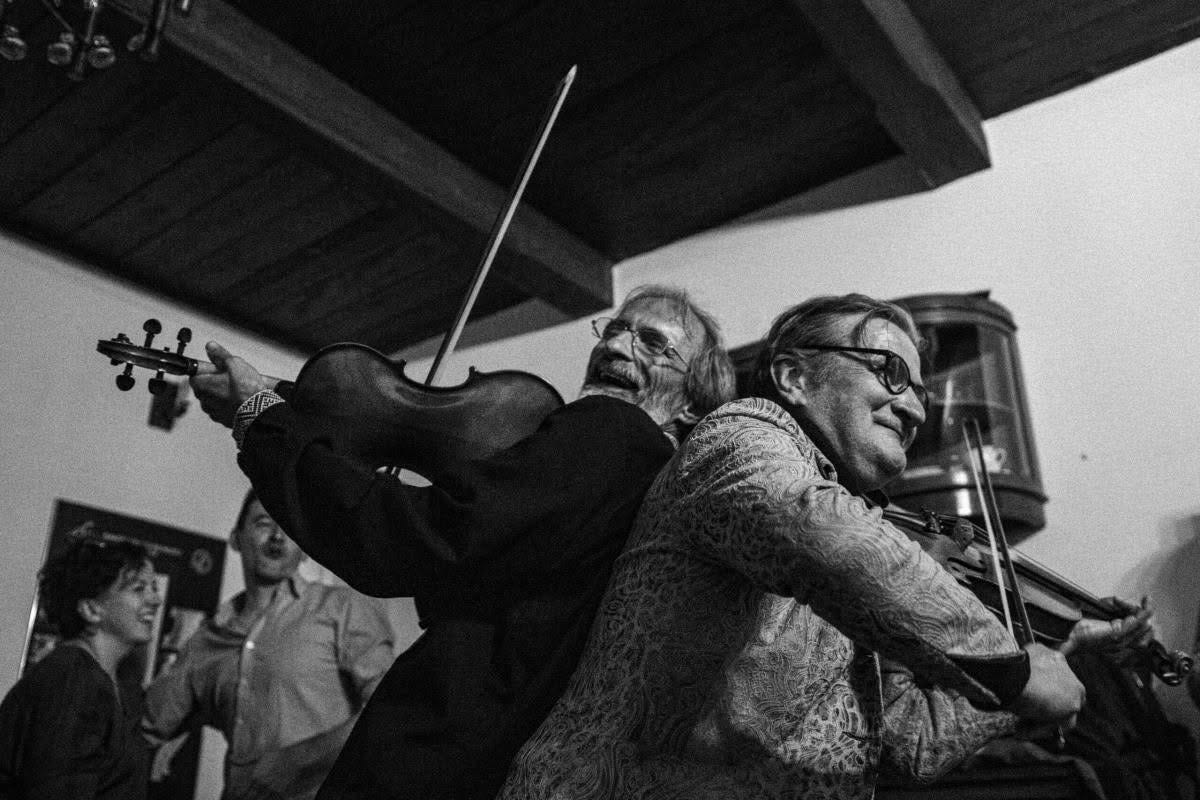
Most of us insiders think of traditional dance as “what defines us today”. If you dress up in a costume, you defy that principle. You do not need the masquerade. Many of us dance in T-shirts and shorts. Others dress elegantly, because that is how they express themselves, but the clothes do not have to come from another epoch.
Stage and choreography create the second problem. Once you are on a stage, you act. Scenic dancers and grassroots dancers in Europe have grown into two communities that barely overlap. A folkloric ensemble performs its thirty minutes, takes the applause and is done. The grassroots dancers, in their sweaty T-shirts, start in the evening and keep turning until dawn.
The third confusion comes from two words: folk and ethno. Among insiders, folk is almost derogatory. It means the enormous festivals where the music has become a commercial mass product. Ethno once promised to merge the richness of every corner of the world, and ended up doing the opposite, gluing together musical phrases stolen from their context. Adapted for an international audience, they lose their ornamentation, their phrasing, their nuance, everything that mattered. You cannot dance ethno music. You can only jump to it.
Small local events, often in villages. Acoustic bands, little amplification, often no stage, usually no costumes. Most importantly: no audience. If you are in the room, you take part. You play, or you sing, or you dance. These evenings are not built for people who came to sit and watch. Quite often you discover, in surprise, that the room has no chairs.
Why do we do it?
Three things matter. First, the connection to the land and its archaic spirit. Second, the raw beauty of music sung and played straight from the heart, from before anyone decided that the octave divides into twelve tones, that instruments should be tuned to 440 hertz, and that phrases divide into bars. Third, the connection between dancers and musicians, which runs from partnering to confrontation, from joy to nostalgia, from technical curiosity to open flirtation. It is unspoken, emotional, often close to spiritual.
The phenomenon has a different name in every country. Throughout this series I use trad, the word used by the communities in France and Italy. Now that I explained a bit the overall context, let’s focus on Poland.
Traditional music in Poland was almost erased by the communist regime. Between 1945 and 1989 it was appropriated by the state and raised to scenic quality, and in the process it nearly disappeared from the villages it came from. Provincial dancers who watched the professional choreographies on stage said, embarrassed, “we cannot dance that well”, and stopped. The state music schools finished the job. Local music was looked down upon, and pupils were pushed towards classical music instead, considered more worthy and more noble.
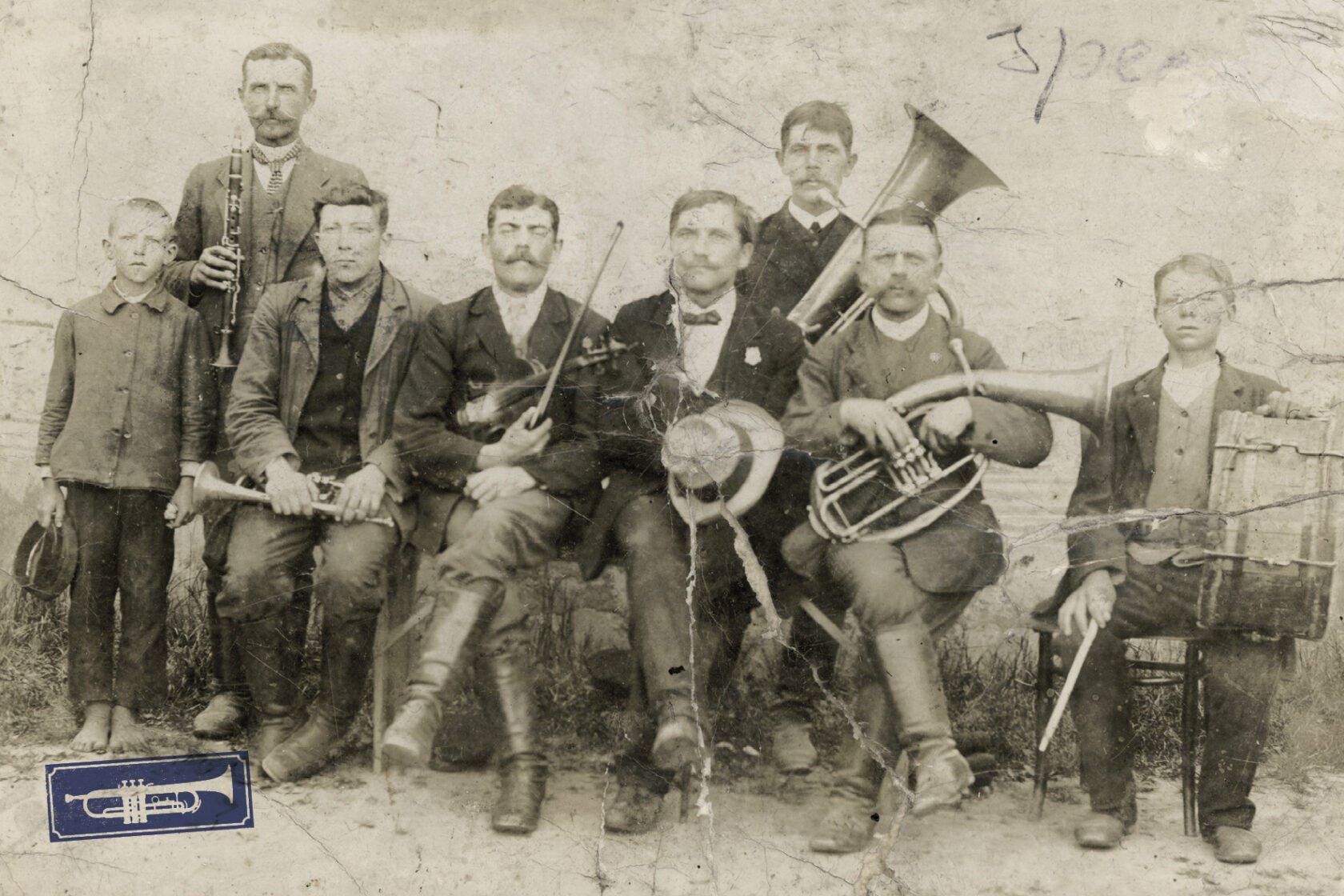
The last decades brought a renaissance, thanks to a small group of enthusiasts who went to the villages and learned from old-timers, some of whom had not played in forty years. They rediscovered and carried on a tradition that is now taught and enjoyed by many. The community is still small, but vibrant, growing steadily, and warm.
Poland is a good place to start dancing, because the dances are simple, at least at the base, which you can then spend years improving. Nearly everything is danced in couples. The polka and the walczyk (waltz) are easy and familiar abroad; the oberek is special and probably unlike anything you have seen or heard.A good oberek band produces something mystical, transcendent, strongly emotional, impossible to describe. The closest image I can offer is whirling dervishes, in pairs. A must.
Below is in my opinion quite unique performance of oberek - played recently by two young countryside boys.
The community meets at summer camps called tabor, lasting three to seven days: workshops during the day, a party every night. If you play or sing, the workshops cover that too. Most participants are young. There are usually meetings with the old generation of local dancers, singers and players.
The biggest festival is Wszystkie Mazurki Świata, Mazurki for short, held twice a year in Warsaw, in spring and in autumn (the video below). But for the real thing, go to the villages. You will dance all night on a wooden floor in a shed, swim in a river in the morning, sleep with thirty other people in a school gym, and walk two kilometres in the afternoon to the only shop that sells beer. After a week you will know everyone. No festival in a city can replicate that.
Tabors are not easy to find by asking around. The average Pole still does not know they exist. If you land at a folkloric event by chance, check whether the dancers are on a stage in regional costume. If they are, you are probably at the wrong kind of event: you are watching choreography rather than living tradition, and you are the audience rather than a participant. The exception is the southern highlands, culturally close to Slovakia and Hungary, where regional dress is still genuinely in use.
For a glimpse of modern Polish folklore, you need to know about the Policja Folkowa.
In the old days every village took it as a point of honour to differ from its neighbours: different tunes, different dress, different steps. Hired to play at a wedding, a fiddler would not dare touch a “foreign” tune from the village behind the woods, unless he was looking for trouble. People could be dead serious about it.
Some in the modern trad movement decided to continue with this strictness. They will tell you that you are dancing wrongly, because this particular tune comes from the other side of the river and here the feet go differently. Or that you will burn in hell for using a proper cello instead of a bare-bones folk bass. In this way of thinking, innovation is a sin.
These purists earned the ironic badge of Folk Police, Policja Folkowa, complete with a steady supply of memes mocking them. At the other end are the Folk Rebels, for whom dance is pleasure first, and who have no problem mixing in a salsa step. At a Polish trad party, try announcing with a wink that you belong to the Policja Folkowa. You will earn points and make friends fast.
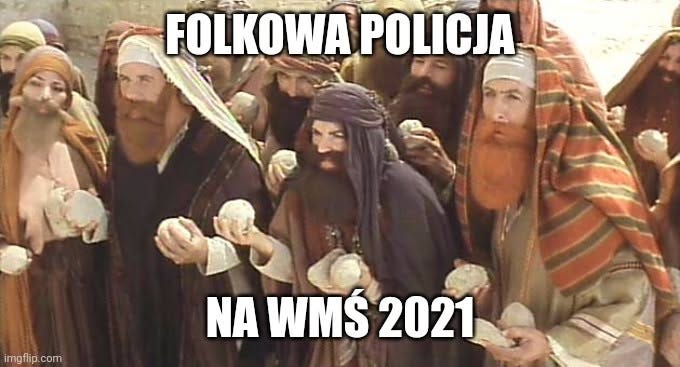
In fact, both sides are right, which is why you will meet this argument again in every piece of this series. Some rules have to be kept, or the depth and nuance of a local tradition dissipate, and all that remains is folk, ethno and World Music. But innovation, humour and pleasure have to be there too, and we should not pretend they were absent in the past.
NomadicMind. Liked it? share it.
Poles are natural-born complainers. You have to whine about something every day.
It is known that dancing is best on a wooden floor, because the feet can bounce and rest. It is also known that those floors are laid in a hurry the day before, so they are never quite flat. No event passes without complaints about the uneven planks, the dechy. Learn the phrase properly and nobody will believe you are a foreigner. Repeat after me: Ale krzywe dechy! (what crooked planks!)
So: Poland, strongly recommended. To start planning and to find events, follow the website muzykatradycyjna.pl with their fb site, or Muzyka Zakorzeniona.
But the grass is greener in the neighbour’s garden. Ask a Pole for the prettiest accordion waltz and he will answer: “... Amélie?”
Which takes us to France. This will be my next story in this series.
Since you’ve gotten this far, let me show you what Polish traditional music is not. Two examples.
The first video below is the scenic version of oberek, the same dance you’ve seen earlier by two provincial boys, now performed by Poland’s official folk ensemble. Stunning choreography is there, and pretty costumes are there. There is also acrobatics - artificial, scenic, absurdly unrelated to the tradition.
What’s lost? Everything.
The second example is possibly the most embarrassing misinterpretation of Poland’s musical culture, at 2014 Eurovision contest. Welcome to folk porn.
If you travel to Poland, please do not travel for this.
Comments
Nothing yet. Say the first thing.
Sign in to join the conversation.