
Kola the Merman was a skilled diver. One day, diving not far from Catania, he found an old treasure. His friends and neighbors pulled it ashore, feasted, and could not believe their luck.
The story would happily end here. But some foolish people carried the news to the king.
The king was wise. He did not ask for the treasure. He asked for something else.
“What an amazing man Kola must be. Bring him to me, so I can meet him.”
The ferry from Livorno to Palermo takes nineteen hours. While the contour of Sicilia becomes visible ahead, my thoughts are still in the past.
Once, in a distant land, over a kitchen table, I was entrusted with a story. A heavy one. Then I left that place and its people, and the story stayed with me, deeper than I wanted.
We, travellers, think we can collect stories, like a cartographer who searches for underwater rocks and puts them on a map. Like these stories did not concern us.
The story has haunted me ever since. It needs a second chapter. I should go back, and write its happy ending. Become part of the story. But this would be a big project. To commit is to loose the lightness and freedom I am made for.
The dilemma comes back like a zanzara, the annoying mosquito. So I set out for Sicily, to change perspective. But one thing you cannot escape: yourself.
I understood. I came here to make that decision.
Getting off the ferry, I find my furgone on level four and start the engine. The service men have vanished. We drivers must guess what to do. The car behind me starts reversing down the steep ramp, so I follow, Scary. In the roar of the other engines I reach level three, still in reverse, where I must turn the van around inside the narrow space while other cars try to do the same, honking, and other continue reversing toward us. No one guides us. It is absurd. And it is only the preparation. Palermo waits outside.
I park by the campsite and walk in. The receptionist is busy, so I decide to shop quickly and come back later. He stops me. Don’t. Hai la targa straniera. With a foreign plate, do not even think of leaving the van outside. He waves me in without formalities.
We both smile. Per favore, I say, where can I buy a few beers? Buy it from the neighbour, next door, he says.
I push through the next door without thinking, and freeze. I am standing in a family living room. The father and his cousins are playing cards, two aunts work the kitchen, children sit on the floor. Cosa vuoi, asks the head of the house, the chief mafioso obviously. Beers, maybe? Come. He opens the family fridge and hands me the only three beers in it. I pay the supermarket price, one euro fifty. I am completely confused. I say grazie, pay, and leave. They go back to their cards. I am not sure where I have been.
Next, I drive down the coast, to a party I have been invited to by someone who is himself only a guest. Certo, puoi venire, sei benvenuto. Of course you can come. The road is narrow and winding. I arrive. The pin on the map is wrong. I slow down. Nothing here. The drivers behind me start honking the moment I hesitate. So I go on, and a minute later I find a place to U-turn. I drive back slowly, looking. Nah, obviously not here. An ugly, dilapidated fence, piles of rubbish along it. I carry on, and a hundred metres further I see a badly parked car and two girls in party dresses, confused, both on the phone.
I stop. Ragazze, do you know the festa of Riccardo? Yes and no. They are also looking for the festa of Riccardo. Good. I am on the right track. I park on impossible ground right next to them, a spot I would never consider at home. I find a piece of cardboard and hide my targa, the registration numbers, so the passing Palermitani do not notice a foreign car left out for the night. The drivers keep honking, their way of saying ciao bella to the girls.
Riccardo appears out of nowhere and leads us. We end up in front of the ugly rusted fence I had dismissed. He points to a hole in it. It does not look as though Ricardo owns the place. I murmur a few swear words. Is this what the nineteen hours on the ferry were for? Welcome to Sicilia.
Someone’s hands appear on the other side. We pass the beers through, then the guitars, then a great pile of gear, all of it landing on rubbish on the far side. Then each of us squeezes through, and we are inside. We are on a vast empty plot, covered in dry scrub that continues towards the sea. In the heat of the Palermo evening we each take as much as we can carry and walk a path that is almost invisible in the bush, down, away from the road. The roar of the road fades. The waves come closer.
Half an hour later I am sitting in another world. We are underneath.
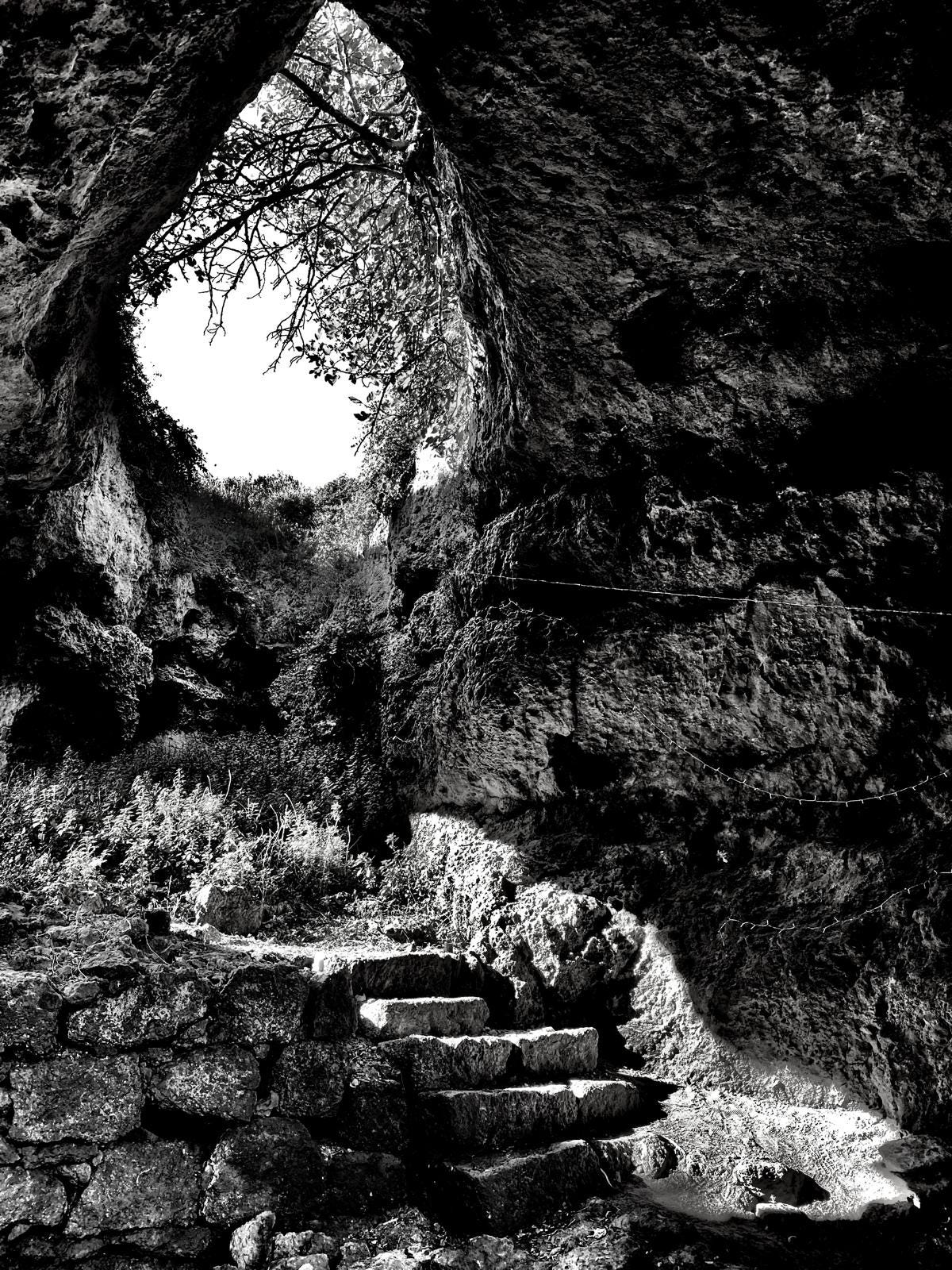
The path took us down and down and then, without warning, to a narrow staircase cut in stone, leading to a cave below. The far side of the cave opens straight onto the sea, another staircase carved into the rock. Why would anyone make stairs in a cave? An old quarry, I am told. The air is cool and fresh. All we hear is the water. It is charming. I did not expect it.
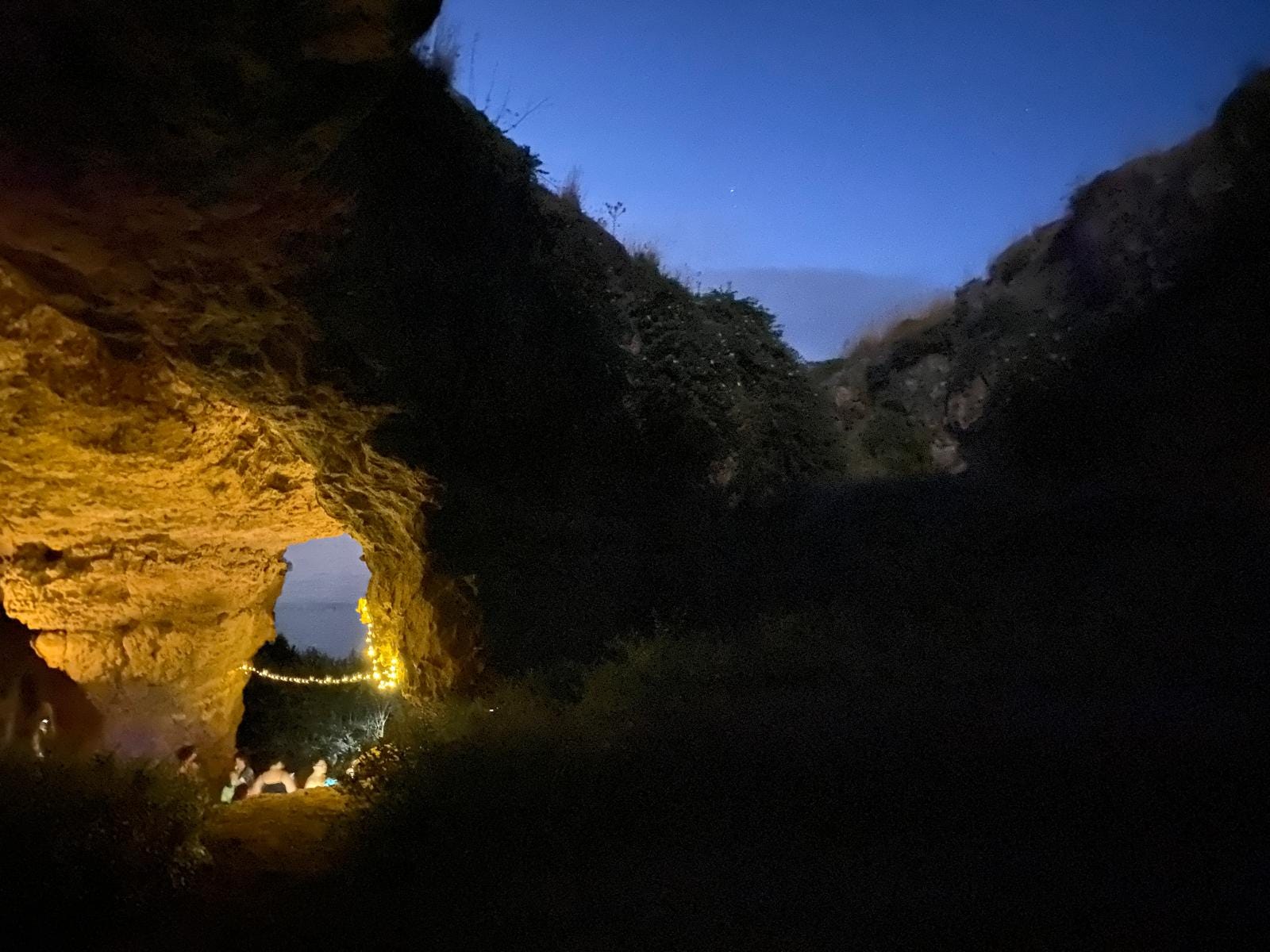
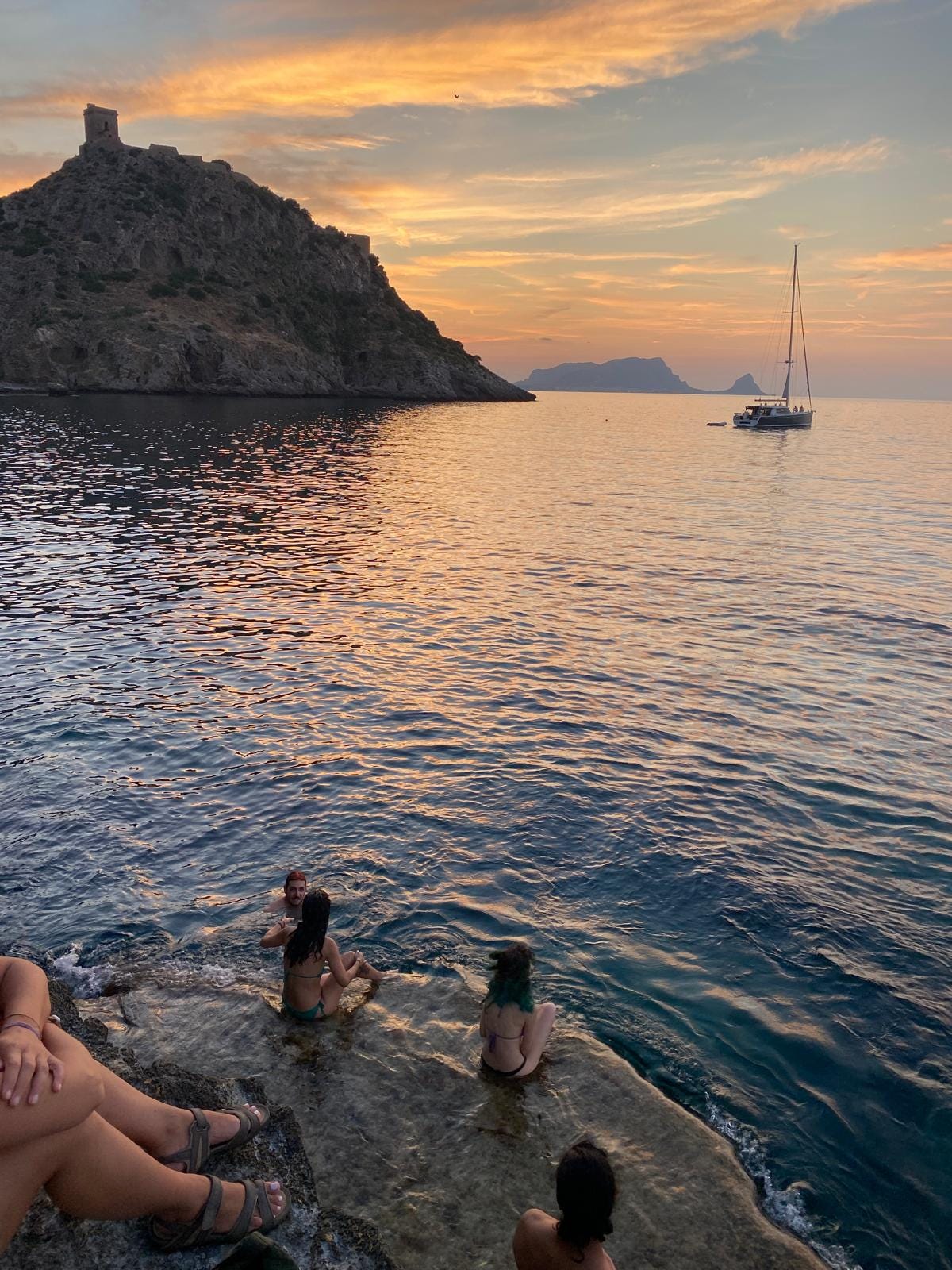
The cave is decorated for the party. There are about twenty of us. I give Riccardo some sweets I brought from home and get a big hug in return. His eyes smile, and his grazie is honest and fresh. I follow Ciccio and Fra down to the sea. The rocks are steep, the water clear and cold. We dive. An hour later, at ease, I watch the sunset with my new friends.
Mi chiamo Andrea, però puoi chiamarmi Kola, Riccardo’s friend introduces himself, handing me a drink.
Why do they call you Kola, I ask.
Perché mi piace nuotare. Kola viene da una vecchia leggenda siciliana. Because I like to swim. It comes from an old Sicilian legend.
Tell me the legend, Andrea.
When Kola came to greet the king, the king said: I will test you three times. If you succeed all three, I will give you a mission.
Without another word he took a golden chalice from the table, emptied it, and threw it out of the castle window, straight into the deep sea. Bring it to me. That is the first test.
Kola did not waste a second. He jumped straight into the sea and soon came back with the chalice. The king was satisfied.
For the second test the king sailed out to open water. He took off his golden crown and cast it into the sea. He sailed back and said to Kola, who had waited on the shore: now bring me the crown. Kola frowned. It was hard. But he dived and searched the sea bed methodically, and the next day he brought the crown to the king.
Mi hai sorpreso. Sei molto bravo, said the king, plainly pleased, and moved to the third test. He took the golden ring from his finger, threw it into the sea behind him, and said: bring it. Again Kola succeeded. The ring was tiny, but he saw it in a crack in an underwater rock and brought it back.
You have succeeded three times and shown your rare skill, said the king. Now I give you the mission only you can perform. You are the king’s cartographer. Go round our island, Sicilia, my kingdom, and chart every rock beneath the water, so that ships can come safely to shore.
To tackle my decision, I buy a notebook and fill it with letters, words, paragraphs. After a week in Sicilia there are eight pages. The decision is as far from me as ever.
I spend less than ten minutes in Ortigia, the old part of Siracusa. Archimedes lived here. I cross the footbridge, look around, and see that I am part of a wave of tourists. I turn back and leave as fast as I can, without seeing the cathedrals, the museums, the historic waterfronts.
Now I am with Giorgio, on his land a few miles away. The plot holds five or six campervans, a couple of mobile homes, some tents. There is a water tank and a provisional kitchen rigged inside a tent. Hammocks hang from the branches of the only full-grown tree. The other trees are just planted, knee high. Giorgio, tattooed and smiling, a surfer, bought the land last year and, with the help of friends and volunteers, is slowly turning it into a small paradise.
I lived in a camper, like you, he says. I moved from place to place, for years. Then I grew uneasy. In that life you take from a place and give nothing back. Then, you move to another place. If you are looking for meaning, one thing matters: commitment.
Giorgio tells me it took him a long time to find the land. Here in Sicilia it is all word of mouth, he says. It is the only way to buy a field.
Later I watch Giorgio instructing a new volunteer, Maria. We work only until ten, then again after five. Tomorrow you will understand, he says. The heat.
The next morning I want to say goodbye to Giorgio, but I am too late. He is already out on the water, surfing. In the kitchen I find Maria, who makes me a coffee. I tell her she is now part of the story now, but she can choose her role. Maybe in your story I am only the one who brings you coffee, she says. Maybe, I say.
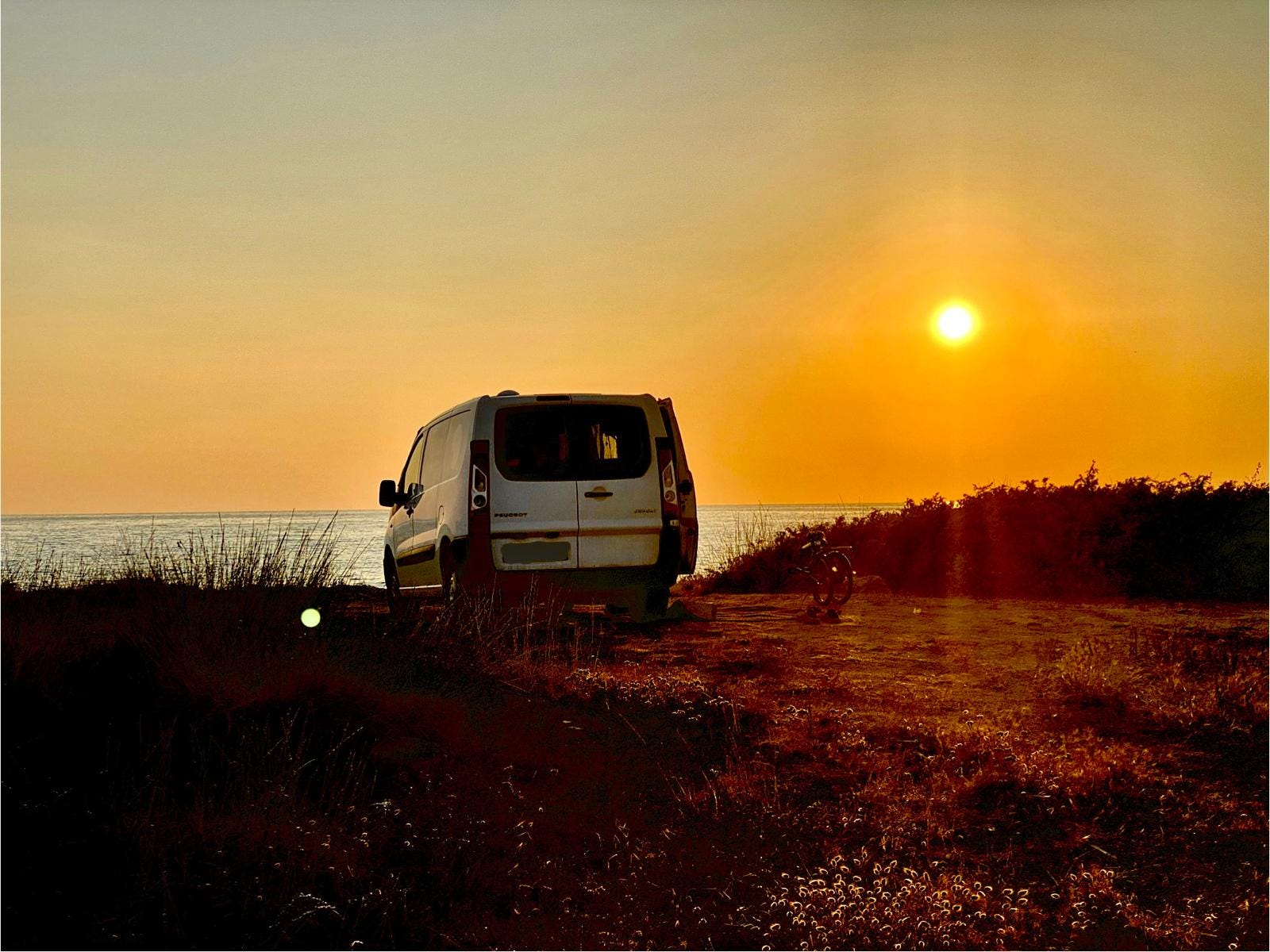
Two days later I park on a random beach. I see a neighbour, also in a camper, and go to shake his hand. One look is enough: he is not here for a night, he is here for life. He offers me fresh eggs, tomatoes, a cigarette, and his company. Soon we are watching the sunset together, Antonio and his friends Maurizio, Andrea and Erica. And myself. Antonio is a cook by trade. I cannot imagine a better restaurant.
Pablo, listen. Everyone invaded Sicilia, because it was a paradise. They robbed it and left. The Greeks, the Spanish, the French. I have fourteen kinds of blood in my veins. My father is from a Norman village. My mother is from an Arab village. I lived in London. I lived in Japan. I was a cook. Now I am here, again. But I left my house and I live on the beach, in my camper. I have learned one thing. The most important person in my life is myself.
He looks for an extreme example and finds it. If you tell me to go to war, to fight for my country, I will not, he says.
This brings my fresh memory from the wartime Ukraine, so I press Antonio. What if the enemy came here, to Sicilia, burned your house, hurt your family? He still would not fight, he says. Home is the past and means nothing. Peace matters more. If you refuse to fight, you invite peace into your life, and peace will come.
Then what about my decision, Antonio? He looks at me. If you have to decide so hard, something is already wrong. If it were the right thing, you would have known it at once, and long ago.
His advice annoys me. It is neither yes nor no. But I admit he intrigued me. He has given me a hint.
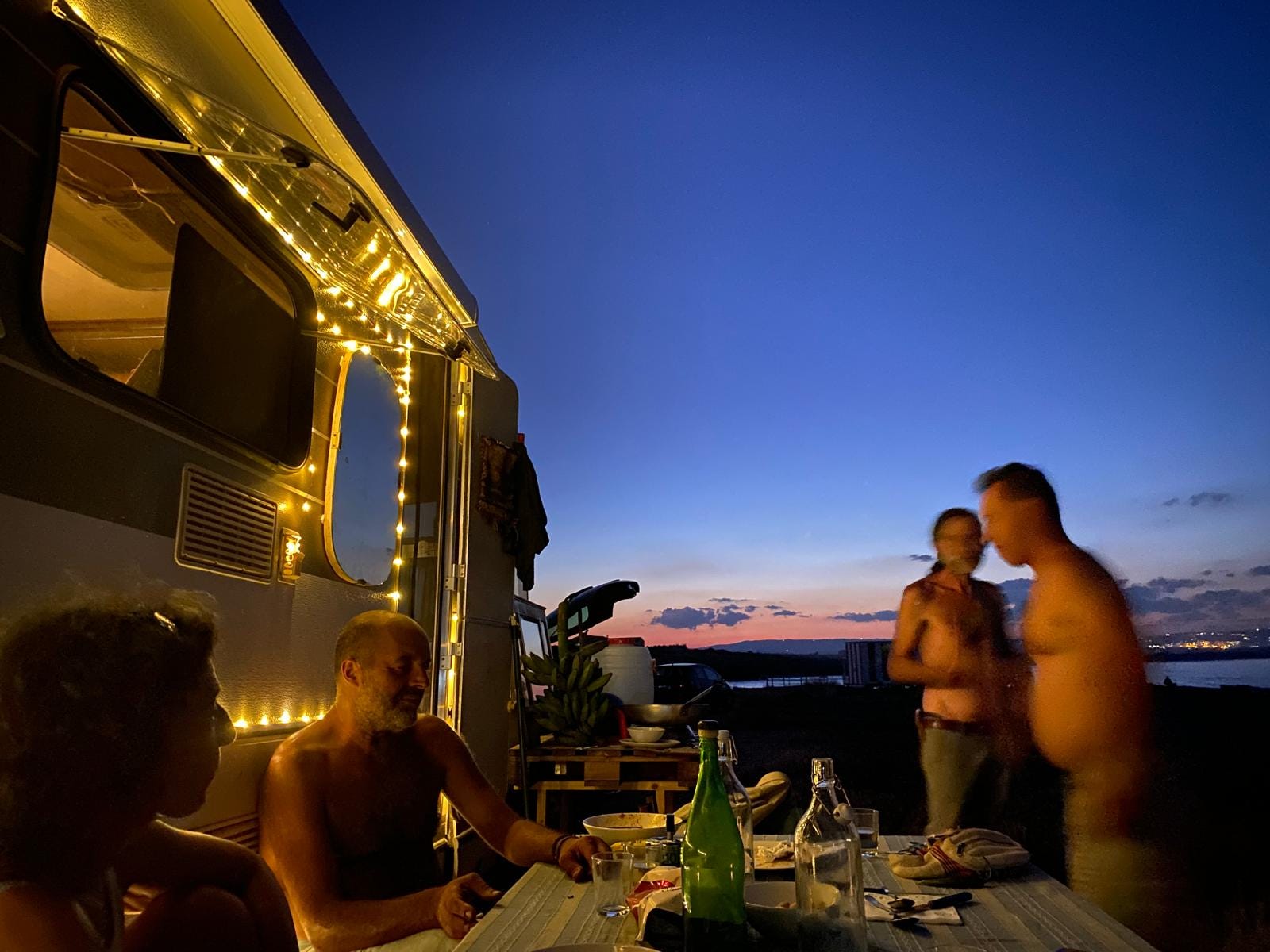
A smart catamaran arrives slowly and stops two hundred metres offshore. We watch and speculate about it. Non sono americani. La barca è troppo piccola. Not Americans. The boat is too small. Through the binoculars Erica counts three people on board. Antonio says he would invite them over, but how? We joke about sending smoke signals with the fire. Come to the party. But they do not come, spending the evening in their own company. Loro sono viaggiatori come noi, solo che hanno speso ottomila euro. Noi, otto. They are travellers like us, except their evening costs eight thousand euro, and ours, eight euro.
In the morning I swim out and end up beside the catamaran, and the surprised crew invites me aboard for coffee. They are Italians, two men and a woman, dressed neatly in white, sailing from Marina di Ragusa to the Isole Eolie. They look a little bored. I tell them about Antonio and say they should come and buy his eggs and tomatoes. No, they cannot, they have to press on towards Messina.
The eggs, tomatoes, the evening - missed because the Isole Eolie, the imaginary future, are waiting.
Piana degli Albanesi is a village in central Sicilia where Albanians, known here as Arbëreshë, arrived six hundred years ago. In the legend, they walked Sicilia for seven years before they settled here, in the Val d’Inferno, the land nobody wanted. In their isolation they have kept their language, their religion and their customs to this day. Only a generation ago the hell valley became a paradise, when a dam turned the wasteland into a pretty lake. In the small museum, set in a former monastery, I learn their history, and one local curiosity: a cave high in the mountain, home to an endemic scolopendra.
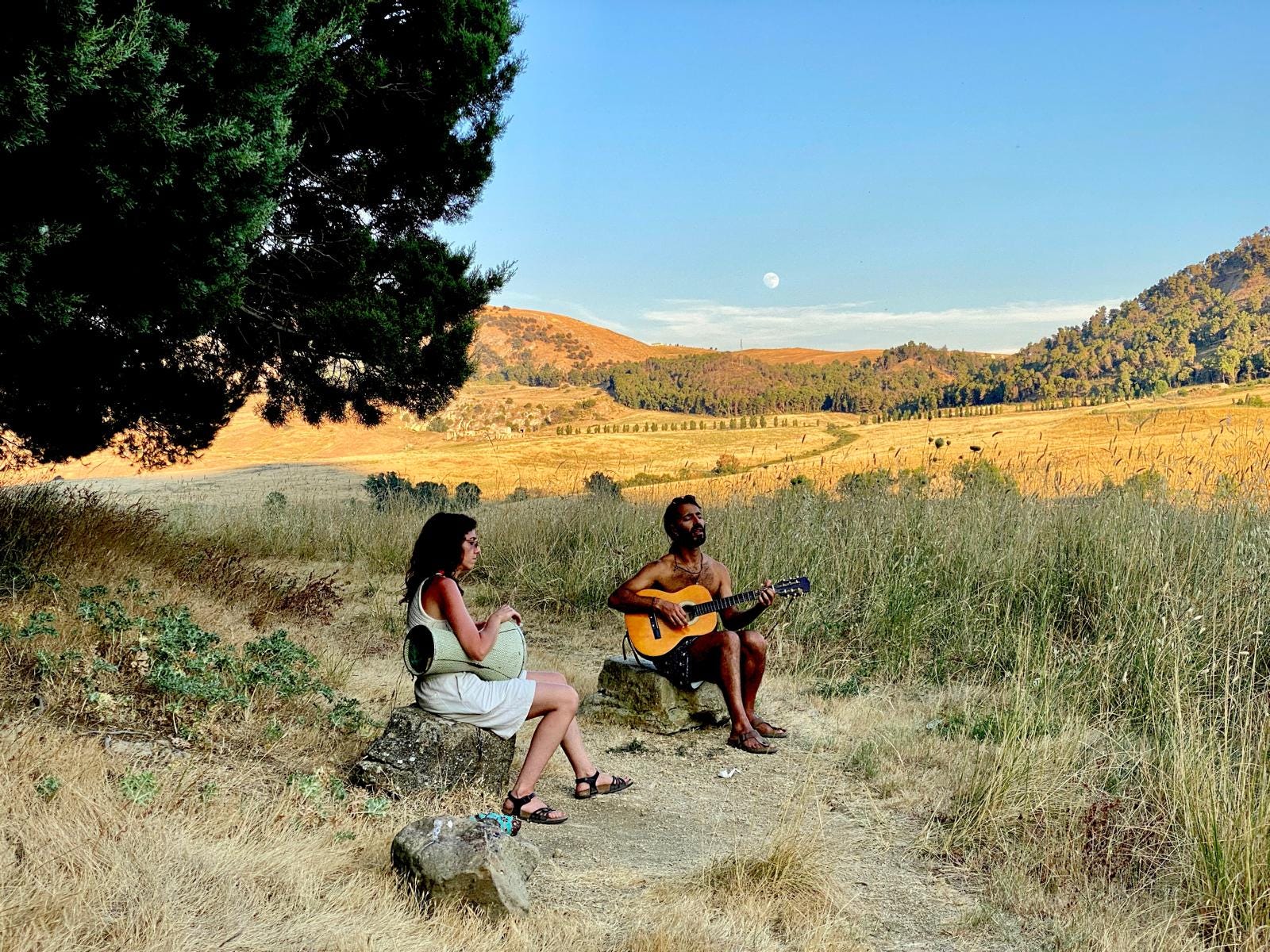
We spend the day by the lake. After sunset Francesca, my Arbëreshë friend, takes us to a strange place on the far side of the mountain. We drive through a long tunnel cut in the rock, and on the other side, to my surprise, the sun is still up. We sit by a dead fountain in an empty field, with the cicadas.
This place is called mundapert, says Fra. In the old days people rarely left the village. From the village on the hillside they always saw the same view, their own fields down the valley. Then the tunnel was cut, and they could walk through and see the far side of the mountain: several villages, small towns, a whole other world. Even the sun goes down an hour later here. We call it mundapert. The world opens.
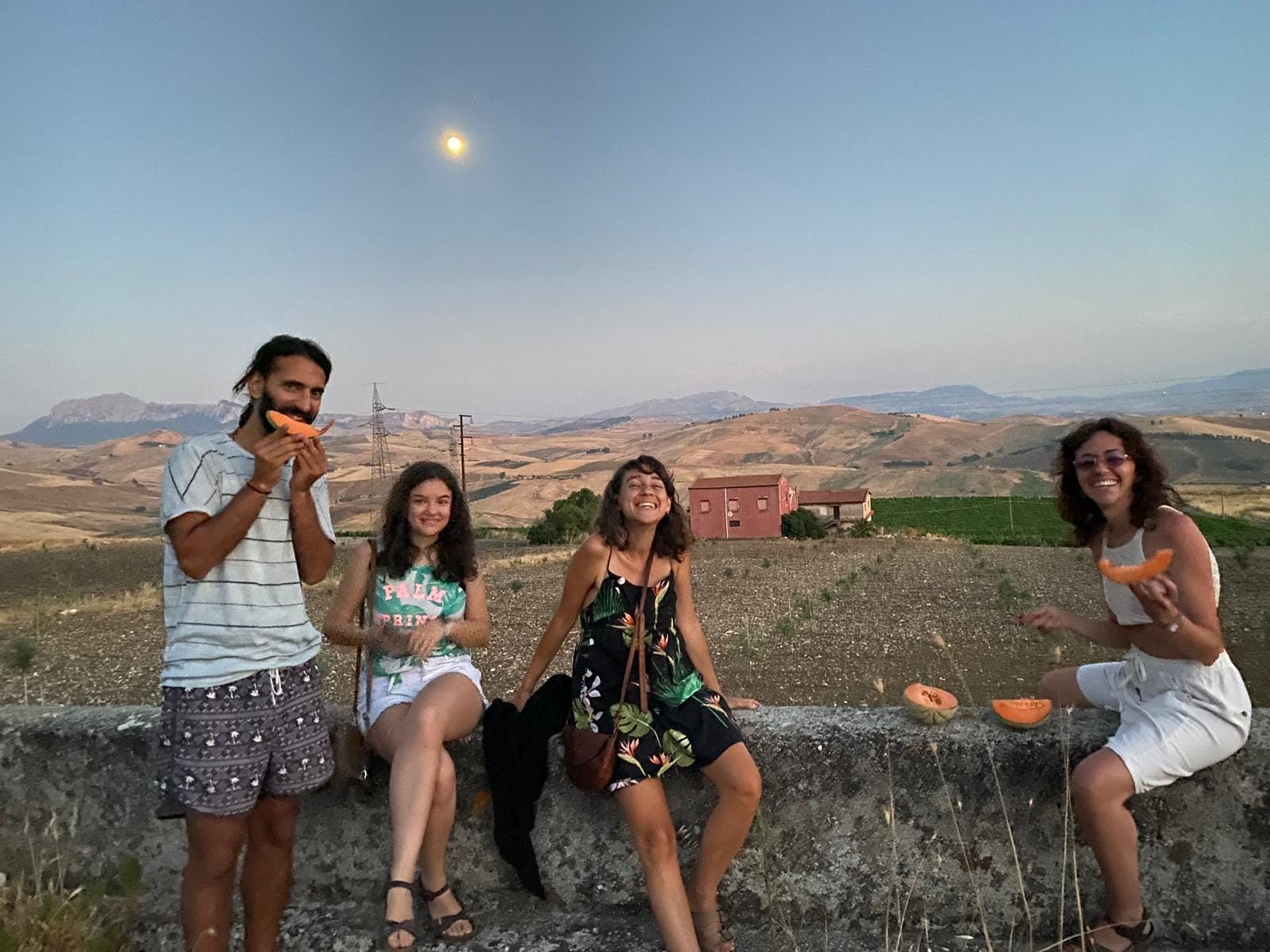
We eat melone and watch our second sunset of the day. I check the map. The lights in the distance are Corleone. You will laugh, I tell Fra, but as a foreigner I have only the one image of Corleone: the mafia town. So do I, she says. I first went there at twenty-nine. They have a nice café. Here, the perspective is different. We rarely travel far. Everything you need is close. Corleone, twenty kilometres away, is like another country.
The children here, I am told later, often dislike learning English. They see no reason for it. Even travel to Corleone is unnecessary, let alone abroad. Sicilia is too good, your village and family provide for everything you need.
I think about how the troubles and stories of other lands can be avoided by never going there, by never knowing they exist.
And so Kola became the king’s cartographer. Sicilia, as everyone knows, is a triangle. Kola began on the eastern shore, near Catania, and worked south to Siracusa. Each day he dived and drew the map of the rocks he found. But when he reached the corner of the triangle south of Siracusa, he dived beneath it and saw that the island rested on an enormous column under the water.
Kola followed the southern shore to Trapani, the second corner. There he dived and found the second column. He understood that Sicilia stood on three great and ancient columns.
He followed the northern shore towards the third corner, Messina. There he knew what to expect. He dived beneath Messina and indeed: he found the third column. But this one was crumbling, in a very bad state, ready to give way at any moment.
The island was in great danger. Kola ran to the king to report what he had found.
I follow the stream upward to find the cave.
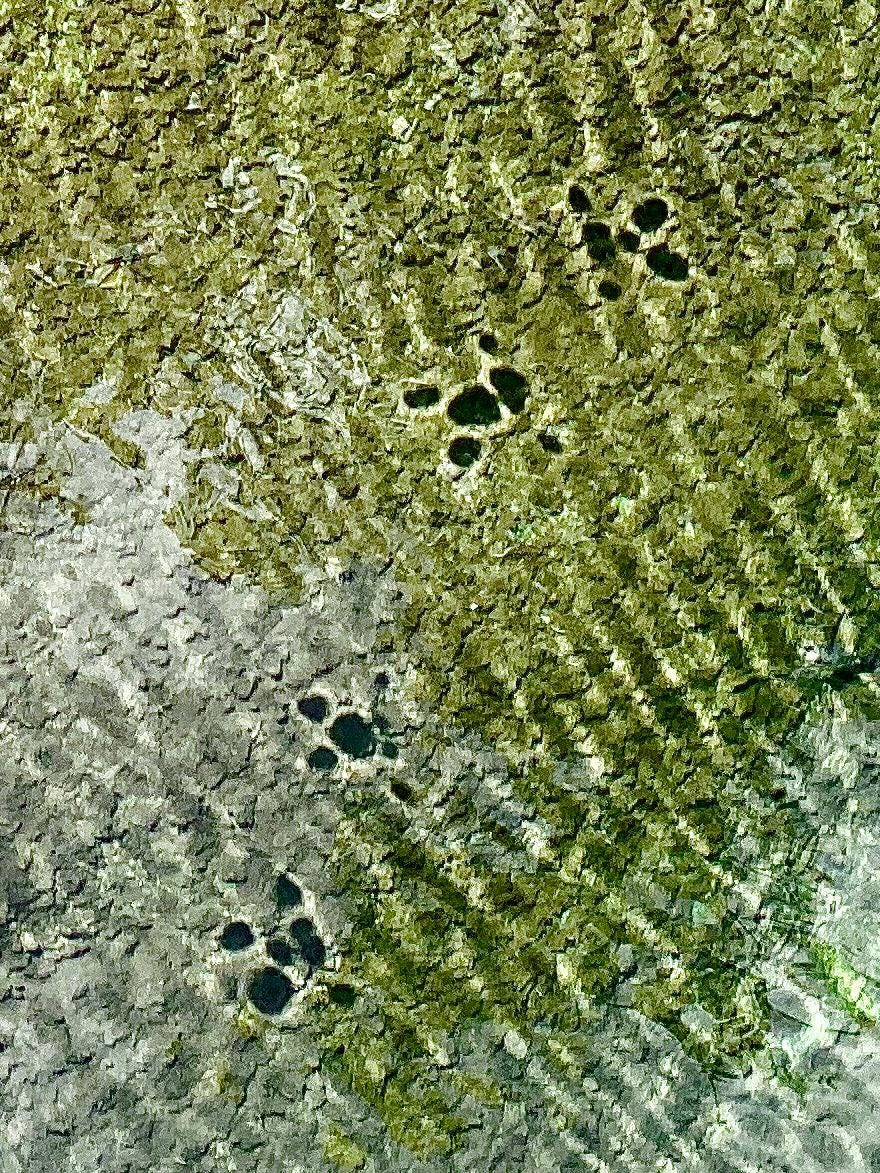
I note peculiar dark blobs in the stream. I come closer to realize those are shadows of water striders, those insects that skate across the surface of ponds and streams. I have never seen a water strider casting a shadow, but now, in Sicilia’s strong sun they are clearly visible: five small blobs that together make a tiny turtle. Strange: you don’t even see the tiny insect, you only see its shadow.
I reach the cave. Few people come here. I am alone. The first chamber is enormous. Weeds grow in the entrance, which adds to the strangeness. From the first chamber, lower down, I see the black opening of the second room. I enter, and immerse myself in the black.
Have you ever known complete darkness? You can only know it in a cave. At night you cannot: there is always some light. After a while, your eyes adjust and you make out the shapes of things. However, deep in a cave they do not, because there is no light at all. After a minute the mind plays tricks. It thinks it sees shapes, because it knows it should. The eyes start sending pictures of things that are not there. The inner ear goes strange too. Up and down stop meaning anything, because the sense of balance leans heavily on sight. But you do not see, and there is no flat surface around either. After a while you understand: there is only the darkness. As there always was, and always will be.
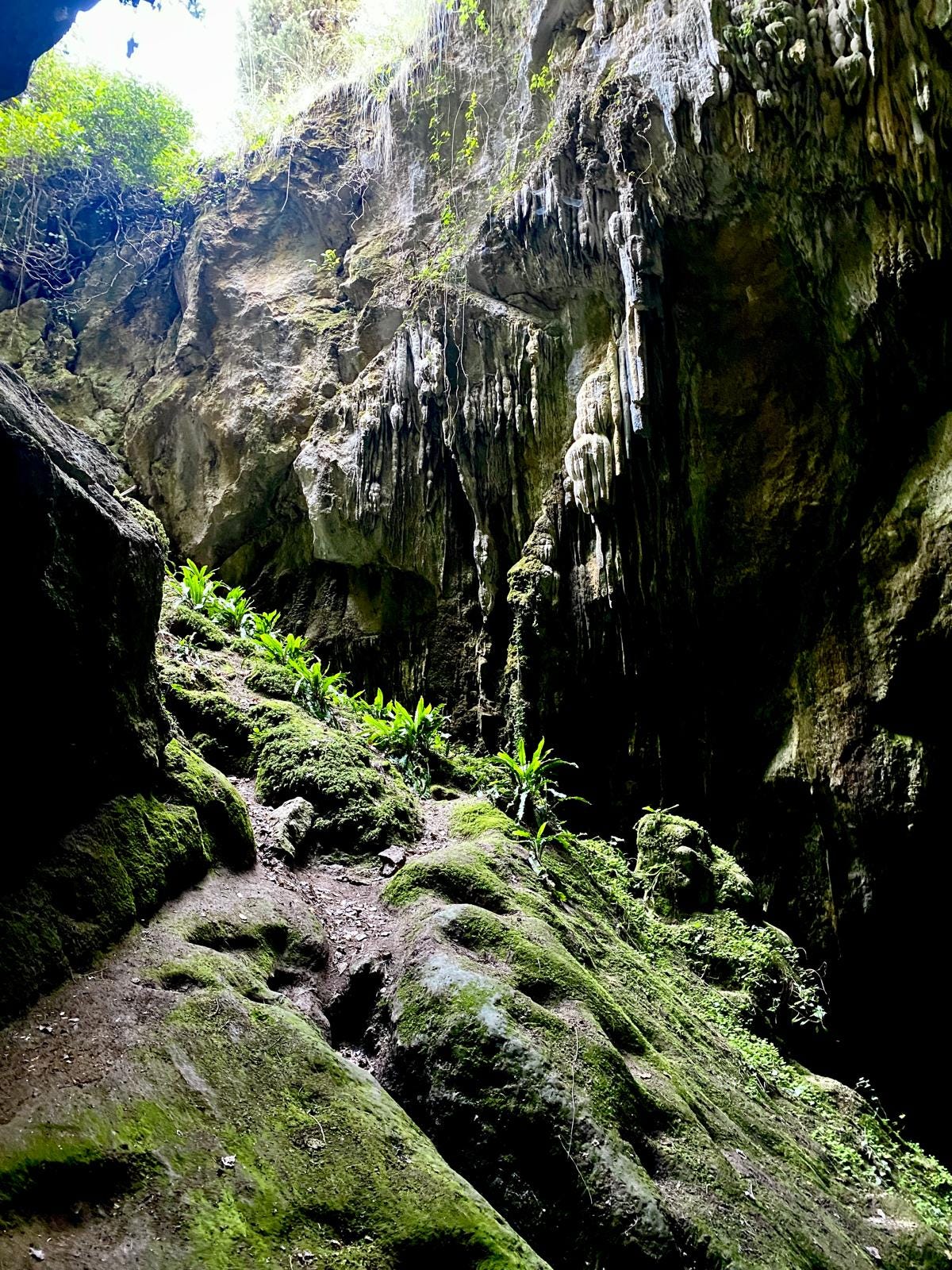
I am in the second chamber now, far from the entrance. The only sound is water dripping from the stalactites, doubled by the echo. There is no path, only rocks and stalagmites to negotiate. Two small pools of clear water. But when, out of curiosity, I turn off my torch I can still make out the faint edges of the rocks. Some little light still reaches here.
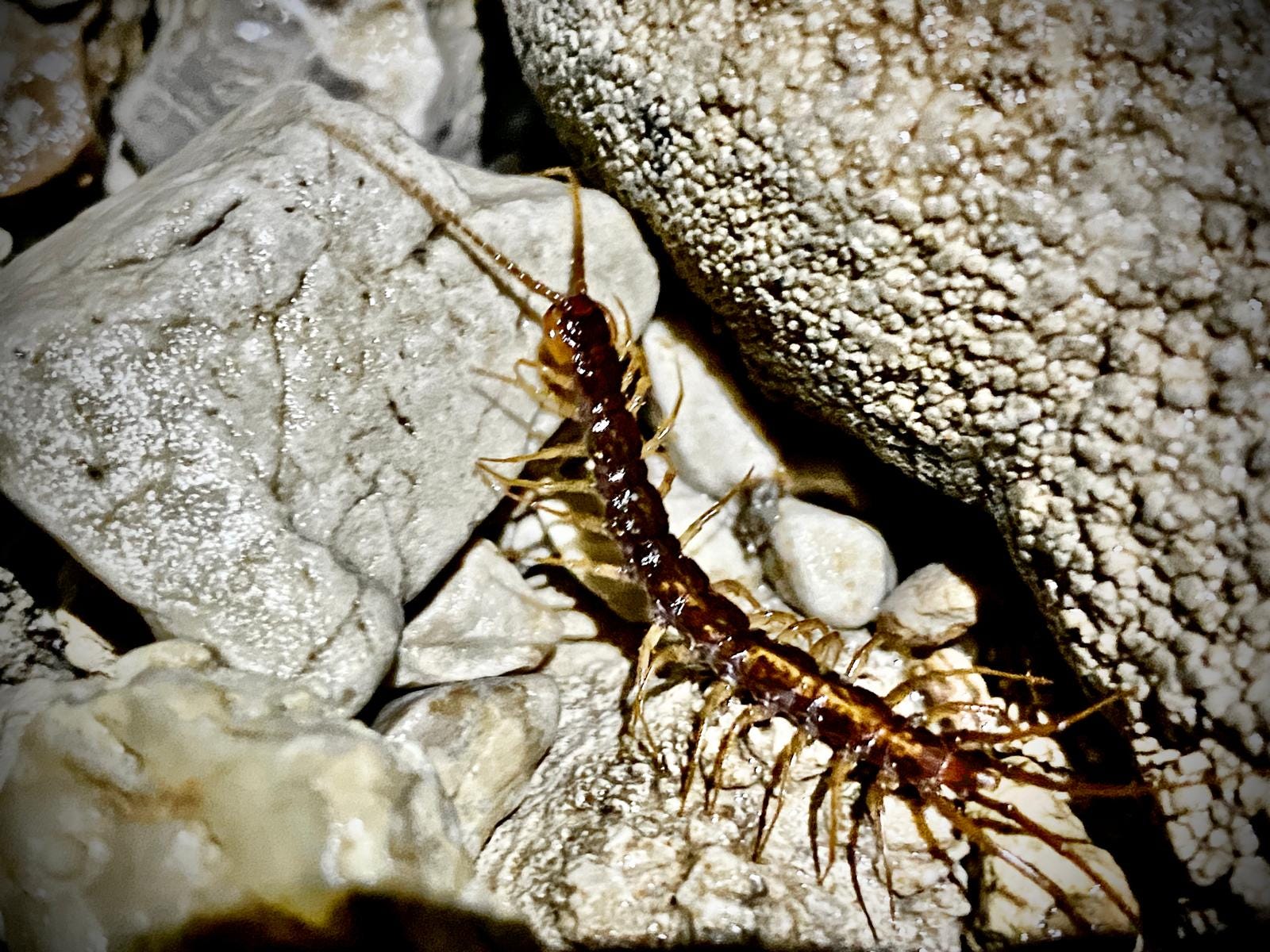
I reach the pool and look down at my feet. There he is, the scolopendra! It is tiny, half the length of my little finger, working at the mud. What can it possibly find to eat here, in the dark? Bat droppings? I check the ceiling. No bats. Still, I am excited to have found the mythical scolopendra.
“Goal achieved. You have found your treasure. Now get out”, says the fun part of me, the part that likes to slide across the surface of life like the water strider, collecting wonders and illusions and calling them living, never daring to go under. “No, you have not”, says the other part, the dull one.
I look ahead into the dark. There. Behind a block, there is a narrow entrance to a third chamber. I move on. I have to stoop, but I can go on.
Then, unexpectedly, my torch flickers twice, and dies.
This time, the darkness is complete.
Panic. I go through the options. I could find the way back; the entrance is behind me somewhere. There is a smartphone in my backpack, and a lighter… Instead I lower myself onto a rock and sit. The water drips. The mind keeps sending its pictures of things that are not there. Then it comes to a halt.
My lord, we are in danger, cried Kola when he was given audience. When the third column breaks, the island will fall into the sea.
The king was wise. As always he found the right words.
Solo tu potevi scoprire questo problema, quindi sei tu che devi trovare la soluzione, said the king in his wisdom.
Only you, Kola, could travel so far, to distant lands under water, and discover this problem. So now it is you, and only you, who must find the solution. No one will do it for you. For it is you who owns the treasure. For where your treasure is, there your heart must go.
Kola looked in despair at the courtiers around the king. They all nodded, solemn and approving, in admiration of the king’s wisdom.
Kola went home. He could not stop thinking. What can I do? He thought day and night, day and night. At last he decided. Kola dived beneath Messina and took the column in his arms. He embraced the column. And there he stayed. So Kola became the third column of Sicilia. And this is why, sometimes, when he grows tired and shifts his weight, a terremoto, an earthquake, is felt in Messina.
I learned later that the story of the merman Colapesce, Nicholas the Fish, is known all over the Mediterranean, in dozens of variants. I think, however, the one carried by word of mouth in Sicilia, and told to me by Andrea on a cliff at sunset, is the most beautiful.
Share this essay, if you liked it.
Comments
Nothing yet. Say the first thing.
Sign in to join the conversation.