
There have been a flurry of leadership changes at my university, most of which make me quite pleased. Soon-to-be former president, Gregory Fenves, is becoming chancellor to focus on external relations and will no longer tend to the day-to-day affairs of the university. The top people in the behemoth unit known as Campus Life have been let go and so can no longer squander the university’s money on vanity projects that do little to serve anyone.
Take for example Cox Hall, which used to have nearly a dozen eating venues and loads of seating and now appears to have just four overpriced venues and a fraction of places to sit.

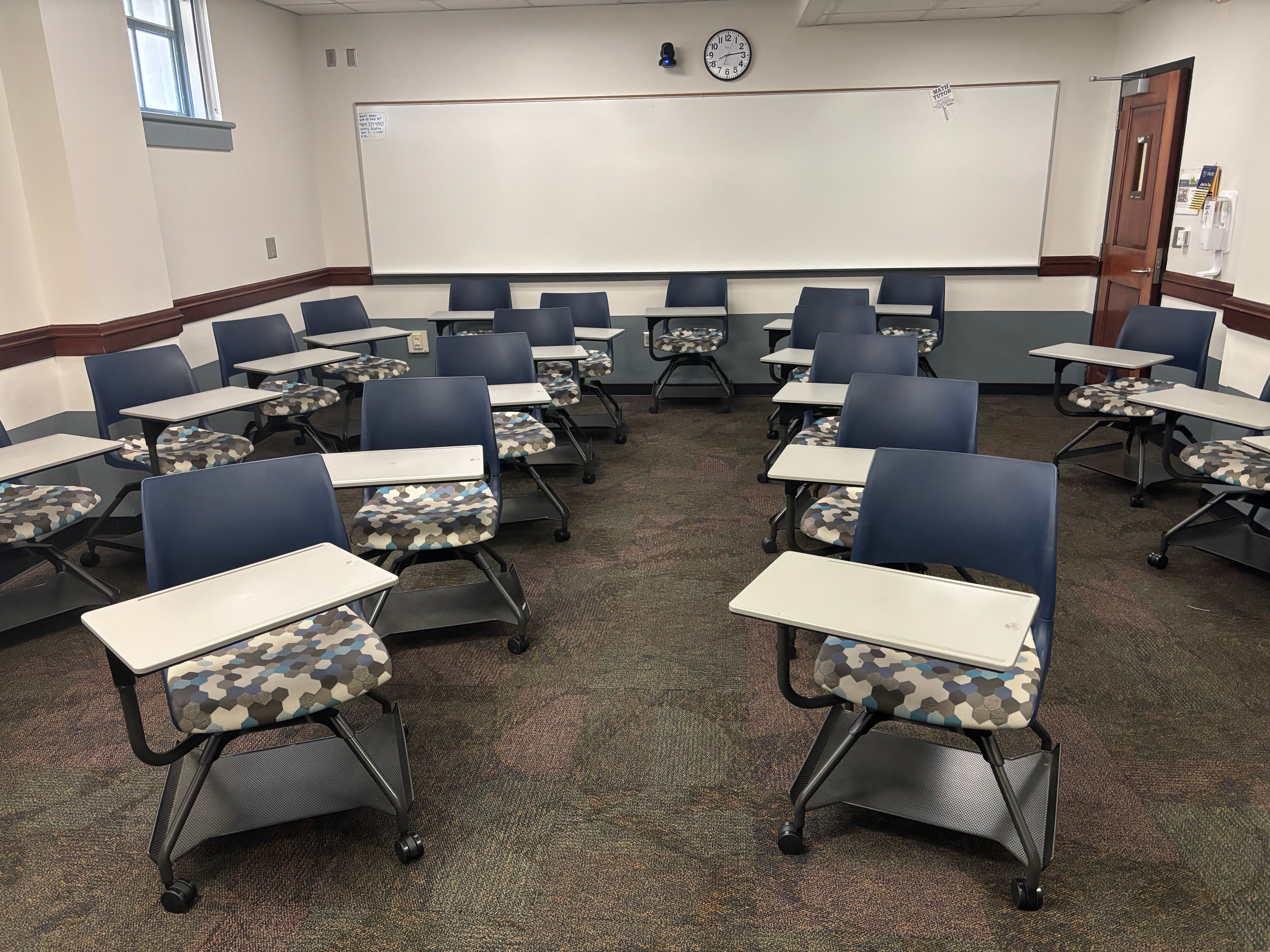
Why ruin a perfectly fine eating area when our classrooms are too small and too few? Just take a look at my dreary classroom this term that’s supposed to seat 23 people.
Enough complaining.
I want to focus on something that has me downright giddy: the Board of Trustee’s appointment of Justice Leah Ward Sears to be Emory’s new interim president beginning this Monday. A former chief justice of Georgia’s Supreme Court, Sears is the first Black woman in the country ever to hold such a role. She is also refreshingly straightforward, courageous, and vocal in her convictions. At convocation this past Tuesday, she lauded the incoming class’s generation for its fortitude through the pandemic and its courage in calling out things that are wrong in the world, and she encouraged them to keep doing so at Emory.
I was gobsmacked. Compare her words to the outgoing president’s actions when in April 2025 he called in highly militarized police forces to violently shut down a peaceful student demonstration, have students and faculty (including me) arrested, and later never once admitting how wrong this was or asking about anyone’s welfare or calling on the solicitor general to drop the charges. In contrast, Justice Sears’ call to students to keep expressing their political views is thrilling.
I had none of this optimism when I wrote my last post, nearly a month ago, on what capitulation sounds like: silence. Over the summer, because silence was all we were hearing from Emory central administration, I was worried. So we in the university senate and faculty council, started forming new committees and asking questions, looking into how the university was responding to the current political climate and executive orders. So far it looks like nothing nefarious is going on. In the current political situation it is dangerous for any civil society institution, universities especially, to be bold. So silence seems to be the prudent course.
But maybe loudness versus silence is the wrong way to think about this. Better might be action versus inaction. Over the past year and four months, since the day that the Georgia State Patrol marched onto campus to assist the Atlanta Police Department, at the behest of the Emory administration, the university senate has become a living, kicking, vital organism. Over the past year a new culture of shared governance has spread across campus. Faculty across the schools are creating new groups to protect academic freedom and research. Our AAUP chapter is growing and reinvigorated. The faculty council is calling for more faculty consultation on budgeting priorities. And the senate is opening up its meetings to the whole university committee. To invoke a cliché, we are walking the talk so we are not left with talk alone. Some autocrats somewhere might want us to shut up, but they can’t keep us from being who we are.
Prudence does not mean being silent about principles. It can mean living and internalizing our principles so that it becomes perfectly natural that the faculty and students should have active roles in charting the future of the university. That’s what democracy looks like. I suspect that a former state supreme court chief justice who is a woman of color in a red state knows that well.
No posts
Comments
Nothing yet. Say the first thing.
Sign in to join the conversation.