
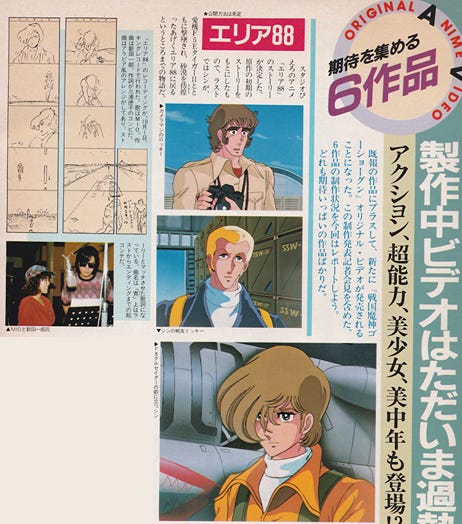
I first learned of エリア88 Area 88 from the November 1984 issue of ジ・アニメ The Anime magazine. It didn’t appeal to me. I’ve never been interested in realistic war stories.1
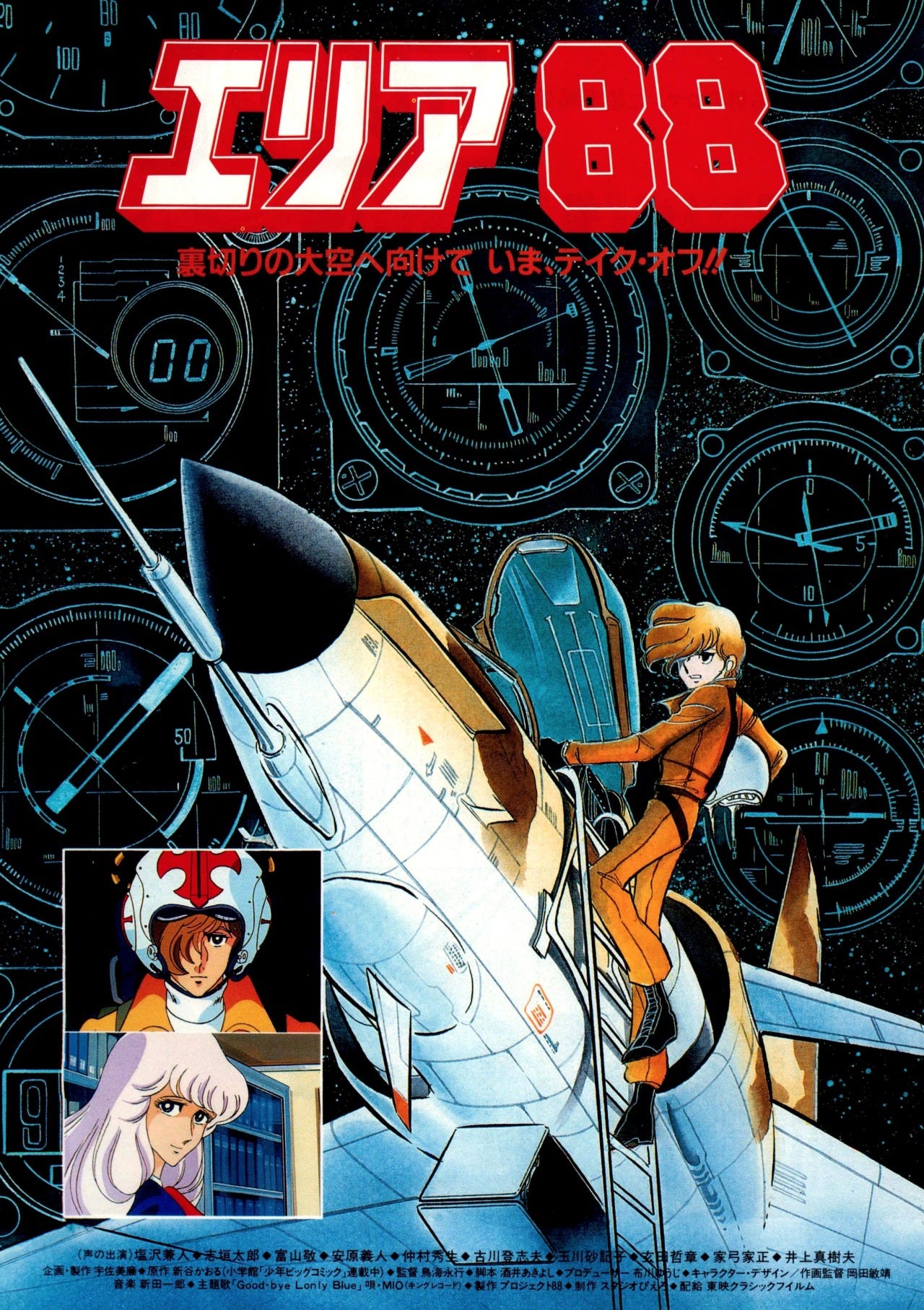
And 新谷かおる Shintani Kaoru’s character designs lack masculinity.
Later I learned why - Shintani started as a girls’ manga artist.
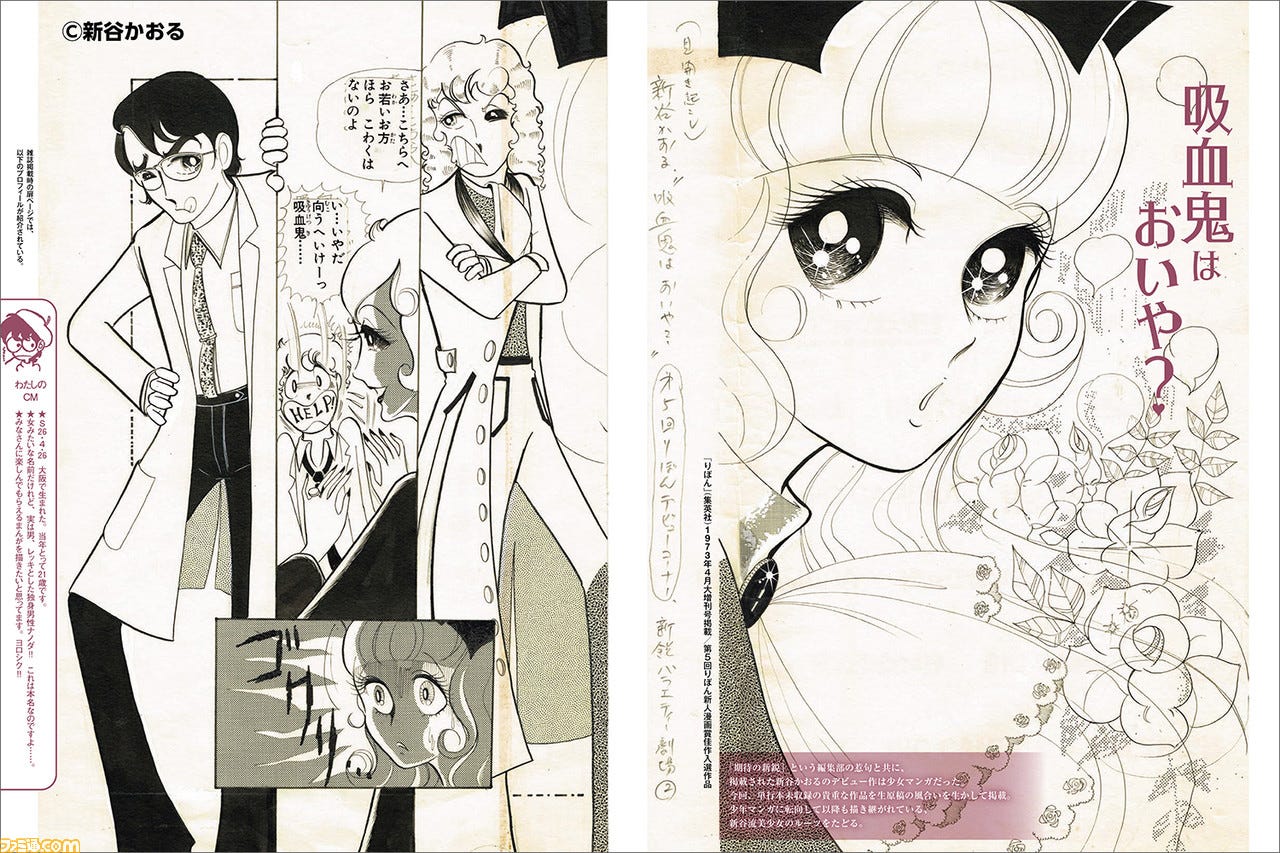
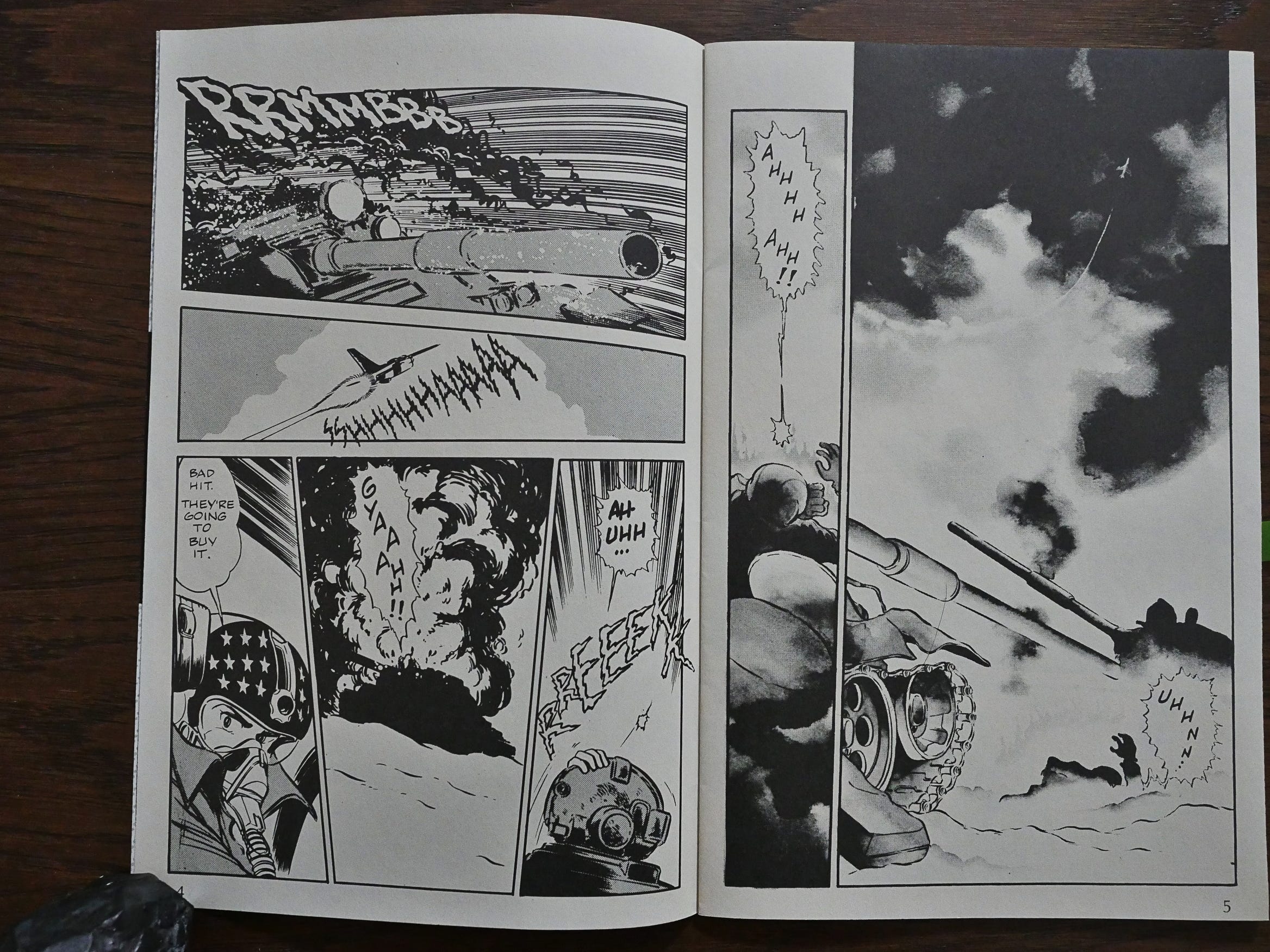
Shintani didn’t change his style much when he drew for boys. Although he added lots of hardware -
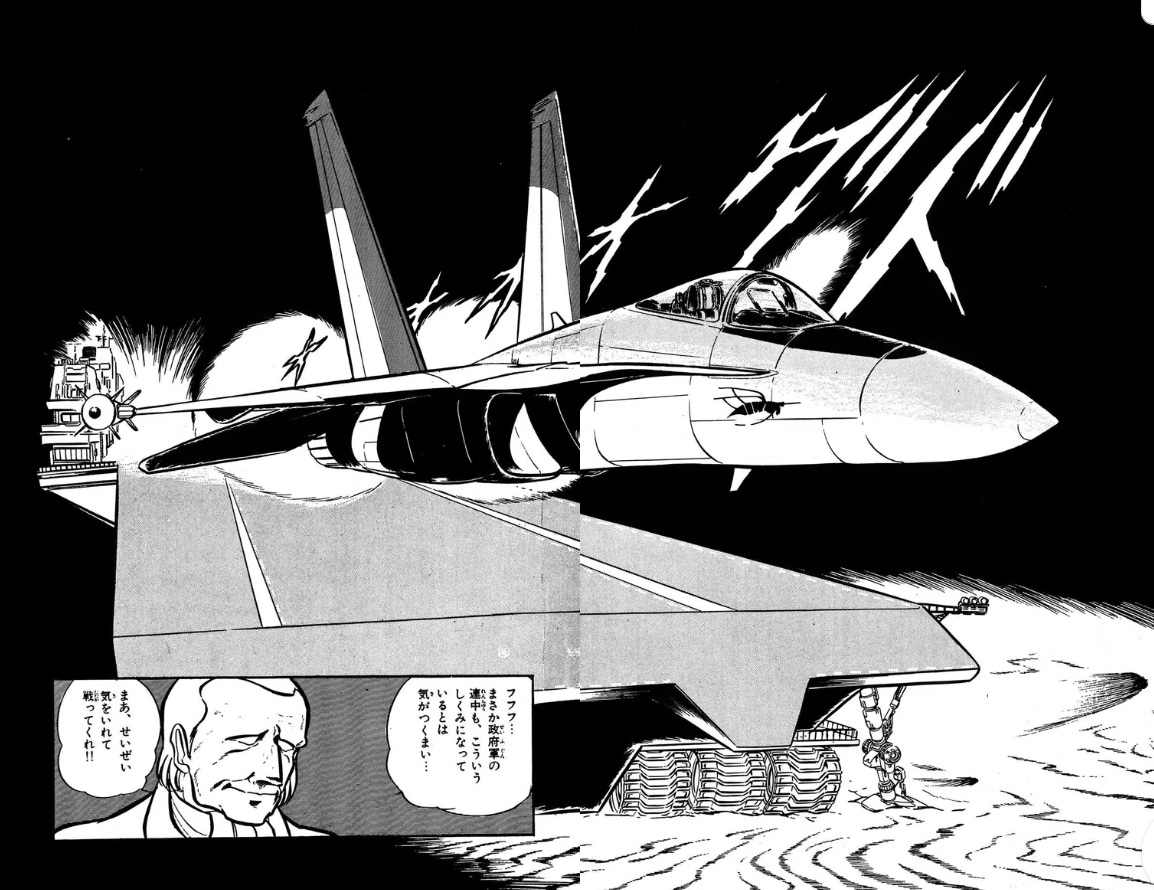
- carefully rendered by his assistants2 - the people remained the same.
But the test of a ‘good’ story for me is one that transcends my biases. I eventually rented all three volumes of the Area 88 anime by 1987 and even got the first issue of the English translation of Area 88.3
The anime has only grown on me over time, and now I consider the Area 88 trilogy to be among my all-time favorite movies. Why?
Because I am always drawn to stories that I can relate to. Stories that might not have the best craft. Miyazaki movies have apex-level craft, yet they leave me completely cold. I don’t see myself in them.
I do see myself in 風間真4 Kazama Shin, the protagonist of Area 88.
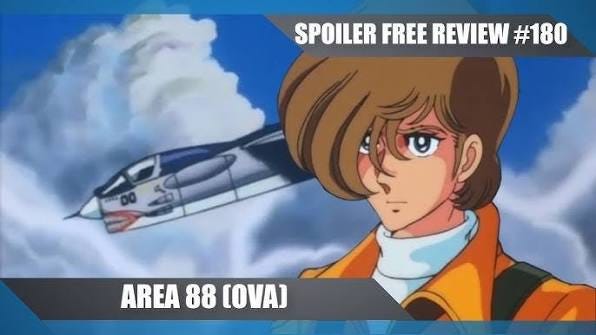
His plight was abstract to me when I first rented his movies. As a teen I was impressed by the aerial action which was completely hand-drawn. No CGI! Loved the soundtrack too. Here’s the opening of Act III: Blazing Mirage which went straight to video in Japan forty years ago today.
No one knows your loneliness5
Hard to believe that came from a studio that had previously specialized in … cute girls!? Studio Pierrot’s biggest hit was their adaptation of Takahashi Rumiko’s Urusei Yatsura which TURNS ME OFF.
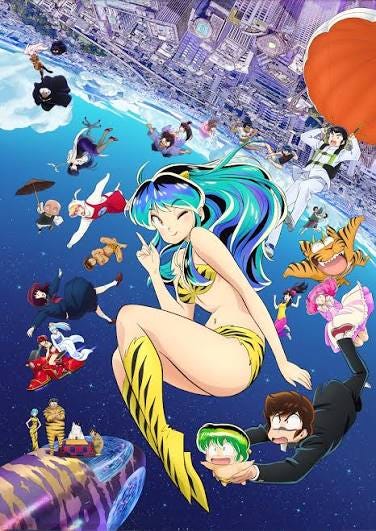
There is nothing of me in that image above.
Granted, Shin doesn’t look like me, though his voice actor is my all-time favorite, 塩沢兼人 Shiozawa Kaneto. I wish I could speak Japanese like he does.
However, the real attraction of Shin isn’t the way he looks - I never wanted to draw like Shintani - or sounds.
Shin was a mercenary flying fighters for the foreign legion stationed at Area 88 in the fictional Middle Eastern country of Aslan, named after the Turkish word for ‘lion’. He was tricked into signing up and was stuck in a foreign land where there were only four ways to leave:
survive three years of combat
pay a penalty of $1.5 million dollars
desert (and risk the death penalty)
die
As an adult, I found myself in my own Aslans, in places far from Hawaii - on the North American continent and in Europe and Asia. Like Shin, I wanted to go home. And like him, I had to make money.
Act I set up that premise.
At the end of Act II, Shin crashed during a mission and managed to walk away alive. To freedom? No … he had accidentally wandered back to Area 88!
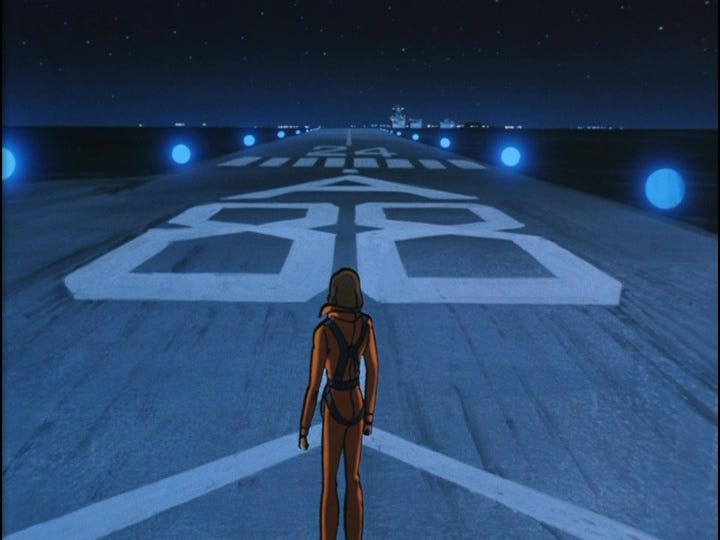
By the end of Act III, Shin was finally out of Aslan. His final mission was to escort the king of Aslan to France, where he was a free man.
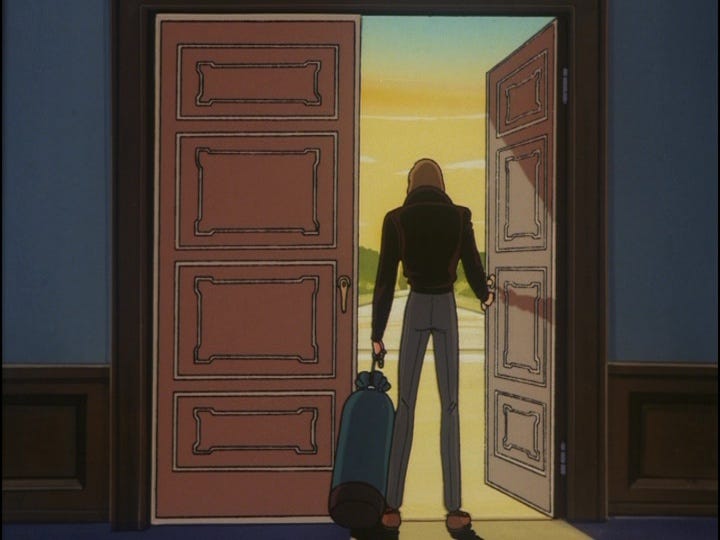
What would do you once you stepped out that door?
In Paris, Shin telephoned his girlfriend 涼子 Ryōko, whom he hadn’t spoken to, much less seen, in years. She wasn’t around to pick up the phone the first two times. When she did pick up the phone the third time …
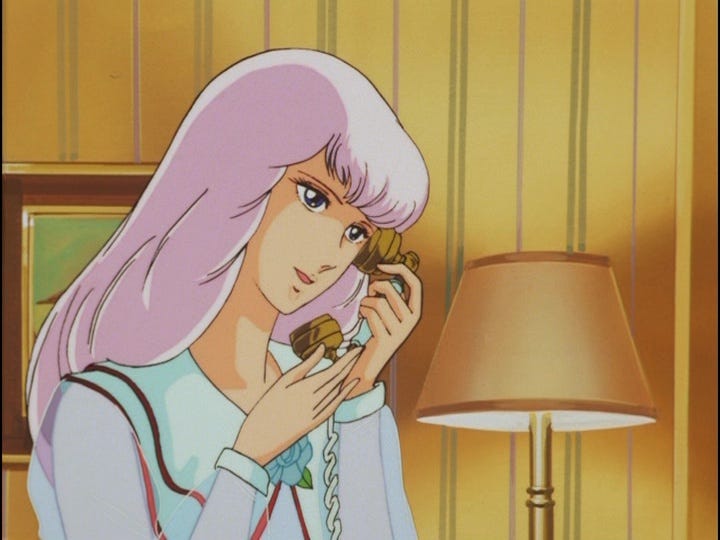
… he could only say a few words to her before hanging up.
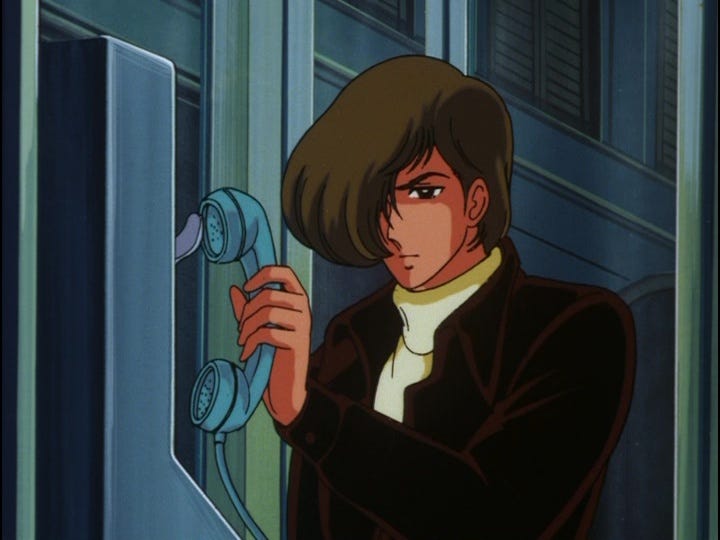
The man she had loved was no more. Only his body remained - a body that no longer belonged in Japan.
Meanwhile, back in Aslan, the civil war was about to end. The rebels had foreign backing and seemingly innumerable planes.
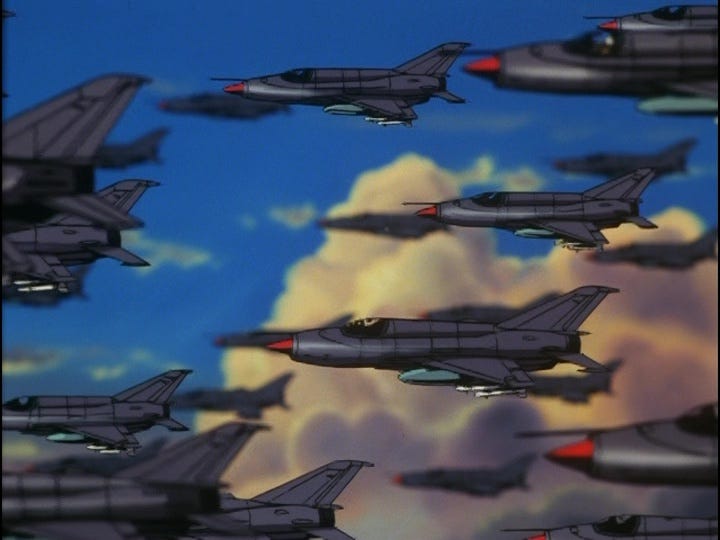
Aslan’s government, having lost its king, was about to fall - and Area 88 would unconditionally surrender. Its commander set Shin’s fellow pilots free.
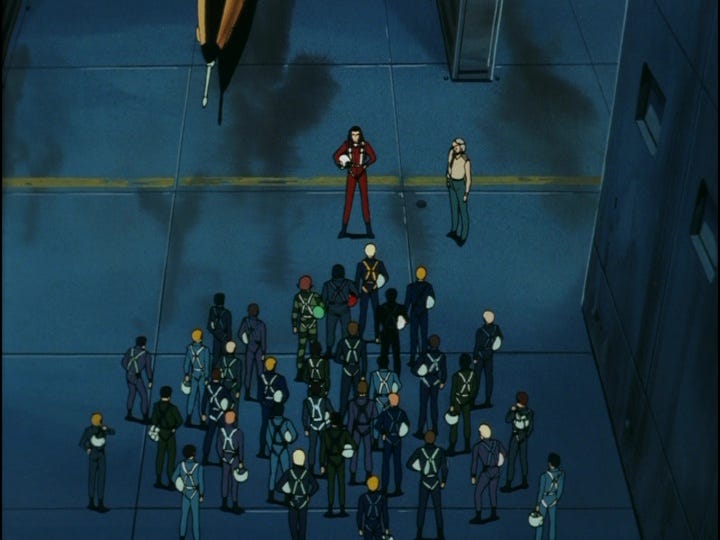
In theory. In reality, they flew toward certain death with him - “a one-way trip to hell”, as the dub put it.
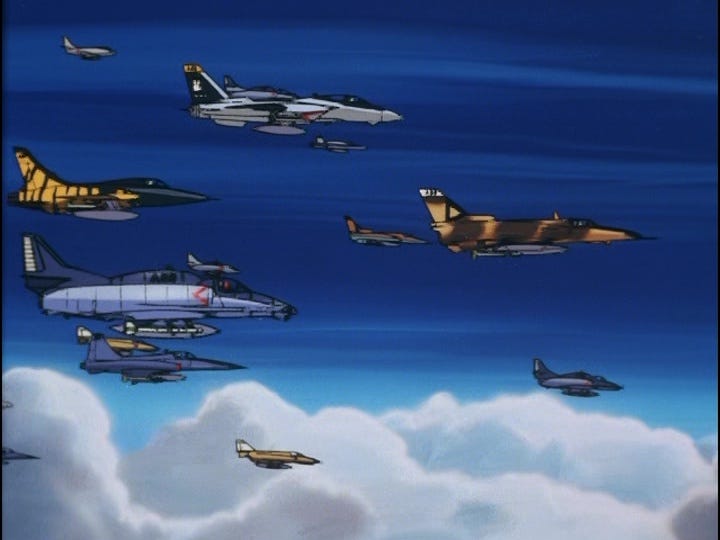
And Shin took off from France to join them …
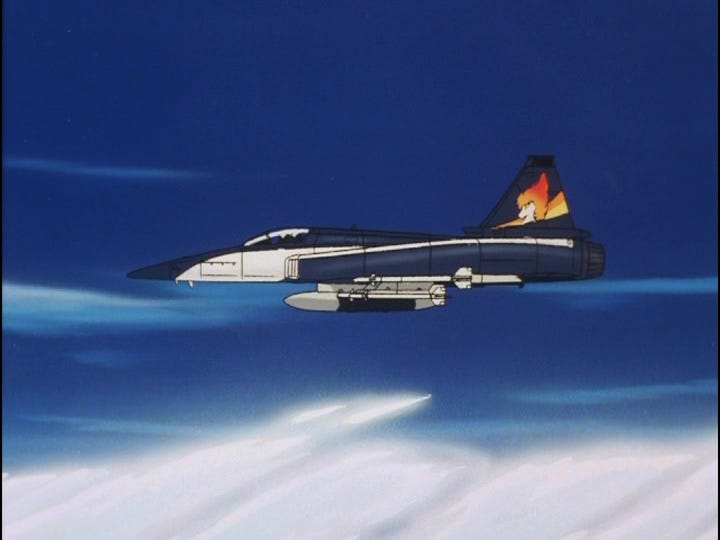
We don’t see all of them die. We don’t have to.
One couldn’t eject in time before missiles struck his plane.
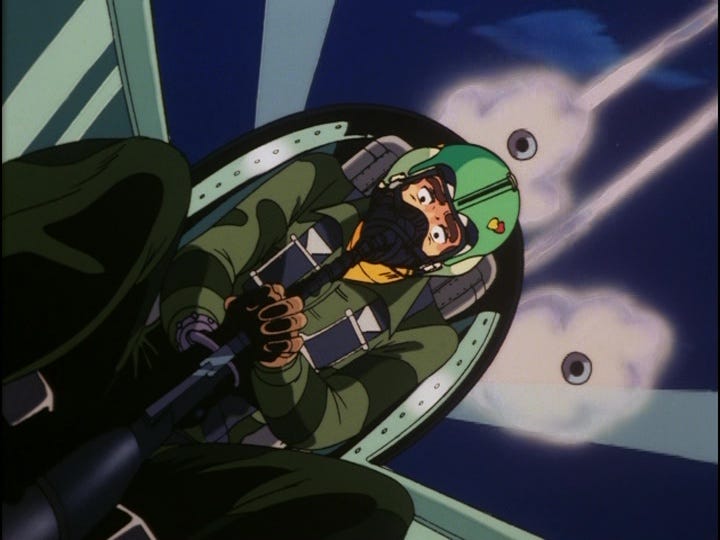
Another who had shot an ejected pilot in mid-air suffered that very fate.
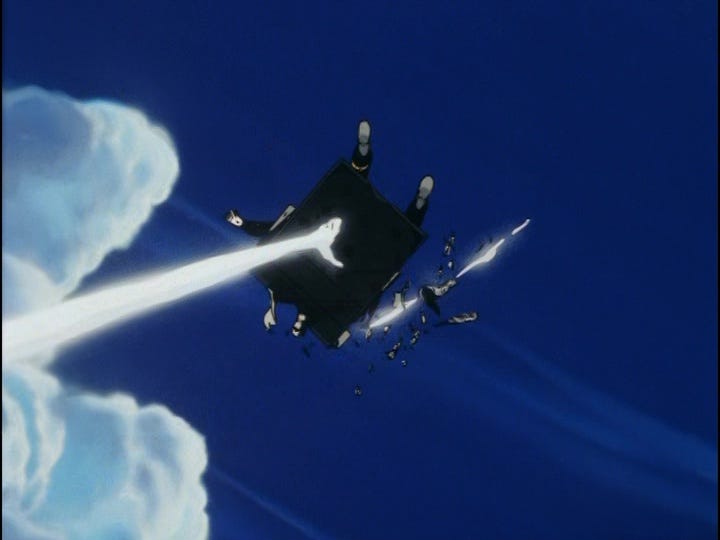
That death scene was the most played part of this YouTube video.
As the video’s title indicates, it gives away the ending, so you might want to watch it after reading my take on the ending first.
The Aslan foreign legion was reduced to just six planes. There’s a scene with all six, but they’re hard to see, so here’s a clearer scene with just four.
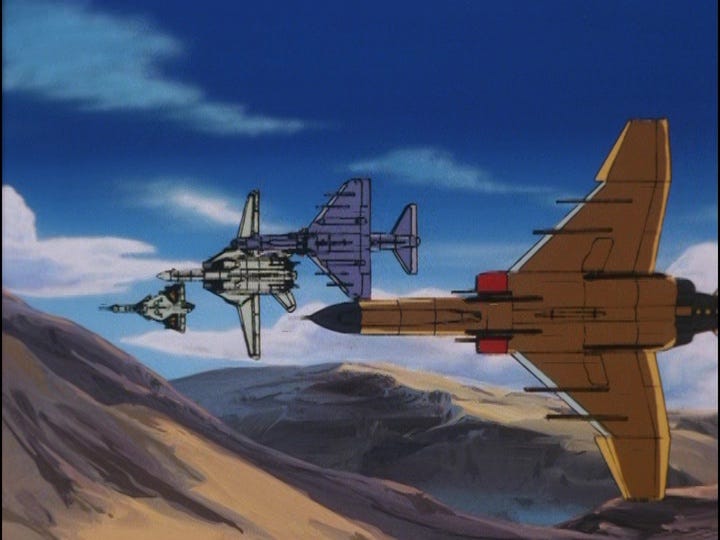
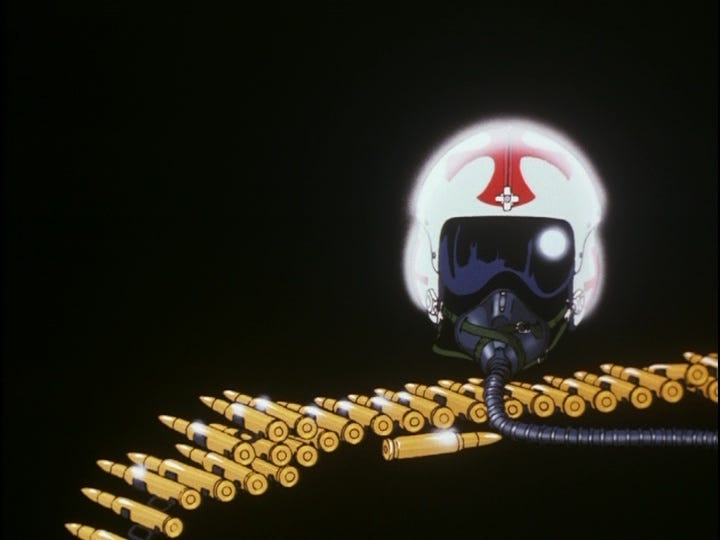
One pilot had only three or four seconds’ worth of ammo left. There was no reason to believe any of the others had much more.
This is a Japanese production. There is no American happy ending. The trajectory was straight down.
Shin knew that, yet when we see his face for the last time, he’s smiling.
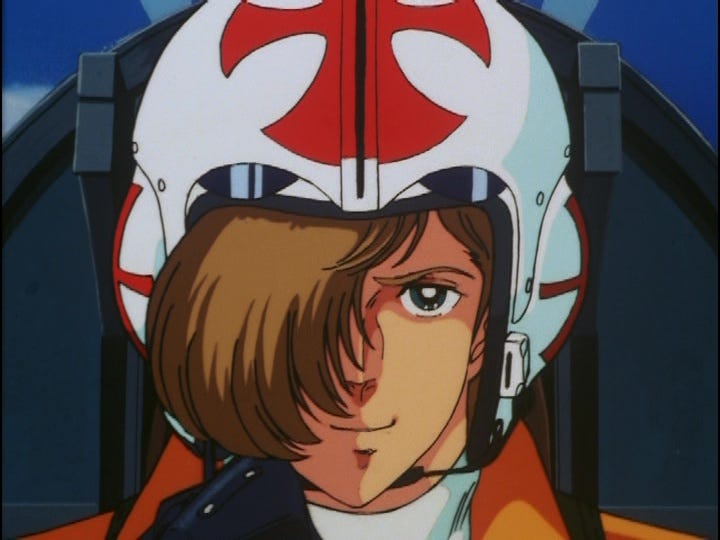
He finally came to terms with what little life he has left.6
Unlike Shin, I did come home. But there was no Ryōko waiting for me.
Will I ever come to terms with this one-party state?
For years I slowly read my way through almost every Marvel Universe story published in the sixties. But I only read one or two Sgt. Fury issues because of my aversion to real-ish war stories.
Although manga are credited to one writer/artist or one writer and one artist, the reality is that the ‘one’ artist is usually the head of a studio of assistants who are generally uncredited. The final installment of the Area 88 manga revealed the names of twenty-one assistants.
Why didn’t I keep buying the manga at the time? Because $1.50 was a lot for a black-and-white comic in 1987, and I thought the anime said it all. Many years later, I collected complete sets of the manga in both Japanese and English, and I still think the anime is the best version of the story, even though it obviously isn’t the source material.
風 Kaza- is ‘wind’, 間 ma is ‘space, interval’, and 真 Shin is ‘truth’.
The line is sung in English, but I couldn’t make out the words and didn’t know them until I saw them in the subtitles tonight!
This is not the ending of the manga, which I found disappointing. The comic version of Shin was able to return to Japan, albeit with amnesia. He got to reunite with Ryōko and presumably live happily ever after. Even the Aslan civil war was wrapped up with a bow.
Shintani was wrapping up the comic while Act III of the anime was in production. So the comic and anime endings were written separately. Act III went on sale a month after the manga concluded. I wonder how many viewers were disappointed by how the anime ending didn’t match the manga ending. Or how many felt the way I did.
Comments
Nothing yet. Say the first thing.
Sign in to join the conversation.