
I take a lot of pride in the array of different foods that I make for my kids. Part of it is educational, and part of it is just the reality of producing a weekly, family-friendly recipe for this newsletter.
Lately however, I’ve entered in and out of the dreaded, “I don’t want sauce on my noodles” phase from my 4-year-old daughter. In my self-imposed terror of having a Buttered Noodles Only kid, as well as a personal love of pasta and noodles, I have sought an array of solutions. Aglio e Olio (pasta with garlic and olive oil) is a solution, but gets old and is not exactly nutrient-dense. Surprisingly, this Pasta with Lentils has remained a hit in our home, despite this often sauce-averse stance.
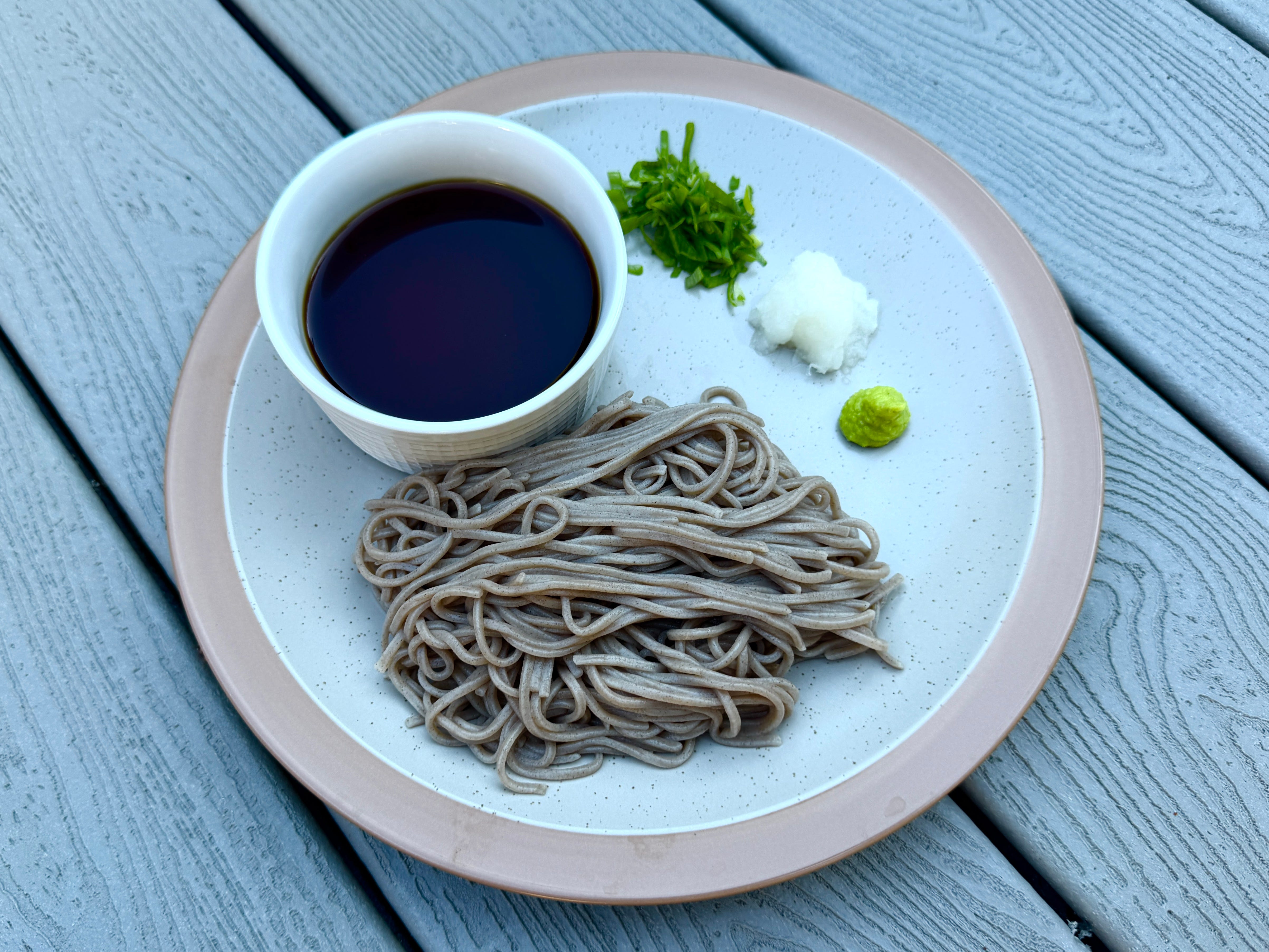
This summer though, I had a really obvious realization: Zaru Soba. This simple, classic Japanese dish is designed entirely around a plate of chilled, cooked buckwheat noodles, served with a dipping sauce on the side. I’m honestly incredibly annoyed with myself for not thinking about this sooner. Especially because I love soba, and made a chicken-and-cucumber version a few weeks back.
Zaru Soba, however, is a classic preparation that involves simply cooking the noodles, chilling them in cold water, then serving them on a bamboo mat with a soy-and-dashi dipping sauce, as well as accoutrements like grated daikon radish, shredded nori, sliced scallions, and a dollop of wasabi.
That means that this week’s “recipe” is mostly about me yelling from the rafters that Zaru Soba is the solution to my problems.
Soba are Japanese noodles are made from buckwheat — a nutrient-dense plant known for having grain-like seeds, filled with fiber, protein and minerals. It is also, despite the name, not wheat at all. Just keep in mind that while you can find 100% buckwheat soba, most of the ones out there are mixed with some wheat flour as well, which makes it cheaper, chewier, and easier to handle.
If you can find it, freshly made soba is one of the great things in the world, often found in Japan but increasingly difficult to find in the U.S. (Two of my favorite restaurants in the U.S. for it are Ichimiann in Torrance, and Kamonegi in Seattle.)
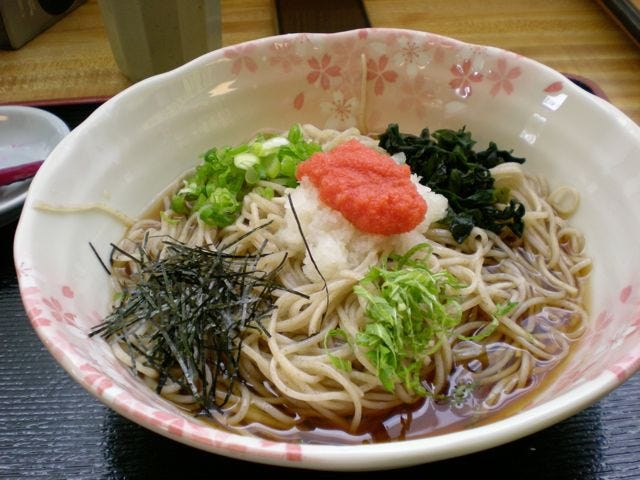
It is easy, however, to find dried soba in many supermarkets and online. On Amazon, this is a common one I have purchased and used. For a gluten-free and 100% buckwheat version, this one is great but also a lot more expensive. You can sometimes even find great frozen versions in Japanese grocery stores.
The sauce, often called mentsuyu, is commonly made with a mixture of soy sauce, dashi (a seaweed-and-dried fish stock), and mirin (a sweet cooking wine — see below for more info on mirin). As always, the good people over at Just One Cookbook have a great breakdown of Mentsuyu. To go from wanting mentsuyu to having it, I will give you three options.
The easiest way is to just buy pre-made mentsuyu and call it a day. This will have more sugar and additives, but it makes life really simple. I’ve never done this, but I’m a weirdo.
This requires minimal effort: simply combine these granules of Instant Dashi with some water and you have a delicious, extremely simple dashi. (See below.) Again, this will have sugar and MSG, but you aren’t using a ton of it.
I happen to really enjoy making dashi, and keep blocks of it on hand in my freezer. I had some at the ready this summer after making a big batch in June when everyone got sick, and it made preparing mentsuyu incredibly easy. I literally just simmered dashi, mirin and soy sauce together for 2 minutes and the sauce was done.
But it does require you to make your own dashi — the quickest stock known to man. Again, see below for more info on this.
A Quick Excerpt from an Earlier Post, About Mirin and Dashi
Mirin
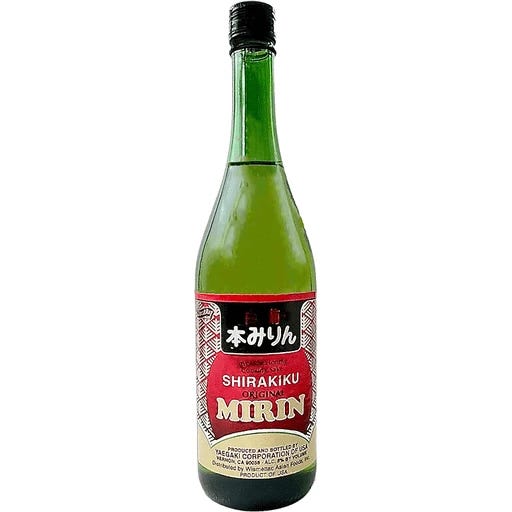
I’m just going to throw this in here as a PSA. Mirin is a classic staple of Japanese cooking, and is basically a sweet cooking wine. For example, the root of teriyaki sauce is sake, soy sauce and mirin. But what kind of mirin should you buy? I’ll refer to my colleague Rie McClenny, who has talked and written about the difference between aji-mirin (the most common form you find at grocery stores) and hon-mirin. Essentially, look at the label to see the difference. Aji-mirin is made with glucose syrup (a sugary bulking agent), while hon-mirin is a cleaner-label rice-based fermentation that has a higher alcohol percentage and purer flavor. If you can’t find hon-mirin? No big deal, you will survive. But many decent Japanese or international markets will carry it. This brand below is a common one, and the brand I use.
Dashi
This is another core of Japanese cooking. I take great pleasure in making my own dashi from scratch. It is probably the best-tasting broth in the world that you can make in under 30 minutes. (Though perhaps shrimp stock would like a word.) It is essentially just dashi kombu (dried kelp) and katsuobushi (aka dried skipjack fish flakes), infused into a delicate broth. There are a million recipes out there for it, but everything I first learned about Japanese cooking came from the legendary cookbook, Japanese Cooking: A Simple Art by Shizuo Tsuji. You don’t need to buy that book for the dashi recipe though, as there are a lot of wonderful resources out there. For a great, simple dashi recipe, check out Just One Cookbook.
But also, you know what is delicious and totally works in a pinch? Instant dashi. Does it have sugar and MSG in it? Yeah. (So does chicken bouillon powder.) But it totally works in a pinch. You can also make a vegan dashi with kelp and dried mushrooms — in fact, I did an overnight room temperature version in my first cookbook.
Wow, that was a little harsh. Feel free to scroll down. But remember, this is more of a PSA than a proper recipe. The idea is to buy soba noodles, cook them, shock them in cold water, and then put them on a plate with dipping sauce on the side — whether homemade or pre-purchased.
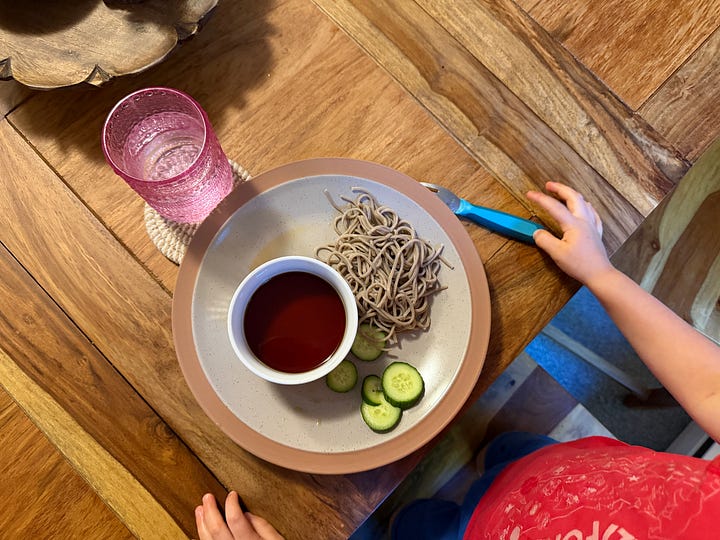
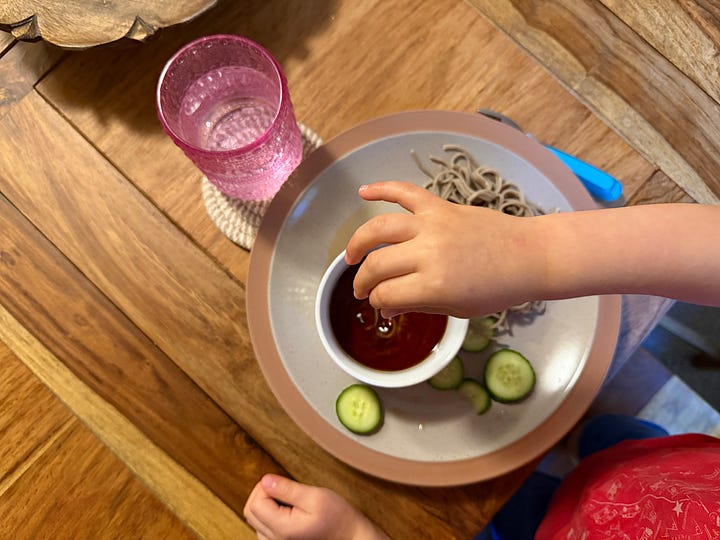
The kids loved it. They actually had it twice in the same week. It’s also fun, interactive and nutritious. My wife loved it too. We served it with a side of sliced cucumbers and boiled, frozen edamame. It will be happening again this summer for sure. Okay here’s the “recipe.”
serves 4
Comments
Nothing yet. Say the first thing.
Sign in to join the conversation.