
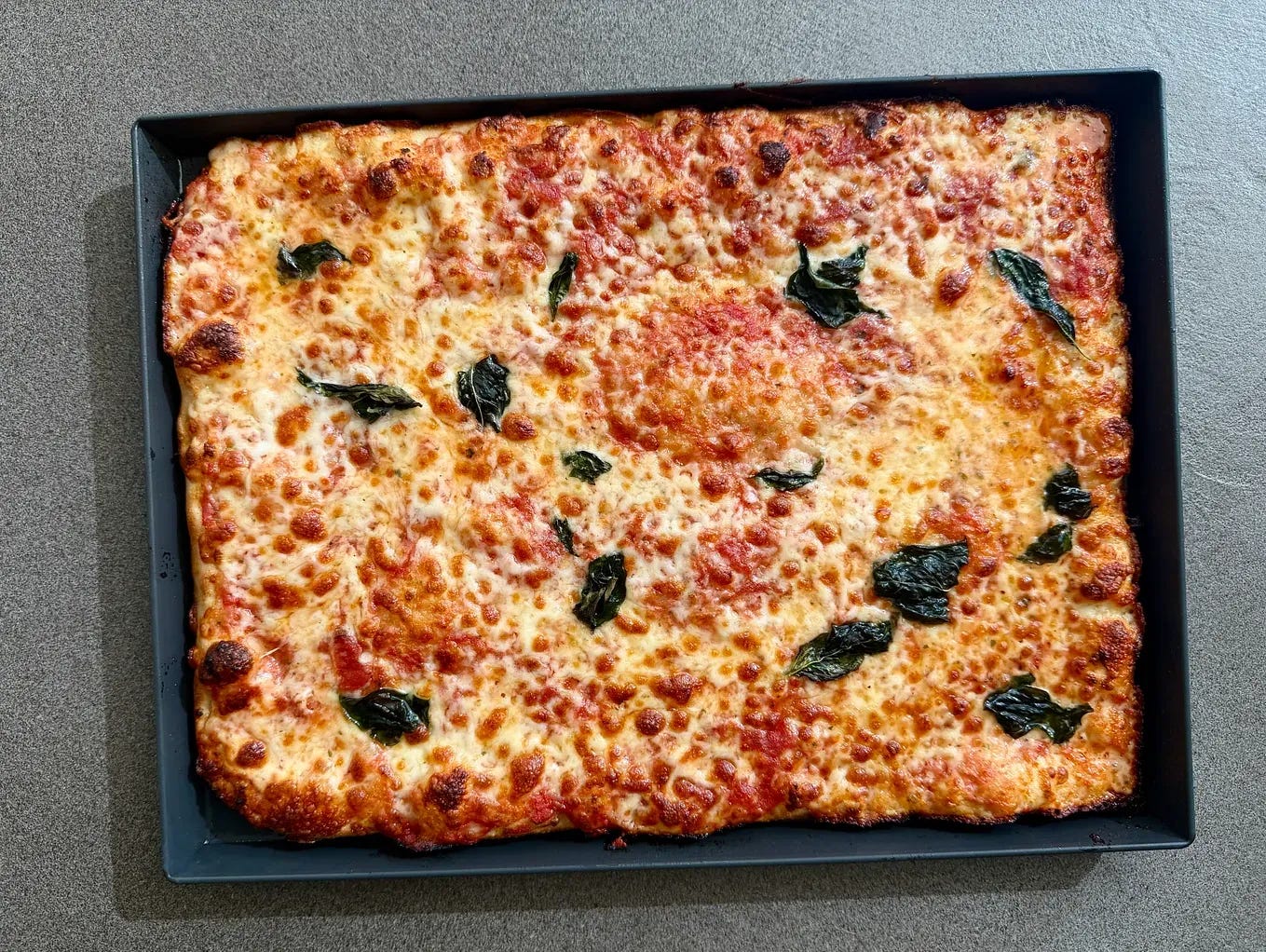
This is going to get a little bit nerdy.
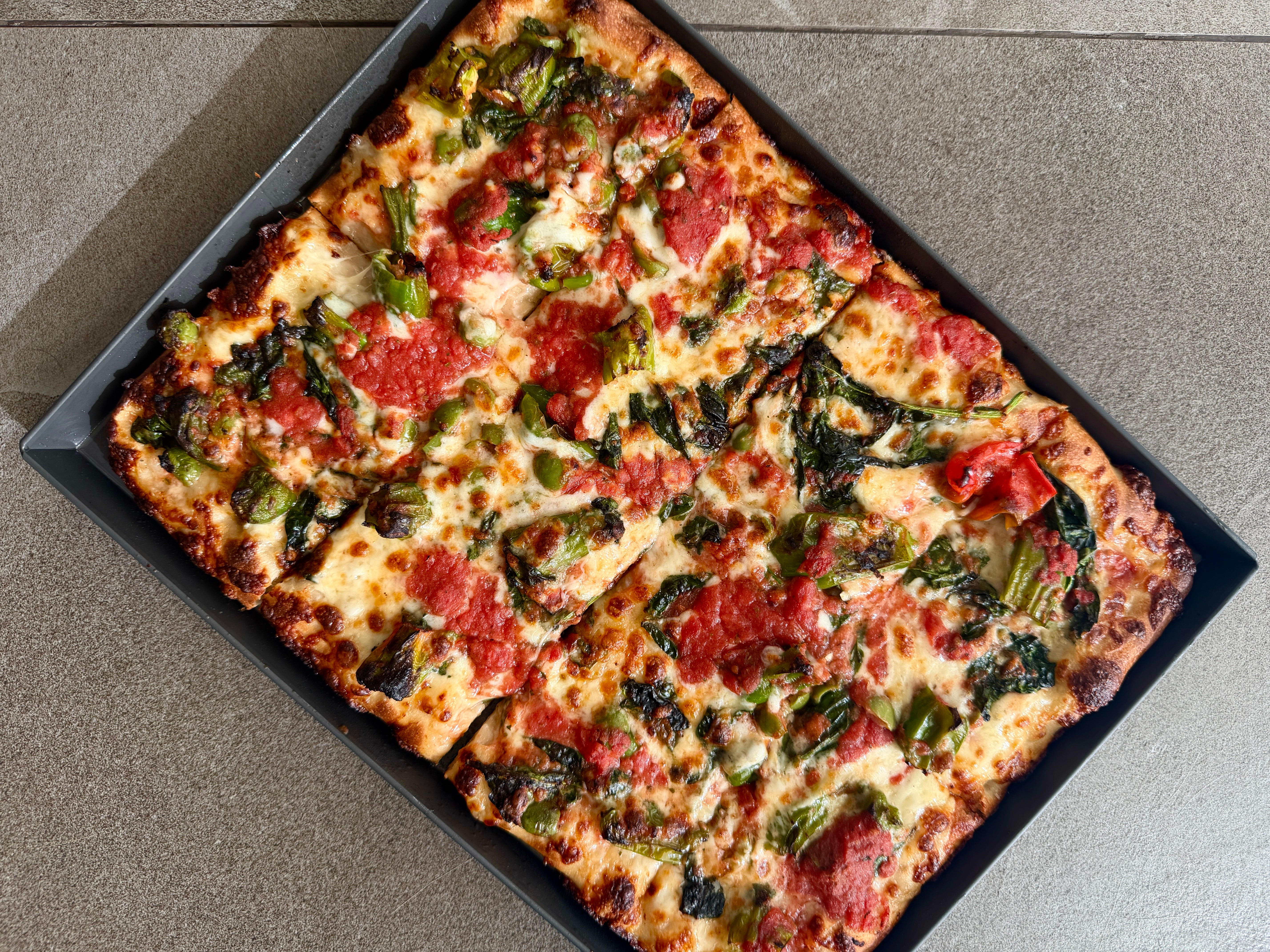
But you can also completely ignore the nerdy parts and just use the recipe at the bottom to make a really good sheet pan pizza — aka a “grandma pie.”
But first a little setup: I’ve made a lot of pizza in my life. I first learned the ropes from Frank Pinello of Best Pizza fame in Brooklyn, back when he consulted for the launch of Prime Pizza in Los Angeles (he also hosts a great pizza show with Gozney on YouTube). From there I went down my own pizza rabbit holes. But in the last couple of years, I had the tremendous honor to learn about a completely different way of making pizza while writing a cookbook (coming soon!) with the great Sarah Minnick of the legendary Lovely’s Fifty Fifty in Portland, Oregon. She was also featured on the Pizza season of Netflix’s Chef’s Table.
Today’s recipe takes a lot of the principles I learned from Frank and Sarah, and then applies them to a simpler home-cooking pizza method. The idea was to create a recipe that hold twos ideas at the same time:
Use grandma-style sheet pan pizzas to make an easier, cleaner pizza-making experience in your home kitchen.
Incorporate whole wheat flour into the dough to make it more delicious and more nutritious for both you and your family.
So that’s the idea: Brooklyn square pie methods crossed with Sarah’s whole wheat flour ideology. (Btw I asked Google, and the exact midpoint between Brooklyn and Portland is Kearney, Nebraska. This is not useful information, but I found it fun to know.)
Let’s first remove the dough-making part, which is fairly self-contained for the most part.
Once you have the dough, and you set out to make most pizza styles at home, you are looking at a lot of paraphernalia: a pizza peel, deck flour and a pizza stone (or pizza oven), as well as a lot more technique. You need to be able to shape a pizza dough with flour, lay it on peel, top it, then successfully land it on a preheated pizza stone. They aren’t hard to do — lots of people do it — but they do require some knowledge and practice.
There are also a lot of places things can go wrong: a thin spot or a tear in your dough can cause a pizza that doesn’t come off the peel clean, and falls apart on the stone. Even a well-landed pizza can tear a small hole once it’s in the oven, leaking sauce and cheese on your stone, creating billowing smoke and a big mess to clean up right in the middle of cooking. Oh and also the pizza is not going to come out at its best.
Then there’s the flour of it all: pizza-making is messy. Flour just gets around. It coasts through the air, it gets on the floor and all over the counter. It requires a proper sweep and cleaning afterward, no matter how meticulous you may be.
But when you make it in a sheet pan — it is all completely contained. Even if your pizza has thin spots and sauce breaks through the bottom, it’s no big deal. The pizza will still bake, and you won’t have to clean up any burning or smoking cheese or tomato bits out of the inside of your oven. This is, in my opinion, the best way to make pizza if you are a casual, novice pizza maker.
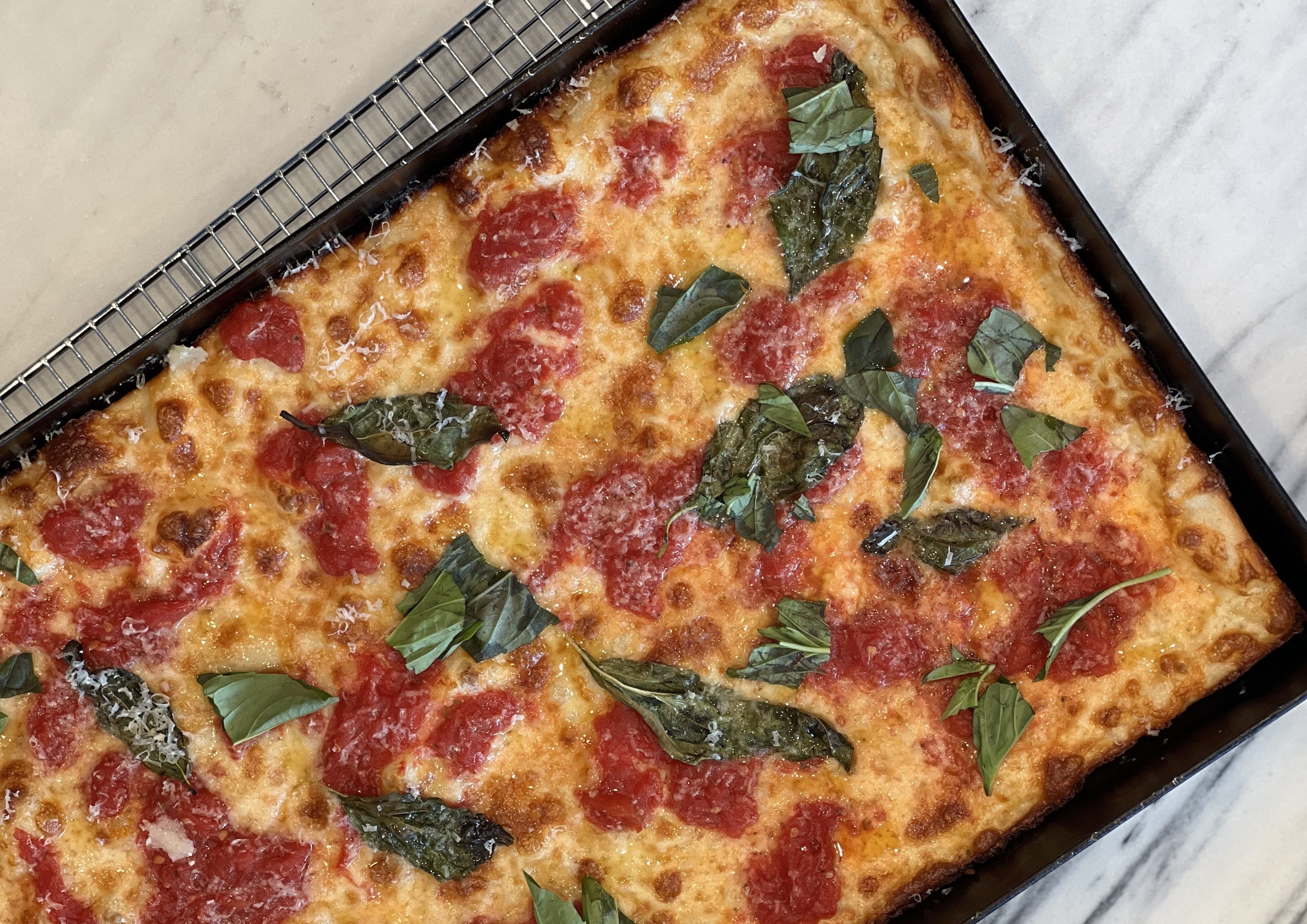
This method also requires no flour for stretching your pizza. Instead, the dough is shaped inside the pan, with just your hands and a little bit of olive oil. This is also a lower hydration dough (meaning less water in the dough), which also means it is not sticky or messy to handle.
From a basic level, whole wheat just has a lot more of the nutritious parts of the plant, which has more fiber, minerals, B vitamins and protein.
But after working with Sarah on pizza dough, I have also come to really appreciate what whole wheat does for the flavor of a pizza dough. It is more complex, nuanced, and actually tastes like something — as opposed to white flour, which basically tastes like nothing.
White flour became popular because, well, it lasts a whole lot longer. Think about it: “whole wheat” means that you use the entire grain — including the bran, germ and endosperm. When you strip away all of the parts of it that “go bad,” you are also removing all of the parts of it that have nutritional benefit and flavor.
This is a common practice in industrial food manufacturing. “What if we took corn…and then we split it off so that all the sugar becomes this syrup, and then all of the fat becomes this oil?”
But while some people love a 100% whole wheat pizza, it doesn’t taste a lot like pizza as we know it. It will be heavier, denser, and a lot harder to make into a crowd-pleaser.
This pizza is 20% whole wheat — meaning that 20% of the total weight of the flour is whole wheat, and 80% is white flour. That is a good amount of whole wheat, while creating a taste and texture that kids and adults really enjoy. It doesn’t seem like a “whole wheat pizza.”
One of the tricks is the use of a hard white wheat. I have found that this wheat, thanks to conversations with Sarah and also master baker Roxana Jullapat, can remain as a whole wheat but also still kind of function like a lighter, fluffier flour.
There are a lot of great versions of this flour out there. A good, commonly available option for this is King Arthur Golden Wheat, formerly marketed as “White Wheat.” It is no longer available in an organic option, to my knowledge, but can often be found at places like Target and the like.
But this is the one I tend to use:
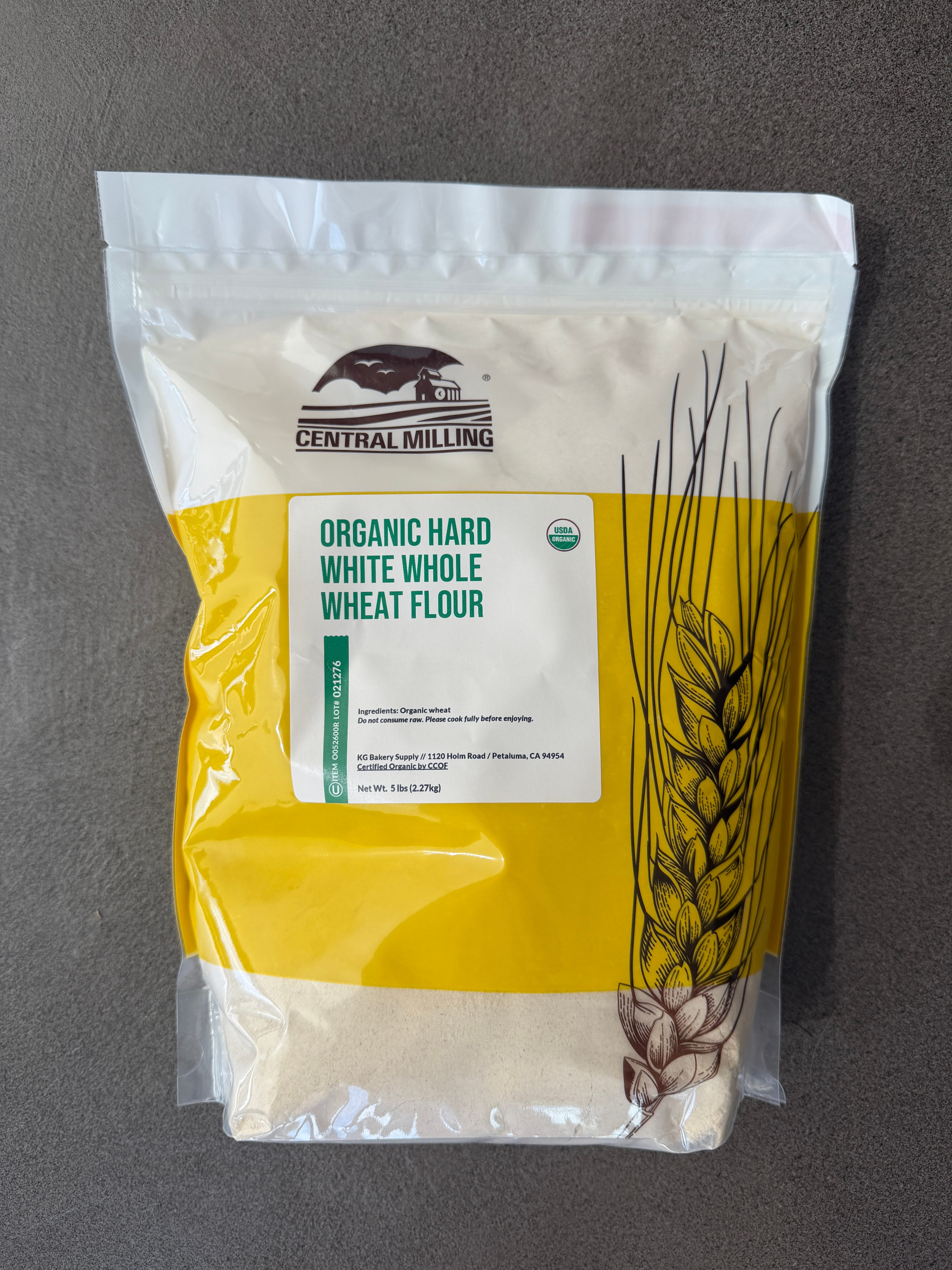
This is Organic Hard White Whole Wheat from Central Milling. I love their stuff in general — they are kind of the perfect intermediate brand that makes really high quality flours that are readily available, with lots of organic flour options, but without getting too niche and talking about small local producers. Their flours are all milled expertly in either Utah or California.
What About Italian Flour???
Fun fact: a lot of the “Italian flour” that people rave about is actually grown in the United States or Canada, then flown all the way to Italy, milled there, and flown back to America and marketed as Italian flour. So you’re really just paying extra money to pay for your flour to go on vacation in Europe.
Basically…Italians are really good at marketing their ingredients, whether or not they’re actually any better, or fully Italian.
Central Milling also makes a great Organic High Mountain Bread Flour that I use in my pizza. It is a great one to blend with all-purpose (lower protein) flours to add some strength to your bread or pizza dough. Their Organic All-Purpose Flour is great for this too, but the King Arthur Organic APF is maybe easier to find and works really well too.
For me, if you get into making pizza at home, it is worth using better flour — and organic is worth the extra money to me.
But the most important thing to avoid is bromated flour — a flour treated with a chemical called potassium bromate, which is linked to cancer and is banned the European Union, Canada, India, Brazil, China and California. Most don’t advertise it, but the ones that don’t use it often will tell you.
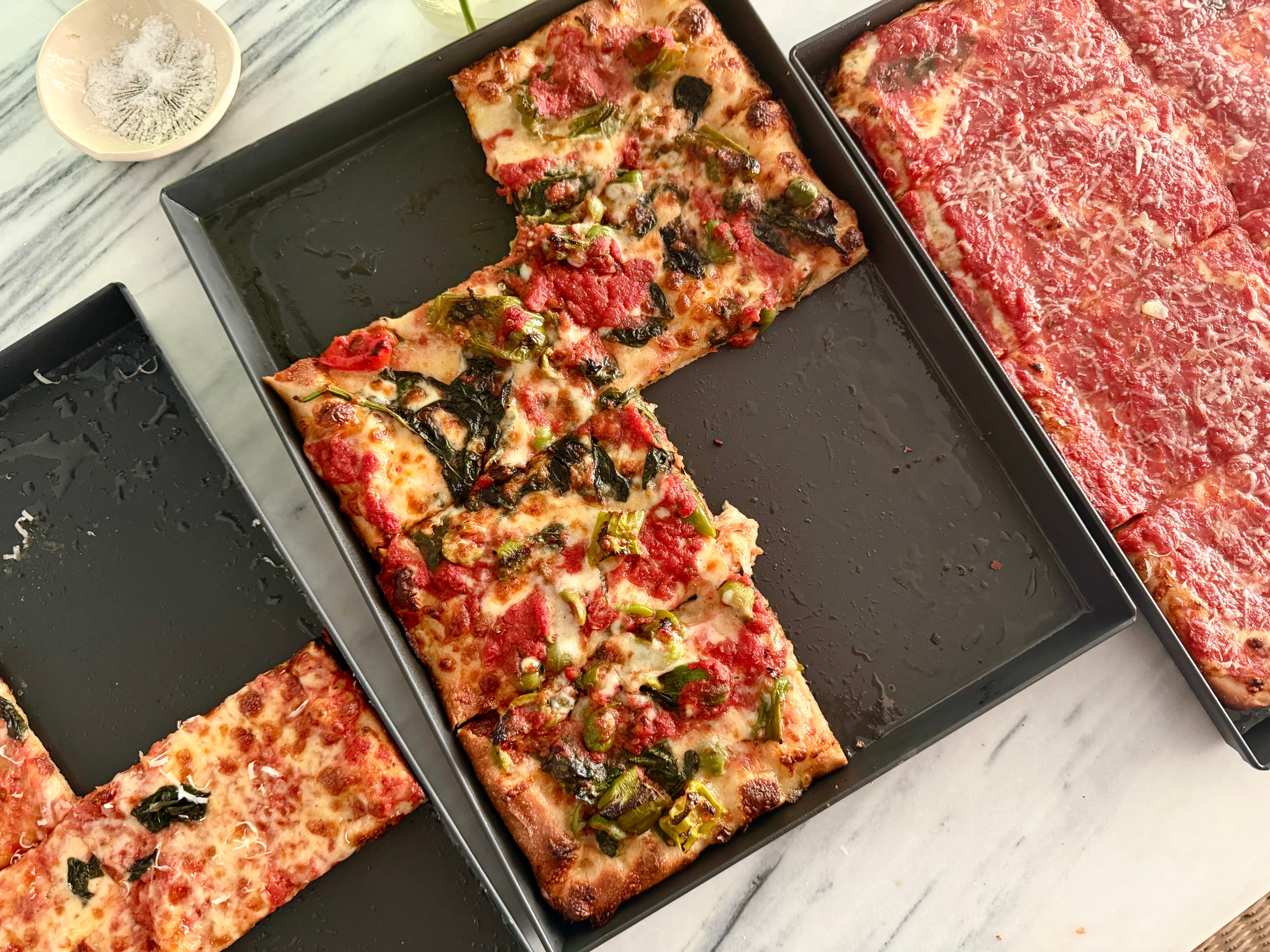
Sure.
But a few last things on equipment:
If you have a stand mixer with a dough hook, this will be a lot easier. If not you’ll need to mix the dough by hand — and since it’s a pretty stiff dough, it will give you a nice workout.
You can absolutely use regular-old sheet pans for this. But if you get into this, I really enjoy baking in these Lloyd Pans — a great, durable option for pizza pans. Your pizza will stick less and caramelize better. They get used in tons of great pizzerias across the country, and will last a super long time.
A digital scale is your friend. I’ll give the cup weights too, but it is just way less accurate and a lot harder. I highly recommend using a scale.
You can place your dough on a sheet pan and put it in the refrigerator to “cold ferment,” but a dough box with a lid that fits in your fridge will make your life way easier.
makes 3 pizzas — serving about 10-12 people
Comments
Nothing yet. Say the first thing.
Sign in to join the conversation.