
Move Your Body, Change Your Brain

I’ve done a lot of cross country running – across the Netherlands, the length of Wales, around Ireland & Northern Ireland, the length of Malta, around Gozo, the length of Scotland, and that little shuffle in 2023 across Australia
And I’ve also had days when lacing up my shoes felt harder than all of that.
But here’s the wild part: every time I move, my brain thanks me for it.
And science is backing that up—big time. Especially when it comes to a little brain chemical called BDNF (Brain-Derived Neurotrophic Factor), which might just be the fairy dust behind feeling more focused, resilient, and emotionally strong.
So, what is BDNF?
And how do we get more of it?
Let’s take a run through the research.
🧠 What Is BDNF?
BDNF is like a personal trainer for your brain cells. It helps them grow, repair, and stay sharp—especially the bits that help with:
Learning
Memory
Mood regulation
Protecting your brain as you age
Think of it as miracle-grow for your mind. And the best way to increase BDNF?
Move your body.
The Research Rundown (made simple)
One study (Reycraft et al., 2020) had young men try four types of exercise. The winner for BDNF boost? Sprint Interval Training (SIT)—short bursts of intense effort. BDNF did shoot up… but only for 30 minutes.
Now, while that’s interesting, the study was done on elite young men—not exactly the crew I’ve spent my life working with. Since I started in the fitness world at 19, my mission has always been to encourage, inspire, and help everyday people fall in love with movement.
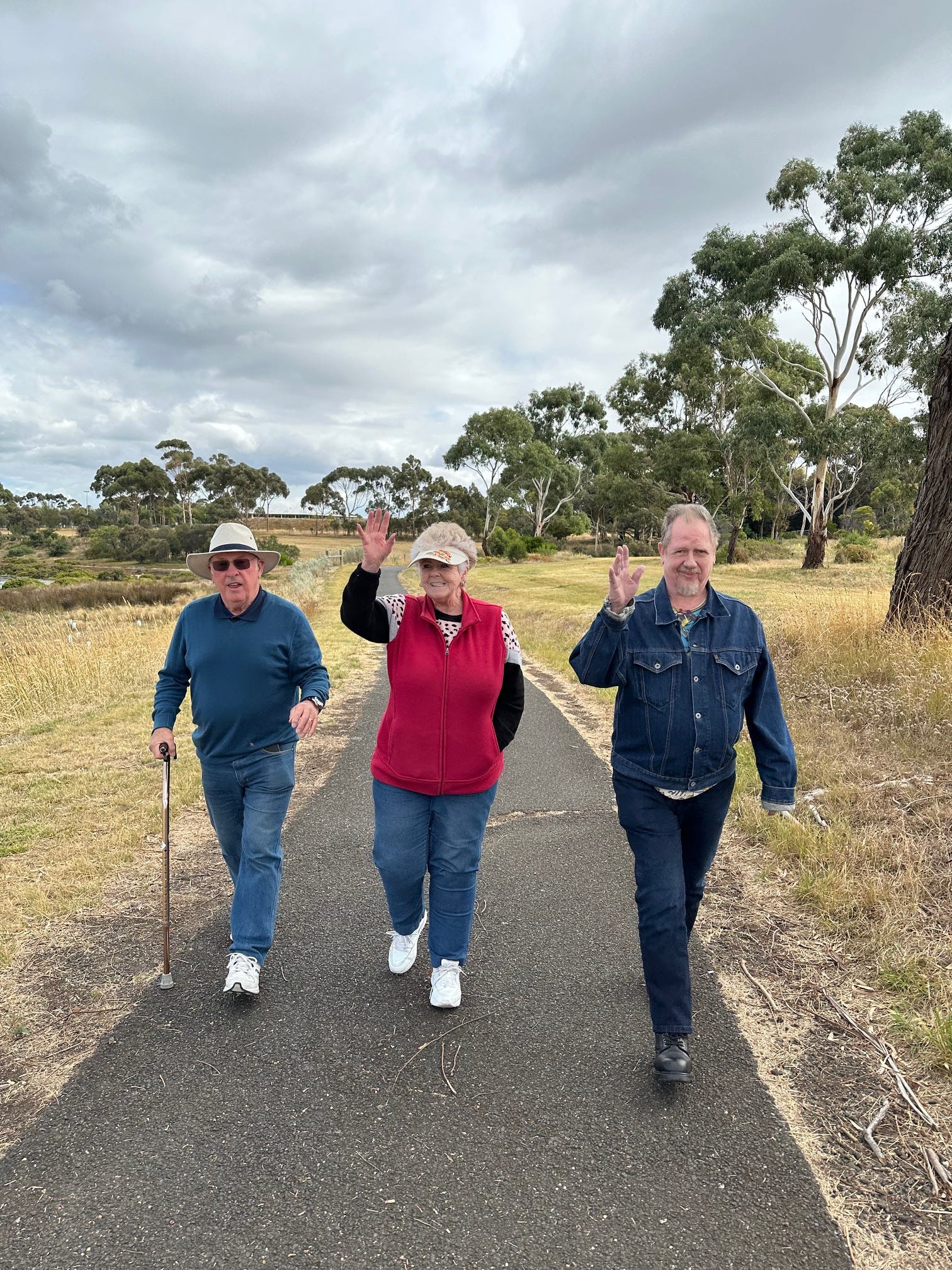
So when I read that study, I couldn’t help but think: how would this help my parents - who are in their 80s - feel motivated to move for their brain and body? One Sprint Interval Training session and I’d more than likely kill them - and I ain’t quite ready to do that … yet.


Thankfully, the research doesn’t stop there…
A broader review (Augusto-Oliveira et al., 2023) looked at studies in both humans and animals. The big message? It’s not about finding one “perfect” workout. Things like age, gender, health status, and even hormone levels all play a role in how your brain responds to exercise.
And in some cases (Hebisz et al., 2019), super intense training might actually divert BDNF to muscle repair rather than brain benefits—especially if your body’s not used to that level of effort.
🧓 For older adults, people with cognitive challenges, or anyone managing a health condition, moderate aerobic exercise—like walking, easy jogging, or dancing in the living room—can still do incredible things for brain health. No beast mode necessary.
💡 So… What Does This Mean for You?
It means that chasing your extraordinary doesn’t require smashing yourself at 90% effort. It means moving regularly—however that looks for you—can literally grow and protect your brain.
And whether you’re walking, jogging, running, or dancing in your kitchen, you're increasing the BDNF that supports your brain to:
Stay sharp
Regulate your emotions
Reduce cognitive decline as you age
My Top 5 Tips to Boost Your Brain with Movement
🟡 Move Often, Not Just Hard
You don’t need to go flat-out. Moderate, consistent movement still works wonders—especially long-term.
🟢 Mix It Up
Sprint intervals, brisk walks, strength training, trail runs—variety keeps your brain (and motivation) fresh.
🔵 Make It Joyful
Mood matters. If your movement feels good, you’re more likely to do it again. And that’s when BDNF really starts working its magic.
🟣 Rest Is Brain Training Too
Recovery days help BDNF do its job. Sleep well, stretch, and honour the down days.
🔴 Listen to Your Body
You don’t need someone else’s plan. You need your pace, your rhythm, your adventure.
🟡 Keep them moving too
I know I said top 5 tips, but I really do like to over-deliver and this is one of my favourites - take your folks out for walkies.
Final Thought
There’s no one-size-fits-all when it comes to training your brain with exercise. But this much we know: movement matters. And the more we do it - on our terms, in our way - the more our brains and bodies come alive.
So go chase your extraordinary. Your brain’s cheering you on. And so am I.
Thanks for reading
Nikki x
And for my fellow brain-science-geeks here’s the sciencey bit that applies to my lived bits.
Augusto-Oliveira, M., Arrifano, G. P., Leal-Nazaré, C. G., Santos-Sacramento, L., Lopes-Araújo, A., Royes, L. F. F., & Crespo-Lopez, M. E. (2023). Exercise reshapes the brain: Molecular, cellular, and structural changes associated with cognitive improvements. Molecular Neurobiology, 60(12), 6950–6974. https://doi.org/10.1007/s12035-023-03366-x
Hebisz, R., Hebisz, P., Borkowski, L., Zatoń, M., & Wierzba, T. H. (2019). The effect of high-intensity cycling on BDNF concentration in trained men. Journal of Sports Science & Medicine, 18(4), 689–695.
Reycraft, J., Islam, H., Townsend, L., Hayward, G., Hazell, T. J., & Macpherson, R. E. K. (2020). Exercise intensity and recovery on circulating brain-derived neurotrophic factor. Medicine & Science in Sports & Exercise, 52(5), 1210–1217. https://doi.org/10.1249/MSS.0000000000002221
Like this post?
Subscribe to Chasing Extraordinary for more stories, science, and sweaty inspiration.
RUNNING ESCAPADES AND OTHER LIFE UPDATES 🏃♀️✨
Don’t Forget…
📲 CONNECT – Come say hi on Instagram or Strava.
Always up for a chat, a kudos, or a sweaty selfie.
🚀 CHASE YOUR EXTRAORDINARY – Launching June 2025!
Pop your name on our mailing list — no pressure to buy, just a friendly “keep me posted” vibe.
No posts
Comments
Nothing yet. Say the first thing.
Sign in to join the conversation.