
Hey friends, Nijay here. I am excited to welcome Dr. Jennifer Matheny as a guest writer today for Engaging Scripture. Matheny teaches OT at Truett Seminary/Baylor University. She has a brand new book that she wants to share about. Give her a warm welcome and—make sure to check out her excellent scholarship!
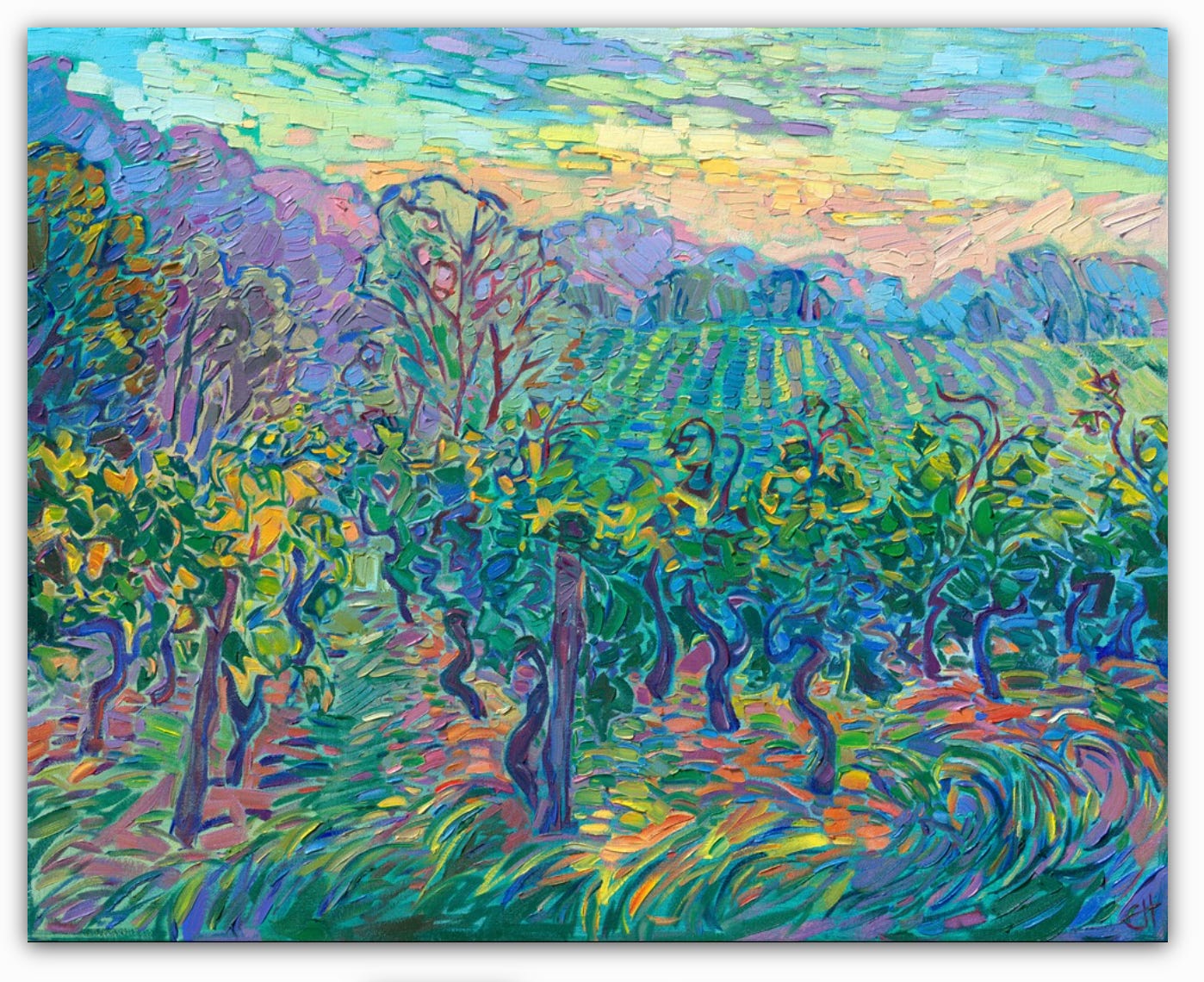
As someone who grew up in Napa Valley, I had the privilege of being surrounded by vineyards and wineries. As a child, I didn’t always appreciate it. While my parents enjoyed wine tastings, I often found myself waiting around, snacking on crackers and wishing we could move on to something, anything, more exciting. Over time, though, I developed a deep appreciation for the art and science of winemaking and for the many factors that shape every bottle of wine. One of the things I find most fascinating is how geography, climate, history, and even the community of people all leave their mark on a vintage. Anyone familiar with California wines can imagine the impact that wildfire seasons have had on recent harvests, and on the wines that could be saved. The story of a wine is never just about the grapes; it is also about the conditions in which those grapes were grown.
In the wine industry, there is a French term, terroir (pronounced tehr-wahr), that describes this idea. The word is difficult to translate but it refers to a wine’s “sense of place.” Terroir includes tangible elements such as soil composition, climate, elevation, and exposure to sunlight. Some even suggest that it includes the people who cultivate the vines and care for the land. In other words, every bottle of wine bears the imprint of its environment and the relationships that helped bring it into being. What I love about this image is how well it connects to our understanding of the image of God. Just as terroir contributes to the unique character of a wine, the many factors that shape our lives contribute to who we become. Our families, communities, cultures, experiences, and even the particular seasons of life we have lived through all leave their mark on us.
The wildfire years in California changed the flavor of some wines. Some Cabernet Sauvignons were described as having metallic or smoky notes, while certain Pinot Noirs carried an ashy aftertaste. Others noted a burnt-rubber aroma in some Chardonnay wines. In much the same way, difficult seasons, losses, and challenges shape us. They leave their mark, adding unexpected notes and flavors to the stories we carry and tell. Yet, like a skilled winemaker working with a difficult harvest, God continues to bring beauty from complex seasons and situations.
This is one reason I find ḥesed so meaningful. Because ḥesed is deeply relational and difficult to define like terroir, it is expressed through unique people in particular places and moments. Each of us is a unique image bearer, rooted in a specific time, place, and community. We bring something distinctive to every relationship and interaction. Like different grape varietals coming together to create a remarkable bottle of wine, each person contributes something beautiful and irreplaceable to the relationships and communities they inhabit.
Some words resist definition and ḥesed is one of them. In a way, ḥesed reminds me of terroir in wine. Ask a winemaker to define terroir, and you’ll likely get a thoughtful explanation rather than a simple definition. The same is true for ḥesed. Scholars have devoted paragraphs to defining the term, yet no single English word captures its meaning. One scholar suggested that it is easier to describe the contexts in which ḥesed appears than to define it directly. I see this difficulty not as a weakness, but as a strength.
Most scholars agree that ḥesed is fundamentally relational. Rather than searching for a perfect one-word equivalent (e.g., love, kindness, loyal love), I suggest that ḥesed is best understood through stories. After all, the Hebrew Bible does not merely define ḥesed, it shows us what it looks like through story.
The noun ḥesed appears more than 250 times in the Old Testament, with nearly half of those occurrences found in the Psalms. It is a unique word in the Old Testament, lacking a cognate in other Semitic languages. Earlier scholarship often linked ḥesed primarily to covenant relationships, but the term encompasses far more than covenant obligation. In the Hebrew Bible, ḥesed describes God’s very character, most notably in Exodus 34:6–7, a passage described as the “grace formula” (Gnadenformal).
Yet ḥesed is not confined to God alone. It can be seen in God’s actions toward humanity, in human relationships with one another (in action and disposition), and even within creation. Like terroir, which shapes each vintage of wine in distinctive ways, ḥesed takes on unique expressions within particular people, relationships, and communities. Because human beings bear the image of God, the possibilities for ḥesed are endlessly creative and surprising. This conviction shapes my recent book on ḥesed.
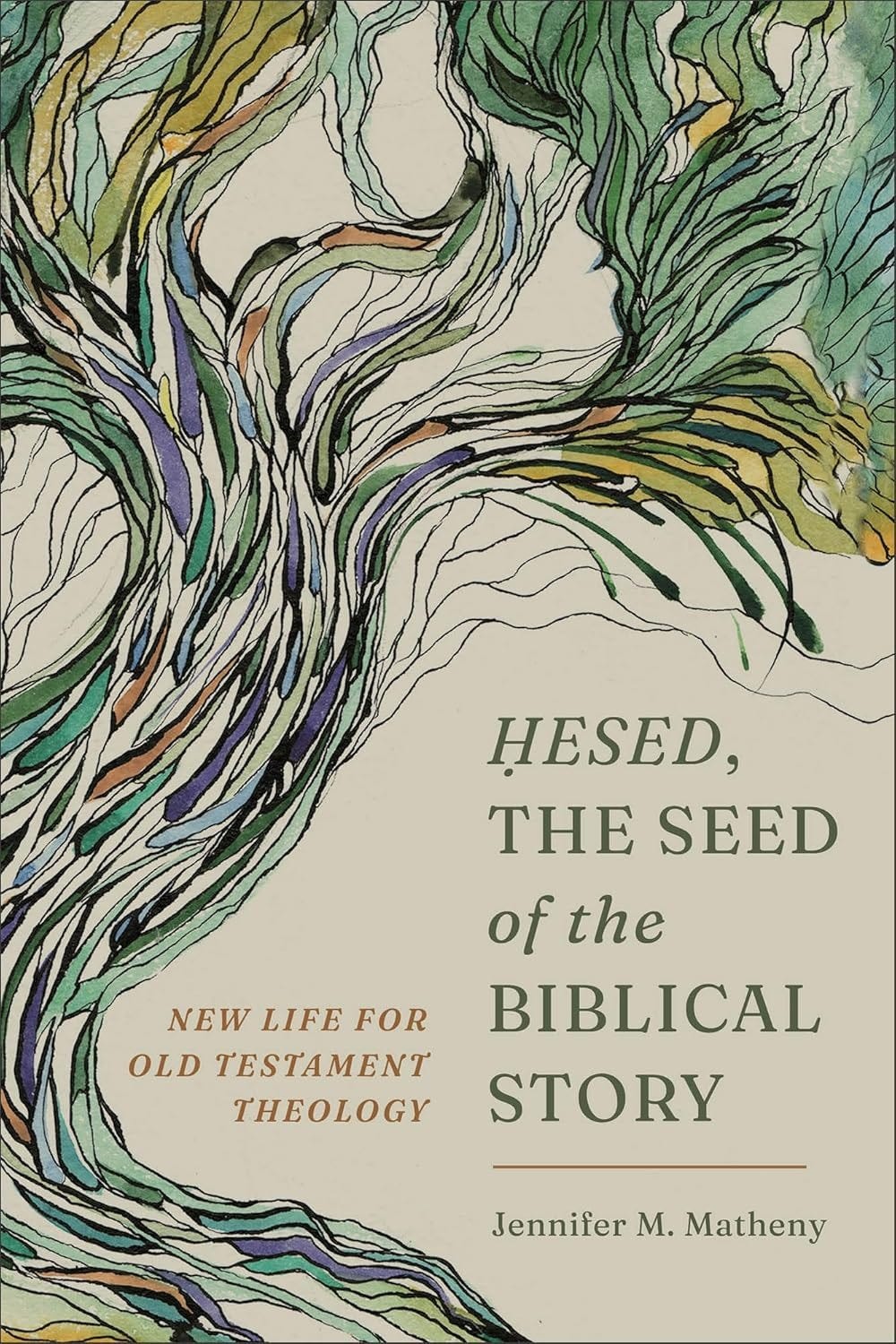
Rather than building my study around a static concept, I use the image of a seed (the German word Kern means both “seed” and “core”) as the guiding image. A seed captures something essential about ḥesed: it contains potential, growth, and transformation. Seeds may lie dormant for a season and they may sprout unexpectedly. Seeds may flourish in abundance or struggle in difficult soil. So too with ḥesed. Many metaphors employed in Old Testament theology felt too fixed or rigid for what I saw unfolding in the biblical text. A seed, by contrast, suggests movement, interconnectedness, and life. It points outward, to relationships, communities, and creation itself.
This book unfolds in six chapters. The first two situate the project within the broader field of Old Testament theology and explore the history of scholarship on ḥesed. I examine the many attempts to define the term and then offer my own description to capture its relational breadth and the ethics of responsibility.
Ḥesed: the loyal loving-kindness that originates in God’s nature, embodying both answerability and possibility through anticipated and creative relational endeavors and expressions among God, humanity, and creation.
The remaining chapters trace ḥesed through the major sections of the Old Testament. These chapters function as case studies, examining how ḥesed is embodied in particular stories and relationships. In the Torah, readers will encounter familiar figures such as Jacob and Joseph, but also unexpected agents of ḥesed, including Pharaoh’s daughter and the midwives Shiphrah and Puah.
In the Prophets—Former Prophets (Joshua, Judges, Samuel and Kings) and Latter Prophets (Isaiah, Jeremiah, Ezekiel and the twelve minor prophets)—I explore households remembered for ḥesed as well as those marked by its absence or neglect. Gideon’s family and David’s family, for example, provide striking contrasts in the ways ḥesed shapes, or fails to shape, future generations. We can learn from failure as well as success!
One of my favorite explorations compares the stories of Joshua and Judges, particularly the tension between ḥerem and ḥesed. The spy narratives in these books reveal surprising intersections between hospitality, loyalty, and communal identity. And then there are the Psalms! Because ḥesed appears 127 times in the Psalter, it deserves a chapter of its own. The Psalms preserve some of the richest reflections on God’s ḥesed, providing language for praise, lament, hope, repentance, and communal worship.
The Writings explore ḥesed through several case studies, including Daniel and Esther, but one of the most significant pairings is Judges 19–21 and Ruth. These texts are often read together because they stand in such stark contrast. Judges 19–21 is a narrative with much gendered violence and eerie silence of women. Ruth, by contrast, centers women who act, speak, and shape the future. In fact, Ruth contains more female dialogue than any other book in the Old Testament. Reading these texts side by side allows us to see not only the absence of hesed but also its flourishing. Sometimes we learn what ḥesed is by witnessing its neglect; at other times, we see its power through relationships marked by loyalty and creative response to human need.
The final chapter turns to the Psalms, where ḥesed appears more frequently than anywhere else in the Old Testament, 127 times! There I focus on examining how it functions within Israel’s worship. My study suggests that ḥesed serves at least three important roles in the Psalms. First, it is the basis of relationship between God and God’s people. Second, it functions as a formational liturgy, particularly for communities navigating loss, displacement, and exile. Third, ḥesed consistently points toward the future. The Psalms are not simply songs of remembrance; they are songs of becoming. This insight brings me back to the heart of the project. Context and ambiguity are not obstacles to understanding ḥesed, they are essential to it.
Because ḥesed has such a wide semantic range, I see its flexibility as one of its greatest strengths. Rather than forcing the term into a single definition or propositional statement, the biblical writers invite us to encounter it through stories, relationships, and acts of faithfulness. The meaning of ḥesed emerges as we watch lives unfold. Even in the Psalms, the ambiguity of the term becomes a gift. Connected to moments of grief, hope, praise, and uncertainty, ḥesed creates space for worshipers to enter the poetry and locate their own lives within it. One can imagine ancient households praying individual lament psalms in the midst of illness, injustice, or loss. Perhaps generations found comfort in knowing that these same prayers had been sung by their ancestors for centuries. Ḥesed was not merely an idea; it was something experienced, sung about, and remembered within a community.
That is why I resist reducing ḥesed to a single word definition. Ambiguity allows us to watch the story take shape. As a relational term, ḥesed comes alive in the interactions between God, humanity, and creation. We do not simply point to one moment and say, “There it is!” Instead, we are given a front-row seat to witness how ḥesed unfolds in unique and unexpected ways through communities, relationships, and individual lives. Perhaps that is why the image of a seed became so important to me. A seed contains possibility! We may recognize its essence, but we cannot fully predict what shape its growth will take. Ḥesed is much the same. Rooted in God’s character, it continues to emerge in creative, relational, and life-giving ways wherever people bear God’s image and participate in God’s work in the world.
A special thanks to my friend, Bob Coleman (Napa Valley Winemaker), for great conversations on wine and theology! For more on aroma and flavor profiles after the California fires see Renata Ristic, Anthea L. Fudge, Kerry A. Pinchbeck, Roberta De Bei, Sigfredo Fuentes, Yoji Hayasaka, Stephen D. Tyerman, and Kerry L. Wilkinson, “Impact of Grapevine Exposure to Smoke on Vine Physiology and the Composition and Sensory Properties of Wine,” Theoretical and Experimental Plant Physiology 28 (2016): 67–83.
Doesn’t that sound like a book you want to read??? Check out Matheny’s latest book
Comments
Nothing yet. Say the first thing.
Sign in to join the conversation.