Post #78: Medicine Is Treating Your Age, Not Your Body - How organ-aging clocks could predict trouble years before standard blood tests
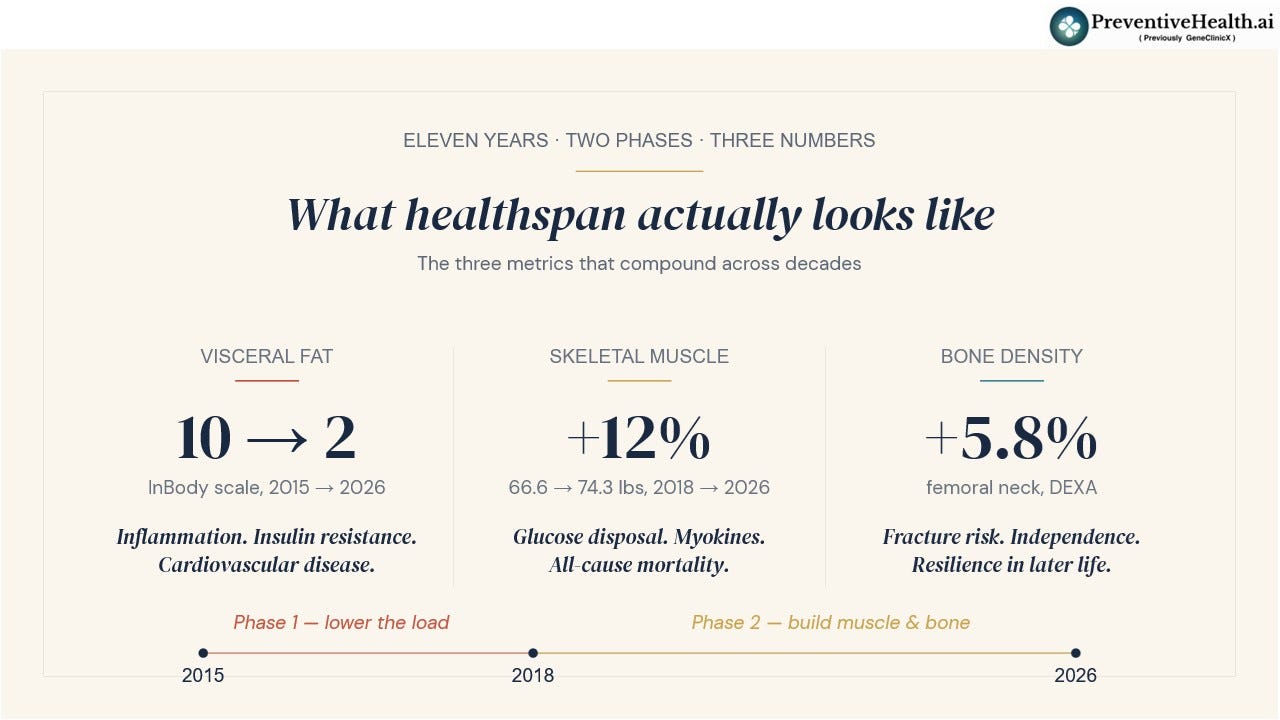
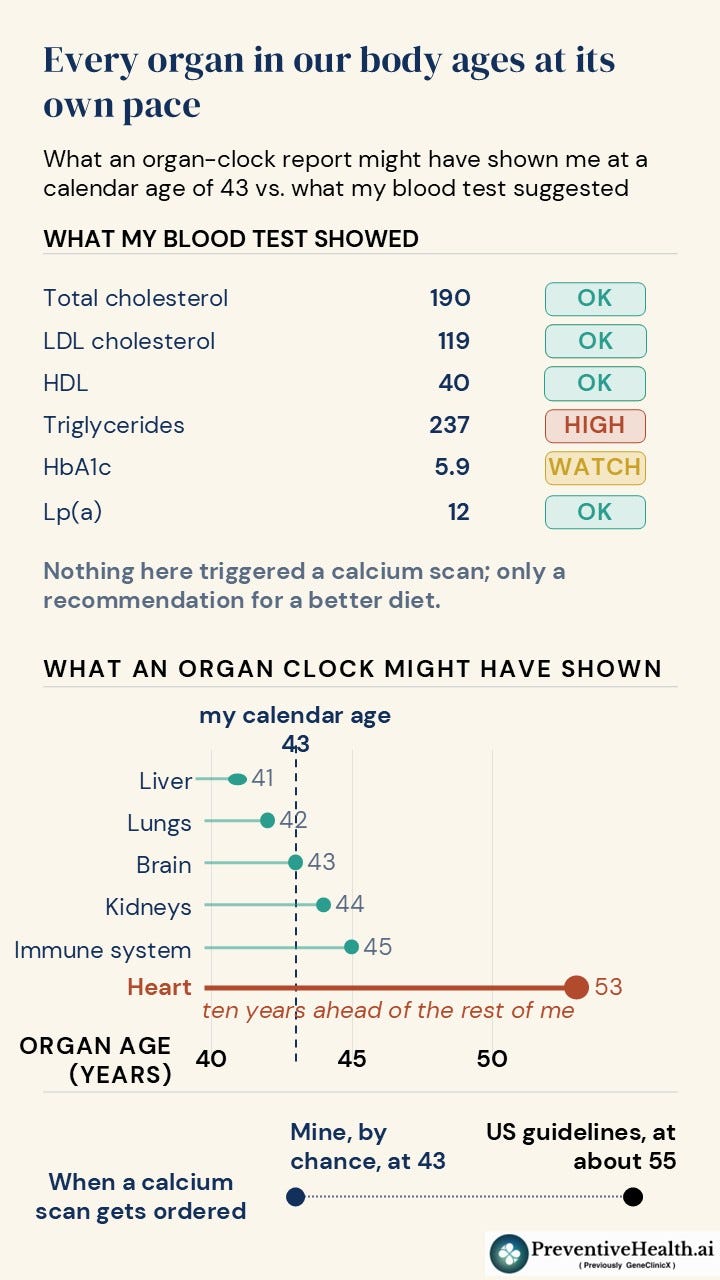
In 2015 I was 43 years old and my blood work said I was generally fine.

My personal health journey made simple and actionable for everyone
Subscribe:.rss.atom.json.md.m3u.pls
Live Last read · last published · next check
Saves to your Listen queue, to pick up on another day or another device.
In 2015 I was 43 years old and my blood work said I was generally fine.
This post (#77) is inspired by a conversation with my friend Rohit Gaikwad, an engineer and technology leader with a PhD, who is also a certified yoga teacher and advanced practitioner.
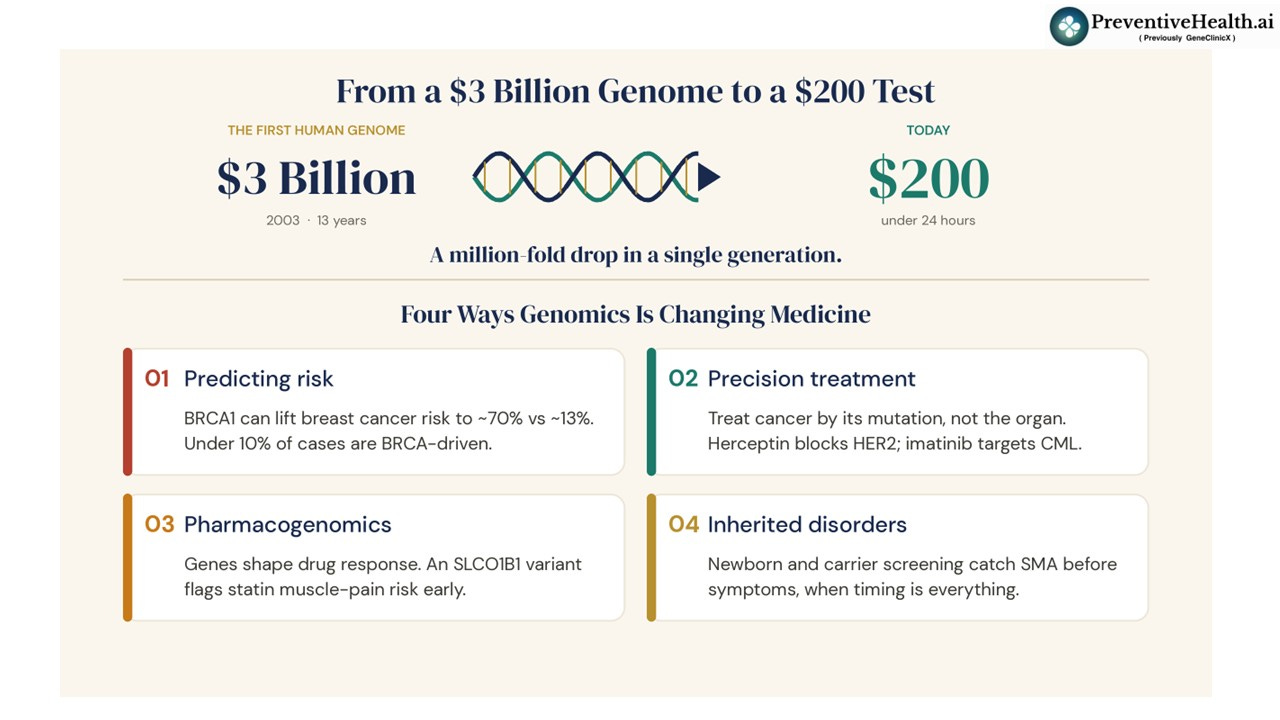
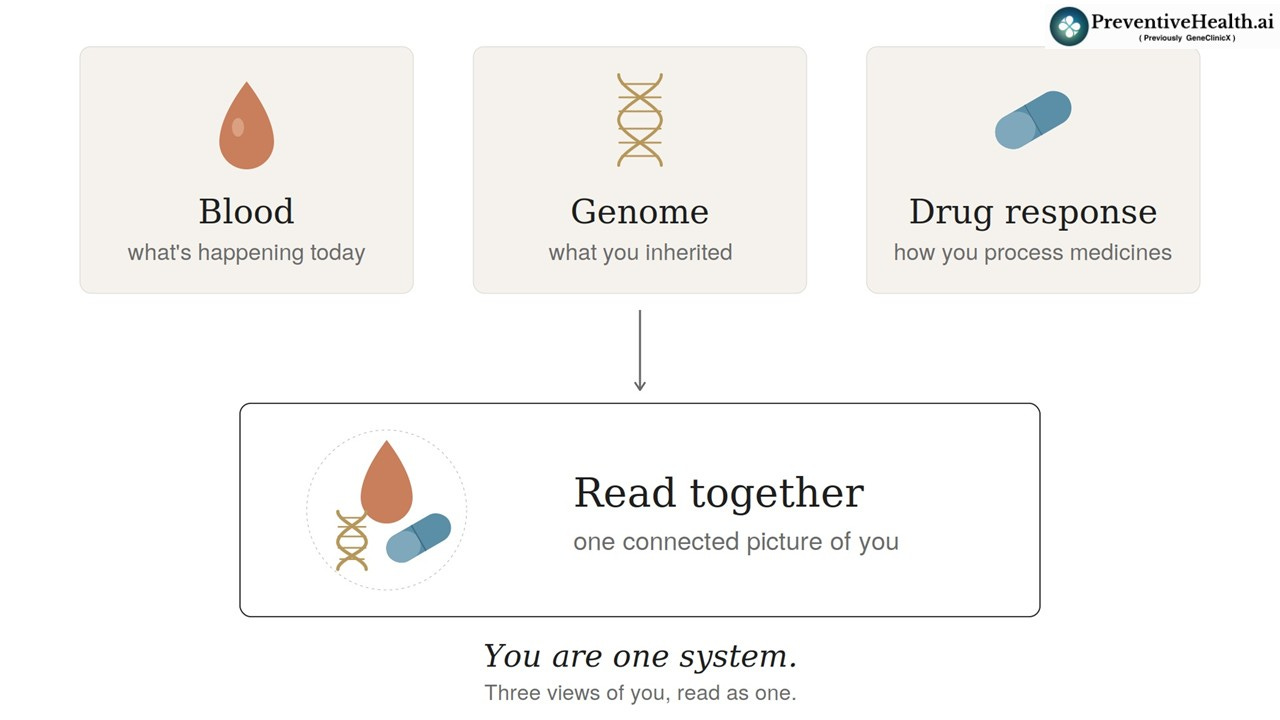
Few areas of medicine generate as much fascination, hope, hype, and confusion as genetics.
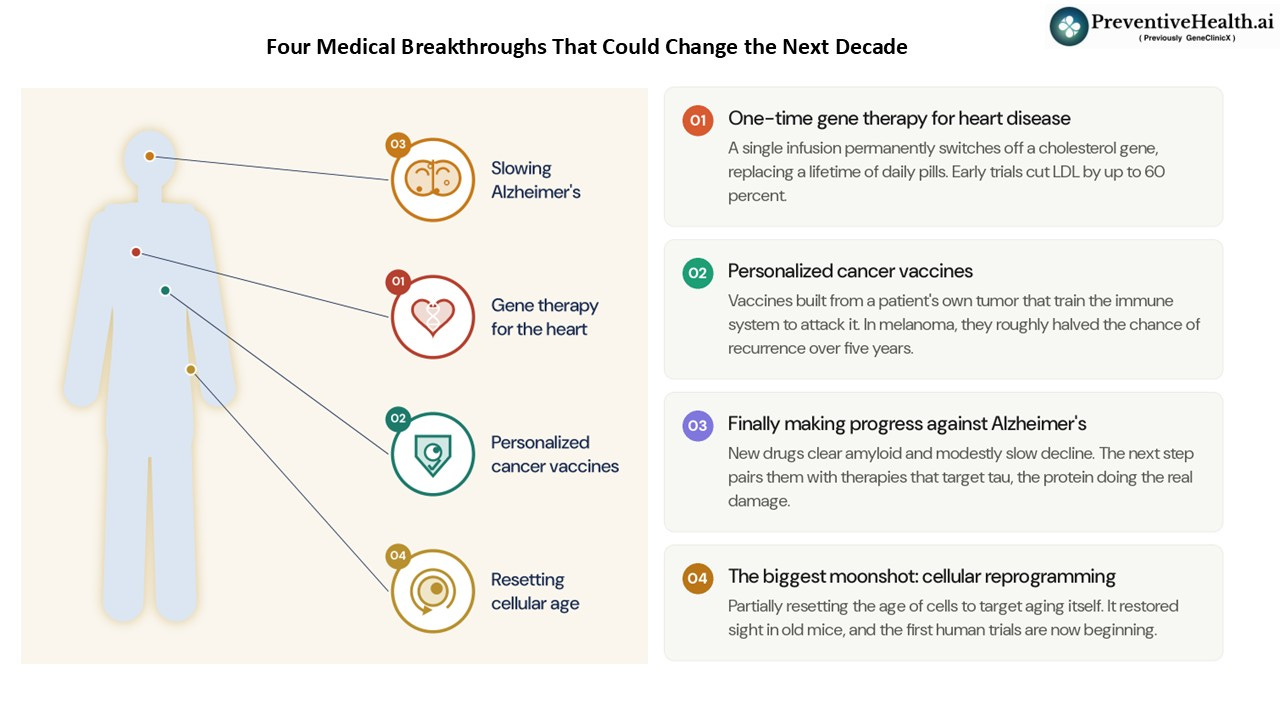
What are the most exciting advances in medicine on the horizon, the ones that could prevent or treat our biggest killers like cancer, heart disease, neurodegenerative disease, and metabolic disease?
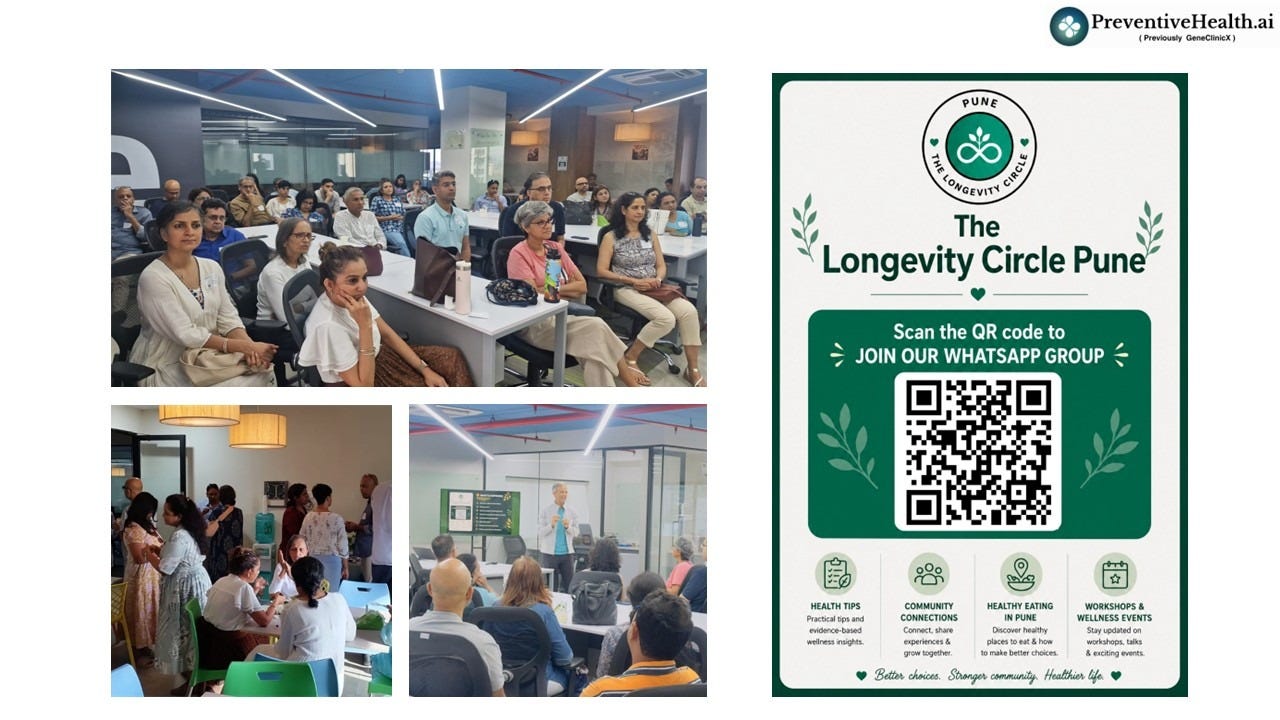
As many of you know, I run a free WhatsApp-based health community called The Longevity Circle.
For most of us, the routine is the same.
In August 2015, at the age of 43, I was diagnosed with cardiovascular disease.
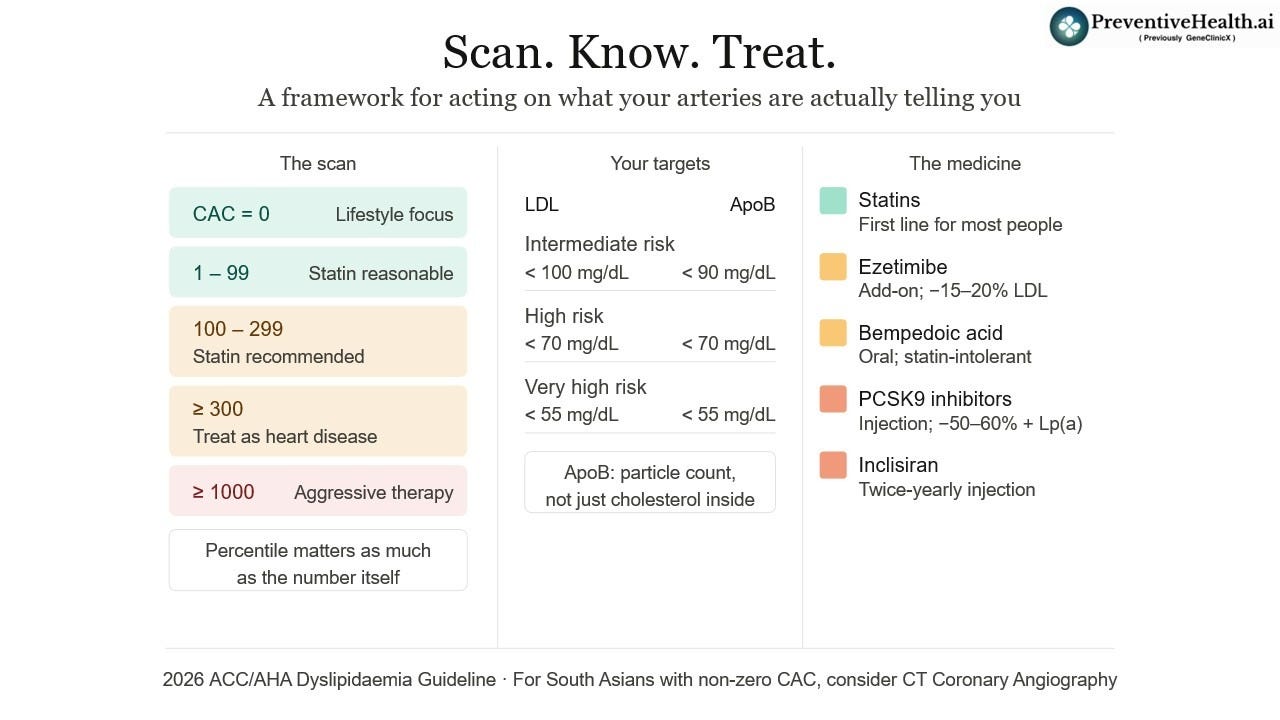
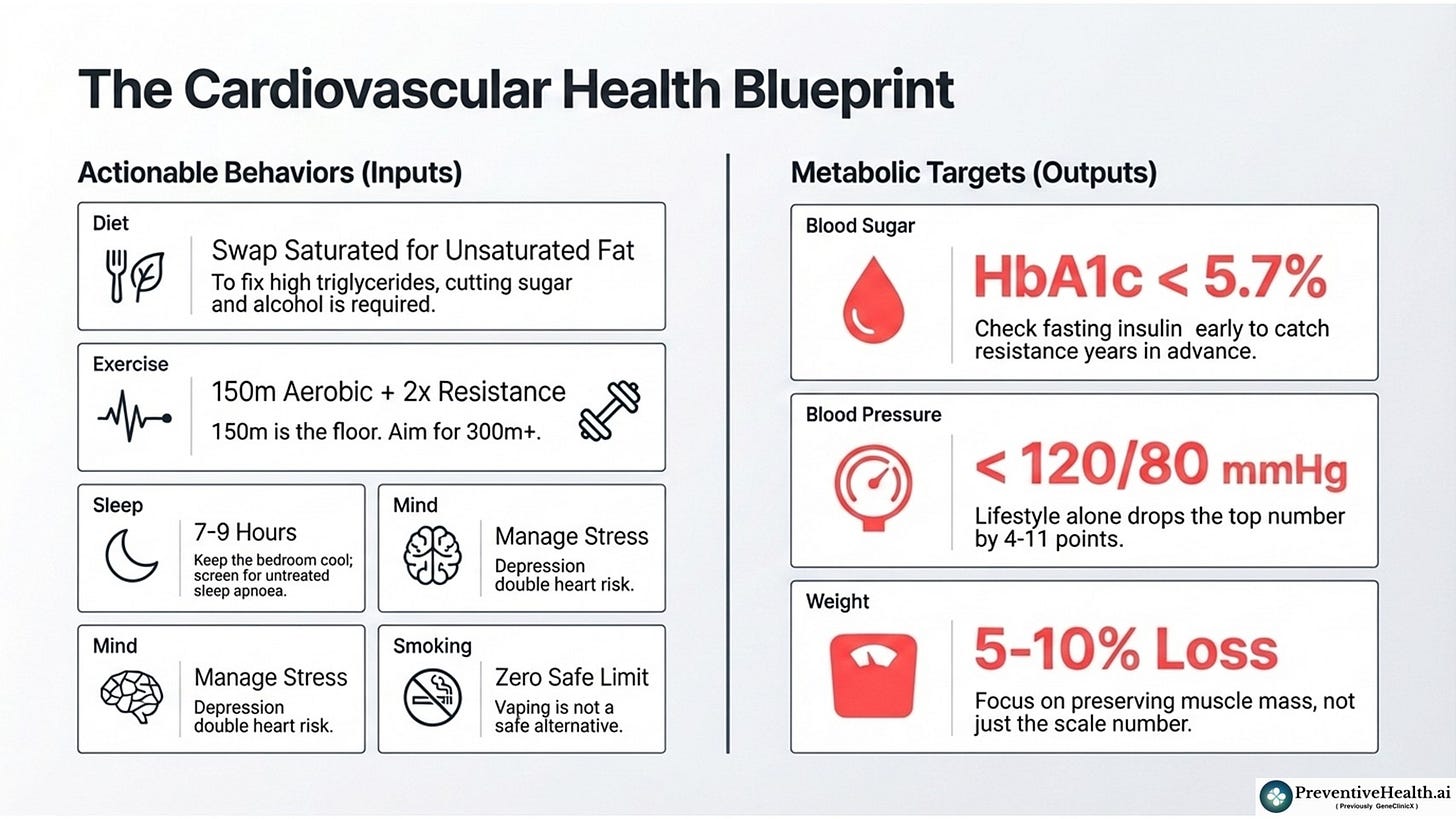
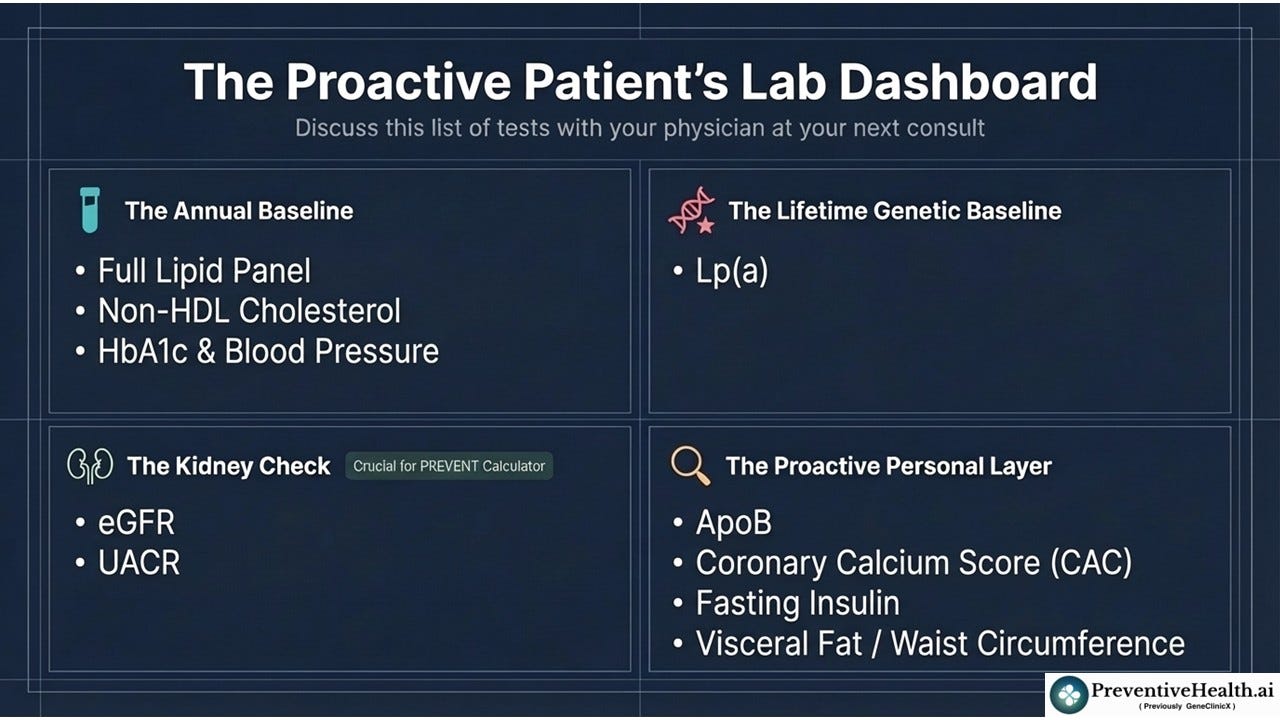
In Part 1, Part 2, and Part 3 of this 4-part series, we covered the CKM framework (the heart–kidney–metabolic connection), cardiovascular risk assessment, what markers to measure, and lifestyle.
In Part 1 and Part 2, we covered how to calculate your cardiovascular risk in the Cardiovascular-Kidney-Metabolic (CKM) framework and what markers and risk factors to measure.
In Part 1 of this series, we covered the Cardiovascular-Kidney-Metabolic (CKM) framework, which uses a holistic approach to risk assessment, as well as the new PREVENT cardiovascular risk calculator.