
In my ongoing retirement process of assessing my life, brooding about what the future holds, and chucking the clutter out of my house, I came across a small box of buttons, the pin-able kind. I’ve been collecting these for years, though I had completely forgotten about them.
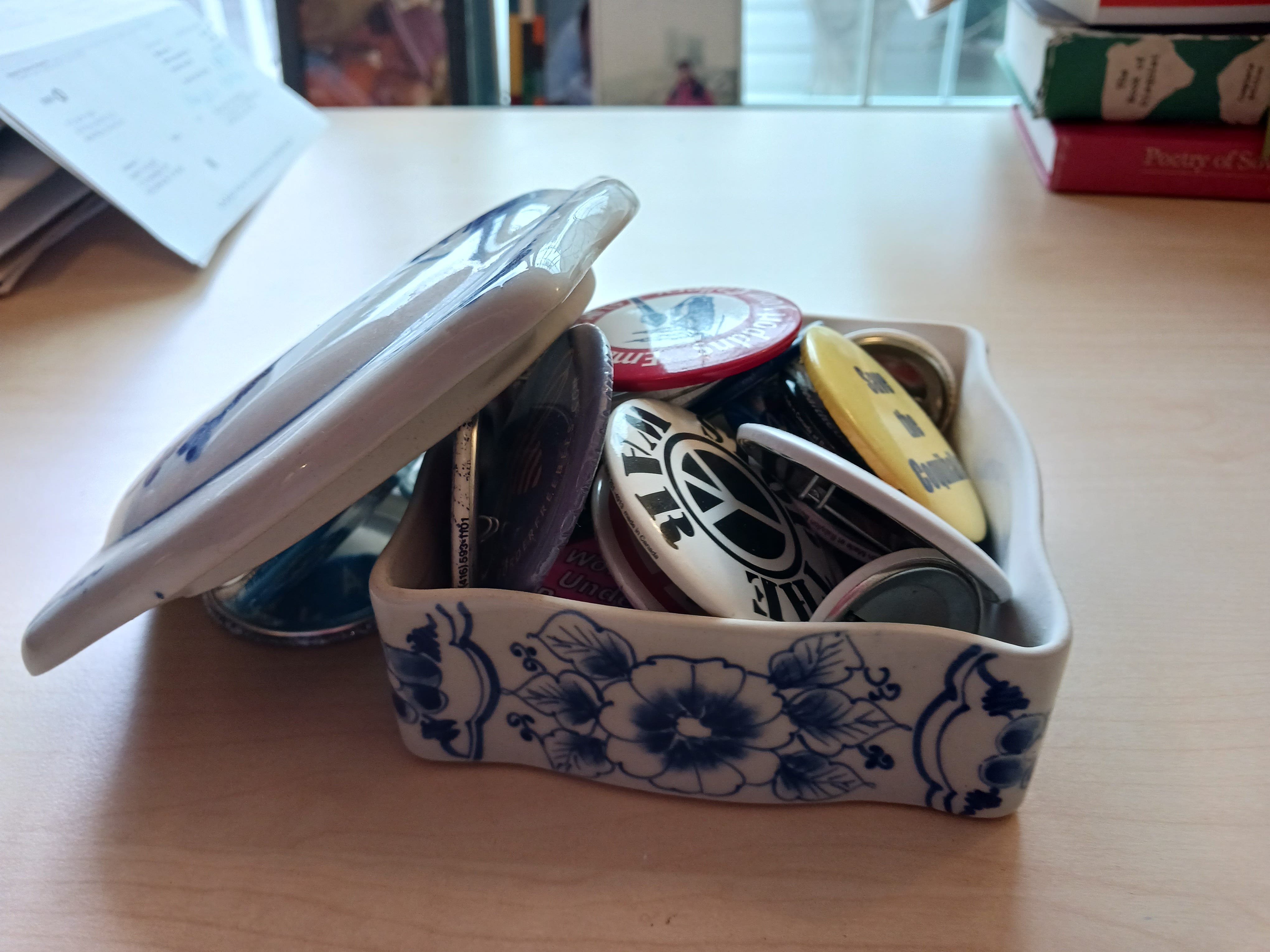
Most of these are protest buttons. Handmade banners and placards may be thrown into recycle bins, but protest buttons can last forever, or at least a few decades. In fact, the library at the University of Connecticut has preserved over a thousand protest buttons, many from the demonstration heyday of the 1960s and 70s.

After this weekend of protest in the U.S., I’m wondering if buttons were handed out in L.A., Philadelphia and the over 2000 towns and cities in every state that hosted “No Kings” protests against Trump and his administration. Or are buttons passé? Big banners make for better Instagram posts.
My personal button archive is a modest couple of dozen, but they span several decades of my life. I have no button from my very first demonstration in 1978. I was 18 or 19 and the Christian pop singer and anti-gay activist Anita Bryant came to evangelize her bigotry at the People’s Church in Toronto. A few days ago, I googled that protest and an archival newspaper image popped up of people marching and milling about in front of the church. I was in that crowd somewhere.
Why did I go to that protest? I wasn’t a queer teenager. Partly, it was that from my earliest years my parents drummed it into me that discriminating against anyone was wrong, and my enlightened mom was clear that included gay people. Instilled values like that are often reinforced by knowing someone who is vilified and discriminated against. When I was 16, one of my girlfriends had a gay friend and he took us to gay bars. They were the first bars I ever went to. Since I was underage, a bar that never checked ID was thrilling and risk-taking, perfect for teenagers. And in spite of being hetero, I enjoyed my first ever Screwdriver cocktails, and the fun and easy acceptance found in those gay bars. Knowing queer people surely fired up my sense of injustice.
After Anita Bryant, wherever I was living, there was rarely an anti-war, pro-choice, anti-this or pro-that march or gathering that I didn’t attend and wave a banner or simply stomp about. I don’t have a button from 1990 when the Gulf War erupted and I marched around a government building in Calgary, my kids in tow— my youngest in a stroller— but I have collected anti-war buttons on many other occasions.
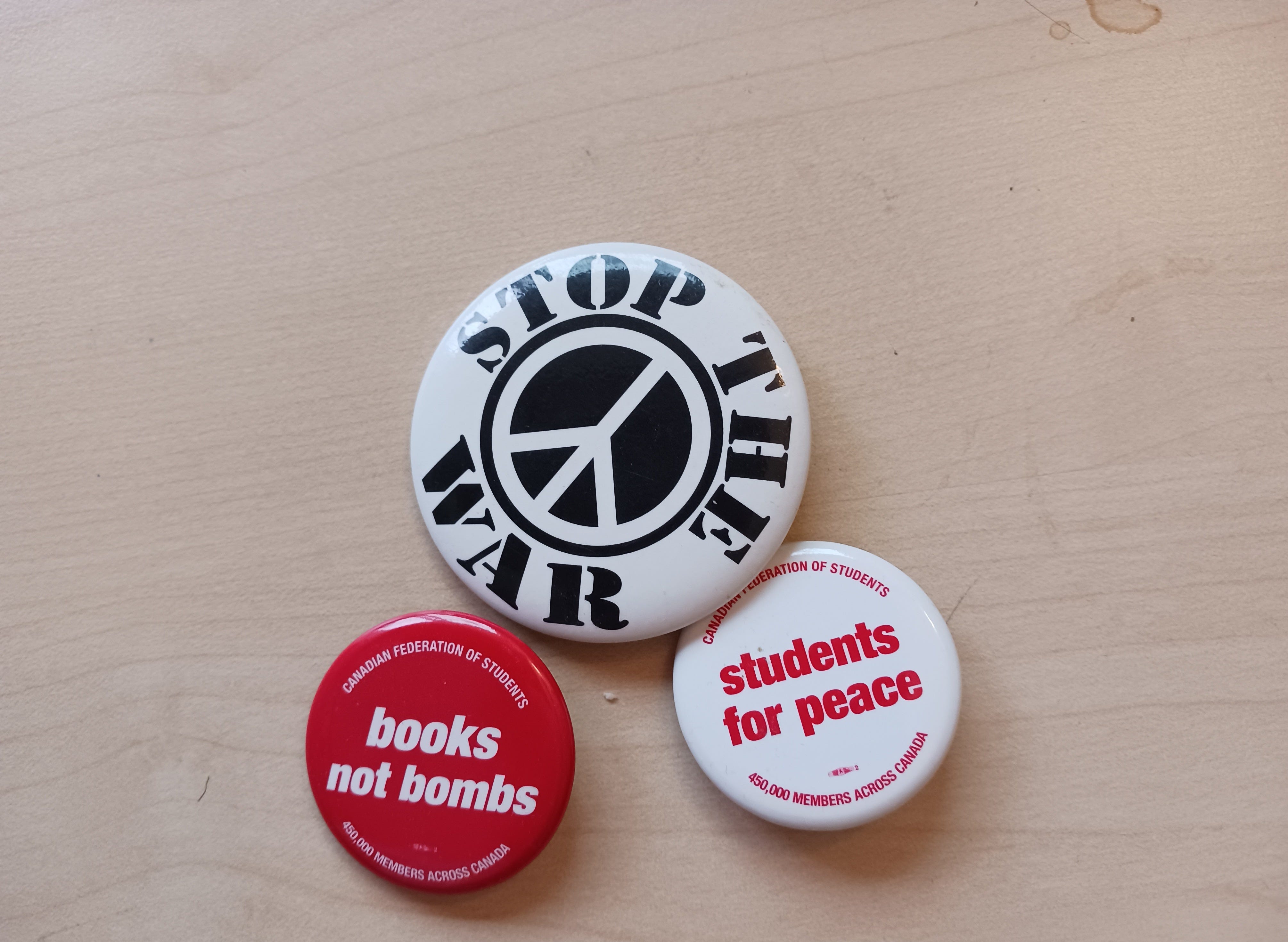
Chronologically, I think the first button in my archive is against the MAI in the mid-90s. The Multilateral Agreement on Investment (MAI) was one of the many global corporate money and power grabs that happened from the late 80s to the early 2000s. Countless people in Canada, the U.S. and around the world protested against the World Trade Organization deals in 1999 and later the Free Trade Agreement of the Americas in the early 2000s.
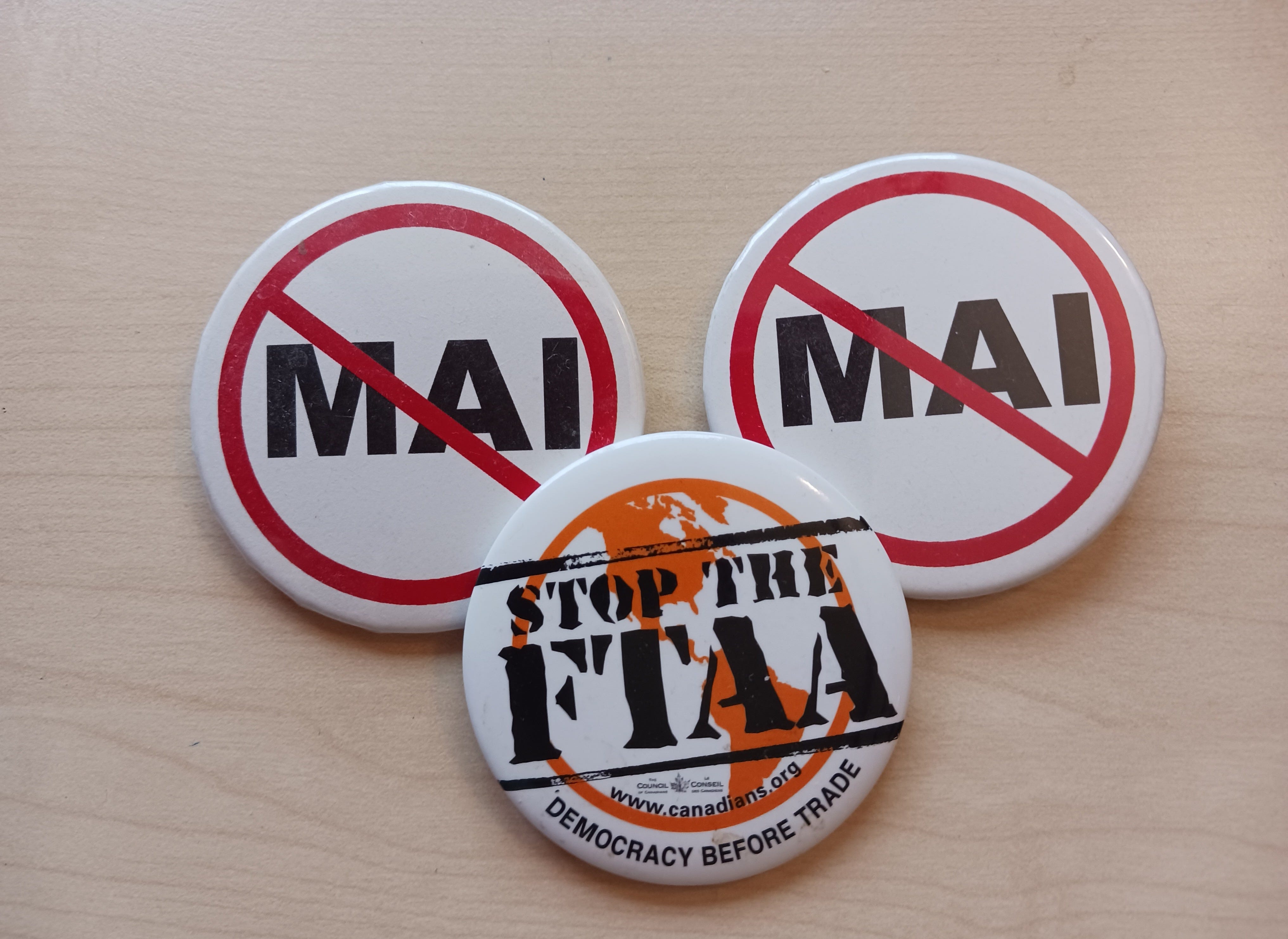
These buttons are stark reminders of how we got to where we are now. Thirty years ago began the relentless, systematic multinational corporate domination of our governments and economies. After the Free Trade Agreement with the U.S. signed by Mulroney and Reagan, these for-profit-only corporate deals continued unabated. Complaints about the loss of manufacturing jobs, union protections, and local control of economies, laws and ecologies turned out to be all too legitimate. Judy Rebbick’s article “They should have listened to us about free trade” is a great summary of not only those protests but also the fallout of the economic decisions made back then when the sound reasoning of us protesting was ignored.
And there’s no doubt we’re living in the dark shadow of those trade agreements and treaties. Canada is suffering the tariff and sovereignty attacks of Trump and his minions, and we have integrated our economy so far into the U.S.’s it is pretty impossible for us to do much but take the punishment irrationally being doled out. (However, I am boycotting American products as much as possible. It is very hard to find non-American lemons.)
The anger and disenchantment that predictably came out of those trade agreements have turned into poisonous resentment politics, the MAGA anger, the tariff schmozzle and anti-immigrant hostility. It is hard to blame people for feeling betrayed and furious with the elites. Our democracies were bulldozed and conned by money deals, even though it wasn’t the lefties who did the deals. As usual it was the true elites: the ultra-rich and super-powerful. It didn’t help that the left spent way too much of the 2000s policing language and thought and shaming well-meaning people who could have been allies.
So much for all those trade protests. Not only are they forgotten, they weren’t that effective. Now that I think of it, I’ve hardly ever protested against anything that ever was stopped. Bombs were dropped, trade agreements that gutted democracy were signed, indigenous people’s rights were ignored, pipelines were built, and forests were cut down.
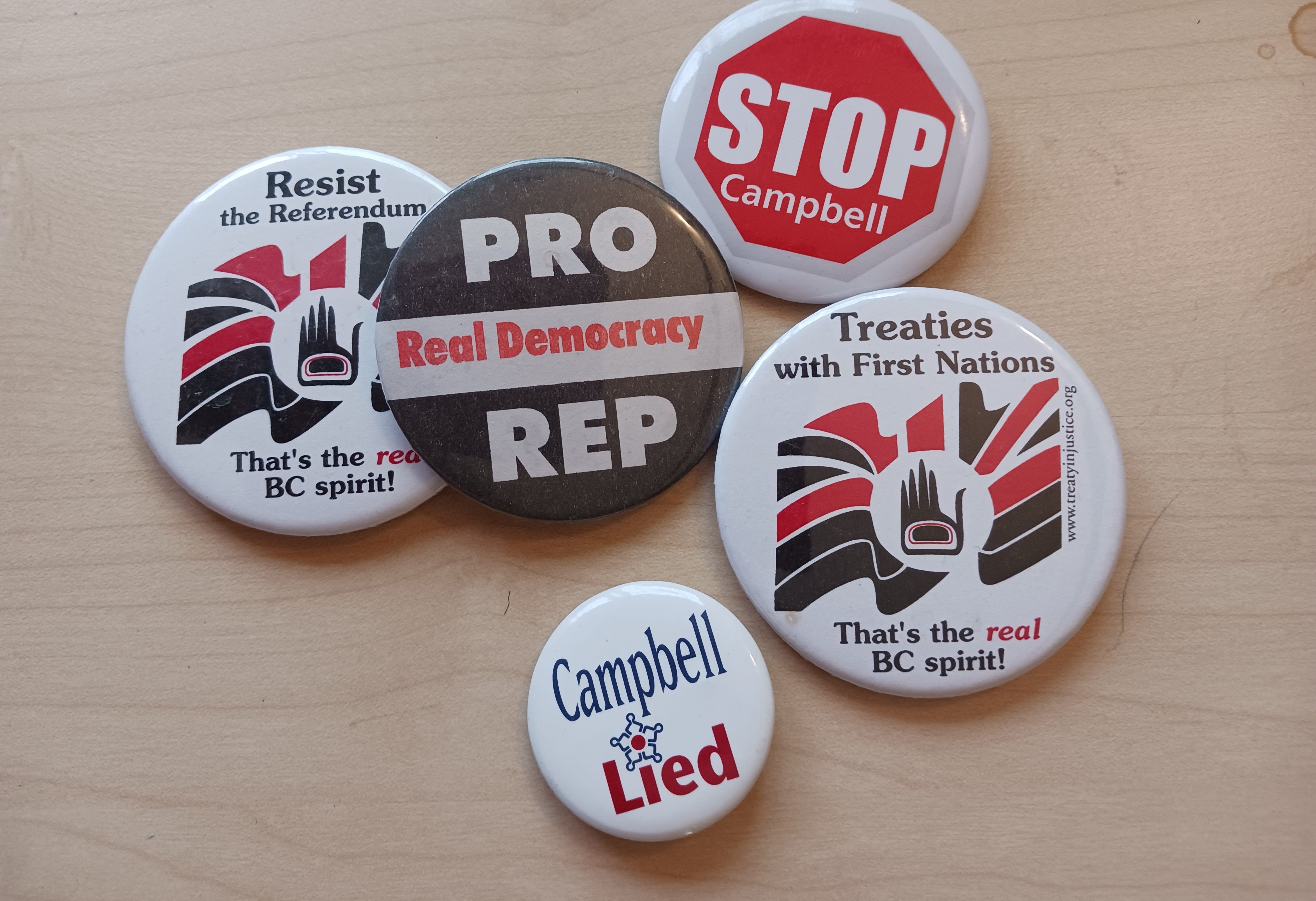
Of course, protests are often part of bigger movements and things DID change and DO change. In spite of setbacks, LGBTQ+ rights are far stronger than in 1978, some forests do get saved, courts often uphold indigenous rights and abortion rights.
Yet, the forces of discontent have been channelled into reaction against just and good things instead of against the thefts of the obscenely wealthy and the horrifying assaults of fanatics and haters. LGBTQ+ activism made spectacular advances, but these rights are vulnerable. Yes, women won the right to abortions, but just look down south for how that has changed. And as for the planet, well, nothing is stopping the burning.
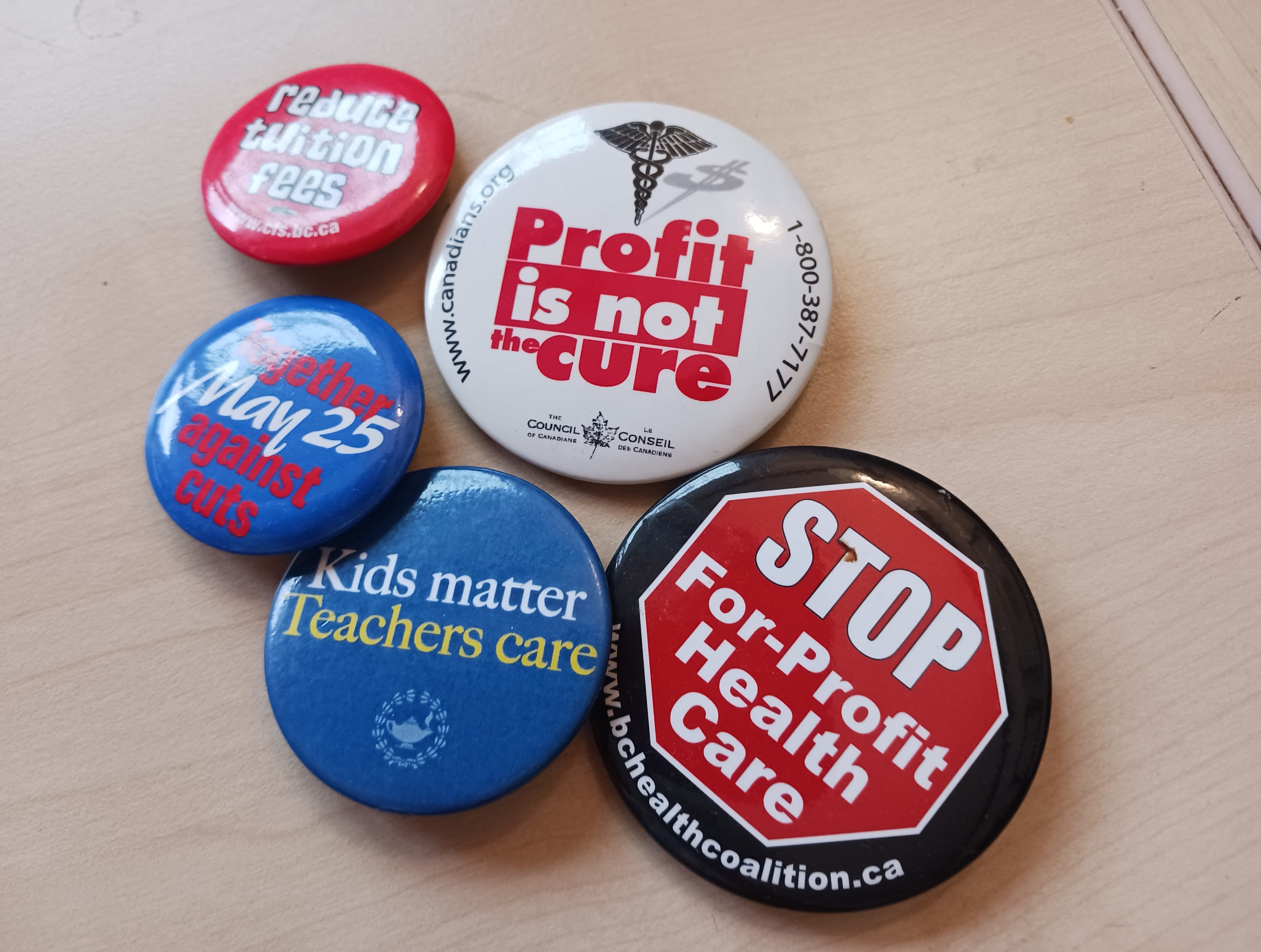
Is this discouragement why I haven’t attended any protest for some years now? Is it complacency or apathetic age that has turned me off demonstrations and protest marches? Yet I’ve hardly ever voted for anyone who’s been elected and that hasn’t stopped me from voting.
Maybe I am feeling that many recent protests are too simplistic for the complicated issues that we are struggling with. It is easy to stand up and insist discrimination against women, racialized people and the LGBTQ+ community is wrong. It is easy to stand up for tackling climate change. However, possibly with the exception of the unprovoked invasion of Ukraine by Russia and yes, probably the No Kings protests, many of today’s issues feel too entangled to unreservedly stand up on either side.
These days, I look at protests in my community where they wave banners like “Freedom” or “Fuck Trudeau [Substitute Any Politician]” and I find it hard to see how these banners are in any way meaningful; I also fear the protestors are aligned with white supremacists and conspiracy theorists. Although I am completely anti-war, I feared the Gaza protestors at the universities were unwitting tools of anti-Semetic forces and Russian trolls as they seemed hopelessly ignorant about the complicated mess of the Middle East. Recently, even a small local protest against the bird-flu-driven culling of ostriches on a farm near me has morphed from supporting a family farm into weird politics, and I fear the extreme right is once again high-jacking tragedies and turning them into agenda-dripping crusades. So much these days is almost too thorny, multi-layered, and difficult to talk about by marching, wearing buttons, and flaunting bumper stickers.
I am willing to accept that I am an old codger who just doesn’t get it. I remember many protests from my youth where old hippies turned up with wavering voices singing “We Shall Overcome” and handing out photocopies about issues totally unrelated to our protest (in my probably incorrect opinion). In my arrogant way I found these oldies sweet but a little embarrassing. Now I suspect that in a current crowd, I would be the embarrassing one who isn’t fully on target.
None of that erases the fact that protesting may do some good and can make you feel better. At least you did something, even if nothing changes. The protests this past weekend in the U.S. seemed energizing and joyful and a stark contrast to the sickly warmongering parade Trump had in Washington. Peaceful demonstrations can generate hope and a sense of togetherness. And they are often full of slogans, buttons and banners generated by really witty and creative people. The internet has some great photos of this weekend’s best signs. While some of these signs could be buttons to be conveniently worn at appropriate times, one of my favorites is delightfully and self-referentially meant to be a sign:
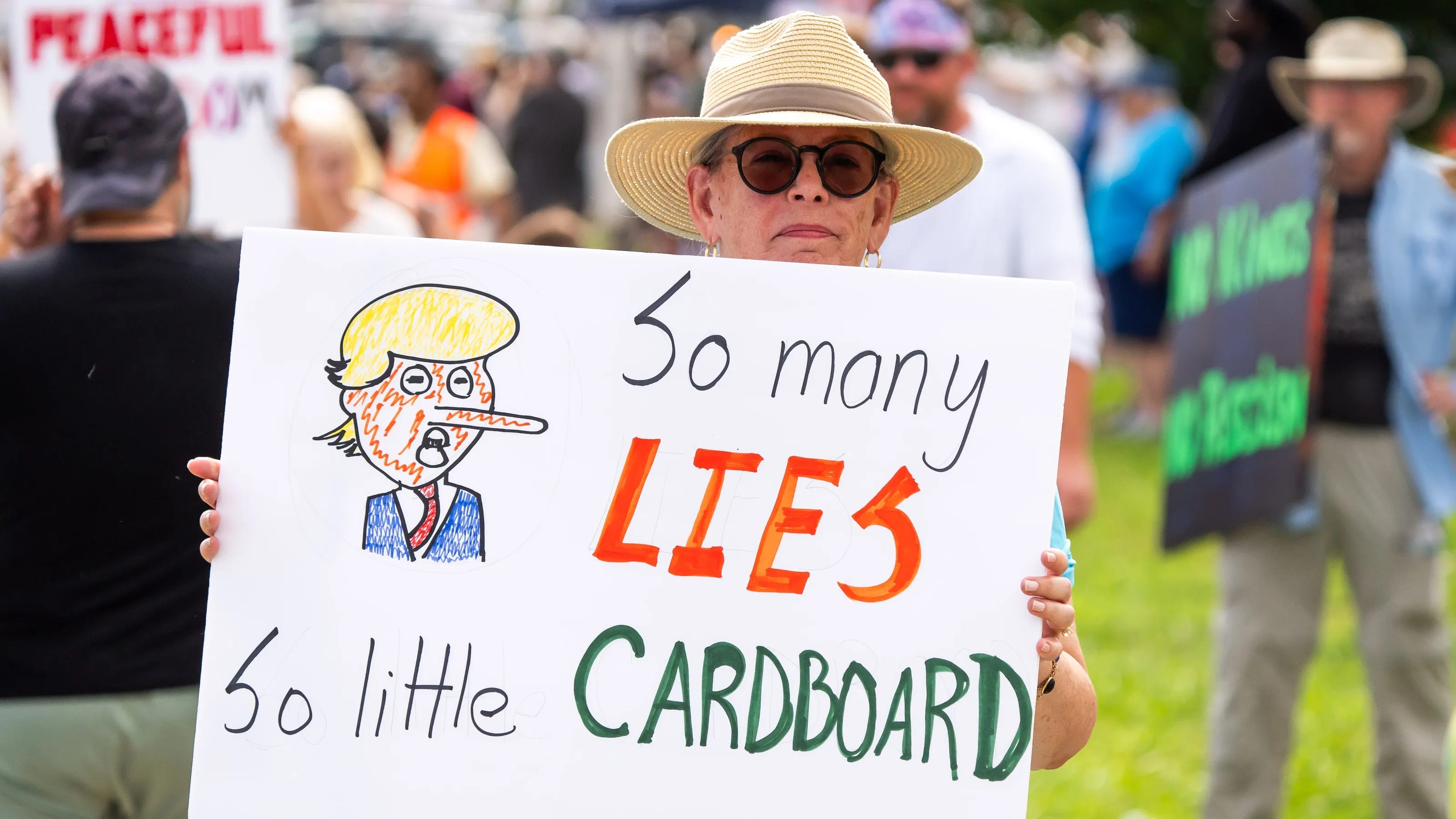
It's a good thing most creative people are for equality and democracy. The humour and wit of these slogans help take back public space that social media has corrupted and help bridge differences between diverse groups of neighbours and fellow citizens. Maybe any protest that doesn’t spark the blooming of witty signs and buttons that reach out across divides isn’t one I want to go to.
For protests can do some good for communities. Signs that make you smile make you feel better and can even connect people in emotionally healthy ways. There’s lots of research that shows humour can defuse tensions and build empathy. Many years ago in my forestry-dependent part of the world, I saw a truck sporting a bumper sticker that said: “Earth First: We’ll Log the Other Planets Later.” Although I am a confirmed environmentalist, I have always thought that very funny. And also clarifying: it coins what environmentalism is up against: rapaciousness and greed, for sure, but it also is a reminder that at stake are jobs and livelihoods for people in my community.
I don’t have a lot of funny protest buttons, sadly. However, my collection includes a few buttons that make fun of the very existence of protest buttons. I think they’re worth keeping.
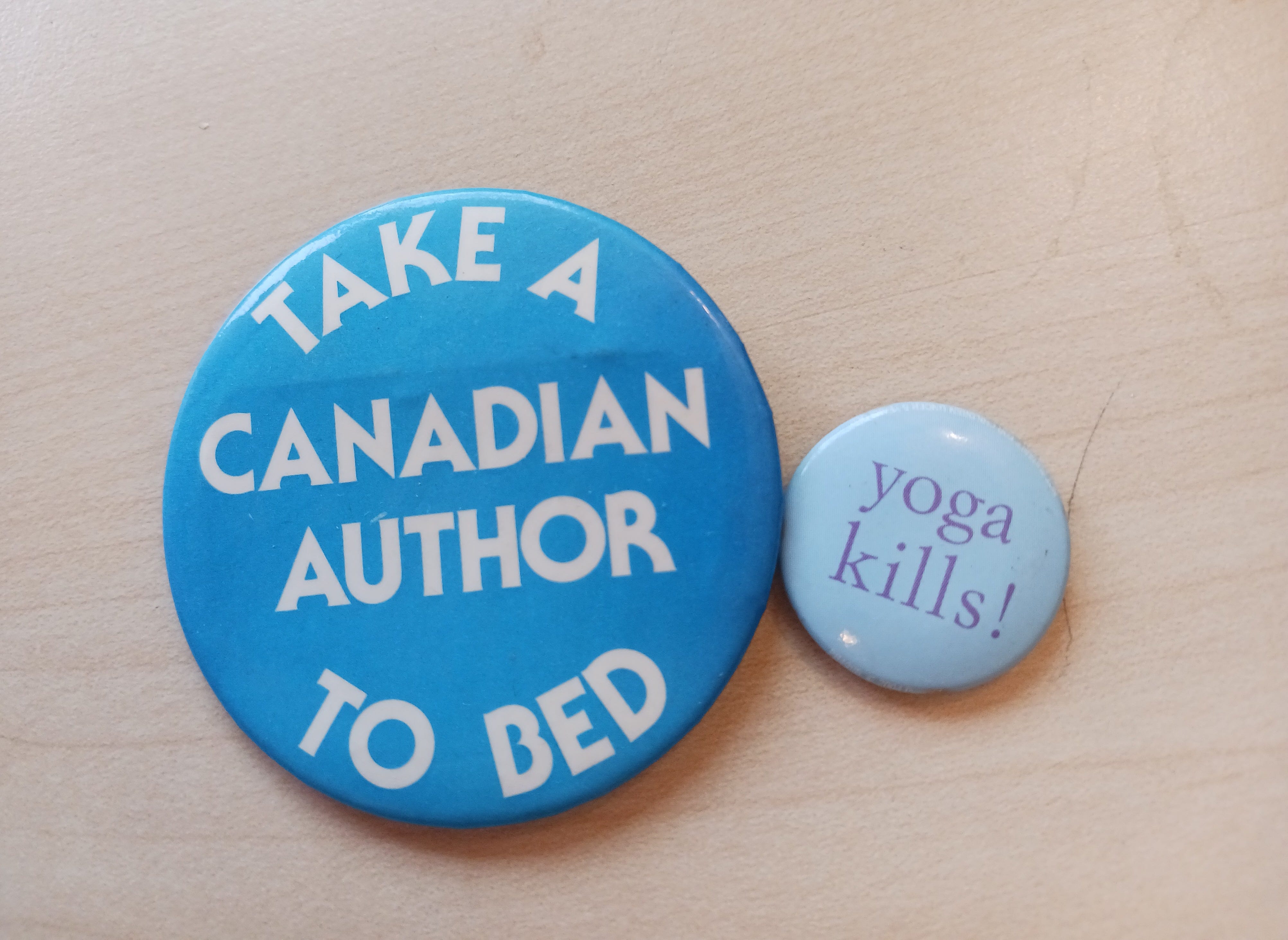
One of these days, I just might get out to another protest. Sadly it seems more and more likely that we’ll need more and more protests to try to protect what is good and what has been arduously won. So if the cause is one I can jump onto, I just might be tempted to hit the street and collect a new button. And if I do, I will likely be one of those old ladies with a stack of photocopied handouts crammed with way too much information. And, embarrassingly, possibly wearing a collection of wildly off-target and irrelevant buttons pinned to my Tilley hat.
No posts
Comments
Nothing yet. Say the first thing.
Sign in to join the conversation.