

There is a version of your life that looks completely fine on paper, where everything appears steady, sensible and well-managed, yet something about it still feels off. You are doing what you are supposed to do, making decisions that make sense, avoiding unnecessary risks and keeping things contained in a way that feels responsible, but underneath all of that there is a subtle tension, a sense that you are holding yourself within invisible boundaries that you did not consciously choose but continue to honour anyway. Sound familiar?
And when you take a moment to really look at those boundaries, you will often find that they have one thing in common.
They were shaped by fear.
The kind of fear that doesn’t announce itself.
Not the loud, obvious kind of fear that stops you in your tracks, but the quieter, more convincing version that sounds reasonable, measured and even wise as it guides your decisions without ever fully announcing itself.
It is the voice that encourages you not to rock the boat, to wait for a better time, to consider what might go wrong and to question whether something is really worth the risk. It does not feel dramatic, which is exactly why it is so easy to follow.
But here is the truth that most people do not stop to confront.
When fear is the thing influencing your choices, you are not truly living your life, you are managing it in a way that prioritises safety over truth.
And while those two can look very similar from the outside, they feel entirely different on the inside.
Fear protects you, but it also limits you.
Fear itself is not the problem, and it is important to understand that before anything can actually change.
Fear exists to protect you, to keep you within what is known and predictable, and to reduce the likelihood of discomfort or perceived risk, which means it is doing exactly what it was designed to do.
The challenge is that fear has no real interest in your expansion, your fulfilment, or the version of your life that feels deeply aligned with who you are becoming.
It is focused on survival, not expression.
So when fear takes the lead, your world can begin to shrink in subtle ways, even if, on the surface, your life still appears full and functional.
You start choosing what feels safe rather than what feels true, delaying decisions that matter because you are waiting to feel ready, and convincing yourself that more time or more clarity will eventually make the decision easier.
And slowly, without any dramatic turning point, you can find yourself further away from the life you actually want to be living.
The disguises that keep you stuck.
What makes this even more difficult to recognise is that fear rarely presents itself as fear.
It tends to disguise itself as overthinking, as wanting to be certain, as needing to plan properly, or as believing that you are simply being careful and considered in your approach.
And while those qualities are not inherently negative, they can easily become a socially acceptable way of avoiding the very things that would move your life forward.
You may tell yourself that you are being smart, that you are taking your time, or that you are making sure everything is in place, but underneath that there is often a quieter awareness that you are holding back from something you already know matters to you.
There is a distinct difference between giving yourself space to think and using that space to avoid, and most people, if they are honest, can feel that difference.
Living isn’t about eliminating fear.
Living fully does not require the absence of fear, and it never will.
What it requires is a shift in who or what is actually in charge of your decisions.
There is already a version of you who understands this, the part of you that has made bold decisions before feeling completely ready, stepped into situations without having everything figured out, and chosen growth even when it came with discomfort.
That version of you did not eliminate fear, they simply stopped allowing it to lead.
And that is the shift that changes everything.
It is not about becoming fearless, but about repositioning fear so that it no longer determines the direction of your life.
Instead of fear being the thing that drives your choices, it becomes something that is present, acknowledged, but no longer in control.
Shifting perspective: moving from fear-led to self-led.
Learn to identify what’s actually driving you
When you notice yourself pausing or delaying, take a moment to ask whether what you are feeling is genuine intuition or whether it is fear presenting itself in a more acceptable form.
Intuition tends to feel steady and grounded, even when the decision is significant, whereas fear often feels tight, urgent, and filled with imagined outcomes.
Make decisions from honesty, not just comfort
You do not need to make one large, life-altering change to step out of fear-based patterns, but you do need to start acting in ways that build trust with yourself.
This can look like speaking up when you would usually stay quiet, setting boundaries where you would normally overextend, or taking the next step instead of endlessly preparing for it.
Stop waiting for a feeling that rarely comes
One of the most common ways fear keeps you stuck is by convincing you that you need to feel completely ready before you move forward, when in reality readiness is often the result of taking action rather than the prerequisite for it.
Expand your capacity for discomfort
A significant part of fear-driven decision making comes from an unwillingness to experience discomfort, even when that discomfort is not harmful but simply unfamiliar.
Growth will often feel uncertain, exposing, and challenging, but those feelings are not indicators that something is wrong, they are often signs that something is changing.
Reconnect with what really matters
Fear becomes louder when you are disconnected from your own values and direction, which is why taking the time to clarify what truly matters can make decision making feel more grounded and less overwhelming.
Take this offline: the conversations that actually change things.
Reading this is one thing, but real shifts often happen in conversation, when you allow yourself to say the honest thing out loud rather than keeping it internal. As always, I want to be be practical and leave you something with my coaching stamp on it. So here are some questions to explore the topic of this newsletter further with trusted people. If you were to take this beyond your own head, here are three places to start:
Where in my life do I already know what I want to do, but I keep telling myself I need more time?
This question cuts through the surface and gets straight to the quiet avoidance most people sit in.
What am I protecting myself from, and is it actually as risky as I’ve made it feel?
This helps separate real risk from perceived fear.
If fear wasn’t the deciding factor, what would I choose next?
Not the whole plan, just the next move. Sometimes that’s all that’s needed to shift direction.
Closing thoughts.
There is nothing inherently wrong with wanting to feel safe, but you are not here to build a life that is solely designed around avoiding risk. You are here to experience, to express, to choose, and to evolve in ways that feel aligned with who you are.
Fear will always have something to say about that. But remember, it doesn’t get to decide.
About the author
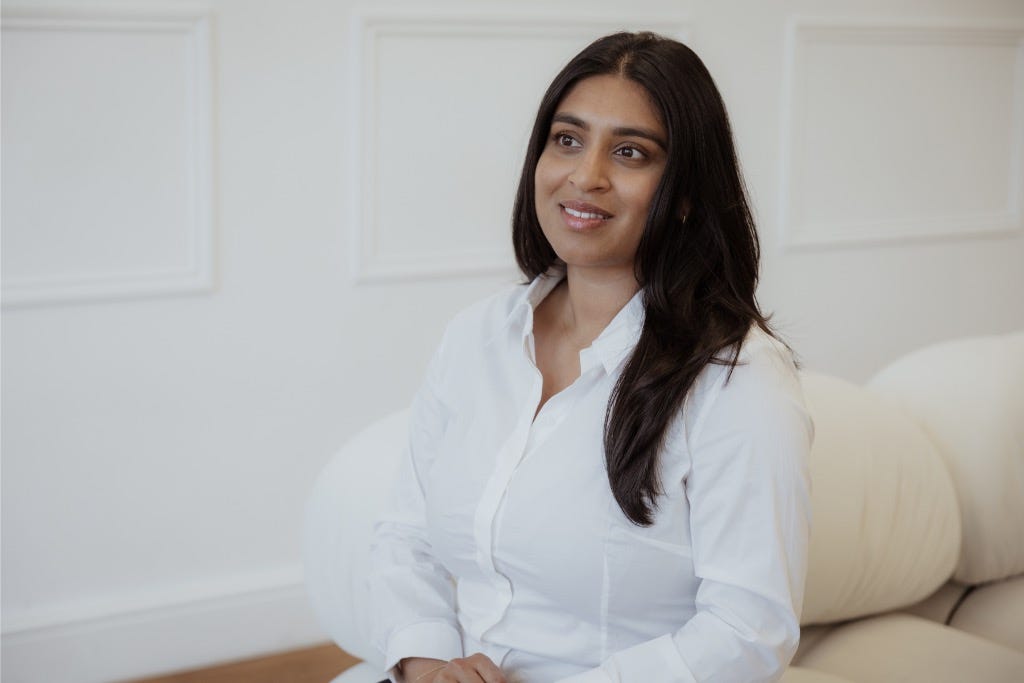
Roxanna Sarkar-Patel is a lawyer and mindset and self-alignment coach. Through her work at @newperspectives.coaching, she supports people in returning to their foundations, mastering their inner world, and building lives that feel both successful and true. Her work is grounded, reflective, and centred on bridging the gap between self and life.
Comments
Nothing yet. Say the first thing.
Sign in to join the conversation.