
There’s one simple statement my whole professional existence is bolted to: we can make cute clothes out of the clothes that already exist.
That’s it. No convoluted positioning, no complexity in explaining why my company should exist. Newless exists to make cute clothes out of existing clothes.
It’s a frustratingly simple concept, but one that gets stuck on a very small yet important word: “cute”.
Replace cute with whatever word resonates with you: stylish, on-trend, hot, cool; but the gist stays the same. And until I see cute clothes being made out of existing clothing at any real scale, we’ll have a reason to exist and grow.
But you know what there is a lot of? The alternative to cute can be summed up by the overwhelming dominance of one reworked aesthetic: patchwork.
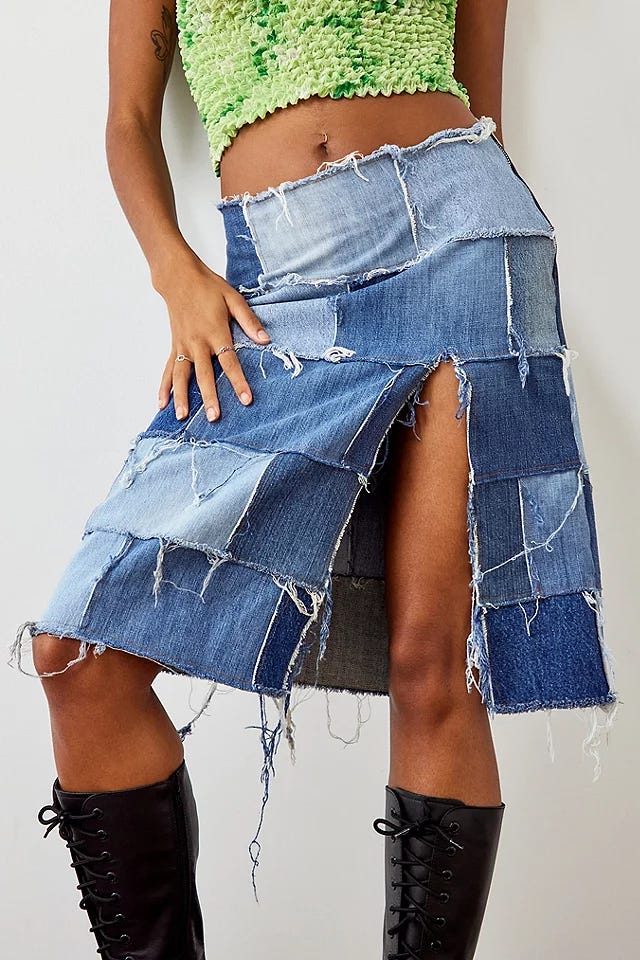
Before I tear it down, let’s visit the birth of patchwork.
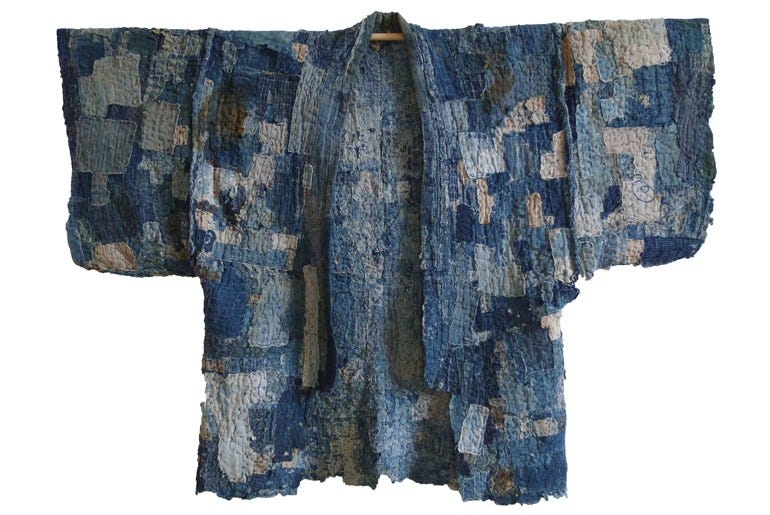
The honest origin of this aesthetic was necessity, not creativity. Patchwork clothing emerged in the work and utility wear of rural communities, garments patched and re-patched to extend their life and use1. It resurfaces in every era of economic struggle: the Great Depression, wartime “make-do and mend.”2 The quilting lineage is the same, early American quilts were strictly utilitarian, born of the need for warm bedding, with pieced “patchwork” quilts as a utility piece, not a decorative throw.3
Japanese boro emerged in the Edo period among peasants in northern Japan who, out of necessity, reworked and mended cloth across generations to survive the winters, built on the “mottainai” ethos of wasting nothing. The kicker: after WWII, boro became a source of shame in Japan, associated with poverty, only later was it celebrated. Then high fashion came for it - boro now echoes through Maison Margiela, Dior and Loewe.4
These communities practiced textile circularity out of necessity, long before “upcycling” was a buzzword. They weren’t going for a look, they were surviving. But through this evolution, the look of poverty and “making-do” got rebranded as a virtue signal.
Modern upcycling adopted that same aesthetic of necessity - visible seams, mismatched scrap - as a badge of sustainability. Which is exactly backwards from making something someone actually wants. Though it does make great PR for a mega-brand’s one-off “circularity” collection.
Patchwork is the path of least resistance for anyone working from salvaged material. When your inputs are heterogeneous - different colors, weights, sizes, conditions - patchwork is the one technique that absorbs that mess. You don’t need to source matching fabric or any volume of one thing; you stitch the differences together and call the seams the design. It also self-advertises: visible seams = visible proof of reuse.
But that’s also the trap. Once everything reworked looks like patchwork, “upcycled” stops being a method and becomes a single, narrow look: busy, crafty, maximalist, polarising. It sells the story instead of the garment. The creative possibility space of “new clothes from old clothes” is enormous; patchwork collapses it to one note.
Making reworked clothes look good is genuinely harder than designing from a bolt of new fabric. With new fabric you control everything. With existing garments you’re solving a fresh puzzle every time; patchwork is popular precisely because it lowers the skill bar: mismatch is forgiven, imperfection becomes “the aesthetic.” So patchwork isn’t lazy - it’s the predictable result of choosing the one technique forgiving enough to let anyone clear the bar.
And that’s identical to the scale problem. Every patchwork/one-of-one piece is bespoke; the economies don’t scale. Even Emily Bode, who arguably does patchwork at the highest taste level there is, said the reason a brand like hers hadn’t existed was that no one believed you could build a scalable business on vintage repurposing. That’s the quiet truth under the whole category: it has stayed artisanal because the dominant technique can’t industrialize.
So here is the true game worth playing: making redesign repeatable enough to look like product and scale like product: coherent inputs, a consistent design system, output that doesn’t announce its seams.
And a few people are already playing it. Marine Serre turns tablecloths, silk scarves and old lace into clothes that read as fashion first and reuse second; she won the LVMH Prize doing exactly that. A whole crop has followed: Conner Ives, Rave Review, the Swedish label Hodakova, which took that same prize in 2024 - all selling reuse as desire, not penance. Even Bode proves patchwork itself can be elevated when the taste runs high enough.
The common thread: they sell the garment, not the story.
Here's why I'm not just shouting into the wind; I’ve got a strong case as to why patchwork isn’t our only solution to this major opportunity.
Start with the clothes themselves: not everything needs to be collaged back together. Whole categories - denim, tailoring, occasion-dresses - are great candidates to be re-cut and rebuilt into something you'd actually want, no visible seams of virtue required.
Then there's technology, which is quietly dismantling the oldest excuse in upcycling: that variable inputs can't be made to behave. They can. The right software can take a pile of mismatched garments and route them through a repeatable process, so what used to be a bespoke puzzle every single time starts to look a lot more like production.
And the incentives are finally pulling in the same direction. Regulation is turning reuse from a nice-to-have into a line on the balance sheet. EPR rules are beginning to reward the brands that build real reuse programs and penalize the ones that don't, so being creative with inventory stops being a values choice and becomes a financial one.
At the same time, the DTC playbook that defined the last decade is breaking: it has never been more expensive to acquire a customer, and it's only getting worse. When buying growth stops working, the inventory a brand already owns, already paid for and already in the building - becomes the most interesting asset it has.
Which means making cute clothes out of clothes that already exist isn't the worthy option anymore. It's the obvious one.
https://envoyofbelfast.com/blogs/looks/patched-and-repatched-a-short-history-of-patchwork
https://beclecticbrand.com/blogs/the-b-eclectic-blog/patchwork-bags
https://worldquilts.quiltstudy.org/americanstory/identity/utilityandthrift
https://retrospectjournal.com/2025/02/23/mended-histories-the-emergence-of-japanese-boro-textiles/
Comments
Nothing yet. Say the first thing.
Sign in to join the conversation.