
This post was written by Ashleigh Gray of The Quiet Corner
Without knowing it, I had practised yoga nidra at the end of many asana (or posture yoga) classes, but never realised it was its own practice (or hadn’t listened/taken it in if someone had said so!). I formally learned of it during my first yoga teaching training certificate (YTTC) programme in India, where we were timetabled to practice it, and oh my god did I need it! After getting diagnosed with various ‘conditions’ - including ADHD, complex PTSD and PMDD - I sought out spaces that centred the needs of neurodivergent and chronically ill people, and the YTTC was the first space in a long time that didn’t centre accessibility in its teaching and facilitating. I felt my queerness and neuro/bodily divergence as otherness for the first time in a long time. It was very overstimulating, and dug up a lot of insecurities - plus the programme was very asana (posture yoga) focused, and the white Lululemon ladies were everywhere, so it felt alienating. (I must say that my research for choosing a course consisted of asking one person where they went and if they liked it, soooo, oops, mala mia). However, that nidra practice allowed me to let go of all the outside noise that translated to inside noise for an hour, to focus on the basics, the breath, and to slow TF down. It was a relief. It encouraged kindness and compassion - ahimsa - toward myself and others, and it softened the edges on some of the cPTSD symptoms I was experiencing.
As the name suggests, yoga nidra is a practice rooted in the philosophical and spiritual framework of yoga. It’s one that you may not have heard of. Thanks to the whitewashing, colonising, and ‘wellness-ing’ of yoga that has happened over the last century, people often associate yoga with thin, blonde, white women in expensive leggings, posing in acrobatic postures on Instagram. It’s intimidating, it’s empty, and it is the epitome of cultural appropriation. Originating from South Asia, the culture and way of life that yoga offers is so much deeper, richer, and political, in fact, than those Insta posts would have you believe, and for me, yoga nidra is one of its most gentle and beautiful offerings.
Literally translated from Sanskrit as ‘yogic sleep’, yoga nidra is a meditation practice in which we practice pratyahara, or withdrawal of the senses, wherein the practitioner, traditionally lying down, is guided by the facilitator towards stillness and deep relaxation. This does not mean that movement is not allowed or that if you don’t feel relaxed during a practice that you have failed, but part of the process is to encourage the mind-body and its nervous system to move into the parasympathetic state of rest and digestion. The practice itself usually entails taking the focus from the external to the internal (the breath), repeating a sankalpa, or intention for the practice, moving your awareness around the body, and it may also include imagining/visualising different sensations or landscapes depending on the length of the practice, which is typically anywhere between 10 and 60 minutes.
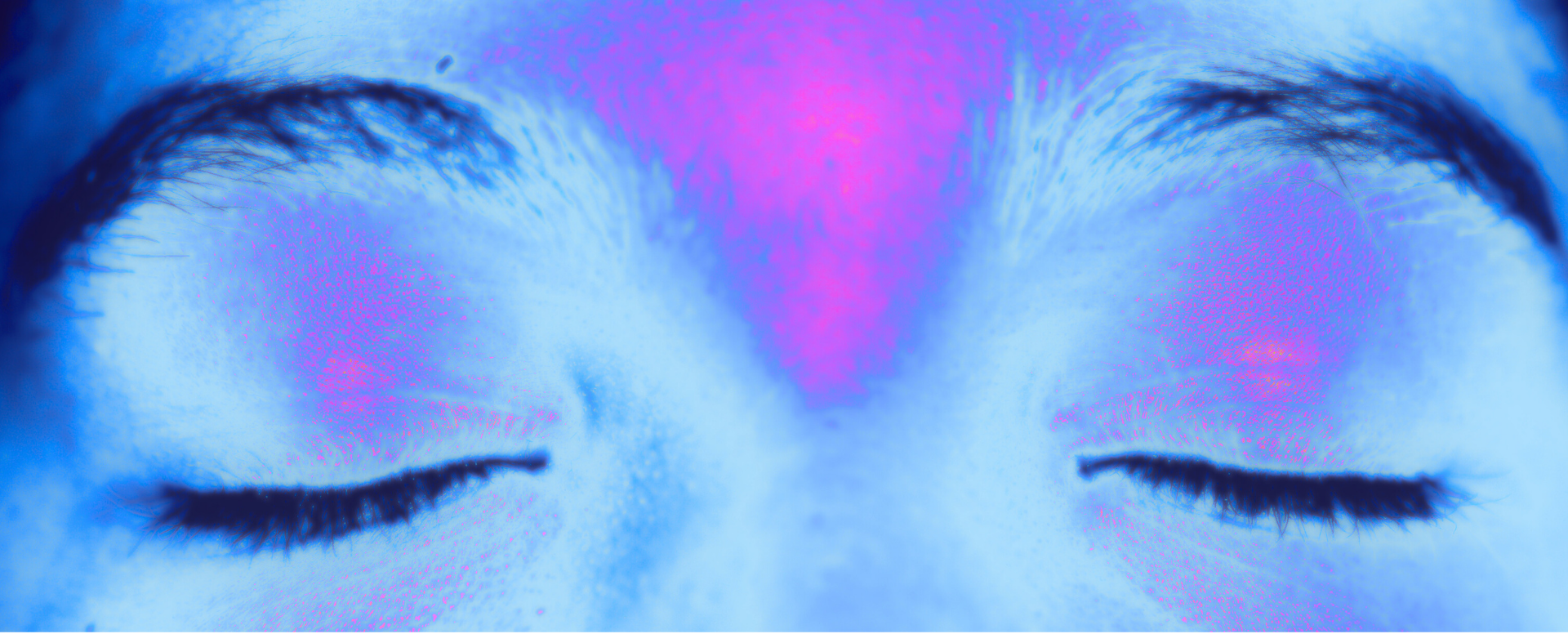
Many of us in the neurodivergent/neuroqueer community have busy brains, busy lives, and spend a lot of time in our heads and out of our bodies. The idea of meditating sat on a cushion in silence can feel out right impossible to us - I know it does to me - but still we seek a softening, a quietening of the mind. Yoga nidra can be a gentle and encouraging practice that allows you to slow down, rest, and softly reconnect with your mind-body. It is inherently anti-capitalist as it asks nothing of you other than to be; you are practising alone and usually with your eyes closed, so there is no place for competition, no standard of perfection, nor any ‘goal’ to be achieved or destination to be reached. It is a practice that supports rest and simplicity, over production and advancement. It is about allowing what is in this moment and accepting that your practice today may be very different to that of yesterday, to that of tomorrow; as many of us in this community live with mental and physical illness, I find this sentiment comforting and the practice supports my commitment to moving with the spirals and seasons of life rather than trying to beat myself into complying with the violent, capitalist notion of upward, linear trajection at whatever dreadful, deadly cost.
Yoga nidra can support our creative practices and our neuroqueering goals more broadly because it is about the process, not the destination. There is no norm; you cannot get this practice wrong. You can only experience the truth of it. What I mean is that your yoga nidra practice may feel deeply relaxing, or it may reveal physical niggles or emotions that have been suppressed. Though the practice seeks to guide the nervous system into the parasympathetic state, it can also bring up difficult things - it is a practice of truth and honouring where you are in the present moment, as you cannot force yourself to be anywhere else than where you are; if you find that your mind is wandering, your practice may centre noticing that, and seeing if you can bring the attention back to the breath; if you find your body wants to move a lot, coming to a comfortable position with as many props as you need may be your practice; if you feel an urge to cry, letting the tears flow may become your practice - “that which hinders your task is your task” as one of my teachers says, and I believe this is true of creative practice as much as any yogic practice (or any practice for that matter!)
If you choose to join me for yoga nidra practice, I truly hope you will first and foremost get an hour of pause and rest. We are all exhausted and devastated - though our direct experiences may be different - by capitalism, white supremacy and its obsession with colonialism, power, destruction, defeat, and genocide. Nothing about yoga’s roots is aligned with the capitalist wellness industry; it is inherently about tending to the inner in order to be of service to others in the community - so I hope that as we are all doing whatever we can to survive and resist, that this yoga nidra practice can be both a break from that and a part of that; through rest, we resist.

Ashleigh Gray (they/she) is a queer, AuDHD, chronically ill performer, workshop & yoga facilitator, with a particular interest in aftercare for artists. They wrote and performed Tumours to a sold-out run as part of Maiden Speech Festival 2018, before taking it to the Edinburgh Fringe Festival and Soho Theatre in 2019. They are currently writing a memoir, completing a Trauma and Social Justice in Yoga teacher training programme, and recently received an Arts Council Lottery Grant to develop a series of workshops for artists and survivors of sexual assault. As a member of the NQC Facilitator Community, Ashleigh currently facilitates regular Yoga Nidra Practice sessions and hosts our monthly Writing Club.
You can join Ashleigh for 6 weeks of Yoga Nidra Practice on Mondays, Jan 19th - Feb 23rd, 6:30-7:30pm GMT via Zoom, with additional intakes starting in April and July. Access is available at three pricing tiers: £33/£51/£75.
If you have questions, need further info, or have issues booking your place, please don’t hesitate to contact info@neuroqueercreative.com.
Comments
Nothing yet. Say the first thing.
Sign in to join the conversation.