
1: Like all animals, young C. elegans nematodes need food to grow and reproduce. But when there’s some food but not quite enough (or when it’s too crowded, or too hot), C. elegans have a little trick where they divert into an alternative stress-resistant form called the dauer.
The name comes from German, where Dauer means persistent or enduring. Dauerlarve (“enduring larva”) was coined by Gilbert Fuchs in 1915, when he was studying nematodes that lodge under the wings of bark beetles, which he found were “immer, stets bereit” (“always, continuously ready”).
C. elegans dauers have some unique behaviors compared to regular adult worms. One of those behaviors is that when they are presented with an aversive stimulus, such as the detergent SDS, they still turn and go in the opposite direction, but not for quite as long. So they seem to be a bit more “chill” about aversive stuff.
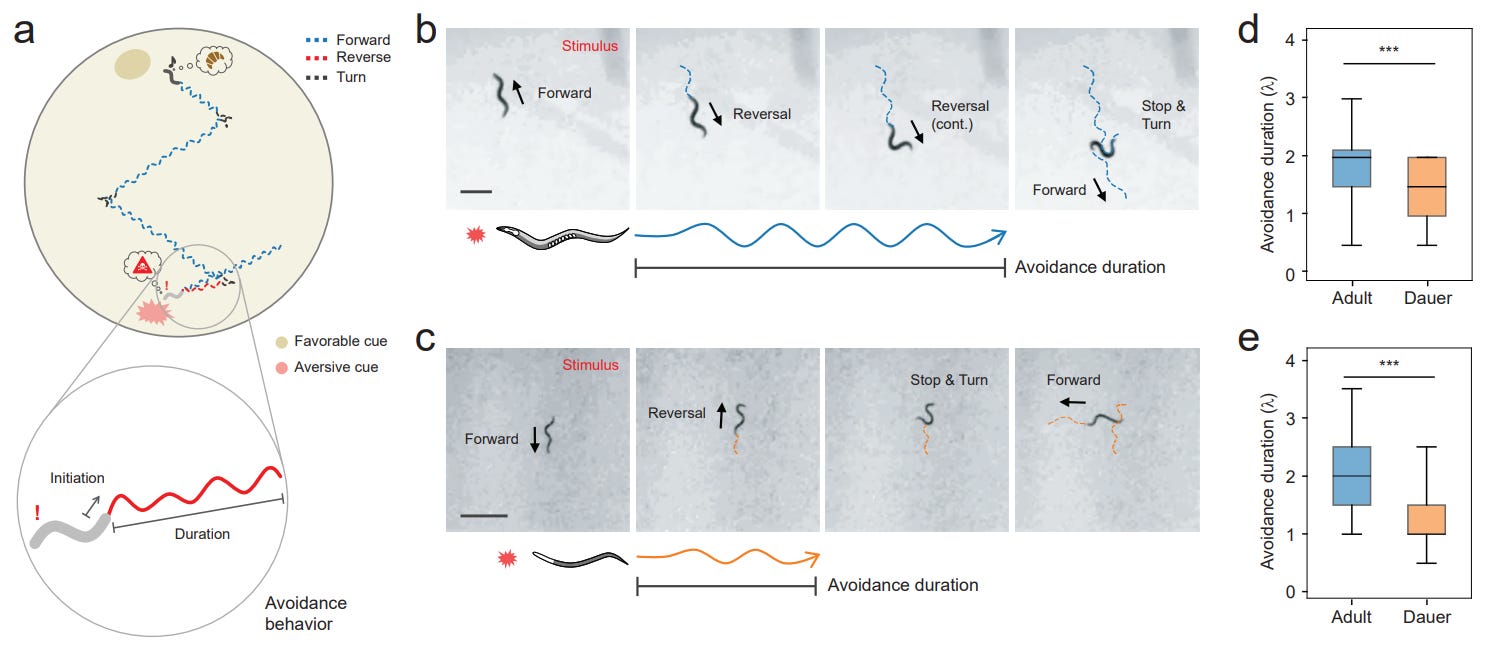
What is the cause of this difference in behavior? A new study investigates this phenomenon using the relatively new technique of comparative connectomics — i.e. comparing the connectomes of C. elegans in the dauer and adult stages and seeing how they differ.
This same group of scientists, with senior author Junho Lee, recently published a paper on the “chemical synapse connectome” of the dauer stage C. elegans — i.e. the complete map of chemical synaptic connections in the dauer nerve ring (which is considered the closest thing it has to a brain).
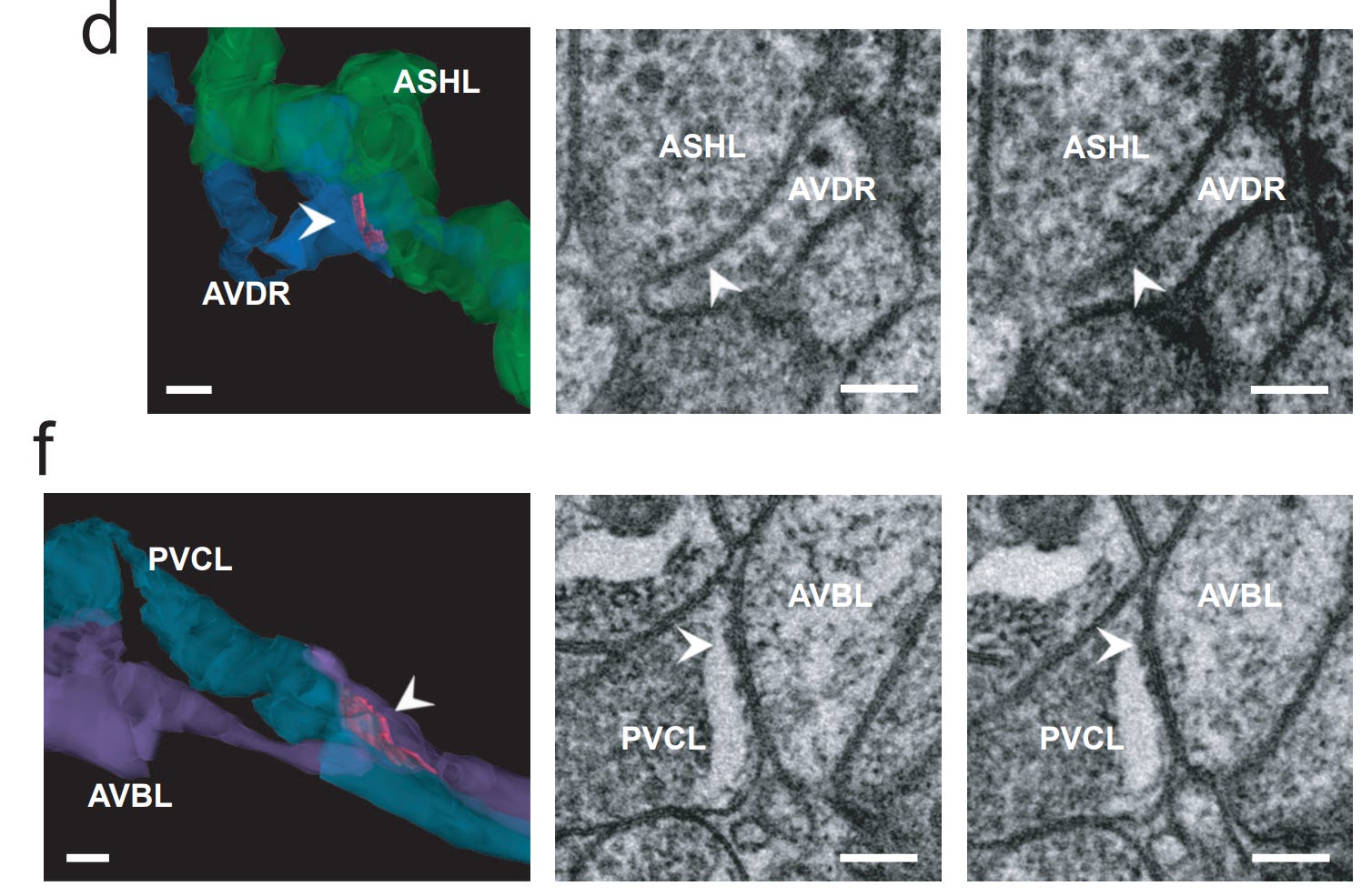
For this new study, they also performed manual annotation of the electrical synapses — aka the gap junctions. They identified the electrical synapses in the electron microscopy images as two electron-dense membranes separated by a 2-3 nm cleft. These arrowheads point to examples in 2d EM images and 3d reconstructions:
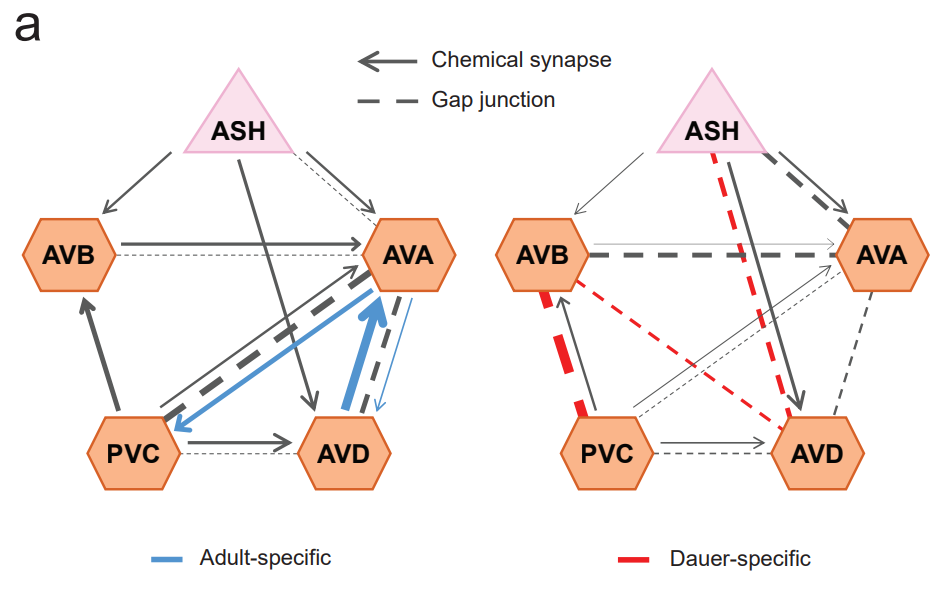
The dauer and adult versions of the nociceptive circuit that controls this behavior have the same set of neurons, including the sensory neuron ASH (which detects the detergent SDS) and the interneurons AVA, AVB, AVD, and PVC.
The way this circuit acts is that ASH senses the SDS and “tells” this to the interneurons that control body movement. More activity in AVA and AVD causes the worm to move backward, while more activity in AVB and PVC causes it to move forward.
Collectively, this circuit “decides” whether the nematode should back up or go forward, but the “decision” just comes down to which of the two sets of neurons is firing more at the moment — so much for nematode free will. (So much for yours too, but let’s not get into that.)
The main differences in their connectivity are that the adult one has a couple of extra chemical synapses, and the dauer one has a few extra electrical synapses. Here are the wiring diagrams for each, with line thickness corresponding to the connection strength, which is proxied by how large each synapse is in the electron microscopy images:
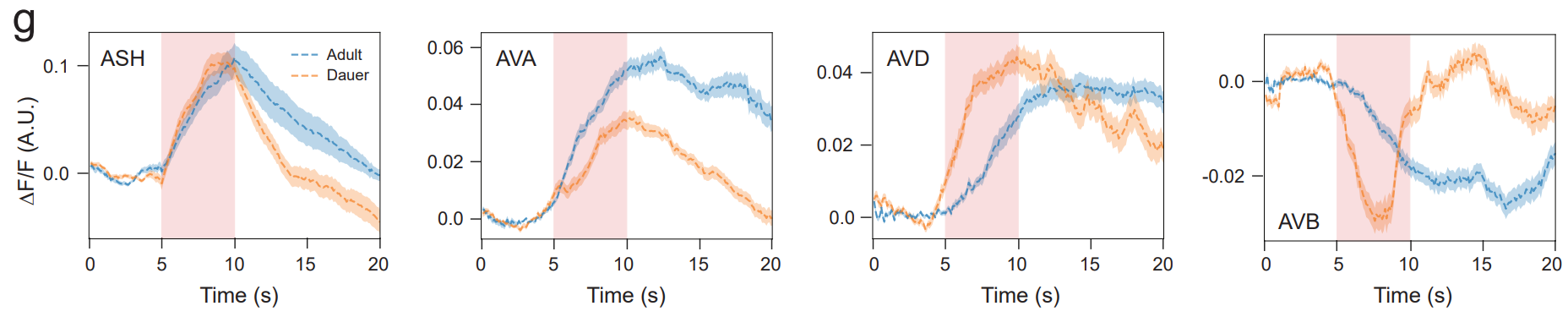
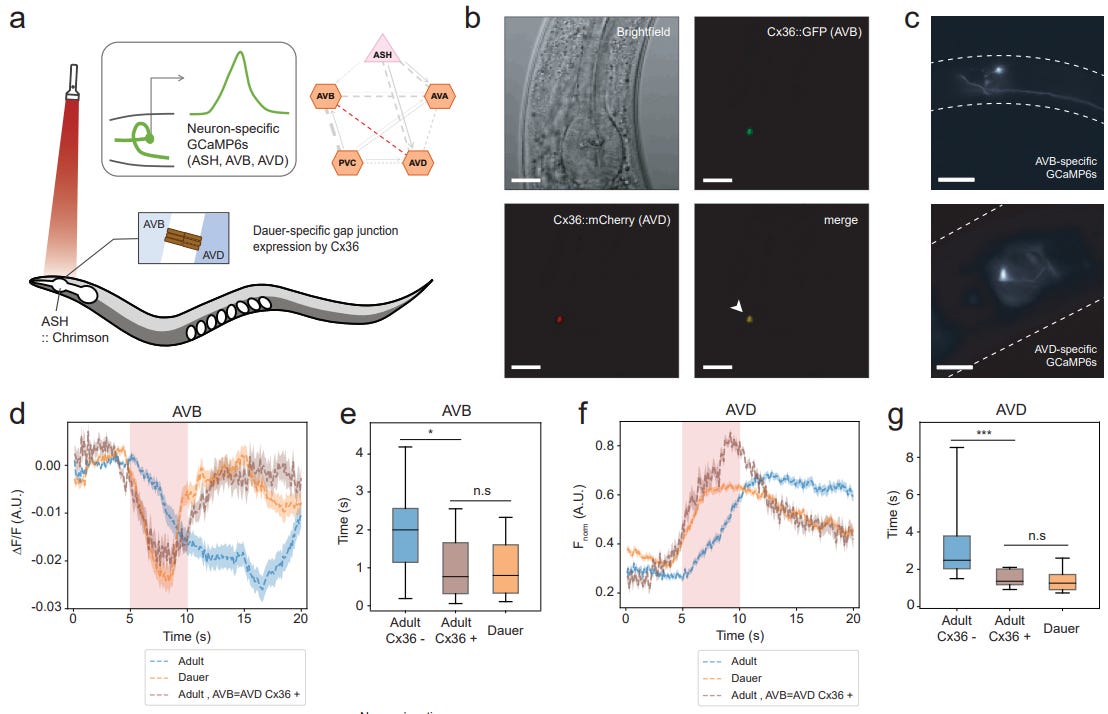
Electrical synapses act more quickly than chemical ones, because they allow electrochemical impulses to just jump from one cell to the next. So it’s not all that surprising that when they imaged calcium activity, they found that the extra electrical synapses were associated with dauer neurons (orange) having neural activity that ramps up and comes back down faster than the adult ones (blue) after stimulation of the sensory neuron ASH:
To corroborate this, they (separately) added two dauer-specific electrical synapses into adult worms by using synthetic connexins, which are the proteins that form electrical synapses in vertebrates. In the worms where they connected AVB to AVD, the adults started behaving like dauers, i.e. having shorter avoidance durations and faster neural dynamics:
Electrical synapses are small and hard to detect, which is why a single trained annotator marked all of them by hand in this dataset using Neuroglancer.
Sometimes electrical synapses are simply left out of connectomes, which seems to be because they are more difficult to call accurately. That makes sense for now, as there is a huge amount to learn from the chemical synapse wiring diagrams that we can map more easily. But I’d personally be very surprised if electrical synapses end up being unimportant, and this paper is a nice example of why.
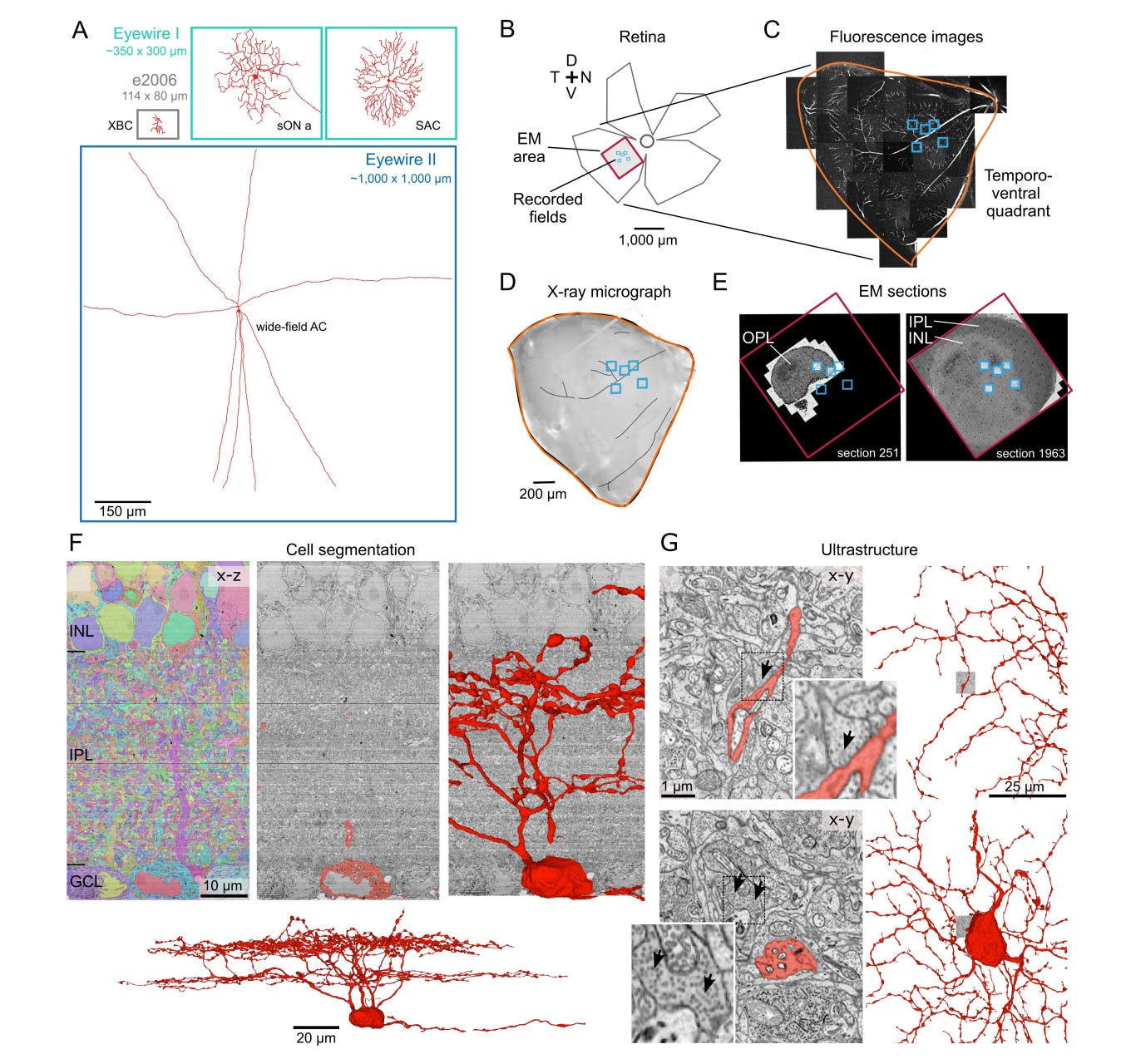
2: Eyewire is an effort to reconstruct the wiring of the mouse retina based on electron microscopy. I first blogged about it in 2012, back when they were more into crowdsourcing the reconstruction process, and a paper on it was published in 2018.
A new paper now presents Eyewire 2.0. The data set is much larger, covering nearly ~1 mm², roughly 10-100 times the area of earlier retinal electron microscopy volumes. It is now at about 0.6% of the whole mouse retina. Here’s their full data processing overview:
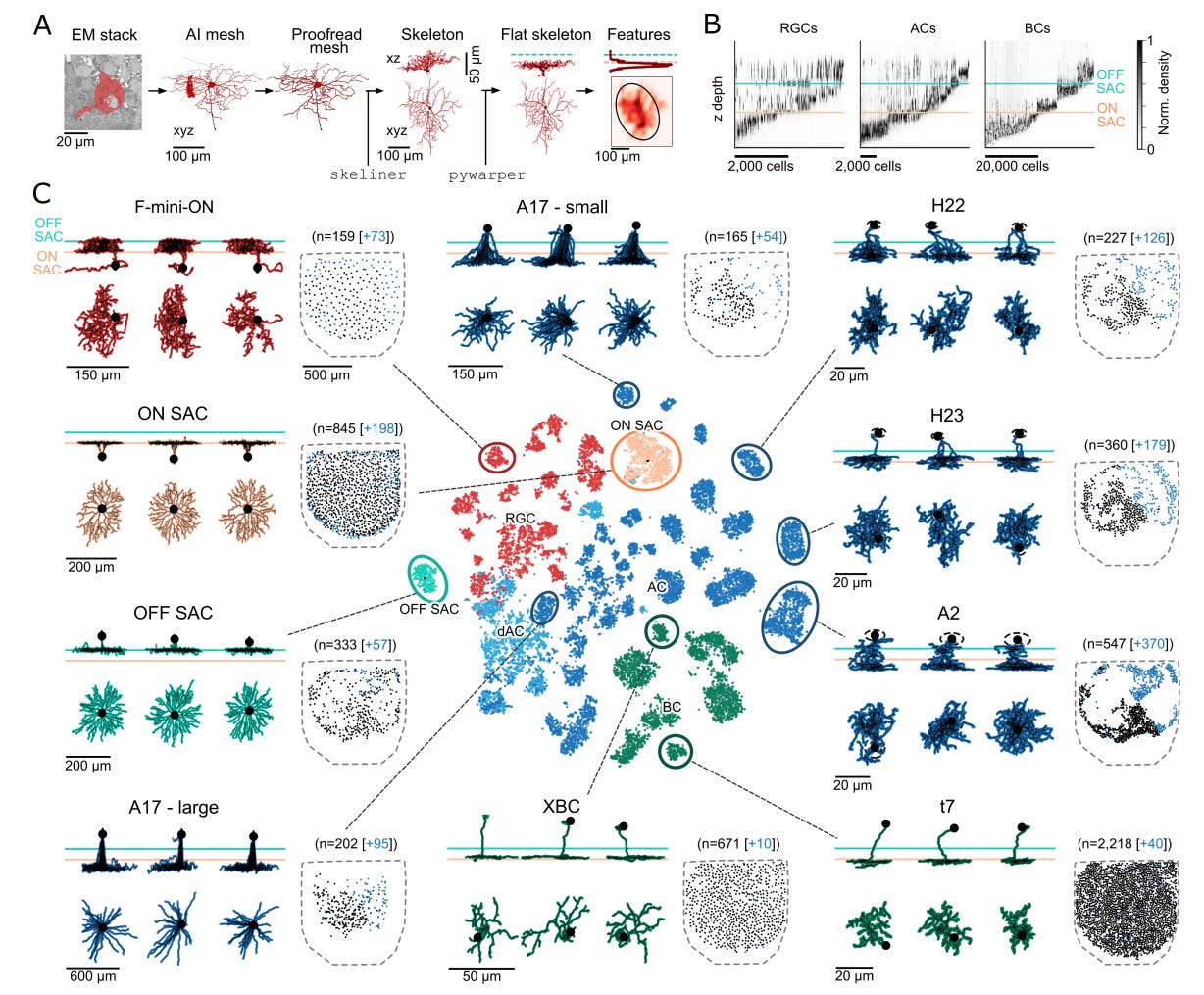
One of the main advances over Eyewire “1.0” is that advances in machine learning-based cell segmentation have now decreased the need for human proofreading of the most complex cells (retinal ganglion cells) by a factor of around ~170x. Here, they were able to classify the cell types by their reconstructed morphologies:
A natural long-term goal would be to attempt to predict the calcium imaging data from the retinal wiring diagram, but there is still a bunch more research to be done before that goal can be reached.
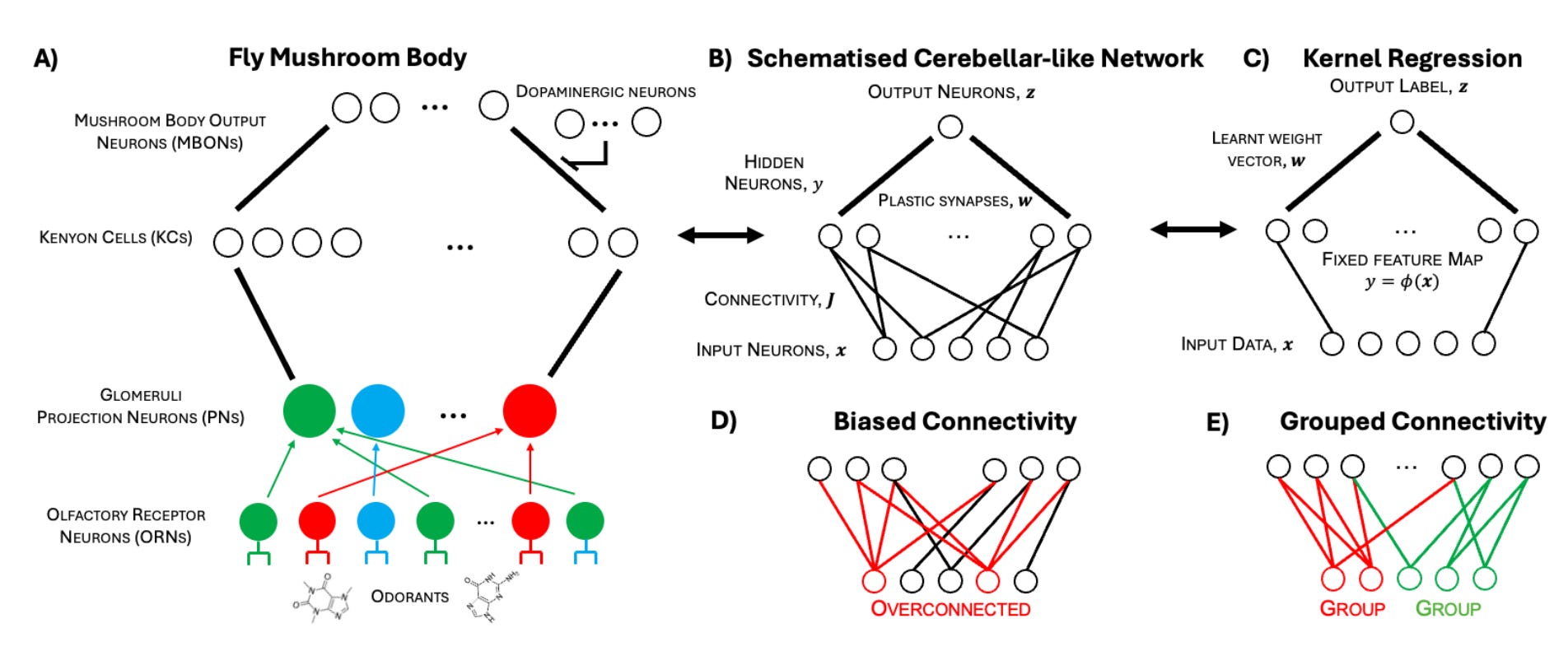
3: Cerebellar-like networks are ones in which input activity is projected to a much higher dimensional space before collapsing to one or more output neurons. This is a frequent “design” pattern in nervous systems, for example being present in the cerebellum, dentate gyrus, and insect olfactory system (i.e. the mushroom body). The way these networks tend to be wired is not, however, entirely random. A new study looks at the ways in which they are non-random and why that might be:
4: A new method for recording the transcription of the neuronal activity marker Fos within individual cells. To do this, the researchers first add a genetically encoded “protein tape” into cells. After the brains are fixed, they can then read these tapes and thereby measure the single cell activity of neurons over the course of the previous few days:
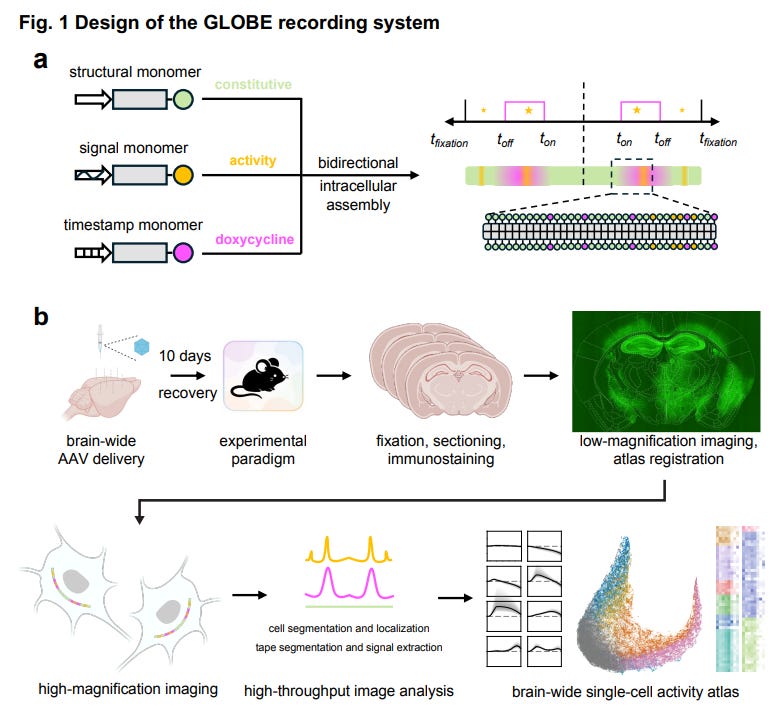
They applied this method while mice were in a contextual fear conditioning and recall task. After preservation, they clustered each cell based on how its Fos expression changed relative to the behavioral task. They found that cells in different brain regions tended to have different temporal patterns of Fos activity, such as being activated only during memory retrieval:
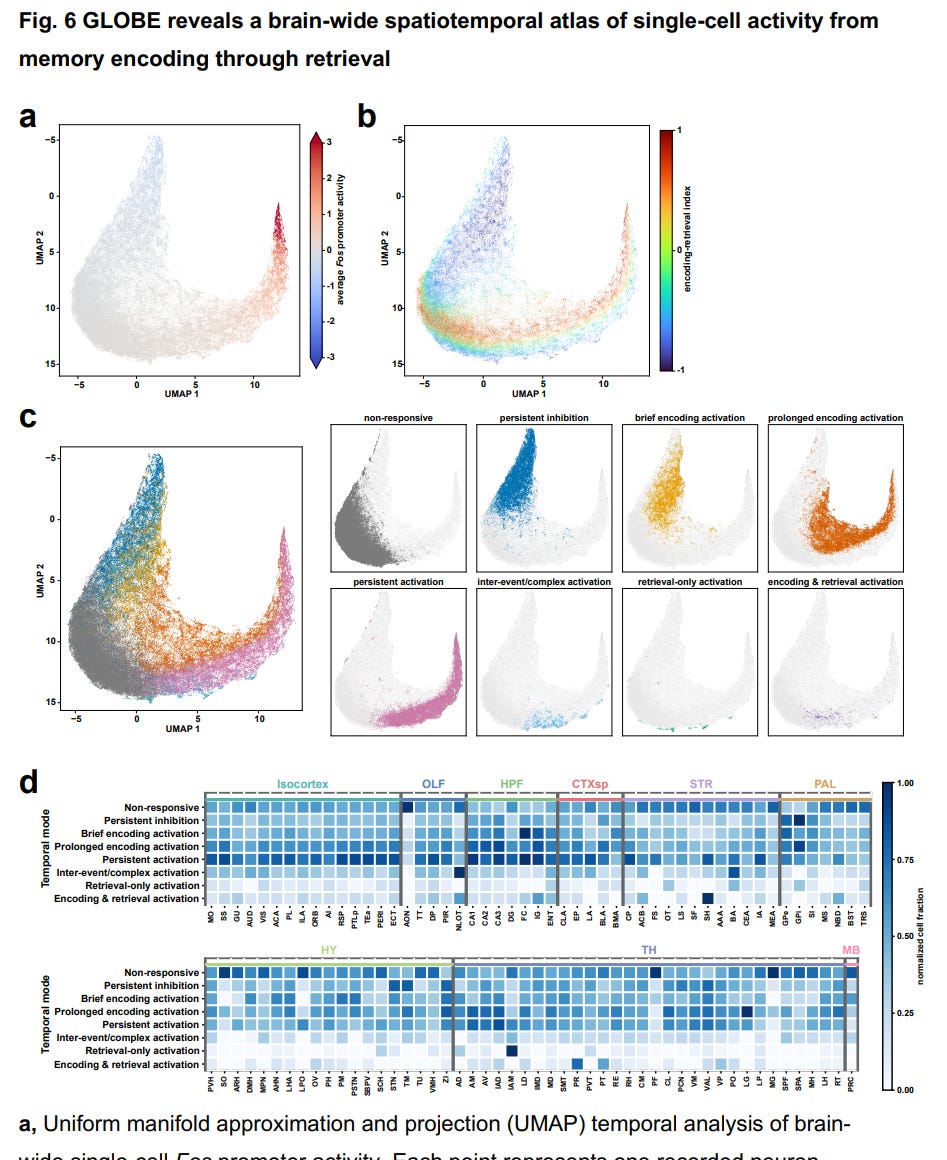
To me this is a nice example of how a preserved brain can capture information about recent experience, recoverable even after that experience has ended. However, it does rely on (a) genetic engineering and (b) a tightly controlled experimental timeline to interpret what the activity markers correspond to.
Theoretically, it seems plausible that some sort of endogenous epigenetic changes might also provide information about the transcription of genes that were activated during recent neuronal activity, like Fos, and that this could potentially be coupled with some sort of lifelogging data to try to make sense of it.
5: Article by connectomics experts Viren Jain and Jeff Lichtman. A couple of points I found notable. First, they note that because connectomes lack molecular data, the field is moving towards “multimodal” connectomes. Such multimodal connectomes include molecular annotations that are either directly mapped, e.g. using expansion microscopy, or inferred on the basis of the electron microscopy images.
Second, they also note that a key benchmark for “understanding” a neural circuit is our ability to simulate it. Specifically, whether we can take a structural connectome and physiological parameters (possibly inferred via AI) and simulate the neural activity that would occur when the circuit is presented with various physiological inputs.
6: A new randomized trial (n=50) tests whether low dose sublingual buprenorphine can prolong the anti-suicidal effects of ketamine in major depressive disorder. Buprenorphine, commonly known as “bupe”, is a partial agonist at μ-opioid receptors used to treat opioid use disorder and chronic pain.
Every participant received a single infusion of ketamine and was then randomized to four weeks of daily buprenorphine (0.2 to 0.8 mg/day) or placebo.
The buprenorphine group showed a larger drop in suicidal ideation scores (mean change −11.6 vs −6.3), with 78% meeting the response threshold at day 31 vs 48% on placebo. Depression scores improved in both groups but did not differ significantly between them.
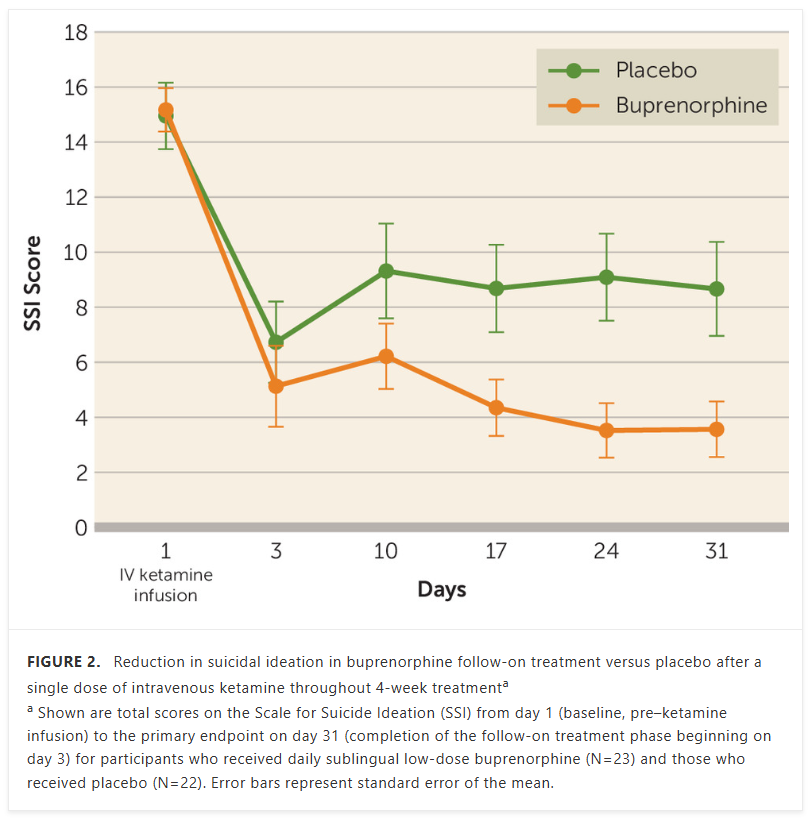
The results are consistent with the anti-suicidal effects of ketamine being related to its effects on opioid receptors.
7: A small randomized trial (n = 15) of short-term weekly psilocybin in people with OCD for whom at least one prior treatment was ineffective (and thus were called “treatment-resistant”). Here are the results. For context, the YBOCS scale is the standard symptom scale in OCD. Here are the groups:
H+H (dark blue): high dose (300 µg/kg) the whole time, all 8 sessions.
L+H (light blue): low dose (100 µg/kg) for sessions 1-4, then switched to high dose for sessions 5-8.
P+H (red dotted): placebo (lorazepam) for sessions 1-4, then switched to high dose for sessions 5-8.
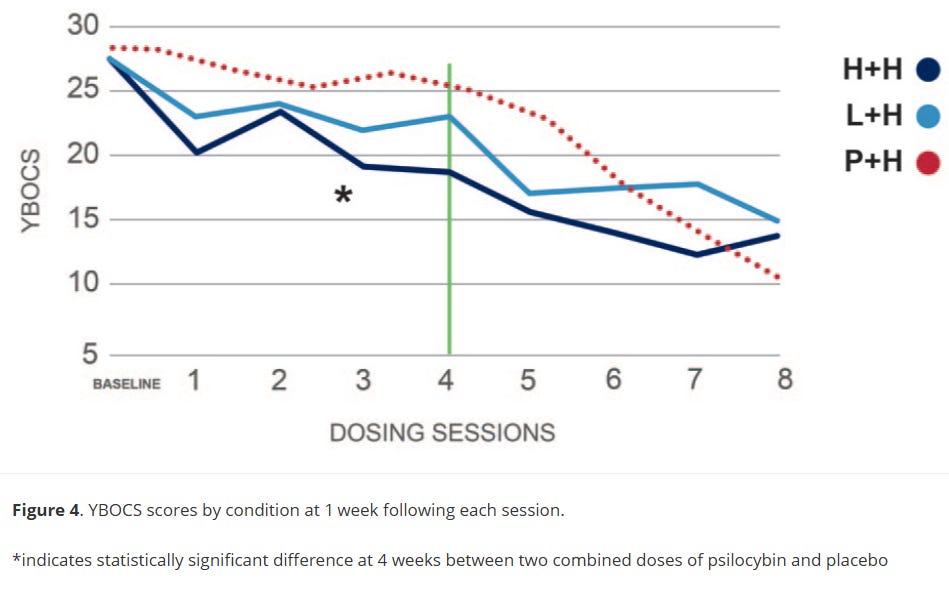
They also measured the extent to which these changes were maintained for the next 6 months:
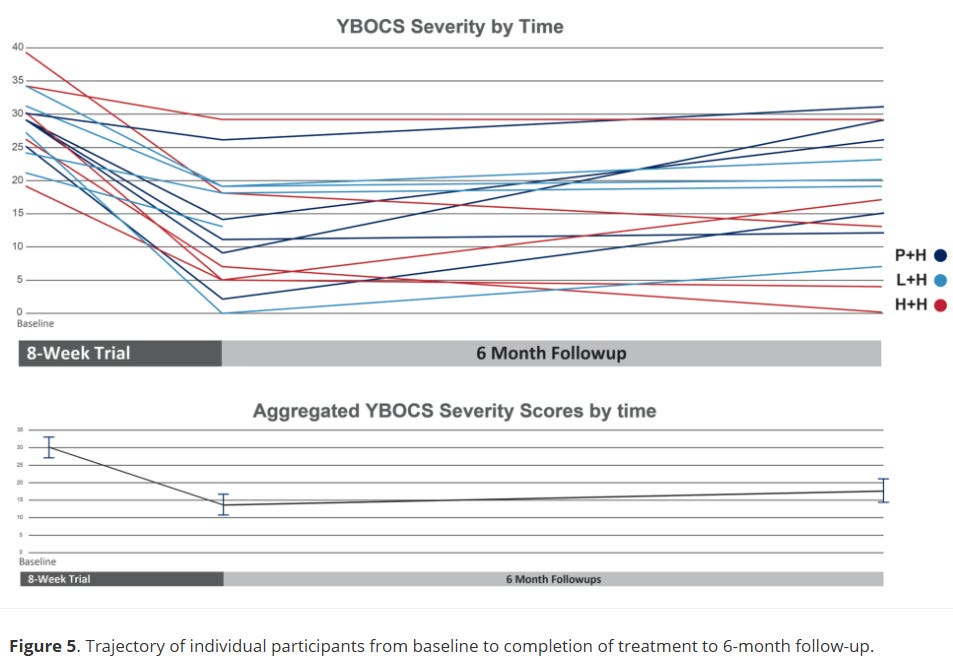
There were no serious adverse events. Overall, it’s a pretty positive study for psilocybin in OCD, but it’s Phase I and a tiny sample size.
If it holds up, one possibility is that maybe “loosening one’s priors” could be helpful for the ego-dystonic intrusive obsessions often seen in OCD.
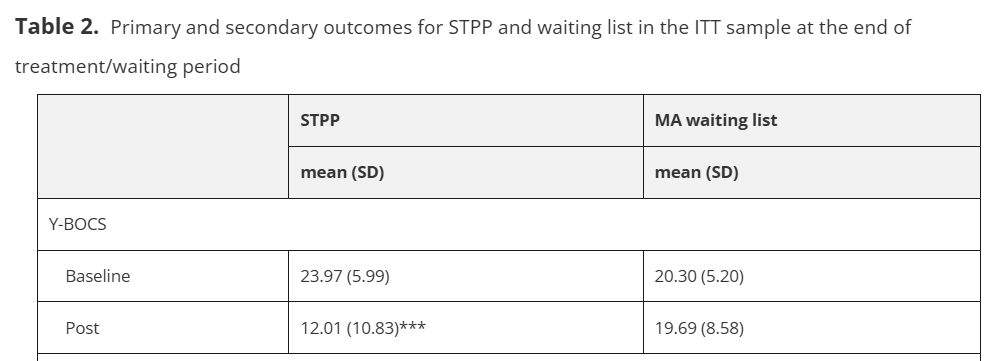
8: A randomized trial (n = 67) of patients with OCD tested a short-term psychodynamic therapy with up to 24 weekly sessions over 6 months.
The core of the approach was identifying and “working through” the core conflictual relationship theme that was thought to be underlying the OCD symptoms. The therapy incorporates self-exposure to feared situations, but primarily uses that exposure as material for exploring the “core conflicts” rather than for desensitizing the conscious “surface” fear, as is done in CBT’s exposure and response prevention.
The study found that the therapy was significantly better than a waiting list control, as studies making that comparison tend to do, but the effect is fairly large and it’s an interesting result. My guess is that, like many types of therapy, this would be helpful for some types of OCD in some people and not others.
9: It’s interesting how every now and then some new treatment idea for Alzheimer’s disease goes viral. This month it was none other than psilocybin mushrooms, a high dose of which was reported in an n = 1 case report to lead to transient improvements in urinary continence, mobility, and spontaneous speech after one dose, and also reportedly beneficial effects after another dose one month later. Even for a case report, the paper is very short on details, so there’s not much to go on.
That said, most people with a clinical diagnosis of “Alzheimer’s disease” have a variety of actual pathologic changes in their brain (“mixed dementia”), and some of these pathologies can lead to cognitive impairment that is fluctuating or partially reversible. So it’s feasible that a single dose of psilocybin could produce a transient improvement here, especially after causing a prolonged sleep-like state lasting 19 hours.
10: I agree with Vinay Prasad’s skepticism on the shingles vaccine preventing dementia. (To be clear, I think the shingles vaccine is fantastic for preventing shingles and I wish I could get it at younger than 50.)
11: Interview with neuroscientist Sean Escola touching on “cognitive dark matter,” i.e. the stuff going on in our brains that is not picked up by external behavior and LLMs. See also this paper on the topic.
12: Sam Harsimony on why various technologies are overrated, including space computing, quantum computing, every source of energy other than solar (including fusion), BCIs in healthy humans, and gene therapy outside of monogenic disorders. Some good takes. In general, Sam’s blog is highly underrated.
13: Jordan Sparks on why anti-aging leading to “longevity escape velocity” — i.e. iterative anti-aging treatments allowing people to completely prevent aging and not die from aging ever — is very unlikely to happen anytime soon.
14: Alex Tabarrok on a new law in Montana, which allows drugs cleared through Phase I trials to be sold commercially, bypassing the full FDA pathway. Seems like a great idea to me to try this. See Infinita for a service provider helping biotech companies to make use of this law.
Alex suggests that this might help the competitiveness of US biotech vis a vis China. An interesting comment notes that the main advantage of clinical trials in China is the speed of patient enrollment, because they have big hospitals that treat lots of patients, so it’s possible to complete a trial very quickly.
15: Study on a new method for the perfusion fixation of turtles that uses carotid cannulation. This allows the flow to go directly into the brain and thereby avoid systemic shunts that could divert flow into the peripheral circulation, if perfusion through the heart were used instead. They report high-quality preservation of dendritic spines:
16: Jeremy Kalfus on why mirror life seems overrated as an existential threat. I know Jeremy because he is a recent high school graduate who reached out to us about volunteer opportunities at Apex Neuroscience and is now working with us on a review paper about ischemic brain perfusion. I predict that he is going to be a superstar one day.
17: New paper on progress towards the very long-term goal of developing molecular nanotechnology. And an interview between Max More and one of the authors, Ralph Merkle.
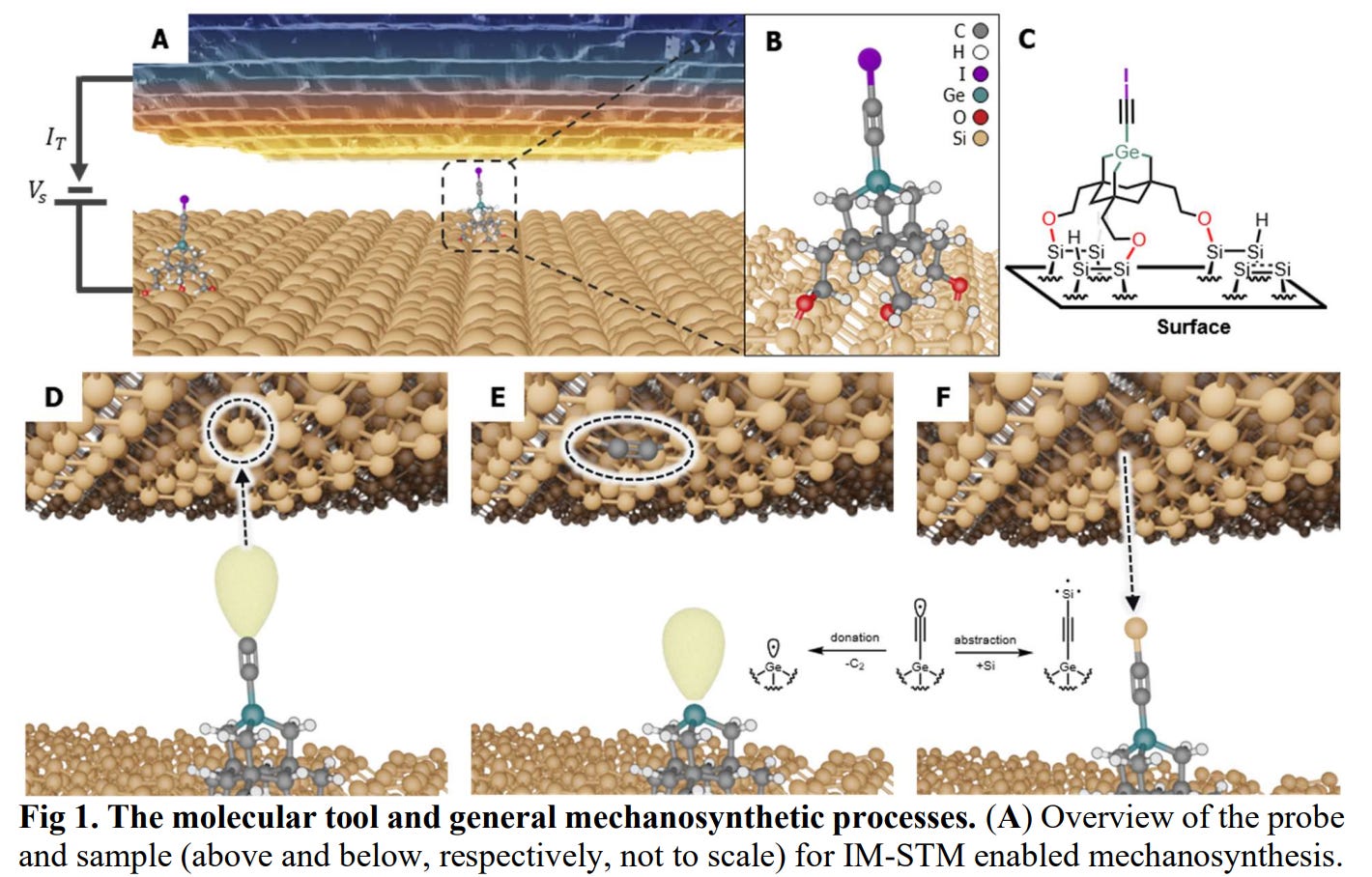
It’s interesting to see Ralph’s critique of Ken Hayworth’s traceability criteria for evaluating brain preservation protocols. I would love to see a debate between Ralph and Ken, perhaps someone could put that together. I think Ken is not appreciating Ralph’s point about the limitations of current electron microscopy vs future brain mapping technology. On the other hand, I think Ralph is not appreciating Ken’s point that it seems prudent to look at the structure of preserved brains and see whether it looks like the substrate that we think encodes memory is most likely still present. For those reasons I personally fall between them, as an Enlightened Centrist.
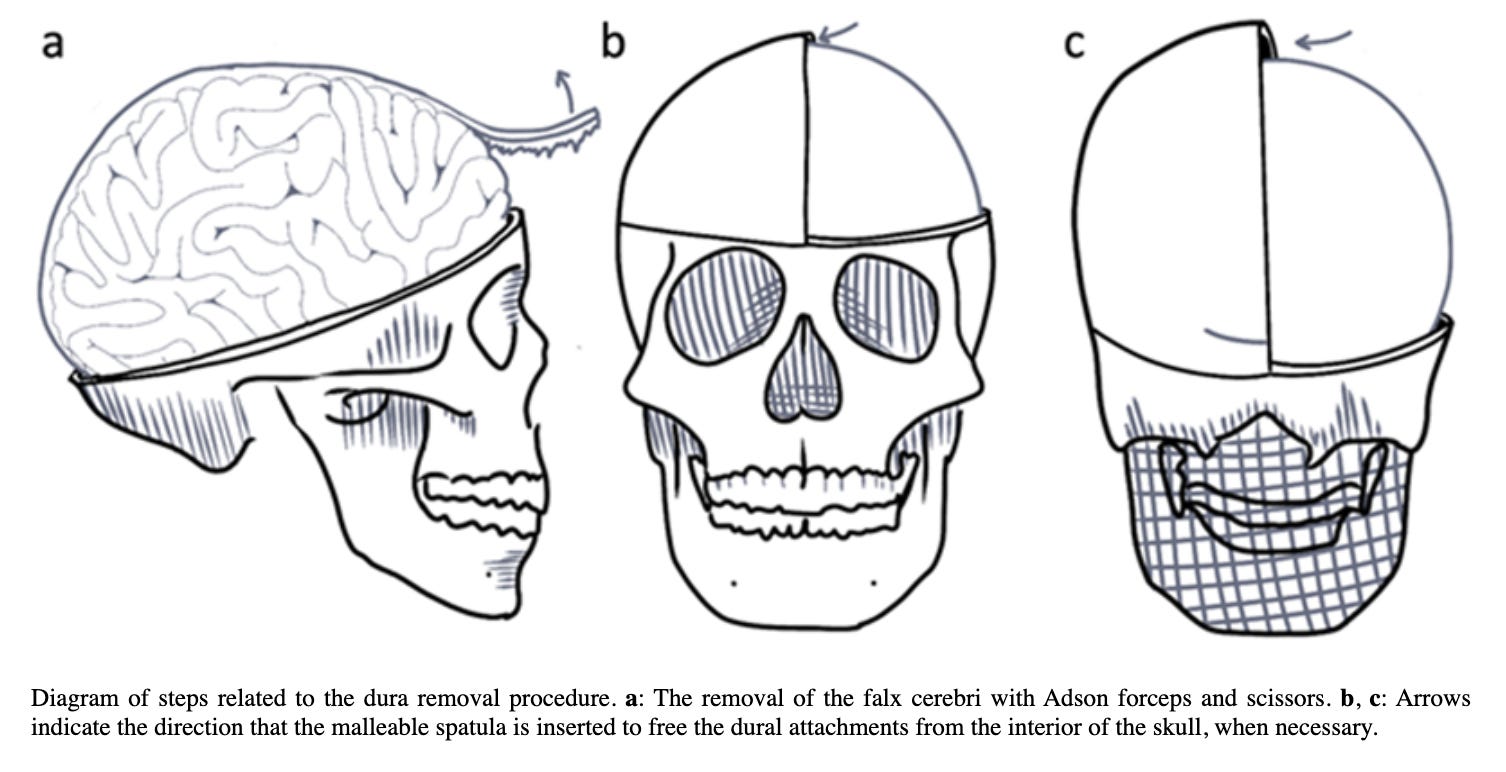
18: Our paper on methods for brain extraction in brain banking has now been published:
No posts
Comments
Nothing yet. Say the first thing.
Sign in to join the conversation.