
Team,
I just spent an hour with Keith Rabois, and I have not stopped thinking about how he lives.
If you don’t know the name, he’s one of the most successful investors of the last twenty years, an early force behind PayPal, Square, and DoorDash. He has more money than he could spend in a lifetime. And he treats his own body with the seriousness of a professional athlete in season. He has not missed more than a handful of workouts in seven years, and the ones he did miss still visibly bother him. He tracks every session. He treats training like brushing his teeth, non-negotiable, not up for debate on any given morning, because he’s figured out that the moment it becomes optional once, it becomes optional forever.
Here’s the thing I’ve noticed, and Keith is just the latest example. The most successful people I meet, the investors, the founders, the ones operating at the very top of brutally competitive fields, almost all treat their bodies like elite athletes treat theirs. It’s one of the most consistent patterns I’ve seen in this work, and I don’t think it’s a coincidence.
I want to talk about why, because it changes how you might think about your own health.
For most of us, health lives in one box and work lives in another. You go to the gym to look better or to feel less guilty, and then you go do your actual job, which happens in your head.
The people at the top don’t think that way. They’ve collapsed the two. They train their bodies because it’s how they protect their minds, their focus, their decision-making, their stamina over a very long career. Keith said something that stuck with me: staying relevant as a VC as the decades pass is genuinely hard, and one of the ways he does it is by keeping his body and brain young, sharp, and curious. The fitness isn’t separate from the career. It’s infrastructure for it.
And there’s real biology under that instinct. When you train, especially when you lift and when you push your heart rate up, you’re not just building muscle. You’re driving the release of molecules that cross into the brain and support the growth and survival of neurons. Exercise is one of the only things we know of that reliably protects the aging brain. These high performers may have arrived at it through obsession and self-experiment, but the science agrees with them.
The second pattern: they don’t guess. They measure.
Keith has trends on his own blood work going back to 2003. He knows his numbers, tracks them year over year, and can tell instantly when something is off because he has two decades of his own baseline to compare against. This is the opposite of how most people do health, which is to wait until something hurts and then react.
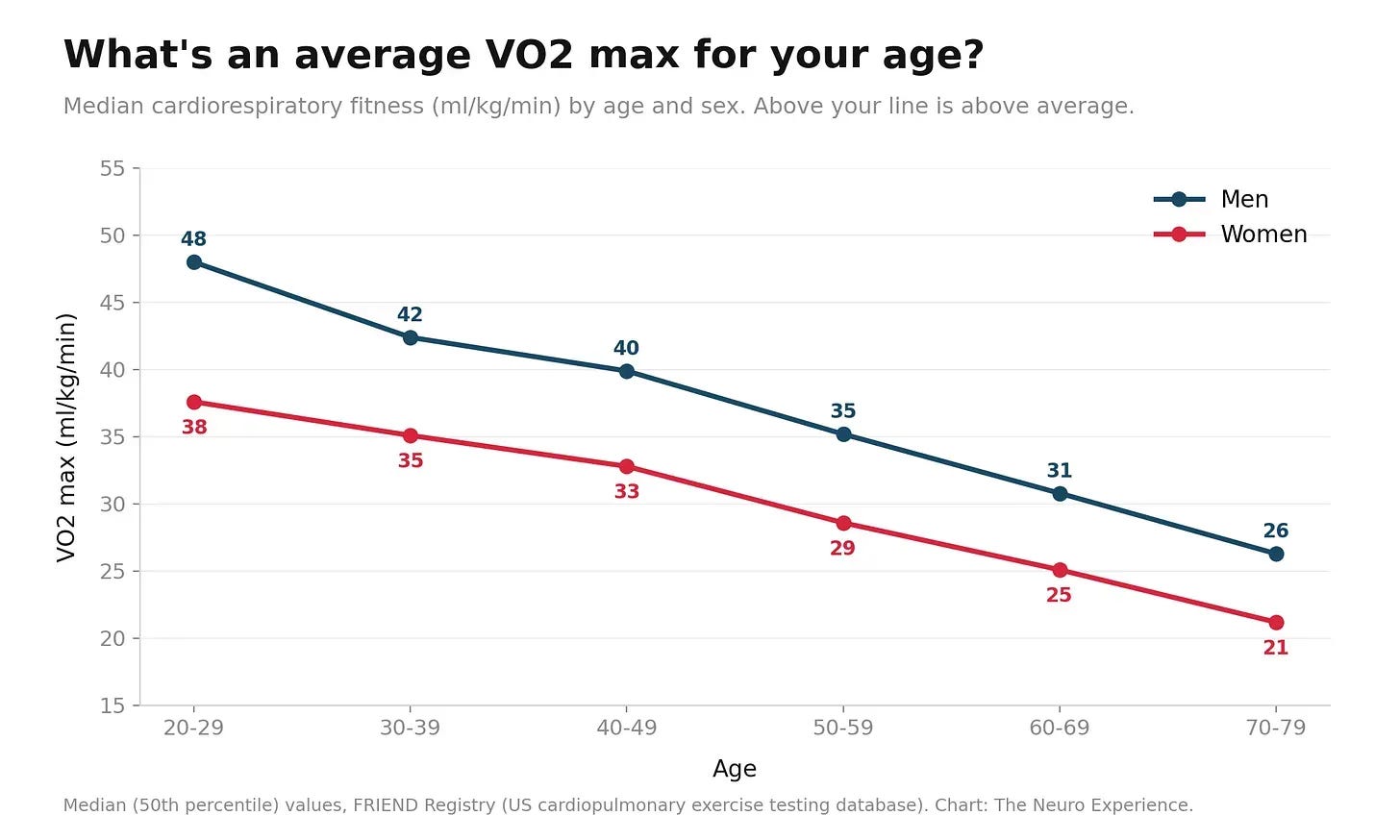
One number he’s fixated on is VO2 max, essentially the size of your engine, the maximum amount of oxygen your body can use when you’re working hard. He asks everyone their VO2 max. Founders, friends, his own partners. And if it’s low for their age, he tells them, bluntly, to fix it.
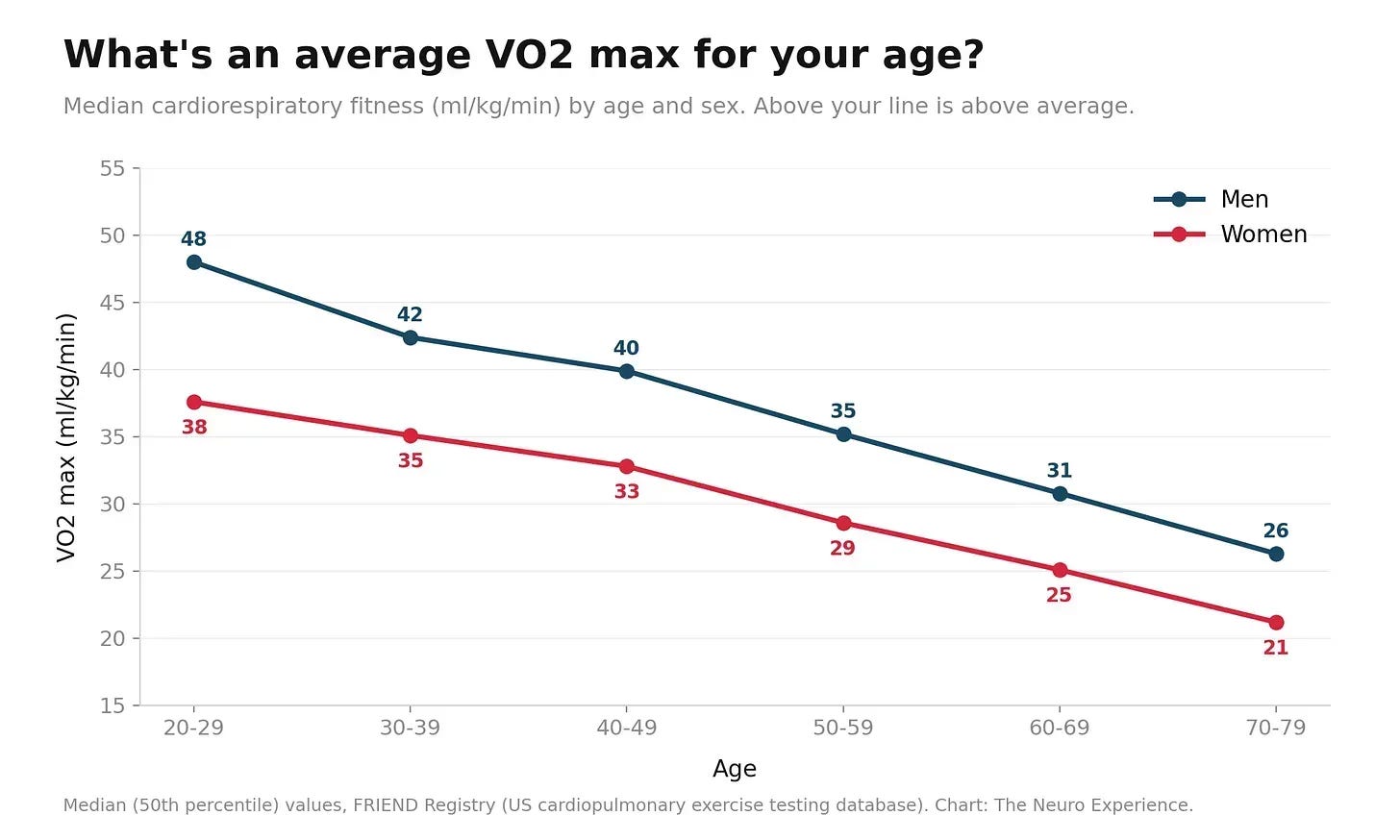
At first that sounds like a fit guy’s quirk. Then you look at the research. In a study of over 122,000 people, the least fit had roughly five times the risk of dying compared to the fittest, and being in that bottom group was a worse bet on your life than smoking, than diabetes, than high blood pressure. We’ve built entire public health campaigns around cigarettes. This beat all of them and almost nobody talks about it.
That’s why he asks. He’s not showing off. He understands that this one number is one of the clearest signals we have of how long and how well a person is going to live. It’s the kind of thing the people at the top know and most people have never been told.
The third pattern is the one I think you can actually steal, whatever your budget or schedule.
They remove the decision. Keith keeps red light at home because if it’s convenient, there’s no excuse not to do it. He trains no matter what because “no days off” isn’t about being a machine, it’s about never letting the door open to the excuse. He even double-books his workouts with friends so that seeing people he cares about and training happen at the same time, and neither gets sacrificed to a busy week.
None of that requires being a billionaire. It requires designing your life so the healthy thing is the easy thing. That’s the actual transferable lesson hiding underneath all the cryotherapy and the blood panels.
You’re not going to pull twenty-two vials of blood or do cryotherapy every morning, and you don’t need to. Most of what these people do at the extreme is time and money that ordinary life doesn’t hand you, and I’m not going to pretend otherwise.
But the mindset underneath it is free, and it’s the part worth taking.
Treat your body as the thing your whole life runs on, not a vanity project you get to when there’s time. Know a few of your own numbers instead of waiting for something to break. And build your days so the good choices don’t require willpower, because willpower runs out and systems don’t.
The most successful people in the world figured out that the body and the career are the same project. You don’t need their money to apply the same idea. You just need to stop treating your health like it’s optional, the same way they never let themselves treat their training like it’s optional.
My full conversation with Keith Rabois is out now, on YouTube, Apple, and Spotify.
Comments
Nothing yet. Say the first thing.
Sign in to join the conversation.