
Kicked off by Tim Stanley’s piece in the Telegraph (discussed here previously), the Tory fold has been having something of a family meeting about its green agenda, punctuated with lots of opinions about what the Conservative Party and the broader political Right should be from people who are manifestly outside it. It’s quite a spectacle seeing Guardian journalists tearing their hair out about the Conservatives’ policy will be: some claim that the Tories will be punished by voters, who are unanimously committed to Net Zero; others state that climate policy should not be contested by political parties. Those arguments debunk themselves.
But shouldn’t we see better argument for green “Conservatism” from its adherents? I haven’t seen it. Stanley was much more precious and petulant about criticism than I would have expected. Another, a former policy advisor to the Conservative Party, responded “We are not environmentalists despite our conservatism, but because of it” and that “Win or lose, we will fight the wreckers every step of the way.” The problem for such dogma is that interrogating it yields no thought. “We are not environmentalists despite our socialism…” someone else might say — and often do — yet no necessary relationship between environmentalism and socialism is revealed. The claim is just ‘A = B’.
I understand that many of the sceptical side like to claim that the green agenda is just Marxism in some other drag, which has somehow colonised the institutions of the Right. But that’s simply the same formulation: ‘A=B’. Whereas contemporary leftoids might claim that climate change is a capitalist crisis (and thus that you can’t tackle climate change without tackling capitalism), a trad socialist (or even communist) would point out that an argument for socialism premised on a condition of ecological austerity (that particular social organisation is required in order to achieve sustainability) is not making a first-principles argument for socialism or communism; environmentalism is establishing the premises. Even Marx himself rejected completely the works of Thomas Malthus.
Malthus’s hypothesis, of course, was an argument for protectionism in the interests of English landed classes. It was seemingly based in unimpeachable mathematical expressions as if iron laws of nature. They would constrain the poor and explain their condition, and resist free trade that might lower prices, such that those conditions could be improved. He was categorically a Conservative — of his era — and his corpse was reanimated by Conservatives in the 1960s. He’s not, however the Conservative Party saint that is raised by Tim Stanley or Ambrose Evans-Pritchard in their defences of green Toryism, despite Malthus probably being the largest contributor to its ‘thought’ (such as it is), much of the rest being incoherent, misty-eyed chocolate-box-ism — a fantasy of British rural idyll which some later tried to turn into a philosophical doctrine without the Blut und Boden stuff that ends in rounding people up and so on. After all, the Enclosures, which Malthusianism defended, had been bad enough, and exterminated the peasant class, one way or another, including “sheep devouring men” — a phenomenon that arguably began the process of wondering out loud if there might be a better basis for social organisation than what appeared to be the order of things.
From across the Atlantic, Jordan Peterson weighed in on the Telegraph’s family squabble. “Climate change catastrophism is a Leftist weapon to destroy capitalism”, he explained.
It’s a category error. And that can be seen by remembering Malthus. Yes, he was against free trade. But that did not and does not put him on the political left. Malthus wanted to conserve the extant social order, and wanted to find a natural basis to legitimise that order — to make it seemingly ‘sustainable’, so to speak. He did not want for the benighted classes to liberate themselves, to fashion their own means of sustenance for themselves, in their own interests. Thus, we should note, throughout the centuries, albeit looking backwards, that there existed a deep contradiction.
After some discussion about contemporary policy regarding air conditioning synchronising in the EU, UK and NYC, Peterson sets out his claim:
The roots of such worrisome totalising can be traced in the more academic realm to the 1960s and 1970s, with the publication of Rachel Carson’s Silent Spring, Paul Ehrlich’s The Population Bomb, and the Club of Rome’s The Limits to Growth. More distal influences, such as Karl Marx’s Communist Manifesto of 1848, also merit consideration, as we shall see.
Unfortunately for him, and for our purposes, the ‘distal influences’ are not discussed in his essay, and so we do not get to see. Moreover, Paul Ehrlich was a conservative — a Republican. The Club of Rome was, similarly, animated by his views, and resonant with the likes of Garret Hardin, whose 1968 essay The Tragedy of the Commons argued, per Malthus, for the abolition of all “public property” — i.e. for total enclosure.
An alternative to the commons need not be perfectly just to be preferable. With real estate and other material goods, the alternative we have chosen is the institution of private property coupled with legal inheritance. Is this system perfectly just? As a genetically trained biologist I deny that it is. It seems to me that, if there are to be differences in individual inheritance, legal possession should be perfectly correlated with biological inheritance-that those who are biologically more fit to be the custodians of property and power should legally inherit more. But genetic recombination continually makes a mockery of the doctrine of "like father, like son" implicit in our laws of legal inheritance. An idiot can inherit millions, and a trust fund can keep his estate intact. We must admit that our legal system of private property plus inheritance is unjust-but we put up with it because we are not convinced, at the moment, that anyone has invented a better system. The alternative of the commons is too horrifying to contemplate. Injustice is preferable to total ruin.
Enclosure was liberating, argued, Hardin, in the same way that a law preventing murder was liberating.
Much more could be said here, but the point I am getting at is one about political geometry, not about Garret Hardin. Peterson makes fundamental errors in his history of the green movement, which he brings into the present.
He continues, to attack Al Gore and his “Inconvenient Truth” — quite rightly, for being emotional, politically-motivated nonsense, although again, I think he overstates its importance in changing the political landscape. Indeed, he goes on to observe that following Gore’s intervention, climate politics in the USA, at least, began to fracture on party lines — “72 per cent of Democrats but only 6 per cent of Republicans worried about climate change”. This fissure, he claims, represents “the deeper hijacking of the climate issue by a set of a priori political and moral commitments”, at which point this train of thought simply disappears.
Do we not want political parties to be divided on “a priori political and moral commitments”? Isn’t that a good thing, a preferable thing, in itself necessary for democracy to function meaningfully — that provided such perspectives are resonant with some part of the broader population and their interests, such divisions represent a material tension in society that needs to be addressed? We do not find out. Peterson moves on to the correct observation that alarmist prognostications have not materialised, yet such claims persist in certain political quarters. “While some errors have stemmed from genuine uncertainty, many more resulted from the subordination of evidence to a broader Left-wing ideological world-view.” But rather than expanding on this, Peterson again abruptly changes course, to examine the mode of action of CO2 in the biosphere.
After this diversion into the greening of the planet, Peterson returns to the “ideological”. “Politicisation of the climate debate meant that facts about atmospheric CO2 and its effects became less scientific observations than convenient proofs of a pre-existing position”, he claims. But that’s not a return to the ideological; it’s a A=B statement again. He means ‘partisan’, not ideological (he does at least use the word). To the intransigent party, that refuses to accept facts that debunk alarmism reject counters to their “proof that industrial capitalism was irredeemably corrupt”.
Is it unreasonable to note how conveniently this narrative mirrors the broader world-view of the Left – even the radical Left? The West is inherently colonial and exploitative; free market capitalism endangers humanity and the planet; centralised planning is the necessary corrective.
But its disproof is just a few pages away. There is Stanley’s essay, which initiated this series of discussions, and his appeal to historical Tory figures. Romantic and daft though that may be, Stanley is arguing from conservative corners. Similarly, the eternally frustrating AEP has, for a very long time, been a green “market” evangelist on those same pages. In his latest offering, for example, he writes that “Britain will soon be Europe’s energy powerhouse”:
The National Energy System Operator (Neso) says the country will become “a net exporter of electricity across the year” by 2030, rapidly reversing the current large deficit. Britain will be the electricity backbone of north-west Europe by 2035. Its domestic power prices will converge with those of France and substantially undercut Germany, Italy or Poland.
AEP, however, forgets that NESO is just an office of DESNZ. Moreover, he forgets that DESNZ has agreed with the developers of all that generating capacity that the British public shall pay a fixed rate for that power, no matter what prices it achieves on the so-called ‘wholesale’ market — those prices coming from the retail market instead.
Despite this evidence on neighbouring pages, Peterson continues…
Is it merely coincidental that socialism – in its extreme forms – appears to be precisely the system necessitated by the “reality” of industrial CO2 production? Or is it too cynical to suggest that such remarkable convenience might explain why interpretations other than “CO2 equals catastrophe” have been systematically marginalised, even at the level of allowable facts?
But it doesn’t. Stanley and AEP have offered versions of green Conservatism, which though they may share talking points with Ed Miliband and his successor Miatta Fahnbulleh, configure them differently. Says Stanley:
“Imagine the conservative wins to be gained from rolling out renewables. Economic? Lower prices. Patriotic? No longer held hostage by foreign dictators.”
Says AEP:
“What can be more conservative than Edmund Burke’s contract of eternal society? It entails a moral duty to pass on the world we have inherited, “a partnership not only between those who are living, but between those who are living, those who are dead and those who are to be born”.”
I am not trying to persuade anyone here to join the green right. Far from it. My point is that Peterson is misled by political geometry, and, sadly for such a specialist in social psychology, doesn’t really get to the bottom of the functioning of ideology, perhaps because he too is impatient to make points to sustain a partisan distinction. He claims:
Let us be clear: this is not science. It is, instead, the subordination of science to ideology, at every stage – from data selection to conclusion. It is the “science-justified” derogation and persecution of dissenters from the claim that “the realities of climate demand socialism”. It is the willingness to wield the prestige of science as a cudgel while denying any motivation other than pure objectivity.
Much of this is right. It’s not science. And yes, it is the subordination of science to ideology. But a more precise way of stating it is that the ideology precedes the science, and the debate between ideologies descends to science.
The point I’m getting at here is that neither the contemporary left nor their counterparts in the putative right have been able to make an argument for their quarters without “science” in general and “climate” (or at least the “environment”) in particular. Peterson misses the cross-party aspect to the climate consensus, and the historical roots of environmentalism in conservative quarters, because he’s just a little too preoccupied with the “left”, which he wants to sustain is a historically-continuous category of thought. All that despite Malthus, and despite Hardin, and despite the left’s own transformations — some might say its self-annihilation.
As I point out in the following article for the Daily Sceptic, I am no fan of political geometry. Put it this way: to say that someone is of the “left” is to say nothing. It’s just a direction. It’s possibly just as meaningless to say someone is a “socialist” — that’s just a noun. If the term is to be an adjective, it must present a coherent description of commitments, but that rarely happens, even where there is self-identification as such — socialists often being as ignorant of their perspective as those who “identify” as this that or the other without definition. And much the same can be said of any counterpart term of the putative ‘right’.
Many trip over the left-right axis in their attempts to understand and explain the rise of environmentalism. Some go even further, and claim that environmentalism is itself a good thing, which has simply been misled. Yet they cannot point me to a time or to a book which represents this authentic form of green ideology existed or had been defined.
It pains me to see an as longwinded and confused argument as Peterson’s just as much as it pains me to see Stanley’s and AEP’s empty green conservatism arrive just as a major British political party was beginning to understand what it had done, and had begin to move the needle. I think their arguments are crap, across the piece.
For progress to be made, the role of British and American Conservatives in developing contemporary green ideology must be acknowledged. And it must also be recognised that there has long been that tradition in British Conservative thought, which has at least twice ended badly. Fool me once, and all that… Those political experiments are conclusive, and they demonstrate at each instance that something as different as Left and Right divide different persuasions within Conservatism. Malthus and his protectionism being one, for example.
And for that matter, understanding that environmentalism is orthogonal to the left-right axis, means recognising that a commitment to seemingly left-wing ideas does not require a commitment to green ideas. The more people from the right protest otherwise, and tell me that I am completely wrong, and that there is a direct lineage between Marx himself and Greta Thunberg, the more I am convinced that these are like Edwin Abbot Abbot’s characters in Flatland failing to comprehend a sphere: the claim of a hidden dimension upsets views on the world, and the existential crisis in turn provokes anger.
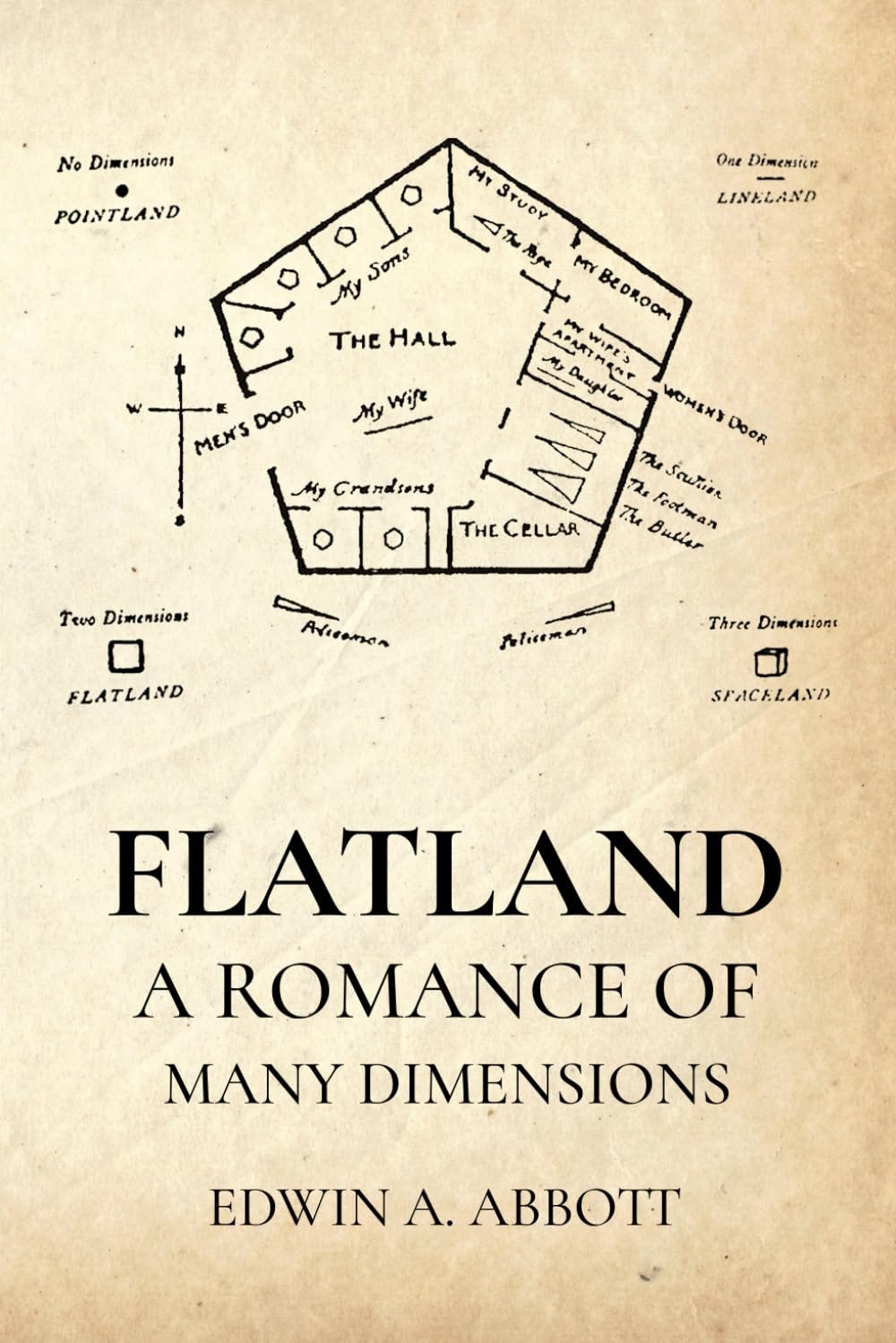
That is to say that political geometry becomes theology, and people start arguing about vectors, rather than ideas that, in any case, were never appropriate for reduction to Cartesian coordinates.
The point that ought to be made is that not only is the green-right (or green-left, for that matter) manifestly committed to ideas that are in contradiction with the substantive axis, the green axis has become the dominant, reducing the scale and influence of the directional axis. Furthermore, the last 20 years has shown us how destructive that dominant axis has become. These facts require a divorce, not more dripping wet nonsense about a ‘broad church’ — you either stand for something, or you stand for nothing.
And for all the talk of the synonymousness of ‘green’ and ‘left’, it was the green Tories who led this country far further up the garden path than their ecosocialist counterparts. They might try to rebrand it as ‘active travel’. But if environmentalism is to be the greater part of a Conservative offering, then its adherents should admit it, and should split.
Following Tim Stanley’s emotional and unscientific appeal for green conservatism in the Telegraph, a number of other commentators in the paper itself and elsewhere have added their thoughts. In the same paper, but in the opposite camp, Stanley’s claims were dissected by Lord David Frost and Dr John Constable of the Renewable Energy Foundation. Subsequently, the paper’s resident solar power and greenomics evangelist Ambrose Evans-Pritchard joined the Stanley camp. Whatever else is argued between these four – and beyond – it establishes that if there is a Left-Right axis in British politics, there is at right angles to it another axis, such that both a ‘green Left’ and a ‘green Right’ can be seen. Now those of a green bent are furious that anyone should occupy any opposite space. But none can make a good argument for their own position, much less a good-faith response to their counterparts taking theirs.
The Left, claims Stanley, turned a “tangible ecological crisis into a culture war abstraction”. But the Right – which Stanley sometimes limits to the “online Right”, seemingly to distinguish it from more respectable quarters – responded to green-Left misanthropy with a “misplaced sympathy for the devil”, siding with “fossil-fuel giants” and against renewables. Evans-Pritchard, picking up on Stanley’s lessons for a form of green Conservatism “limited by voluntarism and property rights” from Aristotle and Disraeli, argues that “The political Right needs to rediscover its philosophical compass.” Accordingly, he channels “Edmund Burke’s contract of eternal society” and Margaret Thatcher before laying into Kemi Badenoch’s “purge of Tory candidates who dissent” – though evidence of this is limited – “at an abominable political moment”. The arguments are, to be kind, confused, misty-eyed and more ambitious than their authors’ talents are equal to.
I am no fan of political geometry, because objects that we can grasp through shorthand or metaphor in that way lack sufficient dimensionality to be useful. (Before we know it, the simple axis we summon up to aid discussion requires us to consider a tesseract.) But let’s stick with it for the moment. If there is a ‘green Left’ and a ‘green Right’, there are by necessity four quadrants to the conceptual space of British politics. Yet for the duration of this century, half of that conceptual space has been silent, empty and verboten. It has been so silent and empty that it has not even been officially designated a colour to oppose green in the way that red sits opposite blue. It has no grantors, no institutions, no patrons and no teenage Swedish truant living saints. Indeed, the area – or is it volume? – that is opposite green: let’s call it brown – is functionally equivalent to exile, worse even than being sent to the real Coventry, which is bad enough. To position oneself in the brown camp was to commit career suicide and eject oneself from polite society. No public sector job, no media job, no job in the increasingly green-woke City was available to you. And so on. Cancellation was invented for climate change ‘deniers’, years before it came for the transphobes and accidental racists.
Comments
Nothing yet. Say the first thing.
Sign in to join the conversation.