
The Honey browser extension, once widely promoted as a helpful tool for finding discounts while shopping online, has come under intense scrutiny for deceptive practices that have negatively impacted both creators and consumers. Honey's core function was marketed as a tool to automatically apply the best available coupon codes at checkout. As Hank Green explained, "Honey is a browser extension that is purported to identify coupon codes- every coupon code on the internet to help you apply that code whenever you're checking out at any website and you could save hundreds of dollars" (Hank, 2024). However, investigations revealed that Honey frequently replaced legitimate affiliate links with its own, redirecting commissions meant for creators to itself instead. This "affiliate theft" has resulted in content creators losing revenue they rightfully earned while misleading consumers about the extent of their savings.
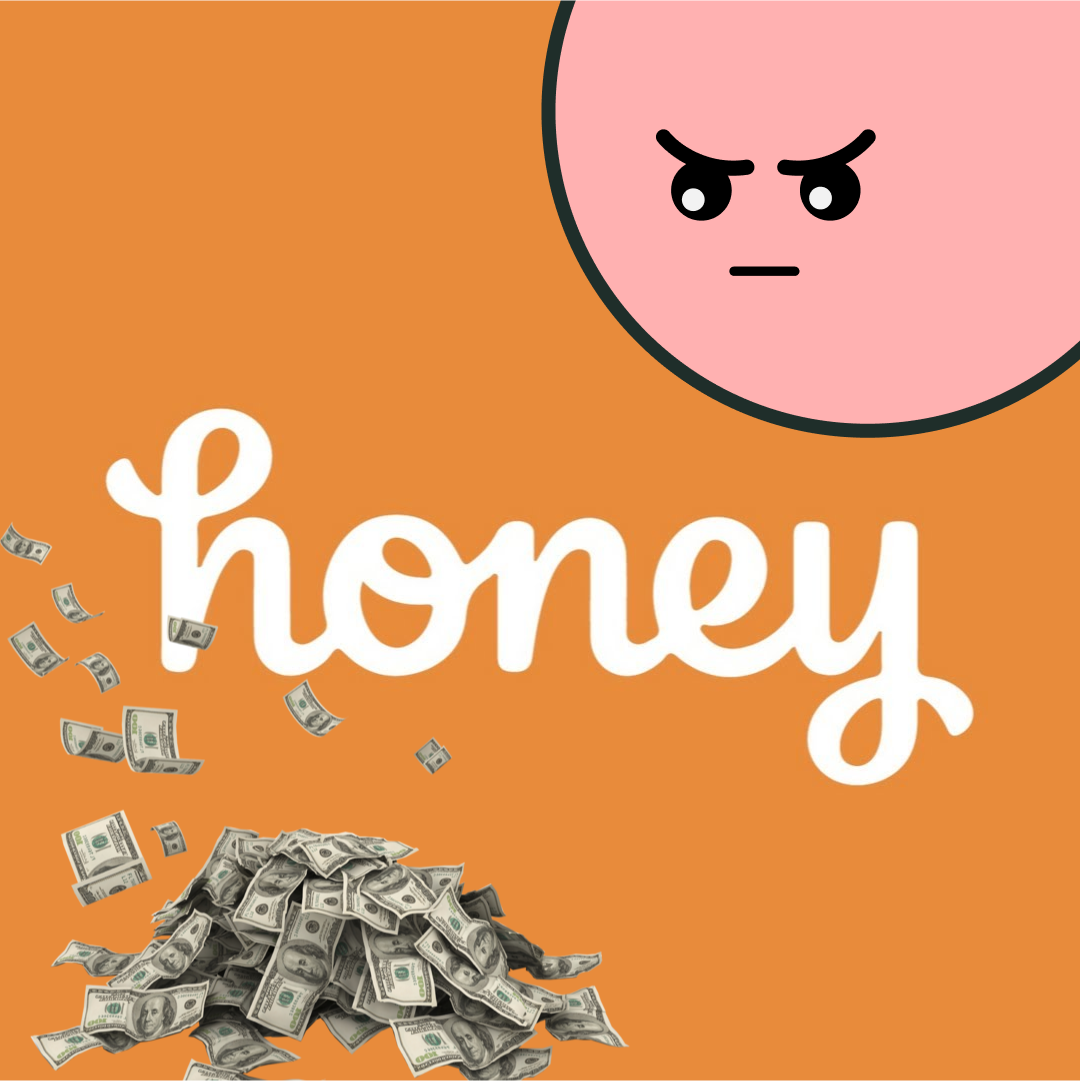
Honey's unethical practices have been ongoing for several years, as noted by Hank Green (2024), who pointed out that it took years for this issue to gain attention despite its long-term deceptive practices. but only came to widespread public attention during late 2024 and early 2025, as revealed through multiple creator investigations and lawsuits. The D&D YouTuber community, as highlighted by Bob World Builder, largely avoided this sponsorship due to their focus on niche, community-driven collaborations, showcasing how selective sponsorship strategies can protect creators. have exposed a deeply troubling business model built on deception and exploitation (Bob World Builder, 2025). Once widely endorsed by major YouTubers and influencers, Honey has now been revealed to engage in unethical practices, harming both content creators and the consumers it claims to help.
A class-action lawsuit filed against Honey by prominent legal commentator LegalEagle (2025) highlights how the company allegedly engages in "affiliate theft." Honey inserts itself at the final stage of a consumer's purchase by opening a new browser tab or refreshing the checkout page, which replaces the original affiliate code (often tied to the referring creator) with its own, ensuring Honey receives the commission instead.
As Hank Green (2024) described,
"Honey strips the affiliate link of whoever actually sent you to the website and gets the affiliate all to themselves, even though they did not get you to the website."
This practice, often associated with creators, unfairly redirects revenue away from the original content promoters. This deprives content creators of the commissions they rightfully earned from promoting products, while Honey profits instead (LegalEagle, 2025).
Worse yet, Honey misrepresents its value to consumers by claiming to offer the best discounts available. In reality, evidence has surfaced showing Honey intentionally suppressing higher-value coupons in favor of lower discounts that maximize its profits (MegaLag, 2024).
These actions harm everyone involved: creators lose their affiliate income, consumers are misled about their savings, and brands pay affiliate fees to a middleman who provided no real value.
Ethical Concerns and Potential Legal Violations
The Honey scandal raises significant ethical and legal concerns. At its core, the platform's practices may violate consumer protection laws by:
Deceptive Marketing: Misleading users into believing they are receiving the best possible discounts while prioritizing profit over transparency (Brownlee, 2025).
Affiliate Fraud: Replacing legitimate referral links with its own, effectively stealing commissions from content creators (MegaLag, 2024).
Unfair Business Practices: Using its massive sponsorship reach to entrench itself while secretly harming the same creators it sponsored (LegalEagle, 2025).
Honey's parent company, PayPal, faces mounting criticism for continuing these questionable practices despite being aware of their impact on the creator economy. As Hank Green (2024) stated, "PayPal, who acquired Honey for billions, embraced this exploitative model despite its clear ethical concerns." despite being aware of their impact on the creator economy, with widespread creator backlash highlighted in coverage by Bob World Builder and other content creators. While PayPal has yet to issue a formal statement addressing these criticisms, the ongoing legal action seeks to hold them accountable. Legal action, led by LegalEagle and others, aims to hold Honey accountable and potentially secure financial compensation for affected creators (LegalEagle, 2025).
How Oak Stands Apart: Transparency, Empowerment, and Ethics
At Oak, we believe technology should empower, not exploit. Unlike the exploitative practices employed by Honey, Oak prioritizes partnerships with niche, community-driven creators similar to those in the D&D YouTuber space, ensuring full transparency and fairness in every collaboration. Our flagship tool, vibeCheck Search, provides a transparent and ethical approach to online decision-making by highlighting potentially misleading or unethical practices directly mentioned in privacy policies and terms of service. Oak as a whole is actively developing additional tools and services to help creators, influencers, and impact organizations raise awareness of broader unethical digital behaviors and empower their audiences with clear call-to-actions.
Key Ways Oak Is Different:
Transparency in Data Handling: vibeCheck Search never hides information or alters affiliate links for profit. Our summaries and insights are designed to empower users with clarity, not mislead them.
No Hidden Revenue Tactics: Oak prioritizes user empowerment over profit-driven tactics. Our revenue model focuses on ethical subscriptions rather than deceptive commission tactics.
Empowering Content Creators: We believe creators deserve full credit for their work. Oak's tools are built to help creators share and monetize their insights with full transparency (Brownlee, 2025).
Data Ownership: Users retain control over their data. Unlike Honey, Oak does not manipulate user activity for financial gain (MegaLag, 2024).
The Broader Implications for Digital Ethics
The Honey scandal reveals a systemic problem in the digital economy: opaque business models that prioritize profits over fairness, disproportionately harming smaller niche creators who rely heavily on affiliate marketing for income, as highlighted in the Bob World Builder video. As consumers, it's essential to remain vigilant and choose tools that respect transparency and integrity.
Oak's mission is to rebuild digital trust by providing tools that simplify complex documents while respecting user agency. In contrast, as Hank Green (2024) observed, Honey's misleading practices complicate consumer trust rather than simplify it, undermining fairness in affiliate marketing. vibeCheck search helps users make informed decisions without compromising their values or financial interests.
Call to Action: Take Control with Oak
The Honey scandal is a reminder that digital tools can be designed for good or exploitation. At Oak, we stand for transparency, fairness, and user empowerment.
✅ Try vibeCheck Search today and take back control of your online experiences.
✅ Share this article to spread awareness about unethical digital practices.
✅ Join Oak's community and advocate for a more ethical internet.
Together, we can build a digital ecosystem where trust and empowerment thrive.
References
Bob World Builder. (2025). How D&D YouTubers Dodged the Biggest Scam Sponsor in History [YouTube Video]. Retrieved from https://www.youtube.com/watch?v=nzMPZ17-nz
hankschannel. (2024). The Honey Scam and the Ridiculous Mess of Affiliate Marketing [YouTube Video]. Retrieved from https://www.youtube.com/watch?v=efLN9yZvaWo
LegalEagle. (2025). I'm Suing Honey [YouTube Video]. Retrieved from https://www.youtube.com/watch?v=4H4sScCB1cY&t
Brownlee, M. (2025). The Honey Scam: Explained [YouTube Video]. Retrieved from https://www.youtube.com/watch?v=EAx_RtMKPm8&pp
MegaLag. (2024). Exposing the Honey Influencer Scam [YouTube Video]. Retrieved from https://www.youtube.com/watch?v=vc4yL3YTwWk
Comments
Nothing yet. Say the first thing.
Sign in to join the conversation.