
Chia khanu bho?
Being away from Nepal these past weeks made me want to caution compatriots to think twice about any foreign trips you may be contemplating.
Many countries have travel advisories for Nepal: that they should exercise caution on road trips, avoid areas prone to tyre burning, and stay away from the salad. These are periodically updated, but never — even at the best of times to my knowledge — has Nepal ever been deemed safe to visit for the firangi.
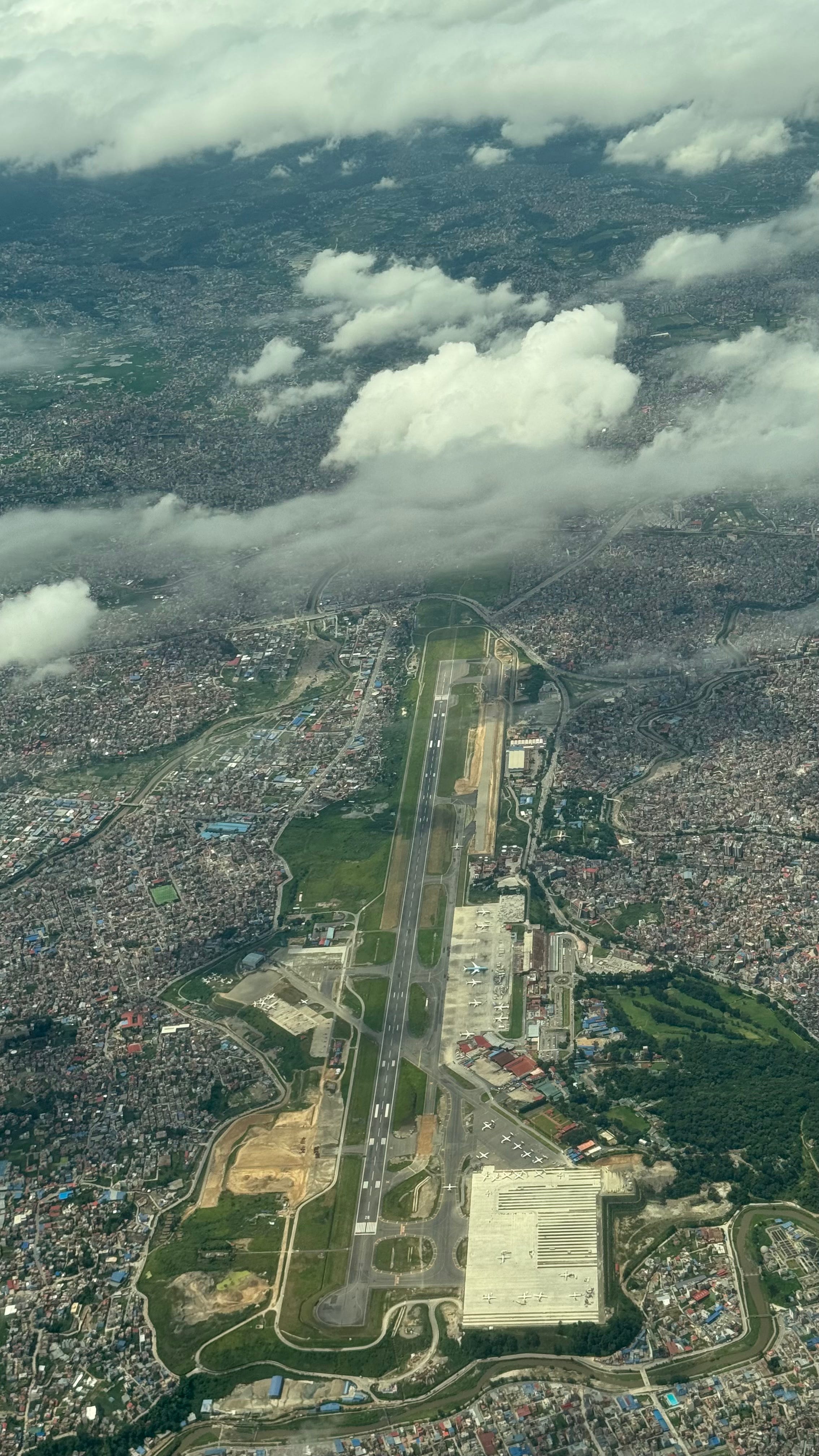
Which makes me wonder, what are all those mountaineers doing here, why isn’t there an advisory that climbing Mt Everest is dangerous?
Immigration Dept numbers show that five times more Nepalis left Nepal in the last fiscal year than foreigners visiting Nepal. This means the Ministry of Affairs with Foreigners (MoAF) should also be duly concerned about the safety and security of Nepalis visiting hazardous countries in the western, northern, and southern hemispheres.
MoAF should issue tit-for-tat advisories to Nepalis. For example, warning them about travelling to Europe during the heat wave and advising them to keep indoors, stay hydrated, and avoid skinheads.
The threat level for Nepalis planning to travel to the United States should also be upgraded. The first question potential visitors should ask themselves is: Do I really want to go there at this time? Everyone except the bravest of the brave should defer travel because of the enormous lines at Tripureswar for new Nepali passports.
All non-essential travel has also been suspended until further notice unless such journeys are for the purpose of overstaying illegally, in which case the $20,000 bond may be a good investment. If you have to go, you have to go.
Nepalis desirous of visiting the Gulf states for a package holiday, because hotels there are so cheap these days, should also be strongly advised that they face a high risk of being stopped by Immigration Officials — at Kathmandu airport. Things should be fine once you reach Abu Dhabi.
In fact, MoAF should advise all Nepalis to just stay put for now. One never knows what is out there. With all the conflicts, World War III could erupt at any moment. There could be catastrophic volcanic eruptions that plunge the Earth into a new ice age. Aside from that, there is always the danger of the planet being hit by a giant asteroid. Just stay home.
With everything being on edge around the world, Nepal does not seem like a bad place after all. Prime Minister Balendra Shah said recently that Nepal was speeding ahead on an expressway and would not stop until it reached its destination. That is the kind of confidence we need in a leader.
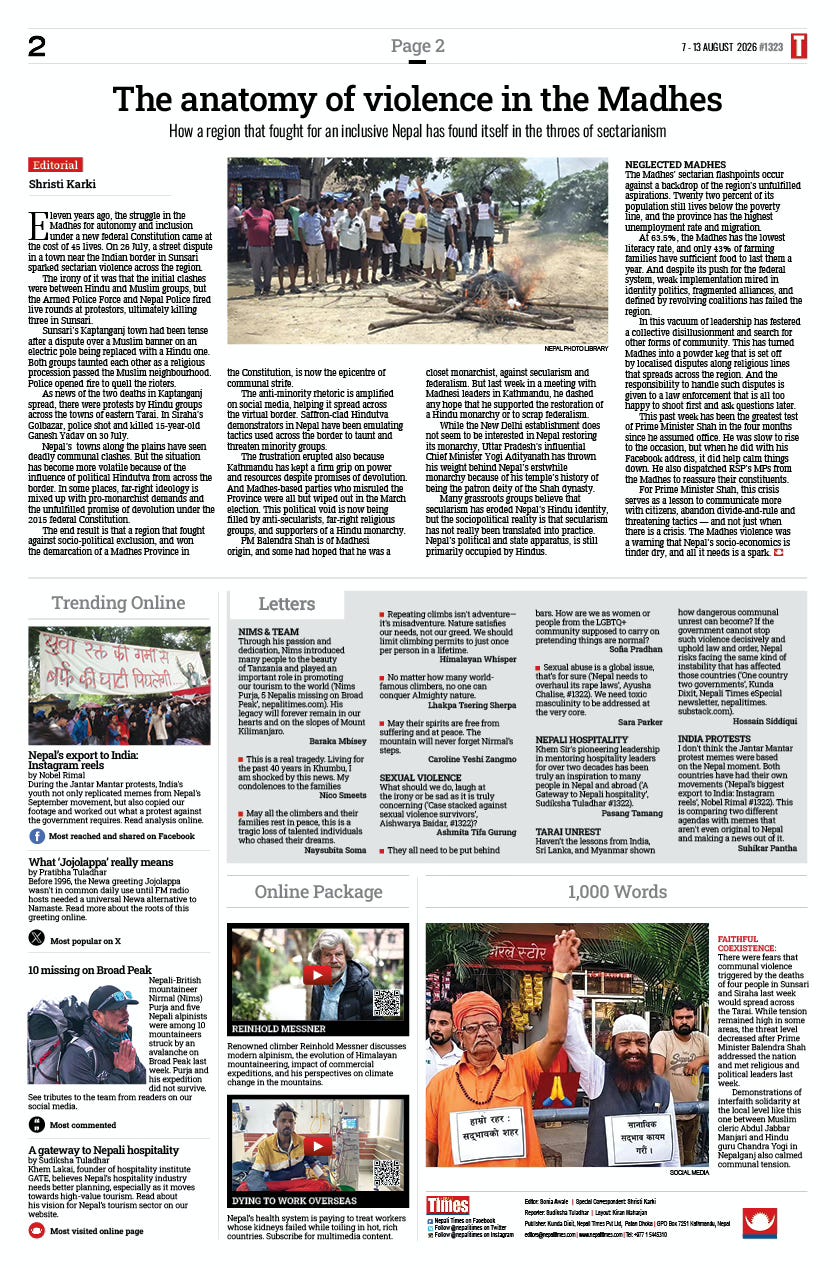
Balen showed prime ministeering is his hidden skill, and he had the sense to hit the brakes on the Tarai Fast-track when it looked like communal tension was spreading. His Facebook address to the nation calmed things down, as did his party’s damage control inter-faith meetings. Shristi Karki brings us up to speed in the Editorial this week (The Anatomy of Violence in the Madhes, page 2).
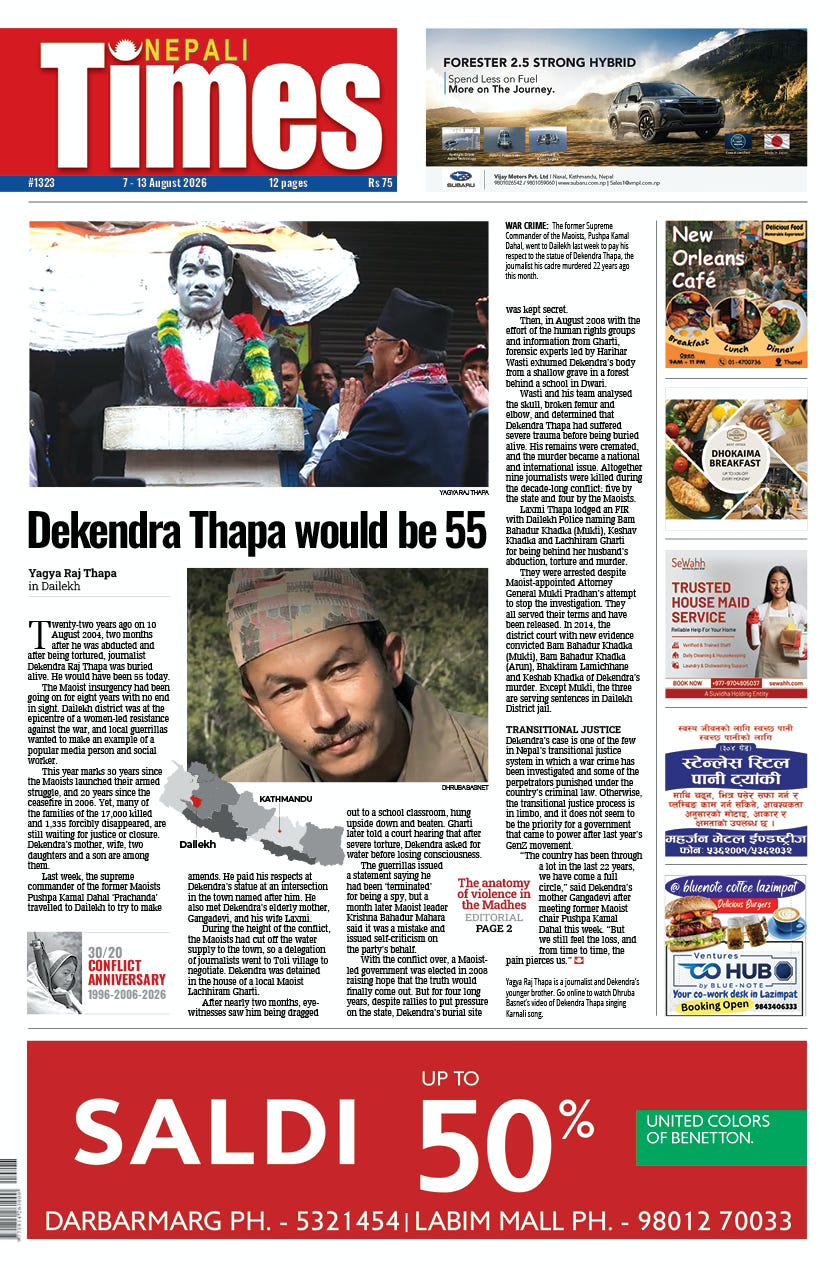
Throughout 2026, Nepali Times is carrying content reminding readers of the Maoist insurgency that began 30 years ago and ended 20 years ago. Many of us who covered that war cannot believe that two decades have elapsed, and an entire generation of Nepalis has grown up without any memory of the violence.
There is no mention of the conflict in history textbooks, even though 17,000 Nepalis died at the hands of fellow Nepalis in the decade of brutal war.
As part of the double anniversary series, we recall the abduction, brutal torture, and burial alive 22 years ago this week of Dailekh journalist and social activist Dekendra Thapa. His younger brother Yaggya Raj reminds us to remember not to forget what the conflict did to families like his (Dekendra Would Be 55, page 1).
The other sad news this week was the death in an avalanche on Pakistan’s Broad Peak of ten mountaineers, six of them Nepalis. Zakir Kibria tries to understand what drives people to risk their lives to climb Himalayan peaks. It is an age-old question, and especially relevant to ponder after the tragedy (Everest, Broad Peak and the Geography of Ambition, page 4).
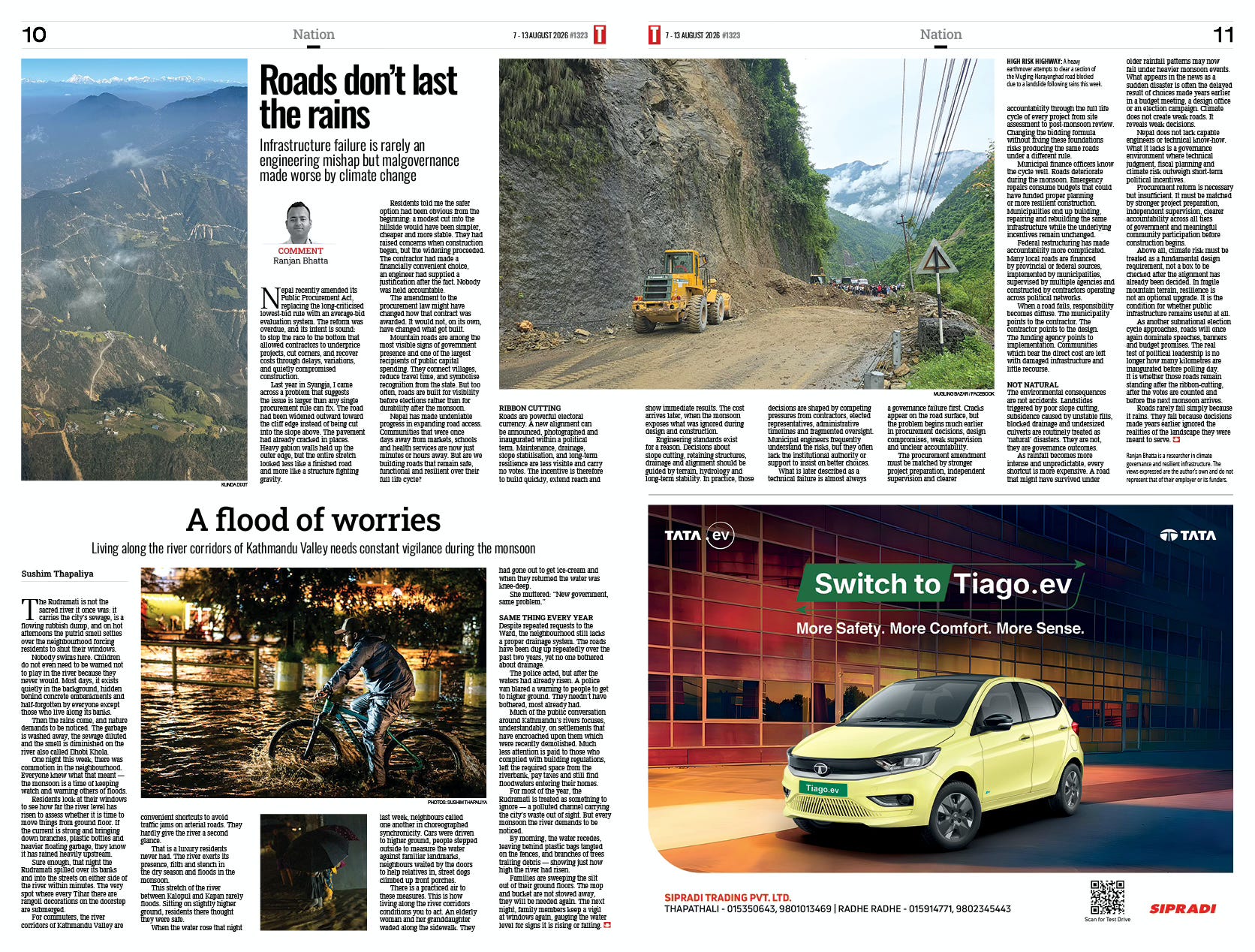
This edition of Nepali Times reviews the cars on display at the annual NAIMA auto show in Kathmandu, where EVs are making a predictable splash (Nepal’s Car Carnival, page 6-7). The irony, of course, is that while the cars are state-of-the-art, many roads and highways are in a state of disrepair this monsoon.

Infrastructure researcher Ranjan Bhatta says that is because Nepal’s roads are rarely designed for the country’s fragile topography and climate (Why Nepal’s Roads Don’t Last the Rains, page 10-11).
Those of you in Kathmandu may want to stop by Kathmandu Art Gallery this week to check out the Homage to Banaras exhibition by two generations of artists and their impressions of a sacred city that was the spiritual and educational home to generations of Nepalis (Nepali Artists Pay Homage to Banaras, page 9).
La ta,
Kunda Dixit
No posts
Comments
Nothing yet. Say the first thing.
Sign in to join the conversation.