
As we approach the open in NY, US equities are modestly lower even as oil prices and bond yields ease back.
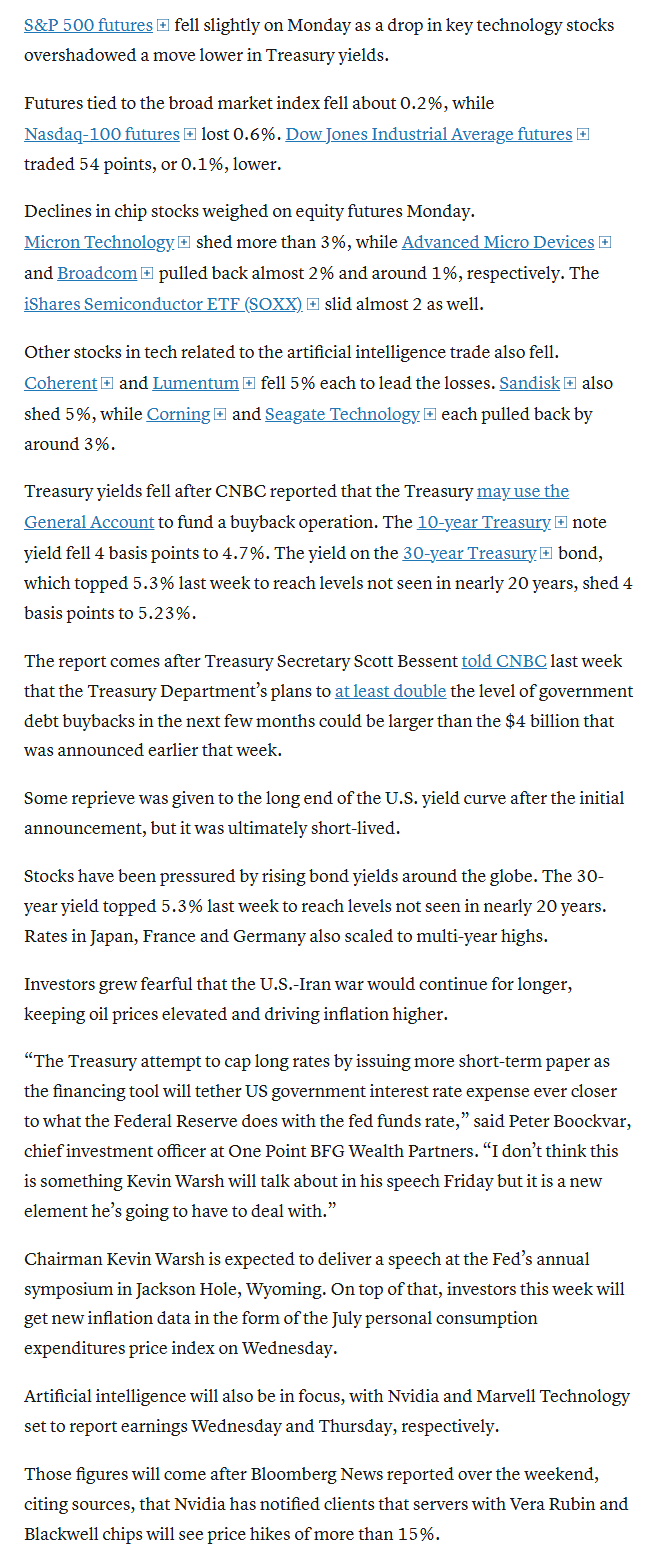
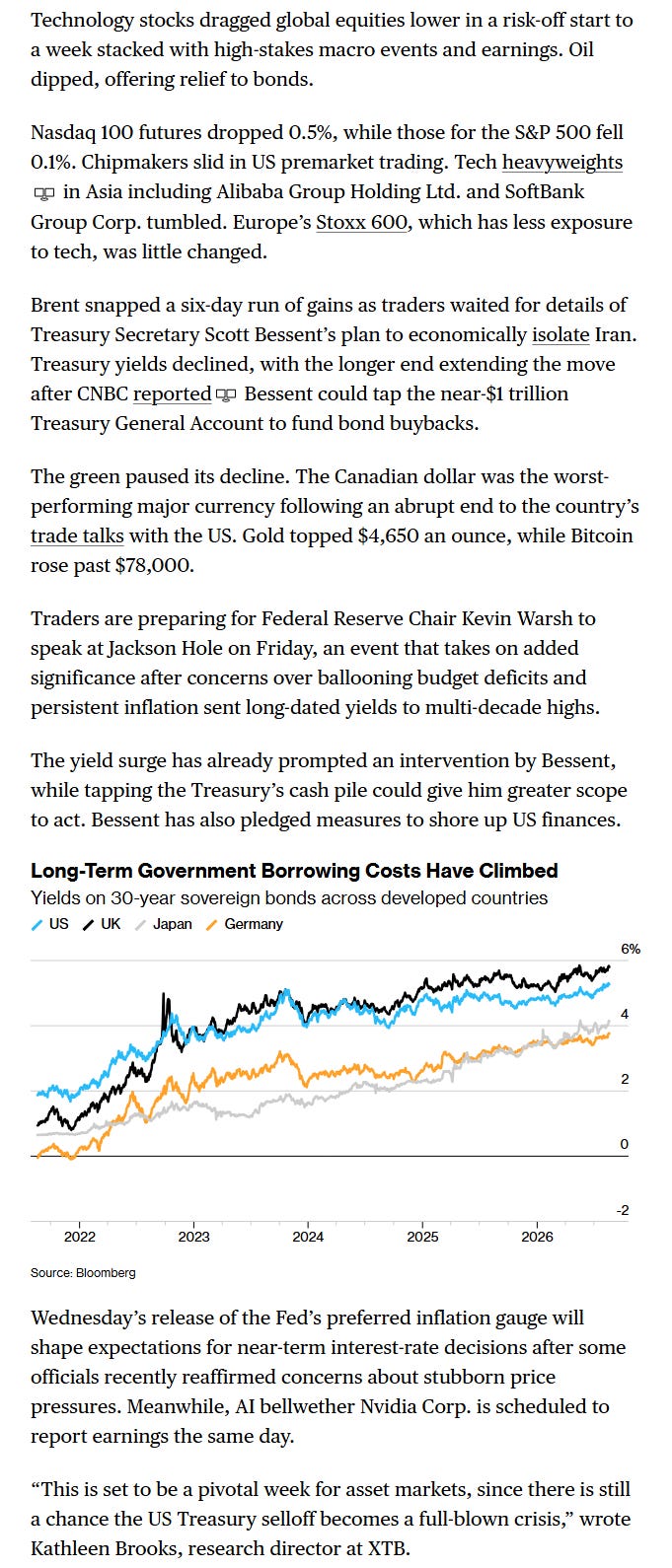
Yields were lower after CNBC reported the US Treasury could use its nearly $1 trillion General Account to help fund its recently announced plans to increase purchases of government bonds (see post below). That comes ahead of Treasury Secretary Scott Bessent’s 1:00 pm ET press conference where he will unveil a plan to economically isolate Iran, targeting any countries supporting the Iranian regime in a bid to “sever every economic lifeline” that sustains it. Iran’s foreign ministry warned that Tehran would retaliate to any such measures.
Tech shares though were under pressure with the State Street Technology Select Sector ETF (XLK) falling 1% in the premarket on pace for its seventh straight loss. Coherent and Lumentum fell 5% each to lead the losses. Sandisk also shed 5%, while Corning and Seagate Technology each pulled back by 3%. In Asia tech heavyweights in Asia including Alibaba and SoftBank saw sharp declines.
In other Mid-East news Pakistan's army chief was visiting Tehran on a mediating mission on Monday while Iran issued a new warning to shipping not to pass through the Strait of Hormuz without its permission, listing 45 ships it said had violated its rules and threatening retaliation for any ship-to-ship transfers with them. Nevertheless Brent crude snapped a six-day run of gains, falling to around $93 a barrel. Separately, the Iranian rial plunged to a fresh low against the U.S. dollar on Monday.
It’s a light day on the economic calendar with no scheduled events the rest of the day.
The S&P 500 is lower by 0.2% while the tech-heavy Nasdaq-100 index is -0.7%, and the small-cap Russell 2000 -0.2%.
[Note the International Update is below the US update]
Link to posts: https://x.com/neilsethinew
Note on all charts the colored lines are daily moving averages (the average price over the given number of days):
20 = green
50 = purple
100 = blue
200 = brownThe middle panel is MACD = Moving average convergence/divergence line, a measure of momentum that compares longer term and shorter term momentum to gauge if a move is strengthening or weakening. This is probably my favorite individual indicator (it’s also the favorite of Katie Stockton, a very fine technician).
The bottom panel is RSI = Relative Strength Index (basically what it sounds like) = measures the strength of the move comparing gains to losses over the given lookback window (I use the standard 14 periods).
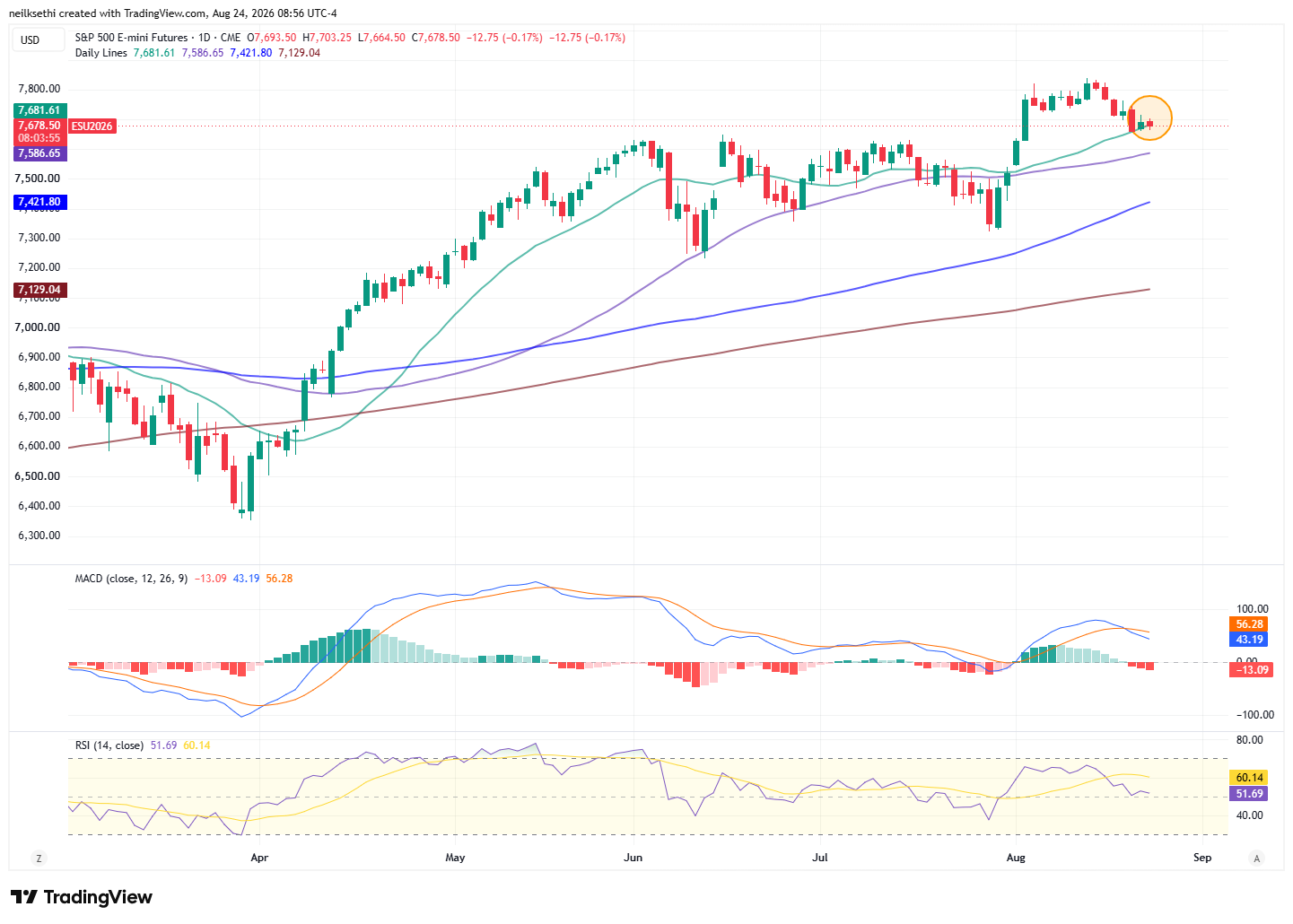
SPX futures (/ES): sitting on 20-DMA.
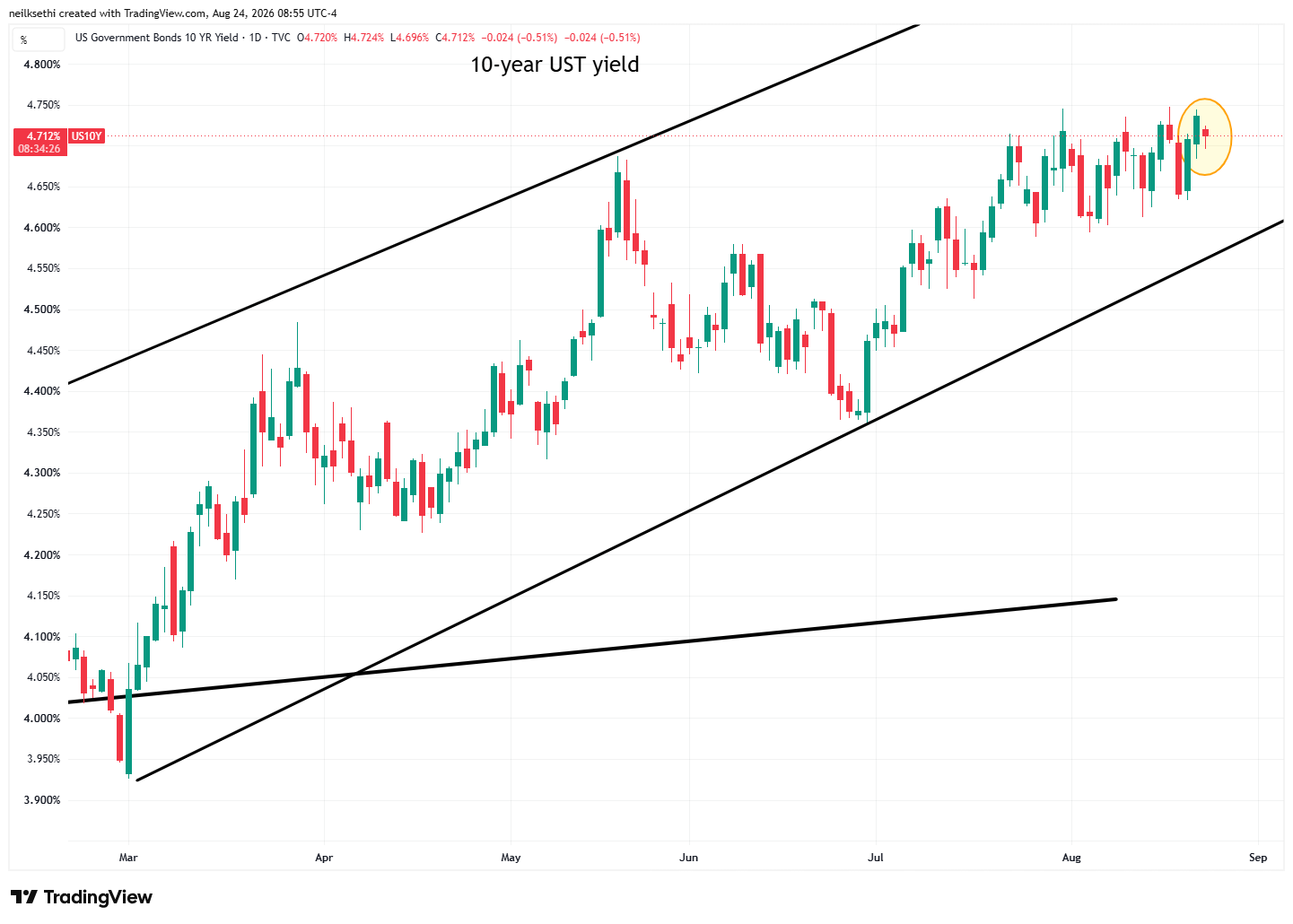
10yr Yield - edging back from highest close since January 2025 on Friday.
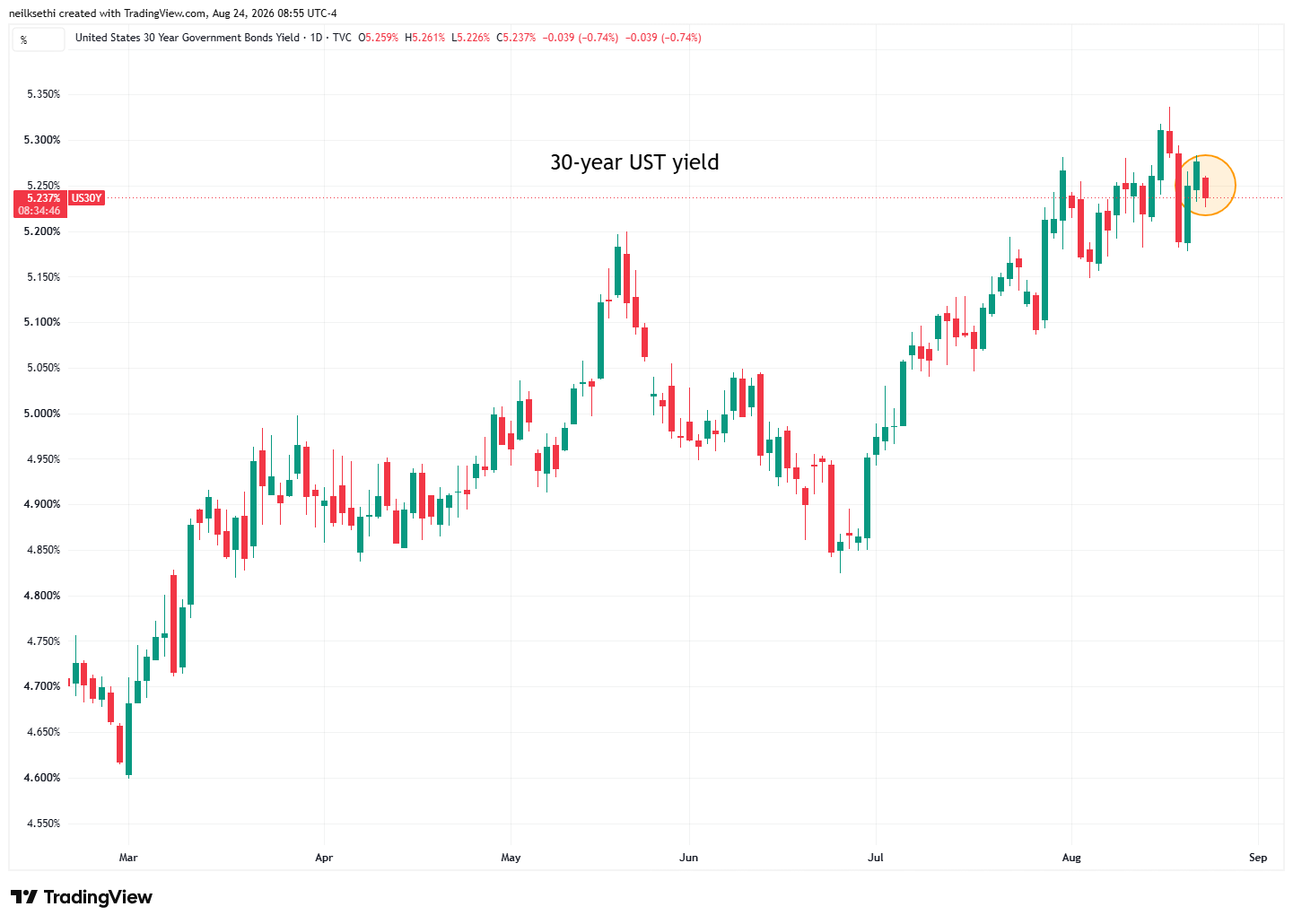
30-yr Yield - easing back.
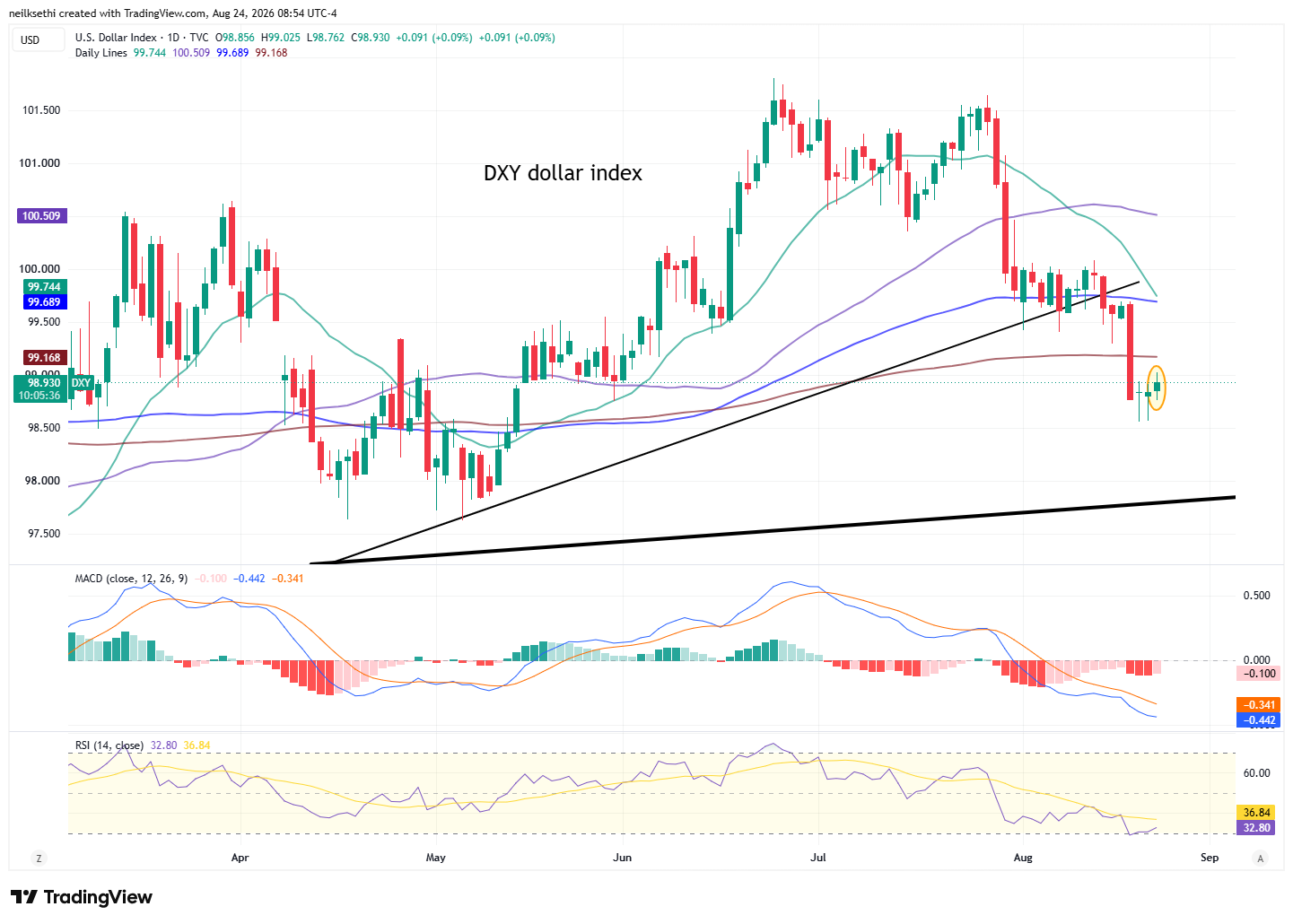
DXY US dollar index - moving off last week’s lows despite yields easing.
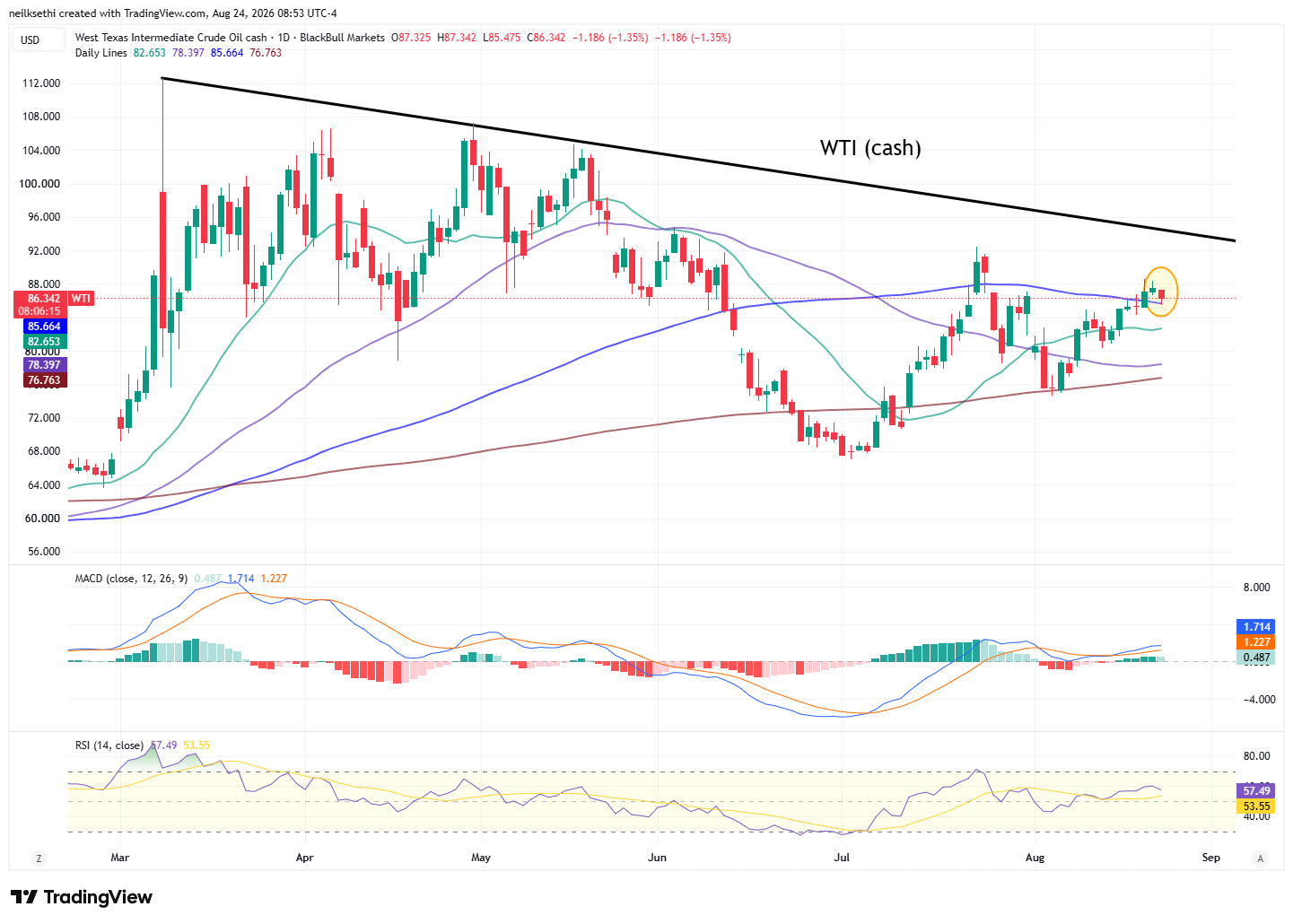
US WTI crude - easing back from 3-week highs.
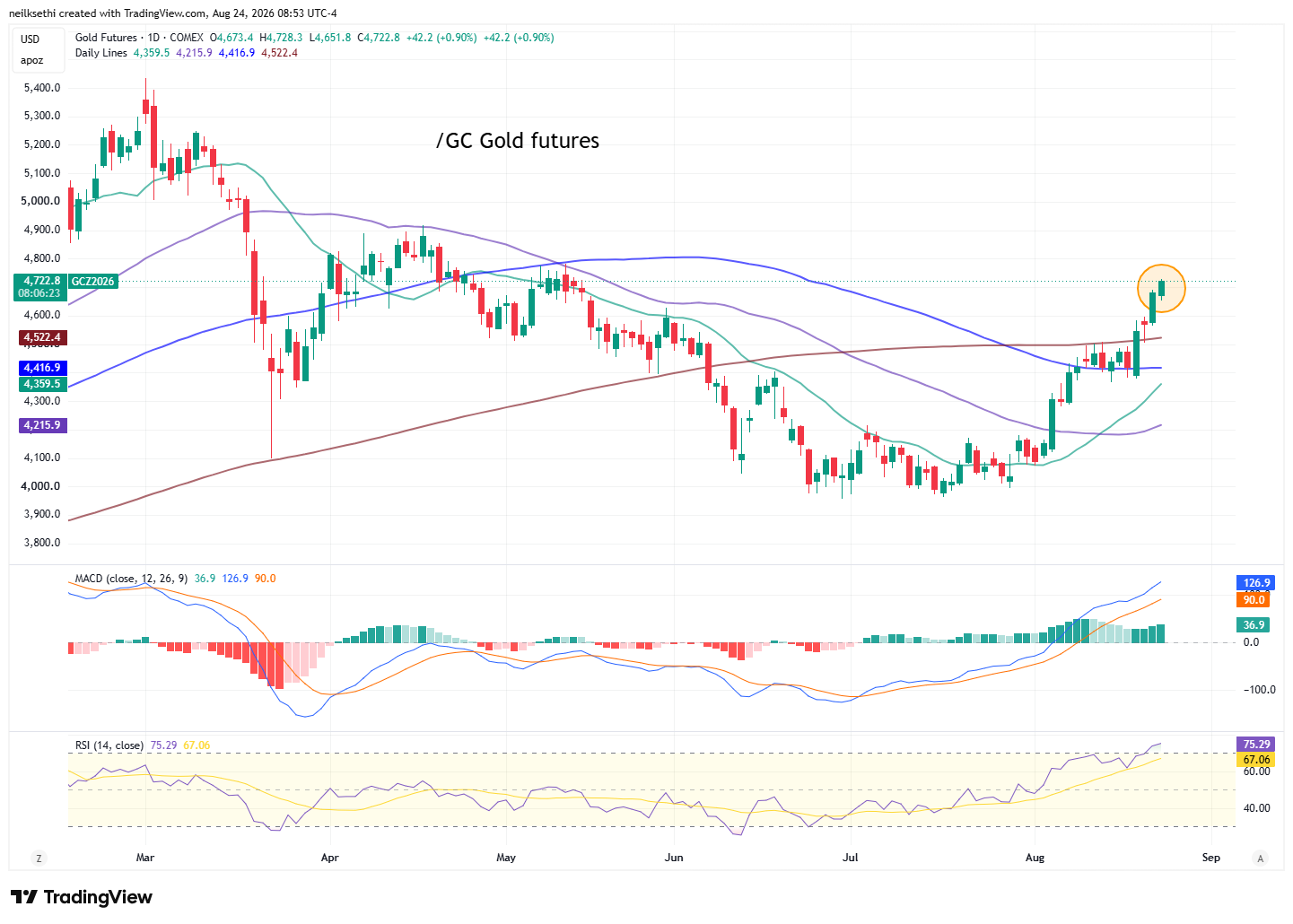
Gold futures (/GC) - up for fourth session after moving through 200-DMA last week which “opens up potential for big run higher,” as noted then.
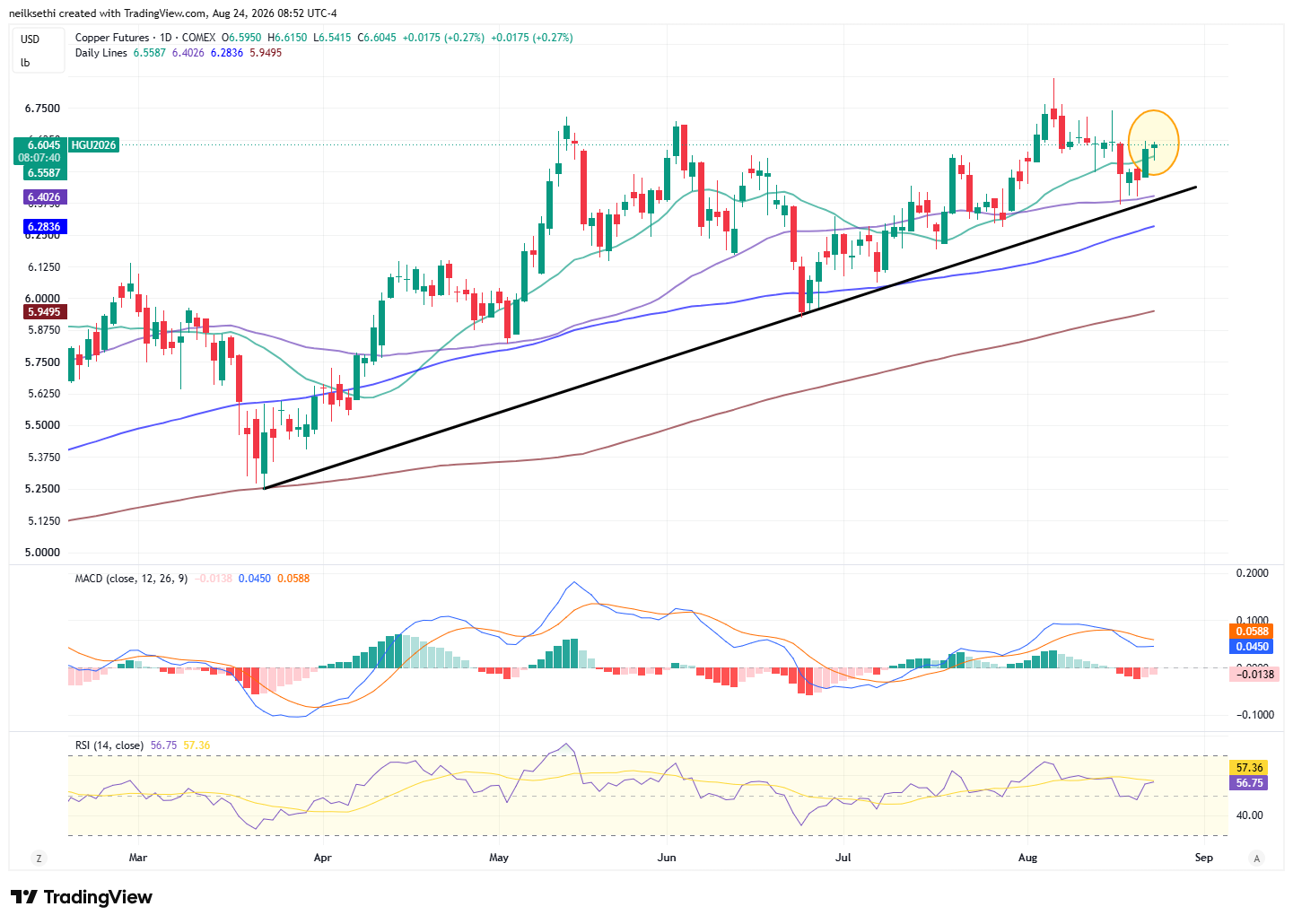
US copper futures (/HG) - pushing higher towards top of range from last week.
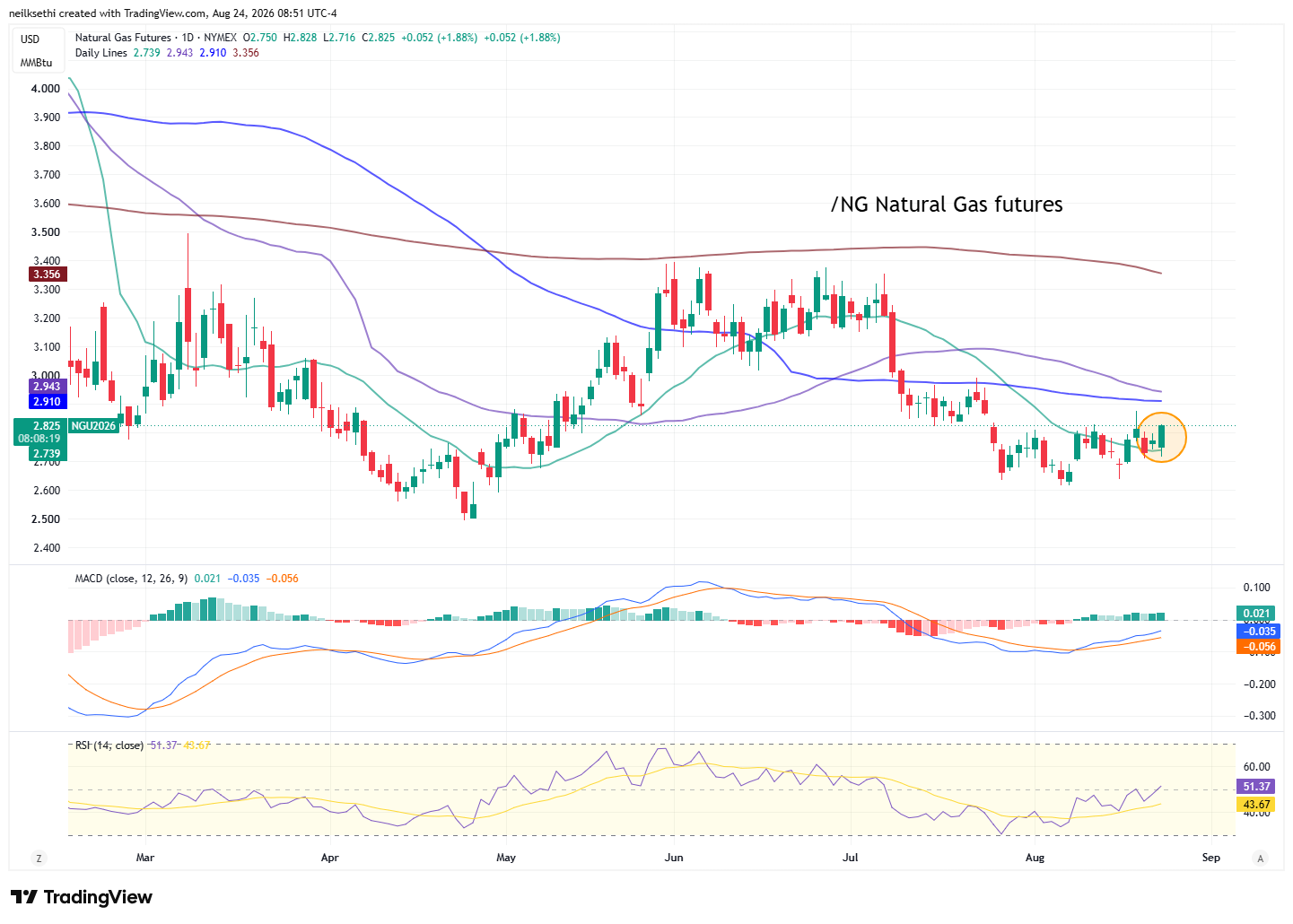
US natural gas futures (/NG) - continue trading in range over the past month but with a bit of an uptrend.
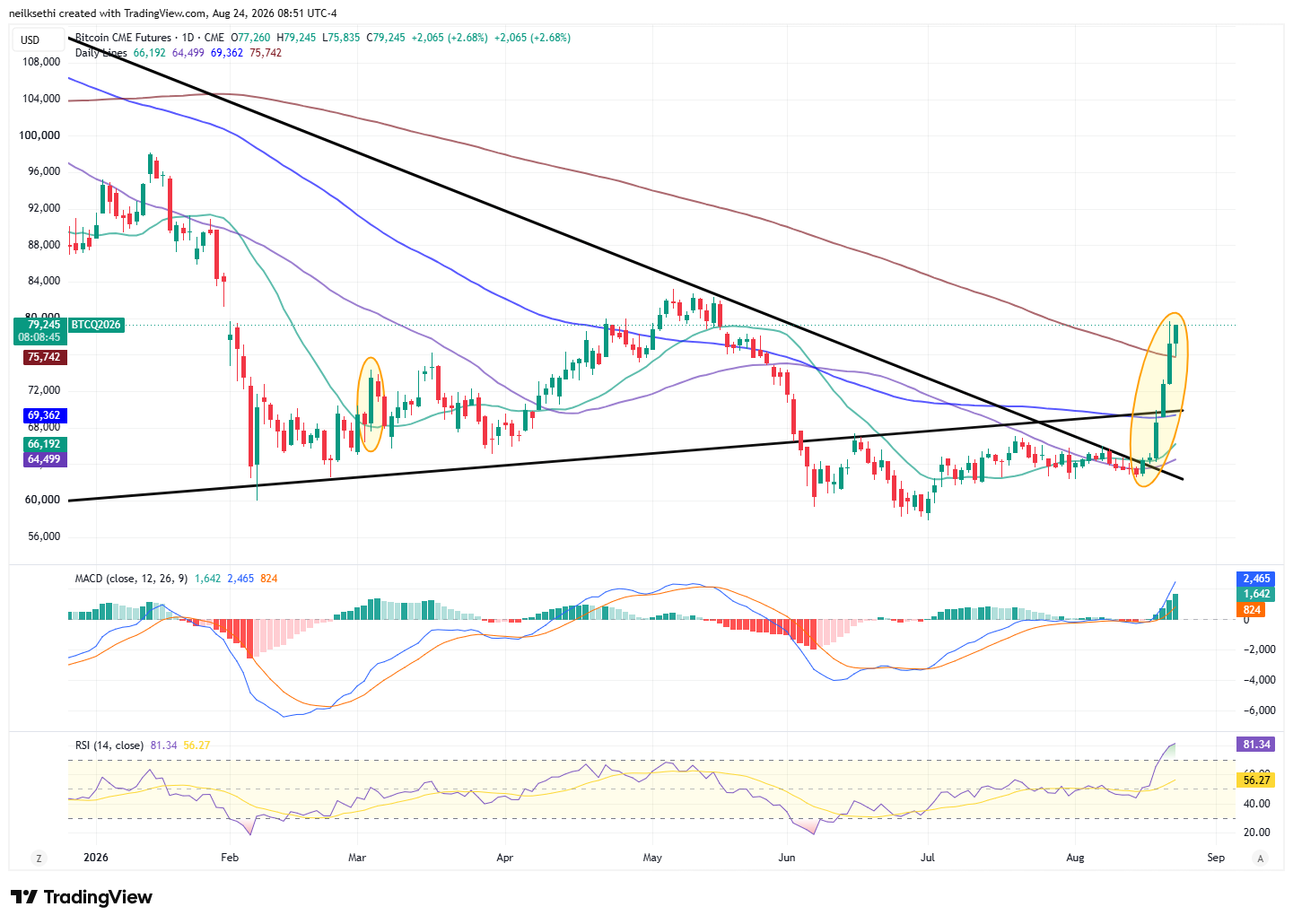
Bitcoin futures - up another +2.5% after clearing resistance last week as noted then “opening up a continued run higher.” They were up nearly 23% last week.
CNBC:
BBG:
Some pre-market company news from CNBC/MarketWatch (links to CNBC pages).
Alibaba — U.S.-listed shares of the Chinese technology company were off by 2% after the company announced it was issuing $10.2 billion of new shares to non-U.S. investors. Alibaba said all of the money it raises will be used to fund its AI projects, particularly on its AI infrastructure.
Chipmakers — After falling 5.5% last week, the iShares Semiconductor ETF (SOXX) was down almost 2% on Monday. Marvell Technology declined almost 3.5%, while Advanced Micro Devices and Intel fell about 2%.
Memory stocks — A slew of memory storage companies were also starting the week in the red before the bell. Sandisk was off more than 5%, while Western Digital and Seagate Technology declined almost 4%. Micron Technology slid 3.5%.
Nucor, Steel Dynamics — The steel manufacturers climbed after trade negotiations between the U.S. and Canada collapsed on Friday. Nucor jumped more than 4%, while Steel Dynamics was up 3.5%. Canada is set to target the U.S. steel industry in its retaliatory tariffs that will start on Sept. 8.
Robinhood, Coinbase — Bitcoin prices stalled over the weekend around $77,000 after a three-day rally that sent the cryptocurrency surging 22% last week. Trading platform Robinhood, which surged more than 18% over the three-day crypto rally, was off 1% before the bell. Coinbase, which similarly jumped more than 27% over the course of the rally, declined 1%.
Jersey Mike’s Subs — The sandwich restaurant chain operator was higher by 0.5% after a slew of Wall Street firms initiated coverage of the stock at a buy rating. Analysts largely said that the company was undervalued and has strong potential for upside ahead.
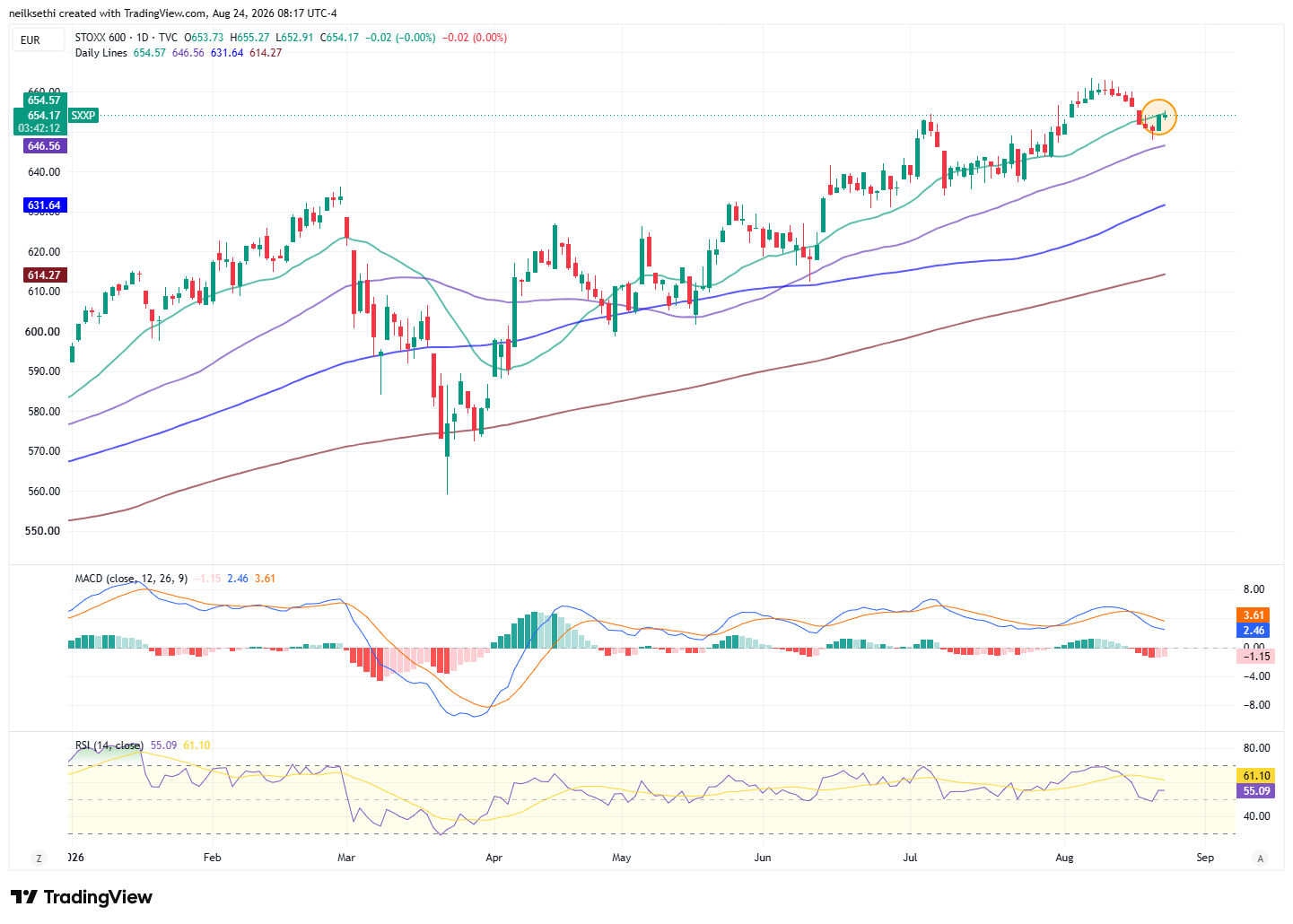
Europe’s benchmark STOXX 600 as of 8.10 am ET was unchanged after gaining Friday for the first time in eight sessions.
Major European indices also trade near their flat lines with Spain's IBEX (+0.4%) showing relative strength.
Germany's DAX: -0.1%, U.K.'s FTSE 100: +0.1%, France's CAC 40: -0.1%, Italy's FTSE MIB: +0.1%, Spain's IBEX 35: +0.4%.
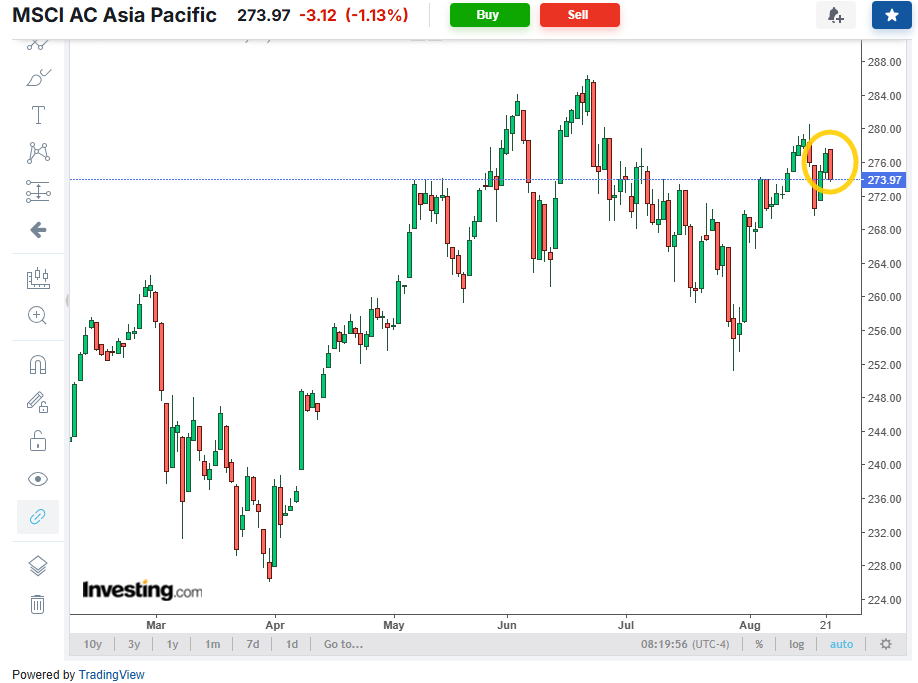
The broad MSCI AC Asia Pacific Index was though -1.1% giving a good chunk of the Thursday/Friday bounce.
Major equity indices in the Asia-Pacific region began the week on a broadly lower note with South Korea's Kospi (-3.1%) showing relative weakness.
Japan's Nikkei: -0.7%, Hong Kong's Hang Seng: -1.9%, China's Shanghai Composite: -0.6%, India's Sensex: -0.2%, South Korea's Kospi: -3.1%, Australia's ASX All Ordinaries: +0.5%.
BBG - Prime Minister Mark Carney’s government sees little chance of resuming talks with President Donald Trump before the midterm elections after trade negotiations collapsed, according to people familiar with the matter.
The Canadian leader, who said he will prepare a domestic aid package to help businesses hurt by US tariffs, is designing those measures to ride out the balance of Trump’s term if necessary, added the people, who were granted anonymity to discuss sensitive deliberations.
The preparations from Carney signal the gravity of the breakdown in talks late Friday, which led Trump to impose new tariffs and Carney to announce retaliation, risking a spiraling trade fight between the two closely integrated economies.
While Carney’s government sees no sign of new talks in the near future — and only a dim chance before the midterms — some of the people cautioned the situation remains fluid and the US has not ruled out a restart.
BBG - China said it continues to support a diplomatic end to the US-Iran war, in a delayed statement released shortly before the US is set to unveil measures to punish Tehran’s economic partners.
“China is closely monitoring the situation in the Middle East and is actively committed to promoting peace talks,” Vice Foreign Minister Miao Deyu said at talks with Iran’s Deputy Foreign Minister Kazem Gharibabadi in Beijing on Aug. 17, according to a statement published Sunday. China’s Ministry of Foreign Affairs didn’t previously disclose the meeting and provided no explanation for the time lag in making it public almost a week later.
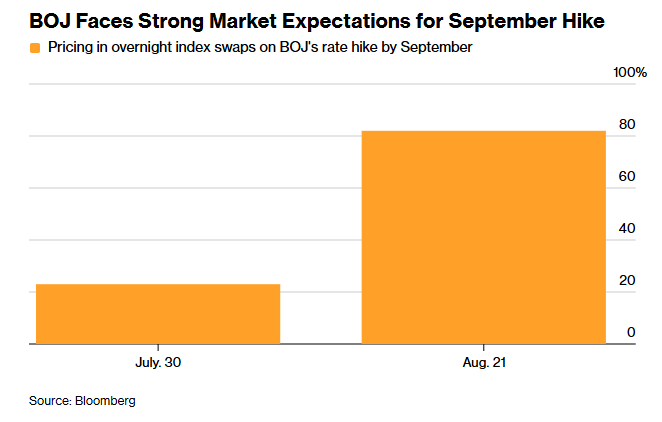
BBG - Bank of Japan officials will soon have several opportunities to validate — or push back against — increasingly aggressive market bets on a September interest-rate hike, starting with a key speech on Thursday.
Deputy Governor Ryozo Himino kicks off a series of public appearances by top BOJ officials before the next policy decision on Sept. 18. Governor Kazuo Ueda, who probably won’t speak at this week’s gathering of officials in Jackson Hole, is likely to follow Himino with a press briefing after a Group of 20 gathering in the US next week. Investors will get further opportunities to test the September thesis with speeches by board members Hajime Takata on Sept. 2 and Kazuyuki Masu on Sept. 10. Masu, a former Mitsubishi Corp. executive, will be closely watched after his remarks ahead of the June meeting helped strengthen speculation about the rate increase that followed. His speech will be the last scheduled appearance by a board member before the decision.
As of late Friday, pricing in the overnight-index swaps market implied a roughly 82% probability of a September hike, more than tripling from about 23% immediately before the BOJ’s July policy meeting. Ueda has emphasized thorough communications with the markets ever since he was heavily criticized for a decision to hike rates in July 2024 that appeared to catch some traders off guard.
“The BOJ probably won’t explicitly say the next hike will come in September,” said Kento Minami, senior economist at Daiwa Securities. “Instead, officials are likely to indicate the need for an early hike by emphasizing upside inflation risks. Markets will take that as a nod for September.”
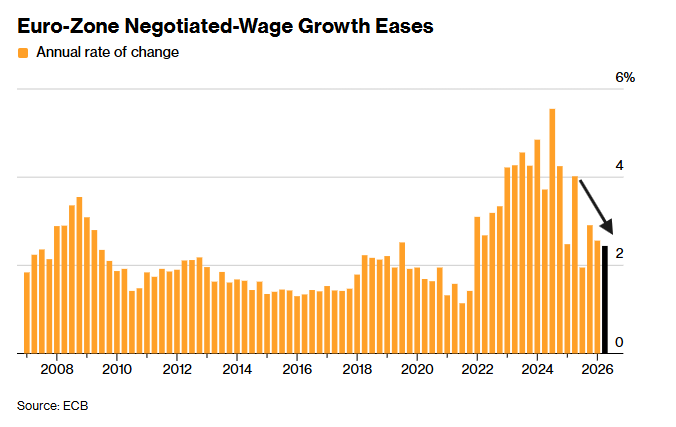
BBG - A key measure of euro-area pay growth eased, offering further relief to the European Central Bank as it assesses inflation risks from the Iran war.
Second-quarter negotiated wages rose 2.44% from a year ago, the ECB said Friday. That’s below the previous period’s revised 2.56% reading and far lower than the 5.55% peak in 2024.
The ECB’s wage tracker predicts pay growth will accelerate through early 2027, though remain far below previous peaks in 2024 that followed the bout of inflation caused by Russia’s invasion of Ukraine in 2022.
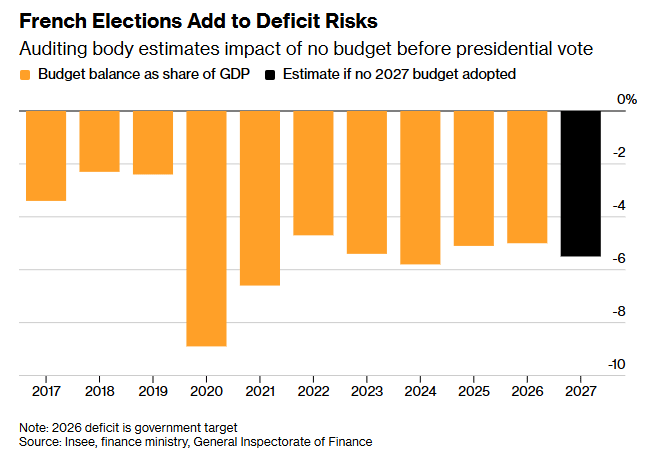
BBG - France’s fiscal deficit would widen by at least 0.5% of economic output if political divisions prevent the adoption of a 2027 budget before presidential elections, the state’s finance auditing body cautioned.
The General Inspectorate of Finance said rolling over measures voted on previously would prevent the government from controlling social spending and raising new taxes. It also warned that the uncertainty of operating for a long period without fully-fledged financial legislation would rattle investor confidence and drive up sovereign borrowing costs, while also weighing on business investment and consumer spending.
“It would certainly expose the country to difficulties and, in some respects, major risks,” the inspectorate said. “Providing the country with a proper budget for 2027, however it is adopted, would be highly preferable.”
The warning adds to growing questions marks over France’s public finances before risky budget negotiations and elections to replace Emmanuel Macron. The Finance Ministry has already said disappointing economic growth means it will be difficult to deliver the promised reduction in this year’s deficit to 5% from 5.1% in 2025.
While governments relied on the special law, or Loi Spéciale, mechanism to keep the state operating in 2025 and 2026, full budget bills were adopted by mid-to-late February of those years. The inspectorate said, however, that parliament would customarily be suspended two months before April’s first round of voting and may not resume until late June or early July, after likely legislative elections.
The inspectorate said its estimate for an increase in next year’s shortfall is a minimum as the calculation doesn’t account for the economic drag from uncertainty. It also said the hit to the deficit could be larger if a budget were ultimately introduced at year-end and unleashed a surge in spending.
BBG - Gas storage levels between 60% and 70% at the start of winter would be adequate, according to Germany’s Economy Ministry, indicating that Europe’s top energy consumer would have a thin buffer against supply disruptions.
Inventory levels “in the range of 60% to 70% at the start of winter, combined with additional import capacity, should generally be sufficient to meet average winter demand,” the ministry said in a statement on Thursday. If security of supply is threatened, the government “can and will respond,” it added.
The continent’s inventories are lower than usual for this time of year, with sites across the European Union just over 61% full, the lowest seasonal level in records going back to 2009. German storage sites, the region’s largest are only at about 50%.
Alibaba Group Holding Ltd. raised HK$80 billion ($10.2 billion) in Hong Kong’s biggest secondary share sale, underscoring its willingness to amass and spend vast sums to take the lead in global artificial intelligence.
SoftBank Group Corp. plans a record ¥1 trillion ($6.3 billion) retail bond sale, the biggest by any issuer in Japan, as the conglomerate raises funds for its investment commitments to OpenAI.
Shein Global Holdings Ltd. is seeking to raise as much as HK$13.9 billion ($1.8 billion) in its Hong Kong initial public offering, as it enters the final stretch of an arduous journey to go public.
Xiaomi Corp. launched a mobile processor for its marquee devices, putting pressure on Qualcomm Inc. and MediaTek Inc., which for years supplied the key component to the Chinese company.
Shell Plc is attracting interest from several potential buyers for its US chemicals business as the company seeks to divest underperforming assets, the Financial Times reported.
Singapore's July CPI -0.2% m/m (last 0.0%); 2.2% yr/yr (last 1.9%)
New Zealand's Q2 Retail Sales -0.5% qtr/qtr (expected 0.1%; last 1.0%) and Core Retail Sales 0.7% qtr/qtr (expected 0.3%; last 1.1%)
To subscribe to these summaries, click below.
To invite others to check it out,
No posts
Comments
Nothing yet. Say the first thing.
Sign in to join the conversation.