
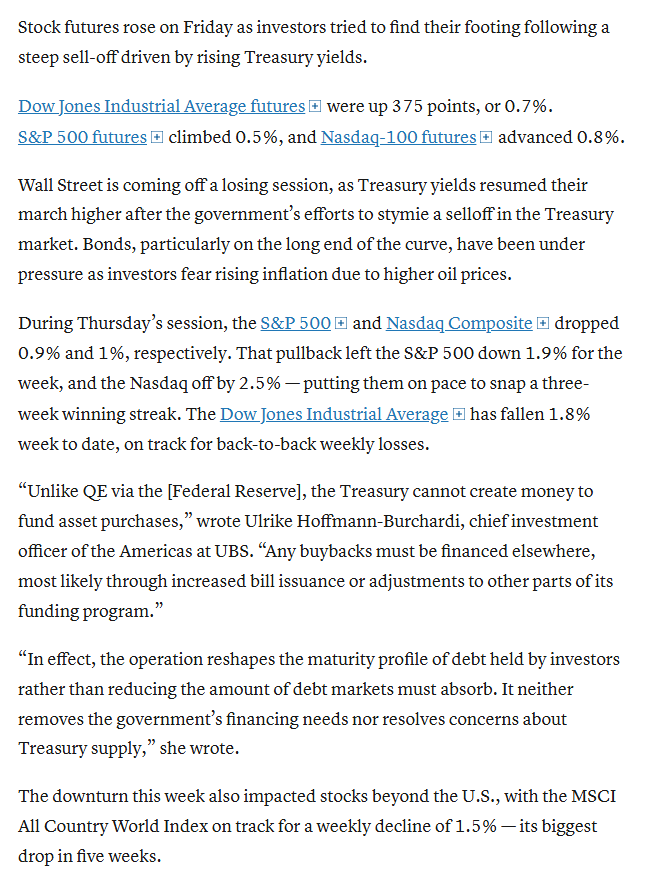
As we approach the open in NY, US equities are higher even as Treasury yields have stabilized with the longest bond (30-year) climbing, although remaining below its levels Wednesday.
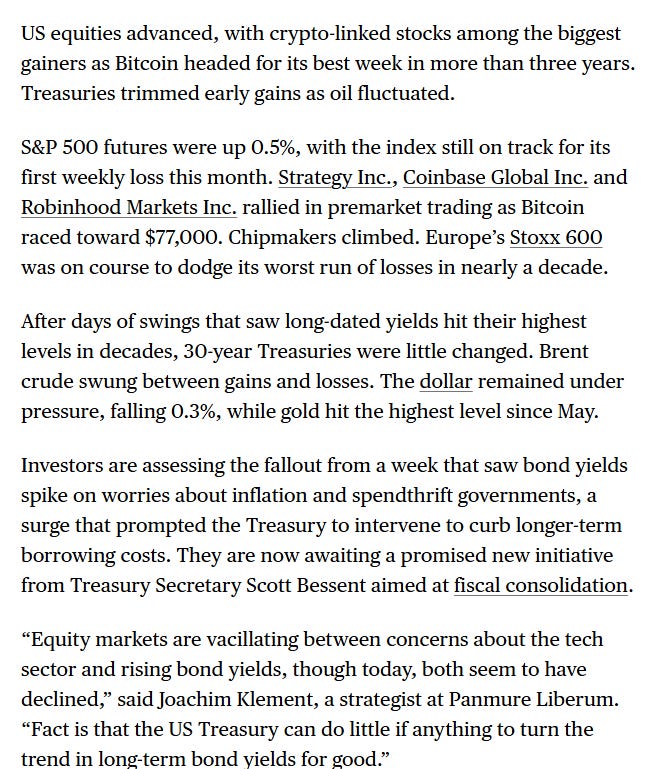
In the US, newsflow overnight into this morning has been mild (heavier ex-US as covered in the international section) with many of the biggest movers Bitcoin linked such as Strategy Inc., Coinbase Global Inc. and Robinhood Markets Inc. who rallied in premarket trading as Bitcoin raced toward $77,000, up 23% this week.
AI related shares are also moving higher on headlines: Broadcom shares are up over 1% after Bloomberg News reported that the semiconductor manufacturer was planning to raise over $60 billion in debt for a deal to support Anthropic who separately expects to match or exceed the size of SpaceX’s initial public offering. Also, Nvidia is talking with Korean chip designer Rebellions about possible collaborations, including a technical partnership or even an acquisition, people familiar said, and Samsung unveiled a plan to return as much as $80 billion to shareholders this year, joining rival SK Hynix in sharing the AI windfall and fueling more optimism across the tech sector
Next week investors are expected to get more information on economic sanctions on Iranian trading partners as well as a promised new initiative from Treasury Secretary Scott Bessent aimed at fiscal consolidation. Iran Friday said that its response to any new US threats would be "devastating”. Nvidia also reports earnings.
The S&P 500 is higher by 0.4% while the tech-heavy Nasdaq-100 index is +0.6%, and the small-cap Russell 2000 +0.7%.
Later this morning we’ll get flash PMIs for the US.
[Note the International Update is below the US update]
Link to posts: https://x.com/neilsethinew
Note on all charts the colored lines are daily moving averages (the average price over the given number of days):
20 = green
50 = purple
100 = blue
200 = brownThe middle panel is MACD = Moving average convergence/divergence line, a measure of momentum that compares longer term and shorter term momentum to gauge if a move is strengthening or weakening. This is probably my favorite individual indicator (it’s also the favorite of Katie Stockton, a very fine technician).
The bottom panel is RSI = Relative Strength Index (basically what it sounds like) = measures the strength of the move comparing gains to losses over the given lookback window (I use the standard 14 periods).
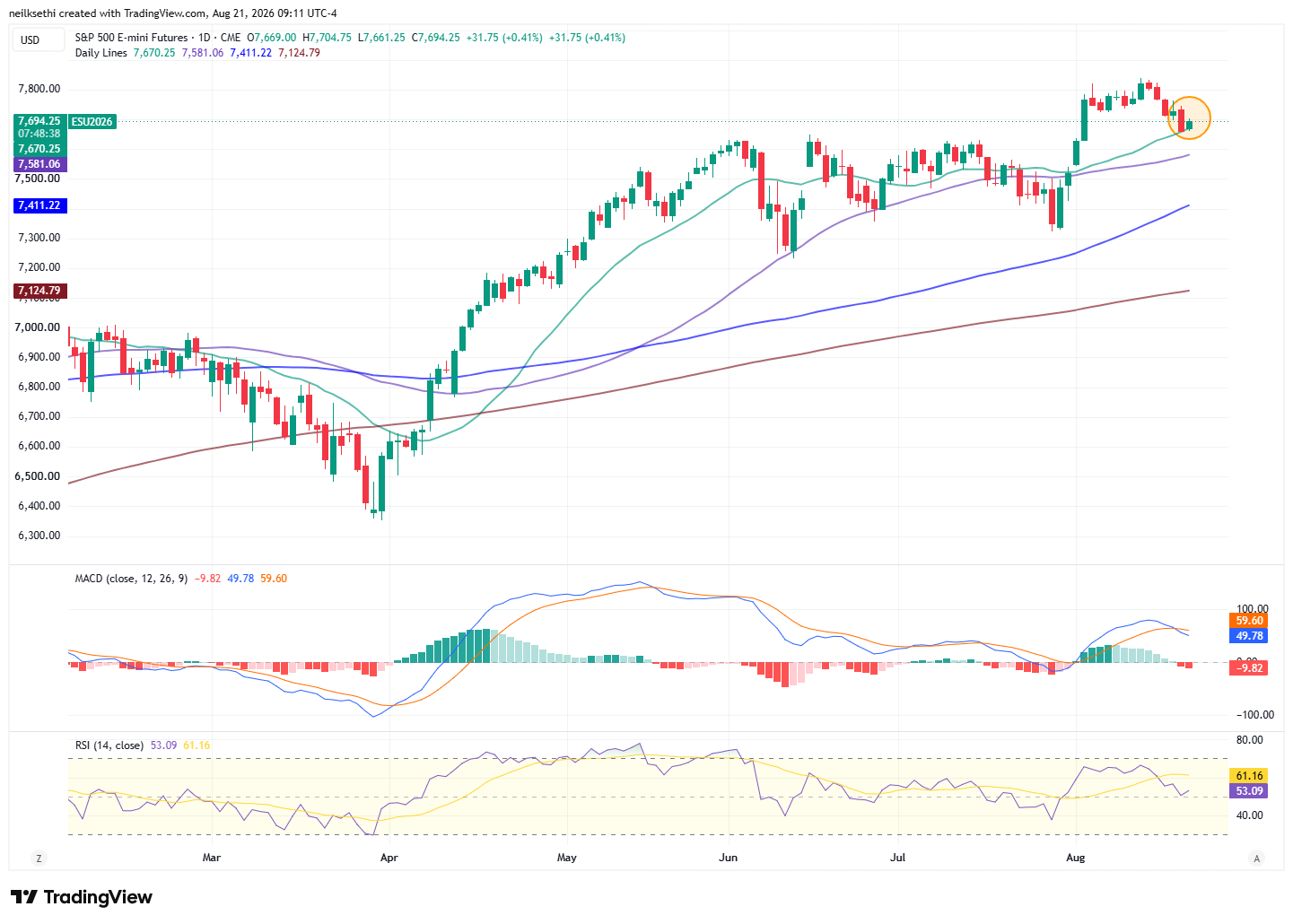
SPX futures (/ES): SPX futures +0.4% moving off 20-DMA.
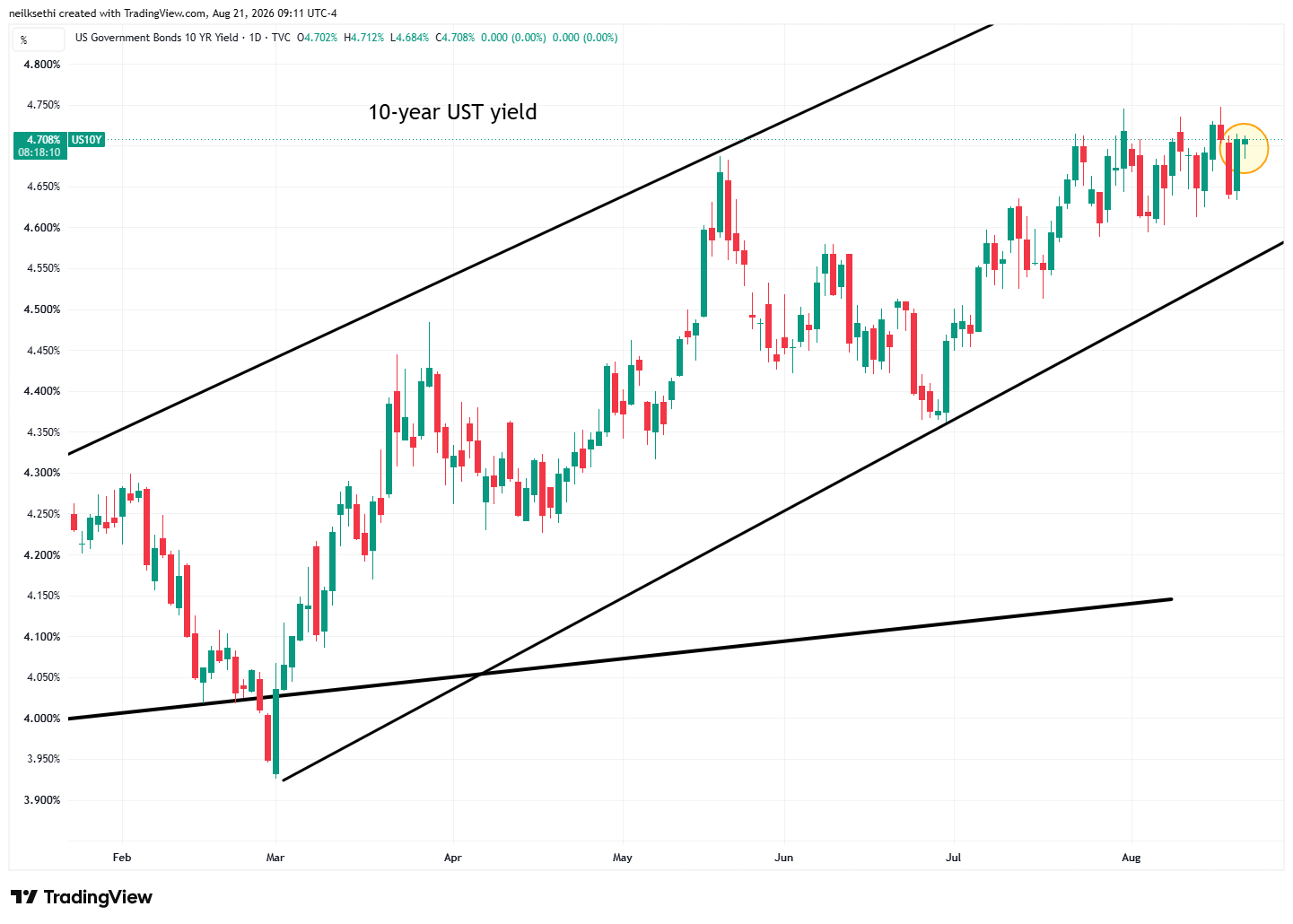
10yr Yield - unchanged
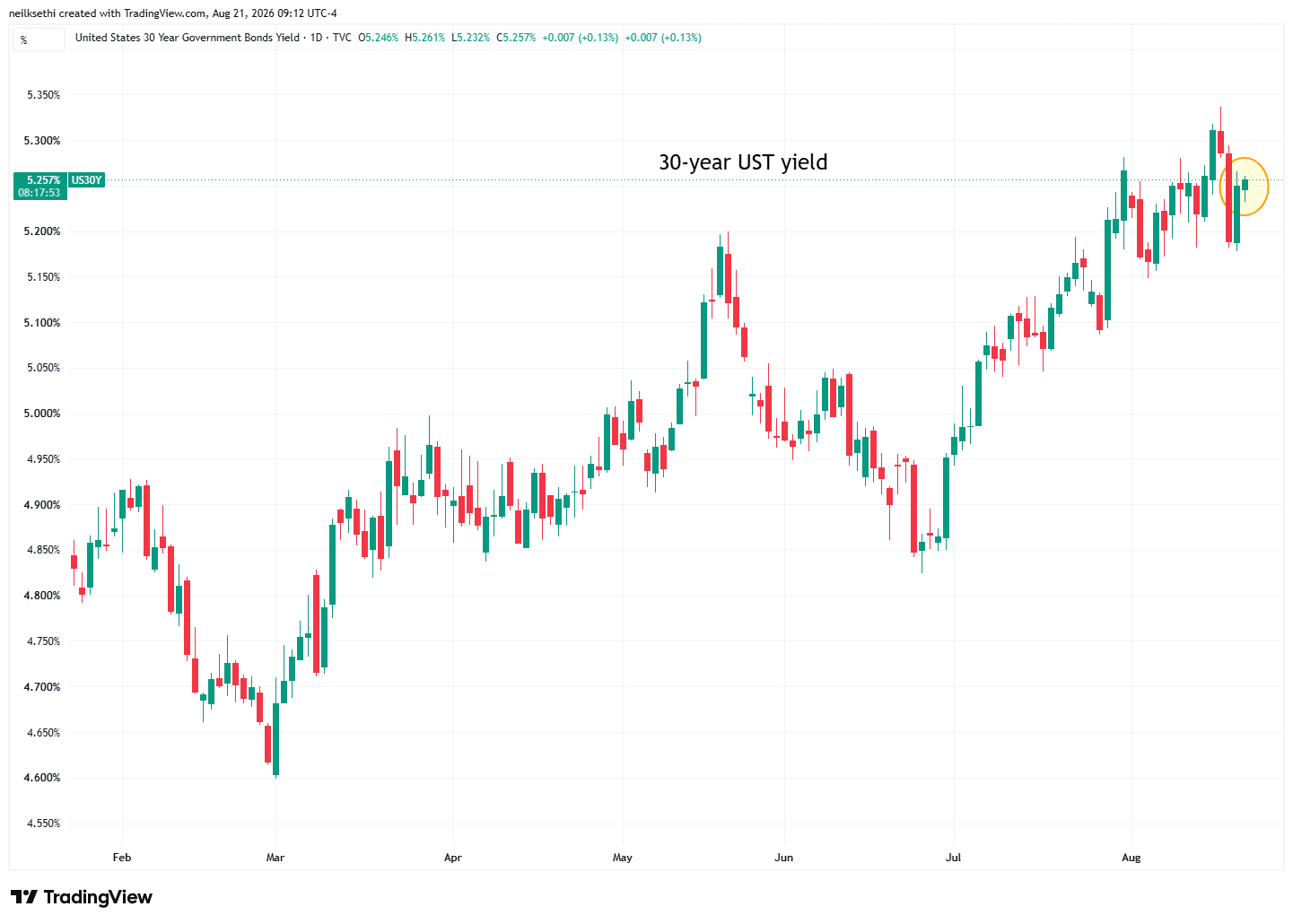
30-yr Yield - edging higher.
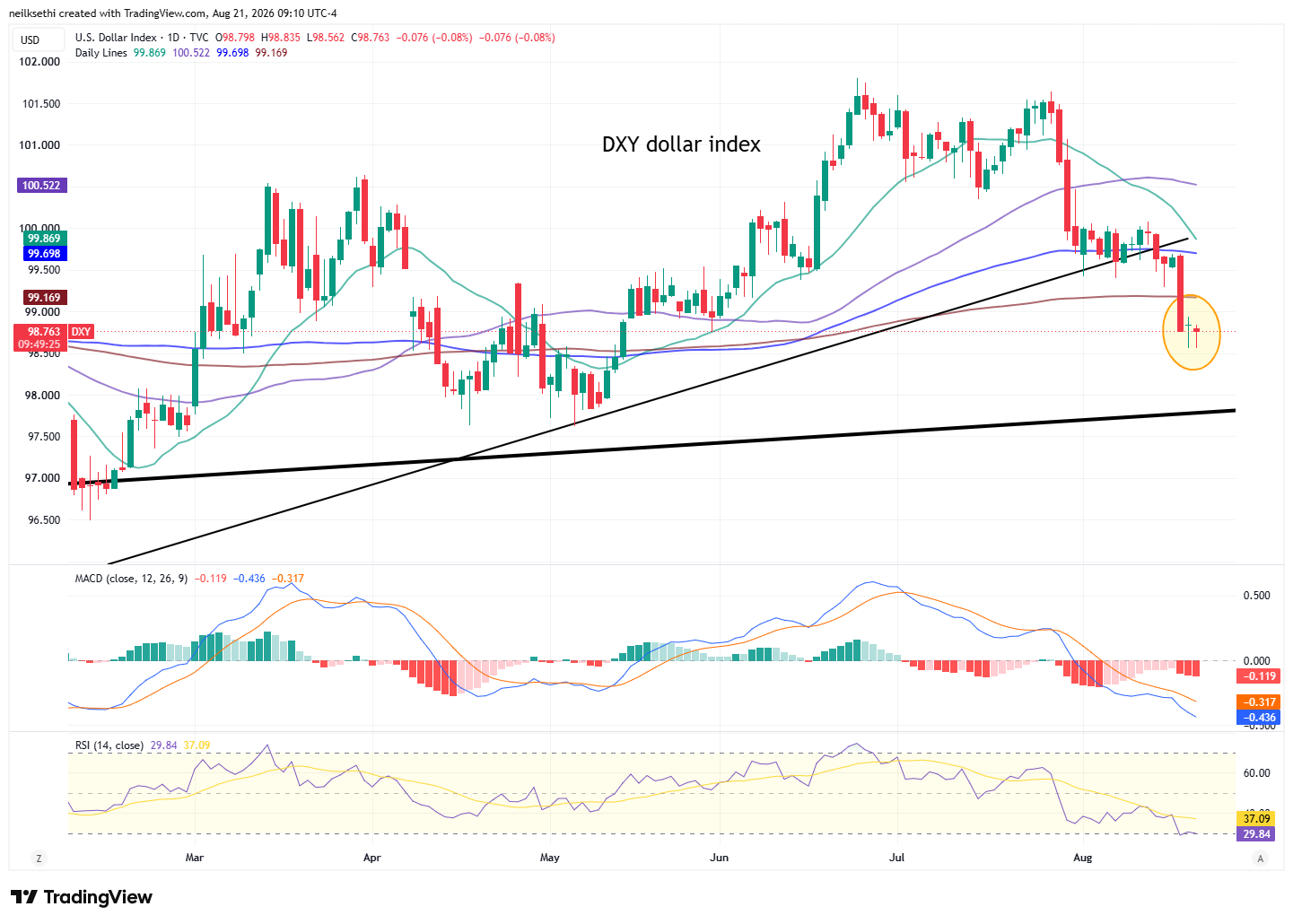
DXY US dollar index - trying to stabilize after the big drop Wednesday.
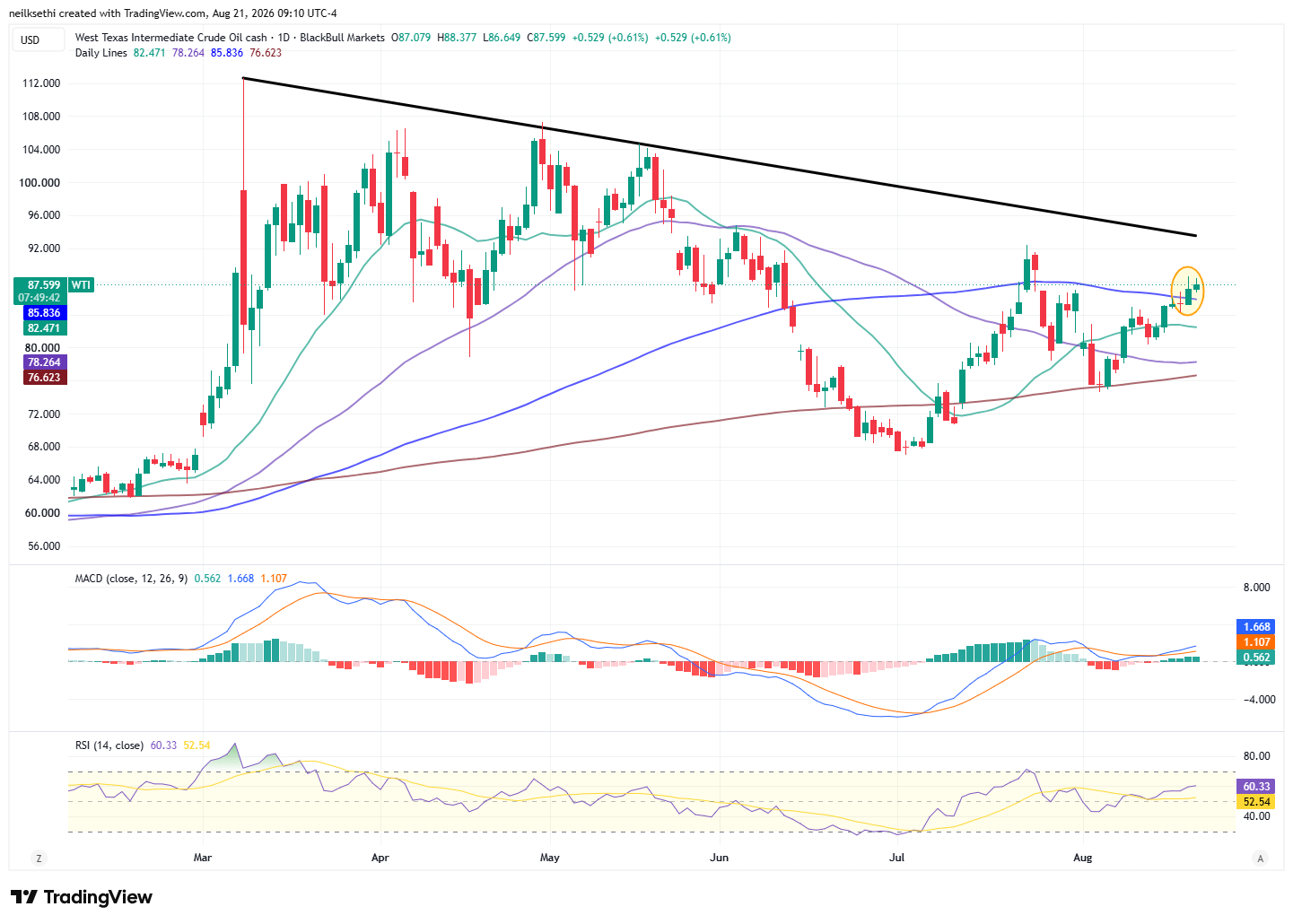
US WTI crude - pressing to 3-week highs.
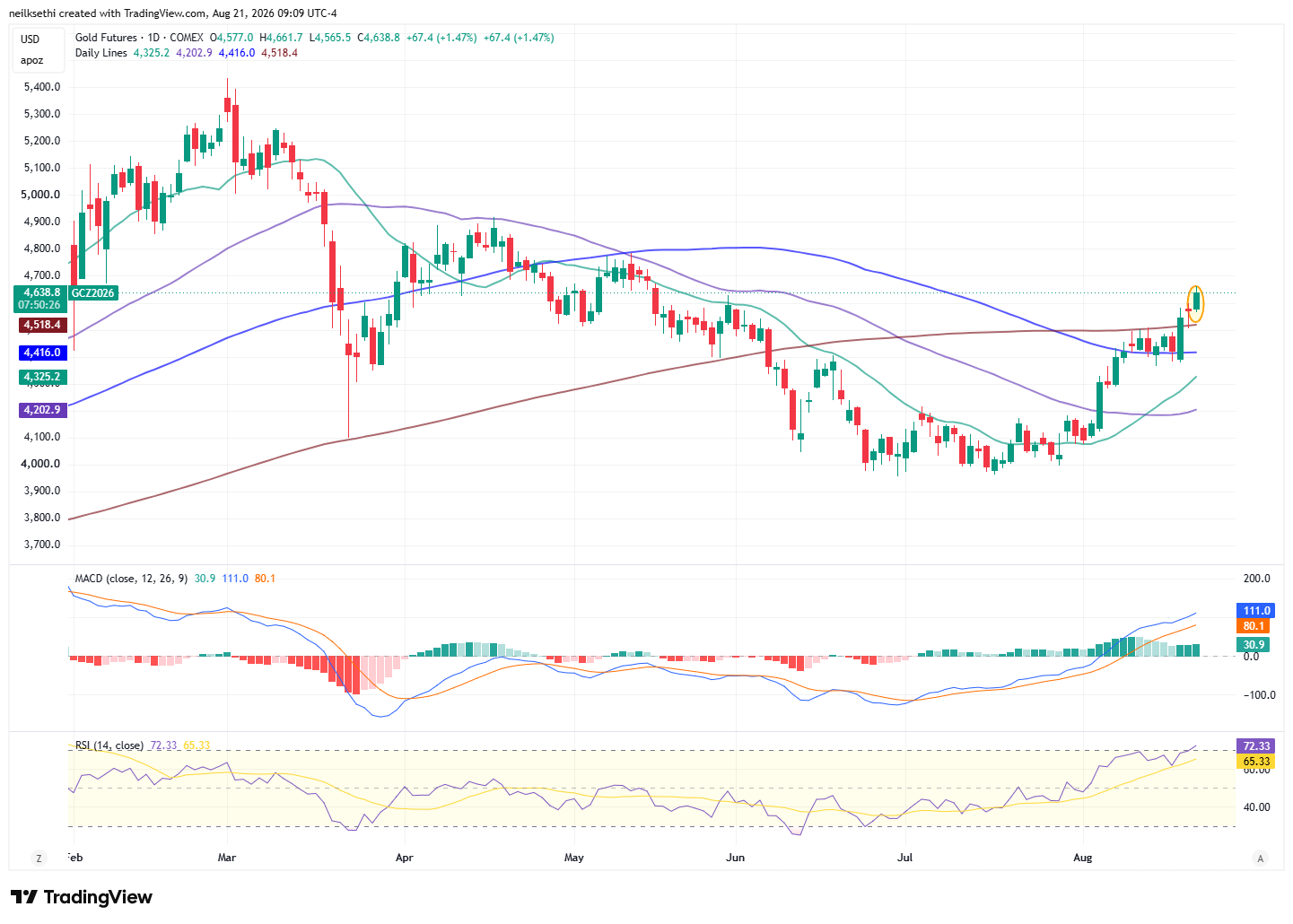
Gold futures (/GC) - resuming uptrend after testing 200-DMA from above; as mentioned Thursday “if it can hold above, as noted previously, ‘breaking through that opens up potential for big run higher.’”
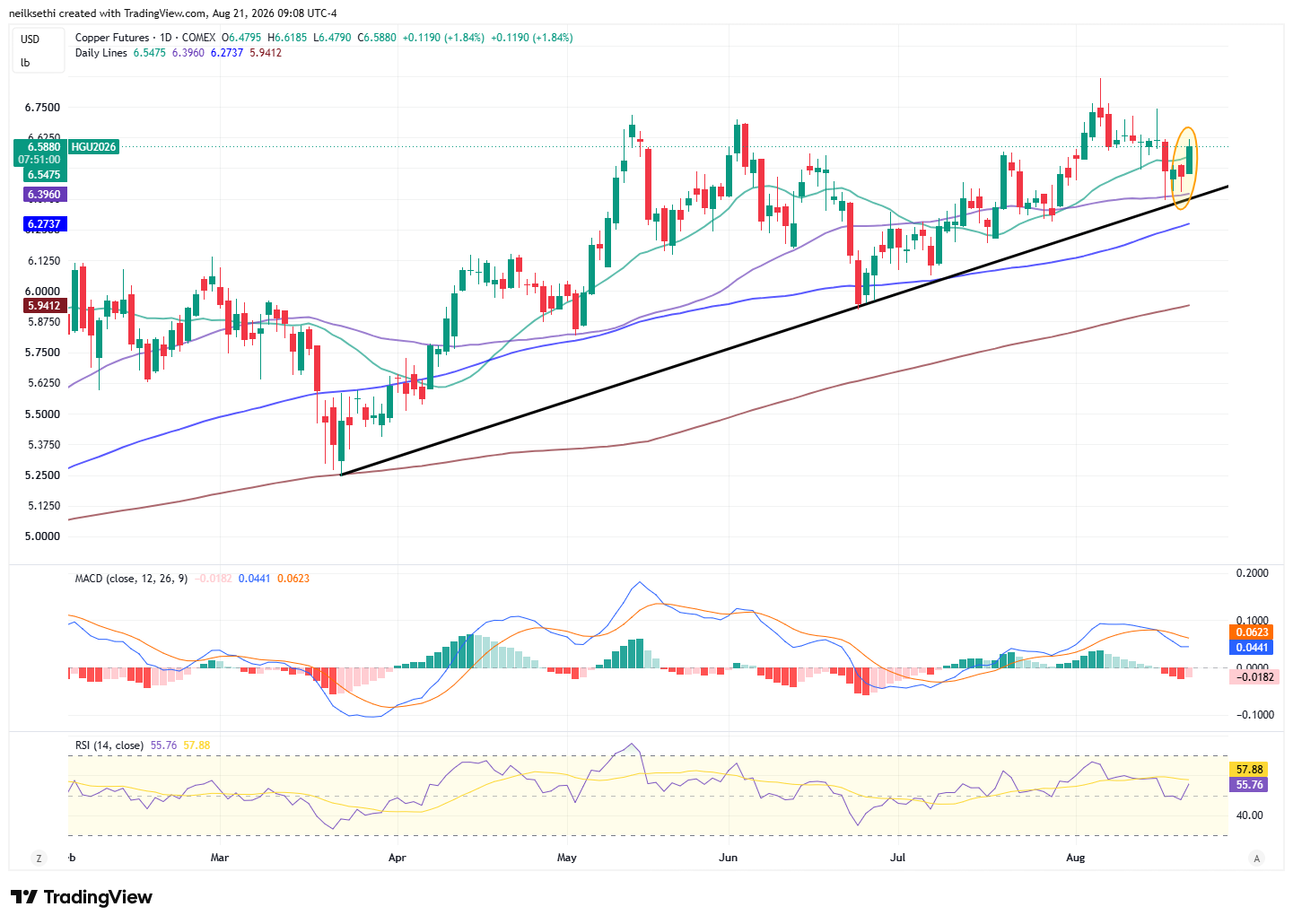
US copper futures (/HG) - pushing higher towards top of range this week.
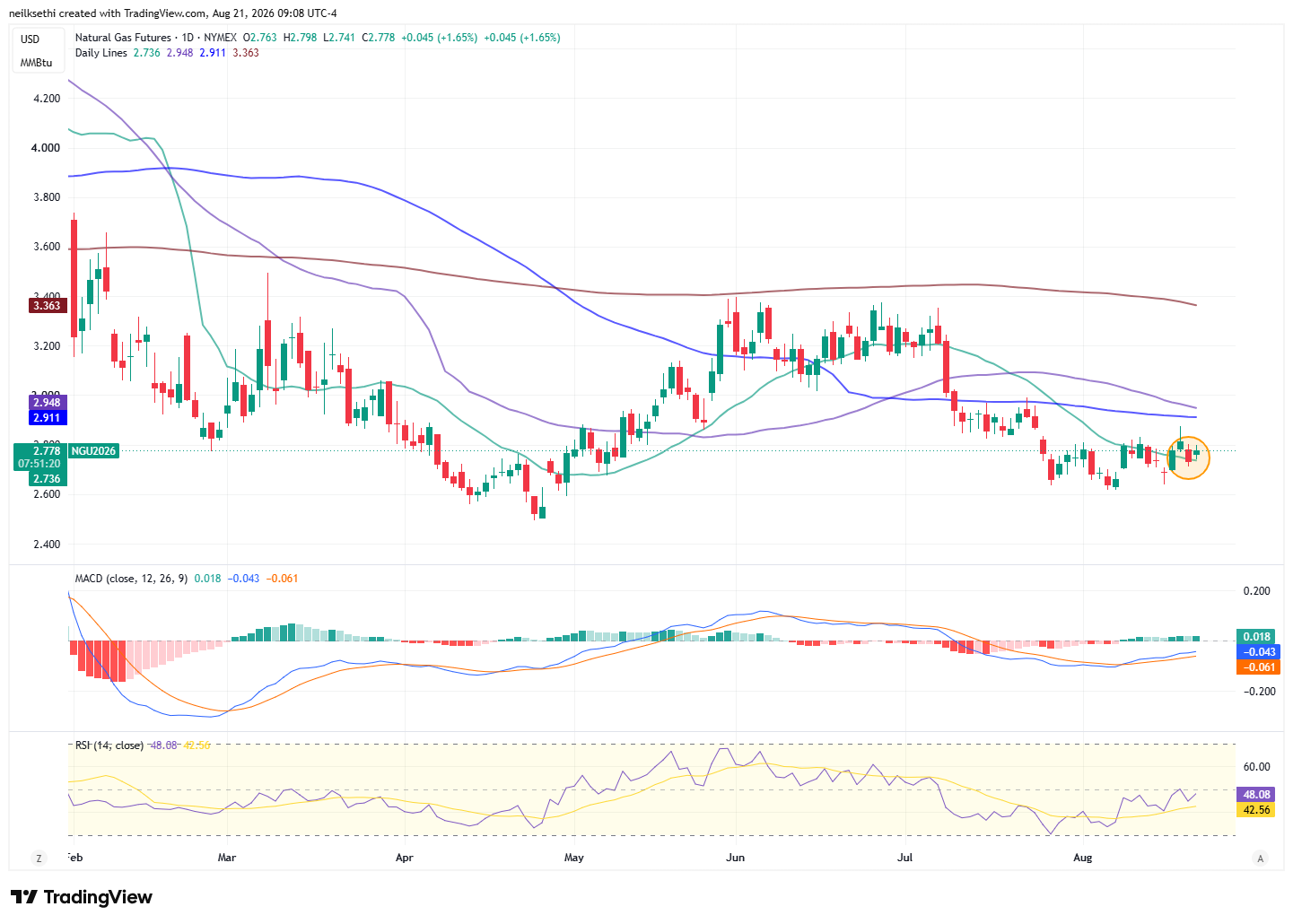
US natural gas futures (/NG) - continue trading in range over the past month.
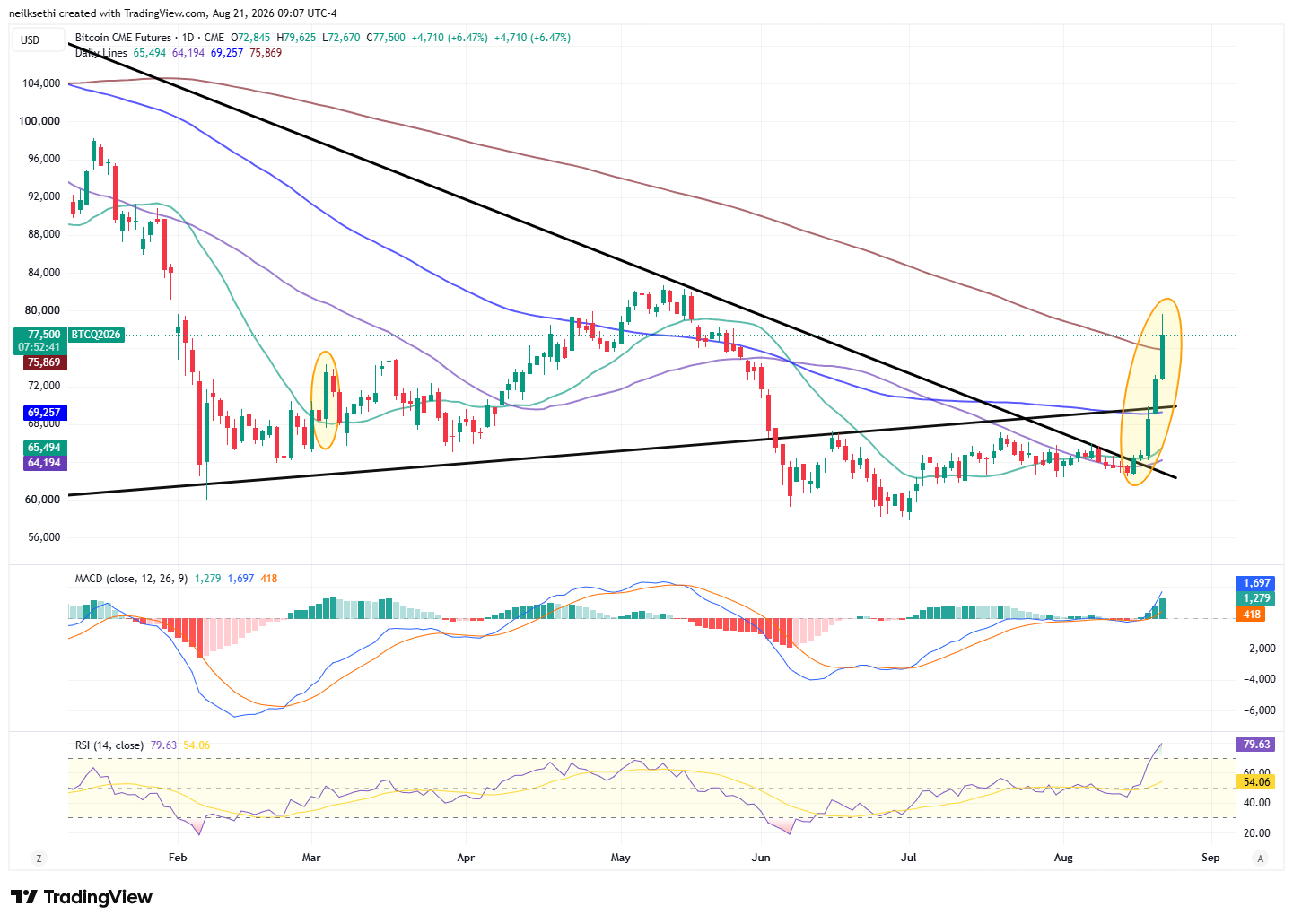
Bitcoin futures - up another +6.5% and have now cleared more resistance “opening up a continued run higher,” as noted earlier this week. They are up nearly 23% this week.
CNBC:
BBG:
Some pre-market company news from CNBC/MarketWatch (links to CNBC pages).
BJ’s Wholesale — Shares ticked slightly higher after the wholesale retailer posted better-than-expected results for the second quarter. BJ’s earned $1.36 per share, excluding certain items, on revenue of $6.09 billion. Analysts polled by FactSet expected a profit of $1.17 per share on revenue of $5.97 billion. It also increased its earnings per share guidance for the fiscal year to $4.60 and $ 4.80 from $4.40 to $4.60.
Ross Stores — Shares were up over 8% in premarket trading after the retail company posted second-quarter results that exceeded analyst expectations. Ross Stores also issued third-quarter earnings guidance that outperformed estimates.
Crypto-related stocks — The group rose broadly as bitcoin continued its march higher on Friday, with the digital currency on pace to end the week more than 20% higher. Robinhood, Coinbase and Strategy, were up by at least 4.5% in premarket trading. Bitcoin got a boost after the White House hosted crypto leaders and urged Congress to pass the Clarity Act, a bill focused on crypto infrastructure and clearer layout on which federal agencies would regulate crypto.
Broadcom — Shares are up over 1% after Bloomberg News reported, citing sources, that the semiconductor manufacturer was planning to raise over $60 billion in debt for a deal to support Anthropic.
Moderna was up about 4% after slumping more than 20% by Thursday’s closing bell as investors sought to gain profit. The pharmaceutical giant’s stock price more than doubled on Wednesday when the company and Merck announced that their experimental vaccine helped to prevent the return of melanoma.
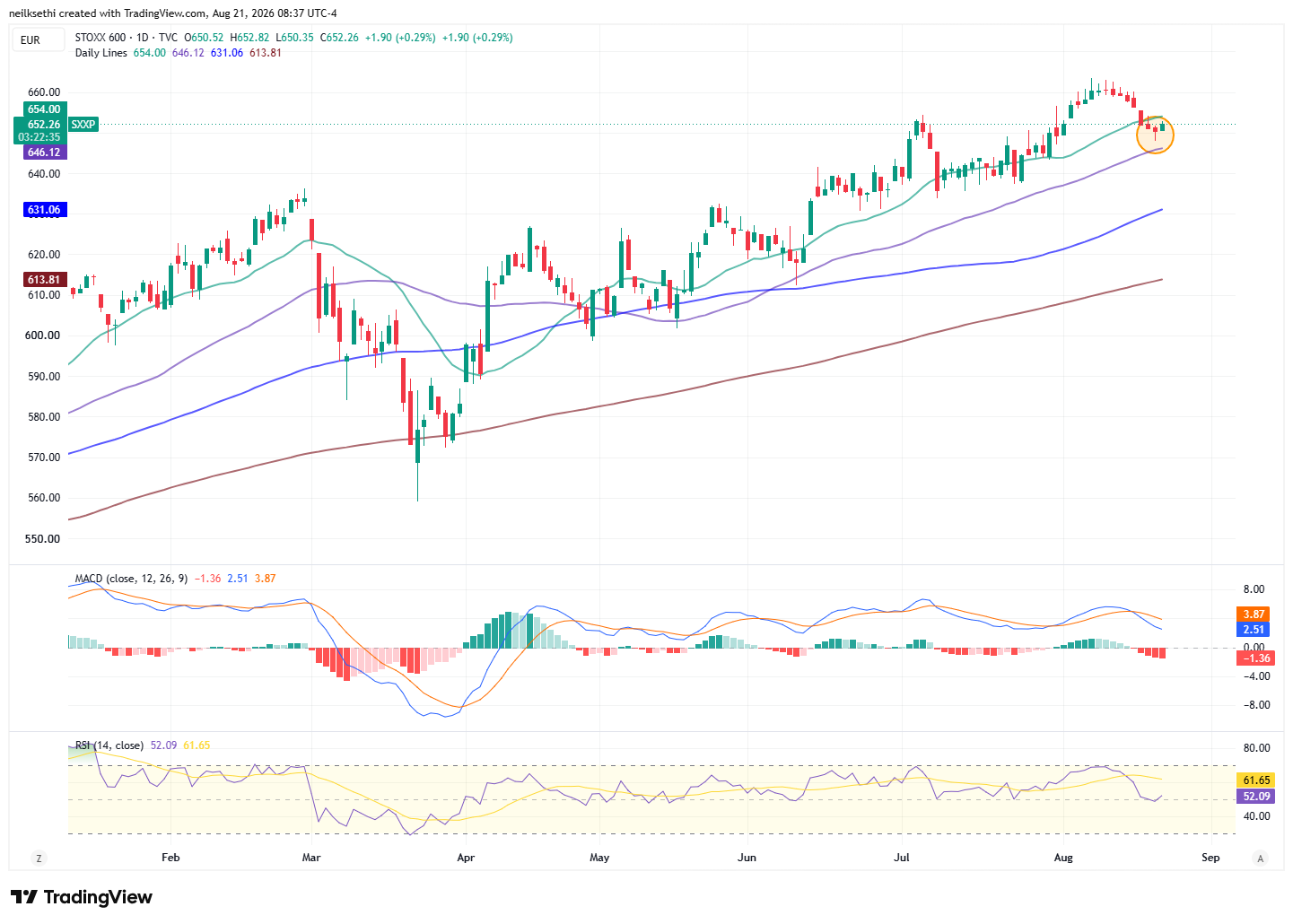
Europe’s benchmark STOXX 600 as of 8.00 am ET was +0.3% which would be its first gain in eight sessions and avert the longest losing streak in a decade (according to BBG). The 7-session streak was the longest since Sept 2023.
Major European indices are also on track for a largely quiet finish to the week with Spain's IBEX (+0.8%) showing relative strength.
Germany's DAX: +0.2%, U.K.'s FTSE 100: +0.2%, France's CAC 40: +0.1%, Italy's FTSE MIB: +0.2%, Spain's IBEX 35: +0.8%.
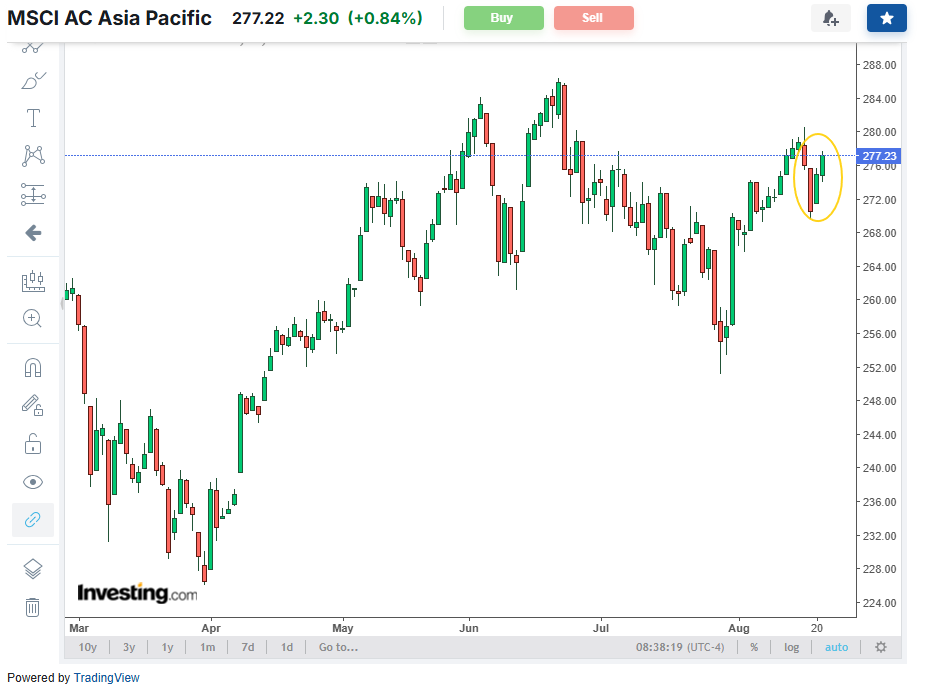
The broad MSCI AC Asia Pacific Index was up +0.8% Friday as it continues its bounceback but ended the week with a loss.
Major equity indices in the Asia-Pacific region ended the week on a mostly higher note.
Japan's Nikkei: -0.3%, Hong Kong's Hang Seng: +1.2%, China's Shanghai Composite: UNCH, India's Sensex: UNCH, South Korea's Kospi: +0.9%, Australia's ASX All Ordinaries: -0.3%.
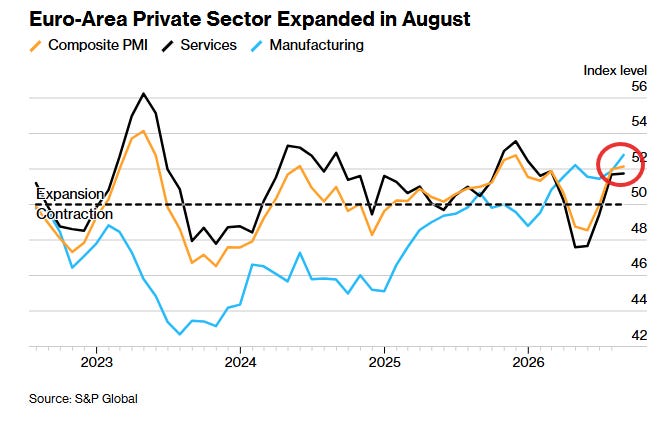
BBG/S&P - Private-sector activity in the euro area unexpectedly improved slightly in August, thanks to the strongest manufacturing growth in more than four years.
The Composite Purchasing Managers’ Index compiled by S&P Global rose to 52.1 from 52 in July, staying well above the 50 threshold separating growth from contraction. Analysts in a Bloomberg survey had expected a slight decline to 51.7.
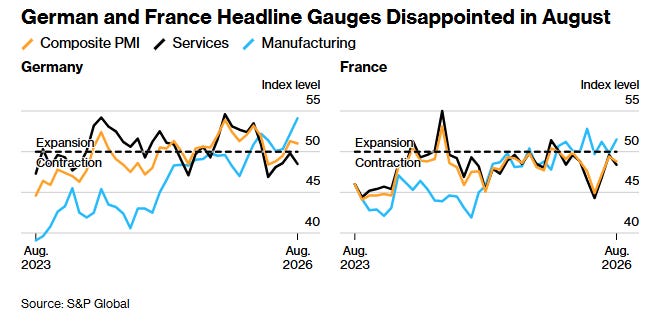
The region’s two largest economies both fell short of estimates, indicating that other parts of the region were behind Friday’s positive surprise. While Germany stayed well above the growth threshold, France sank deeper into contraction. “The rest of the euro area as a whole registered the fastest expansion since April 2022.”
“The manufacturing sector is again the star performer,” Chris Williamson, chief business economist at S&P Global Market Intelligence, said in a statement. As well as precautionary stock building, “there are also encouraging signs of rising demand for AI-related tech goods and rising equipment demand thanks to higher defense spending, notably helping Germany in particular achieve increasingly impressive production gains.”
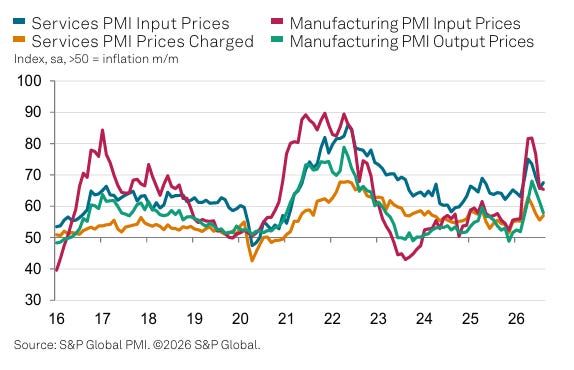
According to S&P Global, price pressures showed signs of further easing in August, for both services and goods. “Although high prices reportedly continue to dampen demand, price pressures have shown signs of further easing. Policymakers will be especially encouraged to see services selling price inflation back down to the joint-lowest so far this year (alongside March), with goods price inflation also continuing to moderate.”
“However, with the flash PMI signaling solid third quarter GDP growth, a return to hiring by companies for the first time this year, and inflation remaining elevated by historical standards, a hawkish bias is likely to be maintained and further imminent rate hikes cannot be ruled out,” Williamson said.
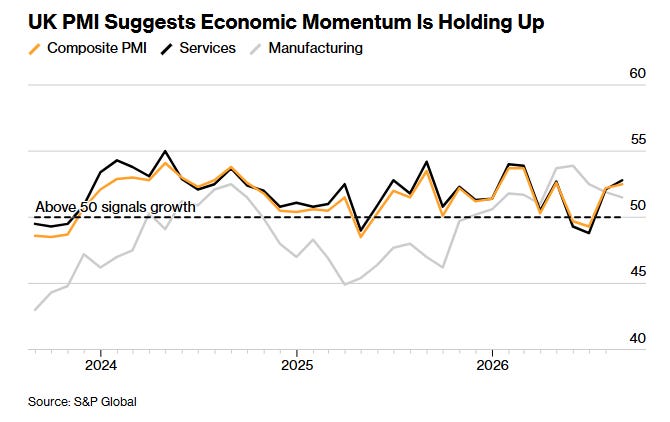
BBG - Britain’s private sector also expanded better than expected and at the fastest pace in four months, as sunny weather and a strong service sector prompted households and businesses to turn on the spending taps.
S&P Global’s purchasing managers’ index rose to 52.5 in August, up from 52.2 last month and above the 51.6 expected by economists.
Chris Williamson, chief business economist at S&P Global Market Intelligence, said the PMI pointed to growth of 0.3% in the third quarter — a pace that would comfortably beat the 0.1% penciled in by economists. Williamson said “sunny weather and tech investment” boosted the economy in August with services sector activity rising at the quickest pace in six months. S&P said firms reported higher spending by consumers and businesses domestically, while expectations of future output rose to a six-month high.
However, the manufacturing output index slipped to a five-month low with the volatile global backdrop and a growing cost burden cited as a drag.
Overall inflationary pressures rose with input prices rising at a faster rate than July’s five-month low. Firms said businesses were passing on higher fuel costs after the recent resurgence in oil prices. It’s clear that the “Middle East and concerns over domestic government policy continue to have a damaging effect,” said Williamson. “Most worryingly, cost pressures remain high, largely due to energy prices and supply disruption linked to the Middle East conflict alongside high staffing costs. The data suggest the Bank of England looks likely to keep a hawkish bias but will stay cautious, holding off any rate hikes until the growth and inflation trajectories become clearer.”
Employment fell for a 23rd straight month, the longest run of declines since records began in 1996. However, it was the smallest reduction in staffing levels since last October.
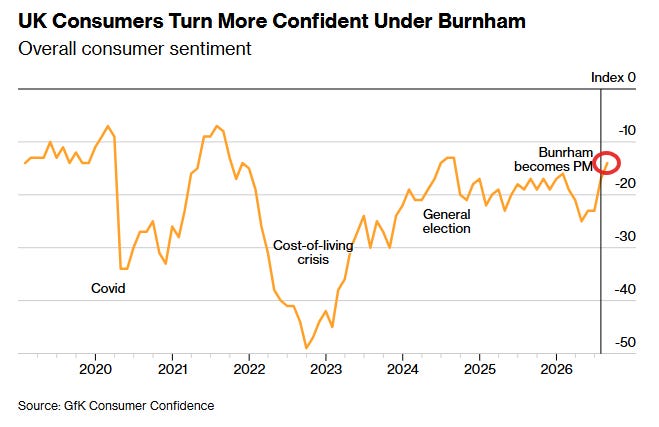
BBG - British consumers are more confident than at any point since Labour took power two years ago, further evidence that the national mood has improved since Andy Burnham took over as prime minister in July.
GfK said its indicator tracking overall consumer sentiment rose three percentage points to minus 14 in August. The index has surged 9 points over the past two months to levels last seen in August 2024, shortly after Keir Starmer led the Labour Party to a landslide election win.
All the sentiment indicators tracked by GfK improved in August. Households’ views of their personal finances climbed further into positive territory, with intentions to make major purchases at their highest since 2021. Britons have also turned more optimistic about the economy as a whole.
Neil Bellamy, consumer insights director at GfK, said it’s “too soon to tell” if the improvement will translate into a long-term recovery in spending. Consumers, who drive about 60% of economic output, still face a difficult jobs picture, rising inflation and uncertainty over the Middle East conflict. “There are still many challenges ahead that will test the mettle of UK consumers,” Bellamy said.
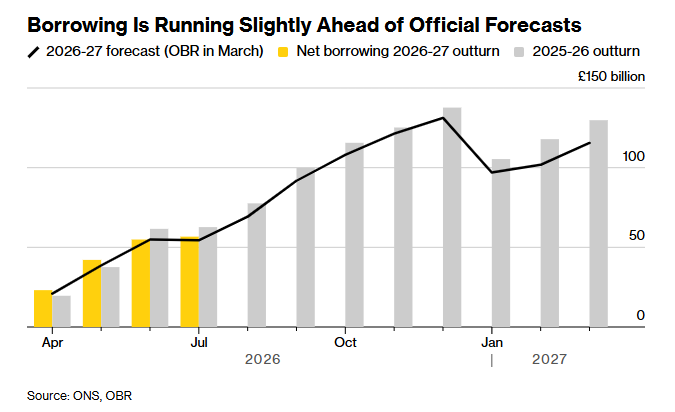
BBG - Britain posted a surprise budget deficit in July, underscoring the fragile state of the public finances as Chancellor of the Exchequer John Healey begins to draw up his crucial autumn budget.
Spending exceeded revenue by £1.8 billion ($2.5 billion), up £700 million on the deficit a year earlier, the Office for National Statistics said on Friday. Economists and the Office for Budget Responsibility were expecting the budget to be in balance, with July typically getting a boost from scheduled payments of self-assessed income tax. Gilts were little changed when markets opened later on Friday.
Record self-assessment tax receipts were offset by spending pressures last month as higher inflation drove up the cost of welfare, debt interest, wages and government procurement. Total expenditure including net investment hit £110.7 billion last month, up from £105 billion a year earlier. Revenue in the first four months of the fiscal year was £2.8 billion higher than the OBR forecast but spending overshot by £5.1 billion. Public debt stood at 94.1% of GDP in July, around levels last seen in the early 1960s.
The figures leave the public finances in a precarious position ahead of the budget on Oct. 28 when new Prime Minister Andy Burnham’s economic vision for the country will start to take shape.
Friday’s figures were “a reminder that the fiscal arithmetic remains extremely tight,” said Martin Beck, chief economist at WPI Strategy. “The government still faces a familiar trade-off between its policy ambitions, the pressure to maintain market confidence and the need to put the public finances on a sustainable path.”
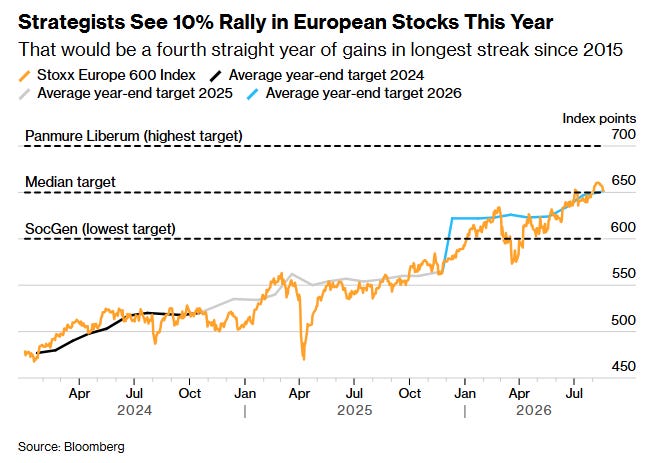
BBG - Goldman Sachs Group Inc. and JPMorgan Chase & Co. strategists are among the most optimistic about European stocks on the back of a robust corporate earnings outlook, a Bloomberg survey shows.
Goldman strategists have raised their three-month target for the Stoxx Europe 600 index to 670 points, implying gains of about 3% from Wednesday’s close. Panmure Liberum is the most bullish in the poll, with a year-end forecast of 700, while JPMorgan sees the index climbing to about 680.
On average, 15 strategists expect the benchmark to end the year around 651 points, representing a full-year rally of about 10%, according to the survey. That would mark the fourth straight year of gains in Europe’s longest winning streak since 2015.
“Europe has done much better than almost everybody would have expected at the outset of this year,” said Sharon Bell, senior European equity strategist at Goldman Sachs. “There’s been so much attention on a handful of companies in the US and Asia that I just don’t feel Europe has had its proper due.”
Market forecasters have consistently underestimated the strength of the rally. Back in December, the cohort had expected the Stoxx 600 to rise about 7% on average by end-2026, with even the most bullish target seeing the gauge at 650 points — a level it has already hit.
One contrarian forecaster is Bank of America’s Sebastian Raedler, who expects a potential increase in equity risk premiums on the back of “unresolved issues” around energy supply and US economic uncertainty. The strategist cut his already-bearish target further to 610 points, implying a drop of 6% from current levels.
For some others, though, the feed-through from AI spending as well as corporate earnings is reason enough to remain optimistic. Analysts on average expect Stoxx 600 profits to surge 15% this year and 9% in 2027, according to data compiled by Bloomberg Intelligence.
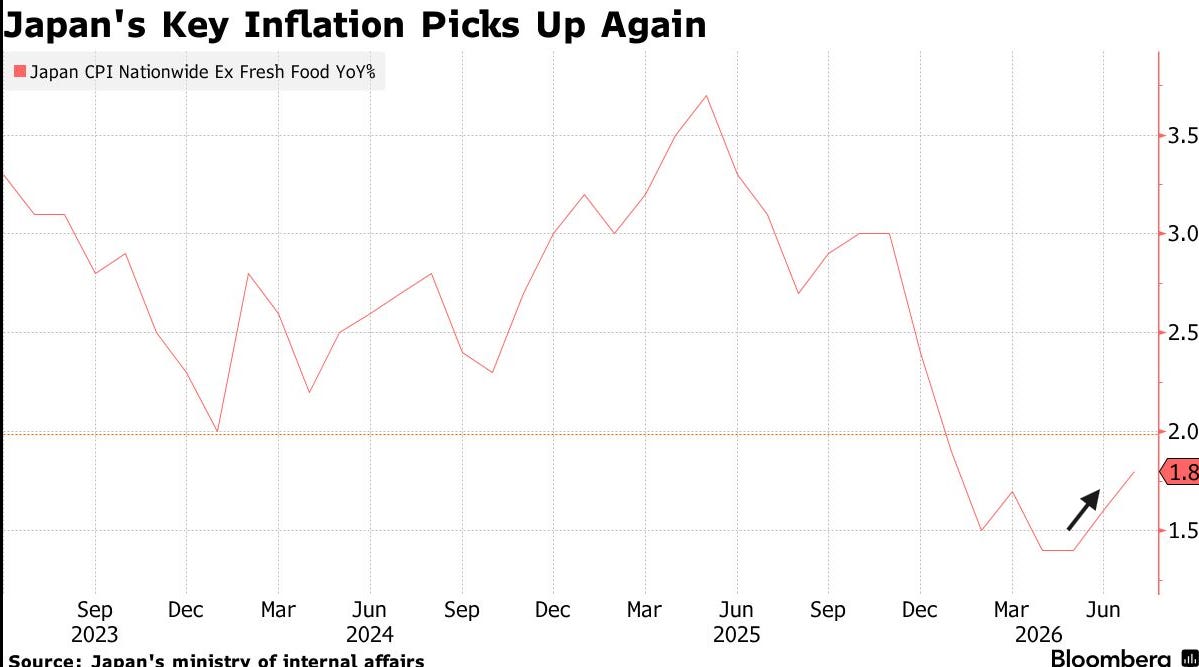
BBG - Japan’s key price gauge accelerated for a second month, keeping the Bank of Japan on track for another near-term interest rate hike as market speculation builds over a move as soon as September.
The consumer price index excluding fresh food rose 1.8% in July from a year earlier, the Ministry of Internal Affairs and Communications said Friday, picking up from a 1.6% advance in the previous month. The reading, the fastest since January, matched the median economist estimate.
The index that strips out both fresh food and energy, a measure closely watched by the BOJ as a gauge of underlying inflation, advanced 1.9%. The overall CPI also rose 1.9%.
The acceleration was driven partly by energy, with those costs rising 0.6% year on year, reversing from a slight decline in June. Snack food including potato chips and the costs of dining out also contributed to the gain. As has been the case for some time, the overall reading was distorted somewhat by government steps to ease the impact of rising energy costs. A gasoline tax cut helped slow overall price growth by 0.22 percentage point, the ministry said.
Prices for processed food rose by 3%, a fairly fast pace by standards in recent decades, but that result exerted a drag on the index, as growth slowed from 3.1% in the previous month. Rice prices dropped by almost 12%, the steepest decline in more than two decades, after surging by 91% a year ago, when it was among major drivers of overall inflation. Service prices — a key indicator for the durability of inflation — rose 1.2%, a slight acceleration compared with June.
“Today’s data backs BOJ’s concerns over inflation,” said Yoshiki Shinke, senior executive economist at Daiichi Life Research Institute. “Given recent data and BOJ’s communications, it’s reasonable to have a base case for BOJ’s hike in September.”
“Japan’s July CPI report strengthens the case for the BOJ to stay alert to an inflation overshoot. Inflation picked up as the March-June oil-price spike and weaker yen pushed up input costs. A lower base from last year’s energy subsidies also contributed to the acceleration.” — Taro Kimura, economist
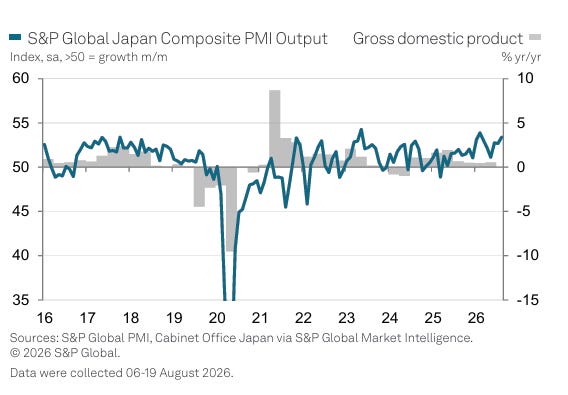
RTRS/S&P - Japan’s manufacturing sector expanded in August as new orders rose at their fastest pace since January 2018, a business survey showed on Friday.
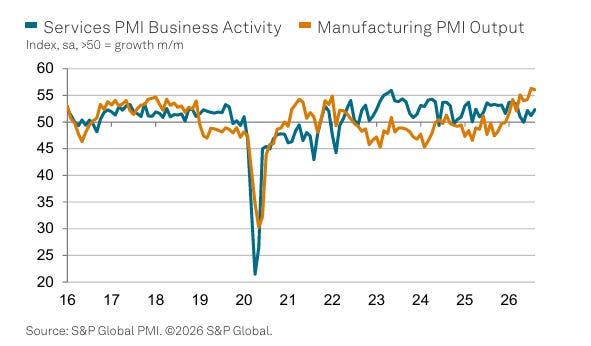
The S&P Global Flash Japan Manufacturing Purchasing Managers’ Index (PMI) rose to 55.1 in August from 54.5 in July, a preliminary estimate by S&P Global showed. The 50-mark separates growth from contraction.
““Japan's private sector continued to perform strongly in August, with firms signalling the quickest increase in output since February. While we saw growth momentum pick up across both manufacturing and service sectors, factories continued to lead growth, registering sharp increases in both production and new orders,” said Annabel Fiddes, economics associate director at S&P Global Market Intelligence. Manufacturers also saw the steepest increase in total sales and overseas demand for more than 8-1/2 years, with firms citing strong demand from semiconductor and AI-related industries, Fiddes added.
And manufacturers led employment growth in August and expanded input buying, while stocks of purchases rose only slightly and suppliers’ delivery times lengthened markedly.
Services activity also strengthened in August though. The S&P Global Flash Japan Services PMI Business Activity Index rose to 52.3 from 51.2, helping lift the Composite Output Index to 53.4 from 52.7, its highest since February.
Cost pressures eased from June’s near-record pace, with overall input inflation across the private sector slowing to a five-month low. Even so, selling prices for goods and services rose at one of the steepest rates on record. “Although input prices continued to rise sharply overall, often due to the impact of the Middle East war on supply chains and energy prices, but also a weak yen exchange rate, the overall rate of cost inflation edged down to a five-month low. Nevertheless, firms may need to see a sustained slowdown in inflation before tempering output price rises, which remained at a near-record pace in August”
Business confidence improved to its highest since February, with manufacturers more upbeat than services companies, attributing their optimism to expectations of higher sales, greater operational capacity and stronger overall market conditions.
“This adds to hopes that Japan’s private sector remains well placed to perform strongly going forward, provided there are no further shocks to prices or demand,” Fiddes said.
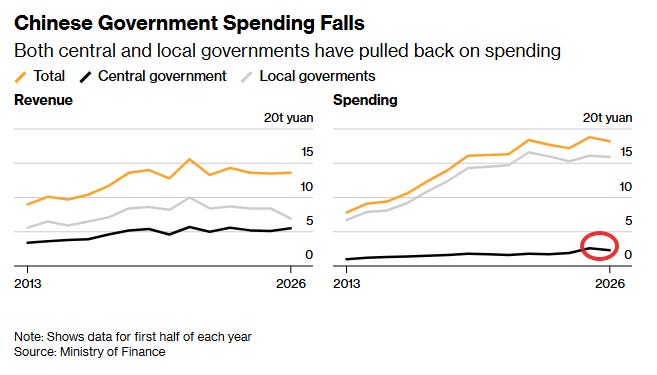
BBG - China is doubling down on a targeted program that’s tapping fiscal resources to drive borrowing by businesses and consumers, with new measures set for launch in the rest of the year as economic growth veers below the government’s annual target.
“We’ve been studying and drafting new coordinated fiscal and financial policies that will be introduced in the second half of this year,” Vice Finance Minister Liao Min said at a briefing in Beijing on Friday.
The announcement marks the latest attempt by the government to provide a dose of fiscal support for the economy during one of its weakest stretches in years. It also underscores the focus by the authorities on acting carefully to revive domestic demand and expand private spending against the backdrop of mounting fiscal strains at the local level.
The creation of the program is “one of the key pillars of this year’s more proactive fiscal policy,” Liao said, adding the authorities will in the future make such fiscal and financial coordination a regular feature of their approach.
Lynn Song, chief economist for Greater China at ING Bank NV, was cautious about the impact on the economy of any new measures as part this mix of policies, arguing that they were insufficient to help halt the growth downturn so far this year. If additional policies come primarily in the form of interest rate subsidies, “it’d be marginal,” he said.
“The bulk of the remaining budget needs to be deployed this quarter. The fiscal inertia evident in July puts the burden on August and September to do the heavy lifting on economic stabilization. A sharp spending push would set up a key policy window in late September.” — David Qu and Chang Shu.
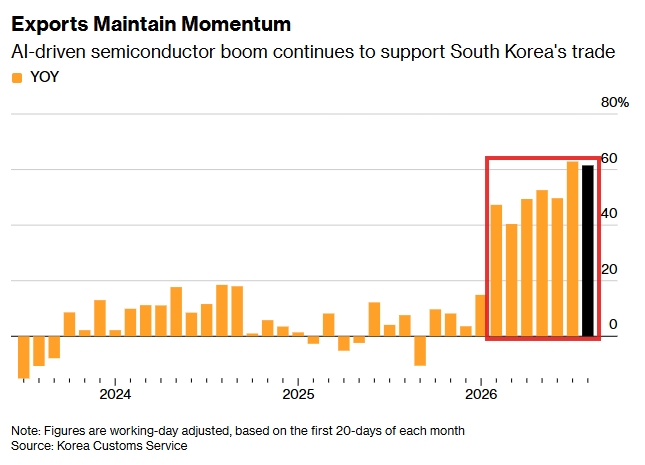
BBG - South Korea’s exports maintained their strong growth in early August, offering further evidence that artificial intelligence-driven demand is powering the economy and supporting the case for further interest rate hikes.
Exports adjusted for working-day differences climbed 61.5% from a year earlier in the first 20 days of August, according to customs office data released Friday. That compared with an initially reported 62.9% increase during the same period in July.
On an unadjusted basis, shipments gained 56%, while imports rose 19%, resulting in a trade surplus of nearly $14 billion.
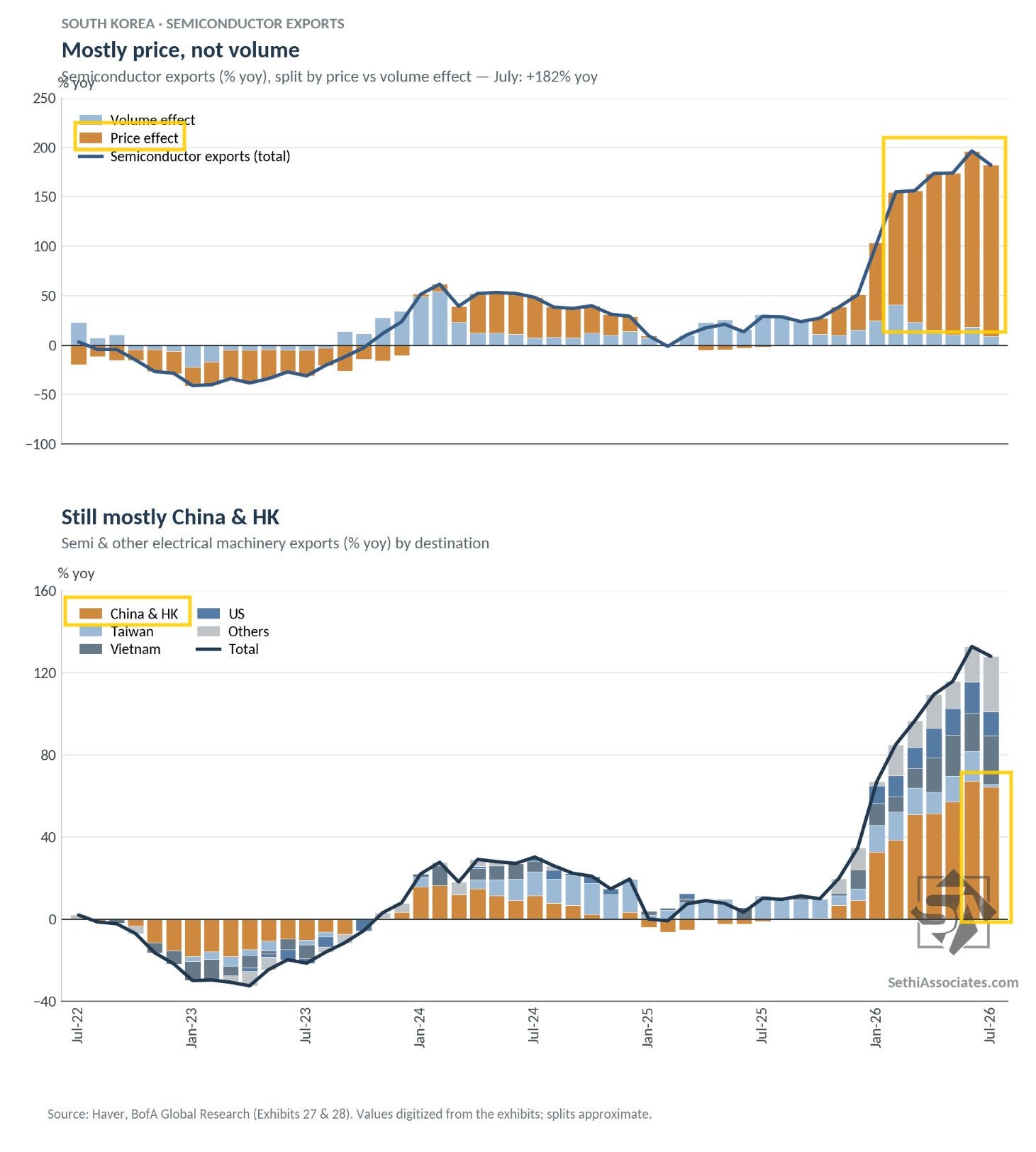
Semiconductors continued to lead the gains, with exports soaring 198.8% from a year earlier. Shipments of computer-related products jumped 242.1%, while automobile exports fell about 45%. The data suggest the export boom remains firmly intact as investment in AI and data centers drives global demand for South Korea’s memory chips and other technology products.
By destination, exports to China increased 118.6%, while shipments to the US rose 59.4%. Exports to Hong Kong and Vietnam jumped 245.5% and 67.4%, respectively.
Export prices are a large part of the story as they surged about 49% in July from a year earlier, the most since March 1998, while its terms of trade improved by a record 24.7%, the BOK said last week.
Samsung Electronics Co. said it expects to return as much as 110 trillion won ($79 billion) to shareholders this year, joining rival SK Hynix Inc. in handing investors a chunk of the windfall generated by the AI rush.
Banca Monte dei Paschi di Siena SpA is seeking to buy two separate banks for a combined price of €34 billion ($40 billion) as it wants to prevent being taken over by rival Intesa Sanpaolo SpA.
U.K.’s July Retail Sales -0.5% m/m (expected -0.4%; last 0.7%); 1.6% yr/yr (expected 2.2%; last 3.8%). July Core Retail Sales -0.9% m/m (expected -0.5%; last 0.9%); 2.3% yr/yr (expected 3.3%; last 5.0%). August flash Manufacturing PMI 51.5 (expected 51.6; last 51.9) and flash Services PMI 52.8 (expected 51.8; last 52.1)
Eurozone’s flash August Manufacturing PMI 52.8 (expected 51.8; last 51.9) and flash Services PMI 51.7 (expected 51.5; last 51.7)
Germany’s flash August Manufacturing PMI 54.1 (expected 52.1; last 52.2) and flash Services PMI 48.5 (expected 50.1; last 49.8)
France’s flash August Manufacturing PMI 51.5 (expected 50.1; last 49.8) and flash Services PMI 48.4 (expected 49.4; last 49.6). August Business Survey 103 (expected 101; last 101)
China's July FDI -6.2% YTD (last -5.0%)
Japan's July National CPI 0.4% m/m (last 0.3%); 1.9% yr/yr (last 1.6%). July National Core CPI 1.8% yr/yr, as expected (last 1.6%). Flash August Manufacturing PMI 55.1, as expected (last 54.5) and flash August Services PMI 52.3 (last 51.2)
South Korea's July PPI -0.4% m/m (last 0.0%); 7.7% yr/yr (last 8.5%)
Australia's flash August Manufacturing PMI 52.0 (last 52.0) and flash Services PMI 52.9 (last 53.6)
New Zealand's July trade deficit NZD1.949 bln (expected deficit of NZD175 mln; prior deficit of NZD237 mln). July Credit Card Spending 5.3% yr/yr (last 3.2%)
India's flash August Manufacturing PMI 52.9 (expected 54.0; last 53.5) and flash Services PMI 54.5 (expected 53.8; last 53.3)
To subscribe to these summaries, click below.
To invite others to check it out,
No posts
Comments
Nothing yet. Say the first thing.
Sign in to join the conversation.