
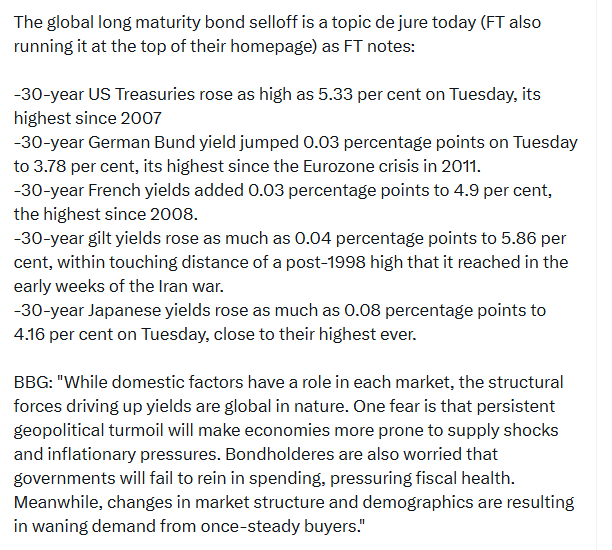
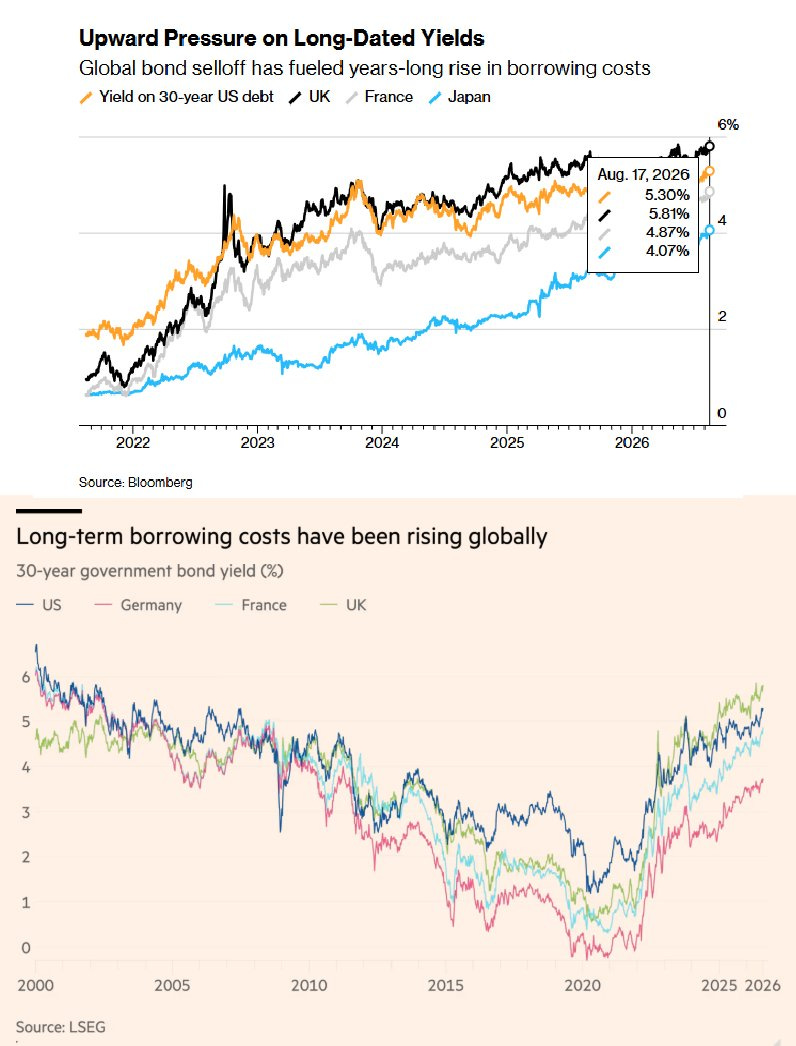
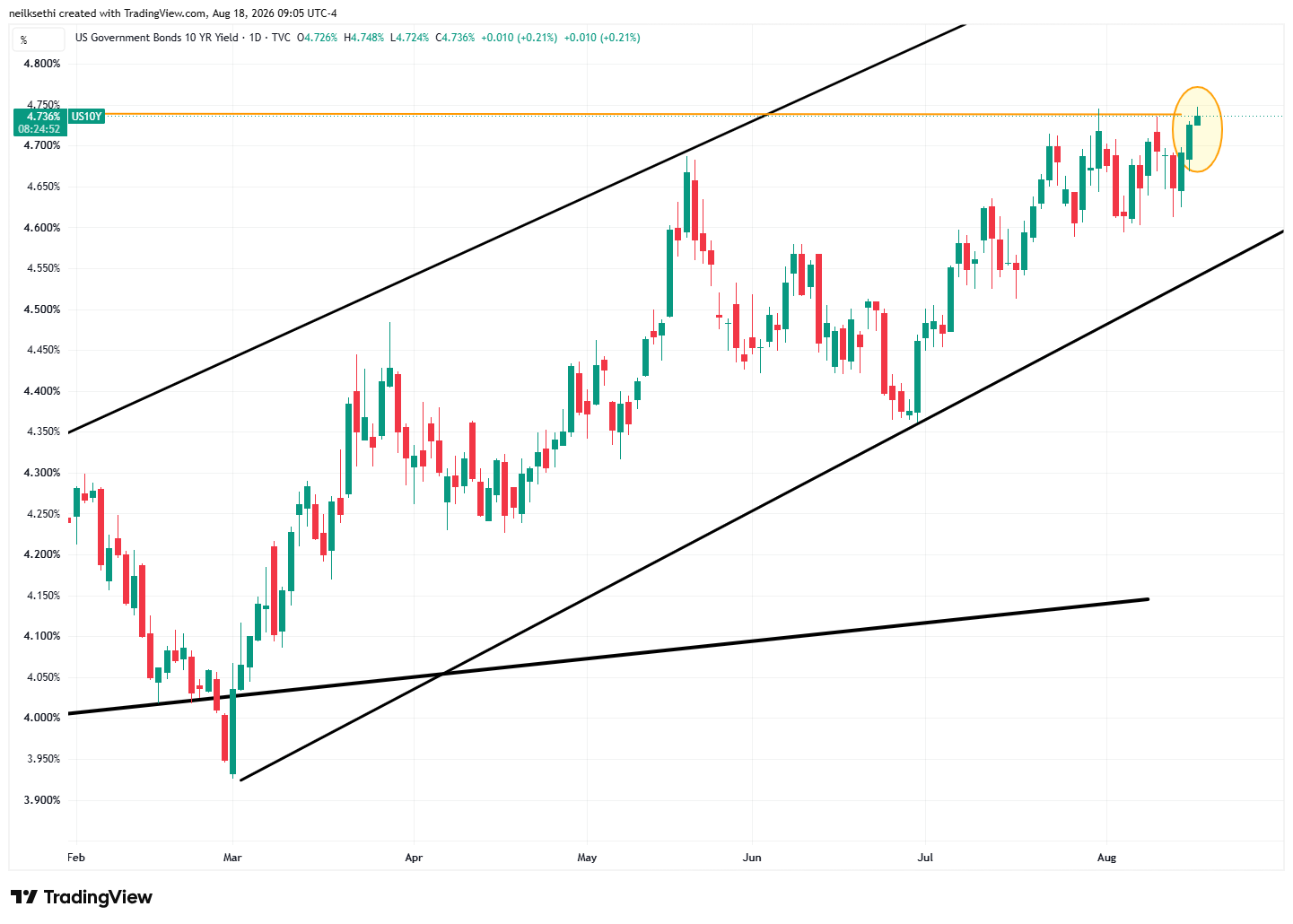
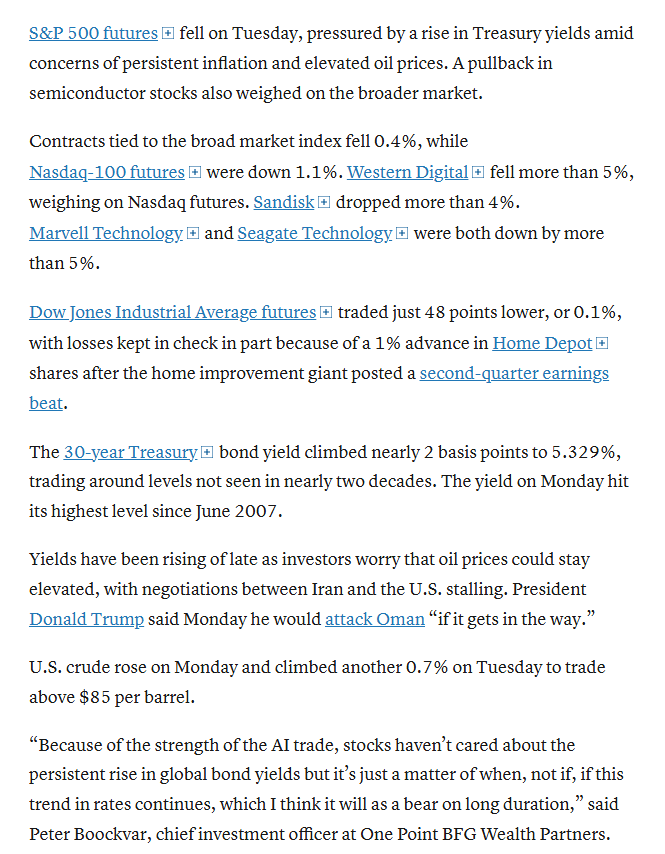
As we approach the open in NY, US equity indices are lower with tech shares today leading the declines as global bond yields continued to press higher (see post below) with 30-year Treasury yields hitting new post-2007 highs and 10-year yields the highest since January of last year.
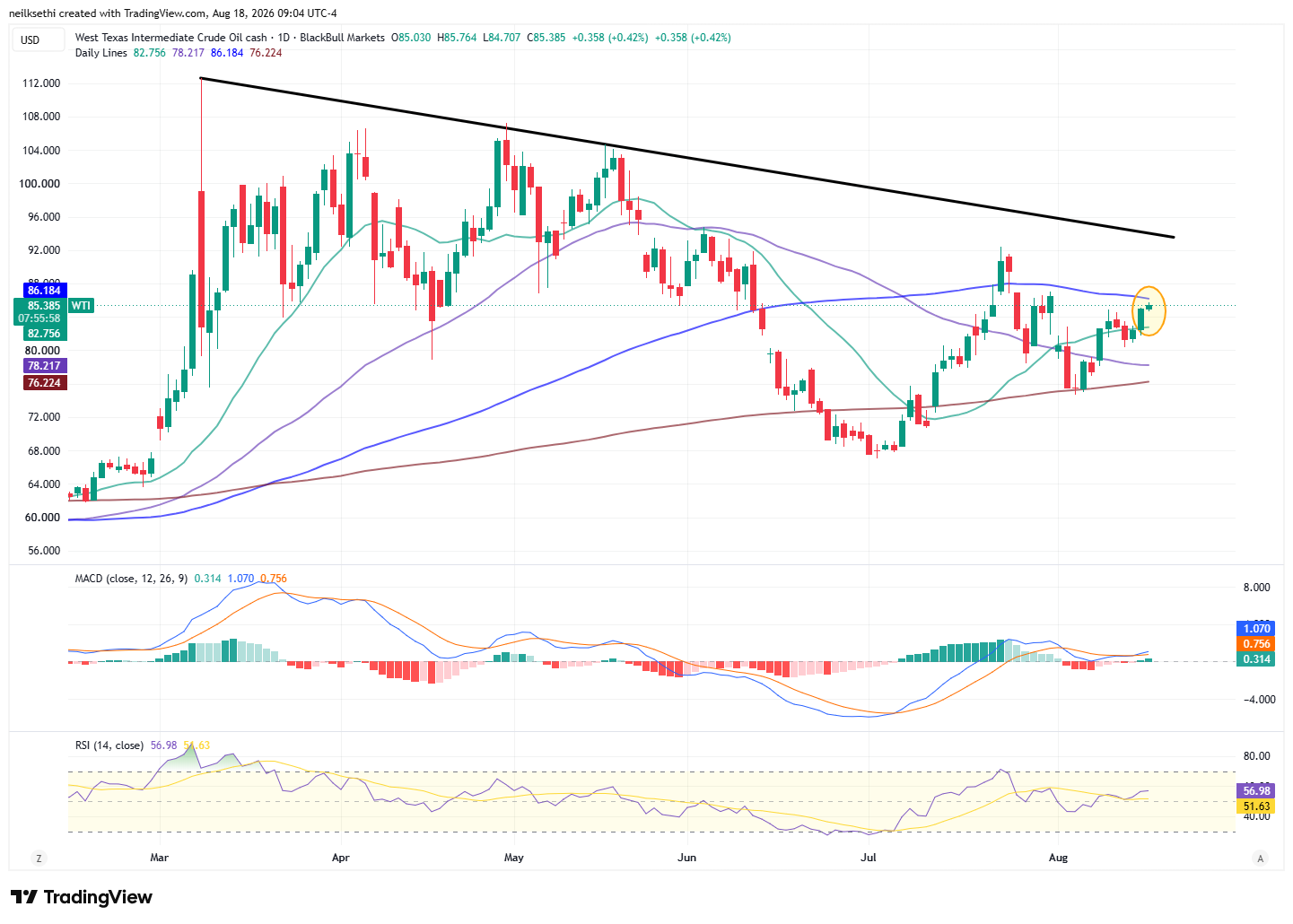
Oil prices are also pushing higher as as tensions in the Middle East showed no sign of easing. A vessel heading out of the Strait of Hormuz was struck by an unknown projectile, the UK Maritime Trade Operations reported Tuesday, a day after President Trump said he’s not interested in extending the expiring MOU with Iran who he said would “not … make the kind of a deal that I feel is necessary. Look, we’re in there for one reason: Iran cannot have a nuclear weapon,” he told reporters in the Oval Office.
An exchange-traded fund tracking semiconductor stocks is sliding 3.6% in premarket trading. Nvidia Corp. dropped 1.9%, Western Digital, Marvell Technology and Seagate Technology all fell more than 5%, Sandisk dropped more than 4%. Home Depot shares though were modestly higher after it beat estimates in the latest quarter, a sign that spending on improvement projects is holding up despite high borrowing and housing costs
The S&P 500 is lower by 0.5% while the tech-heavy Nasdaq-100 index is down 1.3%. The small-cap Russell 2000 is 0.4% lower.
Earlier this morning, we got a blast of economic data:
July housing starts/permits which saw starts fall sharply with both single-family and multi-family starts seeing double-digit declines while permits though improved;
July import prices which came in under expectations due to lower fuel prices, but ex-fuel prices rose more than expected (although eased from June); and
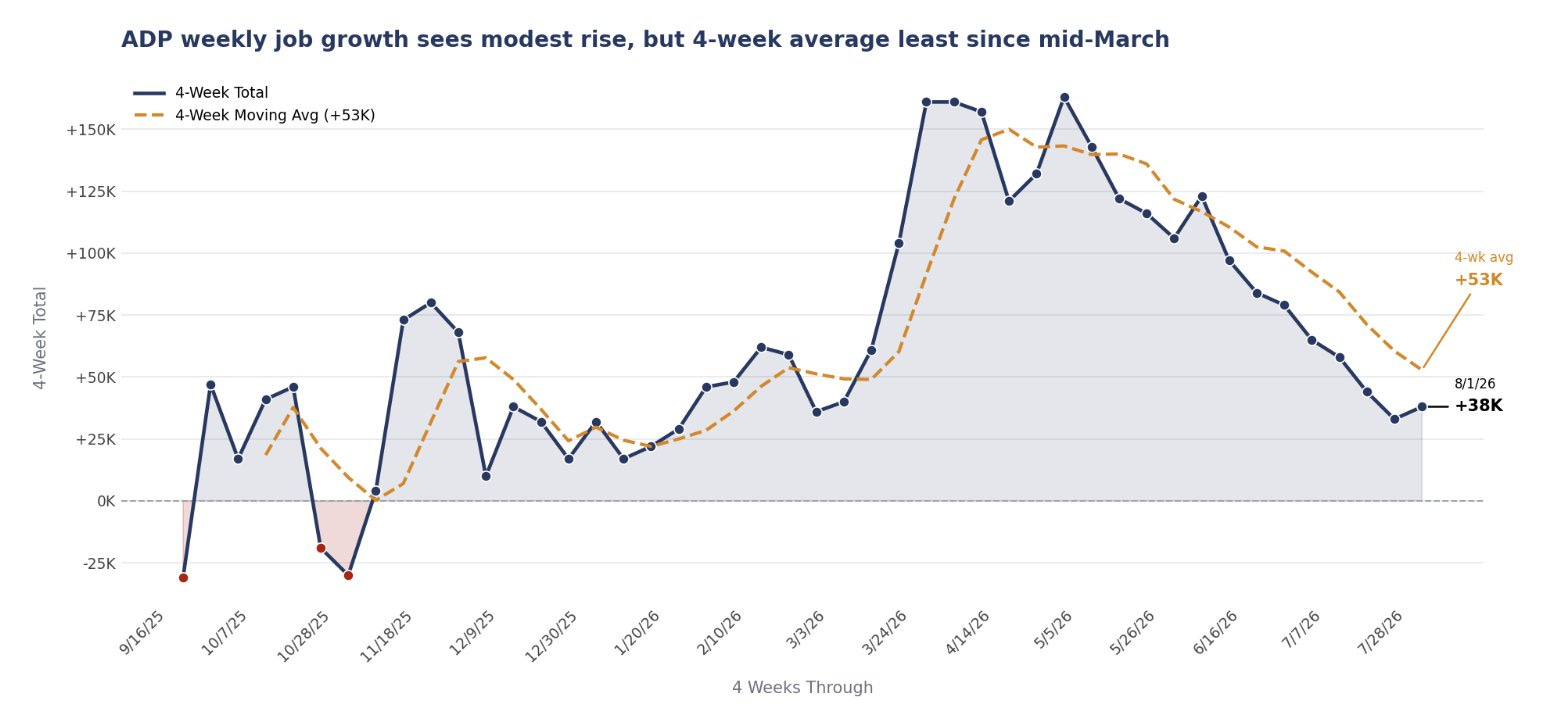
the preliminary weekly NER Pulse hiring report from ADP for the four weeks ending August 1st rose for the first time in eight weeks (and 2nd in 13) but very modestly to 38k (+9.5k/wk) from +33k (+8.25k/wk) the prior week, which was the slowest week since January, but the 4-week moving average fell to +52.8k, the least since March 14th.
Later this morning we’ll get July industrial production (our most comprehensive look at the manufacturing sector) and pending existing home sales.
[Note the International Update is below the US update]
US Housing Starts Jul: 1239K (est 1345K; prev 1427K)
- Housing Starts (M/M): -12.4% (est -5.9%; prev 19.0%)
- Building Permits: 1443K (prev 1374K)
- Building Permits (M/M): 5% (prev -2.6%)
US Import Price Index (M/M) Jul: -0.4% (est 0.1%; prev 0.3%)
- Import Price Index Ex Petroleum (M/M): 0.3% (est 0.1%; prev 0.5%)
- Import Price Index (Y/Y): 5.9% (est 6.7%; prev 7.1%)
- Export Price Index (M/M): -1.3% (est 0.0%; prev -0.6%)
- Export Price Index (Y/Y): 8.2% (est 9.7%; prev 10.2%)
Link to posts: https://x.com/neilsethinew
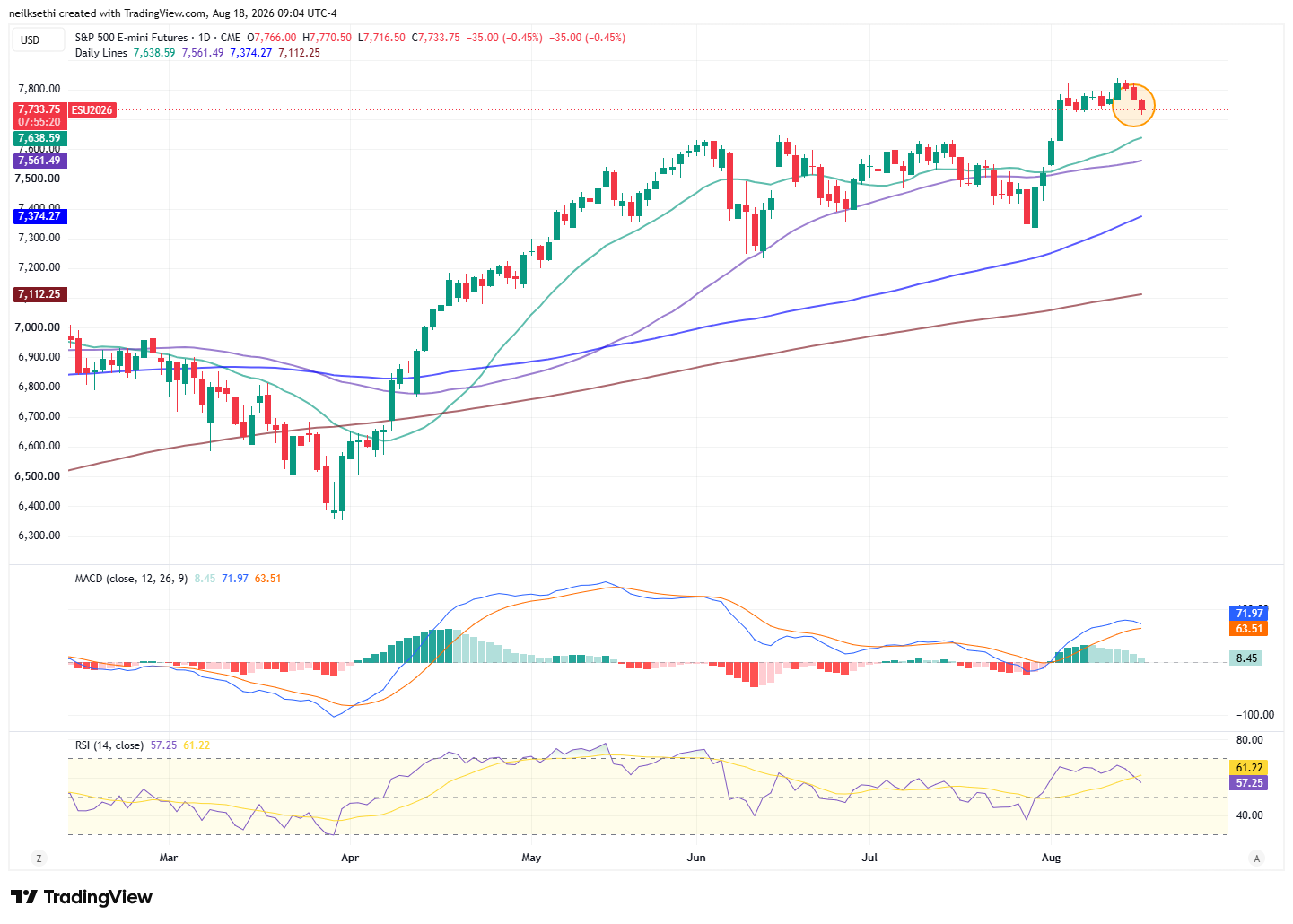
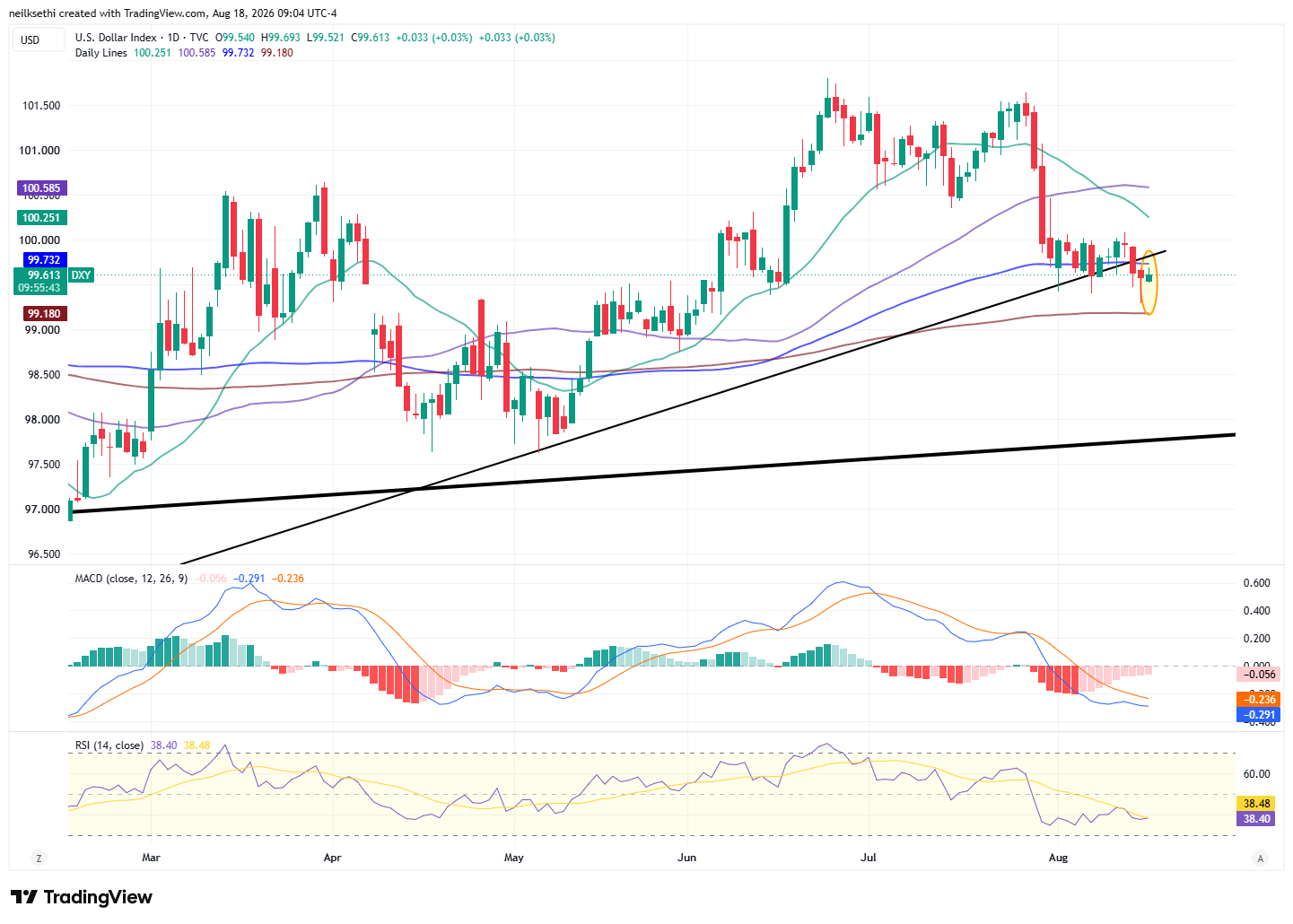
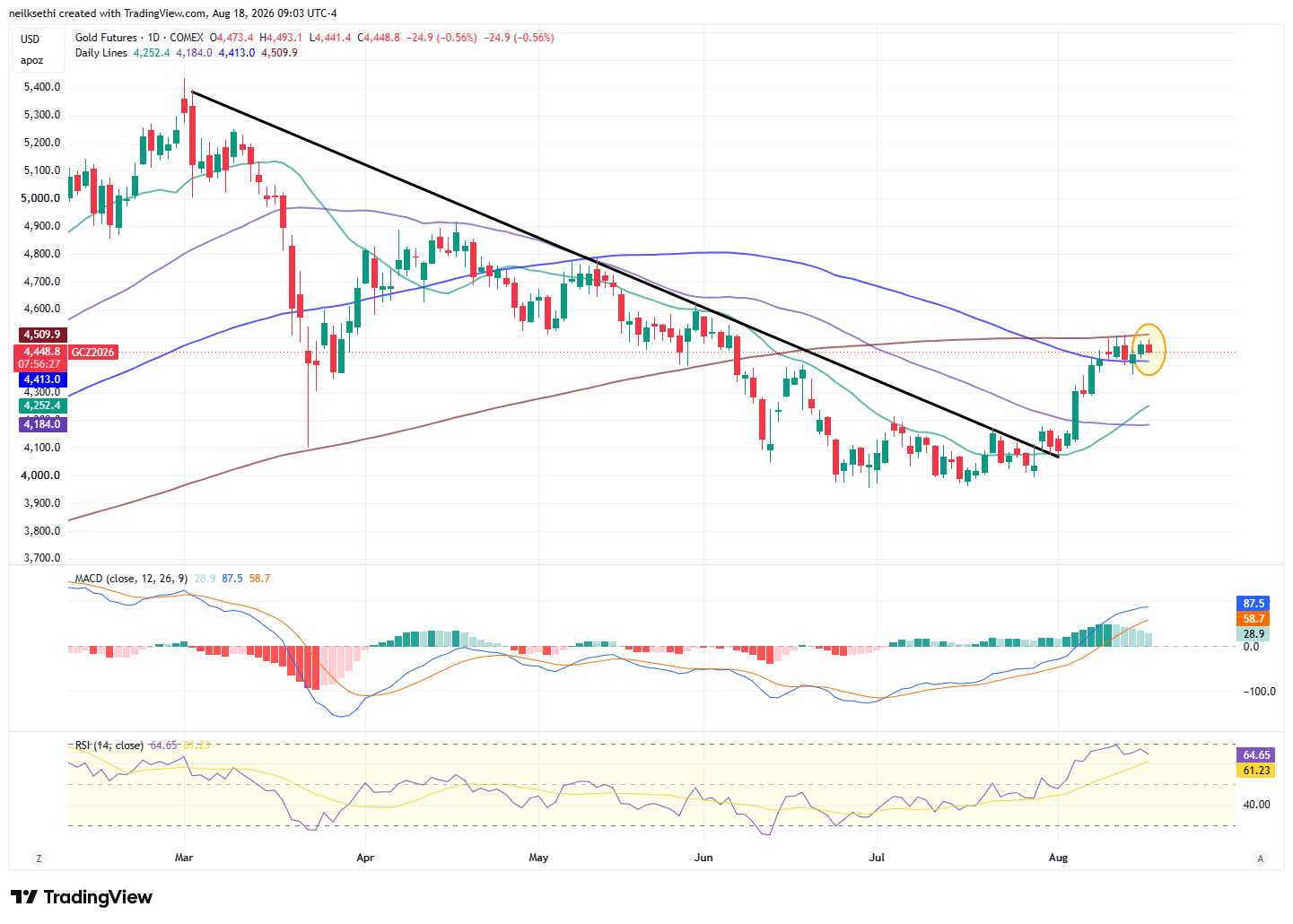
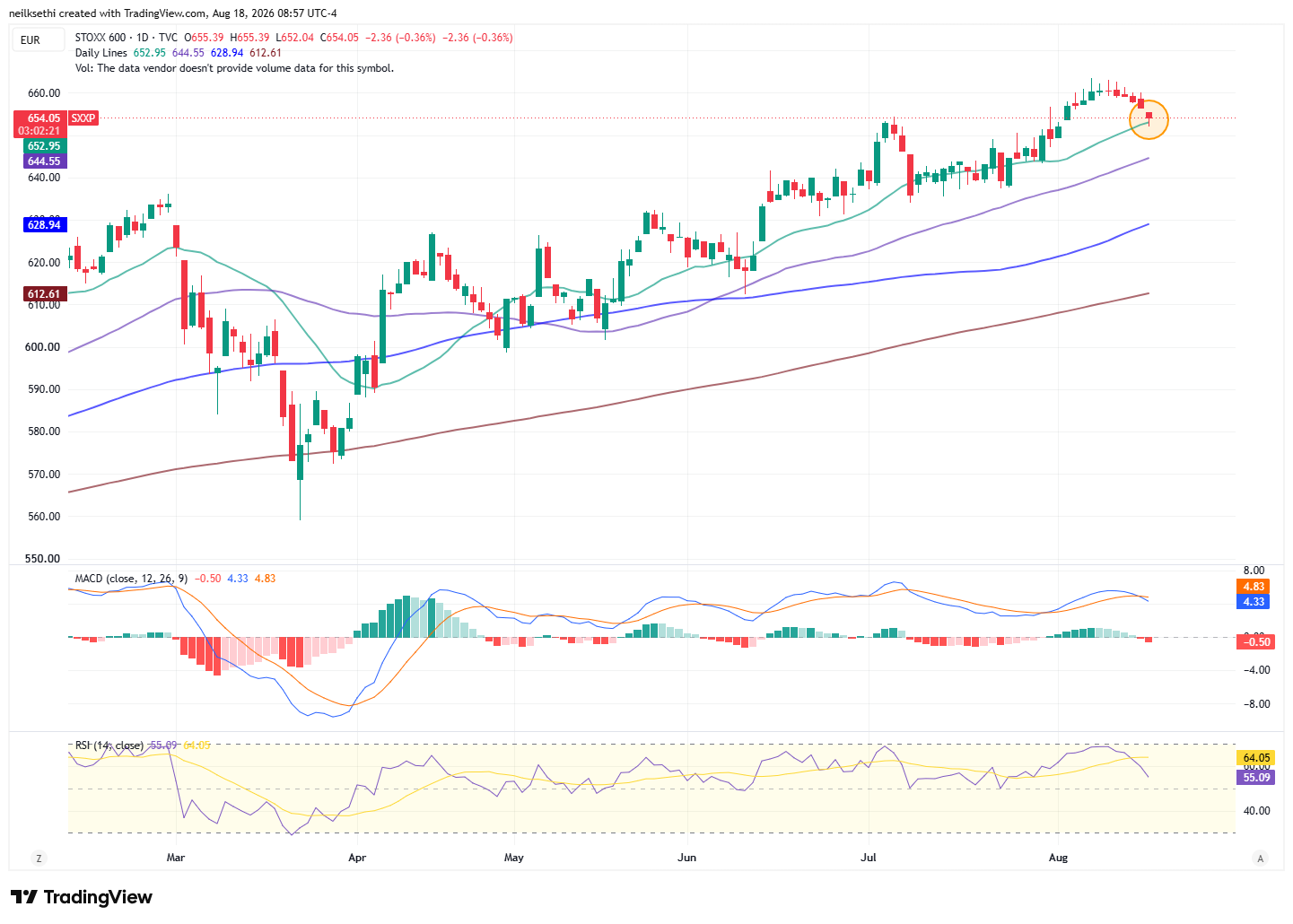
Note on all charts the colored lines are daily moving averages (the average price over the given number of days):
20 = green
50 = purple
100 = blue
200 = brownThe middle panel is MACD = Moving average convergence/divergence line, a measure of momentum that compares longer term and shorter term momentum to gauge if a move is strengthening or weakening. This is probably my favorite individual indicator (it’s also the favorite of Katie Stockton, a very fine technician).
The bottom panel is RSI = Relative Strength Index (basically what it sounds like) = measures the strength of the move comparing gains to losses over the given lookback window (I use the standard 14 periods).
SPX futures (/ES): SPX futures -0.5% to 1-week lows.
10yr Yield - pressing into the highest levels since January 2025.
DXY US dollar index - little changed around 2-month lows.
US WTI crude - modestly higher.
Gold futures (/GC) - falling back after again testing 200-DMA which it failed at three times last week; breaking through that opens up potential for big run higher.
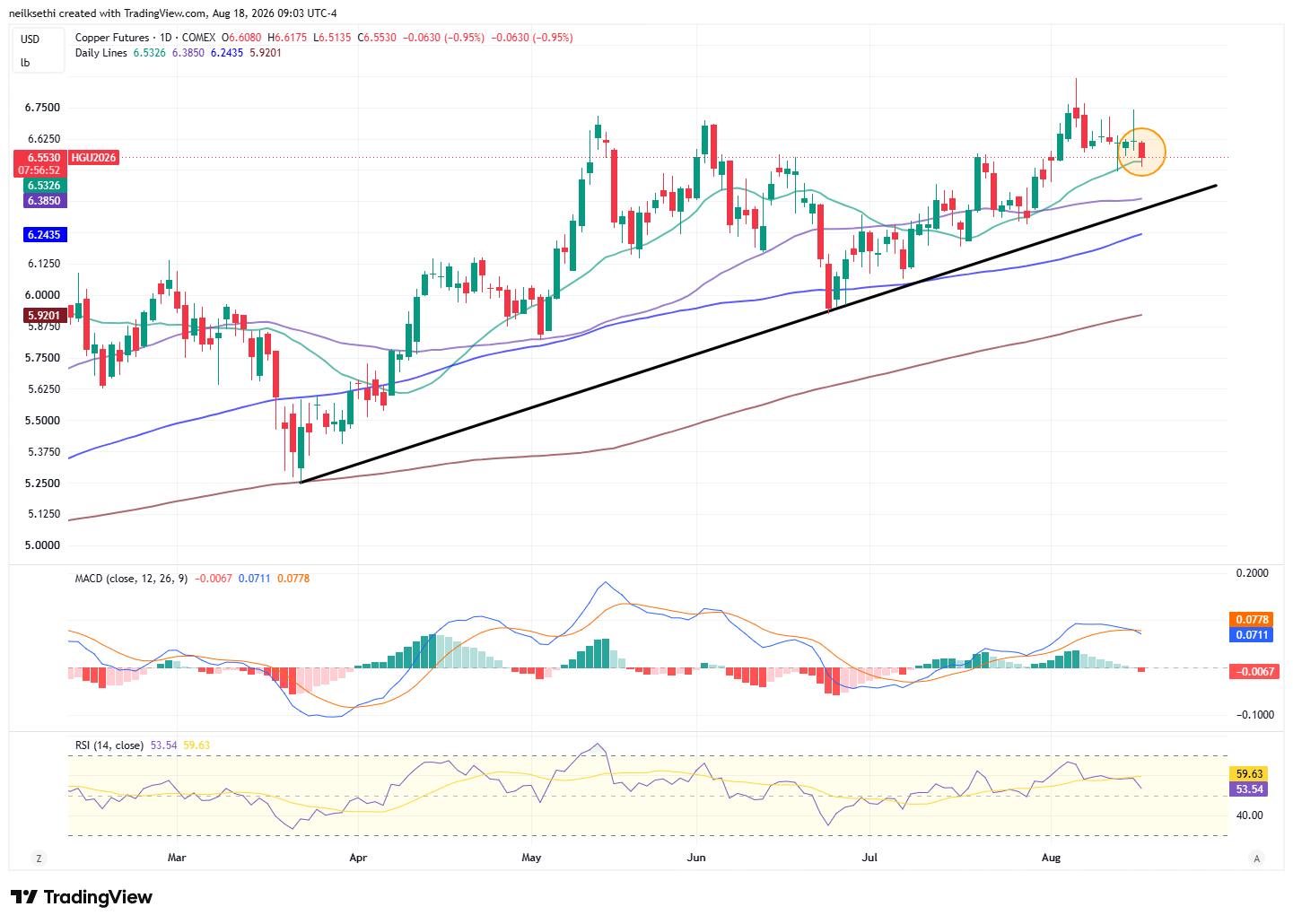
US copper futures (/HG) - falling back with the AI-trade to 20-DMA.
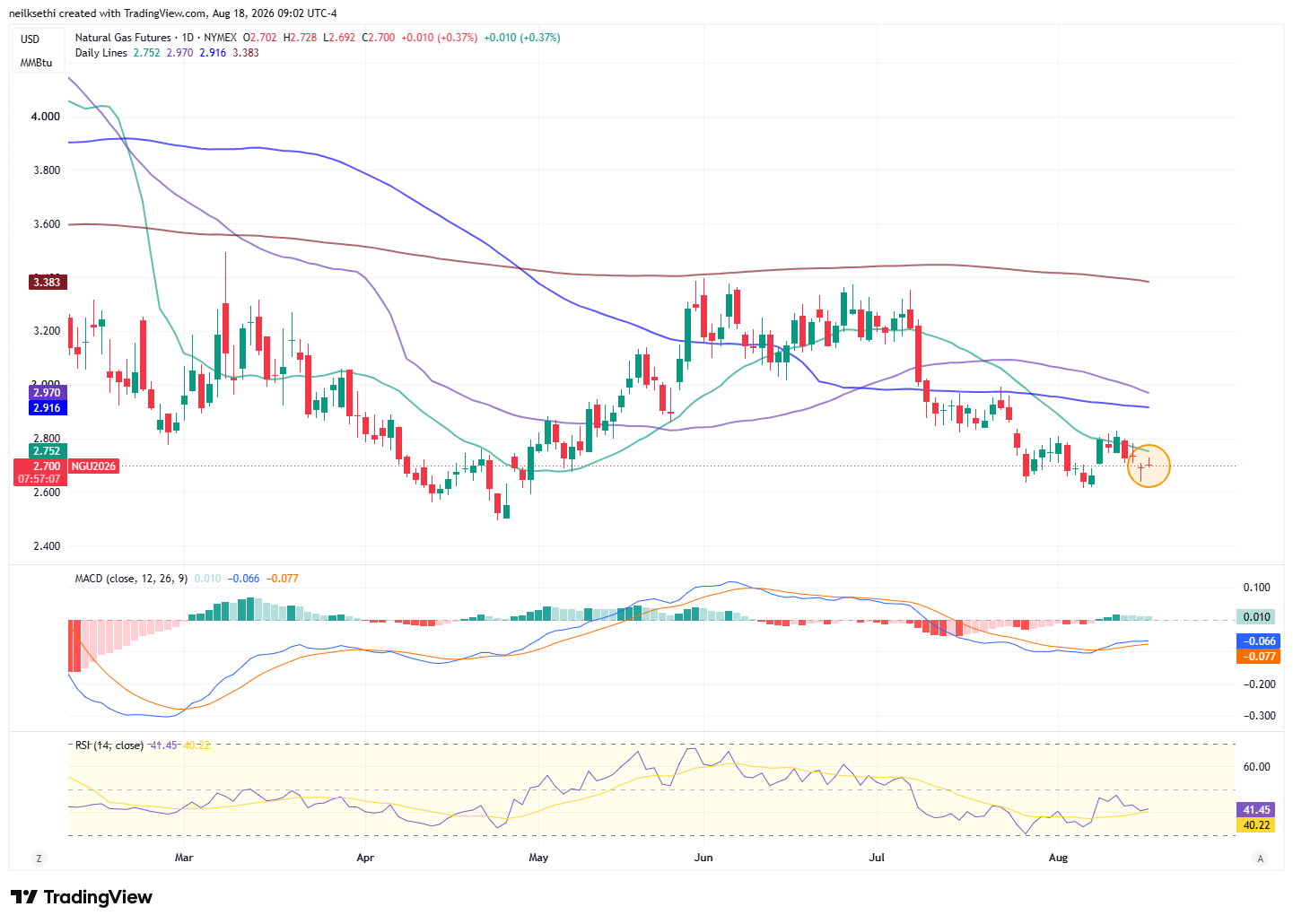
US natural gas futures (/NG) - up modestly.
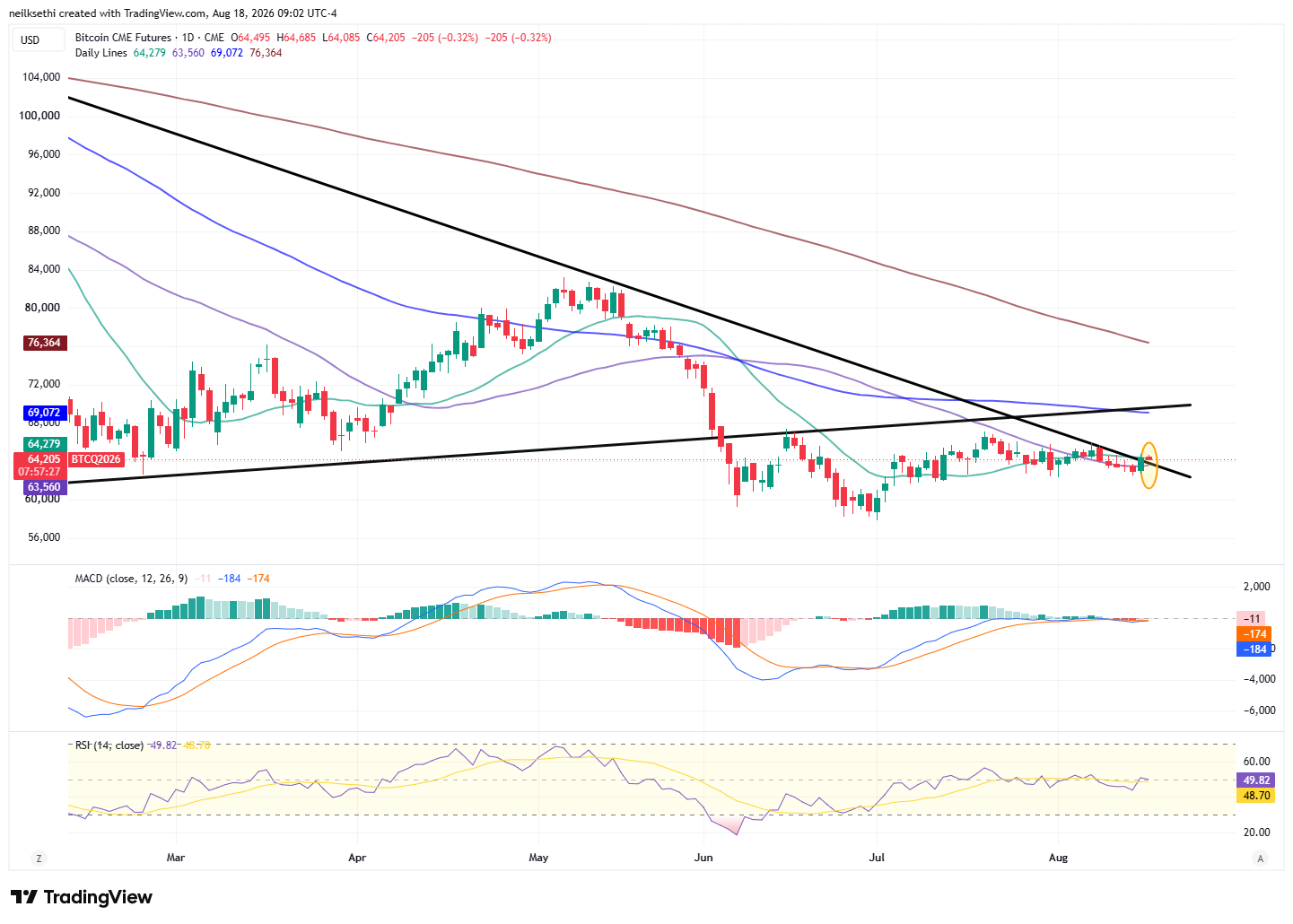
Bitcoin futures - remain trapped under resistance but again trying to “edge around”.
CNBC:
BBG:
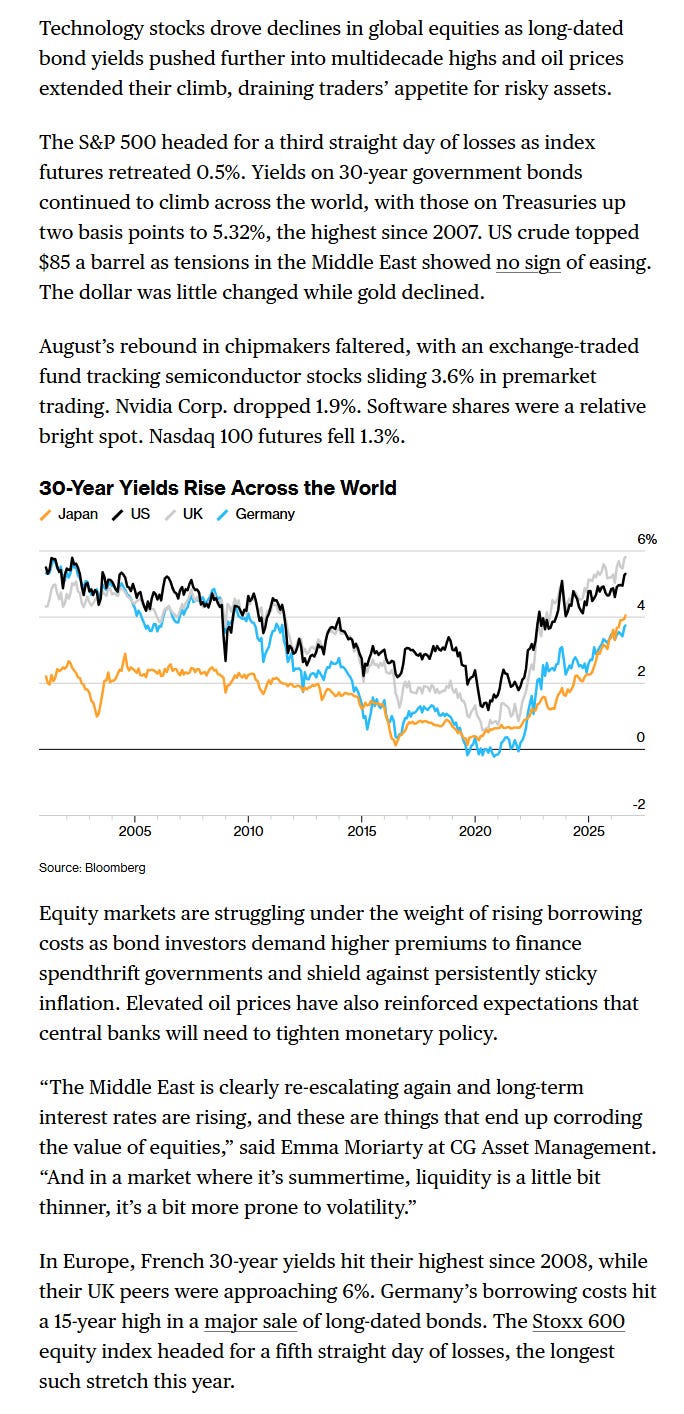
Some pre-market company news from CNBC/MarketWatch (links to CNBC pages).
Home Depot — Shares gained 1.5% after the home improvement retailer posted fiscal second-quarter results that beat expectations on the top and bottom lines, and reaffirmed its full fiscal year guidance. Adjusted earnings of $4.92 per share topped the $4.73 expected by analysts polled by LSEG. Revenue of $47.86 billion exceeded the forecast $47.27 billion.
Tesla — Shares dipped 1.2%. The Information reported that the electric vehicle maker is preparing for an August launch of its Cybercab, a robotaxi without a steering wheel.
Fabrinet — The optical product manufacturer dropped more than 9% fourth-quarter earnings and revenue exceeded expectations, and it issued rosy guidance. Fabrinet said usual Q1 expense seasonality is expected to create a temporary margin headwind in fiscal Q1 2027, StreetAccount said.
Memory stocks — Memory chip makers were down as a group in premarket trading, with Micron Technology and SK Hynix off by more than 4%, each. Shares of Sandisk were also down more than 4%.
Duolingo — The language learning platform rose 3% after D.A. Davidson upgraded Duolingo to buy from neutral. “While we think the market has historically priced the risks related to [daily active users] deceleration and monetization issues effectively, Duolingo is nearing a turning point,” the firm said.
Oracle‘s stock declined about 3.5% as software stocks also suffered from a broad sell-off in the technology sector. Palantir edged 0.5% lower.
Coherent shed nearly 7% as traders sought to take profit following the optical technology provider’s recent rally.
Europe’s benchmark STOXX 600 as of 8.50 am ET was -0.4% as it falls back modestly for a fifth session to its 20-DMA from record high territory.
Major European indices also trade trade on a mostly lower note.
Germany's DAX: -0.4%, U.K.'s FTSE 100: +0.1%, France's CAC 40: -0.4%, Italy's FTSE MIB: -0.6%, Spain's IBEX 35: +0.3%
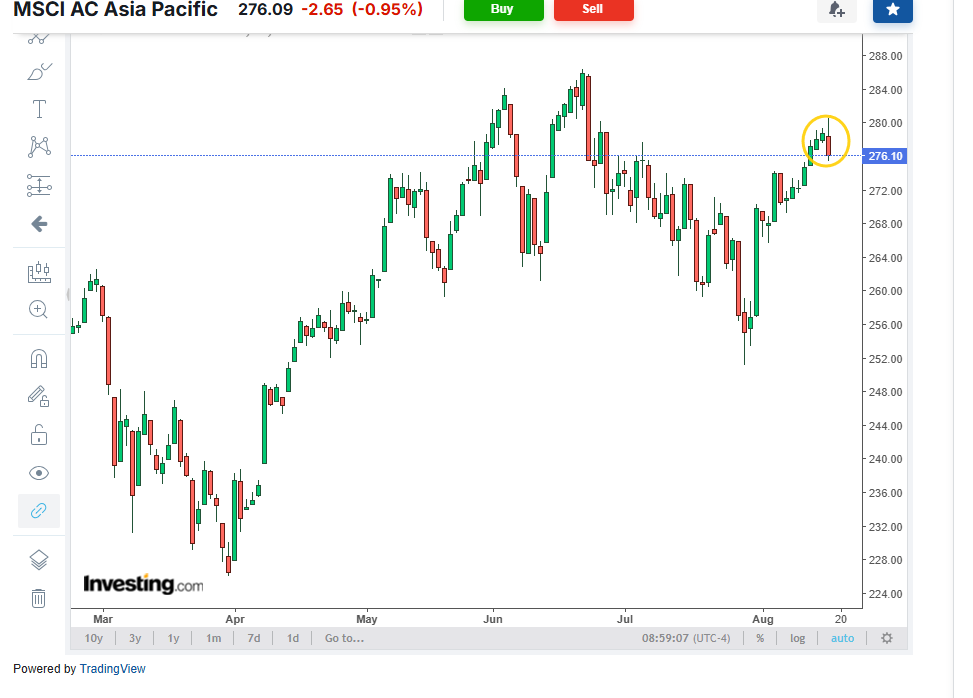
The broad MSCI AC Asia Pacific Index was down -1%, only its second losing session in the past eight, falling back from the highest close since the all-time high in June.
Major equity indices in the Asia-Pacific region ended Tuesday on a mixed note with South Korea's Kospi (-1.6%) approaching a five-week high before reversing.
Japan's Nikkei: -2.5%, Hong Kong's Hang Seng: +0.1%, China's Shanghai Composite: +0.2%, India's Sensex: -0.6%, South Korea's Kospi: -1.6%, Australia's ASX All Ordinaries: -0.1%.
FT - A correction in US technology stocks is likely and could threaten Eurozone financial stability, even if AI eventually lives up to investors’ hopes, a team of European Central Bank economists has warned.
In a post published on the ECB’s blog on Monday, the researchers wrote that a pullback in the tech sector did not necessarily need to be driven by irrational exuberance and “should be expected even if current valuations are rational”.
The warning matters for Europe despite most of the tech stock gains of recent years happening in US markets. Euro area households have about €440bn of exposure to US tech equities, according to the economists, largely through investment funds, while insurers and pension funds also have significant exposure to the so-called Magnificent Seven megacap tech stocks.
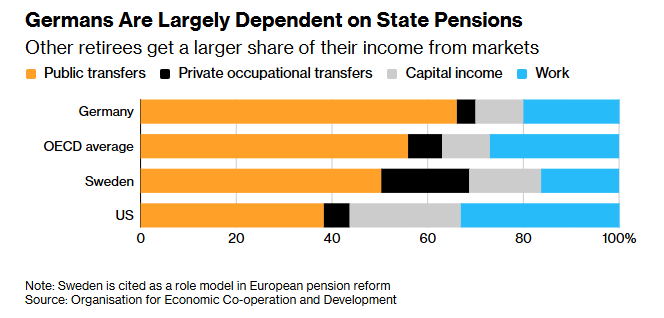
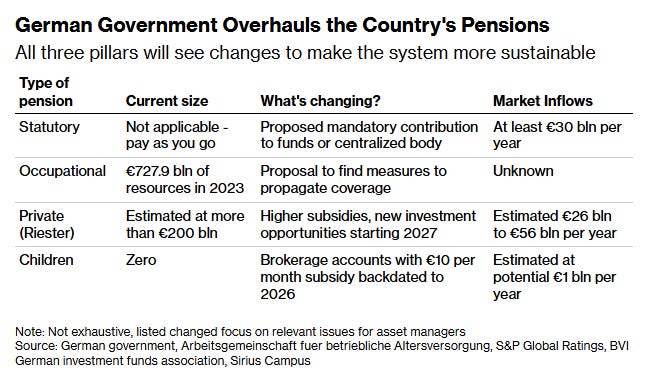
BBG - One of the biggest reforms in Germany’s pension system since Chancellor Otto von Bismarck founded it in the late 19th century is about to hand modern fund managers a new empire of cash to deploy.
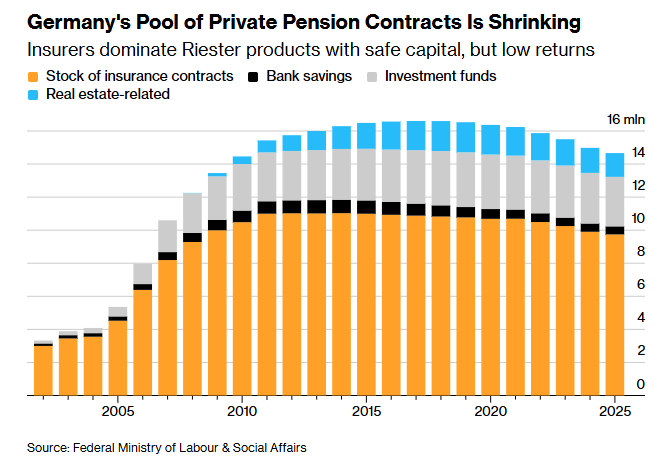
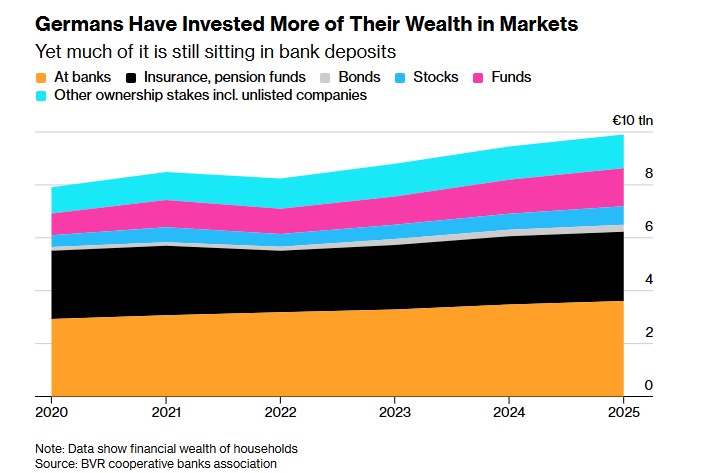
After many years of accepting puny returns in exchange for guaranteed capital, the nation is about to move away from conservative securities and insurance policies and also subsidize a broader range of investments, from index tracker funds to private credit.
In a three-pillar system, the private pension pot alone is set to double to some €500 billion ($577 billion) in the coming decade, according to BVI, the country’s fund industry lobby.
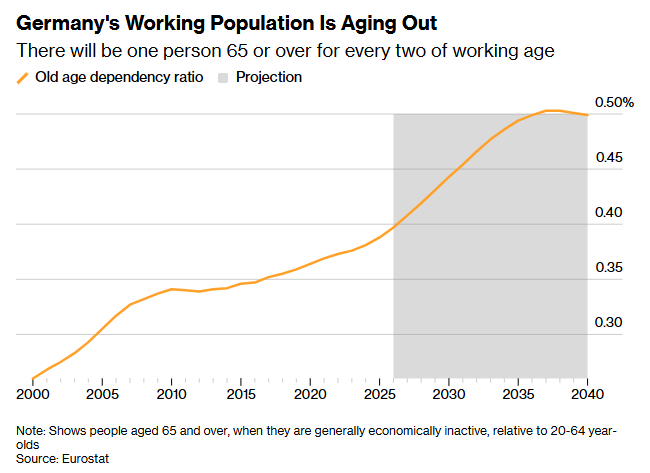
There are several reforms underway. The statutory pay-as-you-go pension, which already eats up about a quarter of the federal budget, looks likely to channel more than €30 billion into financial markets. The government also wants to boost participation in occupational pensions, which are topped up by employers. But for now, the financial industry is focused on one which will allow private money to flow into subsidized brokerage accounts. It replaces the Riester system, introduced in the early 2000s, which offered guaranteed capital, yet low returns.
Depending on the take-up, S&P Global Ratings says the reform will unlock an additional €26 billion to €56 billion of annual inflows into German private pensions after an on-boarding period of as long as two years. That gives the fund management industry a road-map for inflows into the next decade, provided they get clients in the door early. There is probably about €225 billion in Riester funds and more than a quarter of that will move, consultancies Sirius Campus and Aeiforia, estimated in a report in May.
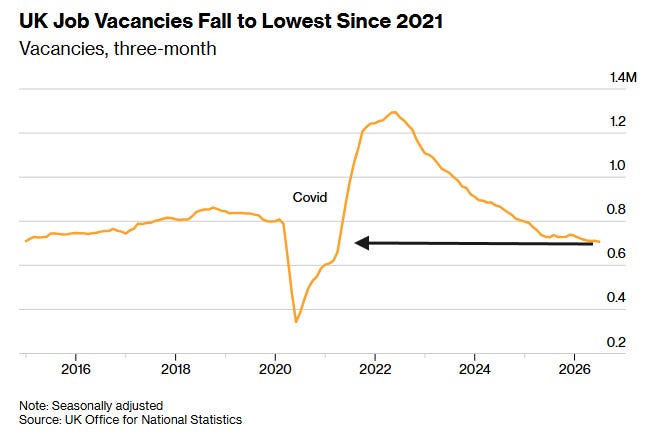
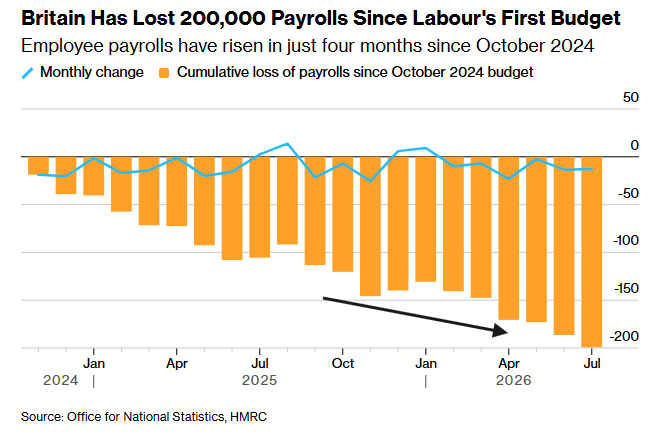
BBG - UK employers shed more workers in July and job vacancies hit a fresh five-year low as demand for staff remained tepid in the face of heightened uncertainty from events at home and abroad.
The number of employees on company payrolls dropped 13,000 in July after a similar fall the previous month, data from the Office for National Statistics showed on Tuesday. Economists surveyed by Bloomberg had expected no change.
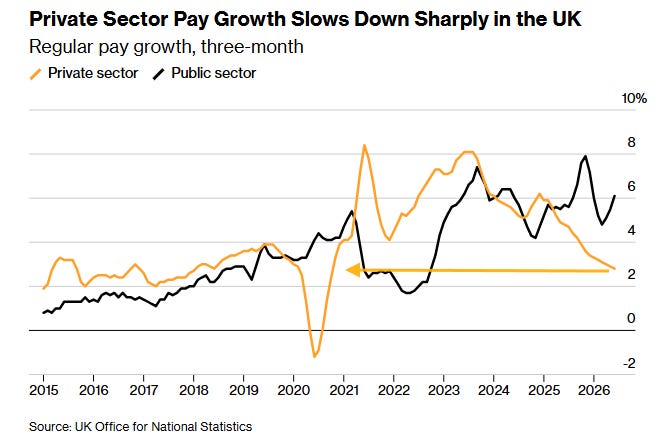
Job vacancies dropped further to 707,000 in the May to July period, the lowest since 2021. Private sector wage growth excluding bonuses, the gauge watched closely by the Bank of England for signs of inflationary pressures, eased to 2.8% in the second quarter, the lowest in almost six years.
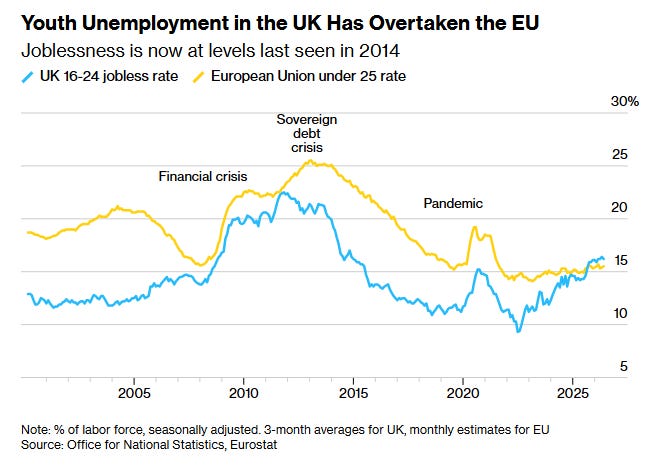
Unemployment held steady at 4.9% in the three months through June, though the statistics office has warned that the figures remain of reduced quality due to an error made in collecting the data. The jobless rate among 16-24 year-olds edged down to 16.2% but remained near levels last seen more than a decade ago.
The pound and market bets on one quarter-point interest-rate hike by the end of the year were little changed. However, economists generally expect the BOE to keep rates on hold.
ONS Director of Economic Statistics Liz McKeown said some softening in the labor market is “still evident.” She said the fall in vacancies “was driven mainly by smaller businesses, which cite labor and operating costs as reasons for not hiring new staff or replacing leavers.”
While private-sector pay growth is well below the 3.25% the BOE deems compatible with its 2% inflation target, overall regular pay growth was up slightly at 3.5%, driven by a 6.1% jump in public-sector wages. Real regular pay growth picked up to 0.7% in the three months through June, up from from 0.4% previously and the fastest pace this year, as lower inflation gave workers a boost.
“The latest batch of jobs data continues to paint a picture of a cooling labor market, likely on the back of higher energy costs and tighter funding conditions. We think this trend has further to run and see unemployment climbing over the rest of the year. That backdrop leaves the Bank of England with a difficult balancing act between returning inflation to target and limiting the drag on activity, supporting the central bank’s wait-and-see approach to the energy shock. Our base case is rates will remain on hold through 2026.” —Ana Andrade and Matt Bunny.
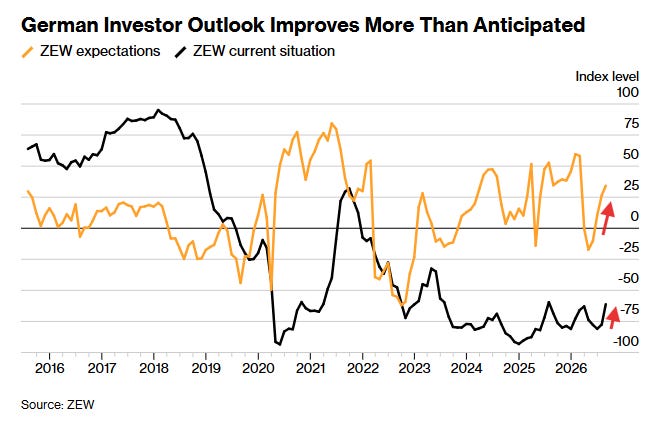
BBG - German investor optimism rose more than anticipated, supporting hopes that the long-awaited recovery of Europe’s largest economy may be gaining traction.
An expectations index by the ZEW institute increased to 34.2 in August from 26.3 the previous month. That’s above the median estimate of 30 by analysts in a Bloomberg survey. A measure of current conditions also beat expectations.
“The German economy continues to benefit from the federal government’s infrastructure programs,” ZEW President Achim Wambach said Tuesday in a statement. Still, “the record low water levels on the Rhine River present an additional acute risk affecting economic activity.”
“The current conditions balance now stands above its February 2026 level, indicating the negativity from the Iran war has been more than reversed,” Nomura economists Andrzej Szczepaniak, George Buckley, Josie Anderson said of the ZEW release.
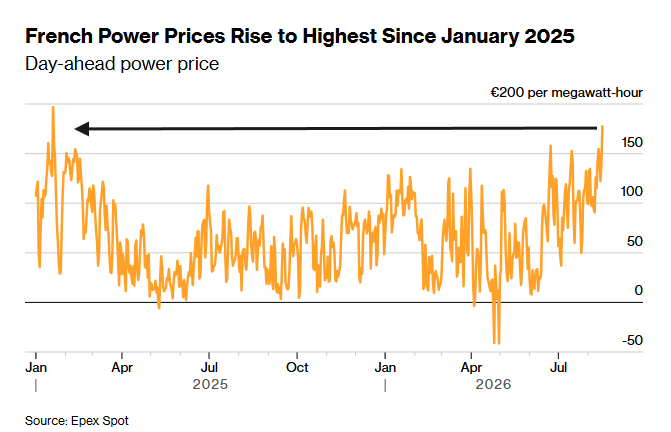
BBG - French daily power prices climbed to the highest since January 2025, amid heat-related outages at the nation’s nuclear plants and as cloudier conditions in Europe curb solar generation.
Reactors continue to face restrictions as high river temperatures have left some plants unable to use the water for cooling. France’s nuclear output dropped to the lowest since October on Saturday, according to data from RTE, and the nation’s fleet availability fell to 58% on Monday.
Day-ahead power prices for Monday advanced to €177.34 a megawatt-hour, according to data from Epex Spot. Intraday prices for some hours today were even higher, suggesting that the market tightened further since the weekend.
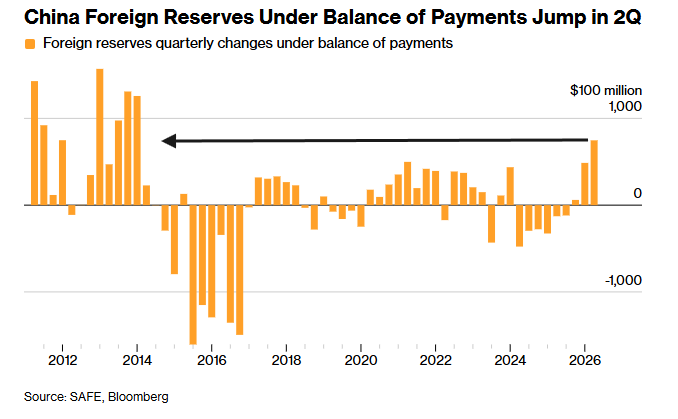
BBG - China’s key gauge of reserve assets saw its biggest quarterly rise in more than 12 years as authorities absorbed heavy foreign currency inflows, a move that helps smooth the pace of the yuan’s gains, according to analysts.
The foreign reserve under the balance of payments recorded an inflow of $74.7 billion in the second quarter, the biggest increase since the first quarter of 2014, according to Bloomberg calculations based on data from the State Administration of Foreign Exchange. The accumulation coincided with a sixth straight quarterly gain for the onshore yuan in the three months ended June.
The reserve build-up aided the People’s Bank of China’s efforts to maintain a stable exchange rate to support the economy. It also helped temper the yuan’s gains, even as strong export growth continues to put appreciation pressure on the yuan.
“They have been absorbing the inflows to slow the yuan’s appreciation,” said Khoon Goh, head of Asia research at Australia & New Zealand Banking Group. “If the PBOC were not absorbing those inflows, appreciation pressure on the yuan would have been greater.”
The onshore yuan has gradually inched up to its strongest level since 2023. The PBOC set the yuan fixing weaker than market estimates on Monday, its longest such streak since Bloomberg’s data started in 2018. Even so, the fixing was still set at the strongest level in more than three years.
Xiaomi Corp. posted profit that fell less than expected, raising hopes it can weather a persistent memory shortage that’s weakened demand for smartphones.
BHP Group’s profit rose by almost a third as buoyant commodity prices lifted earnings, with full-year revenue from copper overtaking iron ore for the first time.
Eurozone’s August ZEW Economic Sentiment 31.4 (expected 25.9; last 23.4)
Germany’s August ZEW Economic Sentiment 34.2 (expected 30.1; last 26.3) and ZEW Current Conditions -61.1 (expected -68.8; last -77.6)
U.K.’s June three-month Employment Change 83,000 (last 147,000), June Average Earnings Index + Bonus 4.1% yr/yr (expected 4.0%; last 4.4%), June Unemployment Rate 4.9% (expected 4.8%; last 4.9%). July Claimant Count Change -11,000 (expected 16,500; last -6,400). Q1 Labor Productivity 0.5% (expected -0.5%; last -0.7%)
Australia's August Westpac Consumer Sentiment 6.0% (last 4.1%)
To subscribe to these summaries, click below.
To invite others to check it out,
No posts
Comments
Nothing yet. Say the first thing.
Sign in to join the conversation.