
Picture this: it’s Monday morning, you’ve just had a call that went brilliantly, a client said something you know your network needs to hear. You open LinkedIn, pull up your streaming app, hit broadcast, and... nothing. An error. The button you’ve always used is gone.
That moment is coming for a lot of professionals on June 23rd. And most of them have absolutely no idea.
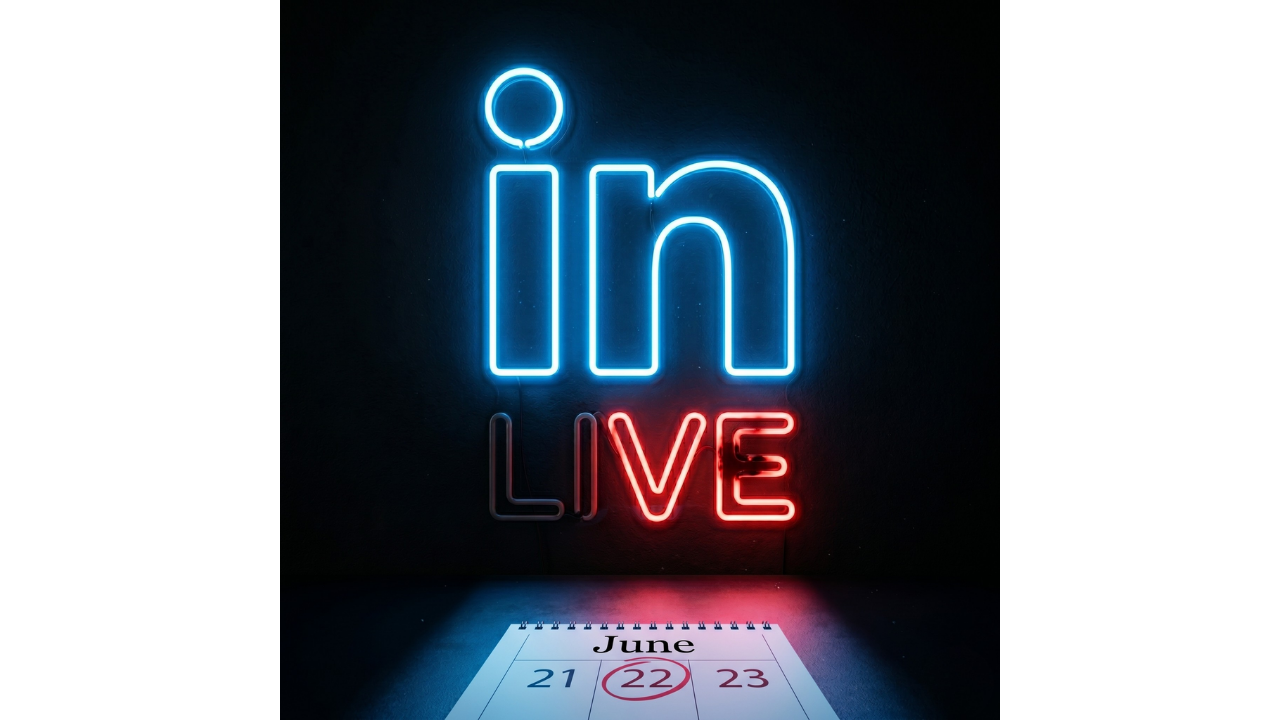
LinkedIn made this announcement back in March, and it barely registered in most feeds.
But starting June 22nd — six days from now, the platform is permanently removing the ability to go live without first scheduling a LinkedIn Event. This isn’t LinkedIn Live disappearing. The format is alive and well. But the rules of access are changing in a way that will catch a lot of casual users off guard — and create a genuine opportunity for the professionals who adapt quickly.
Here’s the practical version of what’s actually changing.
Until June 22nd, you can open Ecamm Live, StreamYard, or any other broadcasting tool, connect it to LinkedIn, and go live immediately. No setup required beyond having Live access.
From June 22nd, every LinkedIn Live broadcast must be tied to a scheduled LinkedIn Event. That event can be created minutes before you start streaming, there’s no requirement for days or even hours of advance notice. But the event creation step becomes mandatory. You cannot bypass it.
If you’ve been using LinkedIn Live occasionally and starting broadcasts spontaneously, that workflow ends next week.
Why LinkedIn did this, and why it matters.
LinkedIn frames the change as making Live “simpler, more discoverable, and more impactful.” That’s the official language. The real reason is more interesting.
LinkedIn is building a commercial layer on top of Live — event advertising, pre-event and post-event campaign targeting, structured promotional windows. That infrastructure only works when a broadcast has a dedicated event page attached to it: something audiences can discover, follow, and set a reminder for ahead of time.
They’re also sitting on data that most of us already know intuitively.
Live streams perform significantly better when the audience knows they’re coming.
Research consistently points to 30–45 minutes as the optimal stream length for LinkedIn Live — a format that benefits enormously from advance promotion. A spontaneous stream gives your network zero time to plan. A scheduled event, even one promoted just 24 hours out, changes the numbers completely.
In other words: LinkedIn is treating Live as a serious professional format. And they’re removing the option that allowed people to treat it as a social media impulse.
If you were already doing it right, you’re fine.
There’s a version of this change that doesn’t affect you at all. It’s the version where you were already scheduling your LinkedIn Lives, creating event pages, and letting your audience know in advance.
If that’s you, your workflow is unchanged. You just keep doing what you’re doing.
The people who will hit a wall next week are those who occasionally hopped on Live without preparation, got a handful of viewers, and wondered why LinkedIn Live never seemed to gain traction. The spontaneous approach was never the professional approach. LinkedIn has just made that official.
Tools like Ecamm Live continue to work. StreamYard and Riverside still connect to LinkedIn. The technical setup is identical. The only difference is one additional step: create a LinkedIn Event before you start broadcasting.
One thing to do before June 22nd.
If you haven’t used LinkedIn Live yet, check whether you’re eligible. LinkedIn automatically grants access to members with more than 150 followers or connections, a history of content creation, and a record of following platform policies. No application required — just check your creator dashboard or simply try to create a LinkedIn Event.
If you already have Live access, do this: go to LinkedIn Events, create a test event for a future stream, and walk through the setup end to end. Give it a title, a time, and a short description. Connect it to your streaming tool. It takes under five minutes — and doing it once before June 22nd means you’ll never be caught off guard.
The bigger picture.
LinkedIn is quietly evolving for professionals who treat content as a long-term asset, not a short-term impulse. The shift to scheduled events is part of that. So is the growth in video content, LinkedIn saw video uploads rise 45% year-on-year in 2026 — and the platform’s push to reward what it calls “Verified Human” content over polished corporate output.
The professionals who will benefit most from LinkedIn in the next 12 months are the ones who build systems, show up with intention, and treat their audience’s time as something worth scheduling around.
If that’s you, this change just made your live content more visible to everyone who isn’t yet.
Are you using LinkedIn Live? Or have you been waiting for the right moment to start? Drop a comment — I’d love to hear where you’re at.
If this has you wondering whether your LinkedIn Live setup is ready for June 22nd, let’s sort it out together. A 30-minute call is enough to get you confident before the change lands.
Book a time here
Cheers,
Neil.
Comments
Nothing yet. Say the first thing.
Sign in to join the conversation.